Category: Book reviews – fiction

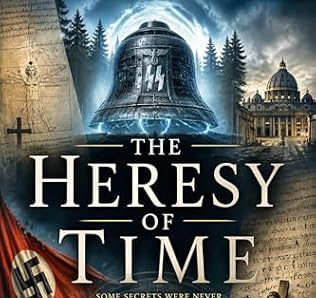
  • Review: The Heresy of Time

    Review: The Heresy of Time

    Clifton Wilcox, The Heresy of Time, (CWW Publishing, 2026)

    https://www.goodreads.com/review/show/8703814123

    A riveting story of time travel and the meaning of witnessing

    1936 A strange craft crashes in Germany’s Black Forest. Nazi scientists rush to harness the new alien technology. They call it Die Glocke (The Bell). Their fear of it ‘can be directed,’ says SS Gen. Kammler, who leads the investigation.

    It has strange properties – it can manipulate time. The time travellers discover that their very observation shapes the events.

    Like all time travel experimenters, especially if they’re ruthless Nazis, Kammler wants to control the variables, catalogue the contradictions, bring back evidence from the future, harness the technology for the Reich. If only he can figure out how it works. If the evidence changes upon observation, who is the observer?

    Seeking metaphysical clarity for the science they are witnessing being defied, Kammler turns to – the Pope – who challenges his arrogance masterfully. The Holy Father wants ‘proof’ – proof of the central tenet of Christianity. Introducing the Vatican into the story is genius. It took me by surprise, as hitherto, Kammler’s team were just considering the sci-fi aspects of Die Glocke (how does it work? etc). Once they turned to more metaphysical questions, turning to the Pope for answers makes sense.

    Even though Kammler is supposed to be an evil Nazi, I liked him. I liked how masterfully he led the investigation team. I thought ‘the technician’, ‘the physicist’ etc should have had names and personalities. I really felt the men’s apprehension around Die Glocke.

    I just love this story’s Concept. Though at times I found the philosophical dialogues a bit too cryptic, it did give the narrative a kind of dreamy quality. I was riveted by the excellence of the writing. The dialogue is natural-sounding; the repartee is sharp. The metaphysical discussion is intelligent; the science bits are great, too.
  • Review: God’s Ghostwriters

    Review: God’s Ghostwriters

    Candida Moss, God’s Ghostwriters, (William Collins, 2024)

    https://www.goodreads.com/review/show/8703796999

    Democratising the history of the New Testament

    As we all know, there were many slaves and ex-slaves in the Roman empire. Some of them – tabellarii or tahydrómoi (letter carriers), angelos (messengers), nomenclatores (memorisers of names and texts), lectores (readers out loud, often children), notarii (shorthand writers), grammatici (grammarians), librarioli (library specialists) – were engaged in the business of writing. The people whose hands wrote down the gospels probably included these enslaved workers. Even booksellers tended to be freedmen, probably having begun their careers as enslaved copyists. The apostles themselves were called messengers (apostoloi).

    When I selected this book to read (recommended by a friend) I was expecting it to be of the Jesus-never-existed conspiracy theory corpus. Instead, I found a sober and thoroughly scholarly work.

    The book’s main argument is that many more than has generally been recognised of the people in the Roman Empire whose existence we can infer from evidence in the New Testament were slaves. Furthermore, these enslaved people were often highly literate, and this group probably included some of the authors or copyists of the Gospels. This is a credible and well referenced premise.

    Moss draws our attention away from our former focus, inviting us to notice the servants enabling an activity. ‘People have translated and interpreted the New Testament without enslavement in mind.’ For example, in the story of Jesus healing the paralytic in Capernaum, she discusses not the patient but the four ‘friends’ who lowered him down through the roof. Jesus commends the four for their ‘loyalty’, and his healing is framed in terms of enabling the man now to do his own work (carry his own bed).

    Pauline conceptions of the Christian’s relationship to Christ and to God can be seen to be modelled upon conceptions of the slave’s relationship to their master (eg 1 Cor. 6:12, 7:23).

    We owe the preservation, and sometimes creation, of these wonders of literature to these workers. Moreover, the story of Christianity was spread not just by the written gospels but orally, by word of mouth, ‘the unauthored gossip of the masses, of women and of enslaved people’, the slaves attending at the high priest’s house who heard Peter denying Jesus three times, kitchen workers who heard Jesus calling for more wine at the Wedding of Cana, etc. Early believers were used to reciting from scriptures in synagogues and carried on this tradition.

    There is so much to say about the history of the New Testament and how it was written. I appreciated that this book stayed ‘on topic’ and didn’t try to go into discussion that was not related to the subject.

    Refocussing on these sometimes anonymous agents is an important contribution towards democratising the history of the New Testament.

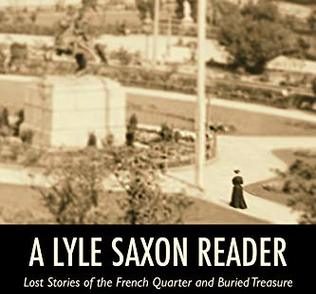
  • Review: A Lyle Saxon Reader

    Review: A Lyle Saxon Reader

    Edited by James Michael Warner, A Lyle Saxon Reader, (Cultured Oak Press, 2018)

    https://www.goodreads.com/review/show/8684705335

    39 stories about New Orleans 1919-1923

    Born into a broken home in New Whatcom, Washington, ‘Genteel Southern author’ Lyle Saxon later fell in love with Baton Rouge where he lived with his mother and maternal aunts, and New Orleans, especially the French Quarter. He campaigned for the preservation of architectural landmarks, and some of these more directly historical writings are in this collection. Other articles are like a guided tour of the Vieux Carré. He loved the Mardi Gras.

    These stories, published in the Times-Picayune Sunday Magazine during the 1920s, paint character sketches and pictures of this bygone world, often wrote about real current news stories – for example the story of Angelo Guirlando who murdered his brother-in-law, and the one about morphine addict Grace Gardiner – and was criticised at the time for commingling fact with fiction.

    His more fictional stories include:

    • A dying man imparting to the narrator a treasure map, an incomprehensible coded diary and a promise of buried Spanish dubloons.
    • The few surviving Confederate veterans holding a reunion in New Orleans.
    • The self-proclaimed ‘prophet’ Otto Marti selling prayers for ten cents.
    • Delphine wondering whether the paved streets brought the automobiles or the automobiles paved the streets, as she saves to buy one.

    I dipped into these stories hoping to learn something about American literary history, maybe to discover an F Scott Fitzgerald (though I hated This Side of Paradise). I found the stories quite varied, yet a bit old-fashioned in style. I wondered if they had been ‘dumbed down’ to suit a Sunday magazine audience.

    The most interesting are the character sketches of real people. Many are from a series he published on ‘Unusual Ways to Make a Living’ – the Neapolitan woodcarver who refuses to make smaller furniture to fit modern houses; the hotel manager who ‘uses all [his] ideas, all [his] imagination, all the time’; the Biagis who make plaster saints and paint them gold; the park photographer who enjoys life as it comes; the man with the parakeets who tells fortunes; the woman who rents out hurdy-gurdies.

    These are people the like of which you won’t see today. These discoveries are like finding buried treasure.

    In a very short space (usually a page and a half) Saxon creates pictures of a bygone era and people we don’t want to forget.

  • Review: Lord of Silver

    Review: Lord of Silver

    Alan Fisk, Lord of Silver, (Xlibris Corporation, 2000)

    https://www.goodreads.com/book/show/2811668-lord-of-silver

    A Pict’s eye view of Roman Britain

    366 CE Austalis, a Pict, heads south from Gododdin (now Lothian, Scotland), passing the Wall to enter the empire on the other side. He’s a Roman citizen—his father once led a Roman cavalry unit of Frisians, but people keep calling him ‘a barbarian’. Nevertheless, he finds people keen to explain the local customs and help him on his way. He’s seeking ‘opportunity’ and, who knows?

    He heads off to Londinium, where he is initiated into the first ‘ordeal’ of Mithras. He doesn’t like it. He is drawn to the ‘sense of goodness’ of Christians, but he turns back to his native god, Nodens, the Lord of Silver.

    He continues to be befriended by people who introduce him to the wonders of Roman civilisation—a sundial in the courtyard of his hostess Marcella which spouts water from underground pipes, a monogram of a Chi-Rho wreath of Christ on a wall, a game of glass bead representing warring Romans and Sabines, religious rituals performed dressed only in a loincloth.

    He returns to the barbarian north with visions of conquest. What follows is the story of what the Romans called the Barbarian Conspiracy of 367-368.

    This is the first work of fiction I’ve read set in the latter days of Roman Britain and certainly the first where the protagonist is a ‘barbarian’, and I was eager to learn about it. Making the narrator an ‘outsider’ being introduced to the culture gives us an opportunity to be initiated. Austalis’ background and character are his own, and we see things through his perspective, though sometimes his reactions and decisions are perplexing. I found myself just as wide-eyed and excited as he is.

    A vibrant, original story.

    I received an ARC from the author.

  • Review: Forty Testoons

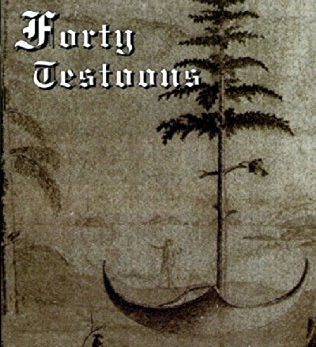
    Review: Forty Testoons

    Alan Fisk, Forty Testoons, (Chronicler Pub, 2007)

    https://www.goodreads.com/book/show/6802082-forty-testoons

    Spooky story of a conspiracy hatched in a Newfoundland winter

    1504 Dominican friar Father Ralph is paid forty testoons, sent to minister to the fishing crews in Newfoundland. He finds a rough, cold country, where settlers have to make do with what they have.

    Against his wishes, the last boat leaves him stranded on the beach with the ‘winter crew’. But what is the winter crew even doing there, when there is no fishing work to be done? The crew members each have their own foibles and their own demons, and in the deprivation and isolation, a kind of cabin fever develops. Father Ralph struggles to reach them spiritually.

    Why had the crew denied the very existence of the native Beothuks? What is everyone hiding? Incredulously, he discovers it has something to do with Harry Chard the Fishing Fleet Admiral, the Beothuks and the York/Tudor political strife back home in England. An amazing plot has been cooked up during the freezing Newfoundland winter.

    The Voice of Father Ralph really comes through. I get a strong sense of his character, and I get a feel for his religious feelings, too. The sense of wonder in the Beothuk’s behaviour is fantastic. I really get the sense that this is something completely alien to Ralph. I loved the ‘Inglis fissmain’ exchange with the Beothuk.

    This is a spooky novel; I kept expecting ghosts. The bleakness and cold of the environment really comes across, and I think the journal-like style gives it a tone of loneliness. The tone is very atmospheric, and we get a feel for minds driven mad by cold, isolation and constant silence.

    I think that the newness of the setting (most readers, me included, know very little about 15th century Newfoundland) means the highly reflective journal-entry style works. What I like most is the spooky tone.

    I received an ARC from the author.

  • Review: Assembly

    Review: Assembly

    Natasha Brown, Assembly, (Penguin, 2022)

    https://www.goodreads.com/review/edit/56646330

    A subtle, poetic insight into racism and class differences

    This beautiful novel is hard to get into at first. You can’t tell who the protagonist is or who the narrator is.

    A few chapters in, we understand that it’s about a woman, her relationship and her emotional journey. She, the narrator, is of Jamaican heritage, ‘socially ascending’. She has cancer. She is the effort her company makes towards ‘diversity’. He is from ‘old money’. He ‘loves the stories of monstrous men doing hideous things in glossy offices and Michelin restaurants’. His parents welcome her into the family’s grand manse; she is testament to their woke-ness, an ‘exotic, exposed other’.

    Minor characters are mentioned—Rach, Merrick, Lou (is he the boyfriend?)—whom we don’t know much about.

    The scenes give us her emotions, but not much story. This is actually quite powerful. We feel that she’s narrating the story as if watching it from afar, showing us how she feels about things without telling us what those things are. She admits that ‘to protect [her]self’ she ‘considers events as if they’re happening to someone else’. I feel as if the story is happening in slow motion, like a perplexing dream.

    The writing is beautiful, enigmatic, almost like poetry. There is a deep sadness to the tone. Most remarkable is the profound insight into the nuances of the emotions embedded into racism and class differences. This is a subtle, unique masterpiece.

  • Review: The Secret of Fire

    Review: The Secret of Fire

    Michael Lockhart, The Secret of Fire, (2026)

    https://www.goodreads.com/review/show/8585695785

    Caucasus black ops flops

    Following a hilarious Victory Parade fiasco, the President of the republic of Karachaevo-Cherkessia Victor Azarov hires Annie Jordan as a PR rep. She is secretly ‘dying inside’, mourning the death of her 4 year old son. MI6 Agent Martin Locke wants to promote this arrangement to undermine regional stability and ‘keep Russia feudal’.

    There is ethnic strife in the North Caucasus republic, between Azarov’s Karachai and the Cherkess, led by Alibek Ismail-Zade and possibly a secret extremist organisation. The contention is mostly over the Russian invasion of 1849-61 and the Cherkess’ accusations that the Karachai had sold them down the river.

    The ancient rivalry is played out on the modern stage of television and PR, which is quite funny. Annie knows her stuff about photo ops, but the entrenched history of the region is beyond her ken. British and Russian intervention have, of course, disastrous consequences.

    The Plot is serious, but there are some humorous elements, as apparatchiks fiercely defend their little patches and rehearse their ancient prejudices. Locke and his Russian counterpart Tarasov are spooks of the old order from the ‘glory days’ of the Cold War, who look amusingly old-fashioned.

    The author has a great feel and understanding of the time (1999) and place, but I wondered about the structure. It’s largely communiqués to and from Locke and others and excerpts from Annie’s journal, leaving me confused as to whose story this is.

    This approach does, however, lend a certain distance between the audience and the characters, making all of them, in fact, into possibly unreliable narrators. I found that fascinating. We don’t know whether Azarov is a Hero Of Our Time  or a villain. Is Locke a drunken bumbler, or is he surreptitiously accomplishing his black ops mission?

    This is a light-hearted peek inside a Russian republic without the darkness of Russian literature.

  • Review: A High-Performing Mind

    Review: A High-Performing Mind

    Andrew D Thompson, A High-Performing Mind, (ISBN Canada, 2026)

    https://www.goodreads.com/book/show/218075114-a-high-performing-mind

    A 12-step programme for training your mind for success

    The author outlines the ’12 Attributes of High Performers’, a self-improvement programme he developed through coaching athletes and by working through his own devastating health crisis. These mental tools and life-changing strategies he has found can apply to any walk of life to help achieve your goals.

    He begins with the story of his own personal crisis, suddenly developing a serious phosphate deficiency, which had debilitating effects and which health professionals, transfusions, vitamins, new diet, etc. were little help in addressing.

    He recommends working through the chapters one by one to give you the chance to practice the new mind skills. Each chapter begins with a pertinent personal anecdote, making it enjoyable reading, and ends with a checklist questionnaire to get you started on your way to new goal-oriented mental habits and help you to ‘make it stick’.

    I decided to set myself a goal while reading this. My ambition is to write and publish my books, but I’m already fairly motivated on that front. Much harder for me is the daily life stuff – paying bills, doing my taxes, clearing out the shed. I set myself the goal of ‘Finishing my To Do List’ to accomplish by the time I finish reading the book. I’m going to get started as soon as I post this review (Stop procrastinating).

    This book taught me a lot of what I already know, yet still have trouble implementing into my life practices, mainly regarding training my mind to think positively. I made a chart listing the 12 Attributes and put it on my bulletin board.

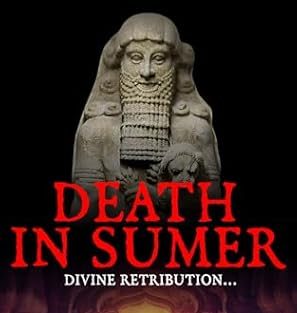
  • Review: Death in Sumer

    Review: Death in Sumer

    James Ferguson, Death in Sumer, (Holand Press, 2026)

    https://www.goodreads.com/review/show/8613979345

    The Wildman is civilised; the king seeks immortality

    Wildman Enkidu is seduced by harimtu (sacred prostitute) Shamhat. Like Adam, after coupling with the woman, he is changed—shaves, wears linen clothing, moves to the city, drinks beer. Is Enkidu ‘fallen’ for having slept with Shamhat, or ‘elevated’? Is losing part of his animal nature a defeat? He battles with Bilgames (Gilgamesh) king of Uruk, whom Enkidu curiously resembles, and the two become friends.

    They embark on an expedition to the Cedar Forest to cut timber for the doors of Enlil’s temple and slay the monster Huwawa. In revenge for Bilgames’ refusing her advances, the goddess Ishtar sends the Bull of Heaven against him, which he defeats with Enkidu’s help. Cursed, Enkidu is struck with a fever and dies.

    Grief-stricken Bilgames seeks immortality and goes in search of Uta-napishti, a survivor of the Flood. Meanwhile Enkidu, resurrected, defeats Kish, marries the princess and becomes king in his absence.

    I’m a bit over-familiar with the story, and this is not a capturing of the ancient genius loci. It’s a ‘counter-narrative’, inventing new plot points, some of which I found unnecessary, yet with more character drama.

    Contains some gems of ancient Sumerian life and ritual—e.g. how heavy barges were towed upstream, drinking beer through straws, pouring libations to the gods of circles of flour, maidens chanting in emersal (a dialect mimicking the voices of goddesses). I liked some of the directly-translated-sounding phrases, like ‘runs with the gazelles’, ‘the birthing one’, ‘sticks-which-hurt’. Loved the double-speaking of the oracle owls of Inanna.

    It’s 2700 BCE, when cities were not so separate from the wildness of nature around them. Enkidu is perhaps the personification of the process. It’s an undying story and told well, a mythical tale dating from the dawn of civilisation, behind which we sense some tantalising hints of real history.

    This review first appeared in Historical Novels Review.

  • Review: The Loch of the Bees

    Review: The Loch of the Bees

    Donald S Murray, The Loch of the Bees, (Saraband/Contraband, 2026)

    https://www.goodreads.com/review/show/8613951916

    The story of a Hebridean loch, with bees

    Guss struggles to his feet beside Loch nan Seillean (Lake of the Bees) after a battle, bees, messengers to the afterlife, buzzing around the bodies on top of him. He and his clansmen had come to this part of the island to raid.

    Some time later, Brother Colm builds his shieling (hut) there, a haven away from St Catan’s Chapel. Supplicants come to seek his healing; Brother Dicuil has told them where he is. Before the Norsemen came.

    We feel the raw beauty of the Hebridean isles, winds whistling over tree-less hills, cushioned with heathers and lichens, the Northern Lights in the night skies over the mountains, a heron waiting motionless for a trout. Gods’ country, both the old gods and the new. Here be the demons of Hebridean folklore, the murderous Mac an t-Srònaich, the lake monster Searrach Uisge.

    From time to time, the dialogue sounds like it’s been translated from another language, where sometimes I fancy I hear them speaking in Gaelic.

    The novel has an innovative structure. There’s no plot per se; instead, it’s a series of vignettes with the loch as setting. Interspersed are invented news articles, entries from logbooks, songs in Gaelic. It tells a long story of life around the loch (modelled on Loch Dibadale), from the eighth to the twenty-first century; each age with its own protagonist.

    The eighth century Highlander, the anchorite who can’t escape the crowds, pilgrims seeking miracles from St Catan, the fishermen pressganged onto a British warship to fight Napolean, the schoolboy who refuses to speak English, the people driven from the land by Lord Langavat. Each leave clues in the bog to the mysteries in their lives, mysteries the bees continue to whisper.

    The author was inspired by the archaeological treasures he’s found in various island lochs.

    This review first appeared in Historical Novels Review.