Category: Book reviews – fiction

  • Review: Bullets in the Water

    Review: Bullets in the Water

    Conor McAnally, Bullets in the Water, (Stoney Creek Publishing Group, 2025)

    https://www.goodreads.com/review/show/8960570209

    What’s going on in Taborville?

    Disgraced journalist Mike Carson comes back to Taborville to sell the old house he inherited from his uncle. He interrupts a fight to defend a woman and ends up being arrested himself, only to find later that his opponent was the son of a powerful local, Duke McMillan, owner of the bar. Duke and his sons Zane and Karter are involved in some shady drugs business.

    Mike takes an unpaid position on the local newspaper and is sent to cover a boring council meeting. But it turns out not to be boring at all, and McMillan is angered by Mike’s write-up. Mike is also investigating a local murder, and all the dirty doings of the locals seem to be connected, dredging up crimes committed in the past.

    This is a good, well written detective story, and the characters are distinct and interesting. The way the baddies hide their criminal activities is genius, and the way Karter gets his come-uppance is fabulous.

    It gets started rather slowly, but gets increasingly exciting as Mike uncovers more clues as to what’s going on in Taborville. As is usual in the genre, he has to confront some issues within himself (drinking, past professional mistakes) and within his own family (his brother’s fatal car accident) before he can solve the crime.

  • Review: The Captain of Venice

    Review: The Captain of Venice

    Christian Cameron, The Captain of Venice, (Orion Books, 2026)

    https://www.goodreads.com/review/show/8960480321

    Great 14th century politics and warfare

    William Gold is a mercenary in the service of John Hawkwood during the 1377-1381 ‘War of the Eight Saints’ and the War of Chioggia between Venice and Genoa. He is a new sort of routier, ‘banker, diplomat and warrior’. This ‘good, fat war’ was especially exciting, as at one point Venice looked doomed, but then finally triumphed.

    The story is as narrated to Geoffrey Chaucer.

    Defying the pope and cardinals, William’s troops raid Tuscany, falling mercilessly upon marauding Bretons, mercenaries of the cardinals who had mercilessly harried the peasants. Disgusted by the brutality of their paymaster Cardinal Robert of Geneva (later antipope Clement VII) during the Massacre of Cesena, they switch sides and fight for Venice, now. William’s sword has won him riches, but throughout the politicking and bloodshed, he searches for a higher purpose.

    Italian politics during the period featured many players: Venice, Genoa, Florence, Milan, Bologna, the papacy—not to mention Turks, Bretons, Hungarians, English, French, Albanians–and as a mercenary, William treats with all the parties. We meet pretty much every mover and shaker of the late 1300s in Italy. It’s Book 7 in the series, so, they all have developed personalities and storylines. A Cast of Characters page would have helped.

    Military fiction at its finest, but it’s not all ‘deeds of arms and flashing blades’. It’s how much it cost and whom you had to deal with to acquire horses, fodder, wine and cooks and prostitutes for the men; dealing diplomatically with adversaries and allies; the importance of scouting and securing food supplies; conversations taking place inside the campaign tent; shifting balance of forces. Sumptuously full of historical detail, all the ins and outs of 14th century politics and warfare.

    It’s no surprise that the author is a military expert, re-enactor and duellist in real life.

    This review first appeared in Historical Novels Review.

  • Review: Mary of Magdala

    Review: Mary of Magdala

    Joanna Courtney, Mary of Magdala, (Piatkus, 2025)

    https://www.goodreads.com/review/show/8960448393

    Mary who walked with Jesus

    Mary goes back to visit her home in Magdala, but her family still rejects her. Phoebe goes on the road to proselytise, as her parents Prisca and Aquila had done. Lydia’s abusive husband won’t let her go hear the woman preacher who teaches that we are all equal in God’s eyes.

    Emperor Claudius exiles all Jews from Rome and they are Jews, yet the synagogues consider them non-Jews. Across the Empire, the Christians flee from persecution and drive to spread ‘the New Way’.

    Hebrew and Hellenist Christians explore the tenets of the new faith and learn the meaning of ‘brothers and sisters in Christ’. Peter says Paul ‘makes up things as he goes along’, and the issue of table fellowship (Jews and Gentile converts eating together) divides the community in Corinth. Lydia runs a profitable purple dye business based in Philippi, but she struggles with doubts of her worth. Mary, in Ephesus, writes her ‘testament’ of Jesus on papyrus with help from Princess Salome. And there’s trouble at the Temple of Artemis. They are all on their way to meet Mary, who ‘walked with Jesus’.

    Rome burns, and the Christians are blamed, but the ‘New Way’ struggles on and grows. Mary is writing again.

    A vibrant, gorgeous novel. I was only disappointed that the revolution brewing in Judaea wasn’t much discussed, as I think that was a bigger issue for them than we were told.

    Juicy details and narratives are added to what we know from the New Testament of the biographies of these early Christian women to flesh out the ancient Roman world and translate it to a modern reader. Even the dialogue is believably authentic. Being so familiar with the history doesn’t detract from our enjoyment, as the novel makes it such a good story and makes the characters so real.

    This review first appeared in Historical Novels Review.

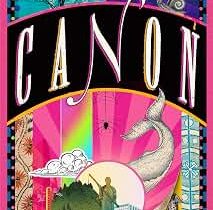
  • Review: Canon

    Review: Canon

    Paige Lewis, Canon, (‎Corsair, 2026)

    https://www.goodreads.com/review/show/8960340071

    6 stars, non-canonical, non-binary imagination

    Inspired by the Biblical Book of Deborah, this is a non-canonical and non-patriarchal story of two prophets. They are non-binary, so they are ‘they/them’.

    Yara is chosen by God – and God is personified, here – to defeat Dominic, leader of the Bad Guys. If you need to pick a time, ‘mostly, it’s the ‘90s’.

    Adrena has a special power; they can disappear a thing or a person by singing about it. They can communicate directly with God. Nevertheless, He chooses Yara for the Dominic mission. They want to prove God wrong and convince Harpo, leader of the Good Guys who are at war with Dominic, that they are God’s chosen.

    This is the first book I’ve read to use the ‘they/them’ convention. And that’s not the only thing that’s innovative.

    Yara’s artist mother mixed Sherwin-Williams paints to get the exact colour of their skin – Tumbleweed, Gravel and Narcissus. Yara is a germaphobe, embroiders facsimiles of famous paintings and knows a lot about things like oysters – they call it ‘facting’. They embark on an Odyssean journey, riding on a sunburnt whale named HOWBIG!.

    Adrena loves spiders and longs to be as holy as was their mother, who ‘assumpted’ into heaven.

    God wears a mosquito-net hat and judges men’s body-building contests, insisting on handing out the trophies Himself.

    HOWBIG! speaks in allcaps and exclamation points.

    It’s magical realism, easy on the realism. Each chapter is a quirky vignette, not a narration per se. It’s not a true-to-life plot, yet the puzzle-piece structure eventually gets somewhere. As the Big Battle looms, just when a narrative might be emerging, someone has a wacky dream, a soldier transforms into an eagle, or two people inexplicably fall in love.

    This is the most imaginative book I’ve read in years. Beautifully literary and so witty, it’s sometimes laugh-out-loud funny.

    This review first appeared in Historical Novels Review.

  • Review: The Silver Pigs

    Review: The Silver Pigs

    Lindsey Davis, The Silver Pigs, (‎Cornerstone Digital, 2011)

    https://www.goodreads.com/review/show/4539899637

    Fabulous funny ancient Rome whodunnit

    I discovered this author after reading Murder in Purple and Gold. What have I been missing?

    This ancient Rome whodunnit series features detective Marcus Didius Falco, the future father of Fulvia Albia, the detective in the book I read. It shares with the other book a deliciously intimate feel for life in ancient Rome and vivid, interesting characters.

    It also features an adorable sense of humour. Our protagonist, for example, when opining upon the attractions of naked women, quips, ‘in my line of work, they are usually dead’. He says, ‘Vespasian’s banquets were extremely old-fashioned; the waitresses kept their clothes on and he never poisoned the food.’ Erudite and funny puns: ‘swarming like honeybees in Hybla’.

    On the steps of the Temple of Saturn, Didius Falco rescues a girl fleeing from thugs. Sosia Camillina had been kidnapped from a senator’s house. Her uncle has left her a bank box, to which only she has the code. Inside, a silver pig, a heavy lead ingot, on which the government claims a monopoly, from – Britain. Someone’s been stealing the emperor’s silver.

    Solving the case means tracing the chain of evidence back to source, taking him to Britain, the cold, wet place he remembers, where ‘you could travel for days… before you found an altar to any god whose name you recognised’.

    Davis knows how to write to create impact, so the ‘reveals’ of major clues in the case hit home. Falco’s account of his time working undercover in the lead mine is harrowing. His relationship with his client, Sosia’s cousin Helena Justina, is intricate.

  • Review: Mindfulness in a Messed up World

    Review: Mindfulness in a Messed up World

    Ava Walters, Mindfulness in a Messed up World, (‎LifeZen Publications, 2026)

    https://www.goodreads.com/review/show/8715657103

    Reduce anxiety? Relieve stress? Yes, please!

    It is hard in this fast-moving world to calm down and relax. This workbook is not about preaching the theory, it’s about finding a way to make it work. It’s about doing rather than thinking.

    Before you even begin reading, it starts with the simple deep breathing exercise. In through the nose (count 4) hold (count 2) out through the mouth (count 6). It’s surprising how relaxing this simple exercise is. It also reminds me to do my neck and shoulder stretches before I start banging away at the keyboard.

    Mindfulness is not about being zoned out all the time; it’s about interrupting the Trigger-Reaction cycle to choose more effective actions. It teaches spiritual ease as well as mental relaxation. Chapter 12 is about ‘Shifting the Lens to Gratitude’.

    Step 1 is to ‘notice where the noise is coming from’. What are my ‘hidden stressors’? Are these ‘facts or fears’? Where do I feel ‘trapped? What feels like it’s just too much’? Do I feel ‘burned out’? If so, what’s one small adjustment I could make to protect my energy? What’s one app I could delete to reduce ‘digital overload’?

    Practice being mindful, noticing what my mind is doing. What distracts me? Notice how my body is reacting. Where is the tension?

    Chapter 4 lists a number of common stress scenarios. What is building the tension? How could I act to reduce the pressure?

    Mindfulness does not necessarily involve meditation, but meditation helps. And it’s not hard. Just breathe for a few minutes. When my mind wanders, notice and dismiss the interruption. Notice ‘a car is honking’, don’t start thinking about how darned noisy the neighbours are. Return to breathing. If there is some thought that keeps recurring, what is that thought protecting me from? What is the fear? Ask ‘and then what?’

    It can help to create a mantra. Here are a few of mine I’ve gleaned from this book:

    Bullet points to add to my bulletin board:

    • I don’t need to fix everything at one – take a moment.
    • Pay attention. Don’t react. Pause for 3 seconds before I respond.
    • If I can no longer change it, leave it in the past.
    • Notice where the ‘noise’ is coming from, where the tension is.
    • Right this moment, just now, is anything wrong? Is it urgent?
    • There doesn’t have to be something happening right now. I can relax for 2 minutes.
    • Movement is medicine.
    • Shift my focus to what I am grateful for, celebrate small wins, and pay it forward.
    • What I am doing right now may already be enough.

    My biggest take-away from this is the exercises involving noticing stressors and emotional triggers – just noticing, not spiralling, letting the emotions just float through me. The idea of ‘noticing’ a thought rather than letting it take over.

    Stopping the ‘judgement’ is key for me. Noticing where the tension is located on my body when I’m thinking tense thoughts will help me to stop beating myself up for thinking them. I like to think of the universe as being nonjudgmental. If God or the universe isn’t judging me for (‘wasting time’, ‘not getting enough done’, ‘being a bad parent’, etc), why am I giving myself such a hard time? I’ve also renewed my vow to stop ‘doomscrolling’ (I’m ridiculously addicted to watching YouTube videos of ‘Karens’ getting arrested. Then, not only do I beat myself up for ‘wasting time’, I endlessly wonder whether I’m a ‘Karen’.).

    Though the book is simple and hands-on, it is nevertheless well researched, including up to date findings on stress and mindfulness.

    I’m no stranger to therapy, so as is usual, a lot of this is stuff I already know – cognitively, at least. But it never hurts to go over it again. Looking at those bullet points above my desk will certainly help me to CALM DOWN.
  • Review: Cracking the Bible Code

    Review: Cracking the Bible Code

    Michael C Newman, Cracking the Bible Code, (Interdisciplinary Biblical Research Institute, 2012)

    https://www.goodreads.com/review/show/8715394615

    One wacky mathematical formula

    This is all about numerology, and in that way lies madness. Nevertheless, numerology systems called gematria were extensively used in the composition of both the Old Testament and the New, so any comprehensive exegesis must involve taking a look at them.

    Pythagoras in the 6th C BCE used isopsephy, and believed everything in the universe has a numerical value. Rabbi Eliezer ben Rabbi Yosei HaGelili codified Jewish gematria systems, and the 2nd C Kabbalah was greatly based on gematria. The writers of the Books of Matthew and Revelation used gematria extensively.

    Trouble is, being numbers, which you could rearrange in any configuration you desire, you could make them mean anything you wanted them to mean. Is 72 60+12 or 7×10? Are we looking at numerical values of words or letters? In Hebrew or Greek? Do we consider the spaces between words or the Hebrew vowel points? Bear in mind that vowel points are flexible. Bk in English could be read either ‘book, back’ or ‘bike’. The vowels ‘oo’, ‘a’ and ‘I’ would have differing numerical values. Or do only certain ‘code words’ (as determined by whom?) have import?

    To conduct this research without going crazy, I suggest we look at a) what the author probably intended b) what readers at the time probably believed.

    As an atheist I reject the idea that ‘God has given us a secret message’ as well as any promises of predicting future events. Having said that, it is not crazy, and is accepted by many serous scholars, that Biblical writings had several layers of meaning. We are familiar with Jesus implying that his parables, on top of their literal meanings, had further esoteric meanings to be understood more clearly by those who ‘had eyes to see and ears to hear’.

    This author has used a computer to come up with one wacky mathematical formula for finding ‘secret meanings’ in, say, the Gettysburg Address or the Bible. Of course, you could just as easily use a different mathematical formula. To preserve my sanity, I skipped over a lot.

    I think the best way of using gematria for exegesis in a scholarly manner is to consult ancient writers and look at how they interpreted the numbers. We can expect more meaning from these ancient interpretations, as those writers were trying to convey a specific religious message. Why would I care if Abraham Lincoln apparently secretly predicted the assassination of JFK (someone he didn’t even know would in the future exist)?

    I was immensely disappointed to discover that this book does not include any discussion whatsoever of hidden meaning in the Bible. It only talks about the Gettysburg Address. Checking out other offerings on Amazon using the search ‘Bible code’, the one at the top is The Bible Code by Michael Drosnin, and there are numerous others. They all cost around £12, so I’ve decided to save my eyes and ears for Irenaeus or Rabbi Eliezer.

  • Review: Dying Every Day

    Review: Dying Every Day

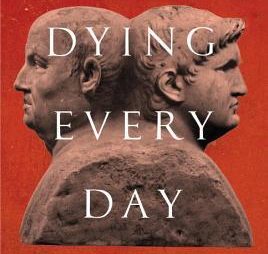
    James Romm, Dying Every Day, Seneca at the Court of Nero, (2014)

    https://www.goodreads.com/review/show/8712932284

    Courage in the face of lunacy

    Ancient Rome’s great philosopher Seneca returns from political exile to tutor the boy Nero, hopefully as a rector (steersman) shaping Nero’s rule. Nero becomes increasingly vain, paranoid and tyrannical, and Seneca finds it more difficult to wield his moral influence. Finally, his erstwhile pupil forces him to commit suicide.

    Looking at evidence from his day, namely the first century drama Octavia, Seneca’s own writings, and those of historians Cassius Dio and Tacitus, we can’t work out whether Seneca was a Stoic philosopher or a Machiavellian conspirator. Tacitus found him a riddle, living a righteous, upright life, yet amassing great personal wealth.

    49 CE, and the emperor Claudius is failing. It seems the empire will either fall to 12-year-old Domitius, renamed Nero, or 9-year old Britannicus. Nero’s power-hungry mother Agrippina, now married to Claudius, is determined to use her wiles to shove him into the position. Herself recalled from exile under Caligula, she recalls Seneca from exile in Corsica to tutor the boy.

    One can’t help but sympathise with the man. He has to walk the tightrope between his ideals and his utter subservience to an absolute lunatic. He is forced into a direct role in the matricide of Agrippina and even dares (cautiously) to allude to it in his plays.

    It’s easy for us, in hindsight, to point out his inconsistencies and his hypocrisies. I’d much rather see someone who, having already lived through the insanity of Caligula and the despotism of Claudius, now has to live through it all over again and, despite his intelligence and erudition, finds himself powerless to stop it. Considering that the swords of the Proletarian Guard could have fallen upon him at any moment, such courageous writings as The Pumpkinification of the Divine Claudius are positively heroic.

    No, he was not a proto-Christian. His brother Gallio washed his hands at St Paul’s trial in Greece like Pontius Pilate.

    Did he collude with the Pisonian Conspiracy against Nero? We could hardly blame him if he did.

    As we watch another powerful leader wreak havoc on the world while surrounding himself with sycophants, we ever more admire the courage of Seneca. Nero left the Roman Empire in a state of chaos. Is the current state of the Middle East sowing the seeds of the end for America?

  • Review: Stop Overthinking for High Achievers

    Review: Stop Overthinking for High Achievers

    Manjul Tewari, Stop Overthinking for High Achievers, (2026)

    https://www.goodreads.com/review/show/8703832527

    How to stop ‘looping’ and start acting

    How do you stop your mind from the ‘noise’ that keeps you stuck in inactivity, especially if you are used to asking a lot of yourself? This book is not a recipe about ‘thinking less’ but rather ‘thinking more effectively’. Each chapter finishes with a ‘workshop’ section to aid you in training the new skills.

    Some bullet points to stick on my bulletin board:

    • Don’t wait for clarity before acting. You become ready by acting.
    • Sometimes one decision is all it takes to change everything.
    • Making a decision is not about choosing the right option. It’s about trusting yourself enough to choose.
    • Momentum doesn’t come from confidence, it creates it.
    • Perfection is not excellence; it’s avoiding the discomfort of imperfection, and it comes at a cost.
    • You don’t need to do more; you need to do it daily.
    • Focus on the next step, not the entire outcome.

    To make the list of worthy aphorisms a more enjoyable experience, we follow the journey of ‘Ethan’, a senior strategy manager. His presentation is just ‘missing something’, and he can’t figure out what. He is stuck in indecision, an endless loop of ‘what if’s running through his head. It’s not his business ability that is eroding, it’s his confidence. ‘He has lost the ability to trust the moment he needed to choose.’ 23 minutes before the big meeting, he is still looping.

    Then, Mark is chosen over him as project leader. The team still listen to Ethan’s input, but they no longer wait for his decision. At home, he spends hours replaying conversations, reviewing emails.

    A wise old man on a park bench points out, ‘Endlessly repeating the same old what ifs is not thinking, it’s repetition.’ Tewari calls this ‘the Action-Clarity Loop’. He recommends the ‘Two-Minute Action Rule’. Pick the smallest possible action. Start within two minutes. Don’t think beyond that.

    There’s an element of Cognitive Behaviour Therapy here. When you find yourself in a loop of repetitive thoughts, give it a name (eg ‘this is just a self-doubt thought’) and by doing so, step out of it and move on to action.

    Books like this are inevitably a list of worthy aphorisms, and as is usual, I am quite familiar in theory with a lot of them, without being able to claim that I have implemented them in practice.

    The whole book is pretty much devoted to one central concept, yet it’s worth reading a whole book about it in order to drum it in, as the wisdom is counter-intuitive. We think we need clarity in order to act. In fact, we become clear in the process of acting.

    There are not a lot of unnecessary words here. In fact, it’s 17800 words in 251 pages, a lot of 4-5 word sentences, one-sentence paragraphs. No matter how busy you are, it won’t take you long to read.

    At the back there are 15 exercises designed to help you implement this ‘reset’.

  • Review: Superstitions, Folklore, Myths & Legends

    Review: Superstitions, Folklore, Myths & Legends

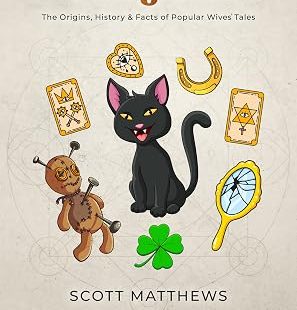
    Scott Matthews, Superstitions, Folklore, Myths & Legends, (2022)

    https://www.goodreads.com/review/show/8684750657

    Charming origin explanations for popular superstitions

    What is the difference between a superstition and a fact? What is the difference between a myth and a memory? Matthews examines the origins of superstitions and old wives’ tales.

    Do you knock on wood, look for four-leaf clovers, cross your fingers when making a wish, cover your mouth when you yawn, spit when you see something bad, say ‘bless you’ when someone sneezes, jump when the wind starts a rocking chair rocking, avoid black cats or killing spiders or walking under ladders or letting milk boil over? You are under the spell of a well-worn lie, but you won’t be alone. Despite our modern education, don’t we all still enjoy consulting horoscopes?

    Matthews also includes modern variations on ancient themes. For example, superstitious beliefs around clocks chiming have morphed in modern horror films into alarms ringing in the dead of night. Fear of the number three is so persistent it has a name – triaphilia. Fear of Friday the 13th is called triskaidekaphobia.

    Some of these will surprise you. The belief that horseshoes bring good luck comes from a story about St Dunstan nailing the Devil to a wall, while shoeing his hooved feet. The prohibition against turning a loaf of bread upside down may have evolved in mediaeval France when upside down bread was left out for executioners.

    Pirates (and other sailors) really did wear eye-patches so one eye could always be adjusted to the darkness below deck. It has been proven to be false that spicy food causes ulcers. ‘Feed a cold, starve a fever’ is bad advice; starving is bad for your illness whether it’s bacterial or viral. Bats do not want to nest in women’s hair. Lightning does, sometimes, strike in the same place.

    Some widely held lore:

    • When a stopped clock chimes, there will be a death in the house.
    • Never kill a swallow, open an umbrella indoors, bring an old broom into a new house, spill the salt or break a mirror.
    • If a portrait falls off the wall, that person will die.
    • Elder and hawthorn trees and branches mean death.
    • A full moon beckons werewolves and can induce insanity.
    • The gift of a purse should always include money.
    • Yule logs and acorns prevent lightning.
    • Babies should not see themselves in a mirror before the christening.
    • Spitting, a rabbit’s foot, salt on a doorstep ward off evil.
    • A knife under the bed of a woman giving birth will ease her pain.

    I’m a passionate student of mythology, and in my historical novels always try to work in the ‘lore’ of a culture as well as the history. I enjoyed reading the charming origin explanations of these popular superstitions.

    The explanations are not heavily historical. They are more charming factoids than serious sociology. Each myth is illustrated by a cute cartoon.