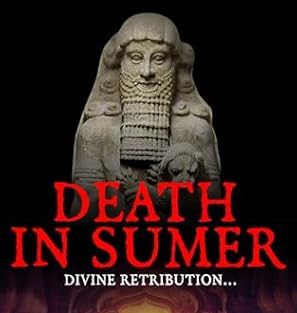
James Ferguson, Death in Sumer, (Holand Press, 2026)
https://www.goodreads.com/review/show/8613979345
The Wildman is civilised; the king seeks immortality
Wildman Enkidu is seduced by harimtu (sacred prostitute) Shamhat. Like Adam, after coupling with the woman, he is changed—shaves, wears linen clothing, moves to the city, drinks beer. Is Enkidu ‘fallen’ for having slept with Shamhat, or ‘elevated’? Is losing part of his animal nature a defeat? He battles with Bilgames (Gilgamesh) king of Uruk, whom Enkidu curiously resembles, and the two become friends.
They embark on an expedition to the Cedar Forest to cut timber for the doors of Enlil’s temple and slay the monster Huwawa. In revenge for Bilgames’ refusing her advances, the goddess Ishtar sends the Bull of Heaven against him, which he defeats with Enkidu’s help. Cursed, Enkidu is struck with a fever and dies.
Grief-stricken Bilgames seeks immortality and goes in search of Uta-napishti, a survivor of the Flood. Meanwhile Enkidu, resurrected, defeats Kish, marries the princess and becomes king in his absence.
I’m a bit over-familiar with the story, and this is not a capturing of the ancient genius loci. It’s a ‘counter-narrative’, inventing new plot points, some of which I found unnecessary, yet with more character drama.
Contains some gems of ancient Sumerian life and ritual—e.g. how heavy barges were towed upstream, drinking beer through straws, pouring libations to the gods of circles of flour, maidens chanting in emersal (a dialect mimicking the voices of goddesses). I liked some of the directly-translated-sounding phrases, like ‘runs with the gazelles’, ‘the birthing one’, ‘sticks-which-hurt’. Loved the double-speaking of the oracle owls of Inanna.
It’s 2700 BCE, when cities were not so separate from the wildness of nature around them. Enkidu is perhaps the personification of the process. It’s an undying story and told well, a mythical tale dating from the dawn of civilisation, behind which we sense some tantalising hints of real history.
This review first appeared in Historical Novels Review.


Leave a Reply