Tag: music

  • Review: Tyrant of Rome

    Review: Tyrant of Rome

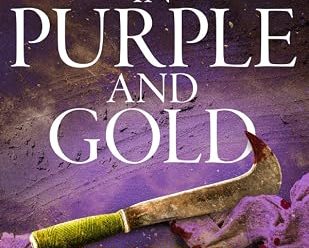
    Simon Scarrow, Tyrant of Rome, (Headline, 2026)

    https://www.goodreads.com/review/show/8500027272

    The first century emperor comes to life

    62 CE Centurion Macro and his wife Petronella are caught up in some trouble at the Forum. 400 slaves are being executed for the crime of one, and there’s a mob outside. Macro and Petronella are raising the love child he sired on Queen Boudica.

    Cato has secretly married Nero’s former mistress Claudia Acte. He reports to the palace on his return from Britannia, fresh from defeating Boudica’s rebellion. Emperor Nero is impressed and appoints him Prefect of the Urban Cohorts, though Cato would really rather retire. He makes an early enemy of Albanius, a crony of Nero’s new sycophant, Tigellinus, and appoints Macro in his place. The two friends are on duty together again, and they proceed to whip the cohorts into shape.

    Vespasian attempts to recruit Cato into Piso’s conspiracy against Nero. Seneca has dirt on him; he knows about Claudia.

    A grain fleet from Sicilia wrecks in a storm off Ostia, and there’s a fire in Rome.

    The characters arrive with rich personalities and backstories established in previous Scarrow books—an impressive 24 novels spanning Roman history 42-62 CE. All the characters are multi-faceted, and the fictional and historical characters intersect interestingly.

    The plot is exciting. The wonderful, colourful dialogue is in modern vernacular, so, these people from 2000 years ago seem familiar. And it provides some clever quips—eg ‘Pardon my Gallic’; it’s Poppaea ‘who wears the toga’ in the family.

    Scarrow is considered military fiction, and the soldiers’ lives are intimately portrayed. However, the plot is character-driven, and even a non-fan of the genre is enthralled. Decadent emperors, marching cohorts, grain ships, the Forum, the Circus, togas, brothels, gladiators, senators’ intrigues, persecutions, the plebian mob—everything that is ancient Rome comes to life.

    For the next book—Cato and Macro are posted to the eastern frontier.

    This review first appeared in Historical Novels Review.

  • Review: The Fire in Their Eyes

    Review: The Fire in Their Eyes

    Stephanie Bretherton, The Fire in their Eyes, (Breakthrough Books, 2025)

    https://www.goodreads.com/book/show/234882889-the-fire-in-their-eyes#?ref=nav_brws

    Archaeological discovery leads to medical breakthrough

    The Old Woman wraps her bear skin over her to go fetch water. Death has ‘drunk from her heart too many times’, yet she doesn’t fear. She understands the fellow creatures around her, anticipates them. She has given to her progeny a ‘seed-gift’, the ‘fire eyes’ of her mother, a stranger to the tribe.

    Dr Eloise Kruft takes a late night call from Darius, from Mount Kenya. He has unearthed, near the bones of ‘Sarah’, a carved claw. A cave in Yemen, disturbed by an earthquake, reveals something else.

    Max goes over his documentary on the bones of ‘Sarah’ and the abduction of Dr Kruft. Jess is the only nurse trusted by Calumn, the cult member abductor, now securely hospitalised. Rev John Evesham visits him to ‘ease his spiritual burdens’ and argues with atheist Max.

    An ice core drilled from the Norwegian Arctic contains a 74,000-year-old virus that devastates the research team and risks spreading to the local Sami or the reindeer. It’s being compared with the DNA of ‘Sarah’.

    The plot alternates between the folktale-like story of the Old Woman in prehistoric Africa and the high-tech story of the worldwide danger posed by the unearthed genome. The two worlds begin to interconnect in more ways than just old bones.

    The modern sections feature details about archaeology, DNA, virology and medical practices. A bit more would have given us a techno-thriller, but it’s quite exciting, nonetheless, and more psychological.

    The excitement is recounted largely through the dialogue and emails, making every development more realistic, more an in-the-moment experience. We see how each person feels about what’s happening. I liked the differentness of the characters. Even the prehistoric characters have distinct personalities. I loved how the language in the prehistoric sections seemed appropriate to the timeframe.

    Book 2 of the Children of Sarah.

    This review first appeared in Historical Novels Review.

  • Review: The Passage East

    Review: The Passage East

    Anil Nijhawan, The Passage East, (Blue Horizon, 2026)

    https://www.goodreads.com/book/show/246178868-the-passage-east-1934

    The Passage East, Anil Nijhawan

    A saga of four friends, from Calcutta to London

    Damon talks a boy out of a petulant, dangerous sit-down in the middle of the street and thus makes a new friend, Robert.

    Now both of university age, Damon takes Robert to India to stay in the house of Damon’s rich uncle Fred, who has left the house in the care of servants.

    In Calcutta, the boys meet Flora, a girl from an orphanage who bizarrely moves in with them. Flora shows them ‘how the other half lives’, and they witness the lazy extravagance of the British as contrasted against the poverty of the Indians.

    This is set against a background of the Ghandi movement, so the boys also see India from the point of view of the people fighting back. Did the ‘British, get out of India’ slogans apply to them?

    A crime is committed, and they are unsure how far their involvement reaches. They take in another stray, a French journalist who tells them some background related to the crime, and the boys investigate the case.

    Meanwhile, there is more to Flora than meets the eye; Damon and Robert are fully involved in her story now. And there is another crime.

    Years later, back in London, they have to face the ramifications for what they did on one day at Uncle Fred’s cottage in Calcutta. War in Europe changes them and their relationships to each other.

    The characters’ behaviour is sometimes hard to understand, and the dialogue is a bit unnatural in places, yet a striking contrast between the two boys’ personalities emerges.

    The English boys’ wide-eyed discovery of India is charming. They have to navigate very grown up problems, and they have to do it in a foreign country where they don’t know how things operate or what people or forces are against them. As the story continues into their adulthood, it becomes a saga, their adult relationships coloured by what happened in their youth.

  • Review: SUS: Short Unpredictable Stories

    Review: SUS: Short Unpredictable Stories

    Glen Nesbitt, SUS: Short Unpredictable Stories, (Kindle, 2024)

    https://www.goodreads.com/book/show/216352172-sus

    This work is comprised of three novellas.

    In ‘Joe the Alien’, a gang of youngsters encounter a purple spaceship and meet Joe the Alien, who is as cute as ET. They promptly attempt to deploy every myth they’ve heard about close encounters. Should they splash it with water? Ask it if it comes in peace? Shoot it with a silver bullet? You won’t get the cultural references if you don’t know Taylor Swift songs.

    Joe’s brain is in his tongue and eats with his bottom, cue lots of fart jokes. Bellamy defends him. ‘Sure, Joe is different, but so am I.’

    In ‘Gwen Stefani’ (again, I don’t get the cultural reference) the narrator analyses point by point the key principles of friendship in pre-school and the psychology involved in strategies to deal with bullies. The difference between equality and equity. The efficacy of I-statements.

    In ‘Templeton’, the farmyard animals from Charlotte’s Web reprise their relationships, as they make silly puns and plot to keep Wilbur the pig from being brought home as bacon. Charlotte the grey spider makes a sacrifice for her friend, and Wilbur wins a prize at the fair.

    I thought they were charming, but as an adult I found the jokes a bit childish. It would be great for an adolescent readership. The strong point is the child-like Voice; each story takes you into a child’s eye view.

  • Review: Truth: a Conspiratorium novel

    Review: Truth: a Conspiratorium novel

    Linda A Sanchez, Truth: a Conspiratorium novel, (Legacy & Light Publishing, 2025)

    https://www.goodreads.com/book/show/238981995-truth

    AI gone mad, a computer-driven conspiracy of deepfakery

    Caleb waits at a diner for a contact who had ‘promised him everything: proof, files, locations’. No one arrived. Only a phone message, ‘look under the red newspaper box’. He goes outside to look. It’s a silver metal case, sealed in duct tape. He peels off the tape to reveal etched on the case, ‘you were right’.

    The next phone message reads, ‘the Red Vault is open’. An old myth, a ‘dump of industry blackmail’. Inside the case is a hard drive, a key engraved with the number 73, and a message on a white card: ‘Caleb, the Red Vault is real. Just follow the chain, connect the rooms’. Signed V.C. He knew who it was—Vera Cross. She’d disappeared right after the story that got him blackballed from the industry.

    He decides to take the drive to the Archivist. The files document not just blackmailing of subjects, but conditioning. Processes like ‘reinforce humiliation’, ‘preserve asset pliability’, ‘reverse dopamine reward mechanism’. The prototype ‘asset’? Juno Skye. Classified as ‘dormant but viable’. Now, as they look at the drive, someone is looking back. The choir. Who, or what, is the Vale Group?

    Various players in the game give Caleb cryptic clues, sometimes so cryptic as to be annoying. He has to solve them in time to save Juno. We get pretty much all the way though the game without learning why this is happening. But the game seems to be poking cynically at the PR world, AI gone mad, a conspiracy turning assets’ lives and emotions into commodities that can be fed to the public, and even to themselves, in monetised bytes, turning ‘raw feed’ into ‘deepfake narrative’.

    Caleb and Juno save the day by using computer wizardry. I wish I’d understood it. It looked cool.

    The writing is stylish yet to the point, with a noirish tone, well-structured and well-paced. If you know computers you’ll understand the technospeak better than I did; it sounded good. It’s hard to write a techno-thriller when much of the plot takes place in MS Dos, but (despite my not understanding the code) I thought it managed this.

    I chose this book having liked Sanchez’ It Ends with Him, a more psychological, inspirational work. This one tells more of a story.

  • Review: Popular Song in the First World War – an international perspective

    Review: Popular Song in the First World War – an international perspective

    Linda A Sanchez, It Ends with Him, (Legacy & Light Publishing 2025)

    https://www.goodreads.com/book/show/245043356-it-ends-with-him

    An emotional journey to find warmth after a cold childhood

    Daniel has grown up with the pain of never being valued, never being loved. Yet his dad believes he was the abandoned one. This year, Daniel determines, things would change.

    He has a great wife. Claire gives him space, she almost realises her silence compounds the hurt, but she doesn’t know how to heal it. And a great workmate. Jenna offers him acceptance and good advice. And a great sister. Bree is ready for some healing, too.

    We travel Daniel’s journey of healing, from ‘feeling life was happening to him’ to deciding to move with it, to change himself. He opens up to his sister Bree and she to him. He lets Claire in. He backslides, but he doesn’t stay there, ‘strength taking shape around the wound’. He remembers that love means doing something just to make someone happy, ‘a simple act of care’. He ‘stop[s] waiting for closeness to find him’ and takes a step himself. He finally gets angry, puts the blame on his dad not himself, and it doesn’t break him. His dad ‘is who he is, and he (Daniel) get[s] to be someone different’. He ‘finally choose[s] to stop disappearing’.

    The dialogue is very good, realistic and full of emotion.

    Loved: ‘His father’s words. Rosa’s voice. Bree’s fear. Mark’s warning. Jenna’s kindness. Claire’s sadness.’

    Studies in the US show that as many as 40% of children face the same struggle as Daniel, ‘lacking strong emotional bonds to parents’. As the author points out in her Author’s Note, this especially happens to boys, who are expected to be emotionally tough.

    I toggled between thinking, ‘is this story big enough for a novel?’ and ‘is this is a novel that can teach us something socially valuable?’. We get the therapy-speak; we don’t get the blow-by-blow.

    It’s quite heavy on paragraph after paragraph of Daniel’s emotional turmoil. Which I sympathised with, don’t get me wrong. I was there too; my father was a narcissist, literally incapable of empathy. I just kept wanting Daniel to get into ‘the dirt’, give us some juicy anecdotes, tell us about that horrible incident at Thanksgiving. Finally, Ch 19, we get one.

    I look forward to checking out Sanchez’ ‘speculative, psychological suspense’ novels.

  • Review: Popular Song in the First World War – an international perspective

    Review: Popular Song in the First World War – an international perspective

    Popular Song in the First World War – an international perspective, edited by John Mullen, (Routledge 2018)

    https://www.goodreads.com/book/show/40245763-popular-song-in-the-first-world-war

    Analysis of music hall during WWI, from both sides, from sixteen scholars

    Before the generalisation of the gramophone, enjoyment of popular music took place in music halls. Editor Dr John Mullen opens the discussion with treatises on WWI music hall in Britain and France. The music hall crowd, contrary to what we have been told, did not necessarily express gung-ho support for the war.

    ‘The songs about the war are about Tommy, not about the empire.’ Songs about the front spoke about soldiers’ daily lives.[1] Editors of trench newspapers ran song competitions.[2]

    Interestingly, there are no British music hall songs about hating Germans.[3] Even the American ‘Hunting the Hun’ is more humorous than bellicose.[4] Whereas in Germany, after losing two world wars, ‘music connected to these traumatic events was not popular’, instead focussing on ‘nostalgia of the past’, songs about love and homesickness.[5]

    Also surprisingly absent, says Mullen, is anti-war sentiment per se, despite the large, especially in the latter years, anti-war movement. This relative absence can be explained by the mass participation necessary to the music hall experience – encouragement of sing-along choruses and audience participation – meaning an emphasis on ‘consensus’. More common is the humoristic poking fun at the effect the war effort was having on people’s lives. Such as ‘Lloyd George’s Beer’, complaining about the government’s reducing the alcohol content in beer.

    Another trend was an emphasis on ‘respectability’; music halls stipulated ‘no vulgarity’. Marie Lloyd, when required to change the lyrics of her ‘She Sits Among the Cabbages and Peas’ to avoid the scatological pun, famously changed it to ‘She Sits Among the Cabbages and Leeks’.[6]

    Popular song, says Mullen, is not ‘a reflection of real history which takes place elsewhere’. Instead, it is ‘a way that artistes and audiences represent the world to themselves and to each other’.

    Mullen’s understanding of music and culture in general is highly nuanced.

    Eric Sauda looks at French popular song. André Rottgeri looks at Germany. Clive Barrett looks at war resistance songs in Britain, with a look at songbooks and personal diaries from the period. Guy Marival specifically studies the French ‘Chanson de Craonne’, which became an anthem of the radical left. Anne Simon writes about gender and romance, separation and homecoming in France. Christina Gier writes about the theme of masculinity in America, also looking at musicological questions such as how the tone was influenced by what key the melody was in. Amy Wells addresses women in song. Melanie Schiller writes about Claire Waldoff and Berlin cabaret. Chris Bourke looks at the war from New Zealand, Pakeha (Europeans) and Maori music. Erick Falc’her-Poyroux looks at the war from Ireland, Gaelic culture and the drive for Home Rule and socialism. Lidia López writes about eroticism in Spanish cuplés. Pedro Félix talks about ‘turbulence’ in Portugese music and fado. Dragan Aleksić looks at Serbian music and national identity.

    Several of the authors mention industrialisation and the impact of technological development. All these chapters are interesting, but I found especially valuable the international perspective, seeing popular music from both sides of the war, and the reflection in popular music of the changing roles of women.

    It is well and cogently written, scholarly yet not high-fallutin’.

    This is a book for WWI buffs, musical history buffs, music hall fans and anyone wanting to learn.

    John Mullen is Professor at Rouen University. He is author of The Show Must Go On: Popular Song in Britain during the First World War (Ashgate 2015).

    I was given a copy by the author.


    [1] Mullen

    [2] Eric Sauda

    [3] Mullen

    [4] Christina Gier

    [5] André Rottgeri

    [6] John Mullen, The Show Must Go On: Popular Song in Britain during the First World War (Ashgate 2015).