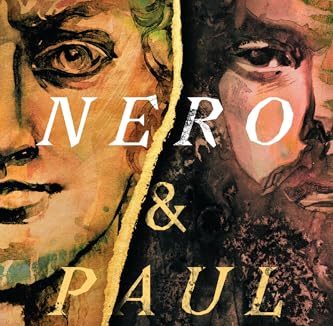
Kathie Lee Gifford, Nero and Paul, (W Publishing, 2026)
https://www.goodreads.com/review/show/9030402083
A story of worldly power versus spiritual transformation
This book begins with the shocking claim that its source, the New Testament is ‘entirely trustworthy, since it came directly from God’. This is a book written in 2026! I doubt if any other Christian apologist nowadays, however fundamentalist, would make such a glaring admission of unscholarly bias.
She compounds her bias by accepting Suetonius, Tacitus, Dio Cassius uncritically, without factoring in that they were political opponents of Nero. This is tantamount to telling the story of Jesus by only quoting the Talmud. Nor is it mentioned that these accounts were coloured by the ancient historians’ attitudes towards factuality being less stringent than what we expect today.
On top of that, there are glaring departures from accepted history, such as suggesting Nero was fathered by Caligula on his sister. She accepts the play (Octavia) about Agrippina’s death as being written by Seneca (historians say not), and treats its wildly mythical elements as history. She uncritically accepts the interpretation of Acts that people were trying to kill Paul because of Jesus. She accepts without cynicism the crazy rumour of Nero’s incest with his mother. And she mixes up the chronology of Nero’s death as we know it.
The overall theme of worldly power versus spiritual transformation is a powerful one. However, the author wants so badly to see the story of Paul and Nero as a straightforward one one of goodie vs baddie that she reduces the story to its most simplistic elements, leaving out much of the interesting stuff – the history of the period, what did Paul mean when he wrote this or that, how did these two characters influence the early Church.
Though I had expected a more scholarly treatment, I found the Christian theology to be cogently expressed. In fact, the most valuable parts of the book are the Codas, where Kathie Lee and her religious consultant Dr Bryan M Litfin discuss their personal spiritual development in the context of the story. Though it’s fairly simple Sunday-School-level stuff, their righteousness shines strongly through. I also commend the author for ‘embracing the Jewishness of [our] faith’.
Unfortunately, this book offers no more insight on Paul and Nero than the New Testament and Dio Cassius, less insight, in fact.
I reviewed it as an adult book, but it would be suitable for a YA or Sunday School readership.


Leave a Reply