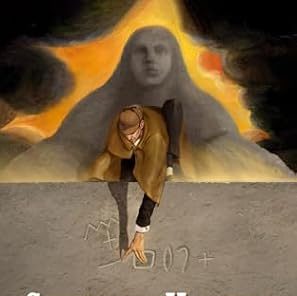
Jonathan Orr-Stav, Sherlock Holmes and the Mistress of History, (Qualum Publishing, 2025)
https://www.goodreads.com/review/show/8993056490
A Canaanite gift to the goddess changes history – elementary
Holmes is back from researching an ancient ‘proto-Canaanite’ inscription – in the Holy Land. A Semitic script, yet why was it written left to right? He invites Watson to return with him for archaeology and adventure on a trek down the Sinai. Watson’s Aghan experience comes in handy.
The slow-paced caravan (18 camels, an interpreter, a cook, 2 Bedouin guides and 3 armed guards) takes them to the Wadi Mukattab (Valley of Inscriptions), thence to Serabit el-Khadem. There reigned the goddess Hathor, Mistress of Turquoise, her treasures mined in antiquity by Canaanite slaves.
When they find the requisite inscription at the turquoise mine, Holmes does something mysterious, and I wondered why Watson didn’t wonder why. As reader, I realised he was saving it for a Big Reveal back in London, but he should have said so to Watson, who travelled all that way with him for just this mysterious information. Holmes saves the Reveal for Profs Flinders Petrie and Alan Gardiner themselves. Naturally, the brilliant Holmes solves a question that had stumped the famed Egyptologists, and in doing so, shatters prevailing shibboleths of Egyptian archaeology.
Sherlock copycats benefit from a fully formed protagonist. Holmes and Watson are just as you would want them to be. Only, the banter is slightly more humorous than has been traditional. The writing style is just a bit antique, which I like, as it’s supposed to be penned by Watson in 1911.
The Setting is deliciously Edwardian – Egyptomania, steam-powered passenger liners with smoking lounges, Art Deco hotels, ancient tombs deep in the desert, Ottoman soldiers, ‘Zionist Hebrews’, and frequent exclamations of ‘Good Lord!’ peppered with ‘old chap’s, not to mention a few ‘the game’s afoot’s.
I loved the weaving together of the Sherlock Holmes tradition and the period-specificity of Egyptian archaeology. The author’s hunches regarding ancient Egyptian/Israelite history tally with my own. We’ve all been wrong about Exodus.