Tag: mindfulness

  • Review: Bullets in the Water

    Review: Bullets in the Water

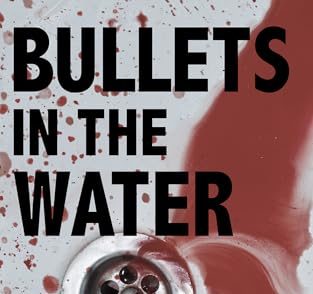
    Conor McAnally, Bullets in the Water, (Stoney Creek Publishing Group, 2025)

    https://www.goodreads.com/review/show/8960570209

    What’s going on in Taborville?

    Disgraced journalist Mike Carson comes back to Taborville to sell the old house he inherited from his uncle. He interrupts a fight to defend a woman and ends up being arrested himself, only to find later that his opponent was the son of a powerful local, Duke McMillan, owner of the bar. Duke and his sons Zane and Karter are involved in some shady drugs business.

    Mike takes an unpaid position on the local newspaper and is sent to cover a boring council meeting. But it turns out not to be boring at all, and McMillan is angered by Mike’s write-up. Mike is also investigating a local murder, and all the dirty doings of the locals seem to be connected, dredging up crimes committed in the past.

    This is a good, well written detective story, and the characters are distinct and interesting. The way the baddies hide their criminal activities is genius, and the way Karter gets his come-uppance is fabulous.

    It gets started rather slowly, but gets increasingly exciting as Mike uncovers more clues as to what’s going on in Taborville. As is usual in the genre, he has to confront some issues within himself (drinking, past professional mistakes) and within his own family (his brother’s fatal car accident) before he can solve the crime.

  • Review: The Captain of Venice

    Review: The Captain of Venice

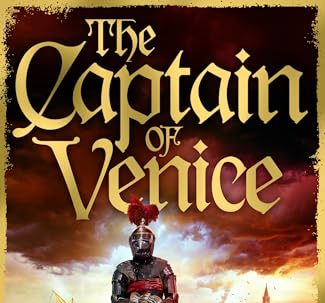
    Christian Cameron, The Captain of Venice, (Orion Books, 2026)

    https://www.goodreads.com/review/show/8960480321

    Great 14th century politics and warfare

    William Gold is a mercenary in the service of John Hawkwood during the 1377-1381 ‘War of the Eight Saints’ and the War of Chioggia between Venice and Genoa. He is a new sort of routier, ‘banker, diplomat and warrior’. This ‘good, fat war’ was especially exciting, as at one point Venice looked doomed, but then finally triumphed.

    The story is as narrated to Geoffrey Chaucer.

    Defying the pope and cardinals, William’s troops raid Tuscany, falling mercilessly upon marauding Bretons, mercenaries of the cardinals who had mercilessly harried the peasants. Disgusted by the brutality of their paymaster Cardinal Robert of Geneva (later antipope Clement VII) during the Massacre of Cesena, they switch sides and fight for Venice, now. William’s sword has won him riches, but throughout the politicking and bloodshed, he searches for a higher purpose.

    Italian politics during the period featured many players: Venice, Genoa, Florence, Milan, Bologna, the papacy—not to mention Turks, Bretons, Hungarians, English, French, Albanians–and as a mercenary, William treats with all the parties. We meet pretty much every mover and shaker of the late 1300s in Italy. It’s Book 7 in the series, so, they all have developed personalities and storylines. A Cast of Characters page would have helped.

    Military fiction at its finest, but it’s not all ‘deeds of arms and flashing blades’. It’s how much it cost and whom you had to deal with to acquire horses, fodder, wine and cooks and prostitutes for the men; dealing diplomatically with adversaries and allies; the importance of scouting and securing food supplies; conversations taking place inside the campaign tent; shifting balance of forces. Sumptuously full of historical detail, all the ins and outs of 14th century politics and warfare.

    It’s no surprise that the author is a military expert, re-enactor and duellist in real life.

    This review first appeared in Historical Novels Review.

  • Review: Mary of Magdala

    Review: Mary of Magdala

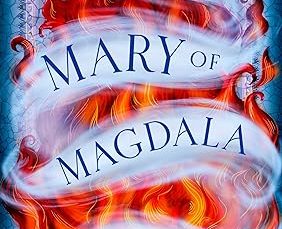
    Joanna Courtney, Mary of Magdala, (Piatkus, 2025)

    https://www.goodreads.com/review/show/8960448393

    Mary who walked with Jesus

    Mary goes back to visit her home in Magdala, but her family still rejects her. Phoebe goes on the road to proselytise, as her parents Prisca and Aquila had done. Lydia’s abusive husband won’t let her go hear the woman preacher who teaches that we are all equal in God’s eyes.

    Emperor Claudius exiles all Jews from Rome and they are Jews, yet the synagogues consider them non-Jews. Across the Empire, the Christians flee from persecution and drive to spread ‘the New Way’.

    Hebrew and Hellenist Christians explore the tenets of the new faith and learn the meaning of ‘brothers and sisters in Christ’. Peter says Paul ‘makes up things as he goes along’, and the issue of table fellowship (Jews and Gentile converts eating together) divides the community in Corinth. Lydia runs a profitable purple dye business based in Philippi, but she struggles with doubts of her worth. Mary, in Ephesus, writes her ‘testament’ of Jesus on papyrus with help from Princess Salome. And there’s trouble at the Temple of Artemis. They are all on their way to meet Mary, who ‘walked with Jesus’.

    Rome burns, and the Christians are blamed, but the ‘New Way’ struggles on and grows. Mary is writing again.

    A vibrant, gorgeous novel. I was only disappointed that the revolution brewing in Judaea wasn’t much discussed, as I think that was a bigger issue for them than we were told.

    Juicy details and narratives are added to what we know from the New Testament of the biographies of these early Christian women to flesh out the ancient Roman world and translate it to a modern reader. Even the dialogue is believably authentic. Being so familiar with the history doesn’t detract from our enjoyment, as the novel makes it such a good story and makes the characters so real.

    This review first appeared in Historical Novels Review.

  • Review: Canon

    Review: Canon

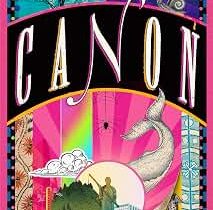
    Paige Lewis, Canon, (‎Corsair, 2026)

    https://www.goodreads.com/review/show/8960340071

    6 stars, non-canonical, non-binary imagination

    Inspired by the Biblical Book of Deborah, this is a non-canonical and non-patriarchal story of two prophets. They are non-binary, so they are ‘they/them’.

    Yara is chosen by God – and God is personified, here – to defeat Dominic, leader of the Bad Guys. If you need to pick a time, ‘mostly, it’s the ‘90s’.

    Adrena has a special power; they can disappear a thing or a person by singing about it. They can communicate directly with God. Nevertheless, He chooses Yara for the Dominic mission. They want to prove God wrong and convince Harpo, leader of the Good Guys who are at war with Dominic, that they are God’s chosen.

    This is the first book I’ve read to use the ‘they/them’ convention. And that’s not the only thing that’s innovative.

    Yara’s artist mother mixed Sherwin-Williams paints to get the exact colour of their skin – Tumbleweed, Gravel and Narcissus. Yara is a germaphobe, embroiders facsimiles of famous paintings and knows a lot about things like oysters – they call it ‘facting’. They embark on an Odyssean journey, riding on a sunburnt whale named HOWBIG!.

    Adrena loves spiders and longs to be as holy as was their mother, who ‘assumpted’ into heaven.

    God wears a mosquito-net hat and judges men’s body-building contests, insisting on handing out the trophies Himself.

    HOWBIG! speaks in allcaps and exclamation points.

    It’s magical realism, easy on the realism. Each chapter is a quirky vignette, not a narration per se. It’s not a true-to-life plot, yet the puzzle-piece structure eventually gets somewhere. As the Big Battle looms, just when a narrative might be emerging, someone has a wacky dream, a soldier transforms into an eagle, or two people inexplicably fall in love.

    This is the most imaginative book I’ve read in years. Beautifully literary and so witty, it’s sometimes laugh-out-loud funny.

    This review first appeared in Historical Novels Review.

  • Review: The Silver Pigs

    Review: The Silver Pigs

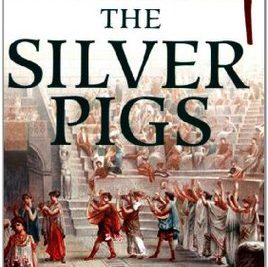
    Lindsey Davis, The Silver Pigs, (‎Cornerstone Digital, 2011)

    https://www.goodreads.com/review/show/4539899637

    Fabulous funny ancient Rome whodunnit

    I discovered this author after reading Murder in Purple and Gold. What have I been missing?

    This ancient Rome whodunnit series features detective Marcus Didius Falco, the future father of Fulvia Albia, the detective in the book I read. It shares with the other book a deliciously intimate feel for life in ancient Rome and vivid, interesting characters.

    It also features an adorable sense of humour. Our protagonist, for example, when opining upon the attractions of naked women, quips, ‘in my line of work, they are usually dead’. He says, ‘Vespasian’s banquets were extremely old-fashioned; the waitresses kept their clothes on and he never poisoned the food.’ Erudite and funny puns: ‘swarming like honeybees in Hybla’.

    On the steps of the Temple of Saturn, Didius Falco rescues a girl fleeing from thugs. Sosia Camillina had been kidnapped from a senator’s house. Her uncle has left her a bank box, to which only she has the code. Inside, a silver pig, a heavy lead ingot, on which the government claims a monopoly, from – Britain. Someone’s been stealing the emperor’s silver.

    Solving the case means tracing the chain of evidence back to source, taking him to Britain, the cold, wet place he remembers, where ‘you could travel for days… before you found an altar to any god whose name you recognised’.

    Davis knows how to write to create impact, so the ‘reveals’ of major clues in the case hit home. Falco’s account of his time working undercover in the lead mine is harrowing. His relationship with his client, Sosia’s cousin Helena Justina, is intricate.

  • Review: Mindfulness in a Messed up World

    Review: Mindfulness in a Messed up World

    Ava Walters, Mindfulness in a Messed up World, (‎LifeZen Publications, 2026)

    https://www.goodreads.com/review/show/8715657103

    Reduce anxiety? Relieve stress? Yes, please!

    It is hard in this fast-moving world to calm down and relax. This workbook is not about preaching the theory, it’s about finding a way to make it work. It’s about doing rather than thinking.

    Before you even begin reading, it starts with the simple deep breathing exercise. In through the nose (count 4) hold (count 2) out through the mouth (count 6). It’s surprising how relaxing this simple exercise is. It also reminds me to do my neck and shoulder stretches before I start banging away at the keyboard.

    Mindfulness is not about being zoned out all the time; it’s about interrupting the Trigger-Reaction cycle to choose more effective actions. It teaches spiritual ease as well as mental relaxation. Chapter 12 is about ‘Shifting the Lens to Gratitude’.

    Step 1 is to ‘notice where the noise is coming from’. What are my ‘hidden stressors’? Are these ‘facts or fears’? Where do I feel ‘trapped? What feels like it’s just too much’? Do I feel ‘burned out’? If so, what’s one small adjustment I could make to protect my energy? What’s one app I could delete to reduce ‘digital overload’?

    Practice being mindful, noticing what my mind is doing. What distracts me? Notice how my body is reacting. Where is the tension?

    Chapter 4 lists a number of common stress scenarios. What is building the tension? How could I act to reduce the pressure?

    Mindfulness does not necessarily involve meditation, but meditation helps. And it’s not hard. Just breathe for a few minutes. When my mind wanders, notice and dismiss the interruption. Notice ‘a car is honking’, don’t start thinking about how darned noisy the neighbours are. Return to breathing. If there is some thought that keeps recurring, what is that thought protecting me from? What is the fear? Ask ‘and then what?’

    It can help to create a mantra. Here are a few of mine I’ve gleaned from this book:

    Bullet points to add to my bulletin board:

    • I don’t need to fix everything at one – take a moment.
    • Pay attention. Don’t react. Pause for 3 seconds before I respond.
    • If I can no longer change it, leave it in the past.
    • Notice where the ‘noise’ is coming from, where the tension is.
    • Right this moment, just now, is anything wrong? Is it urgent?
    • There doesn’t have to be something happening right now. I can relax for 2 minutes.
    • Movement is medicine.
    • Shift my focus to what I am grateful for, celebrate small wins, and pay it forward.
    • What I am doing right now may already be enough.

    My biggest take-away from this is the exercises involving noticing stressors and emotional triggers – just noticing, not spiralling, letting the emotions just float through me. The idea of ‘noticing’ a thought rather than letting it take over.

    Stopping the ‘judgement’ is key for me. Noticing where the tension is located on my body when I’m thinking tense thoughts will help me to stop beating myself up for thinking them. I like to think of the universe as being nonjudgmental. If God or the universe isn’t judging me for (‘wasting time’, ‘not getting enough done’, ‘being a bad parent’, etc), why am I giving myself such a hard time? I’ve also renewed my vow to stop ‘doomscrolling’ (I’m ridiculously addicted to watching YouTube videos of ‘Karens’ getting arrested. Then, not only do I beat myself up for ‘wasting time’, I endlessly wonder whether I’m a ‘Karen’.).

    Though the book is simple and hands-on, it is nevertheless well researched, including up to date findings on stress and mindfulness.

    I’m no stranger to therapy, so as is usual, a lot of this is stuff I already know – cognitively, at least. But it never hurts to go over it again. Looking at those bullet points above my desk will certainly help me to CALM DOWN.