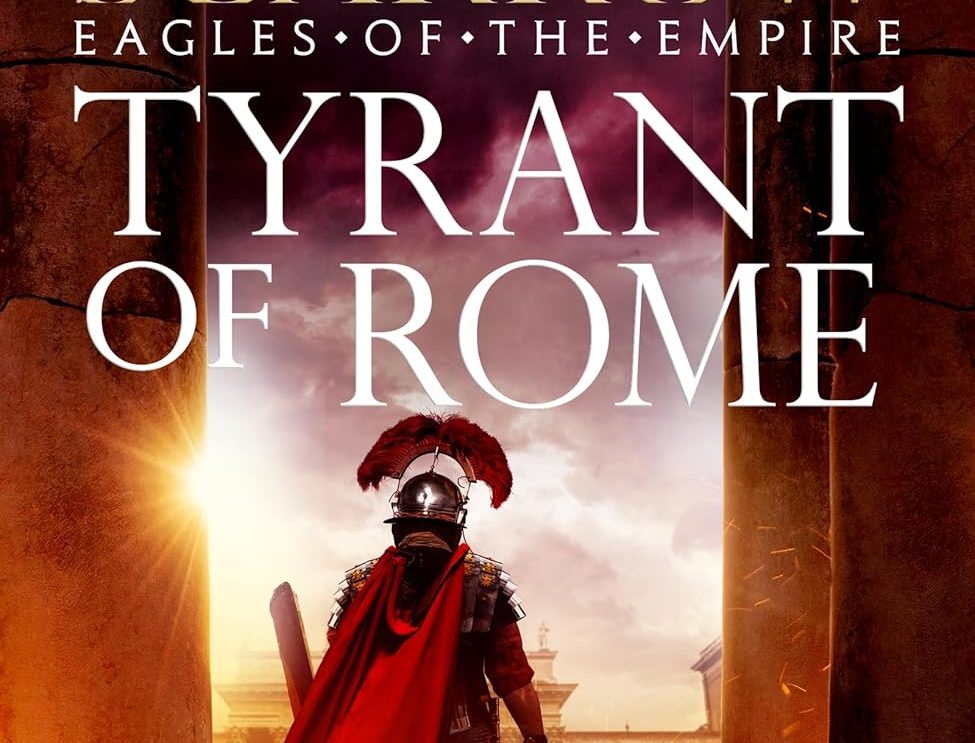
Simon Scarrow, Tyrant of Rome, (Headline, 2026)
https://www.goodreads.com/review/show/8500027272
The first century emperor comes to life
62 CE Centurion Macro and his wife Petronella are caught up in some trouble at the Forum. 400 slaves are being executed for the crime of one, and there’s a mob outside. Macro and Petronella are raising the love child he sired on Queen Boudica.
Cato has secretly married Nero’s former mistress Claudia Acte. He reports to the palace on his return from Britannia, fresh from defeating Boudica’s rebellion. Emperor Nero is impressed and appoints him Prefect of the Urban Cohorts, though Cato would really rather retire. He makes an early enemy of Albanius, a crony of Nero’s new sycophant, Tigellinus, and appoints Macro in his place. The two friends are on duty together again, and they proceed to whip the cohorts into shape.
Vespasian attempts to recruit Cato into Piso’s conspiracy against Nero. Seneca has dirt on him; he knows about Claudia.
A grain fleet from Sicilia wrecks in a storm off Ostia, and there’s a fire in Rome.
The characters arrive with rich personalities and backstories established in previous Scarrow books—an impressive 24 novels spanning Roman history 42-62 CE. All the characters are multi-faceted, and the fictional and historical characters intersect interestingly.
The plot is exciting. The wonderful, colourful dialogue is in modern vernacular, so, these people from 2000 years ago seem familiar. And it provides some clever quips—eg ‘Pardon my Gallic’; it’s Poppaea ‘who wears the toga’ in the family.
Scarrow is considered military fiction, and the soldiers’ lives are intimately portrayed. However, the plot is character-driven, and even a non-fan of the genre is enthralled. Decadent emperors, marching cohorts, grain ships, the Forum, the Circus, togas, brothels, gladiators, senators’ intrigues, persecutions, the plebian mob—everything that is ancient Rome comes to life.
For the next book—Cato and Macro are posted to the eastern frontier.
This review first appeared in Historical Novels Review.
 Susie Helme
Leave a comment