Tag: writing

  • Review: Following: A Marketing Guide to Author Platform

    Review: Following: A Marketing Guide to Author Platform

    David Gaughran, Following: A Marketing Guide to Author Platform (2020)

    https://www.goodreads.com/book/show/53919170-following?ac=1&from_search=true&qid=KER0IP0xH9&rank=1

    This pamphlet, which the author gives away free as a Reader Magnet, boils down the essential elements in developing an author platform. What is an author platform. It is ‘a writer’s collective presence on the internet’. Gaughran simplifies the gobbledy-gook and pares it down to the essential tasks, also recommending requisite services and software.
    Never mind blogging, he says, unless you want to. The three main ‘planks’ of your author platform need to be 1. a Great website 2. a Thriving mailing list 3. an Active FaceBook page.
    He goes through, step by step, how to do this.
    Check it out, and start building your ‘following’.

  • Review: Solar

    Review: Solar

    Ian McEwan, Solar (Random House 2010)

    https://www.goodreads.com/book/show/7140754-solar?ac=1&from_search=true&qid=cHaGQwgYSE&rank=2

    The beginning is studiedly nebulous. ‘He belonged to that class of men—vaguely unprepossessing, often bald…’ physicist Michael Beard is an Everyman, but in a tongue-in-cheek way.
    His fifth marriage is disintegrating—his wife Patrice is having a flagrant affair—and he hasn’t a clue how to react. Adultery seems to have made her more desirable. Even his Nobel Prize and the fame of his Beard-Einstein Conflation couldn’t keep her in his bed.
    While his attention is occupied by Patrice’s affair, he sleepwalks into leading a huge project, which grows more unmanageable by the day. He takes off for a sinecure trip to a frozen fjord to discuss climate change with a select group of artists and scientists. Stuffed into a 20-pound snowsuit, urination-related accidents and near-encounters with polar bears ensue, seemingly designed to ruin his chances of fjord-based hanky panky.
    Enter brilliant, young, idealistic post-doc Tom Aldous, who, annoyingly, worships Beard. Then, mishaps and retribution.
    Years on, Beard tries to live his life in the same way, resting on his laurels. A battle of wills with a younger man on a train over a packet of crisps and an ideological disagreement with a female colleague in which the press become involved push him to his lowest point. For a while, he retreats from human involvement. ‘Stick to photons,’ he thinks—his current project involves simulating photosynthesis—but there comes a point when the brou-ha-ha dies down. Then, on the eve of the grand opening of his project, all his ghosts come out to haunt.
    One of the world’s great writers, McEwan turns a beautiful phrase; it’s chock full of inventive metaphors and gorgeous descriptions. In this Bollinger Everman Wodehouse winner, he applies his skill to wit as well as beautiful language. The plot overall is quite humorous, and some of the scenes are hilarious.

  • Review: Herzog

    Review: Herzog

    Saul Bellow, Herzog (Penguin Classics 2003)

    https://www.goodreads.com/book/show/6551.Herzog?ac=1&from_search=true&qid=9dGruMtrcW&rank=1

    Moses Herzog is floored by the collapse of his second marriage; she’s leaving him for his erstwhile friend Valentine. For Madeleine, the announcement of their break-up is ‘one of the greatest moments of her life’; for him, he realises that he ‘has mismanaged everything in his life, everything’. He seeks solace with other women—Wanda, Ramona, Zinka—avoids work on his book on Romanticism, and writes manic notes to himself and erudite ‘impertinent letters’—which never get sent—to all and sundry.
    I remember someone from my feminist days describing Bellow as ‘misogynistic’, and for that reason I avoided for years picking this book from my bookshelf. Reading it myself, I can agree that he has little empathy with his female characters, and Herzog has little remorse for his philandering. Nevertheless, the depiction of his characters, both female and male, is immensely deep, rich and funny.
    During an event-filled five days, he descends into madness, becoming ever more philosophical and verbose. He ends up at his erstwhile marital home in the countryside, realising that, like the old place, he just needs a bit of fixing up.
    Bellow won the Nobel prize in 1976 for works such as this National Book Award for Fiction and Prix International winner. Herzog doesn’t really follow a linear plotline, instead, mostly consisting of the ramblings inside the protagonist’s head—but, what a protagonist! His mental process as he prepares for a date goes on for twenty whole pages. For this reason, I found it a bit hard to read, though worth it for its virtuosity.

  • Review: The Grass Crown

    Review: The Grass Crown

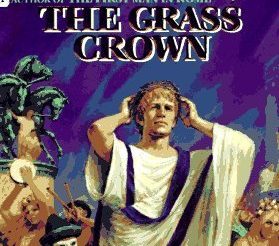
    Colleen McCullough, The Grass Crown (Avon Books 1992)

    https://www.goodreads.com/book/show/3424.The_Grass_Crown?ac=1&from_search=true&qid=Jn1BkEG0NI&rank=1

    This Book Two of the Masters of Rome series follows the political and personal lives of the famous men and women of ancient Rome.
    Gaius Marius, Lucius Cornelius Sulla and Publius Rutilius Rufus dine together. Marius announces his intention to go on pilgrimage to Pessinus, but his friends know he wants to check out what’s going on in Cappadocia.
    Quintus Caecilius Metellus (Piggle-wiggle) is out for blood, and Marius’ man Manius Aquillius is on trial. Sulla is about to leave for Spain on campaign. Marius takes his family to Patrae, then Athens, then Helicarnassus and in the spring, on to Pessinus. Young Gaius Julius Caesar is a precocious lad, and Aurelia hires a pedagogue. The rivalry between Sulla and Piggle-wiggle escalates.
    In Sinope, King Mithridates of Pontus reads a letter—Gaius Marius wants to meet. Mithridates travels incognito. He is out for conquest.
    Marius and family make it to Bithynia, where he becomes involved in politics with Mithridates and Nicomedia.
    Marcus Livius Drusus dreams of ‘a general enfranchisement for the whole of Italy’; Quintus Poppaedius Silo, an Italian, dreams of Italian ‘secession from Rome’.
    Drusus is determined to get his law passed emancipating the Italians. Their spokesperson thwarted and murdered, leaders of 14 Italian peoples decide to use threat of war. The early victories in the Social War go to the Italians, giving Rome a fright. Though Rome eventually wins, the Italians win their citizenship.
    The story follows the lives of Young Caesar and Young Marius. Young Caesar attends upon Marius after his second stroke. Caesar pulls Marius back into politics, and Marius begins to train him. Young Marius kills Lucius Cato the Consul in a mutiny, which saves a battle. Sulla is awarded by his men a Grass Crown. Sulla massacres Aeclanum.
    Despite his infirmity, Rome wants Marius at the helm against Mithridates, and Sulla is told to hand over his legions. Instead, he invades Rome. But the troops rebel. On the run from Sulla, Marius flees and takes shelter at Cercina.
    At the ludi Romanii, Lucius Cornelius Cinna makes his move to introduce laws regarding the distribution of new citizens and for the recall of 19 fugitives—including Gaius Marius. The controversy leads to the Massacre of Octavius’s Day.
    The story finishes with the tale of the battle between Cinna and Gnaeus Octavius Ruso and the deadly rivalry between Marius’s faction and Sulla’s.
    The scope of this novel, encompassing the gamut of Roman history, both political and personal, during the 1st century BCE, means learning a lot of complicated Roman names, more so than Book One, which was mostly Marius and Sulla. It takes you through the Senate meetings, the patricians’ dinners, the war strategy and the battlefields as if you were there yourself.

  • Review: In Shadows of Kings

    Review: In Shadows of Kings

    K. M. Ashman, In Shadows of Kings (Silverback Books 2014)

    https://www.goodreads.com/book/show/20810891-in-shadows-of-kings?ac=1&from_search=true&qid=e3BDAcc9v5&rank=2

    Rhodri ap Gruffydd, nicknamed Tarian (Shield of the Poor), has summoned his knights to a secret banquet. King Henry of England is dead, Edward Longshanks yet in the Holy Land, but more battles with the Welsh are in store on his return. Tarian and his knights are doubting the leadership of Prince Llewelyn.
    At Brycheniog Abbey, Abbot Williams, the man who murdered Garyn’s parents, discusses the transport of the True Cross to Rome. Garyn ap Thomas, the blacksmith’s son, joins his wife Elspeth for dinner, exhausted from rethatching the roof. His brother Geraint, missing the camaraderie of the Crusades, is about to leave on a journey aboard a ship commissioned by Tarian.
    Owen Cadwallader comes to the manor of the deceased Sir Robert Cadwallader to forge a marriage between Sir Gerald of Essex and the elder daughter, Suzette.
    Father Williams and the newly betrothed Sir Gerald seem to have it in for Garyn’s family and livelihood, and he has to flee. He joins the Blaidd (Wolves) mercenaries to fight brigands. The rescue of a kidnapped girl brings new information about the True Cross, leading Garyn to realise that he had been double crossed.
    Tarian’s flotilla disembark on a new world and battle with the natives, aided by the Mandan, a people who speak their language. They’ve come seeking the descendant of Madoc, who travelled three times to the New World.
    The characters are lively, the dialogue credible and the plot exciting, alternating interestingly between Wales and the new World. The writing is just archaic enough to pass, but without any embellishments. This is Book 2 in the Medieval Series, and Book 1’s backstory of the retrieval of the True Cross and the persecution of Garyn’s parents is handled skilfully. It keeps the promise of the ‘direction you will not expect’ promised in the Foreword.
    This review was originally written for Historical Novels Review.

  • Review: The Show Must Go On

    Review: The Show Must Go On

    John Mullen, The Show Must Go On (Routledge 2016)

    https://www.goodreads.com/book/show/29442612-the-show-must-go-on-popular-song-in-britain-during-the-first-world-war?ac=1&from_search=true&qid=E2KG6SiRij&rank=1

    A Marxist history of Music Hall during the war years, this work was originally published in French in 2012. Mullen is a Marxist historian and Professor of History at Rouen University. He has extensively written academically on popular culture in the 20th century and politically on Islamophobia and anti-capitalism.

    Building on extensive research of trade press of the period and an enormous corpus of songs, Mullen studies Music Hall ‘from below’. There is no showbiz tittle-tattle in this study, but there are copious relevant facts illustrating what the songs say about the lives and fantasies of their audience.

    Mullen critiques scholars who see Music Hall either as a ‘culture of consolation’ or as a commercial project to inculcate conservative ideas. Nor should it be understood as an unmediated vox populi, but rather as an ‘expression of working-class experience’.

    Beginning with an analysis of the British entertainment industry, its economy and industrial relations, he shows that musicians and staff were part of Britain’s trade union movement, and while generally accepting the need to win the war, did not shy from strike action.

    Two dynamics exerted pressure on the industry, the economic drive toward concentration of capital in the search for profits and the ideological drive to build respectability.

    The rise of the revue format was not a tragic sign of the decline of the good old days, as some scholars have it, but rather a centralisation enabling economies of scale.

    The drive to reassure moralistic organisations and licensing boards meant that ‘vulgarity’ was discouraged, and singers were limited to suggestive gestures and double entendres (e.g., ‘She’d Never Had Her Ticket Punched Before’).

    A turn at the Music Hall, where a sing-along chorus was de rigueur, had to reach the widest audience possible, and quickly, before the next act came on. Interestingly, the format of narrative verses plus sing-along chorus allowed the presentation of conflicting ‘voices’ in the same song, the verses mocking the character and the chorus empathising with him. The overall tone was one of ‘working-class neighbourliness’.

    There is a valuable chapter on men and women as reflected in song. Women begin to be praised for their wartime work (‘We Thank You, Women of England’, 1917) rather than for their patiently waiting at home (‘Women Who Wait’, Ernest Pike 1914). The occasional anti-women’s rights song was more likely to poke fun at the caricature suffragette rather than propound against women’s votes per se.

    The study’s most important conclusion is the challenge to the popular myth of universal working-class jingoism. Support for the British Empire is given, but the emphasis is not pro-war but rather homesickness of soldiers or supporting love ones left at home. They sang more about ‘Mother’ than about ‘Empire’. ‘The majority of songs…were not about the war, and [those that were focused] instead on ‘comic and tragic aspects of the war experience.’ Soldiers’ songs demonstrated black humour in the face of horror and not ‘Tommy’s undaunted spirit’. ‘The general tone is one of dissent’ but almost never of mutiny.

    This book is a must for musicologists and WWI buffs but also a fascinating read for any lover of history. Though links are provided for many of the songs to listen to online, there are unfortunately no photographs. It is to be hoped that future printings will consider illustration.

  • Review: Conquest: Daughter of the Last King

    Review: Conquest: Daughter of the Last King

    Tracey Warr, Conquest: Daughter of the Last King (Impress Books 2016)

    https://www.goodreads.com/book/show/31617066-conquest?ac=1&from_search=true&qid=kT5XiEq1x4&rank=1

    Post-Conquest, Norman nobles are scrambling to wed the orphaned princesses of their vanquished Scottish and Welsh foes.
    Nest verch Rhys, daughter of the last Dinefwr king Rhys ap Tewdwr, has been placed with Lady Sybil and her husband Robert FitzHamond, in Cardiff Castle. FitzHamond is tasked by the king with subduing the Welsh. Nest nurses hopes of rescuing the Royal Deheubarth line, and wants to realise her betrothal to her noble cousin Owain ap Cadwgan. But she realises she would miss Lady Sybil and her little daughters and the maid Amelina.
    Meanwhile, there is a scramble for the English throne, and personal fortunes rest on backing the winning side. FitzHamond is for King Rufus. Duke Robert and other Norman lords depart on crusade. Owain comes to Cardiff dressed as a tinker and slips a whisper to Nest that he will come for her, but on the night he doesn’t show.
    Listening around corners, Nest discovers a plot against the king involving Sybil’s brother Arnulf.
    King Rufus denies marriage petitions from Arnulf and from Owain. When King Rufus dies, his brother Henry takes the throne, and alliances shift. Those who backed the new man are in favour. Some barons believe the older brother Duke Robert was the legitimate heir. Duke Robert thinks so, too, and challenges his brother in battle.
    The new king marries the Scottish Princess Matilda, though Nest had entertained thoughts that he might choose her.
    The story is told mainly through Nest’s point of view, but also through the knight Haith and his sister, nun Benedicta, in coded letters containing all the royal gossip.
    Book 1 in the Conquest series, this novel is an enjoyable look at the daily lives of nobility during a period of great social change. The story illustrates how, unlike England, the Norman conquest of Wales was slow, though equally painful. Nest’s ‘desire to be resistantly Welsh is… necessarily compromised and hedged about by love’.

    Nest’s brother Gruffydd ap Rhys was my 20th great grandfather.

  • Review: Claymore and Kilt

    Review: Claymore and Kilt

    Sorche Nic Leodhas, Claymore and Kilt (Holt, Rinehart, and Winston 1967)

    https://www.goodreads.com/book/show/17225501-claymore-and-kilt?ac=1&from_search=true&qid=ffzmwlm3Da&rank=1

    This is a compendium of folklore and folk history, stories about kings and castles.
    It begins with the druids, who called themselves Gaedil (stones people). Higher knowledge was their exclusive domain, and they considered it unlawful to write anything down of their history. Folk history consisted in oral form in verse and took a druid 20 years to learn. As the druids were later exterminated by the Romans, this cultural wealth was largely lost.
    The book treats early lords—beginning with Fingal (if indeed historical) who ruled Argyll as Ard-righ (high chief) of the clans between Wales and the West Coast—and early saints, including Ninian and Kentigern as well as Columba.
    The concept of the book is to tell us about the folktales without actually narrating the folktales. It assumes readers already know the story. We are informed about the various versions of the tales and informed of where they differ from historical fact, but some of the stories are referred to rather than told. For example, a chapter heading announces ‘the riddle sent to Bruce’, yet the chapter does not tell us what the riddle was. This is unsatisfactory.
    Though well-written, it is not narrative enough to be a book of folklore and not sociological enough to be a book about folklore. I checked out the tales on Google, so I did learn something, but I would’ve preferred a more narrative approach, which wouldn’t have added too many pages to the not-too-long 157-page book.
    It is illustrated with beautiful curly Celtic art-nouveau line drawings.
    Other books by this author treat ghosts, legends and tales from the Highlands.

  • Review: The Third Twin

    Review: The Third Twin

    Ken Follett, The Third Twin (MacMillan General Books 1997)

    https://www.goodreads.com/book/show/92373.The_Third_Twin?ac=1&from_search=true&qid=6RcMVplLNA&rank=1

    Pacey technothriller plays with the dramatic possibilities of DNA manipulation.

    Genetics researcher Jeannie discovers two genetically identical twins, born to different mothers, Steve, a law student, and Dennis, a murderer. She finds evidence of a conspiracy involving a biotech company, big politicians and her own university.

    Intriguingly, we begin inside the point of view of the murderer, as he rehearses his cruel fantasy.

    Biotech CEO Berrington, Jeannie’s boss, is trying to talk his partners Preston and Jim into accepting a takeover bid. They want to make perfect genetic babies for the rich and sterilise the poor. Jim wants to run for president.

    Stephen’s mother swears he was not adopted. When Jeannie’s colleague Lisa is raped, Stephen becomes a suspect. In real life, I think maybe Stephen would have been exonerated by examining his hands for lack of evidence of setting the fire, but for dramatic purposes, he is fitted up due to his DNA matching the perp’s.
    This mystery of the identical twins whose mothers claimed natural births could be explained by a switcheroo in the maternity ward. Or IVF implementation of two different women by semen samples from the same donor.
    For his own nefarious reasons, Barrington is trying to quash his own company’s study. He intentionally gets Jeannie in trouble by leaking her project to the press. They get the idea that Jeannie’s study involves ‘accessing medical records’ and raise a hue and cry over her ethics.

    I feel sure that a big-name author like Ken Follett would do his research, but there were so many details where I wondered whether or not they match reality. Do police really interview criminals in front of other criminals? Do they really tell suspected rapists the address of their alleged victim? Would a rape victim be emotionally capable of interviewing her rapist’s identical twin? It would certainly be unethical in real life for the researcher to begin dating one of the study’s subjects.
    However, I loved all the details about DNA analysis.

    Although this was back in the age of floppy disks when computer science was less advanced, the riddle of the identical twins whose mothers didn’t know is solved by a technological innovation that was brand-new back when this was written.
    Well-structured and exciting, but Follett is not of the ‘less is more’ school of writing. We get every detail–down to what type of car everyone drives.

  • Review: The Devil in the White City

    Review: The Devil in the White City

    Erik Larson, The Devil in the White City (Crown Publishers 2003)

    https://www.goodreads.com/book/show/397483.The_Devil_in_the_White_City?ref=nav_sb_ss_1_27

    Two men, an architect and a serial killer, find their fates linked at the great Chicago World’s Fair of 1893.
    Daniel H Burnham, designer of famous buildings like Washington DC’s Union Station, and his partner John W Root are tasked with designing a fair that would rival Paris’s 1889 Exposition Universelle, symbolised by the iconic Eiffel Tower.
    One challenge was building on top of soil so soft they called it gumbo, with a bedrock 160 feet down, too deep for human workers. There was a constant conflict between the desire to make the fair grand and beautiful and the drive to save money.

    In the same city, at the same time, while Jack the Ripper was on the rampage in London, Holmes began construction of a building—‘the castle’—which would include a purpose-built torture chamber in the basement.
    Holmes opened a pharmacy on the ground floor of his new building, and his female clerks and supposed wives kept disappearing.

    Problems arose with the White City. Opening day was lacklustre, with poor weather, unfinished exhibits, the Ferris Wheel half-finished and buildings and attendance below target.

    Holmes opened his torture building as a hotel, where numerous young women seem to have checked out without paying. He promised marriage to Julia, now pregnant, but instead bumped her off, selling her cadaver to medical students.

    Holmes was finally nabbed by Detective Frank Geyer, ‘America’s Sherlock Holmes’. Geyer finally found the bodies of Holmes’ former partner Pietzel’s daughters, and a search of ‘the castle’ uncovered bones and numerous macabre details. On the inside of the vault, there was the distinct imprint of a woman’s foot. It was estimated that Holmes may have killed up to 200 people during the course of the fair.

    The setting—Chicago—is portrayed just as intricately as that of the protagonist and the antagonist. The gleaming white world’s fair, as a metaphor for technological progress in America, is contrasted with the dark, perverted doings of Holmes. The plot is roughly but not strictly chronological making for more interesting reading than a month-by-month narrative.
    The fair launched many firsts–the first concert transmitted by telephone, the first recitation of the ‘Pledge of Allegiance’ in schools, the first pancake mix, the first rendition of the ‘there’s a place in France’ cobra-charming tune.
    The White City’s neoclassical architecture inspired design across America. “The exposition was Chicago’s conscience—the city it wanted to become.”