Tag: writing

  • Review: Life in a Spin

    Review: Life in a Spin

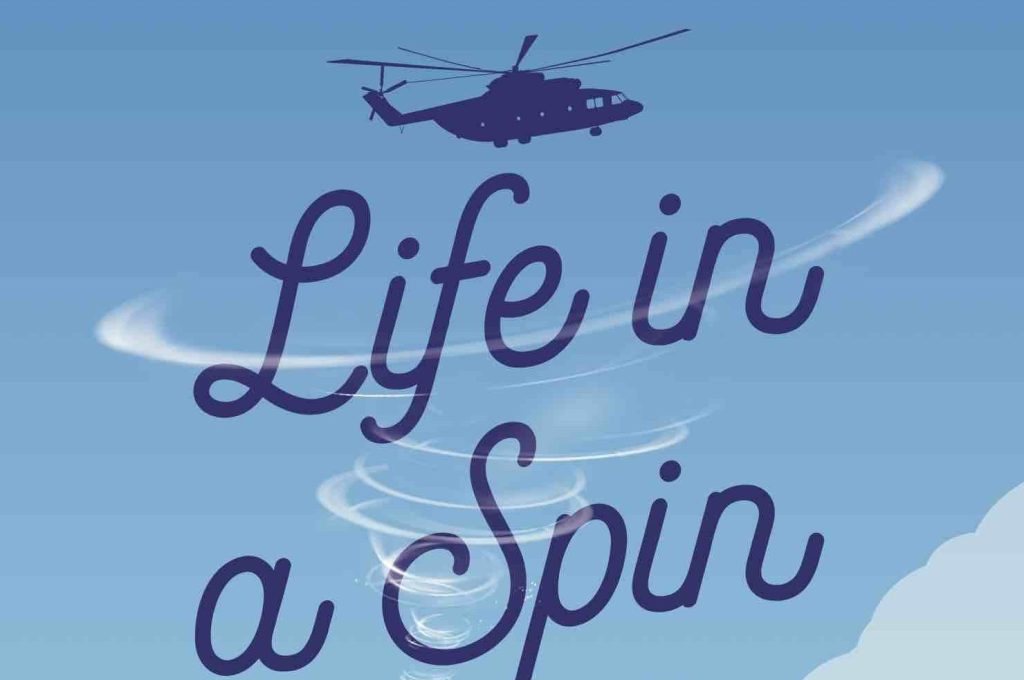
    Nick Mylne, Life in a Spin (The Conrad Press 2020)

    https://www.goodreads.com/book/show/56345624-life-in-a-spin?ac=1&from_search=true&qid=Yfv6nsoYR6&rank=1

    This little book contains humorous anecdotes from the author’s career as an international helicopter pilot with both commercial and military experience.
    Beginning with a funny-but-it’s-true story of a misguided attempt to represent Sandhurst at boxing, Mylne tells a charming array of tales. The anecdotes are not so much ‘funny ha-ha’ as ‘human’. Good naturedness comes through on every page. He is as genial about his own cock-ups as he is about the sometime silliness of military bureaucracy.
    Some of the stories convey how terrifying it must be to pilot a powerful air-borne vehicle in dangerous conditions or when infrastructure is inadequate, and Mylne describes a couple of horrifying near-death experiences.
    From job assignments all over the world, readers are treated to amusing (yet always respectful and even loving) looks at foreign cultures, and we meet kings and sultans. One story contains the great line—‘what sparked my love of the Arab world—amazingly, was… a war’. Cultural faux pas result when he mispronounces words in Arabic. Mylne was flabbergasted at the size of his salary in a teaching posting to Saudi Arabia until he discovered that flight instructors were expected to arrange their own accommodation—baksheesh and all. Certain students, despite their dangerous lack of aptitude, he was not allowed to fail.
    Each story is illustrated by a cute cartoon by Peter Loyd.
    A must for fellow aviators, but even non-flyers will enjoy this.
    I was given a copy by the author.

  • Review: The Atenisti

    Review: The Atenisti

    Aidan K. Morrissey, The Atenisti (The Conrad Press 2022)

    https://www.goodreads.com/book/show/62025797-the-atenisti

    Ricci, a member of a secret organisation, the Atenisti, finishes a job in London and, being followed, escapes to Italy. He is an assassin, trained by the late Giacomo. He seeks to avenge the rape and murder of a ten-year-old girl and finds himself chasing a world-wide paedophile ring through Italy and Germany to India. His method is to get to them before the police do.
    He knows them from the pornographic ‘snuff film’. Their paymaster collects gruesome trophies of the children. The rapist/murderers gouge out their eyes and send them to him, to be kept in a jar.
    It’s action-packed, and there is excellent building of suspense; you really want to keep reading. The climactic final scene is nail-biting, with all the rapists getting what’s coming to them.
    Sadly, I believe that world-wide paedophile rings do exist, whether they have vigilante assassins from secret organisations chasing them, and much needs to be done by law enforcement to shut down these crimes. Also sadly, the use of sexual violence as a political tool in ethnic terror and oppression of girls remains an international scandal in parts of India. The story cites a statistic, probably accurate, of 106 rapes in India per day, forty percent being minors.
    Building a fictional tale around these real-life tragedies makes the story realistic and exciting, lending meaning and identifiability to the protagonist’s quest.
    Some crime scenes are quite graphic.
    Morrissey builds on his experience as a lawyer, time spent living and working in Italy, Germany and India, and his passion as an amateur Egyptologist.

  • Review: Stones Corner: Turmoil

    Review: Stones Corner: Turmoil

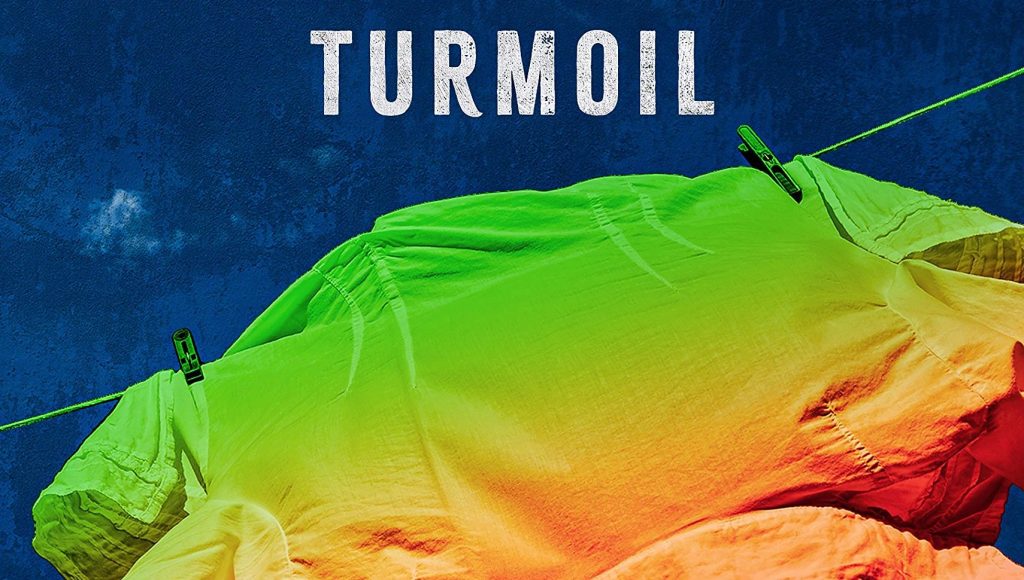
    Jane Buckley, Stones Corner: Turmoil (Orla Kelly Publishing 2021)

    https://www.goodreads.com/book/show/56918213-turmoil?ref=nav_sb_ss_1_21

    After Bloody Sunday, things are still volatile in Northern Ireland. The British forces in Derry, exhausted from lack of success, are zealous for payback. Private Robert Sallis is in his barracks, trying to understand the hatred with which he and his mates are daily bombarded.
    19-year-old Caitlin McLaughlin is terrified by the sounds of invading helicopters. The Brits already have her brother Martin, who’s friendly with the Provos. Now they’ve come, causing as much destruction as possible, for her father Patrick.
    A girl is wooed by the fervent Republican Kieran. Kieran convinces her to set up a honeytrap for soldiers.
    Caitlin and her sister Tina try to carry on. Caitlin, her face black and blue from the soldiers’ blows, goes to work at the only remaining shirt factory. The boss’s nephew, James Henderson, catches her eye.
    Her father has a heart attack in custody, and a neighbour rushes them to the A&E, through aggravating checkpoints and impossible traffic. There’s been a bombing, and the A&E is swamped. Her father is badly beaten, unresponsive, and not expected to last the night.
    James, in his uncle’s opulent dining room, finishes his partridge dinner, surrounded by Protestant businessmen, politicians and policemen. The factories are threatening a strike against internment. At work, James needs a secretary, and her supervisor suggests Caitlin, warning him that she’s ‘a Papist’.
    As he and Caitlin pursue a clandestine love affair, James plans a conference with both sides of the sectarian divide, hoping for a rescue strategy for the factory and peace for Derry.
    All these characters interconnect in complex and heart-wrenching ways, finally climaxing at the fateful conference at the City Hotel. Stones Corner-Darkness, Part II of the series, deals with the fallout from this event.
    The characters are rich, and the plot moves along at a good pace. The dramatisation is great and the dialogue believable.
    My only niggle was that I found Robert’s naïveté a bit surprising. Surely British troops in Northern Ireland knew precisely what their historic role was. James seems a bit clueless, too. The characters at the extreme ends of the Republican/Orange spectrum—Kieran and Charles Jones—are a bit one-dimensional, but that’s alright, as all the other characters are well developed.
    This novel is gorgeously written, with careful editing. We feel the terror of the raid on Derry—the down-draught of helicopter blades, the rattling of rooftiles, the salivating German Shepherds—the agonising grief at her father’s death.
    I rate this 5 stars Plus.

  • Review: Heir to Murder

    Review: Heir to Murder

    Tony Bassett, Heir to Murder (The Book Folks 2023)

    https://www.goodreads.com/book/show/203178090-heir-to-murder?ac=1&from_search=true&qid=5oKFBKsMaq&rank=1

    A neighbourly dispute over loud music results in trouble. And murder. The noise-maker, Miles Kenworth, son of Lord Culverton, has had his skull mutilated by an axe. Residents had seen Jake Harris knocking down his door brandishing a bat.
    The tales features detective DS Sunita Roy, whom we know from previous novels in the series.
    Charles Laxton, Rupert Faulkner and Miles’ ex-girlfriend Ursula Grey enter the investigation. Stephanie has photos of someone in a compromising position in a hay barn, and her sister Bella tries to dissuade her from using them for blackmail. Laxton hasn’t told the truth. Logan Price has a motive. The list of suspects reaches seven. The murders multiply, and one two years earlier on the Costa del Sol may be linked, so DS Sunita Roy and Brett Dawson jet off to follow the lead. Sunita follows her instincts, and it pays off.
    The investigation builds gradually, and we experience some setbacks, building suspense for the climax.
    In Bassett’s detective novels, the plot builds right along with the police investigation. We see peeks inside the suspects’ private lives, as we are fed the detectives’ leads. This makes for good pacing and good suspense. I like how realistic the cops are. There’s a team of them, of mixed genders and ethnicities, as in real life, each with individual roles and talents, and their dialogue is natural with enough banter to make it fun. When the plot becomes complicated, there is always a helpful summing up—either a team meeting or Sunita mulling things over at bedtime.
    A perfect detective thriller. I was given an ARC by the author.

  • Review: Contrast

    Review: Contrast

    Linda Coussement, Contrast (Elephas Publishing 2024)

    https://www.goodreads.com/book/show/199799331-contrast?ac=1&from_search=true&qid=ZtMH0DeWED&rank=4

    Ghost wakes up to a beautiful morning and looks around for someone with whom to converse. Rabbit, Cat and Frog are discussing some mysterious new object in the garden, a round, flat circle of concrete. Leora walks out, speaking to her friend Dana on the phone, and notices the object, too.
    Her neighbour Xander notices that a strange circular patch of flowers has replaced his prized Japanese maple. The concrete and flower circles have a psychological effect on their viewers. There is something malevolent about the wall between the gardens.
    Ghost—named during life Adam—goes back through his life in the Resistance during the Nazi occupation to figure out where he went wrong. Ghost and Leora discuss the meaning of life. Xander believes it’s all about ‘staying away from the heavy’.
    Ghost’s memories of life have a hazy, dream-like quality. Nothing seems solid and real, provoking the reader to think deeply about the same existential questions. Perhaps the two gardens symbolise purgatory, where Leora and Xander, also, are stuck because they’re dead inside, and the wall represents their barriers to self-actualisation.
    We get no sense of a Creator god. The dead and the living bump around, coming to some conclusions, but nothing earth-shattering.
    We spend a few too many early chapters wondering at the strangeness of the world, and by the half-way mark, we still haven’t figured it out. As the reader is also trying to work it out, this leaves an uncomfortable feeling. While Ghost and Leora and Xander work out the rules to this world where ghosts can manifest and walls can be malevolent and circles of concrete and flowers can appear overnight and you can converse with disembodied voices, there could have been some impending consequence, some ticking timebomb necessitating that they solve the puzzle quickly. Or, there could have been a bit more action or relationship conflict to make it more interesting.
    A world where already-dead ghosts help the still-living humans work out the answers to ‘life, the universe and everything’ is an interesting one. I liked how it was mostly Ghost asking the questions, not the living. Unsurprisingly (as they are bogus), mediums who purport to translate across the boundary have never been able to procure for us solid answers.

  • Review: Pilot Who Knows the Waters

    Review: Pilot Who Knows the Waters

    N. L. Holmes, Pilot Who Knows the Waters (WayBack Press 2023)

    https://www.goodreads.com/book/show/61198050-pilot-who-knows-the-waters?ac=1&from_search=true&qid=FLio8ymDmz&rank=1

    1335 BCE. The story is fictional but based on real events during a tremendously interesting period, the suppression of the Aten revolution of Akhenaten and the Zannanza Affair. The death of Prince Zannanza led to a period of conflict between the Hittites and Egyptians that culminated in the Battle of Kadesh.
    Lord Hani is sent to Hattusha to the court of King Suppiluliuma to negotiate a Hittite bridegroom for the Queen of Egypt. The Hittites called this queen Dakhamunzu—basically ‘great king’s wife’ in Luwian—so we don’t know who the desperate queen was—Nefertiti, Meritaten or Ankhesenamen. Holmes has it as Meritaten, or Meryet-aten.
    At the palace, the Egyptian ambassadors meet with chamberlain Hattusha-ziti, who is then sent by the Hittite King to check out the situation in Egypt before Prince Zannanza is offered. Intrigue, coups d’état and murder ensue.
    This is Book 6 in the Lord Hani series, so the main characters have been established. Helpfully, the cast of characters and glossary comes at the beginning. There is adequate characterisation of the main players, the diplomatic team, and scene-setting is good in terms of descriptions of the palace, travel, etc.
    I would have liked a fuller rendition of the negotiations with King Suppiluliuma. The discussions that led to this extraordinary betrothal must have been extraordinary. We should certainly have heard the letter of the queen: ‘…I would not wish to take one of my subjects as a husband. I am afraid.’
    I like how Holmes uses the real Egyptian words for things. Interesting details about the Hittite culture are seen through Egyptian eyes—e.g. the diplomats are amazed that the Hittites have no gardens. The daily family lives of the Egyptians are well portrayed, and the family scenes allow for good pacing, contrasting the action of the political events. The dialogue is natural—difficult in historical fiction. The plot is interesting and throws up some fascinating twists.
    A wonderful ancient-Egypt detective story.
    I was given an ARC by the author.

  • Review: The Moon that Fell from Heaven

    Review: The Moon that Fell from Heaven

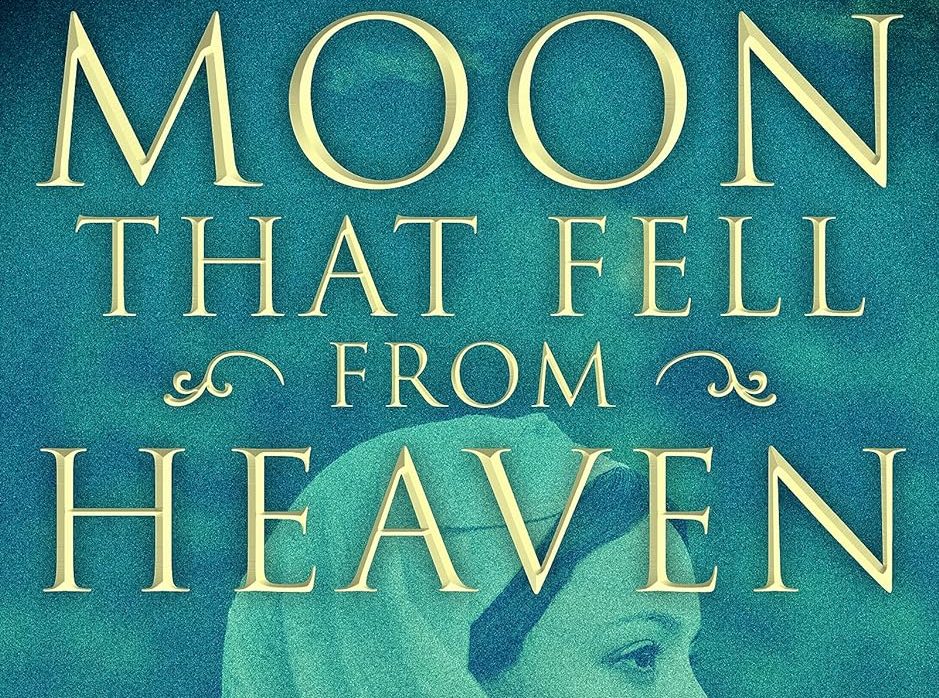
    N. L. Holmes, The Moon that Fell from Heaven (Red Adept Publishing 2023)

    https://www.goodreads.com/book/show/197978391-the-moon-that-fell-from-heaven?ac=1&from_search=true&qid=pS1MBuEiDJ&rank=1

    1213 BCE Ehli-nikkalu, king’s wife of Ugarit, is miserable. Her mother-in-law Sharryelli has all the power in the palace, and her husband King Niqmaddu disrespects her. He drops a clay tablet—an overture to some foreign king, perhaps the Mizri (Egyptians), planning an invasion of her father the great king of Hatti. She swiftly moves to warn her father.
    Amaya’s father is to take the message to Hattusha, but a murder intervenes. Chief scribe Ili-milku (real historical author of the Ba’al Cycle) brings the news to the queen. Amaya inherits her father’s mission and becomes involved in the effort to thwart the invasion. She and her siblings come to live at the palace.
    It opens full of action, and the story is full of suspense and palace intrigue. The dialogue doesn’t seem out of place for the period—difficult to do for such an ancient age—and the metaphors are time- and place appropriate (e.g. couriers ‘sweeping into a collective bow like a field of wheat in a breeze’; treason is ‘an asp whose bite might well kill itself rather than its intended victim’).
    The plot is already exciting by about Chapter 2, and the inter-relationships of the characters are interesting. Fear, pain, love, loss and remorse are expressed with great emotional depth. The portrayal of falling in love is wonderful—e.g. ‘her heart seemed to rise up her throat like a bird taking off’.
    Ehli-nikkalu is especially interesting. I loved how she was finally able to find her tears in the scene with the dead bird. Ili-milku’s reaction is a lovely balance between compassion and comportment befitting a courtier.
    It is clearly well-researched. Author’s Notes at the end of each chapter make the necessary factual and historical points, thus not clouding the spontaneity of the writing style in the narrative.
    Other novels in the series precede this story, bringing to life the history of a fascinating period.
    I received an ARC from the author.
  • Review: The Behaviour of Moths

    Review: The Behaviour of Moths

    Poppy Adams, The Behaviour of Moths (Virago 2009)

    https://www.goodreads.com/book/show/4539646-the-behaviour-of-moths?ac=1&from_search=true&qid=SnysdeNaQl&rank=1

    Ginny is waiting for her sister Vivi in the crumbling family manse. They are from a long line of lepidopterists (butterfly and moth collectors). Now they are both old.
    She looks back on their childhood, wondering what it was that changed everything. Vivi had slipped off the belltower 59 years ago and ruptured her womb. That was the start of it.
    ‘What have you done with the furniture,’ says Vivi, ‘all that priceless furniture?’
    ‘I didn’t sell any of the moths,’ she replies.
    She becomes, almost by destiny, ‘the Moth Woman’. Clive does experiments to find out ‘what makes a moth a moth’. He believes that moths—and other animals—have no awareness, only instinct. With his new Robinson’s trap, he catches a Nomophila noctuella.
    Vivi grills Ginny on the manner of their mother’s death—she had fallen down the stairs—but Vivi had not known their mother was a drunk. As Ginny, Vivi and Arthur conduct their own experiments on propagation and metamorphosis, Ginny struggles to keep secrets from everyone, only to find they have kept secrets from her.
    A beautiful and innovative Gothic-style tale. There’s not so much plot action-wise; it is mostly the story of the relationship between two sisters as it evolves and the tangled webs they weave. I really loved the metaphorical parallels between the metamorphosis of moths and the cycle of human gestation, birth and death. Woven into these themes are stories of historical debates and experiments in lepidoptery during the period.
    After reading this, I’m a little less disgusted by moths.

  • Review: Something about Ann

    Review: Something about Ann

    J. Everett Prewitt, Something about Ann (Northland Publishing Company 2017)

    https://www.goodreads.com/book/show/36556230-something-about-ann?ac=1&from_search=true&qid=f7CVDtR6Hu&rank=1

    This novella is comprised of twelve interconnected short stories following a group of African-American soldiers who faced traumatic experiences in Vietnam during the 1955-1975 war. The wartime experiences of this squad were covered in Prewitt’s earlier book, A Long Way Back.
    These stories talk about what it’s like to experience fear of death, horrific injury, blood and pain and grief—the devastating experience of dedicating one’s life to a cause that failed, a war that ended in embarrassing defeat.
    These fictional stories follow the soldiers after their return home. Clarence Bankston falls for a Vietnamese nail salon owner he meets at a party, Ann Minh. Acknowledging the discomfort of the situation, having established they both ‘left in ‘69’, she is the one who apologises. Her real name is Ly Trung Trac; she is married; she is North Vietnamese.
    Some of those who fought are still, years later, looking for revenge. As one veteran says, ‘if someone threatens you or your loved ones, and you are trained to kill, you tend to see every solution through the sight of your rifle.’ These vendettas intermesh with present-day conflicts over women or money.
    Each man faces his demons from the war as well as the racism and other ills of the society they returned to.
    It is written from the soldier’s perspective. Personalising the war experience recognises that the Vietnamese and the American soldiers were arguably ‘fellow victims’.
    I liked the device of masking perpetrator’s identities using foreigners’ pronunciation of names (Mr Krantz, Mr Clarence). The portrayal of ways in which the veterans’ inescapable trauma affects their present-day struggles is intimate and profound. I loved the intimate peeks into a veteran’s mind of the one shying away from a fight for fear of hearing something he’d heard before, the smash of a head against the wall ‘like a watermelon’, and the one who kept his pistol under his bed until his wife threatened to divorce him, and the one where a shared wartime experience is powerful enough to break down the black/white racism barrier.
    The ‘jungle’ metaphors are beautiful (‘like a sleeping panther that, if awakened, attacks’; ‘hunched like a water buffalo getting ready to charge’). The use of dialogue is excellent; the characters really come through.
    It is best to read this work as a collection of short stories rather than as a novella. This format—interconnected short stories—means that some loose ends are left when each episode concludes. That leaves the reader to wonder what connects the stories; they are all connected by the theme of the struggle to come to terms with wartime trauma and the particular struggle of black veterans. ‘Some say that war produces 100% casualties.’

  • Review: Krill

    Review: Krill

    em.thompson, Krill (Eccentric Directions 2024)

    https://www.goodreads.com/book/show/213563314-krill?ref=nav_sb_ss_1_8

    6 stars. Anarchist-geeks take over the country using internet technology


    John Tucker is about to jump off Suicide Bridge when he meets Kristy ‘Krill’ McGill. He talks him out of the deed by listing all the various painful and gory ways there are to kill oneself, and they strike up a friendship. Tucker tells McGill about his problems—a mountain of debt and a too-high mortgage after his wife left him. ‘Tyler can sort you out,’ he says, Tyler being someone who runs a hedge fund called Page-R, a ‘harmless little scam’.
    Tyler suggests ‘Faustian bargain’, and Tucker’s house in Crouch End is converted into a high tech hub for manipulating the DeepNet, staffed by ‘rowdy yahoos’. Tucker joins the team. And yet, it seems there is something else going on. They call themselves the New Praetorians.
    Tucker’s expertise from his corporate background, plus his new-found friends, enable him to cleverly turn the tables on his former boss at Poppy Seed Inc. He rejigs the company to fit the new objectives.
    The protagonist/narrator’s journey is an interesting one, and profound, and a unique writing style—straight-forward, yet personal and sometimes emotional—contributes to pulling us right in. It becomes a story of redemption. The description of ‘coming in from the cold’, the process of recovering from a suicide attempt, was extremely insightful. The love story is intricate. The dialogue is wonderful, really painting the characters.
    I found it a little bit strange that Tucker was roped so easily into Krill’s political programme. For someone to be in the top managerial position of a radical political programme to which he was ideologically ‘neutral’ seemed far-fetched. It’s an exhausting 117,000-plus words (needs cutting! Or dividing into Book 1 and Book 2) and gets long in places. By the time of the anti-IRA crackdown sub-plot, I was tiring.
    Contains the great metaphor: ‘he picked up the patters [patois] like fag ends off the street’ and the lovely phrase: ‘afraid to close my eyes, perchance to sleep and blunt my dreams’. His ex-boss’ calling his ex-wife ‘the Russian girl’ is a great story. I love how Berlusconi the cat has a role to play. The return to the Suicide Bridge theme at the end was skilful and brought balance back to the sub-plot filled narrative.
    The cyber-revolution gone bad is a common thriller theme, but the denouement to this one is especially exciting.