Tag: wellness

  • Review: The Diomedeia

    Review: The Diomedeia

    Gregory Michael Nixon, The Diomedeia  (DokNyx Publishers 2022)

    https://www.goodreads.com/book/show/61836881-the-diomedeia?ac=1&from_search=true&qid=mMz56SFyqy&rank=1

    Against a backdrop of the Mediterranean Bronze Age Collapse, the Sea Peoples prepare to invade Hittite capital Hattusa. The Great King Suppilulima II worships at the temple of the Storm God Tarhunta. His Great Queen Lieia-Hepa schemes to return Hatti to female rule and the dominance of the Goddess Arinna. Approaching the city, they encounter a band of refugees, including Diomedes, Trojan War veteran and once king of now-fallen Tiryns, who had been held prisoner. Henti, the ex-harem-girl, interprets. They learn that the royal family, priests and nobles have deserted, carrying with them the Hatti treasure. Diomedes and his warriors go in pursuit to Lawazantiya, cult city of the goddess. Suppilulima has a crazed plan, but Diomedes and Co ally with Queen Lieia-Hepa, who has her own plan. Kabi the Canaanite has a better idea.
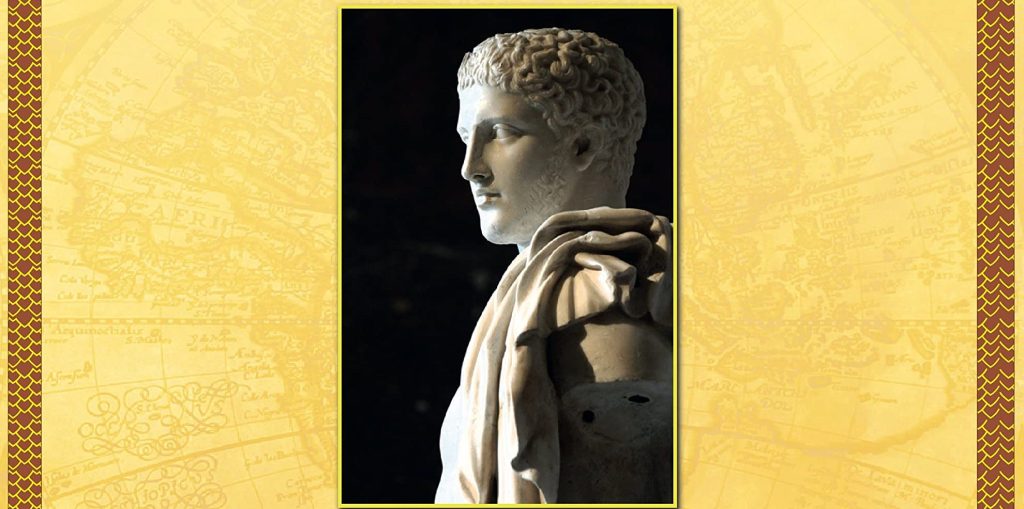
    The Diomedeia constructs a scenario that elucidates the collapse of the Hittite Empire, involving famous kings and generals we know from Homer and from history and who are listed in an appendix. Many of the stories we know from mythology, Jason and the Argonauts, the fall of Troy, etc. are told as tales by warriors to each other.
    I will grab up any book set during the Bronze Age, but this one is remarkable for what I assume is historical detail. A bit too much of it crammed into the first chapter, maybe, before we get a chance to get familiar with the characters. Some of it—descriptions of statues and rock carvings we can still see today—I think we could do without. It’s hard to say that, though, because we have little evidence of the period other than those artefacts and the occasional clay letter from one king to another.
    The dialogue could have been more natural by observing the ‘three beat’ rule—long utterances need to be broken up by action points, dialogue tags or responses.
    The war council between Kabi, Klymenos, and Sarpedon is great. From that point the plot and inter-personal drama become quite exciting, although the pace slackens towards the end as the fates of the Hatti and Diomedes and his People of the Sea are determined. The ending is disappointing, yet promises a continuation of series.
    Don’t miss the well-researched appendices. In fact, I recommend reading them first.
    This review was originally written for Reedsy Discovery.

  • Review: The First Man in Rome

    Review: The First Man in Rome

    Colleen McCullough, The First Man in Rome (Avon 1991)

    https://www.goodreads.com/book/show/480570.The_First_Man_in_Rome?ac=1&from_search=true&qid=LcqcJow4HP&rank=1

    Gaius Julius Caesar, grandfather of the future emperor, and his sons have joined the procession of Marcus Minucius Rufus’ inauguration to consul; his wife Marcia and their teen daughters Julia and Julilla join the crowd of spectators. Somewhere in the crowd is Gaius Marius. He runs into Caesar, who invites him to dinner. Despite humble origins, Gaius Marius was born to lead soldiers; Caesar sees it and offers him one of his daughters to wed.
    Next door to Caesar’s house is Sulla’s stepmother Clitumna. Lucius Cornelius Sulla sleeps with both his stepmother and his mistress Nicopolis, but he prefers boys, like Metrobius.
    Jugurtha, usurper to the throne of Numidia is on the outskirts waiting for permission to cross the pomerium. Close friends with Gaius Marius and Publius Rutilius Rufus, they were all twenty-three.
    Julilla has a crush on Sulla, and weaves for him a grass crown—a symbol of military victory. Nicopolis dies, leaving him a fortune. At 50, Gaius Marius finally has enough money to run for consul and leaves Africa in a mad dash for Rome. Wedded now to Julilla, things look up for Sulla, too.
    There is a crisis in the Roman army—too many have died. Marius builds a new army of recruits from among the proletarian Head Count, offering booty land as payment.
    The Germans in their 100s of 1000s are on the march, but Roman generals Gnaeus Mallius Maximus and Quintus Servilius Caepio are busy fighting each other, leading to the worst defeat in Roman history. Enter Gaius Marius’ African legions, sent to save the day for the Empire.
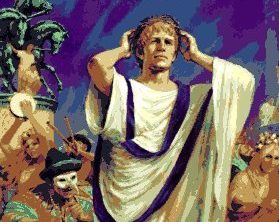
    This is Book One of the colossal Masters of Rome series.
    These people we know from history come gorgeously to life; the intricacies of Roman class politics are portrayed vividly. Marius’ military campaigns in Numidia and Gaul are not just discussions of armour and battles, but also feature debates over strategy, inter-personal politics and even espionage.
    Told through the strong Voices of Gaius Marius, Sulla, Julia, Jugurtha. I can’t decide which I loved more, the juicy historical accuracy or the wonderful story-telling. 2000 years ago, but the characters and their letters and conversations are as natural as those of you and your neighbours. The only trouble is there’s a lot of complicated names to learn, but that’s Roman history’s fault not McCullough’s. She helps by making the characters colourful and memorable. I wish I knew how she sniffed out all the intricate inter-personal scandals behind every dollop of historical fact. If purely invented, it is totally believable.

  • Review: The Grass Crown

    Review: The Grass Crown

    Colleen McCullough, The Grass Crown (Avon 1992)

    https://www.goodreads.com/book/show/3424.The_Grass_Crown?ac=1&from_search=true&qid=kWftwdXP4c&rank=1

    This Book Two of the Masters of Rome series follows the political and personal lives of the famous men and women of ancient Rome.
    Gaius Marius, Lucius Cornelius Sulla and Publius Rutilius Rufus dine together. Marius announces his intention to go on pilgrimage to Pessinus, but his friends know he wants to check out what’s going on in Cappadocia.
    Quintus Caecilius Metellus (Piggle-wiggle) is out for blood, and Marius’ man Manius Aquillius is on trial. Sulla is about to leave for Spain on campaign. Marius takes his family to Patrae, then Athens, then Helicarnassus and in the spring, on to Pessinus. Young Gaius Julius Caesar is a precocious lad, and Aurelia hires a pedagogue. The rivalry between Sulla and Piggle-wiggle escalates.
    In Sinope, King Mithridates of Pontus reads a letter—Gaius Marius wants to meet. Mithridates travels incognito. He is out for conquest.
    Marius and family make it to Bithynia, where he becomes involved in politics with Mithridates and Nicomedia.
    Marcus Livius Drusus dreams of ‘a general enfranchisement for the whole of Italy’; Quintus Poppaedius Silo, an Italian, dreams of Italian ‘secession from Rome’.
    Drusus is determined to get his law passed emancipating the Italians. Their spokesperson thwarted and murdered, leaders of 14 Italian peoples decide to use threat of war. The early victories in the Social War go to the Italians, giving Rome a fright. Though Rome eventually wins, the Italians win their citizenship.
    The story follows the lives of Young Caesar and Young Marius. Young Caesar attends upon Marius after his second stroke. Caesar pulls Marius back into politics, and Marius begins to train him. Young Marius kills Lucius Cato the Consul in a mutiny, which saves a battle. Sulla is awarded by his men a Grass Crown. Sulla massacres Aeclanum.
    Despite his infirmity, Rome wants Marius at the helm against Mithridates, and Sulla is told to hand over his legions. Instead, he invades Rome. But the troops rebel. On the run from Sulla, Marius flees and takes shelter at Cercina.
    At the ludi Romanii, Lucius Cornelius Cinna makes his move to introduce laws regarding the distribution of new citizens and for the recall of 19 fugitives—including Gaius Marius. The controversy leads to the Massacre of Octavius’s Day.
    The story finishes with the tale of the battle between Cinna and Gnaeus Octavius Ruso and the deadly rivalry between Marius’s faction and Sulla’s.
    The scope of this novel, encompassing the gamut of Roman history, both political and personal, during the 1st century BCE, means learning a lot of complicated Roman names, more so than Book One, which was mostly Marius and Sulla. It takes you through the Senate meetings, the patricians’ dinners, the war strategy and the battlefields as if you were there yourself.

  • Review: Fortune’s Favorites

    Review: Fortune’s Favorites

    Colleen McCullough, Fortune’s Favorites (Avon 1992)

    https://www.goodreads.com/book/show/182430.Fortune_s_Favorites?ac=1&from_search=true&qid=pVcjWHWMSa&rank=1

    Book 3 in the Masters of Rome series continues the tales of famous Roman leaders of the 1st century BCE.
    Gaius Marius is dead after leading a bloodbath. Young Caesar is Flamen Dialis, which he finds limiting, and married to a young girl.
    In a land devastated by the recent Social War, all of Italy was choosing sides between Sulla and Gnaeus Papirius Carbo, Sulla standing for the old aristocracy, Carbo for the new commercial class.
    Unloved in her family and in her marriage, Servilia jealousy safeguards the interests of her son Brutus. Brutus suggests Carbo share his consulship with Young Marius. Marius calls the Julii to a family meeting, where Caesar eyes Marius’s wife Mucia Tertia.
    Most of its leaders either dead or in exile, Rome is in crisis and elects Sulla Dictator. He proceeds gleefully to take down all statues of Gaius Marius and implement a widespread terror of proscription.
    Caesar resigns his flaminate and goes on the run. Sulla reworks the Roman mechanism of government to suit his own purposes and in the best way to curtail Pompey. Caesar leaves for Asia to serve under Marcus Minucius Thermus, travelling with two servants and the German giant freedman Burgundus. Thermus sends him to King Nicomedes in Bithynia to raise a fleet. Caesar, aged 19, is given a difficult command in the siege of Mitylene, ending in defeat for Mitylene. Caesar is awarded the corona civica.
    Sulla gets involved with the politics of Egypt, and there is war with Tigranes. Lepidus and his legate Marcus Junius Brutus are marching on Rome, and the Senate sends Pompey against them.
    Off the island of Pharmacussa, Caesar is seized by pirates. The ransom is twenty silver talents. Caesar says, ‘Is that all? I’m worth fifty.’ Once ransomed, he returns and crucifies 500 of them. Mithridates invades Bithynia and Cilicia.
    Convicted of mutiny, the Thracian Spartacus elects to become a gladiator and embarks on the Third Servile War. Infamously, Crassus crucifies one in every 100 feet from Capua to Rome.
    Pompey, only a knight, aims to run for consul. Crassus hires Philippus to do his bidding in the Senate. Crassus sends Caesar to negotiate with Pompey, and he makes a deal with him, proposing a plot. Pompey and Crassus are elected consul in absentia and hold triumphs.
    Much of the tale is about battles and battle strategies. There are many, many complicated names and family and political relationships to keep track of, which, while unwieldly for the reader, is a testament to McCullough’s scholarship. Like the first two books, it includes hand-drawn maps and portraits of the main characters.

  • Review: Sherlock Holmes and the Strange Death of Brigadier-general Delves

    Review: Sherlock Holmes and the Strange Death of Brigadier-general Delves

    Tim Symonds, Sherlock Holmes and the Strange Death of Brigadier-general Delves (MX Publishing 2022)

    https://www.goodreads.com/book/show/60681721-sherlock-holmes-and-the-strange-death-of-brigadier-general-delves?ac=1&from_search=true&qid=V5jiQVVlUI&rank=1

    Dr Watson meets with Col. ‘Maiwand Mike’ Fenlon, an old military comrade, to reminisce about Afghanistan. Fenlon has been invited by Brigadier-general Delves to come to Guernsey to discuss the Battle of Maiwand, about which he is writing a book. There are questions. Why did Delves rush into battle, for example, when reinforcements were on the way? Why did, at every step, he seem to command defeats?
    A telegram arrives for Watson from Fenlon in Guernsey urgently requesting his assistance. Delves is dead and Fenlon accused of murder. Delves dies, after pub crawling with Fenlon, of alcohol poisoning topped up by opiate mixture Chlorodyne, a vial of which was found under Fenlon’s chair. Fenlon has written an account of it, placed in an envelope in a bank vault, only to be opened after his death. He refuses to say anything in his own defence.
    At the last moment, Holmes appears, as witness for the prosecution! He testifies that the fingerprints on the vial indeed match those of Fenlon. They are reminded of Holmes’s previous case, the Case of the Norwood Builder.
    Fenlon dies, and Watson opens the envelope, and the whole story is revealed.
    The narrator is Holmes’s ‘biographer’, Dr Watson, but there’s a long section, with the opening of the envelope, when we lose track of who’s narrating (presumably Fenlon). Like all Holmes cases, this one has something of the quirky about it. The story hooks the reader with a good pace, building suspense until the opening of Fenlon’s bank vault document reveals the backstory. I couldn’t quite understand why the document could only be read after Fenlon’s death.
    A long ‘Miscellany’ section at the end goes into absolutely everything.
    Over 100 authors have written new stories featuring the Sherlock Holmes. Tim Symonds has written eight novels starring the famous detective.
    This review first appeared in Historical Novels Review.

  • Review: The Witch in the Well

    Review: The Witch in the Well

    Camilla Bruce, The Witch in the Well (Tor Books 2022)

    https://www.goodreads.com/book/show/55077699-the-witch-in-the-well?ac=1&from_search=true&qid=gVhigj6vIT&rank=1

    200 years ago in the town of F-, Ilsbeth Clark drowns in the well.
    Elena Clover is dead, and schoolteacher Catherine Evans wants to write the true account of it, to exonerate herself. She remembers a happy childhood with Elena.
    Elena is clearing out the house, called ‘the castle’ of her deceased Uncle John. She remembers a rather supernatural experience from childhood. She is very drawn to the well.
    Cathy happily researches the story of Ilsbeth. Then, Elena announces she will write her own book, and her version is very different, suggesting a female-driven magic cult. Elena claims a ‘soul connection’ to Ilsbeth, their consciousnesses intertwined. Ilsbeth’s soul imparts her witchcraft to Elena.
    Cathy and Elena have it out, but Elena refuses to halt her book. Elena is visited by a white horse, Ilsbeth’s token? She finds a dead rabbit on her doorstep and catches Cathy breaking into her house. She takes out a restraining order.
    Ilsbeth, reluctantly wed to Archibald Clark, enters an affair with the reverend Owen Phyne. Her mother Anna gives her a ‘daemon’, which she releases into the well, from there to consume quantities of raw meat.
    The plot, which mostly deals with the relationship between Cathy and Elena, unravels slowly. It’s page 241 until the death of Elena is narrated. It’s page 265 until we learn what childhood event influenced Cathy.
    The narrative probes deeply into the characters’s feelings. While Elena is obsessed with ‘Ilsbeth’s soul’ Cathy becomes obsessed with stopping Elena’s book. Point of view shifts between Cathy and Elena, and Ilsbeth, including excerpts from Elena’s diary and Cathy’s book, making an patchwork of material.
    Cathy, Elena and Ilsbeth are all, due to their obsessions, unreliable narrators. Is witchcraft real? Are daemons really eating children? How does it work? This gives the story a dream-like quality.
    This review first appeared in Historical Novels Review.

  • Review: The Weather Woman

    Review: The Weather Woman

    Sally Gardner, The Weather Woman (Head of Zeus 2022)

    https://www.goodreads.com/book/show/62079482-the-weather-woman?ac=1&from_search=true&qid=LE57yQhoTL&rank=1

    Russian girl Neva Friezland has a gift—she can predict the weather.
    Regency England January 1789.The Thames is frozen over, and London is enjoying a winter Frost Fair. Three-year-old Neva mimics the sound of ice melting, but the adults don’t heed her warning. She can also read ‘the weather inside people’. Her mother, fiery red, and her father, ice-blue, fight constantly, and she lives in terror.
    An accident kills her parents, and Neva takes up with clockmaker Victor Friezland, who also is Russian. She wears boy’s clothes, puts on blue-lensed spectacles, and calls herself Eugene Jonas. People are noticing that her predictions about the weather always come true. Victor fears for her safety and builds an automaton to have her speak though.
    Neva meets Henri Dênou, Lord Wardell’s nephew, who gives her a shiny black pebble. Henri bets on her forecasts and wins. In the guise of Eugene Jonas, she goes to a club with Henri Dênou and has a whale of a time.
    Though it’s not a comedy, there are errors of miscommunication and misunderstanding. Mix-ups arise when lovers don’t declare themselves, mix-ups which are complicated by them dressing up as the opposite gender. Letters remain unsent.
    Victor’s death—and his surprising will—brings all the characters into conflict.
    Any period would love to have a magic weather predicting machine, but there’s a quirky Regency feel to the story of Neva’s special power. This is a period when people were fascinated by magicians and mesmerism and when the provision of public entertainment for the masses was just beginning.
    Modern readers can appreciate a tale of female empowerment, and there’s a climate change message in Neva’s predictions.
    The early chapters, the three-year-old voice is very good; Neva’s voice is strong throughout. The interplay between characters is full of love, jealousy, greed, skulduggery.
    This review first appeared in Historical Novels Review.

  • Review: The Bitcoin Conspiracy

    Review: The Bitcoin Conspiracy

    Tom Callahan, The Bitcoin Conspiracy (Kindle 2023)

    https://www.goodreads.com/book/show/196444218-the-bitcoin-conspiracy?ac=1&from_search=true&qid=oT9t9x2V4l&rank=1

    The mysterious ‘Sakashi Nakamoto’ introduced the world to Bitcoin in 2008. But will it change the world, overthrow global capitalism, bring down corrupt governments and corporations? Or is it just one more new technology?
    Zhang Wei of China and V V Petrov of Russia strike a devilish conspiracy to challenge the Bitcoin cryptocurrency. Meanwhile, the offspring of two US heroes—Laura Roberts and Tom Michaels—connect. Laura teaches at Johns Hopkins and researches cryptology and espionage; Tom is chief of the China desk at Langley and learns Mandarin.
    Nakamoto’s hoard of bitcoin reaches 70 million USD, but he doesn’t emerge to claim it—the ‘Satoshi Hoard’.
    The story plays on the popular myth that cryptocurrency could undermine hegemony of the dollar, if not bring down global capitalism, and the Sinophobic conspiracy theory of Wuhan laboratories developing the C-19 coronavirus as a biological weapon. It also works in references to real history. As well as the history of money, currency and cryptocurrency, we have the now-familiar picture of a moronic US president and a Russian invasion of Ukraine.
    We spend a good few chapters just getting to know the characters, who all have extraordinary backgrounds and impossibly wonderful talents. Full of sumptuous metaphors (e.g. the US is a ‘captivating starlet’ with ‘geopolitical finesse’), over-generous with adjectives. I loved the idea of encoding secret words into the blockchain.
    A great Concept, good Plot—which gets quite exciting in the latter third—and well structured, though not quite techy enough nor thrilling enough to be a techno-thriller. The tantalising ‘Chekhov’s gun’ of the Wagner PMC insignia is left hanging, as are the Johnson family. I wanted to read action and dialogue-packed scenes of how one ‘channels vast quantities of nuclear power into [an] illicit Bitcoin mining enterprise’; how one ‘[weaves] a thick web of misinformation and deception’; how one ‘uncover[s] a chilling trail of collusion and corruption’.

  • Review: God’s Vindictive Wrath

    Review: God’s Vindictive Wrath

    Charles Cordell, God’s Vindictive Wrath (Myrmidon Books 2022)

    https://www.goodreads.com/book/show/60806288-god-s-vindictive-wrath?ac=1&from_search=true&qid=exvRkjkbrE&rank=1

    1642 Warwickshire. Francis Reeve looks up to the hill carving, the Red Horse, and down upon the king’s forces, among whom is his half-brother Ralph. On the other hill, Ralph thinks about Francis. Why had he sent that angry letter? Perhaps Francis was still angry with Ralph for being caught with his master’s wife.
    This is an exciting, minute-by-minute story of the English Civil War, from the Battle of Edgehill to the Battle of Brentford. It’s told from multiple points of view, enabling us to see battles from all angles, but largely through Francis and Ralph. On opposing sides, the half-brothers must ultimately confront each other. That the author was a career soldier himself is evident in the detailed descriptions and analyses of battle strategies. We learn about Dutch-style defence, Swedish King Gustavus’ brigade formation, as well as the mechanics of cannons and muskets.
    We are used to looking at historical battles from a bird’s-eye-view, since we know the outcome. This is from the soldier’s point of view—do-or-die determination for the cause, hearts filled with fervour yet terror, eyes witnessing pain, blood and death, never knowing what the overall state of play is until after it is all over.
    Most of these characters are known to history. Though the detailed accounts of battle and multiple points of view don’t leave much time for character development, their lively interactions bring the reader right into the scene.
    The attention to historical accuracy is fantastic. I was impressed by the duplication of the religious expression that was especially characteristic of this revolution. Also well portrayed are the lifestyles of people at the time, not to mention the gore and mayhem of war. Both the storyline and the writing style are tremendously exciting.
    Contains some sex, swearing and gore. Fans of military fiction will love this.

    This review first appeared in Historical Novels Review.

  • Review: The Awakening Aten

    Review: The Awakening Aten

    Aidan K. Morrissey, The Awakening Aten (Troubador Publishing 2019)

    https://www.goodreads.com/book/show/45997590-the-awakening-aten?ac=1&from_search=true&qid=Z8HRePsJjs&rank=1

    1420 BCE. In prison, Yuya interprets Perneb’s dream and tells him about the ten laws of the One God. Then, King Amenhotep’s (II) guards come for him. The king has had a dream. Yuya interprets it as foretelling famine, and the king appoints him Overseer of the King’s Granaries.
    They are going to war against the Naharina (Mitanni), who are anxious for revenge after their defeat at Megiddo and have now formed an alliance of seven princes with Nubia and the Hittites. Royal tomb painter and architect Kha and stonemason Minmose are commissioned to immortalise the expected victory in stone.
    The battle is won, but Kha is horrified by the carnage. A Mitanni princess is taken captive and given a Kemetian (Egyptian) name, Mutemwiya. Prince Thutmose has a dream instructing him to renovate the Great Sphinx, at the time buried up to its neck.
    Haqwaset grows under the influence of grandfather Yuya; he becomes Amenhotep III. He has some 300 wives and concubines but prefers the company of his Chief Wife Tiye. He has designs for young Thutmose, his eldest, to be high priest of Ptah and Anen, Yuya’s son, to be high priest of Amun. He corresponds diplomatically with the rulers of neighbouring lands and entertains ambassadors. Tension grows between him and the priests of Amun.
    Amun priest Nahkt plots to rob the tomb of Thutmose III and threaten the king himself.
    The beginning leaves out from the familiar myth the juicier bits (the coat-of-many-colours, Potiphar’s wife) and instead focuses on the less interesting details (the stocking of the warehouses). I understand that the Amun/Aten conflict was one of class, but as it played out in religious matters, I would like to have seen more discussion of the relative merits of monotheism/Aten worship. Basing the plot around this class struggle would have been a ‘bigger’ plot, in my view, than a tomb robbery. The plot contrives a plausible scenario whereby certain persons and items were buried in certain tombs.
    Morrissey goes with the identification of Yuya, father-in-law of Amenhotep III, as the biblical Joseph, a hypothesis with some merit. Thanks to the Egyptians’ tomb paintings and marvellous preservation of their dead, we know quite a lot about Yuya and the family of Amenhotep III, and around these details, Morrissey has constructed a narrative. This is also the period of the Amarna Letters, providing much juicy detail about the relations between Egyptian kings and other neighbouring royalty.
    The is Book 1 of The Aten Saga series.