Tag: wanderlust

  • Review: Madrigal

    Review: Madrigal

    Christophe Medler, Madrigal (2021)

    https://www.goodreads.com/book/show/58362013-madrigal?ac=1&from_search=true&qid=YVwtxOo6VP&rank=1

    1642, England is in the midst of civil war. The king is weak, following first one policy, then another. The confusion of the period has spawned spies, plots and conspiracies. Sir Robert Douse learns that six men have a secret plan, code-named ‘Madrigal’, which promises to end the conflict and keep the king on the throne.
    It reads like a detective story, uncovering the Madrigal plot clue by clue, which is quite exciting, with an exciting conclusion. Historically, in fact, there was a similar plot, referred to as the ‘Waller Plot’, recounted here as ‘Crisp’s Plot’, intended to restore London to the Royalists, and a number of characters in this novel played a role in this. This is a wonderful literary device—taking something from actual history and fictionalising it, maybe even ‘sexing it up (figuratively)’.
    17th century language—‘good sir’, ‘how goes thee’, ‘pray what’–is used only sporadically. Nonetheless, Medler beautifully portrays the period. We get a feel for what everyday life must have been like during this upheaval–leaving windows open so one could easily escape if Roundheads raided the place; the necessity of acquiring permission from Parliament to enter London; the wait for sometimes weeks to hear the outcome of a battle. Not to mention the normal things like how they spent Christmas, how they made ink. In no other book have I read of the labour it took to fill those copper bathtubs, nor of how good it felt to undo the buckles on one’s breeches after a long ride, nor of how a highwayman can distinguish whether his victim is a Parliamentarian or a Cavalier!
    We get a sense of just how much partisans, as they travelled from battle to battle, relied for billeting on safe houses, sympathetic estate-owners and loyal innkeepers along the way. It must have required substantial intelligence to know which venues held to which side; it is also testament to the author’s superb research.
    The text is illustrated, in beautiful black and white drawings, to show what the Boar’s Head Inn, Lincoln’s Inn, a 17th century print shop, a ‘molly house’, etc. looked like.
    Such a fabulous subject matter, yet the text could have benefitted from some tighter editing.
    Minor points: why would the Parliamentary spy Marchal reveal crucial clues on his deathbed? I don’t think even nobility back then would have referred to the king as ‘Charles’. They didn’t refer to the Virgin Queen as ‘Queen Elizabeth I’; II hadn’t existed yet. The word ‘sadomasochism’ hadn’t been invented yet. The ‘Doomsday Book’ is spelled ‘Domesday’. At the first mention of ‘the Rump’, we probably need a bit of explanation.
    Major plot flaws are: if Robert is loyal to the king’s cause, why would he be keen to intercept a plot designed to bolster the king? Why is so much attention given to discovering who are the parties involved in the plot and where the pieces of paper are on which the document is written, without finding out what the plan of the plot actually is? The ‘Waller Plot’ planned an armed invasion of London. We never hear what Madrigal intended.
    Britain during the Glorious Revolution was in a state of ‘dual power’; people were crying out for democracy, and the bourgeoisie were chafing for power. Whatever conspiracies did or did not succeed, the revolutionary upsurge would have found some other way to surface. And in fact, something like the Madrigal compromise did happen, with the restoration of Charles II, a key architect of which was Fairfax, one of the Madrigal conspirators. However, this reaction was due more to the weakness of Britain’s bourgeois class than to any spies or conspiracies. But, it’s a novel, not a history book. The premise of this novel is wonderful. It is not far from what really happened and is well worth the read for historical fiction lovers.
  • Review: The Lazarus Charter

    Review: The Lazarus Charter

    Tony Bassett, The Lazarus Charter (The Conrad Press 2020)

    https://www.goodreads.com/book/show/50995863-the-lazarus-charter?ac=1&from_search=true&qid=21DEe9LR4b&rank=1

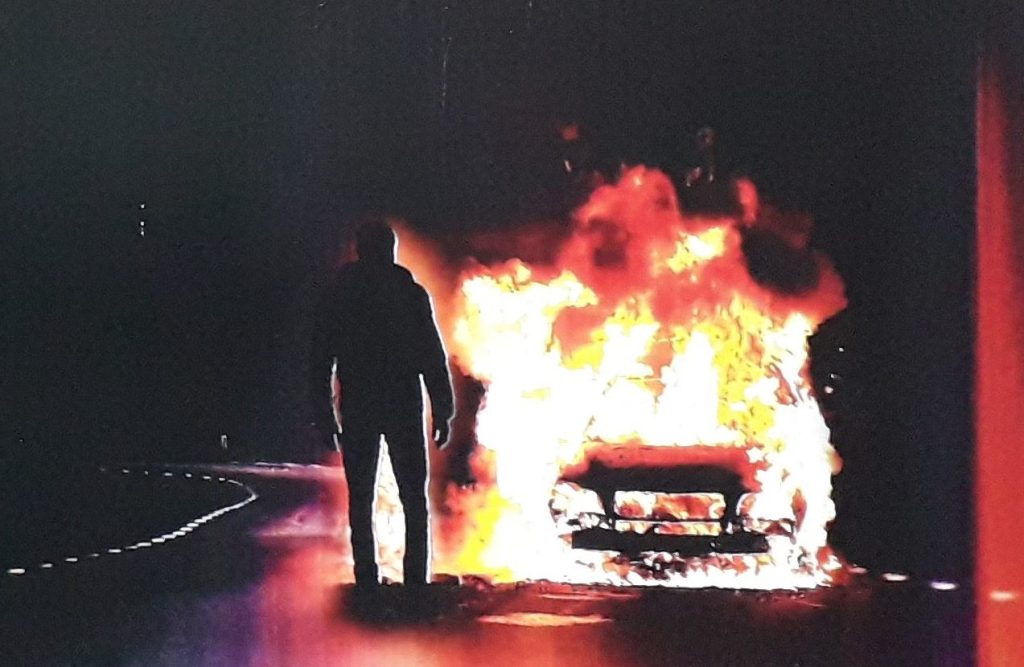
    Bob sees his friend, Prof. Gus Morley, getting off a train at Euston Square, a train he shouldn’t have been on, on a day when he shouldn’t have been there. Five weeks earlier, he’d attended the man’s funeral, so his wife Anne thinks he was imagining things. Gus, a government scientist, had been in a terrible traffic accident where the car ended up in flames.
    Bob tracks down Gus, who has changed his name and his appearance. Earlier, Gus had almost been run down by a lorry and was also involved in a drive-by shooting. After three suspicious incidents: the lorry, drive-by shooting, and burning car, Anne finally believes him and pledges to help him play detective (in fact she makes most of the breakthroughs).
    Then an associate professor goes missing and turns up poisoned.
    A bizarre plan seems to have been carried out, to fake Gus’ death. Who did this? And why? Bob and Anne are drawn into an ever-developing plot as they uncover the pieces to the puzzle. Men from some organisation are trying to kill them or kidnap them. Are they from Russian military intelligence agency? Or are they British military forces?
    The detective story is quite realistic. It’s quite difficult to obtain information from pub staff, taxi drivers, ex workmates, etc.; even police find it hard to get people to open up. I found that the interviewees of the sleuthing couple were no more nor less forthcoming than would have been the case in real life. The puzzle pieces all make sense and fit together credibly. The Russians talk the way Russians really talk. I like that in a detective story.
    It also helps that the action takes place in mostly beautiful English country towns, with people calling each other ‘old bean’. The story could make a Midsomer Murders-type TV episode. I’m picturing Tommy and Tuppence Beresford.
    It would have been fun to have some more intricacy concerning the potential involvement of ‘the Russians’.
    The sleuthing process starts out very slowly. It was a quarter of the way through the book before he even got Anne to believe him. The most important factor—the fact that Gus had been doing drone weapons research—isn’t revealed until page 136. The murder doesn’t take place until page 204. I would have liked a faster pace, especially in the earlier bit. If something like this happened to you in real life, the amateur sleuthing would be a fun project for you and your wife to do together, and the recounting of it would be a perfect conversational gambit at a party or at the pub, but as a novel, the story doesn’t get exciting until halfway through the book. After that, though, it’s quite exciting, and even at the end, new complications arise and new perps are unveiled.
    This story seems to have been inspired by, and is dedicated to the victims of, the Russian poisoning incidents of 2008 and 2018, and it’s a great read.

  • Review: Tarō

    Review: Tarō

    Blue Spruell, Tarō (Out of the Blue Productions 2021)

    https://www.goodreads.com/book/show/57590409-taro?ac=1&from_search=true&qid=CrIcEVSzMv&rank=2

    In Japanese families, Tarō is a sort of generic name for the eldest son, where Jirō is the second born and Saburō is the third, so one could think of a story about a boy named Tarō as a story about Everyboy.
    Kintarō (Golden Boy) is the legend of an actual historical person, Sakata no Kintoki, a renowned samurai of the 10th century Heian Period, who became legendary as the chief of Minamoto no Yoritomo’s shitennō (four braves). Urashima Tarō is an 8th century fairy tale about a fisherman who is carried on the back of a giant sea turtle to the Dragon Palace under the sea where he is loved by the Princess Otohime. Momotarō (Peach Boy) is a fairy tale first written down in the 17th century about a boy born out of a giant peach.
    Spruell borrows from these three traditional folk traditions, weaving the ‘three faces of Tarō’ (fictionally) into one archetypal boy, Takeda Shingen, who was a real person from the Sengoku (Warring States) period of the 16th century. This is an innovative literary device, and one I have not seen before.
    The story opens on Tarō, on the occasion of his 7th birthday, being presented by his father Takeda Nobutora with a traditional wakizashi (short sword), before a pilgrimage to the shrine where they are ambushed and his father killed.
    Competing daimyō (lords) vie for influence over the young emperor, and treachery is afoot. Along with Tanuki, his badger sidekick, Tarō enters into the service of Lord Tokugawa in Edo (now Tokyo) and enjoys his first bath, first kabuki play and an excursion to the ukiyo ‘floating world’ pleasure district. His eye is caught by Kamehime, the lovely daughter of the lord.
    He enters into training as a samurai, surprised to find that his sparring partner is Kamehime. As well as wrestling, archery, sword and spear fighting Tarō learns the more spiritual lessons of bushidō. His tutor’s taunt, ‘You don’t know yourself, Tarō’, haunts him, and he learns that lesson (no spoilers) to his chagrin. His destiny now clear to him, he carries out one final mission, aided by his ability to talk to the animals. The final climax is exciting, a fictional retelling of the Battle of Sekigahara!
    Exciting figures from Japanese history—Tokugawa Ieyasu, Oda Nobunaga, Hashiba Hideyoshi, Sen no Rikyū, Ikkō-Ikki warrior monks and castle wall-scaling ninja assassins—pop into a story peppered with magical creatures—a shape-shifting tanuki (badger), sumo-wrestling tengu (demons), a turtle-backed kappa, a rokurokubi monk with an elongated neck and a cave-dwelling yama uba (mountain witch) with an enchanted mirror. Spruell paints a colourful portrait of a fascinating period of Japan’s history, with just enough witches, goblins and shape-shifting talking animals to make the tale juicy. In the fight scenes, the author’s experience as a martial arts instructor is evident.
    As a devout Japanophile, I devoured this book with relish. It’s gorgeously written and also beautifully illustrated. The borrowing from the Tarō folk traditions lend one to expect it to be for children or YA-targetted, but if so, it should have been shorter and the history/politics should have been simpler. It does feature a bit of gore and some adult topics, and some of the yōkai (ghosts/demons) of Japanese folk tradition are quite nightmarish. If intended to begin with for an adult readership, it could have featured the history/politics in more depth. Anyway, as an adult, I enjoyed it immensely, and I would read it to my children if they were older than about 10.
    Tiny niggles were that the placing of Yama Uba’s magic mirror within the narrative is in places clumsy, and a late scene of Tanuki in the ukiyo seems superfluous.

  • Review: The Sower

    Review: The Sower

    Rob Jung, The Sower (Hawk Hill Literary 2021)

    https://www.goodreads.com/book/show/57635713-the-sower-book-two-of-the-chimera-chronicles?ac=1&from_search=true&qid=7cmOzROmcO&rank=1

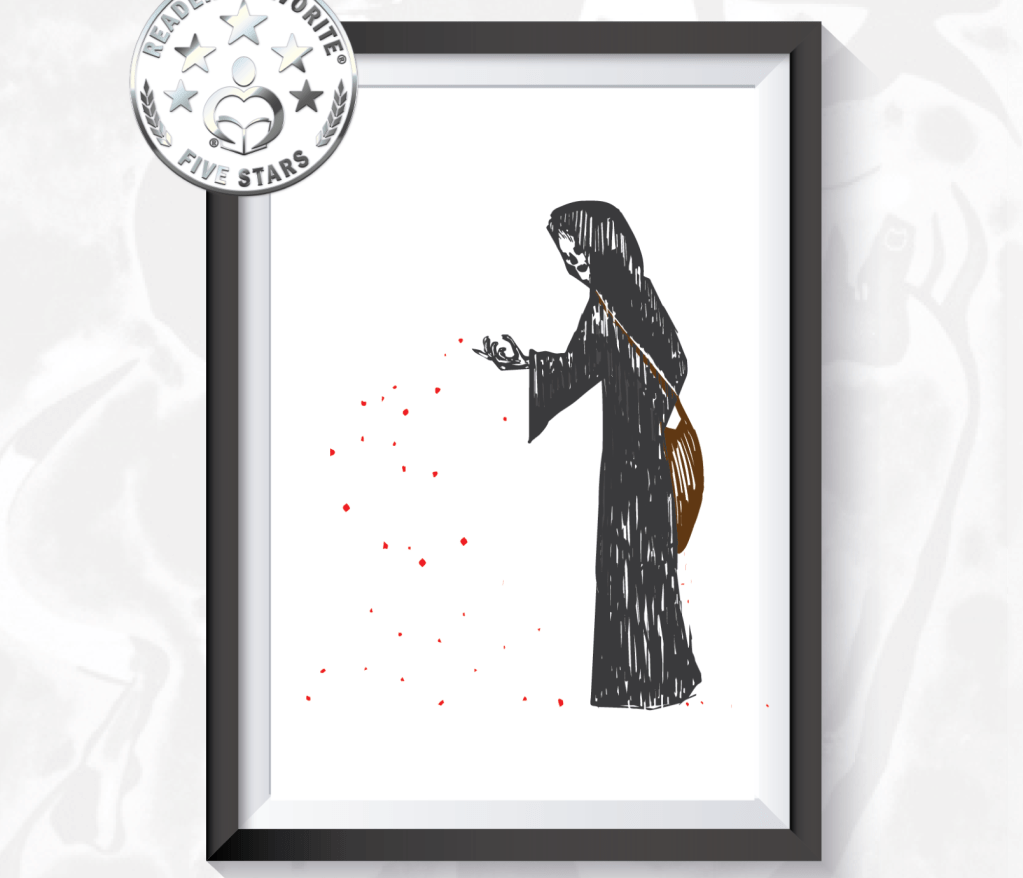
    This book is the second in a series, and I haven’t read the first one, but it works as a standalone. It continues the story of The Reaper, a still-lost painting by Spanish artist Joan Miro, which disappeared from the 1937 Paris Exposition.
    Trans P.I. Ronni’s detective agency is investigating the cold case murder of Lorraine Blethen, hired by the woman’s grandson, Hamilton. But someone is trying to stop her, slashing her tire, burgling her house—transphobes? or someone trying to thwart her investigation?
    Hamilton’s only clue regarding the existence of his mother, who left him when he was 4, was an enigmatic graduation card signed ‘Magnolia’. Could Massachusetts senatorial candidate Magnolia Kanaranzi, with her connections to media mogul Arthur Kincaid, have had a secret love child? No one seems to have any information on Magnolia’s childhood. Now, the museum has received a tip-off that The Reaper, sold to them by Hamilton, is a forgery.
    Ronni tries multiple lines of inquiry, and multiple suspects pop up. There’s a spate of trans murders in Dallas. Meanwhile, shenanigans are kicking off in Magnolia’s senatorial campaign, and disgruntled staff from her election campaign enter the picture.
    It’s very carefully edited. The characters are interesting, the dialogue lifelike, and the writing style fluent and witty. I feel compelled to mention the cleverest description I’ve ever come across of someone who has undergone a sex change—’a “T” in that familiar string of letters (LGBTQ), and a relative newcomer to the status of “W”’.
    As someone who has not read the first book in the series, I would have appreciated a brief rehash of what happened in Book 1. The detective investigation is interesting and believable, and the multiple story lines make the plot quite complex, and it even has a love story. The Lorraine Blethen plotline and the Magnolia Kanaranzi plotline come together at the end in a thoroughly satisfying way. This novel has all the elements of a great crime thriller.

  • Review: A Deadly Harvest

    Review: A Deadly Harvest

    Scott Dovala, A Deadly Harvest (SD Publishing 2021)

    https://www.goodreads.com/book/show/58005553-a-deadly-harvest?ac=1&from_search=true&qid=tG8D6vei15&rank=1

    Starts out rather cliché—Peter Lansing, world-renowned photographer, an overnight success at age 17, gets sick of his city job, experiences road rage, goes into a bar, chugs down two vodkas while he examines himself in the bar’s mirror. He buys himself a house in Healdsburg next to a vineyard.
    Carlo Vinetti, from a wine-making family in Aosta, Italy, loses both his parents to cholera and goes to live with his uncle Marcello in New York. He learns the bread-making business in Marcello’s bakery, but he just doesn’t get along with his aunt Angela. Then one day there’s a gas leak and fire, and Marcello doesn’t make it out. Angela kicks him out, and he is taken in by Marcello’s friend Enrico Genovese, who offers him a job at his restaurant as a pastry chef. At night, he yearns for vineyards. With the proceeds from selling his parents’ vineyard, he buys a vineyard in Petaluma, near Healdsburg.
    He meets a beautiful girl, Catarina Sorrentino, and in a year’s time, he marries her. As their vineyard matures Catarina dies in childbirth, and Carlo raises the child, Christoforo, on his own. Christoforo grows up, goes to university, joins the Marines and serves in the Pacific War. In Okinawa, he faces hand-to-hand combat with a Japanese officer, while watched by a boy from the jungle. He comes home and marries the daughter of another Sonoma County wine-maker, soon blessing Carlo with a grandson, Gio, but the boy’s parents are killed in a train crash, leaving Carlo with another baby to raise on his own. Gio grow up, joins the Army, serves in Vietnam, where he distinguishes himself in Apocalyse Now-style combat, before being wounded, when he falls in love with a British nurse. Gio waits for her to join him in California, but one day he receives a letter, not from her, from her mother, saying she was to marry a British barrister.
    Gio spots a change in the market and want to switch to making higher-end wines, but Carol won’t have it, so Gio starts producing fancier wines without telling him. Carlo dies, and Gio plans to launch his new boutique wine with a fancy advert, hiring his friend, Peter Lansing. Peter is stunned by the beautiful model Gio has recruited to star in the ad, and the two begin a whirlwind romance, but their jet-set work schedules get in the way. Emily finds she has a weekend free and plans to Peter for a romantic weekend in Bordeaux wine country.
    But the unscrupulous businessman Hakata is out to get Vinetti Vineyards.
    The story of how the grape harvest is turned into wine is fascinating, but I would have preferred, instead of straight narration, for it to have been dramatized. Perhaps Gio and his workers, out in the field, struggling through the night to get the vintage in because of an unexpected cold rain…?
    The author seems to know his stuff about wine-making, and photography, and the reader benefits from the education. The unscrupulous business dealings of Mr Hakata are probably very like what business practices unscrupulous businessmen do use to put pressure on the little guys. As a Japan-lover, I’m sorry the baddie has to be Japanese, but, hey, somebody’s got to be the baddie. And I do understand that it was a noticeable phenomenon in the 1980s that Japanese investors like Hakata were buying up property and assets in America, every square centimeter of the Japanese islands having long been bought up.