Tag: technology

  • Review: A Song for Nero

    Review: A Song for Nero

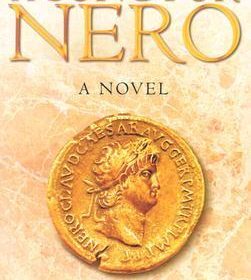
    Thomas Holt, A Song for Nero, (Abacus, 2009)

    https://www.goodreads.com/book/show/1852372.A_Song_for_Nero

    What if—just for a laugh—Nero didn’t die and lived on to pursue his dream career as a musician?

    Lucius Domitius (Nero) and Galen are in a prison cell in Damascus, waiting to be crucified. ‘Is it true you murdered your mother?’ Galen wants to know. ‘What about your wives?’ And what happens after a person dies? Nero should know; ‘half your rotten family are gods’.

    Galen, our narrator, regales us with tales of his and his brother Callistus’ youth as thieves in the streets of Athens and how Lucius Domitius showed up. It had to do with a hilarious mishap, a cart and a chain of slaves nearly going over a cliff edge.

    According to ancient Roman sentiment, any sort of corruption or debauchery, fratricide, patricide, matricide, kicking your pregnant wife to death, was par for the course when done in private, but standing up in the amphitheatre alongside a bunch of riffraff singing songs about the fall of Troy was a bridge too far. The ‘purple-stripe boys’ senator class have it in for Nero, and when push comes to shove, Galen and Callistus pull a switcheroo.

    Now Galen and Lucius Domitius traipse around the Empire, pulling petty confidence tricks—Nero’s an actor, after all—getting into scrapes and blagging their way out of trouble. And then, some Sicilian and this rabbit-faced bloke are following them, and one of them’s a music fan. The plot gets complicated, and there’s a buried treasure up for grabs.

    A rattling tongue-in-cheek yarn in the entertaining Voice of Galen. Our Nero listens to some funny retellings of funny stories about himself that went down at the time—eg punishing people for falling asleep during his concerts. Now, he complains, ‘I’m not even as good as the lies they tell about me’.

    The tone and the gags are to tickle a modern funnybone, yet culturally referencing the olden Roman days, which is especially funny (eg ‘beats me why we aren’t all speaking Carthaginian’; ‘playing… pass the hemlock soufflé with [his] ghastly mother’; f*** a goat six ways to Nicomedia’).

    The editor tended not to put spaces after full stops and commas, which was distracting.

  • Review: The Pickpocket’s Letter

    Review: The Pickpocket’s Letter

    Anil Nijhawan, The Pickpocket’s Letter, (‎Blue Horizon Publishing, 2025)

    https://www.goodreads.com/book/show/243252262-the-pickpocket-s-letter

    A young pickpocket becomes a champion of love

    Young Deenu dictates into his Sanyo tape recorder an impassioned letter to PM Modi. ‘You must look deeper into why there are so many abandoned children in this country’, he says. Sanju types the transcripts for him, on the promise of ‘more juicy bits to come’.

    Deenu has experienced it all—raised in an orphanage, kidnapped and beaten by gangsters at age 14, forced to steal for his daily bread, s**ually ab**ed by staff members in return for chocolate bars, slapped for speaking out, in thrall to people with ‘different agendas’. He doesn’t know his real name—Deenu is a nickname. He lives in Kolkata, but he used to live in Bengaluru, where he ‘had a steady job working as a pickpocket’.

    There is a villain, the evil trafficker Vikram, who ‘wants to make keema out of’ Deenu, and a mission—a pocket-picked wallet sets Deenu on a journey to reunite two separated lovers. If only he could be reunited himself with his lost mother. In a world full of hate, Deenu is loving.

    The Voice of the narration is that of the child Deenu, which is charming. We see the streets of Bengaluru and Kolkata through his eyes. His good-heartedness takes for granted the poor conditions and care, the poverty, the abuse; fleeing from ‘the RTP’ (robbers, thieves and pickpockets); the children suffering ‘like the crunching of cockroaches under… feet’. The police are no help with his problems—they only try to extort money from the victims.

    This makes it all the more heart-breaking to us. If not for this relative degree of separation, we’d not be able to bear reading it. All the little stories about life on the streets—tragic stories they are, but Deenu makes them humorous. Each little scene is colourful. The details are wonderful, tragi-comic and heart-warming. There is an intricate climax to the story, where everything seems disastrous for everybody, but Nijhawan manages to give us a hopeful ‘triumph over tragedy’ happy ending. I almost cried.

    There is liberal use of Hindi words, which I had to look up in Google, but I didn’t mind as they lend familiarity to the foreign (to me) setting and paint the scenes as through the characters’ eyes.

    Like PM Modi, we must learn of the sufferings of children like Deenu. It is our responsibility to fight for a world where every child grows up in love and security.

  • Review: INK!: From the Age of Empire to Black Power, the Journalists who Transformed Britain

    Review: INK!: From the Age of Empire to Black Power, the Journalists who Transformed Britain

    Yvonne Singh, INK!: From the Age of Empire to Black Power, the Journalists who Transformed Britain, (The History Press, 2025)

    https://www.goodreads.com/book/show/238765832-ink?from_search=true&from_srp=true&qid=bn6gZKybpO&rank=3

    Giving a voice to forgotten black voices

    Black journalism in the UK has been scandalously undervalued. Black voices have died unlauded, unrecorded, unpreserved. A poem by Una Marson was read on the radio as ‘by a Jamaican poet’, without listing her name or her credentials as the BBC’s first Black presenter. Claudia Jones’ grave in Highgate Cemetery went unmarked for two decades.

    Journalist and daughter of Windrush, Singh tells the tales of seven heroes of history whose writings need to be read and whose stories need to be heard.

    These heroes had to overcome heart-wrenching ordeals to become strong voices of history. Darcus Howe’s Black Dimension was closed under accusations of libel over its frank reportage on police brutality. Jones’ West Indian Gazette was threatened by Nazis.

    Claude McKay, George Padmore and Claudia Jones were Communists. Having received sponsorship for his trip to revolutionary Moscow, McKay was pickpocketed and his tickets stolen. Claudia Jones’ youth was blighted by poverty and illness, and she was deported from the US in 1955 during Hoover’s ‘Red Scare’.

    Singh’s account contradicts other sources as to Howe’s familial relationship to CLR James (correctly, he was his great-nephew).[1] She also includes some questionable speculation, which is fun. Did similar CVs mean Dusé Mohamed Ali was an alias created by Rev. William Rand?[2]

    The style is straightforward, respecting the journalistic who-what-when-where format.

    These seven journalists were instrumental in, as Darcus Howe’s biographer put it, bringing ‘reason to race’.[3] Have we learned, yet? We owe it to the cause of human liberation to make sure these stories are remembered.

    This review first appeared in Historical Novels Review.


    [1] She says CLR James was Darcus Howe’s second cousin; Wikipedia says his uncle. Genealogy sites say great-uncle.

    [2] This source, Jacob S Dorman, also claims Ali was not Egyptian, an origin attested everywhere else.

    [3] Bunce, Robin, and Field, Paul, Darcus Howe: A Political Biography (London: Bloomsbury, 2013).

  • Review: Edenglassie

    Review: Edenglassie

    Melissa Lucashenko, Edenglassie, (Oneworld Publications, 2025)

    https://www.goodreads.com/book/show/136335272-edenglassie

    The worlds of Goories and whitefellas surround Granny Eddie’s hospital bed

    Granny Eddie has a fall, knocked cold. Everything has ‘gorn skewiff’, whitefellas avoiding looking at an old Goorie woman. In the crisp hospital bed, she thinks of dirt, all her life being ‘a dirty Blak’. She feeds the journalist tall tales about the old days. Her granddaughter Winona is an angry woman. Dr Johnny is smitten.

    1840. Dawalbin espies the Ancestors’ arrival, a ‘great white curve coming upriver’. The dagai (I guess, foreigners) are leaving; will the people now have peace? Mulanyin, a Yugambeh youth, catches a big mulloway, but has to return it since it’s a female bearing eggs. Soon he will be ready for the bora ceremony, and he dreams of owning his own whaleboat and marrying Nita, the Petries’ housemaid.

    He and Murree compete in the regatta, only to find the prize for the blackfellas is less than for the whites. Young Tom Petrie, the first white child born in Brisbane, who ‘speaks Yagara like a Goorie’, catches a river turtle.

    Meanwhile, the whitefellas in the government town struggle to ‘build a Christian civilisation in the wilderness’.

    The story is based on the colonial history of Queensland. Edenglassie was a name briefly used for the penal colony near Brisbane.

    The voices of Eddie and young Mulanyin are brilliant; one offering history, the other vitality. Young Tom’s familarity with the Goories allows us to see their world through sympathetic white eyes and see the whites’ world through their eyes—alien concepts like ‘Work, Fences, Debt and Jesus’.

    A masterpiece, and a model of Showing not Telling. However, the unfamiliar vocabulary and culture obscured some of the major plot points. E.g. I didn’t understand the ‘statue disaster’. I could have used a Glossary.

    At the end the stories of the modern-day and 19th century Goories connect beautifully.

    This review first appeared in Historical Novels Review.

  • Review: Way Out West

    Review: Way Out West

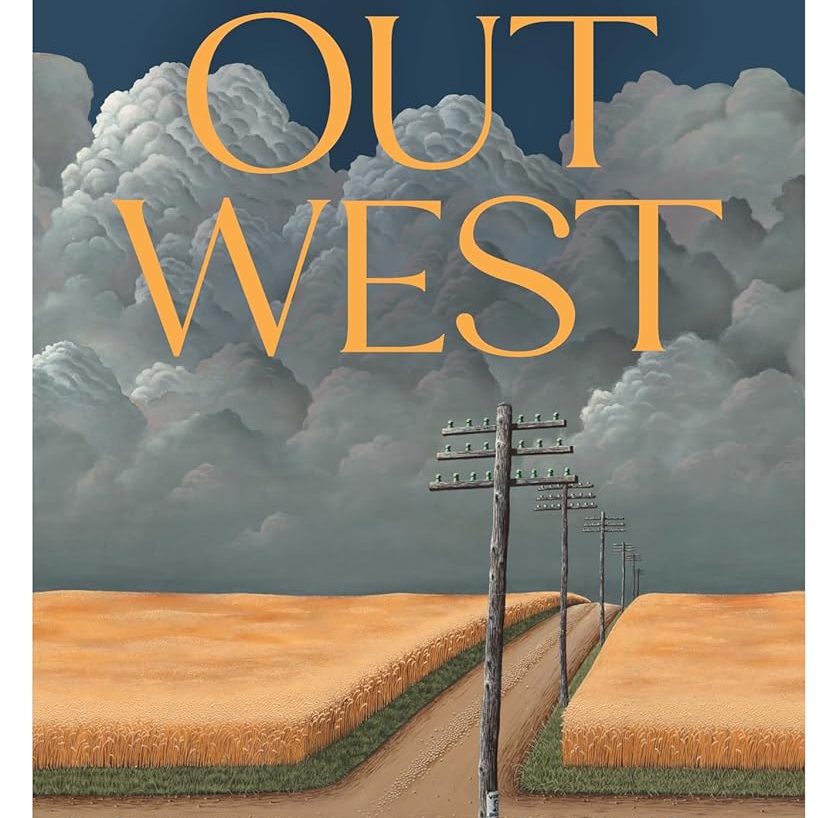
    Anthony Glavin, Way Out West, (New Island Books, 2024)

    https://www.goodreads.com/book/show/205796187-way-out-west

    A thoroughly human story about Ireland and America, and everything in between.

    Picture Fintan growing up in Donegal, a three-room whitewashed cottage still thatched in 1955, in Glenbay, where ‘the wide world washed in from time to time’, where praying against fairies only stopped with Father Boyle’s arrival. His uncle Condy and other returned émigrés ‘swap lies about America’, filling an emotional gap after his mother dies.

    This creates a wanderlust in him, and he never stops, London, Paris, Hanover, Ohio, St Louis, Wisconsin, San Francisco, Boston, a ‘self missing in motion’. He voraciously reads books which he gets from libraries. He searches for a painting of his mother by an American artist, which becomes a metaphor for his unrestful soul, which shies from the ‘overblown excesses’ of America, yet hunts for ‘the bleed between a storied past and the here and now’.

    ‘To be here now is more about consciousness than locale.’

    It begins slowly, as we meet Fintan’s parents Packy and Mary and all the characters in the village. The novel’s structure roves like Fintan, its storytelling style, while wholly appropriate, is hard to sink one’s teeth into at first. He moves from town to town ‘like a dart thrown on a map’, from job to job, observing America, the people, the ‘earnestness’. The stories aren’t tall tales, just little vignettes of humanity.

    Author Glavin is an émigré from the other direction, from Boston to Donegal, yet his work has an Irish feel, with pathos, subtlety and vivid storytelling. His portraits of Glenbay folk seem so authentic, I’d bet he himself has heard some of those stories. He sees America through Irish eyes.

    There’s an understated loneliness pervading this novel, all the more poignant as the language is beautiful, the people, their stories and the little vignettes wondrous.

    This review first appeared in Historical Novels Review.

  • Review: Slashed Beauties

    Review: Slashed Beauties

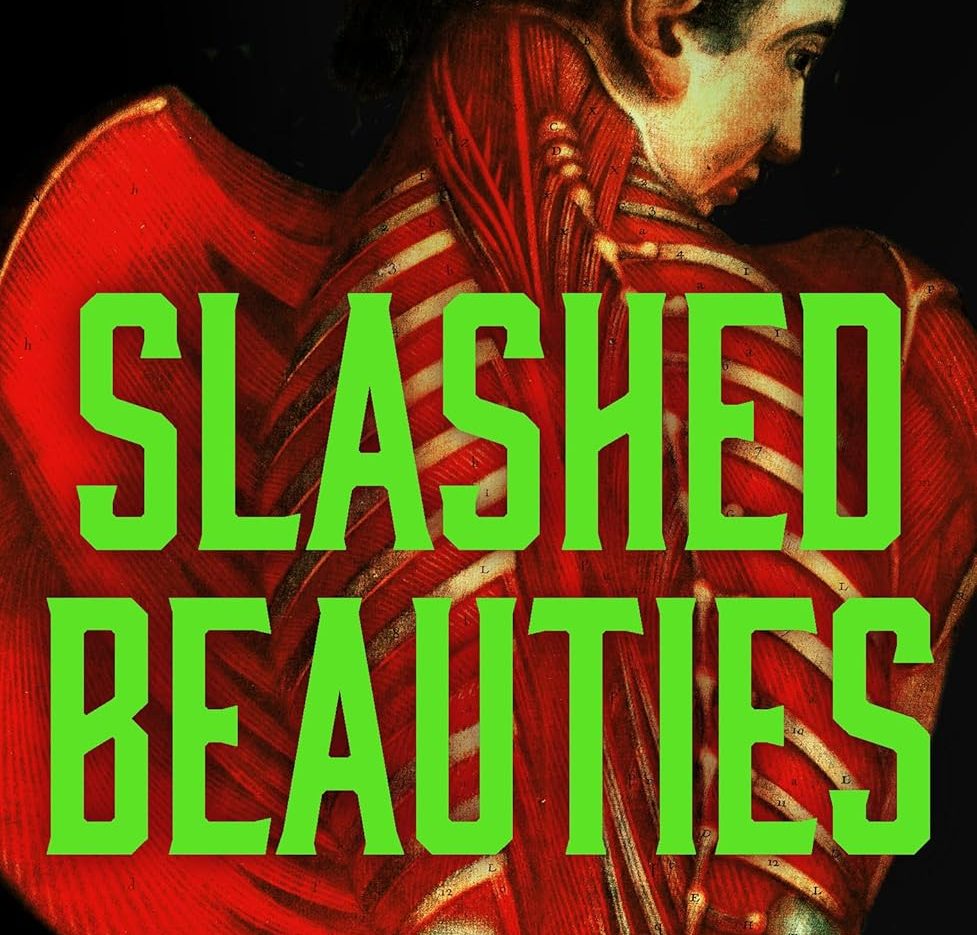
    A. Rushby, Slashed Beauties, (Verve Books, 2025)

    https://www.goodreads.com/book/show/222925674-slashed-beauties

    Anatomical models? Or Bewitched seductresses?

    Three bewitched 18th century wax models are expressly designed to entice in medical students eagerness to slash and dig into their beautiful bodies. These ‘Anatomical Venuses’ are objects to be desired, automatons of pleasure; men—like Geon Yoon—will ‘scratch at the walls to get to them’.

    In one of the models, the face and groin are interchangeable parts—a gruesome metaphor.

    Eleanor, abandoned in 1769 London by her cad of a lover, has two choices—the new factories or the bawdy house. She meets Elizabeth and Emily in the Vauxhall Pleasure Gardens and enters into a Faustian pact. She is offered a life of luxury but warned that ‘only the exterior is gilded in this world’. When the brothel comes upon hard times, the three beauties are paid handsomely to sit for the anatomist.

    Antiques dealer Alys, who has a macabre specialty, is given a large amount of money to transport one of the models from Seoul to London. The legend goes: when the three Venuses reunite, they will rise

    The Venuses, debauched for their beauty by men, want revenge, and there is a coven of witches who have the magic to make everything right.

    The modern players involved in the scramble for the Venuses ‘have skin in the game’, occupationally or genealogically. Halfway through the plot—which is equally engaging in the modern timeline as in the 18th century one—we learn just how interested they are. There are dark and dangerous secrets in everyone’s history. Alys admits, ‘I’m hiding everything.’

    I loved wondering just how real the Venuses are—we are kept guessing. Is ‘Elizabeth’ the anatomical mannequin or a sentient power-hungry brothel madam with magic powers and her own evil agenda?

    Rich, intricate, full of surprises and everything ties up wonderfully at the end.

    This review first appeared in Historical Novels Review.

  • Review: The Confessions of a Young Nero

    Review: The Confessions of a Young Nero

    Margaret George, The Confessions of a Young Nero, (Main Market, 2018)

    https://www.goodreads.com/book/show/63279259-the-confessions-of-young-nero

    Uneasy lies the much maligned head

    Young Lucius (Nero) is deposited age 3 with an aunt when Caligula exiles his mother. When Claudius comes to the purple, they are reunited, but the relationship is strained. He hears over and over that he is descended from the great Augustus, destined for something greater than happiness.

    When Agrippina marries Crispus, the boy is left for a while in the villa with his Greek tutors, and he experiences a period of freedom. He loves the cithara and chariot racing and everything Greek. He dreams of winning the cherished periodonikes, a victor’s crown in each of the four major Greek games.

    We see the setting and culture through the eyes of a youngster, enabling exposition without Telling through the protagonist’s viewpoint.

    With a title like The Confessions of… we expect that the book will be Nero owning up to all his sins. Did he really commit incest with his mother? Did he poison his half-brother Britannicus? It’s more a tale of justification. Nero is the narrator as well as the protagonist, so he can’t be expected to present himself in too bad a light.

    Lucius the boy Nero is utterly adorable, is respectful to slaves, does well in his schooling, obeys his mother, doesn’t use his high birth to influence unfair advantage at wrestling. Gradually, he gets an education. He witnesses his mother’s poisoning his beloved stepfather Crispus, her calculating seduction of Claudius. He’s forced to marry his sister.

    He struggles between two selves. ‘the Augustan one of public duties and Roman virtues and the Apollon one of music, art and poetry’, but where Mother comes into it, ‘a darker one emerges’.

    George says that Nero was much maligned, and unfairly so. According to this view, he was an artistic soul who was beloved by the people, if not the senators. Recently published non-fiction histories make the same point.[1] Our ancient sources—Tacitus, Suetonius, Cassius Dio—all had personal axes to grind and did not possess the modern historian’s propensity for factual truth. George’s Nero is a thoroughly nice guy, pushed into doing what he did by the debauched, corrupt, backstabbing environment he found himself in.

    The hagiographic portrayal continues in Book 2, Emperor Nero.

    If we are not chortling over the scurrilous gossip, if it’s to read fictional justifications of someone whom we know was guilty of at least some of the stuff he was accused of, is that interesting enough?


    [1] Thorsten Opper’s Nero: The Man Behind the Myth; Anthony Everitt’s and Roddy Ashworth’s Nero: Matricide, Murder and Music in Ancient Rome; Osric W Fenmere’s Nero biography.

  • Review: The Art of War

    Review: The Art of War

    Manda Scott, The Art of War, (Transworld Digital, 2013)

    https://www.goodreads.com/book/show/15799175-rome

    Rome 69 CE. The Year of the Four Emperors, treachery and intrigue around every street corner.

    Vespasian, our first narrator, is in his tent in Judaea. The spy Pantera has just foiled a would-be assassin sent by Vitellius’ brother Lucius. Vitellius had been ‘everyone’s second choice’ for emperor. Vespasian’s legions hail him Imperator. He sends Pantera to Rome to protect his son and his mistress.

    Centurion under Vitellius, Sextus Geminus, our next narrator, is promoted to the Praetorian Guards. He is ordered to kill Pantera, his friend Juvens ordered to kill Trabo.

    Trabo is the third narrator, like Pantera now an outlaw, a man loyal to the memory of Otho.

    Jocasta, ‘the Poet’, fourth narrator, summons Pantera to the house of Seneca’s widow. Both had been students of Seneca’s spycraft.

    Seven more narrators follow, each allied to one side or another. All these forces are intriguing against, spying on and double-crossing each other. All this is complicated, as Jocasta puts it: ‘Lucius thought he owned Trabo and Pantera thought that Lucius thought it while Pantera was the true owner. And I knew that Pantera thought so and was wrong.’

    There is a traitor close to Vespasian’s cause, and two different armies are marching toward Rome. There’s a price of eight sestertii on Pantera’s head as he plots sedition and subterfuge to bring Vespasian to power.

    The climax of the story, when Vespasian’s forces win him the throne, taking place, to add excitement, during the Saturnalia, is nail-biting.

    Central to the plot is the idea that there are organised ‘messenger networks’—of course, there must have been, and Scott recreates them in juicy detail. Complete with lists of undercover agents, hired assassins, under the table bribes, gutter boys all named Marcus whistling warnings from rooftops, passwords and call signs, secret letters in code, assassinated men’s heads in sacks.

    The head-hopping between narrators from chapter to chapter is confusing, but it does make the story seem immediate. We see the same scenes from multiple viewpoints.

    The five parts of this book are the five classes of spies as defined in Sun Tzu’s Art of War: local spies, internal spies, double agents, doomed spies and surviving spies.

    I was impressed that each of Scott’s four books in the series have slightly different structures. Some are third-person omniscient, some narrated. One is mostly soldiers and battles; another is mostly spies and secret messages. All are characterised by beautiful writing.

  • Review: The Eagle of the Twelfth

    Review: The Eagle of the Twelfth

    Manda Scott, The Eagle of the Twelfth, (Transworld Digital, 2012)

    https://www.goodreads.com/book/show/12515759-rome

    Demalion of Macedon and the Eagle standard, beautiful writing about ancient Rome

    Feb 57 CE, Hyrcania on the Caspian Sea. The Vth Macedonica faces Vardanes II and seventeen client kings. Demalion of Macedon, our narrator, clerks for Sebastos Abdes Pantera, his commander. Pantera shoots an arrow killing Vardanes, allowing Vologases to reclaim the throne of Parthia. Pantera gets Demalion and Cadus promoted to positions in the XIIth.

    They dye their tunics with madder to mark a successful training manoeuvre in the mountains, giving their cohort a nickname, the Bloody First. They come under the command of Corbulo, governor of Syria, a good leader; then Lucius Caesennius Paetus, governor of Cappadocia, a poorer one. Paetus sends them into a Thermopylae-like defeat at the Battle of Rhandeia.

    Book 2 left us breathless with a new king of Israel anointed and Roman legions on the march.

    Now, Demalion and the disgraced XIIth suffer another devastating defeat at Beth Horon in Judaea under Cestius Gallus, another poor general. What’s worse, the rebels have stolen their eagle standard, the symbol of their military pride. Retrieving it is almost more important than victory.

    Three-fourths of the book follow Demalion’s military life, then the last fourth brings Pantera back into the story. I found this disjunct a bit disconcerting, and after all those pages, we’d forgotten Pantera’s motivation.

    As with the first two books, Scott crafts the known history into an entirely new plot, with deep understanding of the culture.

    I’m not normally a fan of ‘military fiction’, but the gorgeous writing makes it worth it, full of drama and emotion, like: ‘looking down on to the tops of their helmets… they seemed to ooze towards us, thickly, like so much mercury poured into a dish; a river of shimmering metal, dancing under the sun’; ‘the parade ground did not so much rock to our entrance as titter, and it was clear that at night we would be cold for lack of men around us.’ I loved Pantera’s assessment of Britannia, ‘a swamp surrounded by sea and full of women who fight like harpies’.

    I’m excited to finally find a historical novel about the Jewish Revolt, albeit, unlike my novel,[1] one from the Roman point of view.


    [1] The Lost Wisdom of the Magi

  • Review: Beware When the Cormorants Dance

    Review: Beware When the Cormorants Dance

    Marsha Mildon, Beware When the Cormorants Dance, (2025)

    marshamildonwriting.ca

    A vibrant archaeology mystery story, and a marinera dance

    Carlos is loading his horse Kuntur into the trailer to chase his dream of winning the National Marinera Championship in Trujillo, while Kelly films them for a documentary. His mamá Rosa worries—so far away from their safe mountain hacienda in Mayutambo. She’ll be dancing again. She has an archaeology doctorate now, but did five years for ‘terrorist offenses’ in the past, and policía might still be looking for her.

    As red-legged cormorants fly overhead, Atoq excavates the ancient Huaca del Llutas (Pyramid of the Birds), recently damaged in the El Niño floods. He hates Mamá’s brother Tío Joaquin, but likes the money he pays him for recommending places to dig, wants to give some to Mamá for his sick baby sister. Atoq has a secret tunnel Tío doesn’t know about. He finds a portrait pot, sells it to Carlos.

    Rosa goes to consult Dr Espinoza in Lima about the pot, Kelly filming. There’s a mystery around that huaca, and there’s something peculiar about the portrait pot, and the archaeologists take time away from the marinera festival to solve it.

    Facing aggro from evil Tío and Rosa’s old nemesis Judge Nuños, Rosa, Kelly and especially Atoq, truly—dance outside the bounds of their comfort zones, into a future their ancestors would have been proud of.

    As well as the vibrant story, which alternates between the dig at the huaca and the competition in Trujillo, we learn all about pre-Columbian ceramics and archaeological ‘looting’ and forgery, and the marinera dance. I loved the factoid that ‘chicken manure does the best job of making ceramics look old’.

    We are immediately hooked into the characters and their world. I loved Rosa’s anger ‘Money doesn’t whiten indigenous people’ and Atoq’s assessment of the archaeologist’s work, ‘steal[ing] things our ancestors left for us’.

    The descriptions of the settings are beautiful—the ‘brilliance’ of the light near the equator. The details of the culture are wonderful—the querencia, the place in a bull ring the bull keeps returning to. You can just taste the alfajores and chicha. Passionate love for Peru shines through this novel, as with Mildon’s Book 1, Dance Me a Revolution.