Tag: technology

  • Review: The GLP-1 Stability Cookbook

    Review: The GLP-1 Stability Cookbook

    Derek Wexley, The GLP-1 Stability Cookbook, (2026)

    https://www.goodreads.com/book/show/246043879-the-glp-1-stability-cookbook

    Maintenance following on from the GLP-1 Diet Meal-Plan Cookbook

    Here are more recipes designed for a high-protein diet, including a 90-day stability plan. It’s designed for those who’ve already reached their target weight loss (I’m not there yet) and are planning a maintenance diet. A stable program of 90 days mean you train yourself to change your dietary habits permanently in order to eat well but stay slim. Protein, water and exercise are the ‘three anchors’.

    Seasoned dieters know that often rapid weight loss is achievable. What’s challenging is to keep the weight off. Focusing on GLP-1 means doing so without experiencing hunger pangs or ‘food noise’.

    Also characteristic of this author’s approach is the accompanying exercise plans, recommending a 5-minute ‘activation’ warm up in the morning and regular daily exercises in a 7-day rotation to get a full body workout. Regular, daily ‘movement’ rather than high-intensity. High protein means you can lose weight while keeping muscles in shape. This also reduces the tendency for ‘Ozempic Face’ gauntness. Hydration is also important. A whopping 2-2.5 litres of water or herbal teas per day is recommended.

    Another feature of this diet philosophy is – small ‘mini-meals’ several times a day (I can’t be bothered with that). The principle is –  you have them prepared in advance so you can just grab them when it’s time, so you have a regular predictable schedule (and don’t experience hunger). The recipes are quite simple – I think I can remember them all without writing them down. Many of the protein-high recipes are ‘soft textured’ – smoothies, soups, stews, ‘gentle’ grains – to encourage easy digestion.

    I don’t normally eat breakfast, but it is theoretically important to start your day with some protein. Cottage Cheese Plate with Soft Pears and Walnuts, Sliced White Fish with Warm Zucchini and Yogurt, Herbed Turkey Patties looked so gorgeous I want to add them to my regular repertoire. You can pair pumpkin or sweet potato with millet or soft-boiled eggs, beetroot with red lentils. These all look substantial enough to be possible lunches.

    Lunch dishes include: White Fish with Warm Tomatoes and Olives, Warm Lentils with Roast Vegetables, Turkey Strips with Warm Broccoli and Lemon Yogurt, Bulgur with Roast Bell Pepper and Yogurt, Tuna with White Beans and Tomato.

    Smoothies are usually yogurt or oat/almond milk + a fruit + protein powder. Soups have usually no more than 4-5 ingredients. To wean us away from sweet or carb-heavy snacks, there are high protein snackables to prepare in advance like Turkey Meatballs, Salmon & Zucchini Patties, Baked Chicken & Spinach Ricotta Cups, Baked Egg & Cottage Cheese Herb Slab, Baked Chickpea & Ricotta Stuffed Mushrooms, Baked Eggplant Rolls with Ricotta & Herbs. There are some dessert recipes too: yogurt = fruit + honey + protein powder. Twenty recipes for herbal teas.

    The dinner recipes are beautiful: Salmon with Yogurt-Herb Crust and Roasted Fennel, Turkey Ricotta Stuffed Zucchini Boats, Seared Veal with Creamy Polenta & Soft Spinach, Shrimp with Soft Zucchini Ribbons & Warm Yogurt. All simple enough to remember without writing them down.

    An absolute must for a cookbook, in my opinion, it includes beautiful colour photographs for each of the recipes, making them really look delicious. It doesn’t specifically say so, but paying attention to the mix of colours on your plate can make the meal look more appetising. Herbs (especially if they are fresh), spices (fresh ginger and turmeric are delicious), nuts and seeds add nutrition, taste and appetitisingness of appearance. Add things like yogurt, chickpeas, whole grains to your regular weekly shop to boost your protein intake.

  • Review: Divine Revelations

    Review: Divine Revelations

    T A Hunter, Divine Revelations, (TigerUnicorn, 2025)

    https://www.amazon.co.uk/Divine-Revelations-infamous-Campania-Vesuvius-ebook

    Beneath the ash and pumice of Herculaneum is a treasure

    DCI Reid Gilchrist is in Rome, with the British consul Sarah Murray. ‘Perhaps a nice job for you,’ she says. The death of a priest, 104 years old, who left the Embassy a box.

    1942 Herculaneum. The young deacon excavates a ceramic jewellery box. He and his mentor Father Stewart were interested in the ancient Christians buried by Mt Vesuvius. Inside are four bejewelled rings and an enamelled bracelet. Beside them in the ash –  a man’s signet ring.

    Reid leaves the retirement home with a death certificate for the old priest, a Perugina Baci chocolates tin and a safe deposit key. His Italian archaeologist girlfriend Cristina helps him find the bank. The safe deposit box, last accessed in 1950, contains only a brown envelope. Inside, a carnelian signet ring. The Greek letters read a name – a very famous name, and one well known to Christian history.

    The story goes back and forth between the dig site in 1942, as the Church representatives excavate the villa of the famous Roman, and the detectives in 2026, unravelling the death of Father Stewart. The Vatican and the Swiss Guard become involved, with (natch) a cover up, and Reid and Cristina are being followed. We also travel back to Judea in 31 CE concerning the matter of a certain ‘Galilean orator’. Archaeological treasures are at stake.

    I just love an archaeological thriller. A really great concept, and the pace is quite exciting throughout. Jumping back and forth between ancient and modern timelines is well handled. A lovely, understated ending to all the excitement.

    I was confused about the use of ‘the church’. When we’re talking about 2026, it probably means the (Christian, usually Catholic) Church. In the context of 30s CE Judaea, what does this mean? Does it mean the nascent Jesus movement? The Sanhedrin? The Temple? This came up so many times that it confused my understanding of the whole plot. If we’re talking about the Jesus movement, there was no such thing as the Church until about 90 CE, and then it was called an assembly (ekklesia) not a church.

  • Review: Chantilly Lace

    Review: Chantilly Lace

    Evelyn Kincaid, Chantilly Lace, (2025)

    https://www.goodreads.com/book/show/244024174-chantilly-lace

    One woman’s psychological journey from emotional abuse to healing

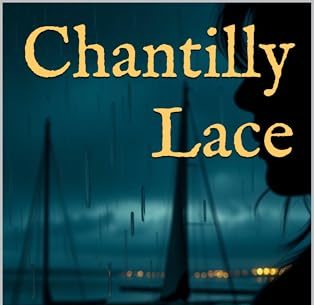
    53-year-old Nora is moving house, after her third divorce. Either running away from South Dakota or running toward San Diego. Facing her failures. But her sister Rachel says all three were gaslighting her. Can ‘geography fix what’s broken inside’?

    She’s looking on dating sites for married men. No commitments, no expectations. All she finds is d*** pics. Until ‘BenSD’; he wants ‘an honest connection’. She signs her response ‘Chantilly Lace’.

    I loved the metaphor of her slamming shut her laptop ‘as if the physical act could contain the vulnerability she’s just released into the digital ether’.

    I was surprised when, just after the first online contact with Ben, she’s already worrying about ‘the way predators create false familiarity’. ‘Predators’!? If she’s that afraid of online dating, why is she doing it? I wondered why he was afraid of ‘visibility’ at the marina but didn’t mind her walking up his wife’s driveway in front of all the neighbours.

    Is this a straightforward romance-gone-wrong story? It charts the psychology quite well. Words like ‘predators’, ‘edge’, ‘rawness’, ‘trap’, ‘trained’, ‘boundaries’, ‘cage’ hint at something darker on the horizon. Are Nora’s ‘attachment issues’ really the problem?

    Nora’s healing journey is also charted well. The psychiatrist’s explanation of trauma bonding as ‘addictive, like a slot machine’ really got me thinking. The story the novel tells is an ordinary one – woman of a certain age has affair with married man – yet the damage Nora experiences is heavy. She doesn’t see it until she’s out of it.

    The ‘psychological’ bit of the billing was very accurate. Having personal experience of an affair with a married man, it sounded all too familiar. Every woman who has this experience should read this book. There’s a lot of therapy-speak, but it’s valid – that’s why therapists use these phrases.

    I must say, though, billed as a ‘thriller’, I was expecting a murder or some zombies or something. Ben is a jerk, but a pretty ordinary jerk, nothing seriously dark. It ends the way I expected it would. Disappointing, but then romance is not my favourite genre. I would call it more a psychological journey.

  • Review: The Dark History of the Bible: Untold Scandals, Biblical Myths, and Ancient Religious Controversies

    Review: The Dark History of the Bible: Untold Scandals, Biblical Myths, and Ancient Religious Controversies

    Skriuwer, The Dark History of the Bible: Untold Scandals, Biblical Myths, and Ancient Religious Controversies, (2026)

    https://www.goodreads.com/book/show/246026958-the-dark-history-of-the-bible

    A basic intro to the darker side of the Bible’s history

    How did a bunch of tribal myths evolve into a tool for conquest and oppression?

    The chronologically organised four parts to this book show where it’s going: 1. 2000–586 BCE: the origins of the myths and texts; 2. 538 BCE–70 CE: the formation of the canon; 3. 50–400 CE: politics and orthodoxy; 4. 400 CE–present: weaponisation.

    The prologue is a list of surprising did-you-knows. You may know that the original story about ‘the empty tomb’ did not feature any resurrections (Mark 16 was added later), but did you know the Battle of Jericho never happened? Matt 27:52-53 says that at Jesus’ death, the dead came out of their tombs like zombies. It was perfectly ok for ancient Hebrews to sell your daughter into slavery as long as you didn’t sell her to foreigners. The Hebrew Hell (Sheol) was not fiery.

    It’s difficult to summarise this chock-full book. From Asherah and Baal to the Council of Nicaea, I can’t think of any other historical topic that is this interesting. It’s structured logically, by theme as well as by chronology. It mainly deals with the New Testament, but Yahweh’s pagan past enters the story in Chapter 6, showing the Israelites’ evolution to monotheism as a ‘winding trail of tribal bargains’.

    For a serious study of this subject, you should start with this book, then move to further study on each topic. The topics are not examined in great depth; it’s more a couple of bullet points on a wide range of topics. Each chapter could be a book or two in itself. It’s useful in the sense that it summarises the basic gist of the topic. But round about Chapter 16 the writing begins to suffer, the style become more note-taking than exposition, in places looking as if it wasn’t even edited. We breeze quickly through misogyny, slavery, the Crusades, European colonialism and Zionism, with just a few bullet points each.

    It ends, depressingly, with ‘how the Bible’s darkness still shapes our world’, Donald Trump, LGBTQ oppression, the climate crisis, religious extremism and the modern triumph of racism. Are we living in the End Times?

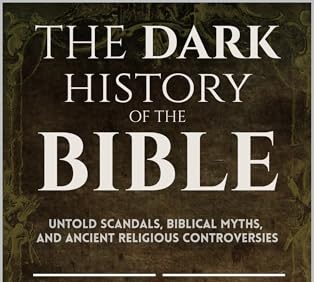
    Includes numerous lush, beautiful colour illustrations.

    An interesting side-factoid about this book is that the royalties are going toward promoting the Frisian language.

  • Review: Ethiopian Bible Apocrypha

    Review: Ethiopian Bible Apocrypha

    Ethiopian Bible Apocrypha, (Ancient Path Publishing, 2025)

    https://www.goodreads.com/book/show/244357902-ethiopian-bible-apocrypha

    The Ge’ez Bible according to the Ethiopians

    Jews had a vibrant community in Ethiopia at least since 365 CE (traditions linking to King Solomon were probably mythical). Oral tradition claims the Tribe of Dan migrated from Israel after the Assyrian conquest (722 BCE). Ethiopian Christianity dates at least to the 4th century (King Ezana of Axum).

    With all the mythology around ‘homeland for the Jews’, we forget that the Jews actually had quite a few ancient homelands. In antiquity, Jews were often merchants, and they moved around a lot, their skill with languages enabling them to negotiate with far afield customers. They often served as mercenaries or doctors; they had advanced knowledge of water storage technology. Especially in Egypt and Babylonia, Jews were respected members of the ruling class.

    Independent Jewish kingdoms of antiquity:

    The Himyarite Kingdom, Yemen, 110BCE-525CE

    Adiabene, Mesopotamia, 30-115CE

    Palestine Hasmoneans 140-37BCE, and the 1st Jewish Revolt of 66-73CE

    The Kingdom of Nehardea, Mesopotamia, 18-33 CE

    The Mohoza Kingdom, Mesopotamia, 495-502CE

    The Khazars, semi-nomadic Jewish state in the Caucasus, 750-950CE

    The Kingdom of Septimania, southern France 462-759

    The Kingdom of Simien, Ethiopia, 4th century CE

    These are the gospels preserved by their churches. Some are so ancient that their facsimiles appear in the Septuagint (3rd C BCE) but not in the Masoritic text (6th-10th C.

    We tend to mistake the canon as a matter of orthodoxy competing with heresy. Often, it was simply a case of access. Copying scrolls and codices was laborious and expensive, and each church tended to use its own favourites or simply whatever they possessed in their reliquary.

    The Paralipomena of Jeremiah (or 4 Baruch) comprises bits that were left out of the Book of Jeremiah but retained in the Ethiopian Bible. Psalm 151 is absent from the Masoritic; the Wisdom of Solomon, the Wisdom of Jesus son of Sirach (Ecclesiasticus), the Book of Tobit and the Book of Judith are preserved in the Septuagint, though their relationship to Ethiopia is unspecified. Bel and the Dragon and Susanna are additions to the Book of Daniel, but why are they Ethiopian? There are some prayers which were preserved in the Ge’ez/Ethiopian as well as the Septuagint. The Book of Jubilees is Essene in origin and considered canonical in the Ethiopian Orthodox church.

    The greatest gem, I thought, is the Book of Meqabyan, uniquely Ethiopian and different from the Greek Books of Maccabees. It was used in Rastafari circles. This version is written in Jamaican patois. Example: ‘Fe ‘Abriham who believed Him Iginnin from him childhood were fe JAH Him trusted friend’.

    This is a hefty tome, one to be selected if you’re a Bible scholar. Though I do so identify, I admit I was more interested in the history of each text and how it came to be preserved than I was in the line by line teachings. It would have been more interesting if the book had written more on differences between the Ethiopian and other traditions.

    It also could have been more interesting if questions around translation had been addressed. I’d love to have seen comparisons—how did the Ethiopians write this line? How did the Septuagint? How did the Masoretic change thing in the Middle Ages? What did these differences mean for religious beliefs and practices?

    A worthy work, notwithstanding that it’s one to sit on a shelf on your library for reference rather than to read page for page.

  • Review: The GLP-1 Diet Meal Plan Cookbook

    Review: The GLP-1 Diet Meal Plan Cookbook

    Derek Wexley, The GLP-1 Diet Meal Plan Cookbook, (2025)

    https://www.goodreads.com/book/show/241646966-the-glp-1-diet-meal-plan-cookbook?

    Not-complicated 6-week diet plan to boost protein, including exercise

    Having been on an intermittent fasting Keto diet for many months AND taking weight loss injections, yet losing weight only very, very slowly, I’m interested in cracking my ‘plateau’. I also wouldn’t mind learning some interesting recipes that won’t blow my weight loss.

    First, the science. GLP1 is all about tricking your body into losing weight without feeling deprived. Also, you want to lose fat, not muscle, so keeping up your protein is key, so you won’t end up with ‘Ozempic Face’ gauntness.

    The diet requires protein hits several times a day, which, frankly, I’m not going to do. I just eat one meal a day about 4pm. Maybe that’s why my weight loss isn’t more successful. I’m just not serious enough to devote my attention to it. I’m mainly looking for recipes to vary my usual diet.

    Wexley provides a 6-week breakfast/lunch/snack/dinner meal plan with daily workout routines. The recipes are not difficult, usually just a few ingredients. Rather than the calories, protein grams are counted. Whether I should or not, I don’t eat breakfast – for my fruit, I just have easy-peeler tangerines and berries and yogurt – but there are numerous yummy looking oats+fruits, eggs and smoothie recipes. Adding some things on a regular basis  – couscous, quinoa, chia seeds, flaxseed, avocado, tofu, lentils, turmeric, protein powder, chickpeas –  can improve nutrition and protein levels.

    Recovery is important too. The program suggests herbal tea, 5-minute evening meditation and 7-8 hours of sleep at night. Drinking water (not coffee) is also important.

    I’ve added to my diet repertoire: Lemon Garlic Shrimp with Zucchini Noodles, Mediterranean Lentil Bowl, Baked Tofu and Broccoli with Tahini Drizzle, Tuna and White Bean Salad, Baked Trout with Herbed Cauliflower Rice, Turmeric Lentil Broth, Lemony Chickpea and Sardine Salad.

    This diet plan provides some yummy-looking but not too complicated recipes to lose weight without feeling bored or hungry and a daily plan to enable a fully well-rounded nutritional diet, with an exercise routine built in.

    More colour photographs illustrating the recipes would have enhanced it.

  • Review: The Children of Copperhead Road

    Review: The Children of Copperhead Road

    Vicki Regan, The Children of Copperhead Road, (2025)

    https://www.goodreads.com/book/show/244648404-the-children-of-copperhead-road

    Appalachian horror folktale novella

    The Compton boy is lost in the mountains; the dogs lost the scent. But something’s been found, just past the Calhoun place. Multiple children, and they ‘aren’t right’. Earl says, ‘Don’t put this on the radio.’

    He’s decided one thing—they’re not going up there at night.

    Kelly says, ‘My daddy told me to stay off Copperhead Road.’

    The reek hits them as they climb, animal musk, weathered animal bones. ‘Kids don’t do this,’ says Kelly.

    The children are all ‘wrong’ in bizarre ways, and they’re all humming—the same note. They take the sheriff and his deputy to see ‘Mama’, a vision of horror, yet she has none. She’s blind. A helicopter comes to take them to the hospital, but their condition defies the doctors. They have ‘anomalies’. Dr Wallace takes over.

    They’re taking the children back to Mama, sending a young teacher up the mountain to homeschool them—Miss Dorothy. Dorothy sends weekly reports, but they cease. The last one says, ‘Caleb won’t take no for an answer.’

    Over and over, Earl does nothing. He watches the treeline.

    2024, there’ve been four disappearances in five years. There’s a new sheriff now. Something moves through the trees.

    We begin to understand that the law enforcement people are related to some of the children. I thought this might have been done as more of a Big Reveal.

    Skilful at the building of suspense, Regan knows how to write horror. This echoes the ‘inbred hillbillies’ stereotype, but Mama and the ‘wrong’ children are more horrific than Banjo Boy in Deliverance.

    I chose this book after enjoying Regan’s sci-fi trilogy Midnight Frequency series. She seems to be a versatile author, writing sci-fi, backwoods horror and vampire fantasy.

  • Review: Unfortunately, She was a Nymphomaniac

    Review: Unfortunately, She was a Nymphomaniac

    Joan Smith, Unfortunately, She was a Nymphomaniac, (William Collins, 2025)

    https://www.goodreads.com/book/show/211051402-unfortunately-she-was-a-nymphomaniac

    The durability of ancient Roman misogyny

    A misogynist myth about women has been going round for millennia. That some women are infected with a psychological madness, an evil insatiable appetite for sex called furor uterinus, a disease which was supposed to originate in the womb.Accusations of sexual promiscuity, true or not, were used as justifications for femicide (the killing of women because they are women).

    Girls were often forced to marry as early as age 12, even before menarche, and death in childbirth was common. The husbands could be in their 30s, 40s or 50s. Divorce was easy, and the children remained with the father.

    The brilliant title of this book came from the mouth of a tour guide at the Palazzo Massimo museum in Rome. He was talking about Julia, the only child of Augustus, whom the all-authoritative ‘sources’ so maligned and who is the main subject of the first few chapters of this book. Augustus exiled his ‘nymphomaniac’ daughter Julia to Pandateria, then her ex-husband Tiberius locked her in a room and starved her to death, while her mother Scribonia had to listen through the walls to her anguished cries.

    We’ve taken so many of our assumptions about this dynasty from Robert Graves’ highly fictionalised and sensationalised I, Claudius (who can forget the terrifying G-g-grandmother?), which Smith calls ‘a misogynist’s fever dream’.

    But the real history is not much nicer. If the Julio-Claudians weren’t poisoning their women or stabbing them to death in the uterus, they were exiling them to distant rocky islands and starving them to death. Smith comments, ‘It’s impossible to overestimate the durability of Roman misogyny.’[1]

    From Nero to Henry VIII, all a ruler had to do to justify bumping off a wife or a mother was to accuse her of infidelity. The empress Messalina, according to the satirist Juvenal, had a second career as a brothel madam, about as credible as Anne Boleyn’s incest with her brother.

    The final chapter, outlining the violence against women that is still going on today, is harrowing.

    We’re all somewhat familiar with the history of these people, but Smith exposes the shocking prejudices of the ‘sources’ and rights some of the myths. Contains copious footnotes, from the author’s own researching Latin sources, and includes many choice exactly translated phrases. Scrupulous scholarship, with the ability eloquently to cut to the gist of things. This is especially appreciated with ancient Roman history, with its plethora of names, dates and complex and inter-related family trees.


    [1] p. 224.

  • Review: Short Stories from a Tall Man

    Review: Short Stories from a Tall Man

    B T McCusker, Short Stories from a Tall Man, (TN Traynor Publishing, 2025)

    https://www.goodreads.com/book/show/243790755-short-stories-from-a-tall-man

    Innovative stories of ‘quiet humour’

    A couple goes on holiday to France, their first holiday since the kids had all grown up. She used to crush on her French teacher, who would greet her with, ‘Bonjour, mademoiselle’.

    On the beach, on the tip of a peninsula is a red house with a white gate. The man at the door invites her in, ‘Bonjour, mademoiselle’.

    ***

    Archbishop De Grey tells Tom, ‘it’s a very big job.’ 524½ ft x 222 ft with a tower 235 ft tall, and 36 bells. ‘Can you build it?’ Tom says his guys can handle it.

    In 250 years’ time, York Minster would be considered an architectural masterpiece.

    ***

    Three coachloads of elderly ladies visit a hotel on the northwest coast. A explosives engineer, discharged from wartime service, sees enemies all around him. On the beach, a genuine emergency, one of the ladies has drowned, and it’s up to him to get the others all ashore safely.

    ‘That’s what I like about coach trips,’ he says, ‘every day is new.’

    ***

    Grandad Wilson shows George and Oliver about magnets and about knots. ‘It’s not magic, boys; it’s science,’ he says.

    Years later, their daughters hold a box tied with a double fisherman. It’s so old, the knot crumbles in their hands.

    ‘Magic,’ says George.

    ***

    These mini-synopses give a flavour of the excellent stories in this anthology.

    Many of the stories are short, two pages or shorter. They tend to have low-key endings, no big punchlines or dramatic twists, quite artful. The subtitle boasts ‘quiet humour’, and I found that description quite apt. Little vignettes–quirky encounters by the seaside, elders reflecting on their youth, the Shrubs family debating Greek philosophy and geometry, an umbrella hooked on a peg in the hallway. Wonderful, innovative ideas, beautiful writing.

    I’m looking at anthologies of short stories at the moment, as our writers’ group has just published one.[1] Short stories can be hard to get your teeth into for the first few paragraphs, as the reader has to suspend disbelief to become hooked into a new world, but their restricted length allows for a concentration of the writer’s skill.

    Each story has an adorable colour illustration in pen and crayon.


    [1] All Points Imagination.

  • Review: The Outhouse

    Review: The Outhouse

    Jonathan T Jefferson, The Outhouse, (Kindle, 2025)

    https://www.goodreads.com/book/show/223853636-the-outhouse

    Not a wardrobe, it’s an outhouse, a magical door into other worlds

    Milton’s great-grandfather built the farmhouse in the late 1800s. There was no plumbing. Over the decades, a kitchenette and bathroom was added, and the well was sealed up. They had almost forgotten the old outhouse was still there. Until Milton’s son Madison sought a place of privacy to kiss his girl Katie.

    He opened the outhouse door, suspecting this would be no place to kiss a girl, and couldn’t believe his eyes. No lavatory, there was instead a grand vista, the Grand Canyon, a winding river with red rock cliffs. Madison enters the magical world. Coming down the river is a native girl in a canoe. ‘Gam’yu,’ she greets him, and he finds he can speak Hualapai.

    When he next opens the magical door, it’s a different place, a lush jungle. A trekking couple informs him they’re on the Inca Trail, on their way to Machu Picchu. At the Sun Gate, he runs to keep up with the tour guide, but the stones are wet and he slips, falling into the abyss. But – he’s back in the outhouse.

    The next time, it’s Egypt.

    Madison’s brother Harry is squirting water on the outhouse. Madison says, ‘Want to build a cover for the snake pit?’

    The snake pit behind the barn. Could it, too, be a magical portal?

    It’s probably involved enough for a children’s story, but I really wanted a bit more of a character arc, and I wanted Madison to go into the magical worlds a bit deeper. CS Lewis wrote whole volumes on Narnia, complete with the spiritual development of the children. We weren’t clear on what time period the worlds were. Is he travelling in time as well as space?