Tag: spirituality

  • Review: The King and the Sage

    Review: The King and the Sage

    George Zarkadakis, The King and the Sage (Feline Quanta 2025)

    https://www.goodreads.com/review/show/7953675109

    A gem, an exotic tale set in ancient Seleucid India

    The king is Menander I Soter (reigned 160-135 BCE), conqueror of the Punjab, not Meander the Greek playwright. The sage is the Buddhist monk Nāgasena. Their historic meeting was the subject of the Buddhist tract Milindapañha (Questions of Milinda). This is the India of the Seleucids, which I have never read another book about.

    Our narrator is Plato, not the Greek philosopher. Plato grows up feeling that his father Megacles has thwarted his chance for a good life. He wouldn’t let him attend the Academy, where Plato could have developed his innate talent for languages. But Megacles hopes for fame and remuneration for his magnum opus, a ‘true story’ about his trip—to the Moon. On the Moon—he saw them—lived ‘green-skinned giants that exhaled hot steam out of their nostrils, four-armed walruses with transparent tusks who rode on buffaloes day and night, hairy bugs with human bosoms who spoke three languages at once, and plant-people with mouths in their hands’.

    Plato and his father independently have drunken evenings which overlap with larger events happening around them and set them off on new adventures. When Buddhist sages come to town, to bring the Dharma to King Menander, their prospects improve.

    Plato has adorable insights on the differences between Indian and Greek cultures, looking up to the Greeks. I loved the primitive explanations of scientific phenomena. I adored the childhood memory of his father seizing members of the Agora crowd to stage his impromptu plays.

    Seleucid India was so unfamiliar to me that it took me a while to get my bearings. The character is something unusual to me, an Indo-Greek monk, yet his personality shines through, and we feel his emotions from page one. The character of Megacles is wonderful, too.

    The introduction of Buddhist ideas works well, expressed in the context of the lovely story of Nāgasena and the king, but Plato, individually, experiences a sort of nirvana as he gains closure on the events in his life and himself embraces Buddhism.

    The denouement and climax is just fabulous—with Sagala under threat, Plato’s newfound spiritual composure and Megacles’ inventiveness save the day. As well as the magical ending.

    Sumptuous writing, lightly humorous, full of myths and adventures, with beautiful descriptions and metaphors. Sagala, his hometown, is as ‘the ruby in the bellybutton of India’. The rhythmic movements of sex are ‘like those made by shoals of jellyfish as they pulsate through the seas’.

    A lovely, exotic tale, completely unique.

    I received an advance review copy for free, and I am leaving this review voluntarily.
  • Review: Kings of Stone

    Review: Kings of Stone

    R. Jay Driskill, Kings of Stone (Kindle 2025)

    https://www.goodreads.com/book/show/238611948-kings-of-stone?ac=1&from_search=true&qid=3QW3b2ReEP&rank=2

    Everything we know about the Hittites

    The civilisation of the Hittites, who flourished 1650-1180 BCE in Anatolia, has been shrouded in mystery. Archaeologist Archibald Henry Sayce in 1872 was the first to recognise that the Anatolian carvings on stone represented a distinct, hitherto forgotten culture.

    During the following centuries there have been a number of illuminating archaeological discoveries, notably the decipherment of their early Indo-European language Luwian, which had its breakthough with the discovery in 1946 of the ‘Hittite Rosetta Stone’, the 8th century BCE Karatepe bilingual inscription.

    Hittite studies have been complemented by the Amarna letters from Egypt, Ugaritic archives from Syria and Mycenaean Linear B tablets.

    Archaeologist Driskill outlines what we know about the Bronze Age superpower, from their origins in Anatolia 2300-2000 BCE [debated] to the zenith of their power in the 13th century BCE to their collapse during the Sea Peoples period. Suppiluliuma II (ca. 1207-1180 BCE) was the last documented Hittite king, but the capital Hattuša, intriguingly, was abandoned not destroyed.

    They called their own language Nesili and themselves ‘people of the land of Hatti’, after the non-Indo-European non-Semitic Hattians, whom they had either assimilated or conquered and whose double-headed eagle symbol and chief deities they adopted. Some of the prayers and rituals were conducted in Hattian. Onomastic (placenames) evidence points to a bilingual culture, with borrowing from Sumerian and Akkadian. ‘Hittite cultural development was one of creative synthesis rather than… separation.’ With distinct cultural boundaries (gods were localised) but with extensive borrowing.

    The Hittite Law Code 1650-1500 BCE, as compared to its harsher contemporary Code of Hammurabi, stressed compensation rather than ‘eye for an eye’ punishment. Their pragmatic and accommodating approach to statecraft and diplomacy established precedents across the ancient world. They played a pioneering role in the development of iron (which they called ‘black metal’) metallurgy.

    It charts the history century by century—dry, academic stuff, kings and dates and footnotes, but if you want to learn about the Hittites, it does the business in a cogent style. It goes through it all, language, kingly succession, governmental structures, religious pantheon, trade, agricultural practices and cultural and artistic trends.

    I love how each chapter, representing a particular period, is illustrated by a choice artefact. They are in colour, but I wish the photos were a bit larger, and I would like to have read a description of the object, where it was found etc.

    I received an advance review copy for free, and I am leaving this review voluntarily.

  • Review: Megalith: Studies in Stone

    Review: Megalith: Studies in Stone

    Hugh Newman et al, Megalith: Studies in Stone (Wooden Books 2018)

    https://www.goodreads.com/book/show/56302910-megalith

    This book features chapters by eight different authors on the astroarchaeology of megaliths and stone circles.

    Much can be said about Stonehenge, for example. Astroarchaeology-wise, it’s interesting that the entrance in 3150 BCE was aligned to the Northern-most moonrises, and it was later reoriented to midsummer sunrises. This perhaps indicates a shift from ‘moon worship’ (which may be a misnomer) or at least an accommodation of solar astronomy with lunar astronomy.

    The solar year is 365.242 days, and the lunar month is 29.531 days with 12 7/19 moons per year. On the days when they overlapped, there would be an eclipse. These numbers can be found in several of the constructions. There are 19 bluestones. The ratio of the diameter of the Aubrey Circle to that of the Sarsen Circle is 7/19. Even if one discards Thom’s Megalithic Yard Theory, using our modern inches the circumference of the Aubrey Circle = 10785.82 inches = 365.24 x 29.53 days = solar year x lunar month.

    Some of these number concurrences may be coincidence, but it’s hard to disregard the numerous alignments. Mayday sunrise as viewed from Glastonbury Tor rises over Avebury. Numerous sites are located on the lines running N-S from Isle of Man to Isle of Wight and E-W from Bury St Edmunds to St Michael’s Mount. These lines cross at Avebury.

    I got a bit lost in the maths and geometry, and I did baulk at some of the claims. How would the Neolithic builders of Avebury have known its precise latitude between the pole and the equator? How could measurements of sites in Britain which correspond to measurements of the Great Pyramid be more than coincidence? I’m not sold on the Megalithic Yard theory.

    But like everyone on earth today I am still astounded by the scale of the construction. Stonehenge took 12 million manhours to build. It’s astounding enough that they could predict eclipses that long ago. The stone circles seem to chart intricate astronomical knowledge gleaned over many generations. Göbekli Tepe (9000-7500 BCE) was aligned to the rising of Orion, which has a 25,800 yr cycle.

  • Review: Inside the Neolithic Mind

    Review: Inside the Neolithic Mind

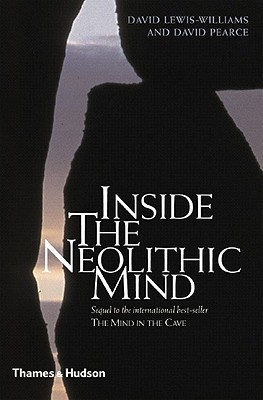
    David Lewis-Williams and David Pearce, Inside the Neolithic Mind (Thames & Hudson 2005)

    https://www.goodreads.com/book/show/967815.Inside_the_Neolithic_Mind?ref=nav_sb_ss_1_25

    This is the book I have been waiting for. Finally, an explanation of stone circles and cave art that makes sense. I’ve heard explanations from stupid to stupider. The red handprints were people planting their mark ‘I wuz ‘ere’ or letting their kids muck around with the paint while they drew bison.

    No, this book says, they were representations of early humans’ spiritual experience, attempts to portray altered states of consciousness and get closer to god. That’s why the horses seem to be floating in air; they were paintings of the horse’s spirit animal. That’s why the bison are sometimes left half finished, as if they’re crawling out of the wall; the wall was seen as a membrane into the spirit world.

    This ‘neuropsychological model’ explains the ubiquity of designs—spirals, lozenges, zigzags, cups and rings. It could be that the descendants of Palaeolithic artists in France migrated into Britain, learning megalithic architecture and artistic norms from their ancestors. Or the artists were painting or carving from a similar experience as that of their forebears, one that is hardwired into homo sapiens’ brains, sometimes aided by hallucinogens or other means of altering consciousness. In fact, subjects in altered states of consciousness under laboratory conditions have produced similar images.[1] Or it could be, I think, a bit of both.

    This explains the abstractness, the mishmash of images, why there is no overall composition. They weren’t creating an artwork to be viewed; they were depicting an experience. Much of this is in places too inaccessible for the whole midwinter solstice crowd, deep inside dark passage tombs; it would have been the purview of the shaman or seer.

    It follows an idealistic analysis, proposing that religious ideas preceded the material realities and social relations they expressed. Clearly, humans had religion before they developed agriculture, as Göbekli Tepe shows. Aurochs (wild bulls) were important in Neolithic religion before the domestication of cattle. But I think any argument that ideas precede realities is illogical (and unMarxist). But that is my only criticism.

    It does not examine astroarchaeology (the alignments of stone circles toward solstices), but that is not a criticism. Other books do that. In the light of this analysis, however, I have revised my view of stone circles as ‘calendars’. Their import was probably more religious than as date predictors. The purpose was more to convey the consistency of the cosmos and to symbolise the stability provided by the rule of the religious elite—as above, so below.

    The book analyses in detail major Neolithic sites in the Near East and British Isles. With B/W drawings and colour photos.

    Richly scholarly, densely footnoted. It explains complex philosophical concepts quite cogently (though with some big words).


    [1] See Fig 64 p 262.