Tag: shakespeare

  • Review: Celtic Mist

    Review: Celtic Mist

    C. L. Nightjar, Celtic Mist (Singing Selkie Press 2021)

    https://www.goodreads.com/book/show/58719929-celtic-mist?ac=1&from_search=true&qid=1gK6sKJ0VL&rank=1

    A bawdy tale of randiness, rebellion and revenge in 1790s Ireland, exceptional in the wealth of its sexual vocabulary
    After a terrible first line: ‘The fateful course of events commenced that September night’, Declan is invited by Captain Blaylock to join his elite corps of ‘Crusaders’ at Kilmaedon Castle. His fighting skill earns him a place as the duke’s boxing prize-fighter.
    To his shame, he learns the nature of the Crusaders’ secret night missions. An unwilling participant in a crime against the beautiful red-haired Aoife and her family, he risks his position at the castle to rescue her. The incident uncovers a memory from his childhood.
    The two head off on the run, she none too willing. She runs away, but everywhere she goes, she is sexually harassed.
    He wanders again, experiencing employment and amorous adventures. He joins the United Irishmen and due to his weapons skills is promoted to sergeant. The plans for rising are beset with spies and turncoats, and they struggle to acquire and hide arms. Ever dreaming of Aoife, and with the rising days away, Declan discovers that she, also, is after revenge, and he finds out just how far she will go.
    I found the working out of the relationship between Declan and Aoife very interesting. He’s lusts for her, but is respectful and has finer feelings. He was one of her abusers, yet he rescued her. Without discussing much between the two of them, this erotic tension gets explored in silent actions, his covering her with his coat, her cleaning his wound; they sleep next to one another in a narrow cromlech.
    This book is long, probably twice as long as you’re used to. Perhaps we didn’t need the entire account of Aoife’s childhood. She could have revealed certain highlights in conversation with Declan, and that would have also served as indication of her warming to him. The passages on Aoife’s youth were perhaps an opportunity to recount the many times men had tried to rape her or her female relatives.
    The lengthy passages on Declan’s youth are more an opportunity to wax on about the ‘wee springy clover of Love’s dewy cleft’ than furtherance of the plot. Indeed, if this novel is anything to go by, at the end of the 1700s, life was chock full of men trying to rape women and women thrusting their ample bosoms and creamy thighs suggestively in front of young lads.
    Effort has been taken to make the language believably antique, something which is important to me, and also believably Irish. It’s well written and edited, and offers up every word, description, metaphor or euphemism for sexual activity or genitalia that existed in the 18th century, more than I thought was possible, with supreme eloquence.
    We know, sadly, that the Irishmen’s uprising of 1798 was a failure, but we can console ourselves to know that our heroes here, in this locale, County Wexford, were more successful than the rest.

    Lots of graphic sex.
  • Review: Justin Wise

    Review: Justin Wise

    Paul Toplis, Justin Wise (Kindle 2020)

    https://www.goodreads.com/book/show/54841408-justin-wise?ac=1&from_search=true&qid=e8FSALD1X5&rank=2

    A funny, alternate history of just about everything, and crazy ancient technology changes the world


    Sports minister Peter Cole arrogantly gets people’s names wrong. His garrulous driver Reg continually shows him up as a prat. Justin Edward Wise, known to his friends as Eddy, knocks on the sports minister’s car window. He’s 47 years old, yet he can beat any world record either running or swimming.
    His family and friends watch, astounded, as he wins 16 Olympic gold medals. As it happens, his freakish prowess was magically acquired when he went back in time (actually, mentally accessed his ancestral memory), and learned secret skills from the Druids.
    As we all know, the Druids didn’t leave any written documents, but it turns out the Druids did record information, which Eddy still remembers how to read. Yes, Virginia, the Druids did possess the secret to perpetual motion, and other fabulous stuff. Eddy, his wife and his three friends plot to replace automobile engines with a device that can run for six months at a cost of a few quid.
    Justin Wise goes on to do astounding things, change the world, even, all using skills he learned from the Druids.
    Right from the first paragraph, the story starts out humorously. Not funny haha, but a quirky, kind of old-fashioned humour, which I loved.
    A good portion of the text is devoted to recounting the history of the Druids, details of Eddy’s sports games, the recording dynamics of his music, the mechanics of the perpetual motion motor, the manufacturing process and the financial arrangements of Eddy’s new company. These bits leave behind some of the humour, but in its place are quite informative.
    This does mean that large chunks of the book are devoted to info-dump, not leaving a lot of room for action or character development, but it’s great fun. My disbelief was thoroughly suspended. I cannot say the same for Justin’s political programme, which naively assumes that the British and US states are the world’s good guys and the Chinese are the baddies. Dirt is also dished on Julius Caesar, Nazi gold thieves and other baddies of history.
    What’s really fun is the (pseudo) historic/scientific explanations for miraculous elements in Celtic mythology, Lemuria and Atlantis, Stonehenge, the ancient library of Sais, the Giza pyramids and their F-sharp resonance, Boudicca and Anna of Arimathea, the Trojan War, King Solomon and his cedar trees, ancient civilisations lying under the Antarctic ice, genealogy and John of Gaunt, and the tale of a prehistoric war between moon-worshippers and sun-worshippers—both sides possessing atomic bombs. The explanation for what caused the destruction of Atlantis is particularly innovative.
    A great read, particularly if you’re a fan of alternate history.

  • Review: A Crack in the Ice

    Review: A Crack in the Ice

    Brendan Gerad O’Brien, A Crack in the Ice (Kindle 2025)

    https://www.goodreads.com/book/show/224104730-a-crack-in-the-ice?ac=1&from_search=true&qid=pUVixswc95&rank=1

    1945 Tralee, Ireland.
    Marcus Fanning kissed goodbye Amanda Hayes, perhaps never to see her again, reminiscing about the accident that had changed his life, the torpedo attack on the ship where he’d been serving as steward. It was in hospital that he’d met Amanda, a nurse. The famous actress whose life he’d saved had hired him as her butler, and he was on his way to Waterford. In his satchel he carried something which was to affect the lives of many.
    25 years later Frankie Rowe stumbles on the satchel, and later he is found dead.
    Garda detective Eamon Foley and Sergeant Kelly chase down the theft of a silver cigarette case from a jewellery store. The owner Delta McKay was already known to the Gardaí. Her much older husband Michael McKay had apparently committed suicide leaving everything to her and cutting out his grown children, and there is a legal dispute ongoing.
    The thief was Marcus Fanning’s pretty daughter Florence. Delta’s history is more complicated than we had realised, and so is the story of her husband’s demise.
    The guards gradually uncover more of the story—Marcus and Amanda’s liaison, the circumstances of Michael McKay’s and Frankie Rowe’s deaths. The characters involved in both cases turn out to have connections with each other, as well as connections with the guards and their families. This person used to date that person; this person bought their house from that person. And information dribbles out in what seems a realistic way. This person overhears something in a pub; that person sees something on their way home from work.
    I never guess who the murderer will turn out to be, but in this case, I think enough clues are given so that the conclusion doesn’t just come out of the blue. Yet it’s still quite innovative.
    At the first there are some uncomfortable shifts in tense for flashbacks—that’s often difficult. And I thought that Eamon Foley, supposedly the star of the show, plays too minor a role until the latter half of the book. I would have liked for more of the story to have been told through his eyes.
    The characters are colourful, with interesting and believable dialogue, and the plot is lively. This is altogether a jolly murder mystery that keeps the reader guessing right up to the end.
    Brendan Gerad O’Brien has written several novels. Gallows Field and A Pale Moon was Rising also feature Guard Eamon Foley.

  • Review: The Twin

    Review: The Twin

    Kevin St. Jarre, The Twin (Encircle Publications 2021)

    https://www.goodreads.com/book/show/58362004-the-twin?ac=1&from_search=true&qid=kdHL0Me5Ya&rank=1

    This is an innovative retelling of the life of Jesus as told through the mouth of Didymus Thomas (the Twin), building on three Christian traditions—first, the legend that Jesus studied in India during the ‘lost years’ (between childhood and the beginning of his ministry); second, that St Thomas evangelised India; third, that Jesus lived to a ripe old age in Srinagar.
    Travelers come to Bethlehem, following a star. The one they seek is their ‘holy one’ Gyalwa Nagarjuna, ‘returned to be born of man on Earth’. The narrator, Didymus Thomas, acts as guide. They set the child a Dalai-Lama-style reincarnation ‘test’, which Yeshua passes.
    Yeshua’s family leaves, fleeing Herod’s wrath, and Thomas follows after, occasionally ‘tempted’ by a traveller called ‘the Other’ urging him to stray, and, as we know, Thomas struggles with ‘doubt’s. And yet, Thomas has another weakness, one he can’t discuss with Yeshua.
    He becomes Yeshua’s teacher, and Yeshua becomes his. Yeshua learns wisdom from the Jains and reads the Vedas.
    There is quite a lot of repetition of quotes from the NT, many of which I found unnecessary. For someone who has read the NT as many times as I have, the repetition is trying.
    It reads a bit like the Gospels, low on plot—people travel from this place to that, certain people come, Yeshua says some wise words, maybe there’s a miracle.
    What makes it interesting is the interaction between Yeshua’s philosophy and that of the Indian priests. Also different is that the ‘miracles’ are given believable this-worldly explanations. There are other minor divergences—Yeshua kisses Judas, not the other way around. Mary Magdalen, called Magda here, is quite bolshie, at times. This story’s interpretation of the Bar-abbas scene is more believable than the Gospels’. And the crucifixion is a bit different! As is what went on inside the tomb during those three days, while Yeshua’s body lay there!
    I love how it begins, the narrator telling the story of how he acquired this ‘document’. The inclusion of footnotes, as well as the occasional ‘[undecipherable]’, give the impression that the writer really has translated this work from some ancient language, though I thought footnotes were used too liberally, and I would have preferred them at the bottom of the page rather than at the end.
    An easy read, people who like reading books about Jesus (like me) will love it.
    I received an ARC from Reedsy.

  • Review: The Prisoner of Paradise

    Review: The Prisoner of Paradise

    Rob Samborn, The Prisoner of Paradise (TouchPoint Press 2022)

    https://www.goodreads.com/book/show/62131828-the-prisoner-of-paradise?ref=nav_sb_ss_1_24

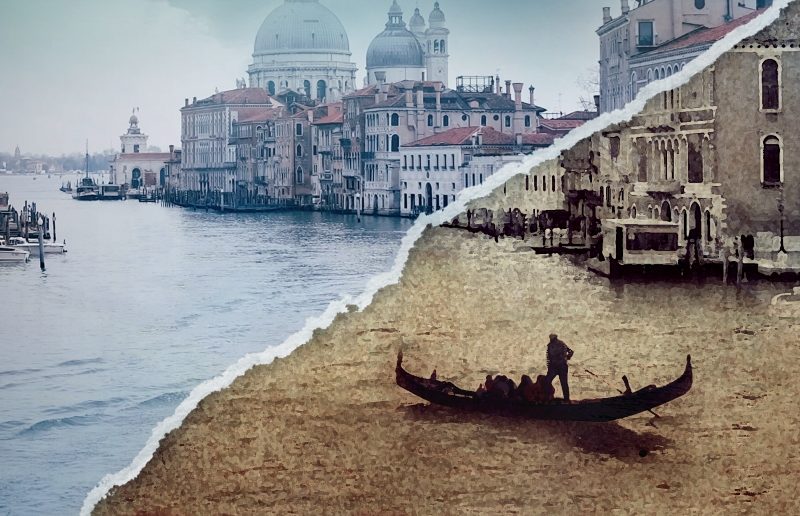
    The Tintoretto Code—Wonderful plot and an innovative time travel mechanism, a step up the literature ladder from Dan Brown


    It begins excitingly, with dark characters lurking and arrows whizzing. Angelo Mascari meets his collaborator on the banks of a canal in Venice. But they are being pursued with rapiers and crossbows. His collaborator is struck down, but Angelo escapes, vowing yet to save his love, the married woman Isabella.
    It is after hours in the Palazzo, and Director of Museums, Salvatore della Porta, pauses for a moment in the Great Council Room in front of Tintoretto’s Paradise, before entering through a hidden door.
    Nick O’Connor is recovering from being hit in the head in a hockey injury. Two weeks since he had his stitches, he’s with wife Julia, an art journalist and photographer, in Venice. But Nick experiences periodic bouts of… something—a woman in the painting is talking to him.
    Enzo Paganelli studies a chart of dates and events, thinking of his twin sister, who had died two months before, hoping for a reconciliation with his estranged daughter. Paganelli is alone in the Chapter Room of the Scuola Grande di San Rocco. He opens a panel into a secret room. From the drawers of a Chinese apothecary cabinet he pulls out an iron key and a parchment.
    The woman in the painting is talking again, and artist Carlo Zuccaro translates. She’s speaking in Venetian. Her name is Isabella Scalfini. Julia puts it down to Nick’s having bumped his head; however, people are following them, and she smells a scoop. In an abandoned cellar, Paganelli prepares a ritual.
    The writing style is sophisticated. I was fated to like an author who uses adjectives like ‘fugacious’ and ‘biovular’. The plot is exotic and wonderful, with backstory woven in skilfully, revealing just enough to keep us interested. The middle section goes a bit slowly, but once Julia comes out of denial, the plot advances at an exciting pace, pausing from time to time only to catch up on this character or that. The characters are colourful and the dialogue believable. The frequent time shifts are deftly handled by using props; Renaissance-era clothing lets us know we’ve gone back in time; an LED alarm clock rings us into the present day.
    This year I’ve read a few historical novels where the hero goes back in time into the body of some ancient person, and the device used here for the mechanics of the time travel is the most innovative I’ve seen.
    If you liked Dan Brown well enough, but would like to move a step up the literature ladder, this is for you.
    I was provided with an ARC by Reedsy Discovery.

  • Review: The Genesis Inquiry

    Review: The Genesis Inquiry

    Olly Jarvis, The Genesis Inquiry (Hobeck Books 2021)

    https://www.goodreads.com/book/show/59337468-the-genesis-inquiry?ac=1&from_search=true&qid=EpmlDEYCbX&rank=1

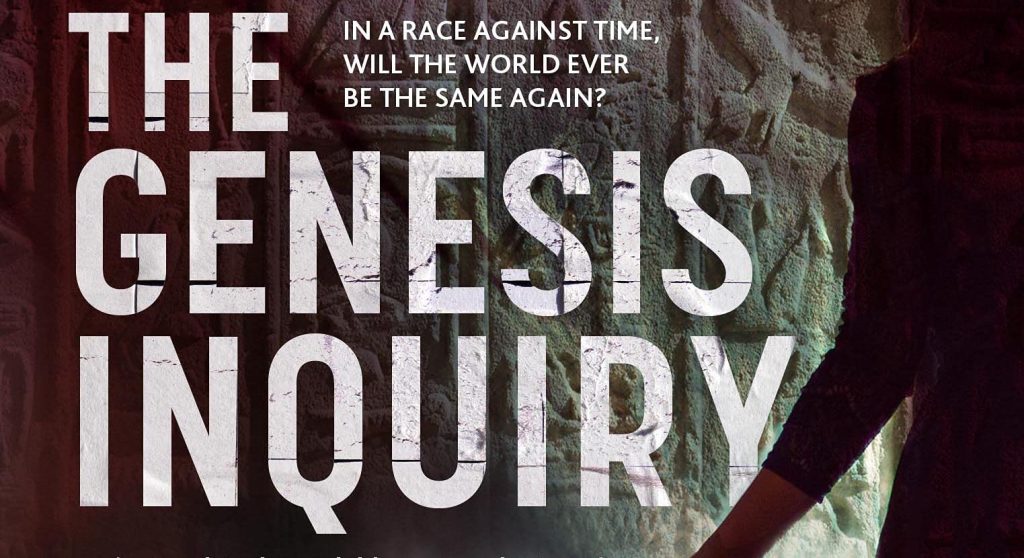
    A detective/legal thriller incorporating ancient history, religion, and ‘the big questions’


    Barrister Ella Blake takes a case at De Jure College in Cambridge, also where her daughter Lizzie is at uni, but their relationship is strained. Cambridge is ‘all about answering the big questions’, Lizzie says.
    The case concerns the mysterious disappearance of a genius African American academic from Arizona, Mathew Shepherd. Shepherd had been researching ‘the big questions—how? and why?’. De Jure wants Ella to find Shepherd and to discover what was the nature of this work. As well as a penchant for the Greek philosophers, he appears to have been reading about every subject, about every period of history—and also the Yorkshire Ripper.
    Though attracted to campus gardener Jay, Lizzie begins dating Greg. But gardener Jay is in trouble, in court for hacking MI6, and Ella defends him. Before making his appointment with Ella, Shepherd’s brother Cameron turns up dead.
    Lizzie and Greg attend the new age retreat of climate change activist David Kline, who has some crazy theories about life and the connectedness of all things.
    A detective, Broady, has come all the way from Phoenix to investigate Cameron’s case, his telescope in tow. Lizzie doesn’t know whom to trust, Greg or Jay. Should they trust Agent Harris from the police?
    The team—Ella, Broady, Lizzie and Jay—are on the run, from Cambridge to London to Lindisfarne to Turkey, chasing down clues. There is an enigmatic letter from Matthew to his brother. There’s a password-protected memory stick and some kind of Bible-code-type grid of dots in columns and rows. All the while, they are being chased by…who? MI6? David Kline? The Chinese? And people who help them keep getting murdered.
    Like Dan Brown books, there are recurring themes, designed to give readers the feeling that we’re being let in on a secret conspiracy—the Anglo-Saxon Chronicle, Aristotle, comets, Noah’s Ark, the date 9500BC. Little by little, these clues reveal what exactly is the Genesis inquiry. The conclusion is more interesting and more educated than the usual we-found-the-real-Garden-of-Eden fare. And in the end, it’s Ella’s lawyer-skill with words that wins the day, not some macho-man with guns. OK, there were guns, too.
    This thriller is an easy read, well written and perfectly edited. I was interested in the characters from page 1, and the backstory is woven skilfully into the well-paced, rapidly developing plot.
    As a real life barrister, Jarvis knows what he’s talking about; the legal proceedings and courtroom scenes seemed quite realistic. It looks like he has a sideline in ancient history and archaeology.
    Olly Jarvis has written several detective/legal novels. This one is billed as ‘an Ella Blake thriller’, so we can probably expect a sequel.
    I was given an ARC by the HNS, who didn’t consider it to fit the historical fiction genre.

  • Review: The Happy Writing Book

    Review: The Happy Writing Book

    Elise Valmorbida, The Happy Writing Book (Laurence King Publishing 2021)

    https://www.goodreads.com/book/show/57356168-the-happy-writing-book?ac=1&from_search=true&qid=kBGOqR2DU2&rank=1

    A writing book not just about the craft, but about the process and the emotional journey of writing


    In my view, there could never be too many books about writing. There are always new ways of reviewing the basics, new viewpoints to hear, new examples to use. However, this book is not just one more writing book—it’s something completely different. This is the first writing book I’ve come across which addresses the why, not just the how. This is a writing book that outlines not only the craft of writing, but the spiritual/emotional journey involved.
    Each chapter is only one or two pages long, and there are 100 of them, 100 ‘parcels of inspiration and provocation’. Chapter headings include “Dream big”, “Put off procrastination”, “Perfect is the enemy of good”, “Make yourself feel”, and (my favourite) “Change the world”. The Further Reading section at the end has headings like “Randomness” and “Listening to silence”.
    The HWB addresses not just the method of writing but the process of writing and the psychological journey involved. Why do we want to write? What is holding us back, emotionally? How do we overcome what gets in our way? The chapters often end with a ‘homework’ exercise—again, focussing on provoking creativity, not just on using a particular writing technique.
    One could probably assume that anyone reading this book is already writing or starting to write, so some of the advice might be a tad simplistic, but the different approach (process rather than just technique) makes up for it, and the chapters are so short they only take a minute to read. I found it a handy tool reading one or two chapters a day to provide a pep talk before starting my morning’s writing.
    The condensation of choice ideas and concepts into the small space makes the chapters almost like little poems. I totally loved the metaphor for creative juices (our writing forays are as one ant’s action, then another’s) as—‘formic pheromones’. The HWB is full of gorgeous new ideas like that.

  • Review: The Owls of Gloucester

    Review: The Owls of Gloucester

    Edward Marston, The Owls of Gloucester (Ostara Publishing 2011)

    https://www.goodreads.com/book/show/11755271-the-owls-of-gloucester

    This 11th century whodunit centers on Gloucester Abbey, where a monk, Brother Nicholas, collector of the abbey’s rents, has been murdered. The body is discovered in the belltower by two novices, Kenelm and Elaf, escaping a beating. They admit they didn’t like the way Brother Nicholas ‘looked at’ them. We can guess.
    Ralph Delchard and Gervase Bret are on the King’s business, administering the Great Survey. As Sheriff Durand begins his investigation of the murder Ralph and Gervase deliberate on local property issues at the shire hall.
    The wives, Golde and Maud, enter the story, as well as Abbot Serlo and Brother Frewine. At the shire hall, we encounter local land owners, both conquering and conquered, making up a panoply of interesting characters.
    As is usual in detective stories, the Sheriff rushes off down a blind alley, needing the king’s commissioners to lead him to the right path, assistance which is, of course, much resented by said Sheriff. Meanwhile, the abbot and his monks conduct their own inquiry, and each party is not sharing their findings with the others. We discover that the local property disputes have very much to do with the murder of Brother Nicholas.
    An easy read—might be accessible to an older-end YA audience, too—not chock full of detail about the period, yet I didn’t find any anachronisms. I don’t think the property cases dealt with by Ralph and Gervase are historic, but they are believable, and there was, indeed, a Strang the Dane listed in the DB as a property owner dispossessed in 1066. If you loved Brother Cadfael you’ll love this series.
    I found the concept of the series positively inspired—detective cases encountered while on the business of William the Conqueror’s survey. This is Book 10 in the 11-book Domesday Series.
    This review was written for Historical Novels Review.

  • Review: The Lion Ascendant

    Review: The Lion Ascendant

    John Biggins, The Lion Ascendant (Bonanova Editions 2021)

    https://www.goodreads.com/book/show/58835259-the-lion-ascendant?ref=nav_sb_ss_1_18

    Flemish surgeon’s apprentice Frans Michielszoon van Raveck enters the Polish-Swedish War 1626-29 War in the service of King Gustav.
    Biggins’ ‘fascination with… the pathology of decaying empires’, as claimed in his author’s bio, is evident throughout. Frans’ life story reads like a comedy of errors, as he assists in one bumbled project after another.
    Over-wintering on a frozen hummock on the Vistula River, Frans becomes assistant to an Italian architect charged by King Gustav to construct an over-priced fortress and sluice-gates. He earns a medical scholarship by successfully operating on the Swedish king, studying at a miserably equipped university in Uppsala. In Stockholm he assists in the construction of the ill-fated folly, the Vasa warship, which sank less than a mile into her maiden voyage.
    Peppered with Classical and Biblical references, the writing admits to having ‘drunk deep at the spring of Pericles [and] Cicero’. It is a rich, erudite style which is very much to my taste. Even apart from the frequent vocabulary in Dutch, Polish, Swedish and Latin, I found almost 20 words I have never before seen in usage, such as ‘obloquy’, ‘clyster’ and ‘gallipot’.
    In places the language is so flowery as to be humorous. For example, a fellow who doesn’t love Amsterdam ‘would certainly starve in the midst of Dame Abundantia’s larder and lack salt to his boiled egg beside the very brine pans of Cadiz’. The language is believable for the 17th century, something which I consider essential for historical fiction.
    The slow pace also speaks to period verisimilitude, when travellers trekked across endless frozen meadows with no map and soldiers waited months for orders never being told the overall battle objective.
    This is Biggins’ 6th novel. This is the sequel to The Surgeon’s Apprentice and ends with Frans travelling, so we can expect Volume III.
    Review first appeared in The Historical Novels Review.

  • Review: The Only Living Lady Parachutist

    Review: The Only Living Lady Parachutist

    Catherine Clarke, The Only Living Lady Parachutist (Idle Fancy Press 2021)

    https://www.goodreads.com/book/show/58421074-the-only-living-lady-parachutist?ref=nav_sb_ss_1_33

    The true tale of a woman reaching the heights (pun intended) of her profession, with some tall tales told to whip up the crowd


    Lillian reminisces upon her entry into show business—the Music Hall world of acrobats, jugglers, trapezists, upon which she gazed with envy from her barmaid job at the pub next door.
    Ted Faust gives her an audition, as a trapezist—and a stage name, Gladys Freitas—only to find that he proposes charging her, ‘for lessons’. Eventually, she becomes ‘the Aerial Queen’, lauded by the Sydney Herald, as trapeze artists say, ‘with the world at her feet’.
    Her debut at Haymarket Music Hall, despite her mother’s disparaging that she had become ‘an actress’, is a success. Sister Ruby wants to form a double act. Despite a prickle of resentment, Lillian welcomes the second Freitas sister.
    Finding their slot increasingly challenged by the new act, Negro minstrels from America, the Freitas Sisters are pressured to undertake something more dangerous in their act. A visiting American, Professor Park Van Tassel, invites them to a hot air balloon and parachute jump show. He gives them jobs as performers. The sisters change employers, as they get traded around like livestock.
    Lillian tries a daring feat and is injured, and the ventriloquist Harry Rayward woos her. When she arrives, cured, in Adelaide, financial backers, Edwin Thorne and magicienne Miss Cora, are scrambling for their shares in the proceeds. As Lillian, now named Leila Adair, seeks daredevil fame, the troupe suffers from a series of failed balloon inflations.
    Van Tassel’s dialogue sounds a bit awkward, but maybe that’s just a sign of a quirky personality. Some plot developments seem thrown away, although, granted, there’s a limit to how much one can embellish with biography. Lillian suffers from a dark pain from her childhood, her career tears her away from her children, and various frauds and mountebanks double-cross her, yet she doesn’t seem to suffer as much as you know someone would.
    An interesting twist towards the end, a secret revealed—and then another—seems unfortunately thrown away, too. The true story finally makes its way through invented personas, lies and tall tales told to whip up a crowd and makes a fascinating concept for a novel.
    The writing style is a little bit tongue-in-cheek in tone, without often reaching ‘funny ha-ha’.
    The world of professional balloonists/parachutists is beautifully portrayed. The book captures the mood of the age, 1890 Australia/New Zealand, when science and new inventions seemed to make everything suddenly possible, and the public, newly blessed with free time for leisure pursuits, hungered for all things strange, exciting and dangerous.
    This is based on the true story of a real woman parachutist, and each chapter is introduced by a real—and wonderfully illuminating—newspaper clipping from the time. The research necessary for this book must have been quite a challenge.
    I received an ARC from Reedsy Discovery.