Tag: science-fiction

  • Review: Quick and Simple Chair Yoga for Seniors

    Review: Quick and Simple Chair Yoga for Seniors

    Luna Light, Quick And Simple Chair Yoga For Seniors: The Complete Step-by-Step Illustrated Guide to Seated Movements for Weight Loss, Improved Balance and Mobility … in Under 10 Minutes a Day (Kindle 2023)

    https://www.goodreads.com/book/show/202972738-quick-and-simple-chair-yoga-for-seniors?ref=nav_sb_ss_2_44

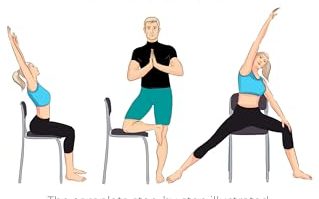
    Basic chair-based posture, cardio and stretching for Seniors, with 28-day programme

    I’m 70, and have lower back issues, so the opportunity to get some low-impact exercise, muscle training and stretching done while seated appeals to me. Because I’m not standing, there’s no impacting the lower lumbar vertebrae and less weight on my bad knee. A big motivation for me is pain relief. I am limited in my work by pain more than any other disability.
    There’s only one of these exercises—the Floor Leg Raise—that I can’t do (because once I lie on the floor I can’t get up). However, I can modify it to do it while lying on the bed.
    The exercises here incorporate Alexander Technique and Pilates. Also the pranayama breathing techniques of yoga.
    Better posture, strength, flexibility, cardio and weight loss are addressed.
    There’s a 28-day programme to make sure you get a well-rounded, general workout and to help you feel like you’re making progress. There are four groups of exercises, which most days you do two or three groups, with a Break day every sixth day. By Day 23, you’ve worked up to doing all four groups.
    Group 1 is basic posture, Group 2 is warmup. Group 3 is easy cardio. Group 4 is flexibility.
    Readers can also download bonus videos.
    I’m starting my 28-day programme today, right in my office, and I’ve just done Day One. I’ve printed the 28-day programme onto a Wall Chart to hang on the inside door of my office to track my progress.

  • Review: Delicatus

    Review: Delicatus

    S. P. Somtow, Delicatus (Diplodocus Press 2023)

    https://www.goodreads.com/book/show/90588349-delicatus?ac=1&from_search=true&qid=01FLZSUME4&rank=1

    The depravity of ancient Rome highlighted by the story of a beautiful boy


    Beautiful catamite Sporus is passed on from Nero to Vitellius. He recounts his journey ‘from slave boy, to fellator of senators, to Empress of Rome, to Goddess of Spring, to Queen of the Dead’.
    He can’t remember the scene of the original outrage—was it in the forest? Or in a palace? When his mother’s head was bashed in. Now Emperor Vitellius intends to use the boy in a reenactment of the Rape of Proserpina in the Circus.
    It’s a tragic tale from the pages of history, but the characters had no voice. Somtow creates a fictional autobiography of one of history’s most famous catamites, and in the process we get up close and personal with the perversions and voluptuaries of Otho, Vitellius and other unworthies. It manages to convey the horror of the sexual abuse historians called ‘an abomination’ without being graphic.
    Nero sings while Rome burns, an apt metaphor for the decaying and debauched ruling class, until Pontius Pilatus suggests blaming it all on the Christians.
    An absolutely smashing first line: ‘…chains and the sea…’ This is how the story of his sexual abuse begins. The tale is beautifully written, told in first person, as if addressing the attendant, the ‘overpainted whore’ perfuming him for sacrifice.
    I discovered this author from GetBooksReviewed, and this is the third book I’ve read.

  • Review: As the Hurricane Winds Blow

    Review: As the Hurricane Winds Blow

    Perry Zenon, As the Hurricane Winds Blow (Black Haired Raven Publishing 2024)

    https://www.goodreads.com/book/show/222103322-as-the-hurricane-winds-blow?ref=nav_sb_ss_1_27

    A cozy collection of ghost stories for a dark and stormy night


    A powerful hurricane rages on the banks of the Mississippi, and the Delaunay family hunkers down inside the family home to tell horror stories. As the wind howls, they pile up cushions in the living room, preparing to brave the storm.
    This anthology comprises separate short stories with dark and/or supernatural themes. There is a haunted asylum beset by a series of mysterious deaths, and a vengeful spirit haunts a funhouse. One tells of a ‘mirror world’ inhabited by a sinister entity. A New Orleans detective uncovers a web of madness. A time traveller goes back in time to prevent a tragic event.
    Common to all the stories is a focus on the darker side of human experience—fear, obsession, guilt. The family examines together the fine line between reality and the unknown and finds that by sticking together in the face of the storms of life, the human spirit survives.
    The text is riven with quite a few clichés: ‘air thick with anticipation’, ‘news swept through the town like wind’, ‘vehicle shrouded in silence’, ‘nerves honed to a steely resolve’, ‘the tranquillity of her reserve was shattered’, ‘a trail of confusion and fear’. It could use a developmental edit and proofread.
    The asylum story jumps too quickly to the accounts of the deaths—we’re not even sure what the protagonist is doing there. And the tension is thrown away by resorting to ‘then there were more deaths’. Other opportunities to build tension are thrown away, I thought—the enchanted mirror could be terrifying, for example, but we see it too soon.
    The stories introduce great ideas that could potentially be scary, but better building of suspense is crucial for the ghost story genre. In several places, the stories could have been scarier if they were longer, with more attention on building suspense.
    I could have done without the intercallary chapters about which family member is going to tell the next story. All except for the last one, which summarises the moral of the story for each one.
    If you love ‘ghost stories’, sink your teeth into these.

  • Review: The Bible: A Global History

    Review: The Bible: A Global History

    Bruce Gordon, The Bible: A Global History (Basic Books 2024)

    https://www.goodreads.com/book/show/204593723-the-bible?from_search=true&from_srp=true&qid=9GKahtOSci&rank=1

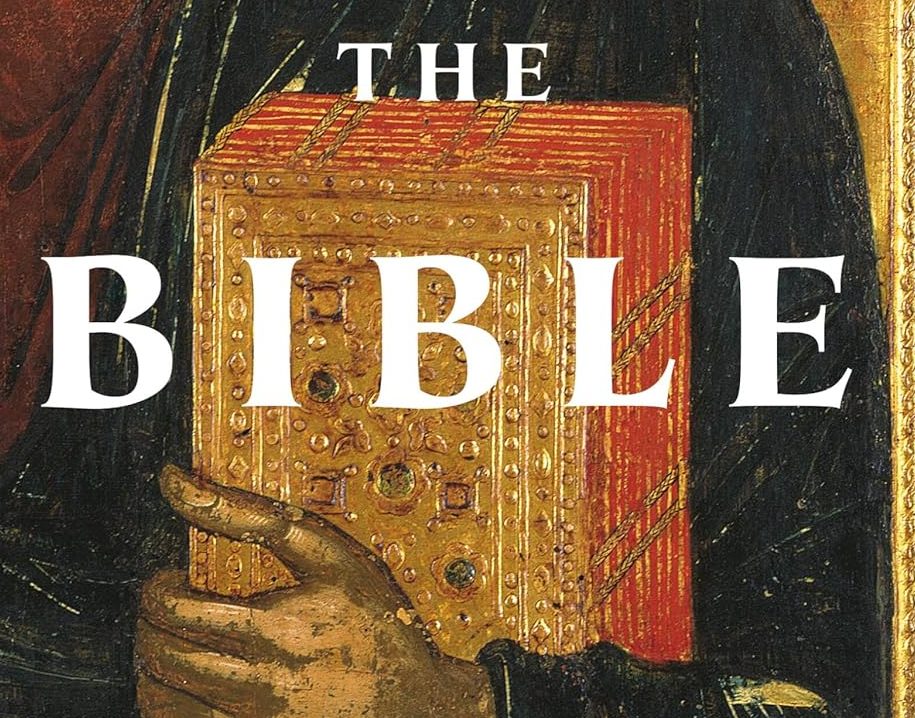
    The book goes through how the Bible became a book and how early Christian writers were inspired to proselytise. We see how the Gospels portrayed the person of the Christ, an aspect of early Christianity which remains shrouded in myth.
    Then it works chronologically through the history of the Christian Bible, from the middle ages to Renaissance and Reformation, taking on the science versus religion argument. We follow the book as it champions the switch from scroll to codex format. The project of translating the Bible drove the invention of the Armenian (4th C) and Cyrillic (9th C) scripts. The book made its way to the New World, making its way to Africa and China. It has been translated into 698 languages.
    Although it treats the Christian Bible (New Testament) only, it does touch upon Christian interpretations of Jewish Scriptures. I missed discussion of the Jewish history, and found discussion of the formation of canon a bit wanting. The dating of the gospels is a fascinating story, and I wish the book had gone into that a bit more. There are some colour photographs of famous Bibles throughout history, but a big book like this could have used more illustrations.
    This is a prodigious work of scholarship extensive in scope.
    I was given this book for Christmas.

  • Review: The Epic Women of Homer

    Review: The Epic Women of Homer

    Eirene S. Allen, The Epic Women of Homer: Exploring Women’s Roles in the Iliad and Odyssey (Pen and Sword History 2025)

    https://www.goodreads.com/book/show/219296084-the-epic-women-of-homer

    Homer (whoever he/they were) didn’t just tell the stories of both the Greeks and the Trojans.

    Where most ancient literature barely mentioned slaves, captives or even wives, Homer’s women are fully formed. The grief and heartbreak of the Trojan women is vividly portrayed, and Helen, the captive queen who causes the war, is a complex protagonist. The victim of sexual violence (or was it love?), her fate depends on the outcome of battle between men. Still, she exercises agency, and in her voice is placed the final lament in the Iliad.

    Allen concentrates on precise line by line translation of the Greek, which at first it may seem a bit pedantic to non-Greek readers. I majored in historical linguistics, however, so I find it fascinating. But we must stick through it, otherwise, we miss too much.

    In some translations Telemachus’ scolding Penelope to return to ‘the loom and the distaff’ can sound like teenage misogyny, until we understand that Penelope is Odysseus’ histos, his loom and his mast, a weaving term with connotations of ship-building and of pillars that hold up the rooves of family and dynasty.

    Allen studies women’s roles as queen, captive, goddess or heroine, a structure I found not the most systematic. For example, the same scene of Telemachus scolding his mother is discussed in several different places.

    A woman’s status was defined in relation to the men in her life. The bard implies, though, that the roles are complementary—we couldn’t have had the heroes without the heroines; it is the women who sing the laments, tend the shrines and keep the legends alive.

    What you won’t find anywhere else is the amazing appendix featuring nuanced and insightful discussions on words and phrases (such as histos) within the cultural context of Homer’s age.

    This review first appeared in Historical Novels Review.

  • Review: The Forger’s Ink

    Review: The Forger’s Ink

    Jo Mazelis, The Forger’s Ink (Seren 2025)

    https://www.goodreads.com/book/show/232616443-the-forger-s-ink

    1816 Swansea. It’s October, and the summer has not come.


    Orphaned Fanny Imlay is unloved in the house of her stepfather, who claims she ‘makes a luxury of her melancholy’. She writes of a fantasy world called Summerland where the sun always shines and all the people are happy—all but one girl who believes she was ‘born sad’ and weeps and weeps. The portrait of her mother Mary Wollstonecraft painted by John Opie, which hangs on the wall in the study, is destined never to glance in her direction. When her half-sisters run off with Percy Bysshe Shelley, they do not take her.
    Years later in 1971 Helena is unloved, minding the bookshop while her absent, cruel husband is away. Jude walks in carrying papers she purports to be proof that Fanny did not, as history has written, commit suicide, the tragedy that was the inspiration for Mary Shelley’s Frankenstein.
    Jude, orphaned, has inherited Fisherman’s Cottage, where ghosts come up from the river ‘squelching and dripping, fish-nibbled and green with slimy weeds’. She meets the fun-loving couple Sigi and Olof. Olof teaches her how to make ink from oak galls, and Jude takes up writing again, inspired by the classics. She’s heart-broken when the couple move back to Sweden. She mourns the warmth of the manufactured family she enjoyed for scarce months the way Shelley’s monster watches the happy family with unrequited longing. Like the monster, Jude ‘pass[es] like a wraith through the world’.
    The Gothic tone matches the Wollstonecraft-Shelley subject matter; the pace is languid. It takes Helena over 100 pages to understand what Jude’s papers are (it’s really her husband who knows books).
    Mysterious and beautiful, if heart-rending, it fully explores the emotions of isolation and sadness. We feel the profound melancholy of Fanny and Jude, even Helena.
    This review first appeared in Historical Novels Review.