Tag: roman-republic

  • Review: Sugar upon my Lemons

    Review: Sugar upon my Lemons

    Maria Conyers, Sugar upon my Lemons (The Conrad Press 2025)

    https://www.goodreads.com/book/show/227779721-sugar-upon-my-lemons

    A no-warts biography and love story, inspirational for the bereaved or anyone with a dying loved one
    The prologue begins as Great Britain has suffered 40,000 deaths, including that of the narrator’s beloved, Parker. Psychotherapist Maria remembers the life she had with her wonderful husband before his sad end, though not from Covid, from cancer. It was all the sadder for the family as lockdown restrictions limited their ability to see each other during the final days; they weren’t even allowed to hug each other at the funeral.
    I must stipulate, I have never read a ‘romance novel’, and I can’t imagine wanting to do so, nor do I read ‘biographies’ unless they’re about some famous person in history, and they’re more interesting if they’re warts-and-all. For me, a love story isn’t interesting unless it is set against a dramatic transition period in history or explores some aberrant psychology.
    I love the title, and found it à propos, and the text is well written, though I found a few grammar mistakes. The memoir is a chronological account of their relationship, which is first tested by Maria becoming wheelchair-bound and then by Parker’s diagnosis of cancer. It is told as straight narration. Year 1, Parker and I did this. Year 2, we did that.
    Some scenes were interesting enough to have been built into whole scenes. Keen to hide their love affair at first from their children, they inventing fictitious friends to tell them they are visiting, until his daughter discovers a skimpy undergarment. We need some dialogue, here. We need to experience the ‘gotcha’ moment. A family car journey that culminates with Parker backing the car all the way down a mountain road, with a child in the backseat suffering from motion sickness–that could have been a great scene. Instead, she tells it as just one more time when Parker was so wonderful. Insisting that he take a turn at cooking, the tube from Parker’s chemotherapy starts melting, leaking dangerous chemicals which start flying around the kitchen. What a dramatic anecdote! I’ve never heard of such a thing happening! I felt sure that if this incident had been recounted in a style other than straight narration, it would have been more dramatic.
    Parker sounds like a really great guy, and everyone who knew him should definitely have a copy of this memoir. It would also be inspirational and useful for anyone whose loved one is dying or has died. The recounting of Parker’s last days and Maria’s struggle to love and support him through them are extremely moving. The loving care that she and her extended family gave to him during his tragic illness is truly inspiring and should provide a model for anyone faced with a similar challenge. Maria writes that “it is possible to use one’s grief as a catalyst to help others”. She includes, as epilogue, a beautiful and inspirational essay About Grief, which speaks to her experience as a psychotherapist as well as that of losing her husband, and her call for a national bereavement support scheme is well said.

  • Review: Lured by the Hoard

    Review: Lured by the Hoard

    Ian Walford, Lured by the Hoard (The Conrad Press 2021)

    https://www.goodreads.com/book/show/59752824-lured-by-the-hoard

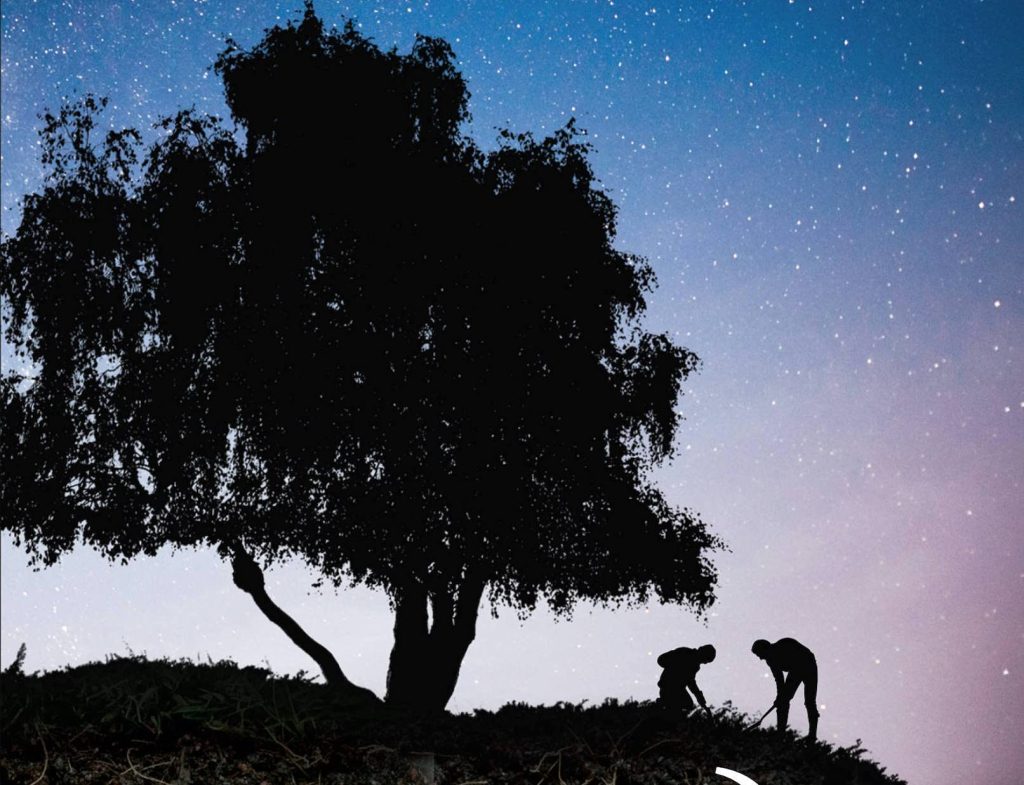
    638 AD. Aelfred and his slave Cadmon are digging. They uncover a rich treasure, the bejewelled war trophies of ancient kings.
    Going back in time to the Roman era, Aelfred’s ancestor Eadrich, an Anglian mercenary stationed in York, enjoys a jar of ale with his mate Modig. Eadrich is getting ready to retire, having been granted land in Deira, which he plans to call Woden’s Ford. He means to found a dynasty.
    Aelfred is born to Rinc, eighth in succession from Eadrich, and Hilda in Woden’s Ford; 6 months later in Gwynedd Cadmon is born to Abertha and Gerant. Rinc and his Northumbrian raiders attack Gerant’s village, killing him. Abertha, carrying her baby, and other villagers are taken as slaves.
    The new house slave suddenly dies, leaving baby Cadmon to Hilda to raise, and Aelfred and Cadmon grow up as if brothers.
    Tensions rise as King Edwin plans to marry a Christian princess, and some talk of a Deiran break-away from the Northumbrian alliance. King Edwin issues a decree requiring the land to convert, and Woden’s Ford, at least nominally, complies.
    King Cadwallon of Gwynedd, allied with King Penda of Mercia, is planning to attack Northumbria and all the thegns in Deira and Bernicia are warned to be ready. King Edwin decides to hide his treasure in various locations (why would he do that?). The battle goes against them, and Woden’s Ford has to adjust.
    Aelfred makes a secret plan, involving the treasure, during which his and Cadmon’s differences have interesting implications for the plot.
    Aelfred’s attitude to the new religion and to King Penda seems in places contradictory, but in the end, his approach to Christianity is pivotal to the plot.
    Personally, I didn’t like the frequent anachronistic expressions—‘no rest for the wicked’ (origin 15C), etc.—but I understand that the more colloquial modern writing style makes the story more accessible to a younger audience.
    The writing style is clear, lively and interesting, and it is perfectly edited.
    What a great idea to write a novel based on the Staffordshire Hoard! When viewing mysterious ancient sights and artefacts, who doesn’t think, ‘I wonder what it was like’? Walford paints a lively picture of what might have been.

  • Review: The Memory of Water

    Review: The Memory of Water

    J. T. Lawrence, The Memory of Water (Pulp Books 2016)

    https://www.goodreads.com/book/show/30899323-the-memory-of-water?ac=1&from_search=true&qid=Kx0JHfy70b&rank=3

    The theme starts out ordinary enough. Hitherto rich and successful writer Slade Harris is now in a slump. With two successful novels under his belt, he’s in an unshakable writer’s block. Publisher and creditors are at the gates. Hitherto successfully promiscuous, he’s beginning to realise that short-lived affairs aren’t bringing him happiness. But there is one woman who seems to matter.
    That’s where ordinary stops. We expect him to plan to propose to her. Instead, he plans to murder her.
    Such a remedy for writer’s block, if believable, would really require quite an aberrant psychology, and Slade has a childhood tragedy he keeps close to his chest. Plus, he has Mommy issues. Hang on, not really. He only means to use it as the storyline in his novel, an exercise designed to unblock the muse.
    From here the plot becomes ever more tangled (no spoilers), and Slade careens into deeper self-examination, finally reaching an epiphany. The conclusion is brilliant, with twists and then twists upon twists, a big surprise.
    At various points during the tale, we’re unsure as to whether Slade is really experiencing this, or whether he is imagining it. With some novels, I might consider this a defect, but here, it seems to match the theme. Slade is looking both for a more real experience of his own life and for a fresh, new fictional inspiration for his novel.
    There’s anything ordinary about the writing. It’s rich, innovative and full of wry humour. The protagonist keeps likening himself to Jay Gatsby, but I kept being reminded of the wit, word-skill and characters of Tom Wolfe.

  • Review: Lillian and the Italians

    Review: Lillian and the Italians

    David Gee, Lillian and the Italians (The Conrad Press 2021)

    https://www.goodreads.com/book/show/57874214-lillian-and-the-italians?ac=1&from_search=true&qid=YALtjYrfbn&rank=1

    Leaving her strait-laced semi-detached life in Hastings, recently widowed Lillian travels to Venice in search of her estranged son, interior designer, Andrew.
    From the railings of vaporettos, she drinks in the glamour of the Grand Canal, the Bridge of Sighs and the Piazza de San Marcos, and tries to ignore the stink. Venice haunts her, remembering the honeymoon she shared here with Andrew’s father, 30-some years ago.
    She begins to encounter some of the people of importance in her son’s life, and the puzzle pieces start to fall in place. She learns more about his Jet Setting lifestyle. She learns a secret, which she can’t understand why he never shared with her. Once, she had believed they were close.
    She fingers the scant postcards they’d received over the years. What had he been doing in Cortina? What took him to Rome? All left no return address.
    Lillian is hosted at the sumptuous villa on the Amalfi Riviera of a handsome Sicilian prince, who has some secrets of his own to reveal. While they wait for news of Andrew, the prince escorts Lillian to Capri by yacht, to Rome by private plane.
    Into the mix we add a murder mystery, involving, provocatively, ‘Corsicans’—Andrew is presumably on holiday in Corsica– and Lillian’s anxiety increases. Thence reignites an ancient feud between Corsican and Sicilian criminal clans, and we are left with assorted love children from complicated liaisons.
    This is a great tale, beautifully written, featuring loads of local colour and a window into the glamorous, sometimes dysfunctional and sometimes dangerous, lifestyles of those who jet and yacht across the Mediterranean from villa to villa. The characters are interesting, and the pace is good. We hear the story of the prodigal Andrew in dribs and drabs, leaving us ever keen to read the next chapter.
    My only slight niggle was that I found the couple in the love story a bit of an unlikely pairing. But, Love is not necessarily rational.

  • Review: The Summer Will Come

    Review: The Summer Will Come

    Soulla Christodoulou, The Summer Will Come (Kindle 2018)

    https://www.goodreads.com/book/show/39325268-the-summer-will-come?ref=nav_sb_ss_1_20

    The story starts in 1953 with a blissful portrait of the picture-perfect mountain-side village of Kato Lefkara in southern Cyprus. The villagers are looking forward to a celebration of the coronation of Queen Elizabeth, and 9 year old Elena and the other children will each be given a mug with the queen’s picture on it.
    But all is not idyllic. There are scandals—the Principal’s daughter has eloped with someone from another village; her mother is beside herself. And life is hard. Mothers wake before sunrise to wash—in the same stone trough from which the donkeys drink–their children’s clothes for school, hand-me-downs from other village children. No one owns more than two sets of clothes, and the best set is saved for church. Elena spends her summers making lace, like her mother, to sell for export to Europe. The fare is simple—lentils, onions, bread, halloumi, olive oil—sometimes rabbit with onions and bay leaves and bourekia or pastelaki pastries on special occasions.
    Elena dreams of England. Her father is in London, and has never sent for them. Yet an aunt living there promises to assist their immigration. Christaki’s father Loizos, also plans their family’s emmigration to England.
    This ordinary picture is then punctuated, by ‘troubles’. Enter into the picture, the Cyprus Emergency. There is increased sympathy for Enosis (political union) with Greece, and some in the village, like Christaki, are joining EOKA (the National Organisation of Cypriot Fighters), and even the children are involved. They organise secretive missions to thwart British rule. Others, however, are not sympathetic and, equally secretly, are actively thwarting these missions. Christaki’s father, for one, supports the communist AKEL. Atrocities by British soldiers multiply, and the population becomes polarised along ethnic lines–Turkish-Cypriot and Greek-Cypriot.
    The immigration to London is hard for both families, particularly for Elena’s, but there is a happy ending.
    The Voice of Elena is very good; we really see a child’s view of playground politics, village goings-on, and we witness the new culture and country of England through Elena’s eyes. The deeper political issues involved in the Cyprus Emergency don’t really come across, which was disappointing for me, because I’m interested in history and politics—I would have loved to read more secret missions and thwarting of missions–but that’s OK, because we’re seeing most of the story through child’s eyes.
    There are an awful lot of characters. In a sense, this is realistic, as in a village everyone is in everybody’s business, and everyone is married to somebody’s cousin or best friends with somebody’s brother. But I found it confusing. A third of the way through the book, I went back to page 1 and made a list of characters so I could keep all the relationships straight.
    Most of the story is ordinary stuff—what people say, what they eat, where they go, how they celebrate Easter, etc., but for someone wanting to learn about Cypriot culture, this novel is a lovely eye-opener. If you like reading about different cultures and/or if you like family sagas, you will love this novel. If you are a Greek Cypriot you will cherish this novel like a rediscovered lost friend.

  • Review: The Blind Affect

    Review: The Blind Affect

    Michael Poeltl, The Blind Affect (Skylab Press 2021)

    https://www.goodreads.com/book/show/58404863-the-blind-affect?ac=1&from_search=true&qid=XgpjrAEK9J&rank=1

    Jonah, 61, his health failing, looks back on his life. Severn, in therapy, tries to remember those missing years. Both children’s mothers drink, and shirk responsibilities to do so. Fortunately, they both have best friends–Jonah has Morty and Severn has Maribel—and these friendships help them through the hardship.
    Always too alone, Jonah had survived birth; his twin brother had not, and his mother is determined never to let him do anything dangerous—or even, really, anything. Finally at 13 Jonah has a friend, another loner, Morty. Jonah tries out for basketball, but the other boys make fun of his body odour, call him ‘Stinky’ and in the locker room shove him into the shower. The doctor says he has Bromhidrosis. In high school, he smokes, drinks and snorts, and he’s been getting into trouble. He’s in and out of rehab.
    Jonah is challenged by his therapist to go the cinema, but once there, he witnesses a crazed shooting. He goes on probably the most awkward first date I’ve ever read about, but the girl, June, an exotic dancer, likes him, anyway, and they settle down to a happy life. Right in the midst of Jonah’s happiness, a series of tragedies send Jonah back to his addictions.
    Severn is abducted by sex traffickers and locked in a basement. By 15 she’s pregnant by one of the paedophile johns, and suffers a forced abortion. The girls and boys there are given new names, but they etch their real ones into the cement block in the corner, proof that they existed. They rehearse a legend of a girl who once got out. Severn, herself, remains captive for 15 years.
    At 31, Severn is expected to manage the others. One day, there’s some kind of incident happening upstairs, and her master, Dominus, wants her to kill them. She refuses, and violence ensues. And so, even her rescue is traumatic. Severn, also, triumphs over her trauma, going to school and qualifying as a social worker, though she has nightmares and still can’t—doesn’t want to– remember the missing years.
    Answering his emails, Darnell plans his talk at an upcoming event about his experience growing up in an abusive home. He’s received an email from Severn, whom his charity had helped, wanting to meet him. Here, there is a fantastic twist in the story (no spoilers) as we suddenly understand Darnells’ role in all this.
    In the end, the three characters’ stories come together in the most serendipitous way, and Jonah discovers that, far from living a useless life as he had thought, his actions have had a ‘blind affect’ on many people.
    Reading about a person with an unusually bad body odour is a first, and I found that interesting, because I know someone like that.
    I found a few mistakes in the editing, but the writing is good. I really hope no reader experiences either the abuse, or the parental neglect that so often turns a blind eye to abuse, like the characters in this book. But for anyone with this kind of experience, it might prove educative or cathartic. The tale of these folks’ woes is told with heart and, amazingly, without self-pity. Jonah is a bit of a whinge, but who could blame him? It’s certainly heartening later in the tale when the characters start finding some happiness in their lives. This book should be a lesson to anyone contemplating suicide that, not only can they survive, but their lives can make a difference to others, sometimes without their even trying. There is always purpose.

  • Review: Cleo McCarthy Time Travel and other Impossible Things

    Review: Cleo McCarthy Time Travel and other Impossible Things

    Michael Poeltl, Cleo McCarthy Time Travel and other Impossible Things (Skylab Press 2024)

    https://www.goodreads.com/book/show/209991851-cleo-mccarthy-time-travel-and-other-impossible-things?ac=1&from_search=true&qid=fbGjwKrcCk&rank=1

    On a bucket-list trip to the Far-east and South Africa, Cleo McCarthy’s plane is about to crash, and her life flashes before her eyes. Her young-onset Parkinson’s has been advancing. Then, she finds she has gone back in time. She remembers being on that plane scheduled for two months in the future. She remembers her Far-east travels.
    Her time travel guide Franklin appears to explain to her the rules. At any point in the future she can jump back to this, her Initiation Day, and make different choices. Then that future will be erased. It’s a ‘closed timelike curve’. The plane crash never happens, but you still have the memories.
    Her physicist friend Bobby says no, time travels in a straight line. Best friend Trish is also in the know. Then Bobby gets shot in a freak burglary. Cleo jumps again.
    There’s a white noise that she can’t identify. It’s an Electronic Voice Phenomenon, Franklin says. Other entities—ghosts?—are using the EVP as a medium. They speak to her, ‘Find usss’ they say.
    She wants to find a place where ‘time stands still’ and visits Rome, where she meets fellow traveller Doris. Franklin sends her an EVP machine in Paris. At Père Lachaise, she meets Stephan, who says he has met her there nine times. His time curve is stuck in sadness; he can’t get past the age of 23 without jumping, every time he tries to kill himself.
    Chapters often end with a switch to Franklin’s POV, as if he’s taking notes on Cleo’s progress.
    For Cleo, constant jumping back might be at least a temporary solution to her Parkinson’s. Along the way, she, Bobby and Franklin ponder the big questions—metaphysics, free will, wormholes, the meaning of past, future, the meaning of life, happiness, love, immortality and the role of human agency.
    The science bit is pretty cool, as is the big solution they all come up with, though I confess I didn’t get the ‘save the universe’ part of it. I was unclear as to whether the time travellers can control if and when they jump. And how did Cleo get all that time off work?
    I loved the line ‘is that a smile sliding up the right side of her face or a frown dipping to the left?’

  • Review: Killing Karma

    Review: Killing Karma

    Michael Poeltl, Killing Karma (Skylab Press 2022)

    https://www.goodreads.com/book/show/61073856-killing-karma?ac=1&from_search=true&qid=t9UNAkAi0T&rank=1

    Last year, Peter was a witness to and participant in the nightmarish pull-out of US forces from Kandahar in 2021. Now, managing a bookshop in Detroit, he struggles with PTSD, avoiding anything that might provide a trigger. Counselling helps, but not enough. At night, he’s right back there on the tarmac at Kandahar.
    One day a woman named Clare orders a book about past lives. She invites him to try regression hypnosis, recommending therapist Theresa.
    Peter begins his hypnosis therapy with Theresa. Twice, he’s experienced dissociative fugue, he tells her, a sense of time loss. Theresa immediately senses his pain. ‘Am I going through this for a reason?’ he asks, wringing his hands. Probably misplaced guilt, she thinks.
    In trance, he’s an African American boy in Georgia named Martin, about to be hung. He recognises the officer putting a nose around his head. Theresa says Peter is being led to understand those responsible for the trauma causing his PTSD.
    Clare walks back in to the shop, and she asks Peter out.
    A bitter divorce has led Detective William Harlow to self-harming. He attends a death, an apparent suicide. The preliminary autopsy shows Harlow’s case is a murder.
    Peter’s date with Clare is a success, and they return to the subject of past lives.
    Theresa goes out for a meal with Nyra, to the same place that Peter and Clare had gone to. They are there on their second date, and Theresa is happy to see romance budding between two of her clients.
    A robbery occurs at the book store which Clare and Peter must witness, the shared trauma of which causes problems in their relationship.
    Harlow attends another crime scene; a small-time criminal is murdered in the street, his head severed. The body carries a card with a similar message to that accompanying the body in the previous case. Harlow suspects Peter.
    Theresa considers her potentially unprofessional feelings about Peter.
    Harlow attends a missing person case. A note was left, with the same message. Karma has a Champion. They deserved it. Signed: The Karma Killer. The missing person is Clare. Now, Harlow suspects Peter even more.
    After a blow to the head, Clare is abducted. Theresa comforts Peter. Peter tells Harlow he’s been seeing a regression therapist, Theresa Clement; Harlow recognises the surname.
    As the perpetrator reveals their hand and Harlow solves the case, we learn that everyone’s fate is a payback for some past life’s crime.
    This is two stories—the first, a romance, the progress of which is affected by the couple’s past lives, and the second, a detective story about a serial killer who is motivated by events in past lives. The interconnection between these two elements makes for an excellent plot.
    I really love the Concept of crimes being motivated by karma left over from past lives. However, I considered the karmic avenger a basic plot flaw, without a fuller understanding of the killer’s past lives. A karmic vigilante would have worked if they had a stream of different clients they enacted revenge for.

  • Review: Eve-0

    Review: Eve-0

    Danielle Gomes, Eve-0 (ANJO One Eleven Press 2021)

    https://www.goodreads.com/book/show/57819046-eve-0?ac=1&from_search=true&qid=hxQ20ob0Vj&rank=1

    In the past decade, 3 million have died from flu, and another five million from viruses. Civilisation has between 3 and 5 years before everyone is wiped out.
    Gabrielle is called away from her U Penn hospital by her fiancé Trent, a geneticist, to be the surgeon on a critical mission into the Amazon jungle. Trent’s employers, AmCorps, have identified an ‘evolution gene’—Eve-0—in hopes of programming the human body to be resistant to disease. Since 1987 Eve-0 has been ‘dormant’, corresponding to a hyper-evolution of viruses and bacteria. The mission is to seek some individuals, without contact from the outside world, untouched by vaccinations and antibiotics, whose Eve-0 gene is not dormant.
    On the boat are also are military man Chris, the captain Paulo, and Kukua, the chief, and three members of the Sapanahua tribe, who will escort them. But someone is leaking info to opposition organisations. First, they fight off gunmen, the it’s sharks in the water, and Gabby soon gets used to the adrenaline rushes. They face a coming storm, and decide to anchor the boat in a lagoon. In the fury of the storm, a tribe member Jim is injured with a punctured lung, and Gabby has to operate against the listing and crashing of the boat. The boat is too damaged, and they have to take off in small Zodiac boats, and they lower Jim into the water to die.
    Back at HQ, word is that it’s Interfaith for Peace who are tracking the Amazon team, and their billionaire backer. They identify Paulo, their pilot, as the mole, and there’s a mole at home, where martial law is in force. Through forest-fire-scorched forest, they guide their boats, chased by these unknown trackers. Plus, there’s danger from the shores, the indigenous Matsés tribe, whom they want to contact for their DNA, but they also want to avoid antagonising. As they hike into the jungle, they’re bombarded by insects. Gabby begins to understand that the ‘terrorists’ following them are instead environmentalists.
    From then, it’s a series of non-stop adrenaline rushes. Finally, a local tribe takes them in and they take ayahuasca. In her trance, Gabby’s mother tells her, ‘When Eve bit the apple it wasn’t knowledge she sought, but control.’ The tribe have fully active Eve-0 DNA. As the roundup of the specimens begins, things heat up, and it’s hard to know who’s on whose side, and HQ tries to take control, without knowing the situation on the ground. That everyone is talking untranslated Portuguese only adds to the confusion. There’s a climax a bit like the end of Hamlet, but the good guys triumph.
    The pandemic-driven post-apocalyptic theme is perhaps not new, but the proposal of a genetically engineered solution is innovative, and the plot is great. The whole jungle experience sounds absolutely hellish. It seems like every disaster you can imagine happening in the jungle happened to these guys. I was picturing the blockbuster film the whole time I was reading it.
    The main character Gabby is fairly interesting; I was so glad she didn’t end up with Trent. The science is really cool, and sounds quite plausible. I would have liked even more of it. And Trent’s high-tech surveillance equipment sounds interesting, too—I would have liked a bit more description there, as well. It’s well written, and well edited, although I must note that inanimate things like ‘life’, ‘strategy’ and ‘damage’ cannot be quantified by the word ‘amount’.

  • Review: Flitting in the Shadows

    Review: Flitting in the Shadows

    Sunil Sethy, Flitting in the Shadows (Notion Press 2021)

    https://www.goodreads.com/book/show/58135069-flitting-in-the-shadows?ac=1&from_search=true&qid=sxdJQv3DLj&rank=1

    Husna’s mother and grandmother are killed in a car crash caused by two men lost in their desire. Husna was already prejudiced by her mother against gays, and this solidifies her antagonism. In her mum’s things she finds a manuscript addressed to her. Her boyfriend Adam helps her through it.
    Part I deals with the manuscript’s revelations about Arvind’s family.
    Arvind is accused by his friend Clive’s wife of a liaison with him, of which they are innocent, but he decides to own up to some things with his own wife Sushmita. This is the gist of the manuscript.
    Manmohan and his pregnant wife Tillotama are fleeing from a massacre of Hindus and Sikhs in the Punjab.
    Their young son Arvind is sexually molested by his uncle Shiv. He wets the bed, and is berated by his parents. But the relationship continues, to Arvind’s pleasure and his shame. Uncle Trilok has started molesting Arvind as well. He is rougher, threatening to tell Manmohan if Arvind doesn’t comply.
    Part II deals with Sushmita’s family history.
    Her wealthy mother Anjali marries the handsome Rakesh in a whirlwind romance, then when he leaves his father-in-law’s firm to take a lower paid job, she abandons him and their daughter and moved to New York.
    Arvind and Sushmita marry despite their parents’ objections. Sushmita suffers two miscarriages, and they adopt a girl—we guessed it—Husna. Arvind feels neglected and has a string of liaisons.
    Part III returns to the present day with Husna and Adam.
    Husna, for some reason, concludes that Sushmita is a pseudonym for her mother Kalpana. This would make Arvind her father. No wonder her mother poisoned her against gays.
    Husna and Adam travel to India, then to Australia in search of her father. They find out his real name is Sudhir Nanda, and he’s migrated to Australia and lives with Brian Murphy, whom Husna surmises is ‘Clive’ from the manuscript. Husna and Adam travel to Sydney, but the baggage of the past rears an ugly head, and the reunion is not as happy as it should have been. But there is a happy ending.
    The writing style is good. There are a few spelling mistakes; in a few places names of characters are spelled differently, which is confusing, since we’re already handling so many characters. There are an awful lot of people to keep track of. The synopsis described it as a ‘family saga’ (which I love) so I was forewarned and kept a running list of characters and their relationships. The myriad characters are all rich and multi-faceted, and their lives complex. Their sagas also span several decades of an interesting period in India’s history, and by the end, we have learned so much about India.
    Almost the whole novel consists of this manuscript Husna discovers, interspersed with brief chapters with Husna and Adam saying stuff to each other about it and Husna saying, ‘What does all this have to do with ME?’ While this may be a logical plot structure, it leaves the reader behind a bit. We are left wondering not only ‘what does this have to do with Husna?’ but ‘Wait, who was Husna, now? I was so engrossed in the Arvind and Sushmita saga, I forgot.’
    The book reflects feelings common for people who have been adopted, unsure of their identity when they don’t know where they’ve come from. Of course, one is pained to read of the abuse of Arvind’s childhood. His later psychological sufferings may also be familiar to those with what is often mistakenly called ‘ambivalent sexuality’. So many people whose sexuality is more complex than just straight or just gay suffer from identity confusion, too. Marital infidelities of any sexuality still often cause too much pain to surmount. Modern-day people can read of these sufferings with sympathy, in hopes that one day, these confusions will no longer cause such suffering.