Tag: reviews

  • Review: Daughter of the Boricua

    Review: Daughter of the Boricua

    Olivia Costillo, Daughter of the Boricua (Kindle 2022)

    https://www.goodreads.com/book/show/61055722-daughter-of-the-boricua?ac=1&from_search=true&qid=EJ8KBlaYou&rank=1

    This multi-generational family saga tells the stories of three women connected by a bloodline; they are all descendants of Moctezuma II. Love for Puerto Rico is a theme running through.
    Isabella and her sisters watch as her father, Moctezuma II greets ‘the white god’ Cortés with gifts and garland of flowers. Two weeks later, the Spaniards are burning huts and raping women. Moctezuma is killed, and with his dying breath he curses the seed of Cortés.
    After the Spaniards are expelled, Isabella married first one successor to the Aztec throne, then another, until the conquistadors return and Cortés seizes her. She learns Spanish and converts to Christianity. She determines she will bear Cortés’ child. One night with the conquistador, and she conceives and bears Leonor, but then rejects the child. On her deathbed, she frees her slaves. Leonor inherits her estate and also Moctezuma’s curse.
    Leonor’s bloodline unravels to Puerto Rico and then to Malibu, California in her descendant Josie Antheus. Her parents’ marriage is breaking down, and she’s taken up cliff diving to take her mind off it. She dives badly and loses consciousness underwater. As she comes to, she hears a voice in some foreign language, which somehow, she understands. It is not her first such experience.
    Back in time to 1895 in Isla de Mona, Puerto Rico, Liani Agüeybana rows her canoe to visit her Tía Anani. Her people, the Taíno, are almost extinct. She brings news that Abuela Karaya is sick. Abuela says, ‘the fault is on Cortés’.
    The years progress in each timeframe. Liani finds love and makes a family. Isabella and her daughter Josie love, divorce and love again, and make a family. Moctezuma’s curse and the vicissitudes of weather and history challenge them, but love for each other pulls them through.
    The first Isabella’s story is bit heavily third person omniscient, but the subsequent stories have more Showing and more dialogue. I couldn’t understand why she would purposefully seduce Cortés but then reject the child.
    The stories are vibrant, and I love the concept of writing about the lives of people in different timeframes from the same bloodline, Moctezuma’s curse following them down the centuries. Despite the theme of Moctezuma’s curse, the story is not overly supernatural (except that Isabella and Josie see visions); the supposed effects of the curse just look like natural tragedies—fatal accidents, marital infidelity. The narrative jumps around in time in no particular order, culminating—as you would expect—in 2017. It works, as each vignette brings you closer to understanding the big picture of this bloodline’s story.
    This review was orignially written for Reedsy Discovery.

  • Review: Catch 22

    Review: Catch 22

    Joseph Heller, Catch 22 (1961; this edition Simon & Schuster 2004)

    https://www.goodreads.com/book/show/168668.Catch_22?ac=1&from_search=true&qid=4HU7hngs6f&rank=1

    Bombardier captain Yossarian is in hospital, trying to eke out the luxury of having meals brought to him in bed for as long as possible. Regretfully discharged, he spends the rest of the war trying not to get killed, having nonsensical conversations and ‘not giv[ing] a damn’.
    The insanity of war and the military bureaucracy are constant themes. Air force doc Daneeka is authorised to ground pilots who are crazy; the ‘catch’ is that ‘anyone who wants to get out of combat duty isn’t really crazy’. Every time Yossarian nears his quota of combat missions and looks forward to going home, Col. Cathcart raises the quota.
    Yossarian presents himself in the nude to receive a medal. But he is not the only victim of war insanity. There’s a soldier living in the woods, and men are playing musical beds in the hospital trying to appropriate more serious diagnoses. Gen. Dreedle is obsessed with choreographing bombing patterns so they photograph well. Col. Scheisskopf’s first item of business upon being promoted to General is to order the marching of more parades. Aarfy rapes and kills an Italian girl, yet it is Yossarian the MPs arrest, for being in Rome without a pass.
    The style is almost stream of consciousness. Yossarian is often in the background of the action, but we still see things from his point of view. Each chapter focuses more or less on a particular character, and there’s little linear plot. The plot is just a bunch of men doing whatever craziness they need to do to get through the war.
    I was surprised to learn that this masterpiece of satire got mixed reviews when it first came out. Most now would acknowledge as one of the great works of literature. Yossarian’s understated wit is not laugh-out-loud funny; rather, his cynical turns of phrase will stay with you, etched in your memory as something new and original.

  • Review: The Last Dress from Paris

    Review: The Last Dress from Paris

    Jade Beer, The Last Dress from Paris (Berkley 2022)

    https://www.goodreads.com/book/show/59089921-the-last-dress-from-paris?ac=1&from_search=true&qid=xRZ7f0Z692&rank=1

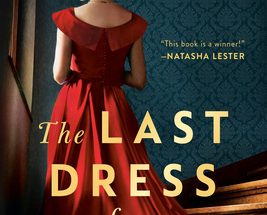
    1952. Alice Ainsley prepares the Residence for a grand reception. She is dressed flawlessly in the latest Dior, yet her much older husband Albert, the British ambassador to France, pays her little attention. Not so, the young Antoine du Parcq.

    2017. Lucille is sent by her grandmother to Paris to retrieve from her friend’s daughter, Veronique, a certain dress. When she gets to Veronique’s, she finds there are eight dresses—all Dior, each accompanied by a card marking the name of the dress and the occasion worn, headed by the enigmatic ‘A & A’. Why are these dresses so important to her grandmother?

    Lucille embarks on a detective investigation seeking out the story of these dresses. It begins with ‘the Maxim’s’, a gown whose story was so moving the shop owner has held onto it all this time. The note on this dress’s card was ‘I need you as much as you need me’. She is helped by Veronique and boutique owner Leon.

    Lucille is on a personal quest as well, seeking ‘adventure and realness’ and independence from her too-busy successful corporate mother. If there’s a romance for her in the bargain—well, Paris is the City of Love, after all.

    The final, the last dress, it turns out, is exhibited at the V & A Museum, and Veronique joins Lucille in London for the last chapter of the story. On the Eurostar, the two women do some more Google researching. There is a delicious and heart-warming twist in the end.

    This novel is a fashion treasure hunt. A story is woven around eight real historic haute-couture dresses. Each has its own story to tell, the story of a romance from the glory days of Dior.

    I adore the Concept, telling a story around eight dresses from Paris. I longed for illustrations.

    This review first appeared in Historical Novels Review.

  • Review: John the Pupil

    Review: John the Pupil

    David Flusfeder, John the Pupil (Harper 2015)

    https://www.goodreads.com/book/show/22249715-john-the-pupil?ac=1&from_search=true&qid=RXvTJ8ZmUM&rank=1

    Franciscan novice John is tasked by his master Roger Bacon to deliver a parcel to Pope Clement IV in Viterbo. In a wooden box is the master’s Great Work, full of his discoveries and inventions, which John is on no account to open. Another parcel, wrapped in linen, he is to open ‘only when he has given up all hope’. He is to travel from Oxford with two companions, Brother Andrew and Brother Bernard, and to write about their journey. Brother Andrew is beautiful; Brother Bernard is strong; John is ‘merely clever’.
    Along the way they meet Simeon the Palmer, who undertakes pilgrimages for hire. He betrays them to a band of thieves, eager to seize their treasure, but the brawn of Brother Bernard and the wily precautions of Master Roger prevail. They encounter the master gardener Father Gabriel, by whose herbs and wisdom John is ‘exalted’. John meets a living saint, who sees into his future. They abide for a while in the kingdom of the epicurean Cavalcante de Cavalcanti and his son Prince Guido, where riches seem endless.
    The brothers preach along their way, and, as well as confronting the dangers of the mediaeval road, they are tempted by the sins of pride, greed, lust, ambition.
    This ‘mediaeval road movie’-cum-morality play is fairly chaotic in structure, as if it were, indeed, as stated in the foreword, composed of loosely bound fragments of parchment found in a box in the attic of some manor house, and, according to my googling of saints’ days, it’s not even in chronological order. Each section is dated by the saint’s day on which the events transpired, with a brief story about that saint. As well as the Gospels and lives of the Saints, theologians—Sedulius, Caesarius of Heisterbach, Boethius—are quoted—and are explained eruditely in an appendix at the back. I didn’t understand the ending, despite rereadings.
    The mediaeval feel of the tale is undeniable.

  • Review: The Biographer’s Moustache

    Review: The Biographer’s Moustache

    Kingsley Amis, The Biographer’s Moustache (Flamingo 1995)

    https://www.goodreads.com/book/show/399568.The_Biographer_s_Moustache?ac=1&from_search=true&qid=vowi5gFJW4&rank=1

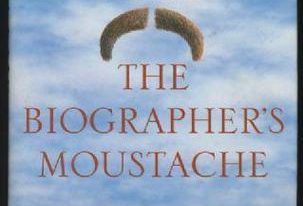
    76-year-old veteran novelist Jimmie (JRP) Fane and his fourth wife, 50-ish Joanna, are hosting a luncheon—or as people are not baronets call it, lunch. One of the invitees is literary journalist Gordon Scott-Thompson, ‘not bad looking if it weren’t for his moustache’, says Joanna.
    With Gordon is girlfriend Louise. All the other guest are Lord-this and Lady-that. Gordon wants to write a biography of Jimmie. He can tell already, the old guy’s a right snob, hobnobbing exclusively with the noble and the rich. Gordon is of the belief that ‘decent writing can overcome almost any prejudice in the reader’. Furthermore, Joanna promised to fill him in on ‘the juicy bits’.
    They arrange lunch and meet, Jimmie pontificating on ‘small restaurants’, ‘Americans’, ‘buffets’, his son-in-law, as well as critiquing people’s pronunciation of various words, then ordering the most expensive dishes on the menu. The next meeting is at Jimmie’s club, where they are joined by Tommie-this and Bobbie-that. Jimmie waxes pedantic on the pronunciation of words, and the conversation is all about nobles Gordon has never heard of. Tommie and Bobbie question the authenticity of Gordon’s double-barrelled name and his qualifications for the job of biographer due to his unfamiliarity with ‘the sort of society’ Jimmie frequents.
    Meanwhile, Joanna tries to convince him to shave off his moustache, succeeding. Suddenly, she kisses him. Jimmie strongly advises Gordon against having an affair with his wife, hinting that his reason has to do with their class difference, but Gordon determines to reject the advice.
    Madge Walker comes forward, volunteering info on when she dated Jimmie during the war. The moment her alimony payments stopped from her Peruvian ex-husband, Jimmie went cold. She found out from someone else that he was engaged to an heiress.
    Joanna shows up at Gordon’s flat to commence their affair and is visibly disappointed by the cheapness of the décor. An invite to weekend at Duke Willie’s country pile stirs up the quadrangle, further complicated by the additional presence of Mrs Fane Number 2.
    As the job progresses, Gordon becomes ever more a part of the story he is writing.
    This was written in the latter part of this prolific writer’s career (1995), long enough ago as to seem quaintly old-fashioned. The subject matter being a (hopefully) dying class adds to that. The toffs are depicted and poked fun of with subtle sarcasm, the writing exceptionally skilful.

  • Review: The Bertie Project

    Review: The Bertie Project

    Alexander McCall Smith, The Bertie Project (Polygon 2016)

    https://www.goodreads.com/book/show/30624772-the-bertie-project?ac=1&from_search=true&qid=SrZH7d19nN&rank=1

    Portrait painter Angus Lordie, his friend art gallery owner Matthew and Angus’s dog Cyril are at the Cumberland Bar in Edinburgh. Matthew informs him that Bruce has a new Australian girlfriend, and Angus later reports the news to his wife Domenica.
    In the flat below, 7-year-old Bertie Pollock is doing a jigsaw puzzle. His mother Irene remonstrates with her husband Stuart that his mother Nicola had allowed Bertie and the baby Ulysses to watch television, offending her views on child psychology and her plans for ‘the Bertie Project’. Meanwhile, Nicola receives a letter from her husband in Portugal, Abril, asking for a divorce. God has spoken to him, he says, and suggested he marry Maria the housekeeper. The news brings Nicola to a revelation: her life’s focus needs to be on ‘freeing’ Bertie.
    Big Lou attends to cleaning her café, while thinking of the proposed adoption of her foster-child Finlay. The authorities say they must ‘be sure of her motivation’. Matthew’s assistant Pat checks her proofs, while Big Lou chats with vascular surgeon Hugh. Bruce is in love with Australian extreme sports enthusiast Clare.
    Matthew and Elspeth have invited for supper their neighbour the Duke of Johannesburg, from whom they bought the house, who shows them a neat trick for uncurdling hollandaise sauce. One of Matthew’s and Elspeth’s triplets has Hand-Foot-Mouth disease. When the two Danish au pairs refuse to help, they are sacked.
    Out on a school trip, Bertie espies his father with another woman. Bertie says forlornly to his gran, ‘Can I come live with you?’ She, Nicola, is delighted to hear that Daddy has a lady friend.
    The plot meanders here and there, focussing on this character and that, some residents of 44 Scotland Street, some further afield—like the Association of Scottish Nudists and its committee crisis—but we are happy to go along for the ride. The humour is witty, sweet, and the writing excellent.
    McCall Smith is best known for his adorable No. 1 Ladies’ Detective Agency series. This novel is 11th in his 44 Scotland Street series.

  • Review: Squeeze Plays

    Review: Squeeze Plays

    Jeffrey Marshall, Squeeze Plays (Atmosphere Press 2022)

    https://www.goodreads.com/book/show/75498637-squeeze-plays?ac=1&from_search=true&qid=o6wD4smDcH&rank=3

    Corbin van Sloot is the busy CEO of Whitehall Bank, with everything going for him, including executive stress. As well as the everyday crises CEOs normally face, he has to manoeuvre a leadership structure that is split across New York and London, helped by his able assistant Angela.
    The bank is reconsidering its loan to media company Star Enterprises, led by Winston Crumm, though he is effectively just a figurehead. Winston’s spending habits are profligate, and his ‘default setting’ is ‘smugness’. He loves posing for photos at black-tie soirées with his wife, designer Adrienne Rogers. He idly tells magazine baron Martin Hargreaves the fib that Adrienne is designing a new autumn line.
    In London, Corbin’s counterpart Sir Reginald’s (nickname Regicide) secretary Agatha wakes him from his afternoon power nap. He has just bought land adjacent to his country house in Essex, land which is coveted by the wildlife sanctuary next door.
    Corbin hears on the news that Winston is being sued by a tenant in his building. Corbin’s one-evening-a-week mistress Larissa is back in France visiting family, Corbin and family are holidaying in Nantucket. His wife Patricia catches daughter Morgan in possession of some Ecstasy. Winston learns from his conference call that Star Enterprises is in debt to the tune of $15 million, and Sir Reginald has taken the painful decision to pull the loan, just before suffering a massive stroke.
    Russian financier Maxim Ripovsky knows an opportunity when he sees one. An underling takes some cream off the top of a deal; Maxim’s thugs smash his hand. Maxim reaches out to Winston with the offer of an anonymous investment, with conditions. Soon, he demands a seat on the board.
    The Van Sloop daughter Amanda has been arrested on a demo, and one of Martin Hargreaves’ gossip mags covers it. Winston’s and his mistress Larissa’s lovemaking is being secretly filmed.
    Financial journalist Bob Mandell considers himself ‘a big game hunter’. He’s on the case, ferreting out the identity of Star Enterprises’ mystery investor as Maxim Ripovsky.
    A bit metaphor-heavy, right from the first line, with a percentage of them quite chiché, some not very appropriate in meaning to their tenor (original subject).
    The story is satisfactorily complex; the pace is good; and the characters are wonderful, interconnecting in surprising ways as the plot thickens.
    This review was originally written for Reedsy Discovery.

  • Review: Jamaican Transit

    Review: Jamaican Transit

    Judy Goodrobb, Jamaican Transit (Kindle 2021)

    https://www.goodreads.com/book/show/58728999-jamaican-transit?ac=1&from_search=true&qid=o6OJFiQNl9&rank=1

    Joanna sits on her porch in Negril, a small fishing village in Jamaica, between boyfriend Michael and friend Dave. ‘Smoke some herb, mahn?’ says Jeevan from the shadows. Dave lights up. ‘Is cool, mahn,’ says Jeevan. ‘Babylon (the police) long gone.’
    Now that their dog Reggae is dead, killed in a horrific train accident, they could stay up to a month, hopefully long enough to heal their relationship. The sun high, they sip on beers to cool them; they’re already high on the ganja. Some ganja-smoking Jamaicans are hauling a shack down the road, and Michael joins the crowd, to Joanna’s dismay. He’s taken with him the key to the room. Giving up, she goes in to the bar and orders a beer. She goes off with Dave to smoke. On her way home, appreciating a beautiful sunset, she finds tears streaming down her face.
    Back on the porch, Michael says, ‘We’re supposed to be having fun.’
    The next day, the three go to the beach, Michael snorkelling and Dave and Joanna sunbathing. She drifts off to come to with Jeevan standing next to her and the two others in the water. ‘Want to taste some Jamaican cock?’ he asks. Only joking, he invites the three of them to dinner. His ‘woman for now’ Dahlia is cooking up a rooster (cock) killed by a motorcycle.
    The holiday continues not to be the magic bullet for Joanna’s and Michael’s relationship, while her attraction to Dave grows, and Michael keeps leaving them alone together. Michael drops a bombshell; he’s got to go back for work. He suggests Joanna stay for the rest of the holiday and even gives his blessing if she wants to have an affair with Dave. He might want the same freedom himself, he admits. But Dave gets bad news from home, and has to go back, too.
    Joanna falls into the whole Jamaica experience—the real Jamaica, not the one enjoyed by tourists—continually finding something new to be amazed or perplexed by in the culture and in her personal relationships. Some Jamaicans offer her great life insights; others are dangerous. She begins to understand her responsibility; no longer is she the passive holiday-maker. ‘Jamaica ‘ave a lesson to teach yuh,’ says Momma Samuel. Joanna must not live in fear ‘lest death take yuh from behind’.
    This novel is quite out of the ordinary. The descriptions of Jamaica and the portrayals of the culture are like gems. It also contains many very good descriptions of the altered consciousness when high on marijuana.
    This review was originally written for Reedsy Discovery.

  • Review: A Keeper of Tales

    Review: A Keeper of Tales

    Marilyn Pemberton, A Keeper of Tales (Williams & Whiting 2022)

    https://www.goodreads.com/book/show/63050783-a-keeper-of-tales?ac=1&from_search=true&qid=AyHhuradqF&rank=4

    Harriet is a female student at Oxford in 1885. Their stern chaperone warns her against making any waves. They live at a boarding home for lower-income students, where they are joined by haughty Lady Victoria, daughter of Lord Somerset, who wants to live with ‘ordinary’ people.
    She meets, chaperoned by Mrs Croft, with her brother Bertie and her second cousin Edward.
    Harriet writes stories, like the ones she heard from her grandma Glizzy—Lizzie from Book 1 The Teller of Tales—and Lady Victoria, Vee, offers to illustrate them. The narrative is interspersed with Harriet’s stories, all about girls asserting independence, being the heroines in their own lives.
    Harriet and Vee are strong characters, and their friendship and their conflicts make for interesting reading. Vee’s aristocratic haughtiness renders her, on the surface, unlikeable, yet she has some deep pain that we are keen to uncover, and we are sympathetic to her rage at the limitations society places on women. They have to dress as men even to enter the library, an act of rebellion which results in their expulsion.
    They are happily taken under Aunt Augusta’s wing. Vee and Edward compete for Harriet’s affections. Harriet discovers there are worse fates for women than being denied an Oxbridge education, and yet she finds love in the end.
    This is Book 2 in the Grandmothers’ Footsteps series, I have read Book 1. Book 3 is expected soon. This one is told in the same first person present tense of story-telling and treats the same theme of female empowerment. As Harriet says, ‘Maybe it’s time for women to lose their femininity and just become human.’
    I received an ARC from the author.

  • Review: A Teller of Tales

    Review: A Teller of Tales

    Marilyn Pemberton, A Teller of Tales (Williams & Whiting 2022)

    https://www.goodreads.com/book/show/63050705-a-teller-of-tales?ac=1&from_search=true&qid=vHVAyLOSbc&rank=1

    Lizzie looks after her mute, handicapped little brother Bobbit, defending him from within and without the family, in their 1820s mining town of Wednesbury, Staffordshire. She tells him imaginative stories, tales of powerful girls who right all wrongs done to their brothers. Does he understand them?
    The addition to the family of a baby sister adds to the tensions, as Matthew, her favourite older brother, prepares to leave to study to be a vicar. Lizzie longs to be a missionary to some far-off land, or, failing that, a teacher. She is told that her place is in the home, and if she didn’t look after Bobbit, they’d place him in an institution.
    Instead, the good Mr Whittaker, who has an admiration for Lizzie, is taken on as new schoolmaster. She watches in envy as her other brother James ‘acts despicably one day and gets his heart’s desire the next’.
    Matthew is going to be a missionary in Africa. Lizzie’s friend John, the carpenter’s son, who insists, despite her urging, on calling her ‘Miss Elizabeth’, makes for her a beautiful carved walnut box to give Matthew as a going-away gift. John understands; she wants to be the heroine in her own stories. Then one day, Bobbit takes one of her stories literally.
    By this time, Lizzie has grown into a young woman, and tragedy ushers in some lessons about life as well as some redemption, as well as a happy-ever-after.
    The dialogue feels a bit rushed in places, although that does match the fairy-tale-like style. I would have liked more commas. (But then, I always want more commas.)
    This is a tale of female empowerment. The story is told in first person present tense, a brave voice, which adds to the immediacy and the story-telling quality. The tone is light and inventive.
    This review was originally written for Historical Novels Review.