Tag: religion

  • Review: The Crimson Petal and the White

    Review: The Crimson Petal and the White

    Michel Faber, The Crimson Petal and the White (Canongate Books 2003)

    https://www.goodreads.com/book/show/40200.The_Crimson_Petal_and_the_White?ref=nav_sb_ss_1_31

    1874 London. William Rackham, heir of Rackham Perfumeries, chafes under the economies of his father, who has long bemoaned his son’s mediocrity. William lounges after dinner, perusing gentleman’s pornography, which impels him, after a discussion with the doctor about committing his wife to an asylum, to seek out the whereabouts of Mrs Castaway’s establishment and a certain prostitute named Sugar.
    His wife, the always-ill Agnes, ‘considers herself the miraculous survivor of a million horrific onslaughts’, stays abed all day with curtains drawn. No one has ever told Agnes about menstruation, and, convinced the internal bleeding is a sign of early death, she starves herself to keep it at bay. Sugar knows, ‘they’re keeping her doped because she says things they don’t care to hear.’ When clear-headed, Agnes sews dresses and practices polite conversation in front of the mirror in readiness for the Season.
    William’s brother Henry, who eschewed the directorship to become a clergyman, pursues a chaste courtship of widow Mrs Fox but secretly desires to ravage prostitutes.
    Life looks up for William. Finally permitted by Rackham Senior to take over the directorship, he redecorates and hires more servants. He purchases Sugar for his exclusive use, and she now utilises her extra time writing a novel, ‘the first book to tell the truth about prostitution’, in which the protagonist violently murders all her johns. William even purchases for her her very own house in Priory Close.
    With too large gaps between his visits to Priory Close, Sugar becomes afraid William will reject her and begins to surreptitiously follow him, and Agnes. In fact, aside from the private dinner and balls, Sugar is doing the Season, sitting a few rows behind the Rackhams wherever they go, and she becomes enamoured of theatre and music.
    Then, she contrives a way of getting ever closer to William. She admits to a friend, ‘I’m so full of schemes and plots, nothing interests me if it doesn’t concern the Rackhams.’ Her final revenge against the johns is brilliant.
    Verbose, Victorian, voluptuous—a delicious slow read. It is written in second person. The unknown but all-knowing narrator speaks to ‘you’. (‘Are you bored yet? There will be fucking in the near future.’) There is a brilliant first line: ‘Watch your step.’ The narrator suggests ‘you’ work your way up the London social ladder by means of successive introductions, while making biting comments on each character’s levels of sophistication or morality.

  • Review: It Had to be You

    Review: It Had to be You

    June Francis, It Had to be You (Allison & Busby 2012)

    https://www.goodreads.com/book/show/19233044-it-had-to-be-you?ac=1&from_search=true&qid=unjxGWeeog&rank=5

    1952 Yorkshire. Two half-sisters are separated and, as adults, find out about each other.
    Emma Booth is with her grandfather Harold, advising him not to go out, as it’s icy. Despite conditions, they go to the pictures. On the way out, the old man slips on the icy pavement and fatally hits his head, leaving Emma with only memories of her grandparents and her parents.
    She finds a letter to her grandmother from a woman, Lizzie Booth, and discovers she has a half-sister. She decides to go to Liverpool to meet her. On the train, her bag is stolen, but a kind passer-by gives her some money to continue her journey. She arrives to find the house derelict, and furthermore, sprains her ankle at the door, but a young constable, Dougie Marshall, stops to help. Dougie and Emma make enquiries about her family, which end at Mrs Elsie Gregory, Betty’s aunt.
    Finally, Emma gets a letter directly to Betty; the half-sisters meet and get along famously. Emma opens her tearoom on Whit bank holiday weekend.
    Betty has a secret regarding Uncle Teddy, which the girls eventually find out about.
    Betty is able to continue her studies in Liverpool. ‘Our Jared’ is home from Korea.
    More nefarious behaviour on Teddy’s part prompts Elsie to confess to the youngsters the secrets of the past.
    The dialogue in this post-war family saga is unnatural in places. The story is told linearly, as is the usual template for family sagas—first these people did this, then those people did that. This can get tiresome at times, when you’re having to read about every cup of tea and every scone and every cigarette. I know it’s Yorkshire, but are people really SO often referred to as ‘our So-and-so’? The characters are interesting and relatable, and the pacing is good.

  • Review: The Scribe

    Review: The Scribe

    Elizabeth R. Andersen, The Scribe (Haeddre Press 2021)

    https://www.goodreads.com/book/show/58586385-the-scribe?ac=1&from_search=true&qid=wjisF9pIqF&rank=1

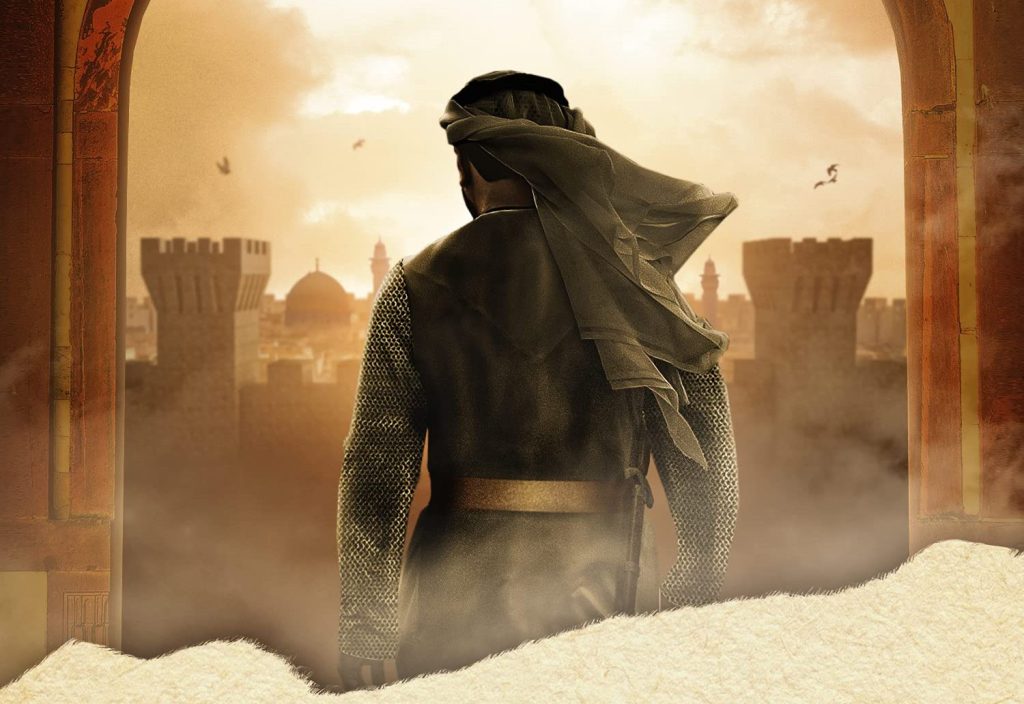
    Damascus 1277. Tamrat lives with his wife Sara and son Dejen.
    In the Amanos Mountains, Emre trains with the other captive Mamluk boys, but he longs for home. He is selected by Amir Qalāwūn to train as Bhadir’s right hand man. Sarangerel picks her way through the wreckage and takes in an orphaned girl.
    Acre 1279. Abdülhamit and Nasir play with the half-Saracen boy Henri Jean-Rogier Maron. King Henry and his sons Amalric and Henry are with Henri’s father Lord Rogier.
    Tamrat invites 6-year-old Sidika to cut his moneybag every morning.
    The sultan Qalāwūn wants to drive the Franj out of Acre. He decides to marry his sons to Mongol wives.
    His father murdered, Henri inherits the title, but the servants are not happy. Henri is spoiled and tyrannical. He is not attentive to them as his father had been. He marries his widowed mother to the unpleasant Mafeo.
    Acre 1290. Tamrat works as a scribe, the adopted Sidika helping him. She is out hunting one day and rescues a tall Franj, Lord Henri. He asks her to join his household as maidservant, and she very rudely refuses.
    Having no other men-at-arms, Henri joins the Templars on patrol. They apprehend ‘a spy’. It is Tamrat, and Lord Henri knows he’s innocent. He makes a decision, the only humane option, and yet it’s not an easy one.
    There are multiple story lines and a plethora of characters. This makes interesting reading, but it was hard to keep up. It’s well written and has a mediaeval ‘feel’ and sense of place. Andersen captures well the social interplay in a complex society comprising Templars, Frankish nobles, Bahri sultans, Mamluk slaves, Arab servants.
    The ending, ‘to be continued’, is simply unacceptable. I know it’s Book One in a series, but I still want each book to have a proper ending.

  • Review: An Honourable Thief

    Review: An Honourable Thief

    Douglas Skelton, An Honourable Thief (Canelo Adventure 2022)

    https://www.goodreads.com/book/show/60840450-an-honourable-thief?ref=nav_sb_ss_1_19

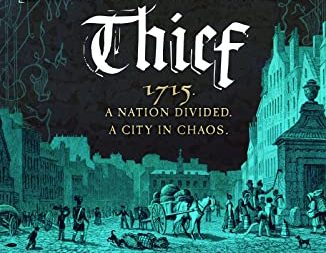
    Queen Anne is dead, and now England must prepare for a German king. Colonel Nathaniel Charters and Charles Talbot, Duke of Shrewsbury, discuss the possible existence of a document, Queen Anne’s will naming her half-brother James Edward, a Catholic, as heir.
    Charters has a mission for Jonas Flynt, who has been won to his Company of Rogues by blackmail.
    Flynt is sent after the document, but he is bested in a showdown with Madame de Fontaine. She mentions that she is employed by ‘the Fellowship’—a secret Jacobite society.
    Flynt rides to Edinburgh, the land of his childhood memories, memories of Cassie. He meets his West Indian stepmother Mother Mercy and his father Gideon, and Cassie has married his friend Rab. Lord Moncrieff, who may have purchased the document, comes, seeking his ‘lost property’, his slave Nero. In fact, Rab and Gideon have arranged the man’s escape.
    A public hanging turns to riot, and a child is killed, leading to more unfortunate carnage. Their guardsman friend Charlie is held responsible for not controlling the situation.
    Flynt and his allies pursue Lord Moncrieff and Madame de Fontaine across Scotland as battle lines form between the Jacobites under the Earl of Mar (‘Bobbing John’ Erskine) and the king’s forces under the Duke of Argyll.
    Flynt and Moncrieff have a history that goes back before Madame de Fontaine. Secrets from the past further complicate dynamics between the characters. The final showdown takes place on a ridge above as the Battle of Sheriffmuir rages below.
    This exciting historical adventure is beautifully written, the scenes well portrayed, vivid and period-appropriate. The dialogue captures very well (it seems to me) the vernacular of the 18th century Edinburgh streets and the feel of the language of the time. The plot is complex and interesting, and backstory is handled artfully.

  • Review: Losing Moby Dick and other stories

    Review: Losing Moby Dick and other stories

    Ian Gouge, Losing Moby Dick and other stories (Coverstory Books 2017)

    https://www.goodreads.com/book/show/38451081-losing-moby-dick-and-other-stories?ac=1&from_search=true&qid=mnuWH5KSpR&rank=2

    Jack has lost his university-days copy of Moby Dick and ventures into a second-hand bookstore to seek a replacement. A new edition from Amazon simply won’t do. It must be dog-eared and finger-worn, steeped in the memories of his youth.
    A remarkable assistant takes him on a magical tour of the backrooms, where he travels back in time to the day before his Melville essay was due. He hasn’t just lost a book. He’s lost something from his life. Could it be behind that door?
    I liked the metaphor of the lost book symbolising something he’s lost in his life.
    Writing to Gisela
    Rick follows his friend Jackson to Lucca, Italy, and he falls in love. After a whirlwind few days, he goes home to the UK, but to his heartbreak, Gisela doesn’t answer his letters.
    After four years, she gets in touch, and he is desperate to learn what happened. The rest of the story is his letters to her. Life goes on, and the circle of life turns. A final communication to Gisela celebrates the ‘closure’ he has found.
    One shouldn’t have a character named Luca in a story set in Lucca. I found it quite artful that we never read Gisela’s letters, and yet we are given all the information we need about her side of the story.
    Riding the Escalators
    Mitch and Cheek are sitting in the mall, wondering how long it would take to ‘ride all the escalators’. To Mitch, escalators symbolise functionality. Or the idea of just once ‘doing something that no one else has done’. Mitch acquires a floor plan of the mall.
    Suzi, the window dresser at Cinderella’s, jokes with her boss. Mr Lee has a talent for answering question that people have yet to ask. But Mr Lee has a secret.
    Meeting Mitch, she hears about his plan and wants to go along with him. Mr Lee gives them a bag of supplies to take along.
    He and Suzi get separated, and from that point on, the escalator marathon became magical, and Mitch has to figure out the rules of the game before he can find Suzi.
    There are some misspelled words, but the writing is very good. After reading these three novellas, I look forward to reading a full novel by Gouge.

  • Review: The Diomedeia

    Review: The Diomedeia

    Gregory Michael Nixon, The Diomedeia  (DokNyx Publishers 2022)

    https://www.goodreads.com/book/show/61836881-the-diomedeia?ac=1&from_search=true&qid=mMz56SFyqy&rank=1

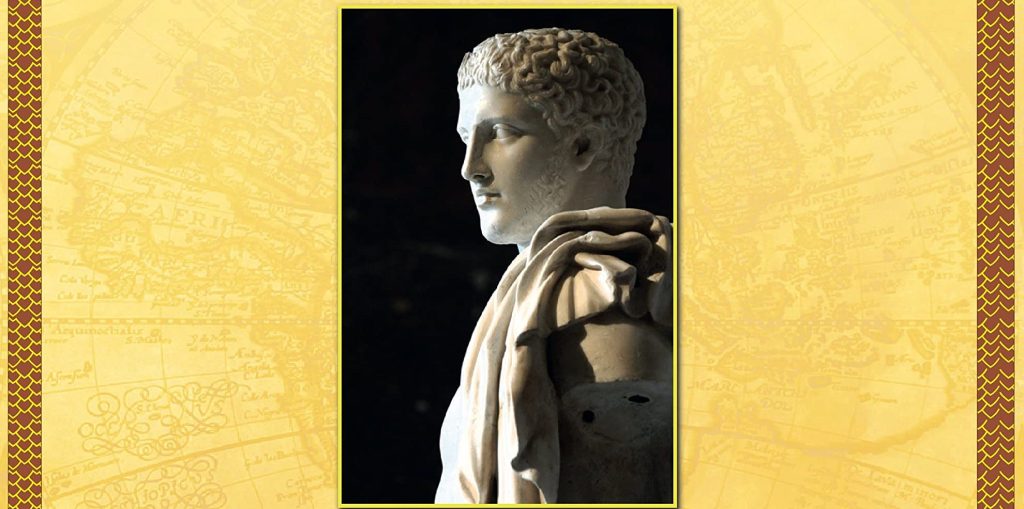
    Against a backdrop of the Mediterranean Bronze Age Collapse, the Sea Peoples prepare to invade Hittite capital Hattusa. The Great King Suppilulima II worships at the temple of the Storm God Tarhunta. His Great Queen Lieia-Hepa schemes to return Hatti to female rule and the dominance of the Goddess Arinna. Approaching the city, they encounter a band of refugees, including Diomedes, Trojan War veteran and once king of now-fallen Tiryns, who had been held prisoner. Henti, the ex-harem-girl, interprets. They learn that the royal family, priests and nobles have deserted, carrying with them the Hatti treasure. Diomedes and his warriors go in pursuit to Lawazantiya, cult city of the goddess. Suppilulima has a crazed plan, but Diomedes and Co ally with Queen Lieia-Hepa, who has her own plan. Kabi the Canaanite has a better idea.
    The Diomedeia constructs a scenario that elucidates the collapse of the Hittite Empire, involving famous kings and generals we know from Homer and from history and who are listed in an appendix. Many of the stories we know from mythology, Jason and the Argonauts, the fall of Troy, etc. are told as tales by warriors to each other.
    I will grab up any book set during the Bronze Age, but this one is remarkable for what I assume is historical detail. A bit too much of it crammed into the first chapter, maybe, before we get a chance to get familiar with the characters. Some of it—descriptions of statues and rock carvings we can still see today—I think we could do without. It’s hard to say that, though, because we have little evidence of the period other than those artefacts and the occasional clay letter from one king to another.
    The dialogue could have been more natural by observing the ‘three beat’ rule—long utterances need to be broken up by action points, dialogue tags or responses.
    The war council between Kabi, Klymenos, and Sarpedon is great. From that point the plot and inter-personal drama become quite exciting, although the pace slackens towards the end as the fates of the Hatti and Diomedes and his People of the Sea are determined. The ending is disappointing, yet promises a continuation of series.
    Don’t miss the well-researched appendices. In fact, I recommend reading them first.
    This review was originally written for Reedsy Discovery.

  • Review: The First Man in Rome

    Review: The First Man in Rome

    Colleen McCullough, The First Man in Rome (Avon 1991)

    https://www.goodreads.com/book/show/480570.The_First_Man_in_Rome?ac=1&from_search=true&qid=LcqcJow4HP&rank=1

    Gaius Julius Caesar, grandfather of the future emperor, and his sons have joined the procession of Marcus Minucius Rufus’ inauguration to consul; his wife Marcia and their teen daughters Julia and Julilla join the crowd of spectators. Somewhere in the crowd is Gaius Marius. He runs into Caesar, who invites him to dinner. Despite humble origins, Gaius Marius was born to lead soldiers; Caesar sees it and offers him one of his daughters to wed.
    Next door to Caesar’s house is Sulla’s stepmother Clitumna. Lucius Cornelius Sulla sleeps with both his stepmother and his mistress Nicopolis, but he prefers boys, like Metrobius.
    Jugurtha, usurper to the throne of Numidia is on the outskirts waiting for permission to cross the pomerium. Close friends with Gaius Marius and Publius Rutilius Rufus, they were all twenty-three.
    Julilla has a crush on Sulla, and weaves for him a grass crown—a symbol of military victory. Nicopolis dies, leaving him a fortune. At 50, Gaius Marius finally has enough money to run for consul and leaves Africa in a mad dash for Rome. Wedded now to Julilla, things look up for Sulla, too.
    There is a crisis in the Roman army—too many have died. Marius builds a new army of recruits from among the proletarian Head Count, offering booty land as payment.
    The Germans in their 100s of 1000s are on the march, but Roman generals Gnaeus Mallius Maximus and Quintus Servilius Caepio are busy fighting each other, leading to the worst defeat in Roman history. Enter Gaius Marius’ African legions, sent to save the day for the Empire.
    This is Book One of the colossal Masters of Rome series.
    These people we know from history come gorgeously to life; the intricacies of Roman class politics are portrayed vividly. Marius’ military campaigns in Numidia and Gaul are not just discussions of armour and battles, but also feature debates over strategy, inter-personal politics and even espionage.
    Told through the strong Voices of Gaius Marius, Sulla, Julia, Jugurtha. I can’t decide which I loved more, the juicy historical accuracy or the wonderful story-telling. 2000 years ago, but the characters and their letters and conversations are as natural as those of you and your neighbours. The only trouble is there’s a lot of complicated names to learn, but that’s Roman history’s fault not McCullough’s. She helps by making the characters colourful and memorable. I wish I knew how she sniffed out all the intricate inter-personal scandals behind every dollop of historical fact. If purely invented, it is totally believable.

  • Review: The Grass Crown

    Review: The Grass Crown

    Colleen McCullough, The Grass Crown (Avon 1992)

    https://www.goodreads.com/book/show/3424.The_Grass_Crown?ac=1&from_search=true&qid=kWftwdXP4c&rank=1

    This Book Two of the Masters of Rome series follows the political and personal lives of the famous men and women of ancient Rome.
    Gaius Marius, Lucius Cornelius Sulla and Publius Rutilius Rufus dine together. Marius announces his intention to go on pilgrimage to Pessinus, but his friends know he wants to check out what’s going on in Cappadocia.
    Quintus Caecilius Metellus (Piggle-wiggle) is out for blood, and Marius’ man Manius Aquillius is on trial. Sulla is about to leave for Spain on campaign. Marius takes his family to Patrae, then Athens, then Helicarnassus and in the spring, on to Pessinus. Young Gaius Julius Caesar is a precocious lad, and Aurelia hires a pedagogue. The rivalry between Sulla and Piggle-wiggle escalates.
    In Sinope, King Mithridates of Pontus reads a letter—Gaius Marius wants to meet. Mithridates travels incognito. He is out for conquest.
    Marius and family make it to Bithynia, where he becomes involved in politics with Mithridates and Nicomedia.
    Marcus Livius Drusus dreams of ‘a general enfranchisement for the whole of Italy’; Quintus Poppaedius Silo, an Italian, dreams of Italian ‘secession from Rome’.
    Drusus is determined to get his law passed emancipating the Italians. Their spokesperson thwarted and murdered, leaders of 14 Italian peoples decide to use threat of war. The early victories in the Social War go to the Italians, giving Rome a fright. Though Rome eventually wins, the Italians win their citizenship.
    The story follows the lives of Young Caesar and Young Marius. Young Caesar attends upon Marius after his second stroke. Caesar pulls Marius back into politics, and Marius begins to train him. Young Marius kills Lucius Cato the Consul in a mutiny, which saves a battle. Sulla is awarded by his men a Grass Crown. Sulla massacres Aeclanum.
    Despite his infirmity, Rome wants Marius at the helm against Mithridates, and Sulla is told to hand over his legions. Instead, he invades Rome. But the troops rebel. On the run from Sulla, Marius flees and takes shelter at Cercina.
    At the ludi Romanii, Lucius Cornelius Cinna makes his move to introduce laws regarding the distribution of new citizens and for the recall of 19 fugitives—including Gaius Marius. The controversy leads to the Massacre of Octavius’s Day.
    The story finishes with the tale of the battle between Cinna and Gnaeus Octavius Ruso and the deadly rivalry between Marius’s faction and Sulla’s.
    The scope of this novel, encompassing the gamut of Roman history, both political and personal, during the 1st century BCE, means learning a lot of complicated Roman names, more so than Book One, which was mostly Marius and Sulla. It takes you through the Senate meetings, the patricians’ dinners, the war strategy and the battlefields as if you were there yourself.

  • Review: Fortune’s Favorites

    Review: Fortune’s Favorites

    Colleen McCullough, Fortune’s Favorites (Avon 1992)

    https://www.goodreads.com/book/show/182430.Fortune_s_Favorites?ac=1&from_search=true&qid=pVcjWHWMSa&rank=1

    Book 3 in the Masters of Rome series continues the tales of famous Roman leaders of the 1st century BCE.
    Gaius Marius is dead after leading a bloodbath. Young Caesar is Flamen Dialis, which he finds limiting, and married to a young girl.
    In a land devastated by the recent Social War, all of Italy was choosing sides between Sulla and Gnaeus Papirius Carbo, Sulla standing for the old aristocracy, Carbo for the new commercial class.
    Unloved in her family and in her marriage, Servilia jealousy safeguards the interests of her son Brutus. Brutus suggests Carbo share his consulship with Young Marius. Marius calls the Julii to a family meeting, where Caesar eyes Marius’s wife Mucia Tertia.
    Most of its leaders either dead or in exile, Rome is in crisis and elects Sulla Dictator. He proceeds gleefully to take down all statues of Gaius Marius and implement a widespread terror of proscription.
    Caesar resigns his flaminate and goes on the run. Sulla reworks the Roman mechanism of government to suit his own purposes and in the best way to curtail Pompey. Caesar leaves for Asia to serve under Marcus Minucius Thermus, travelling with two servants and the German giant freedman Burgundus. Thermus sends him to King Nicomedes in Bithynia to raise a fleet. Caesar, aged 19, is given a difficult command in the siege of Mitylene, ending in defeat for Mitylene. Caesar is awarded the corona civica.
    Sulla gets involved with the politics of Egypt, and there is war with Tigranes. Lepidus and his legate Marcus Junius Brutus are marching on Rome, and the Senate sends Pompey against them.
    Off the island of Pharmacussa, Caesar is seized by pirates. The ransom is twenty silver talents. Caesar says, ‘Is that all? I’m worth fifty.’ Once ransomed, he returns and crucifies 500 of them. Mithridates invades Bithynia and Cilicia.
    Convicted of mutiny, the Thracian Spartacus elects to become a gladiator and embarks on the Third Servile War. Infamously, Crassus crucifies one in every 100 feet from Capua to Rome.
    Pompey, only a knight, aims to run for consul. Crassus hires Philippus to do his bidding in the Senate. Crassus sends Caesar to negotiate with Pompey, and he makes a deal with him, proposing a plot. Pompey and Crassus are elected consul in absentia and hold triumphs.
    Much of the tale is about battles and battle strategies. There are many, many complicated names and family and political relationships to keep track of, which, while unwieldly for the reader, is a testament to McCullough’s scholarship. Like the first two books, it includes hand-drawn maps and portraits of the main characters.

  • Review: Sherlock Holmes and the Strange Death of Brigadier-general Delves

    Review: Sherlock Holmes and the Strange Death of Brigadier-general Delves

    Tim Symonds, Sherlock Holmes and the Strange Death of Brigadier-general Delves (MX Publishing 2022)

    https://www.goodreads.com/book/show/60681721-sherlock-holmes-and-the-strange-death-of-brigadier-general-delves?ac=1&from_search=true&qid=V5jiQVVlUI&rank=1

    Dr Watson meets with Col. ‘Maiwand Mike’ Fenlon, an old military comrade, to reminisce about Afghanistan. Fenlon has been invited by Brigadier-general Delves to come to Guernsey to discuss the Battle of Maiwand, about which he is writing a book. There are questions. Why did Delves rush into battle, for example, when reinforcements were on the way? Why did, at every step, he seem to command defeats?
    A telegram arrives for Watson from Fenlon in Guernsey urgently requesting his assistance. Delves is dead and Fenlon accused of murder. Delves dies, after pub crawling with Fenlon, of alcohol poisoning topped up by opiate mixture Chlorodyne, a vial of which was found under Fenlon’s chair. Fenlon has written an account of it, placed in an envelope in a bank vault, only to be opened after his death. He refuses to say anything in his own defence.
    At the last moment, Holmes appears, as witness for the prosecution! He testifies that the fingerprints on the vial indeed match those of Fenlon. They are reminded of Holmes’s previous case, the Case of the Norwood Builder.
    Fenlon dies, and Watson opens the envelope, and the whole story is revealed.
    The narrator is Holmes’s ‘biographer’, Dr Watson, but there’s a long section, with the opening of the envelope, when we lose track of who’s narrating (presumably Fenlon). Like all Holmes cases, this one has something of the quirky about it. The story hooks the reader with a good pace, building suspense until the opening of Fenlon’s bank vault document reveals the backstory. I couldn’t quite understand why the document could only be read after Fenlon’s death.
    A long ‘Miscellany’ section at the end goes into absolutely everything.
    Over 100 authors have written new stories featuring the Sherlock Holmes. Tim Symonds has written eight novels starring the famous detective.
    This review first appeared in Historical Novels Review.