Tag: religion

  • Review: The GLP-1 Stability Cookbook

    Review: The GLP-1 Stability Cookbook

    Derek Wexley, The GLP-1 Stability Cookbook, (2026)

    https://www.goodreads.com/book/show/246043879-the-glp-1-stability-cookbook

    Maintenance following on from the GLP-1 Diet Meal-Plan Cookbook

    Here are more recipes designed for a high-protein diet, including a 90-day stability plan. It’s designed for those who’ve already reached their target weight loss (I’m not there yet) and are planning a maintenance diet. A stable program of 90 days mean you train yourself to change your dietary habits permanently in order to eat well but stay slim. Protein, water and exercise are the ‘three anchors’.

    Seasoned dieters know that often rapid weight loss is achievable. What’s challenging is to keep the weight off. Focusing on GLP-1 means doing so without experiencing hunger pangs or ‘food noise’.

    Also characteristic of this author’s approach is the accompanying exercise plans, recommending a 5-minute ‘activation’ warm up in the morning and regular daily exercises in a 7-day rotation to get a full body workout. Regular, daily ‘movement’ rather than high-intensity. High protein means you can lose weight while keeping muscles in shape. This also reduces the tendency for ‘Ozempic Face’ gauntness. Hydration is also important. A whopping 2-2.5 litres of water or herbal teas per day is recommended.

    Another feature of this diet philosophy is – small ‘mini-meals’ several times a day (I can’t be bothered with that). The principle is –  you have them prepared in advance so you can just grab them when it’s time, so you have a regular predictable schedule (and don’t experience hunger). The recipes are quite simple – I think I can remember them all without writing them down. Many of the protein-high recipes are ‘soft textured’ – smoothies, soups, stews, ‘gentle’ grains – to encourage easy digestion.

    I don’t normally eat breakfast, but it is theoretically important to start your day with some protein. Cottage Cheese Plate with Soft Pears and Walnuts, Sliced White Fish with Warm Zucchini and Yogurt, Herbed Turkey Patties looked so gorgeous I want to add them to my regular repertoire. You can pair pumpkin or sweet potato with millet or soft-boiled eggs, beetroot with red lentils. These all look substantial enough to be possible lunches.

    Lunch dishes include: White Fish with Warm Tomatoes and Olives, Warm Lentils with Roast Vegetables, Turkey Strips with Warm Broccoli and Lemon Yogurt, Bulgur with Roast Bell Pepper and Yogurt, Tuna with White Beans and Tomato.

    Smoothies are usually yogurt or oat/almond milk + a fruit + protein powder. Soups have usually no more than 4-5 ingredients. To wean us away from sweet or carb-heavy snacks, there are high protein snackables to prepare in advance like Turkey Meatballs, Salmon & Zucchini Patties, Baked Chicken & Spinach Ricotta Cups, Baked Egg & Cottage Cheese Herb Slab, Baked Chickpea & Ricotta Stuffed Mushrooms, Baked Eggplant Rolls with Ricotta & Herbs. There are some dessert recipes too: yogurt = fruit + honey + protein powder. Twenty recipes for herbal teas.

    The dinner recipes are beautiful: Salmon with Yogurt-Herb Crust and Roasted Fennel, Turkey Ricotta Stuffed Zucchini Boats, Seared Veal with Creamy Polenta & Soft Spinach, Shrimp with Soft Zucchini Ribbons & Warm Yogurt. All simple enough to remember without writing them down.

    An absolute must for a cookbook, in my opinion, it includes beautiful colour photographs for each of the recipes, making them really look delicious. It doesn’t specifically say so, but paying attention to the mix of colours on your plate can make the meal look more appetising. Herbs (especially if they are fresh), spices (fresh ginger and turmeric are delicious), nuts and seeds add nutrition, taste and appetitisingness of appearance. Add things like yogurt, chickpeas, whole grains to your regular weekly shop to boost your protein intake.

  • Review: Divine Revelations

    Review: Divine Revelations

    T A Hunter, Divine Revelations, (TigerUnicorn, 2025)

    https://www.amazon.co.uk/Divine-Revelations-infamous-Campania-Vesuvius-ebook

    Beneath the ash and pumice of Herculaneum is a treasure

    DCI Reid Gilchrist is in Rome, with the British consul Sarah Murray. ‘Perhaps a nice job for you,’ she says. The death of a priest, 104 years old, who left the Embassy a box.

    1942 Herculaneum. The young deacon excavates a ceramic jewellery box. He and his mentor Father Stewart were interested in the ancient Christians buried by Mt Vesuvius. Inside are four bejewelled rings and an enamelled bracelet. Beside them in the ash –  a man’s signet ring.

    Reid leaves the retirement home with a death certificate for the old priest, a Perugina Baci chocolates tin and a safe deposit key. His Italian archaeologist girlfriend Cristina helps him find the bank. The safe deposit box, last accessed in 1950, contains only a brown envelope. Inside, a carnelian signet ring. The Greek letters read a name – a very famous name, and one well known to Christian history.

    The story goes back and forth between the dig site in 1942, as the Church representatives excavate the villa of the famous Roman, and the detectives in 2026, unravelling the death of Father Stewart. The Vatican and the Swiss Guard become involved, with (natch) a cover up, and Reid and Cristina are being followed. We also travel back to Judea in 31 CE concerning the matter of a certain ‘Galilean orator’. Archaeological treasures are at stake.

    I just love an archaeological thriller. A really great concept, and the pace is quite exciting throughout. Jumping back and forth between ancient and modern timelines is well handled. A lovely, understated ending to all the excitement.

    I was confused about the use of ‘the church’. When we’re talking about 2026, it probably means the (Christian, usually Catholic) Church. In the context of 30s CE Judaea, what does this mean? Does it mean the nascent Jesus movement? The Sanhedrin? The Temple? This came up so many times that it confused my understanding of the whole plot. If we’re talking about the Jesus movement, there was no such thing as the Church until about 90 CE, and then it was called an assembly (ekklesia) not a church.

  • Review: Chantilly Lace

    Review: Chantilly Lace

    Evelyn Kincaid, Chantilly Lace, (2025)

    https://www.goodreads.com/book/show/244024174-chantilly-lace

    One woman’s psychological journey from emotional abuse to healing

    53-year-old Nora is moving house, after her third divorce. Either running away from South Dakota or running toward San Diego. Facing her failures. But her sister Rachel says all three were gaslighting her. Can ‘geography fix what’s broken inside’?

    She’s looking on dating sites for married men. No commitments, no expectations. All she finds is d*** pics. Until ‘BenSD’; he wants ‘an honest connection’. She signs her response ‘Chantilly Lace’.

    I loved the metaphor of her slamming shut her laptop ‘as if the physical act could contain the vulnerability she’s just released into the digital ether’.

    I was surprised when, just after the first online contact with Ben, she’s already worrying about ‘the way predators create false familiarity’. ‘Predators’!? If she’s that afraid of online dating, why is she doing it? I wondered why he was afraid of ‘visibility’ at the marina but didn’t mind her walking up his wife’s driveway in front of all the neighbours.

    Is this a straightforward romance-gone-wrong story? It charts the psychology quite well. Words like ‘predators’, ‘edge’, ‘rawness’, ‘trap’, ‘trained’, ‘boundaries’, ‘cage’ hint at something darker on the horizon. Are Nora’s ‘attachment issues’ really the problem?

    Nora’s healing journey is also charted well. The psychiatrist’s explanation of trauma bonding as ‘addictive, like a slot machine’ really got me thinking. The story the novel tells is an ordinary one – woman of a certain age has affair with married man – yet the damage Nora experiences is heavy. She doesn’t see it until she’s out of it.

    The ‘psychological’ bit of the billing was very accurate. Having personal experience of an affair with a married man, it sounded all too familiar. Every woman who has this experience should read this book. There’s a lot of therapy-speak, but it’s valid – that’s why therapists use these phrases.

    I must say, though, billed as a ‘thriller’, I was expecting a murder or some zombies or something. Ben is a jerk, but a pretty ordinary jerk, nothing seriously dark. It ends the way I expected it would. Disappointing, but then romance is not my favourite genre. I would call it more a psychological journey.

  • Review: The Dark History of the Bible: Untold Scandals, Biblical Myths, and Ancient Religious Controversies

    Review: The Dark History of the Bible: Untold Scandals, Biblical Myths, and Ancient Religious Controversies

    Skriuwer, The Dark History of the Bible: Untold Scandals, Biblical Myths, and Ancient Religious Controversies, (2026)

    https://www.goodreads.com/book/show/246026958-the-dark-history-of-the-bible

    A basic intro to the darker side of the Bible’s history

    How did a bunch of tribal myths evolve into a tool for conquest and oppression?

    The chronologically organised four parts to this book show where it’s going: 1. 2000–586 BCE: the origins of the myths and texts; 2. 538 BCE–70 CE: the formation of the canon; 3. 50–400 CE: politics and orthodoxy; 4. 400 CE–present: weaponisation.

    The prologue is a list of surprising did-you-knows. You may know that the original story about ‘the empty tomb’ did not feature any resurrections (Mark 16 was added later), but did you know the Battle of Jericho never happened? Matt 27:52-53 says that at Jesus’ death, the dead came out of their tombs like zombies. It was perfectly ok for ancient Hebrews to sell your daughter into slavery as long as you didn’t sell her to foreigners. The Hebrew Hell (Sheol) was not fiery.

    It’s difficult to summarise this chock-full book. From Asherah and Baal to the Council of Nicaea, I can’t think of any other historical topic that is this interesting. It’s structured logically, by theme as well as by chronology. It mainly deals with the New Testament, but Yahweh’s pagan past enters the story in Chapter 6, showing the Israelites’ evolution to monotheism as a ‘winding trail of tribal bargains’.

    For a serious study of this subject, you should start with this book, then move to further study on each topic. The topics are not examined in great depth; it’s more a couple of bullet points on a wide range of topics. Each chapter could be a book or two in itself. It’s useful in the sense that it summarises the basic gist of the topic. But round about Chapter 16 the writing begins to suffer, the style become more note-taking than exposition, in places looking as if it wasn’t even edited. We breeze quickly through misogyny, slavery, the Crusades, European colonialism and Zionism, with just a few bullet points each.

    It ends, depressingly, with ‘how the Bible’s darkness still shapes our world’, Donald Trump, LGBTQ oppression, the climate crisis, religious extremism and the modern triumph of racism. Are we living in the End Times?

    Includes numerous lush, beautiful colour illustrations.

    An interesting side-factoid about this book is that the royalties are going toward promoting the Frisian language.

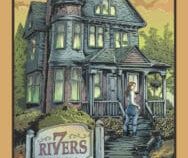
  • Review: Seven Rivers: The Darkness

    Review: Seven Rivers: The Darkness

    B. Luiciano Barsuglia, Seven Rivers: The Darkness (Koa Aloha Media 2025)

    https://www.goodreads.com/book/show/235105617-seven-rivers

    A supernatural journey of redemption

    Cora and Gabe are fighting. She has a baseball bat; he has a gun.

    It ends badly in a devastating car accident, and she ends up at the Seven Rivers Recovery Clinic in bandages. But this is no pristine hospital, no wholesome rehab facility. It starts with the tea–they’re giving her some kind of hallucinogen–then the pain and the terror, the savage bandage changes. The place operates according to an unfamiliar set of rules, which Cora now has to work out. The other residents aren’t welcoming, either. But at least they seem to know why they are there.

    ‘Some are here for recovery; others for redemption. Why are you here?’ Lady asks.

    ‘I’m hiding out, I guess,’ says Cora.

    I liked the parallels between pain and terror, but the horror begins too soon. We need to build up to it. And there’s too little action. We start hearing about ‘the ragged pulse of her fear’ before we even see anything to be afraid of. There’s no explanation as to why she’s ended up in this place and no explanation as to why Gabe is threatening her life.

    The chapter headings read like a ‘Pilgrim’s Progress’–Integrity, Acceptance, Humility. Cora is on a journey of self-discovery and redemption about which we get no clues until page 109. She witnesses horrors. Ex-robbers in a heist gone wrong. Each room, each interaction with the other guests confronts her with the consequences of her guilty past.

    A few too many clichés for me, coupled with some phrases we don’t really know the meaning of–‘an unease that lingered like a shadow’. I liked ‘tremors that shook her very atoms’.

    I liked the Concept–a surreal environment (Purgatory?) forcing someone to accept the consequences of their past behaviour, but Cora’s psychology doesn’t really come through. The unexplainedness contributes a surreal, spooky Kafka-esque atmosphere, yet I didn’t get the sense that Cora was trying to figure it out, which was frustrating. We can’t empathise with Cora’s suffering if we don’t understand why.

    In the end, she confronts the fear of death, something I don’t see treated in many novels, surprising considering that it’s probably the biggest fear humans face.

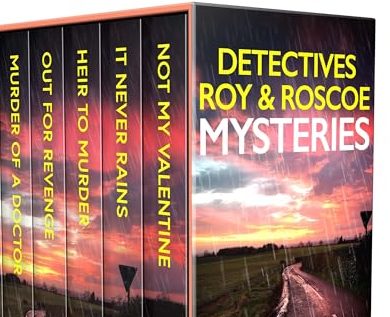
  • Review: Detectives Roy & Roscoe Mysteries Books 1–7

    Review: Detectives Roy & Roscoe Mysteries Books 1–7

    Tony Bassett, Detectives Roy & Roscoe Mysteries Books 1–7 (The Book Folks Crime thriller and mystery 2025)

    https://www.goodreads.com/book/show/243115585-detectives-roy-roscoe-mysteries-books-1-7

    Absolutely perfect crime novels

    I congratulate Bassett on the publication of this compendium. I am a fan of his crime fiction and have read and reviewed several of the books in this collection.

    His writing is excellent, his characters colourful, and his plots are always exciting.

    What I like most about Bassett’s novels is the (what seems to me to be) realistic police procedures, the great characters and the great plots. The working lives of the characters are portrayed realistically. Bassett’s policemen have believably cop-like dialogue and avoid clichés (donuts, etc). We never lose sight of the people while the plot is gathering facts. The large cast of coppers and suspects all have inter-connecting stories, and we see fascinating peeks inside the suspects’ private lives.

    Bassett is a master of suspense. We find out the clues at the same time the detectives find them, meaning that the pacing is comfortable, slowly developing, then a rush of drama. As in real life, some of the leads don’t pan out, which gives it a true-to-real-life feel. Not everything is done by our heroine; also as in real life, there are multiple officers involved.

    We’re never given too much all at once, and usually about three-fourths into the story, just when it’s getting almost too complicated to follow, we are given a summary of the suspects, clues and alibis through the mouths of the police in a team operational briefing. So, we never have to think, ‘hang on, what was that clue back on page 23?’ Bassett is skilled at weaving necessary backstory into the dialogue. You probably get enough clues to solve the crime yourself, although I usually don’t.

    I like that his main detective, Sunita Roy, is of non-Anglo heritage, making her a little bit out of ordinary from what we’re used to. She’s an interesting woman as well as police detective. Though she’s not full of herself, she has a keen mind, and when cracks the case, it’s usually because she has done a bit of lateral thinking that her bosses haven’t considered. The crime is always solved in some innovative way.

  • Review: The Better Angels

    Review: The Better Angels

    Robin Holloway, The Better Angels (Holand Press 2025)

    https://www.goodreads.com/review/show/8009771617

    The invasion of St. Helena Island in South Carolina by the Union forces drives away the white planters, leaving the ex-slaves considered ‘contrabands of war’, neither free nor slave.

    Northern white abolitionists like Laura Towne build a school to educate the children.

    While initially flabbergasted by the differentness of the culture and frustrated by their subservience, Laura spends her whole life loving and working in the good interests of ‘her people’.

    The ‘Port Royal Experiment’ is sincerely dedicated to bettering the lives of the ex-slaves, but there is debate on how to go about it. Some think the most important thing is to return the cotton fields to productivity and integrate the ex-slaves into the capitalist system. Laura loves and respects them, but fears for their vulnerability in the new world. Jupiter, the elegant black carriage driver, believes the blacks must fight for their freedoms.

    The first year’s cotton crop is not good, so they are ‘forced’ to list the plantations for sale. Mr Philbrick is trusted to make the initial investment, promising to offer plots to the freedmen ‘when it is possible’, but ‘possible’ keeps getting delayed. Will they get their ‘40 acres and a mule’ as promised? Will they get the vote?

    The structure is a mixture of diary entries, letters and exposition. Some of the exposition seems to be in the POV of Jupiter, but this is not clear. A very worthy subject, but as a novel, I found myself wanting a love story or some drama, or some slight fault in Laura’s angelic character.

    This is all about the psychology of oppression and the complexity of relationships when love is mixed with exploitation. It is also about angels. Fortunately, there are people on this earth and in history who dedicate their lives to making the world a better place.

    This review first appeared in Historical Novels Review.

  • Review: The Midnight Frequency

    Review: The Midnight Frequency

    Vicki Regan, The Midnight Frequency (2025)

    https://www.goodreads.com/book/show/231121146-the-midnight-frequency

    Time-travelling adventure to save the world, again and again

    Radio host Sarah Collins asks her late night audience to phone in with their ‘weirdest experiences’. Then, she has the weirdest experience of her life. She picks up a caller claiming to be a time traveller speaking from 2045 with a chilling prediction about Flight 2409. The prediction proves true, and Sarah receives more warning calls. The next one warns, ‘they’re coming for you.’

    As subsequent events prove the predictions her mysterious caller warns of, Sarah finds herself in danger from federal agents and from shadowy corporate bad guys who are trying to manipulate time for who knows what reason.

    She meets an ally, Dr Eleanor Hastings, an expert on ‘temporal anomalies’, and the two embark on a frantic mission to prevent the disasters their time traveller predicts. ‘Why me?’ Sarah wonders. Eleanor explains that her voice over the airwaves is ‘an anchor point across timelines’.

    Each time a disaster threatens, Eleanor says, ‘Let’s go save the world, again’. When they do, Sarah’s caller tells her she’s changed the timeline, ‘the future is now uncertain.’

    Timey-wimey conundrums ensue. In different timelines, different realities exist. Sarah’s mentor from the future tells her, time manipulation means ‘never being certain which version of reality you’re experiencing’.

    It’s tremendously exciting; by Chapter 2 Sarah is already running for her life and facing global destruction. The mechanics of the time traveling are more or less satisfactorily explained, though we never quite find out why the bad guys are doing this.

    The ending is quite cute, and does have a bit of finality, yet it’s open-ended enough to make you want to read Book 2.

    This novella is Book 1 in The Midnight Frequency Series.

  • Review: Among the Okapi

    Review: Among the Okapi

    John S Taylor, Among the Okapi (FriesenPress 2023)

    https://www.goodreads.com/book/show/152204115-among-the-okapi

    Memories of Africa cause ramifications for everyone back home

    The last students have left Anatomy class at Waverly College in Toronto where Fred is lab demonstrator. He’s determined to ask his head of department Dr Smith for a pay rise. An affair with the landlady Inge has not saved him from paying rent, but his mind is on a student from his hometown of Darby whom he remembered from high school, Esther.

    John Lyon is studying the sales figures of his lager-brewing company. A phone call promises that his son Jason will come home to visit. Wife Daphne is out at a meeting with the arts committee. Esther, their niece, orphaned at age 10, is staying there for a while. The two cousins have never met.

    Dr Smith commissions Fred to edit the study he did in Africa on the okapi. Esther, a vegetarian, wants to be excused from dissecting white rats. Dr Smith thinks she look familiar. Fred and Esther bond during a spot of undercover activity.

    Chapter 5, we break to quoting every other chapter from Dr Smith’s African journal—his tale of the okapi and of Alice. Every other chapter, however, goes back to the present-time narrative, so we don’t break the continuity.

    Dr Smith seems obsessed with a Mark Van Dusen, someone from the Africa days.

    These two sets of characters revolve around each other. Jason finally tells Dr Smith, ‘every time there’s been a serious problem in my family, it’s somehow connected to you.’

    The characters are all very well developed, and their histories intersect in interesting, complex ways. I would have liked a bit more enlightenment earlier on concerning Van Dusen. When we finally learn, it’s suitably astonishing, with misunderstandings all around.

    A very well written story.

  • Review: Dread: An Appalachian Horror Tale

    Review: Dread: An Appalachian Horror Tale

    David Grayson, Dread: An Appalachian Horror Tale (2025)

    https://www.goodreads.com/book/show/44288015-dread?ac=1&from_search=true&qid=gKTPYT6mDr&rank=1

    Something is stirring in the woods

    Ed awakes to deranged screams outside his cell in the Sanatorium. Fortunately his lunatic cellmate Joseph is still asleep. Ed remembers a different kind of torture in Fallujah.

    The first few paragraphs describe Ed’s life in the Sanatorium, but the Opening features interchanges between Joseph and other patients, making it more personal and more compelling.

    On page 16, we get the first hint of some horror, the mention of ‘lights in the woods’. The suspense builds from there. First, the monthly supplies of food and medicine didn’t arrive. The truck is discovered empty, the driver missing. The guards are behaving strangely. A series of events begins, which might otherwise be just normal glitches in the daily routine. But they build. Meanwhile, Ed flashes back to Fallujah.

    I was rather annoyed that the bad guys were never explained. Were they zombies? Why were they attacking the Sanatorium?

    Otherwise, this is an easy-to-digest novella, a lovely bit of horror just before bedtime.