Tag: nutrition

  • Review: What We Leave Behind

    Review: What We Leave Behind

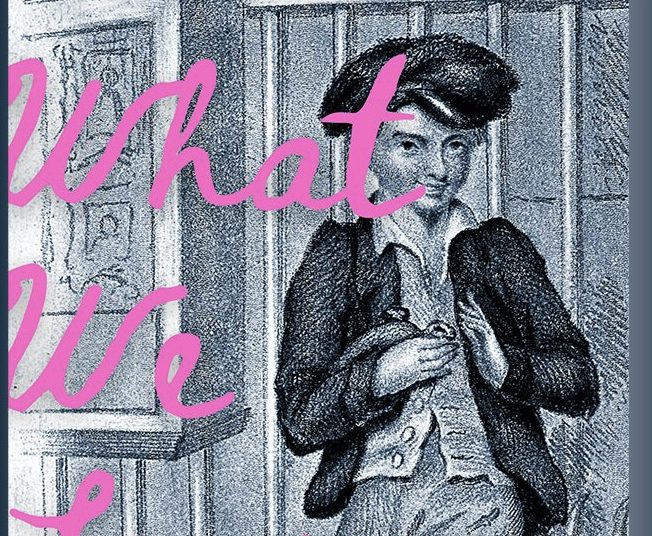
    Siôn Scott-Wilson, What We Leave Behind (Deixis Press 2023)

    https://www.goodreads.com/book/show/96178833-what-we-leave-behind?ac=1&from_search=true&qid=5mGR4BbxAL&rank=1

    Graverobbers Sammy and Facey dig for their living amid the squalor of 18th C London London.
    Carrying contraband liquor into Portsmouth Harbour, Sammy and Facey manage to evade the Tide Surveyor. Sammy’s young adopted son, ship’s boy Pure John, has been taken to London, and Sammy’s wife Rosamund is anxious. They need to find the lad before he is hanged for a deserter.
    They are pulled into the search for a fabled gemstone. The rare Eye of Brahma black diamond, a ferronière (to be worn on the forehead), was worn into the grave by a Mrs Edith Belmont, making its retrieval within the skillset of the two graverobbers. The mission is all the riskier in that the deceased died of the infectious Asiatic Cholera. And yet the blue tinge of corpse’s skin wipes off with vinegar, and the stone is a fake.
    They are drawn into not just a thieving escapade but solving a mystery involving the young heir, William Belmont. Local jewellers come under suspicion as do members of the Belmont staff, Jenkins, Nellie, Mrs Stride and Mrs Parkes.
    Rosamund enters the Belmont household, where a poisoner maybe lurks, as governess, and Sammy and Facey enter as plasterers.
    Saving the boy means making a sacrifice. The clock-ticking rescue, involving use of a Dandy Horse (early bicycle) and a last-minute crowbar, is quite exciting.
    The Voice, mostly that of Sammy, sounds quite authentically 18th century, down to the flowery formality of everyday speech, which is occasionally almost humorous. Even street criminals address each other as ‘Mr’ and ‘Mrs’, and the dissecters of human cadavers discourse courteously. It dips into the mysterious (and morbid and seedy) world of graverobbing, and we even learn some street gang slang—e.g. ‘karker’ (carcass), ‘dipper’ (pickpocket), ‘stretcher’ (lie), ‘downy’ (shrewd), ‘mazer’ (puzzle), ‘neb’ (nose) ‘glims’ (eyes). The jocular, colloquial banter between the characters sounds authentic.
    A beautiful book, which follows on from Some Rise by Sin. This review first appeared in Historical Novels Review.

  • Review: Book of Days, French social history 1003-1975

    Review: Book of Days, French social history 1003-1975

    Douglas Bullis, Book of Days (Kindle 2022)

    https://www.goodreads.com/book/show/174703621-book-of-days-french-social-history-1003-1975

    6 stars. This book is a masterpiece in so many ways. 1. It is ‘street-level history’, which we rarely see in literature. 2. It is beautifully written. 3. It is, as far as I know, a unique—Concept. 4. It also has quite a unique methodology—relying on visual material.
    Films and novels show us how kings and queens lived, but what about peasants? Interestingly, because so little is written about their daily lives, this book uses as its sources ‘visual depictions rather than written texts’. Books of hours and stained-glass windows, produced for religious purposes, inadvertently give us insights into daily secular life.
    Bullis paints vignettes of French villagers at certain points in history from 1003 to 1975. Each chapter is a day in the life of a member of the (real historical) Lefief family. A wonderful, wonderful—and as far as I know, unique—Concept.
    For example:

    The world has not ended, and everywhere people are building churches. In the village of Fougerolles, the land is cleared by peasants who then take the name of Lefief.
    October 1193. Autumn smells fill the air as villagers labour to prepare for winter. Gonbault Lefief is trying to ensnare a crow when his son arrives home from Crusade.
    October 1260. Bread maker Josquin Lefief rises before dawn. After making the day’s loaves, he and his wife cart around a mobile pretzel oven to cater to celebrants of the Consecration.
    August 1346. The battle (Crécy) is lost—King Philippe hadn’t reckoned on the prowess of the English longbowmen—and brothel-keeper D’Airelle Lefief prepares his women for their inevitable impending rape.
    The level of historical detail in this work is amazing, and yet, it does not read like a dry history book. It is superbly written. There are lyrical descriptions of the village and the nature surrounding it and edifying human dramas among the Lefiefs and other villagers. There are very few named characters, here. Instead, it is a portrait of the entire culture, an intimate glimpse into the world of mediaeval peasants that we rarely see anywhere in literature.
    The illustrations alone should bump this to everyone’s ‘must read’ list, and I recommend a luxurious read of the beautiful text.
    This fabulous work of research includes beautiful colour and B/W illustrations from over 50 sources. An Addendum tells the story of the imagery in the Crusader’s Bible.
    This review first appeared in Reedsy Discovery.

  • Review: The Timber Girls

    Review: The Timber Girls

    Rosie Archer, The Timber Girls (Quercus Publishing 2022)

    https://www.goodreads.com/book/show/60864215-the-timber-girls?ref=nav_sb_ss_1_16

    Trixie Smith is fed up working in a greengrocers and playing the piano in a pub at night in Gosport. How is this helping to win the war? she thinks. So, she is on her way to Scotland to join the Women’s Timber Corps. On the ferry she meets Cy, a US soldier from New Orleans on leave.
    Training to be a lumberjill is hard work, and Trixie finds that each of her new friends has something they’re running away from. Hen has left a privileged life for the promise of excitement. There must be some story behind Jo’s mercurial moods. And what has caused the bruising on Vi’s arms?
    Doing a job that’s vital for the war effort makes women of these girls, while the boys at the front are facing hardship, danger and death.
    The dialogue with Cy is a bit stilted, meaning that we don’t really feel the ‘falling in love’ bit, but the conversation among the ‘girls’ is more natural. It’s page 258 before we discover something important about Cy, which I think should have been revealed earlier.
    It captures the period and the wartime spirit—that everything was changing, the eagerness to seize opportunities for love and fun because death could be around the corner. Though a lot of the detail is fairly banal stuff, it depicts the living and working lives of women workers, the camaraderie of the shared war effort, the newfound self-satisfaction in doing ‘a man’s job’, sexism and even threats from men. It was interesting to learn about ‘brashing’, ‘snedding’, cross-cut saws and spokeshaves and fretsaws, how to measure a tree’s height, fire and accident prevention, the infernal midges—all the business of forestry and felling trees.
    This is a ‘girls at war’ saga, a well written, easy read. This review first appeared in Historical Novels Review.

  • Review: Christ in the Belly of the Whale

    Review: Christ in the Belly of the Whale

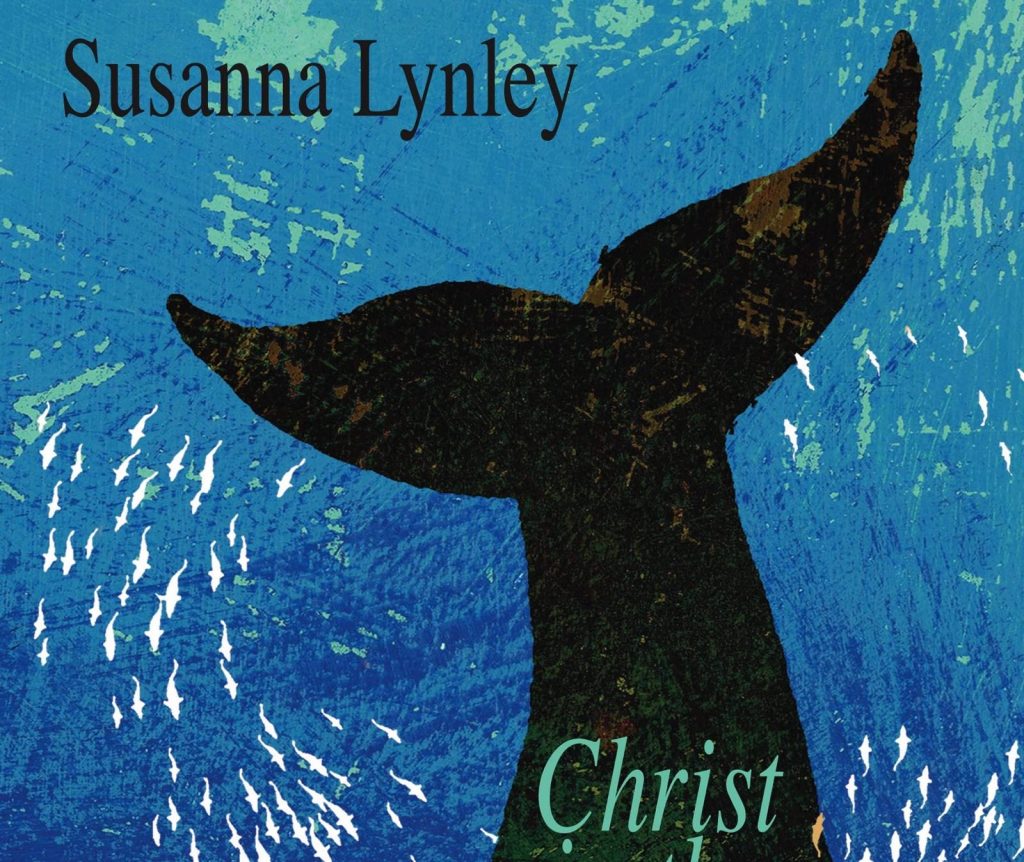
    Susanna Lynley, Christ in the Belly of the Whale (Kindle 2022)

    https://www.goodreads.com/book/show/63231805-christ-in-the-belly-of-the-whale?ac=1&from_search=true&qid=EYsZGYajK2&rank=1

    The Gospels announce the ‘goodnews’ of Jesus’ resurrection, but they don’t tell us the story.
    Golgotha 14 Nisan 30CE. His uncle and foster father Amos the cloth merchant is among the six at the cross, watching Jeshua’s final suffering. The women of Amos’ family possess the secret of a blue dye ‘from the lightest shade of a bird’s egg to one so rich it rivals lapis for depth and clarity’.
    It all began with a pair of chisels.
    Amos tells a familiar story from an unfamiliar point of view. Like HBO Rome, the story inserts fictional characters next to the historical ones. This device is handy, seeing as there is so little we know about the historical Jesus.
    The title is both catchy and inspired. Jonah—he in the whale’s belly—was a popular symbol for early Christians, representing both pious dissidence and Christ’s burial/resurrection.
    It’s sometimes a 21st century take. A history or biography of the historical Jesus would be a different novel and probably impossible to achieve. For example, Amos says the ‘King of the Jews’ sign on the cross was ‘Pilate’s little joke’. We are not used to thinking of Jesus as some kind of contender for the throne. First-century observers would not have found the sign funny at all. Jesus rides in on a donkey to ‘be quiet’. First-century Jews would have recognised the stunt as a restaging of Zech 9:9. Though I myself have studied the historical Jesus for over 20 years, I think this is fine.
    Backstory is managed with an admirable light touch and keeps within the Voice of each narrator. I loved Judas Iscariot’s: ‘What I did not know, what I wish I had known, is that he (Jesus) was weak.’ There’s a bit of Telling (not Showing), but the scene-setting is great. The details of the cloth trade are wonderful. The plot is inventive, with added intrigue as the sons of Yehuda the Galilean conspire against the peacemongers. It weaves in more than just the story we already know; it’s fun to read a book about Jesus that’s not all about Jesus. An Epilogue addresses the historicity question, with an impressive Bibliography.
    There is no blasphemy, only imagination. Christian readers will love this. YA readers already conversant with the Christian mythology will find familiar people and elements. All will enjoy the lively, down-to-earth, intimate portrayal of everyday life in the 1st century.
    This review first appeared in Reedsy Discovery.

  • Review: Bury Me Behind the Baseboard

    Review: Bury Me Behind the Baseboard

    Pavel Sanaev, Bury Me Behind the Baseboard (1996, this edition CreateSpace Independent Publishing Platform 2014)

    https://www.goodreads.com/book/show/22269461-bury-me-behind-the-baseboard?ac=1&from_search=true&qid=N04ea7NCD8&rank=1

    Eight-year-old Sasha introduces himself thus: ‘My mother abandoned me for a blood-sucking midget and hung me around Grandma’s neck like a god-awful heavy cross.’
    Grandma alternates between horrible verbal abuse—Sasha ‘stinks’ and is a ‘bastard’, destined to ‘rot away’ before he is 16—and excessive suffocating attention—she picks the seeds out of his grapes; he has to stand on a chair while dressing so his feet won’t get cold and wear woollen tights even in bed; he has to take homeopathic pills; and Grandma is terrified that he might sweat. He is taken to the doctor more often than school. According to Grandma, he has maxillary sinusitis, golden staph, colitis, chronic pancreatitis and intracranial hypertension. He has to take Ephedrin, Conium, colloidal silver, albucid and olive oil.
    She says Grandpa will ‘rip out his arms and legs’ if he goes to play at the MREC again. Grandpa, however, is fully hen-pecked and depressed over his situation, unable to escape the harpy’s tongue.
    All Sasha lives for is to see Mom, a rare occurrence. She has taken up with a boyfriend, whom Sasha is encouraged to view as an ogre. And fighting with Grandma takes up so much of the time he is allowed to spend with her. When he dies, he wants to be buried not in the cemetery, which frightens him, but behind her baseboard, so he can always see her.
    The child’s-eye view of Sasha’s Voice is adorable. It’s Russian, but not overbearingly so and funnier than Dostoyevsky, containing some dream-like magical realism bits.
    The truly insane behaviour of Grandma is told through the helpless eyes of the child. I have seen behaviour/parenting like this, which I term ‘crazifying behaviour’, and I’ve struggled to effectively represent it in writing. This parenting style is so crazy that I think Sanaev’s open-eyed, innocent approach is the only way to portray it. This approach stands back, uncommenting, and allows the reader to exclaim, ‘OMG, how insane!’
    Though happily Sasha is eventually rescued, it kind of ends with a thud.
    It is written in a distinctive style and has been beautifully translated by Konstantin Gurevich and Helen Anderson. The original publication apparently sold over a million copies in Russia, won literary prizes in Russia and Italy and was made into a movie in 2009. It won first in World Literature Today’s November 2014 readers’ poll ‘25 Books That Inspired the World’. This review first appeared in Reedsy Discovery.

  • Review: The Warlock Effect

    Review: The Warlock Effect

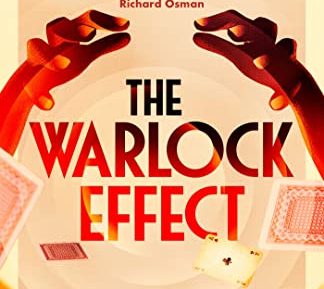
    Jeremy Dyson, The Warlock Effect (Hodder & Stoughton 2023)

    https://www.goodreads.com/book/show/60053872-the-warlock-effect

    A young German Jew fleeing the Nazis, Ludvik plays card tricks to lure the English boys away from tormenting him. Louis Warlock the magician is born.
    Mr Aldous, editor of Illustrated, who has previous history with Louis, challenges him to prove his magic is ‘real’. His assistant (and fiancée) Dinah is hidden within a three-mile radius, and Louis must find her within three hours, blindfolded, only using his ‘psychic’ mental connection to her. They secretly communicate messages to each other by tapping their fingers in Morse code. He passes the test.
    A British Secret Service agent recruits him for a mission which requires his sleight of hand skills. But is he dealing with a double agent? He is being used by someone. Are his handlers British? Soviets? Louis is taken against his will, removed from his friends and fiancée and thrust into a Kafka-esque world of mind games. He is sent behind Soviet lines into Czechoslavakia to investigate the sinister ‘Funhouse’, where it seems magicians can even fool magicians.
    This thriller is all about mind-manipulation as much as it is about espionage. I was reminded of the sadistic mind experiments the Nazis did, for which Louis, as a Jew, would have held a familiar dread. To safeguard his sanity, he recites the Shema. The story is interspersed with instructions on how to do various magic tricks (which you must not reveal).
    At some point, Louis becomes a willing participant in the secret agenting that he is being forced into. Given what they had put him through, I found that a bit incredible. If it were me, I would have found some way to phone the fiancée.
    It is well written, and the agent/double agent conundrum adds a twist to what would otherwise have been a simple story about surviving torture.
    This review first appeared in Historical Novels Review.

  • Review: Dear Doctor Love

    Review: Dear Doctor Love

    Susan Murphy, Dear Doctor Love (2023)

    https://www.goodreads.com/book/show/123284009-dear-doctor-love?ac=1&from_search=true&qid=UdKx6s78iW&rank=2

    Cadet reporter Ella is leaving the funeral of her beloved Aunt Gina, not so long after burying her dad, when a stranger presses a card into her hand—Meg Russel, Russel Gallery & Exhibits—says she ‘helped Gina with her affairs’. Ella still grieves for her dad, and Aunt Gina’s death hits her hard. Gina has left her house to Ella, and Ella is glad to move away from home.
    Filled with loving memories of Aunt Gina, Ella sets to clearing out her aunt’s effects. Jazz joins her with bagels and coffee, and in one of the albums they discover a bunch of clippings from newspapers and magazines, agony aunt letters and responses. Then a set of hand-written letters and typed replies. Aunt Gina had been a secret agony aunt. She was ‘Doctor Love’.
    In a letter to Ella left in her office, Gina confessed her secret side job and asked Ella to contact Meg Russel about mounting an exhibition of these letters.
    Ella finds some letters that had not been answered ‘due to program shutdown’. Among them is evidence of a young love story facilitated by Doctor Love, yet just at the point when Tom was to notify Maya of a rendezvous point for their elopement, the newspaper shut down. Had these star-crossed lovers found each other?
    They decide to reinstate the Doctor Love column, track down Tom and Maya and write the story up for the paper. They find Tom and find an ally in son Cal in the hunt for Maya. She and Cal connect.
    But Jazz has gone one too far. She takes too personal an interest in one of their cases, which triggers something in her. She goes off on a search of her own.
    The Tom and Maya story comes to a conclusion, 30 years after their last good-bye, and Ella’s article is a hit.
    The relationship of Ella and Jazz is quite adorable, and the bit where she’s cleaning Gina’s house portrays her loving memories of Aunt Gina beautifully. Each of the trio contribute their own talents and personality to both the Doctor Love column and the search for Tom and Maya. Cal provides a serious side to counterbalance Jazz’ exuberance.
    Both love stories are handled with a light touch, which seemed to match the style of the work. I really liked the ending, so simple and joyful and looking to the future.
    This review first appeared in Reedsy Discovery.

  • Review: Olawu

    Review: Olawu

    P. J. Leigh, Olawu (Brave Girls Press 2024)

    https://www.goodreads.com/book/show/217003023-olawu?ac=1&from_search=true&qid=020DrYhEvk&rank=1

    Young Zulu Olawu causes a scene at market, earning a beating from her Umama. She is friendly with the boy Batiko. Her Ubaba tells her, ‘Do not give him your heart’, but Batiko has other plans. In secret, Ubaba teaches her how to set bones.
    Members of the Dikebe tribe come to Kanakam. Would the Zulu be drawn into their conflict with the Oloko?
    Dikembe, son of the warlord who has taken over their village, comes seeking Ubaba, the udokotela (surgeon) Mbako, seeking help for his mother. Olawu notices Dikembe’s blue lotus flower tattoo.
    If she doesn’t find a husband, she’ll be sent to the Choosing and be sold for the price of an isitshalo—a plantain.
    A war ensues between the Dikebe and the Oloko. Her relationship with Dikembe is on-again-off-again, but Businge, a young man from Borimbe, is a suitor.
    What Olawu cares about is not which man she’ll end up married to, but whether or not she can become an udokotela. She wants to fill her Ubaba’s shoes in a society which doesn’t accept such a profession for a woman. In pursuit of this, her loyalites shift.
    A girl’s coming-of-age and female emancipation in a misogynistic culture—it’s a familiar theme. As well as the ruse of male attire. What is delicious about this is the intimacies of a culture from a time and place that I don’t know much about.
    I understand Olawu’s shift to the Oloko because they had accepted her as udokotela, but her shift from agreeing to kill Dikembe to melting in his arms, then spying on him, and even turning on her own Kanakam, was not well explained from a character motivation point of view.
    It’s action-filled, with brilliant scene-setting and descriptions of the culture and the people in it, and the dialogue is good, the interplay between the characters wonderful. I was confused by the unexplained foreign words, although they certainly led to verisimilitude. I couldn’t find online a definition of ‘Pootagi’—finally defined on page 271. It flows well and is well paced. There is pretty hot frisson going on between Olawu and Dikembe, and their relationship arc is very interesting. The battle with the Oloko and the dam-sabotage scene are exciting. But it’s long, 312 pages, particularly about ¾ in, between the battle and the dam-sabotage.
    Though long, would suit a YA readership—for young readers of East African heritage, particularly girls, a ‘must read’.

  • Review: Isabelle

    Review: Isabelle

    Sophie Holloway, Isabelle (Allison & Busby 2022)

    https://www.goodreads.com/book/show/62001257-isabelle?ac=1&from_search=true&qid=hYMtUxwNsC&rank=1

    Isabelle Wareham’s difficult relationship with her sister is exacerbated by the death of their father. The elder Cornelia, already planning refurbishments to Bladings, the family manse, is incensed that the Will leaves everything to Isabelle, who had looked after Col. Wareham since his seizure. Isabelle is aggravated to find that her brother-in-law viscount Charles Dunsfold, is now her legal guardian.
    She decides, despite mourning, to host the annual Boxing Day hunt at Bladings as was her father’s tradition. And she is determined to hold the Twelfth Night shoot, as well. Her cousin Julia accepts the proposal of Lord Slinfold, so, one of the bachelors is out of the running. Lord Idsworth is wounded at the shoot, and Isabelle nurses him back to health.
    The tension is light. The ins and outs of aristocratic English high society are daunting. What is appropriate? What is not? Are men flirting with her, or just being gracious? Fortunately, Lady Taynton takes her under her wing.
    Local squire Edwin Semington seems sure Isabelle will marry him, a match favoured by Lord Dunsfold, but she is more attracted to the penniless Lord Idsworth. As Dunsfold and Semington plot to force her hand, Lady Taynton and Idsworth plot to rescue her.
    The similarity of names—Charles Slinfold/Charles Wareham; Slinfold/Dunsfold—is unfortunate, but there are not too many characters to keep track of.
    This is a Regency romance ‘in the style of Georgette Heyer’. I don’t know Heyer, but there seemed to be a bit of the Bridgerton and a bit of the Upstairs, Downstairs (but mostly Upstairs) and with the antics of young toffs Sir Charles Wareham, Lord Idsworth, Lord ‘Molly’ Mollerton and the indefatigable butler Mumby in their hunt for the rat and/or Lady Slinfold’s muff, a bit of the PG Wodehouse. An easy read.
    This review first appeared in Historical Novels Review.

  • Review: The First Kingdom

    Review: The First Kingdom

    Max Adams, The First Kingdom (Apollo 2011)

    https://www.goodreads.com/book/show/54626524-the-first-kingdom?ac=1&from_search=true&qid=JAZYKeaae2&rank=1

    We have very little to tell us about the lives of early British people after the Romans departed. Their houses and villages lie waiting for us, under mounds of earth on Salisbury Plain and elsewhere, but they are as yet unexcavated, archaeologists focussing on the juicier finds of fancy villas. These villas were not the norm. Most people lived as unfree serfs in small, unfortified villages. Literature leaves us the very rare Venerable Bede to tell us about it.
    Claudius Caesar’s invading force in 43 CE recorded information in Latin about the local tribes—Trinovantes, Iceni, Brigantes, Belgae—and their leaders, but no tax records survive to give us the names in the local Brythonic. One list, the Tribal Hidage, gives the names of kingdoms and their wealth in hides, but the centuries between Caesar and Bede are relatively silent.
    At Venta Begarum (Winchester) the civitas capital of the Belgae, women weavers wove byrri hooded capes and tapetia rugs for export to Gaul. There was a temple and town around the hot baths of Aquae Sulis. The Fosse Way connected Isca (Exeter) the civitas capital of the Dumnonii with a military veterans’ colonia at Lindum (Lincoln). A road from Aquae Sulis led to Londinium via Corinium Dobunnorum (Cirencester) the civitas capital of the Dobunni and Verulamium (St Albans).
    Some of the only known voices of that past come from curses inscribed on lead sheets supplicating the goddess Sulis, and offerings of clothing, vessels and jewellery—even one mule—give a picture of the material culture. It seems they had the latest technology and access to European trade goods. An indigenous ruling class, like Boudicca and her husband, were thoroughly Romanised, spoke and signed documents in Latin and wore togas.
    There was a gradual population decline, tree pollen counts indicate that agricultural land was less intensively farmed, and politico-economic power decentralised, but in no way was it the ‘Dark Age’ picture of catastrophic devastation painted by 6th C Gildas. In fact, ‘there seems to be a broad continuum in architecture, economy and social practice’ into the early Middle Ages.
    Towns began to build walls in the 4th C, yet it may have simply been a statement of status; there is no archaeological evidence for attacks during this period, and no Romano-British town shows signs of widespread abandonment. Only one post-Roman pre-Viking battle site has been identified in Britain. No Roman coins have been found after this period.
    Having said that, there were profound changes in the culture that, if violence was not the cause, need to be explained. 5th and 6th C Britons cremated their dead at public funeral feasts and buried them in pots that had previously been used for food storage along with valuables and sometime animals or food, customs linking them to Germany or Scandinavia. However, the change of burial customs seems to have occurred before Gildas’ dating of any mass migration. A switch to east-west alignment of the bodies is seen as evidence of Christianisation. They built German-style sunken grubenhäuser pit-houses that don’t seem to have been dwellings. They lived in clusters of households, each community producing food and goods for its own consumption or taxes, not market.
    At West Heslerton ‘Anglian’ graves contained grave goods similar to ones found in Germany and Scandinavia. The West Heslerton bodies have been isotope-tested, showing that most of them were descended from people who had lived there since prehistoric times. A few individuals revealed a foreign origin.
    The 452 Chronica Gallica states that Britain was now ruled by Saxons.
    The story in Historia Brittonum of Saxon mercenaries under Hengest and Horsa in ‘three keels’, invited in to fight the Picts, who then stayed to become raiders themselves sounds credible. But where are these ‘big men’? Gildas’ ‘tyrants’? The Hengests, the Arthurs and the Cerdics? The monumental earthworks, dykes of this period needed some powerful authority to have organised their construction, but the archaeological landscape is empty of their graves or mead halls. Adams suggests they moved into refurbished buildings in Roman towns.
    Adoption of new styles and customs and the growing predominance of Old English (Saxon) placenames seem to tally with Bede’s mass migrations of Angles, Saxons and Jutes. In the east and south of Britain Brythonic and Latin were completely replaced. Yet the archaeology suggests intermittent raiding or more of a gradual chain migration, a movement of people over several generations, rather than Gildas’ ‘foul hordes’. Anthropologists suggest a small peripatetic warrior elite able to exploit a weaker indigenous people. But ‘no single model seems to accommodate all the evidence.’
    A new class of bucellari, military men who could shift their allegiance between lords (like Beowulf who offered his service to King Hrothgar), was handy when tax collecting time came around, and the right to collect taxes devolved to the comites (armed retinue). Bailiffs rose to become de facto lords; ‘the late Roman state had been privatized.’ These social changes took place before any incursion of foreigners. Towns became places where tax goods could be converted into more fungible goods or coin. Furthermore, 5th and 6th C towns show a peaceful co-existence between locals and incomers. By the 6th C there were few major towns.
    Adams tells us the ‘under Roman rule, Britons were better off’, still stressing that this was only the case for some Britons. The classic answer to the question ‘what did the Romans ever do for us?’ is ‘aqueducts’. Yes, a marvelous engineering feat, but one which benefitted only the rich in their villas. Water from these aqueducts went straight to the fountains and baths of the rich. It was not used to irrigate crops or provide drinking water and was never of benefit to the general population.
    Personally, I suspect the answer lies somewhere between the two. The Saxons clearly came, whether bellicosely or peacefully, en masse or intermittent. We will probably one day begin to unearth the battlesites, rígtechs (royal houses) and ‘princely burials’ presumably so missing from the British landscape.
    Adams equates the 5th C Romano-British warlord Ambrosius Aurelianus mentioned by Gildas with ‘King Arthur’.
    A well-written history and valuable contribution to understanding of an age only ‘dark’ because we know too little about it.