Tag: mental-health

  • Review: Seven Rivers: The Darkness

    Review: Seven Rivers: The Darkness

    B. Luiciano Barsuglia, Seven Rivers: The Darkness (Koa Aloha Media 2025)

    https://www.goodreads.com/book/show/235105617-seven-rivers

    A supernatural journey of redemption

    Cora and Gabe are fighting. She has a baseball bat; he has a gun.

    It ends badly in a devastating car accident, and she ends up at the Seven Rivers Recovery Clinic in bandages. But this is no pristine hospital, no wholesome rehab facility. It starts with the tea–they’re giving her some kind of hallucinogen–then the pain and the terror, the savage bandage changes. The place operates according to an unfamiliar set of rules, which Cora now has to work out. The other residents aren’t welcoming, either. But at least they seem to know why they are there.

    ‘Some are here for recovery; others for redemption. Why are you here?’ Lady asks.

    ‘I’m hiding out, I guess,’ says Cora.

    I liked the parallels between pain and terror, but the horror begins too soon. We need to build up to it. And there’s too little action. We start hearing about ‘the ragged pulse of her fear’ before we even see anything to be afraid of. There’s no explanation as to why she’s ended up in this place and no explanation as to why Gabe is threatening her life.

    The chapter headings read like a ‘Pilgrim’s Progress’–Integrity, Acceptance, Humility. Cora is on a journey of self-discovery and redemption about which we get no clues until page 109. She witnesses horrors. Ex-robbers in a heist gone wrong. Each room, each interaction with the other guests confronts her with the consequences of her guilty past.

    A few too many clichés for me, coupled with some phrases we don’t really know the meaning of–‘an unease that lingered like a shadow’. I liked ‘tremors that shook her very atoms’.

    I liked the Concept–a surreal environment (Purgatory?) forcing someone to accept the consequences of their past behaviour, but Cora’s psychology doesn’t really come through. The unexplainedness contributes a surreal, spooky Kafka-esque atmosphere, yet I didn’t get the sense that Cora was trying to figure it out, which was frustrating. We can’t empathise with Cora’s suffering if we don’t understand why.

    In the end, she confronts the fear of death, something I don’t see treated in many novels, surprising considering that it’s probably the biggest fear humans face.
  • Review: Detectives Roy & Roscoe Mysteries Books 1–7

    Review: Detectives Roy & Roscoe Mysteries Books 1–7

    Tony Bassett, Detectives Roy & Roscoe Mysteries Books 1–7 (The Book Folks Crime thriller and mystery 2025)

    https://www.goodreads.com/book/show/243115585-detectives-roy-roscoe-mysteries-books-1-7

    Absolutely perfect crime novels

    I congratulate Bassett on the publication of this compendium. I am a fan of his crime fiction and have read and reviewed several of the books in this collection.

    His writing is excellent, his characters colourful, and his plots are always exciting.

    What I like most about Bassett’s novels is the (what seems to me to be) realistic police procedures, the great characters and the great plots. The working lives of the characters are portrayed realistically. Bassett’s policemen have believably cop-like dialogue and avoid clichés (donuts, etc). We never lose sight of the people while the plot is gathering facts. The large cast of coppers and suspects all have inter-connecting stories, and we see fascinating peeks inside the suspects’ private lives.

    Bassett is a master of suspense. We find out the clues at the same time the detectives find them, meaning that the pacing is comfortable, slowly developing, then a rush of drama. As in real life, some of the leads don’t pan out, which gives it a true-to-real-life feel. Not everything is done by our heroine; also as in real life, there are multiple officers involved.

    We’re never given too much all at once, and usually about three-fourths into the story, just when it’s getting almost too complicated to follow, we are given a summary of the suspects, clues and alibis through the mouths of the police in a team operational briefing. So, we never have to think, ‘hang on, what was that clue back on page 23?’ Bassett is skilled at weaving necessary backstory into the dialogue. You probably get enough clues to solve the crime yourself, although I usually don’t.

    I like that his main detective, Sunita Roy, is of non-Anglo heritage, making her a little bit out of ordinary from what we’re used to. She’s an interesting woman as well as police detective. Though she’s not full of herself, she has a keen mind, and when cracks the case, it’s usually because she has done a bit of lateral thinking that her bosses haven’t considered. The crime is always solved in some innovative way.

  • Review: The Better Angels

    Review: The Better Angels

    Robin Holloway, The Better Angels (Holand Press 2025)

    https://www.goodreads.com/review/show/8009771617

    The invasion of St. Helena Island in South Carolina by the Union forces drives away the white planters, leaving the ex-slaves considered ‘contrabands of war’, neither free nor slave.

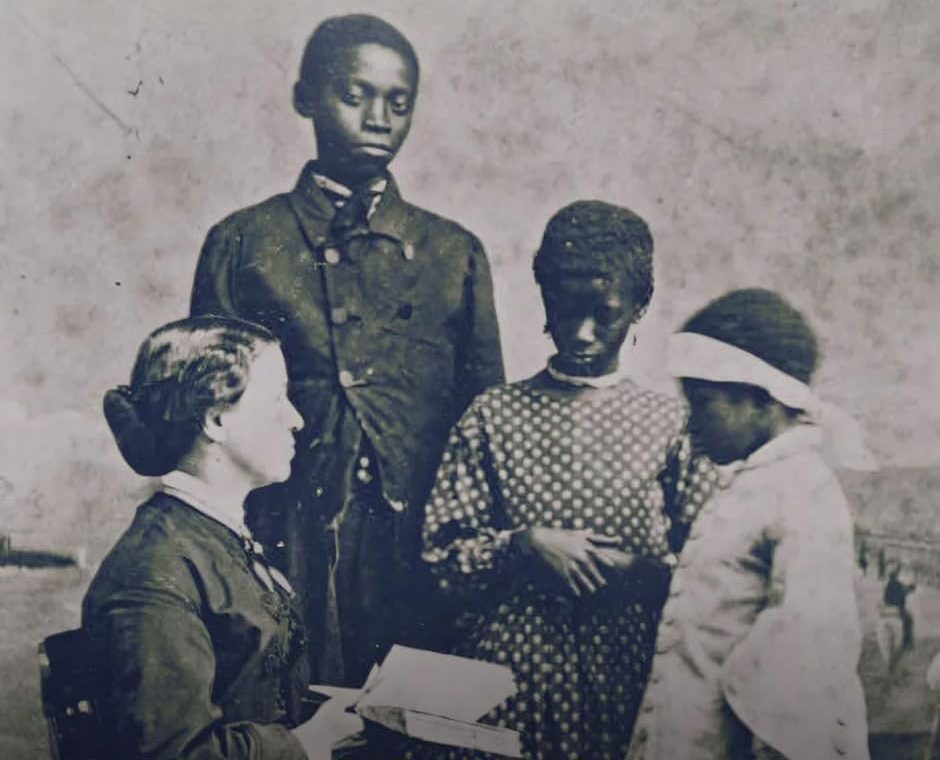
    Northern white abolitionists like Laura Towne build a school to educate the children.

    While initially flabbergasted by the differentness of the culture and frustrated by their subservience, Laura spends her whole life loving and working in the good interests of ‘her people’.

    The ‘Port Royal Experiment’ is sincerely dedicated to bettering the lives of the ex-slaves, but there is debate on how to go about it. Some think the most important thing is to return the cotton fields to productivity and integrate the ex-slaves into the capitalist system. Laura loves and respects them, but fears for their vulnerability in the new world. Jupiter, the elegant black carriage driver, believes the blacks must fight for their freedoms.

    The first year’s cotton crop is not good, so they are ‘forced’ to list the plantations for sale. Mr Philbrick is trusted to make the initial investment, promising to offer plots to the freedmen ‘when it is possible’, but ‘possible’ keeps getting delayed. Will they get their ‘40 acres and a mule’ as promised? Will they get the vote?

    The structure is a mixture of diary entries, letters and exposition. Some of the exposition seems to be in the POV of Jupiter, but this is not clear. A very worthy subject, but as a novel, I found myself wanting a love story or some drama, or some slight fault in Laura’s angelic character.

    This is all about the psychology of oppression and the complexity of relationships when love is mixed with exploitation. It is also about angels. Fortunately, there are people on this earth and in history who dedicate their lives to making the world a better place.

    This review first appeared in Historical Novels Review.

  • Review: The Midnight Frequency

    Review: The Midnight Frequency

    Vicki Regan, The Midnight Frequency (2025)

    https://www.goodreads.com/book/show/231121146-the-midnight-frequency

    Time-travelling adventure to save the world, again and again

    Radio host Sarah Collins asks her late night audience to phone in with their ‘weirdest experiences’. Then, she has the weirdest experience of her life. She picks up a caller claiming to be a time traveller speaking from 2045 with a chilling prediction about Flight 2409. The prediction proves true, and Sarah receives more warning calls. The next one warns, ‘they’re coming for you.’

    As subsequent events prove the predictions her mysterious caller warns of, Sarah finds herself in danger from federal agents and from shadowy corporate bad guys who are trying to manipulate time for who knows what reason.

    She meets an ally, Dr Eleanor Hastings, an expert on ‘temporal anomalies’, and the two embark on a frantic mission to prevent the disasters their time traveller predicts. ‘Why me?’ Sarah wonders. Eleanor explains that her voice over the airwaves is ‘an anchor point across timelines’.

    Each time a disaster threatens, Eleanor says, ‘Let’s go save the world, again’. When they do, Sarah’s caller tells her she’s changed the timeline, ‘the future is now uncertain.’

    Timey-wimey conundrums ensue. In different timelines, different realities exist. Sarah’s mentor from the future tells her, time manipulation means ‘never being certain which version of reality you’re experiencing’.

    It’s tremendously exciting; by Chapter 2 Sarah is already running for her life and facing global destruction. The mechanics of the time traveling are more or less satisfactorily explained, though we never quite find out why the bad guys are doing this.

    The ending is quite cute, and does have a bit of finality, yet it’s open-ended enough to make you want to read Book 2.

    This novella is Book 1 in The Midnight Frequency Series.

  • Review: Among the Okapi

    Review: Among the Okapi

    John S Taylor, Among the Okapi (FriesenPress 2023)

    https://www.goodreads.com/book/show/152204115-among-the-okapi

    Memories of Africa cause ramifications for everyone back home

    The last students have left Anatomy class at Waverly College in Toronto where Fred is lab demonstrator. He’s determined to ask his head of department Dr Smith for a pay rise. An affair with the landlady Inge has not saved him from paying rent, but his mind is on a student from his hometown of Darby whom he remembered from high school, Esther.

    John Lyon is studying the sales figures of his lager-brewing company. A phone call promises that his son Jason will come home to visit. Wife Daphne is out at a meeting with the arts committee. Esther, their niece, orphaned at age 10, is staying there for a while. The two cousins have never met.

    Dr Smith commissions Fred to edit the study he did in Africa on the okapi. Esther, a vegetarian, wants to be excused from dissecting white rats. Dr Smith thinks she look familiar. Fred and Esther bond during a spot of undercover activity.

    Chapter 5, we break to quoting every other chapter from Dr Smith’s African journal—his tale of the okapi and of Alice. Every other chapter, however, goes back to the present-time narrative, so we don’t break the continuity.

    Dr Smith seems obsessed with a Mark Van Dusen, someone from the Africa days.

    These two sets of characters revolve around each other. Jason finally tells Dr Smith, ‘every time there’s been a serious problem in my family, it’s somehow connected to you.’

    The characters are all very well developed, and their histories intersect in interesting, complex ways. I would have liked a bit more enlightenment earlier on concerning Van Dusen. When we finally learn, it’s suitably astonishing, with misunderstandings all around.

    A very well written story.

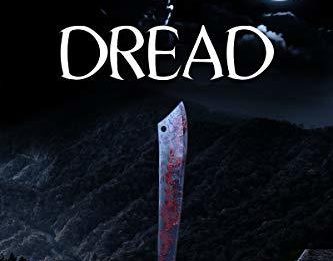
  • Review: Dread: An Appalachian Horror Tale

    Review: Dread: An Appalachian Horror Tale

    David Grayson, Dread: An Appalachian Horror Tale (2025)

    https://www.goodreads.com/book/show/44288015-dread?ac=1&from_search=true&qid=gKTPYT6mDr&rank=1

    Something is stirring in the woods

    Ed awakes to deranged screams outside his cell in the Sanatorium. Fortunately his lunatic cellmate Joseph is still asleep. Ed remembers a different kind of torture in Fallujah.

    The first few paragraphs describe Ed’s life in the Sanatorium, but the Opening features interchanges between Joseph and other patients, making it more personal and more compelling.

    On page 16, we get the first hint of some horror, the mention of ‘lights in the woods’. The suspense builds from there. First, the monthly supplies of food and medicine didn’t arrive. The truck is discovered empty, the driver missing. The guards are behaving strangely. A series of events begins, which might otherwise be just normal glitches in the daily routine. But they build. Meanwhile, Ed flashes back to Fallujah.

    I was rather annoyed that the bad guys were never explained. Were they zombies? Why were they attacking the Sanatorium?

    Otherwise, this is an easy-to-digest novella, a lovely bit of horror just before bedtime.

  • Review: The Watchers

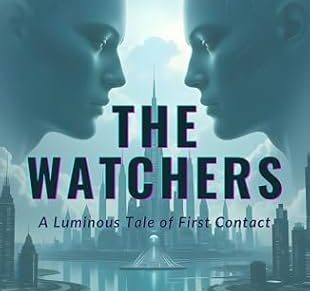
    Review: The Watchers

    V. M. Andrews, The Watchers: A Story of First Contact (2025)

    https://www.goodreads.com/review/show/7984314563

    A spooky, metaphysical portrayal of First Contact

    I chose this book because I found interesting the treatment of First Contact from the ET’s point of view.

    This poses a problem, though. Sci-fi necessitates a world-building before we can suspend disbelief. Here, the aliens are the status quo; they have no need to explain themselves. So, we are left with descriptions of how the Earth looks to them and aphorisms such as ‘We arrive as we have always arrived’ before we really understand what’s going on. This allows for some beautiful, dream-like writing, yet makes for a vague, rather confusing Opening. And it continues.

    I like the idea of the alien invasion as, not a single noteworthy event, but rather something gradual, a ‘continuity threaded through their myths’. The Watchers are ‘gardeners, archivists, architects of memory’.

    It’s not really a novel or novella, more like a poem. The language is absolutely beautiful, and metaphysically, it introduces some fascinating concepts, but I found the absence of storyline exhausting.

    There an outcry in the publishing industry over the use of AI. Intriguingly, this author admits to using it, not to ‘replace’ her creativity but as ‘a part of’ it. So far, I’m of that opinion myself.

    Each chapter features a beautiful spooky-looking colour illustration.

  • Review: Such a Fantastic Girl

    Review: Such a Fantastic Girl

    E. D. Rich, Such a Fantastic Girl (2025)

    https://www.goodreads.com/book/show/240943127-such-a-fantastic-girl

    Sara was a great mom, until she wasn’t. Now she wants to rebuild broken bridges

    Sara, age 42, is in therapy. She wants to look at why she put herself first, above her children, why she ‘doesn’t feel like a Grade A Asshole’. As a doctor, she’d taken an oath to ‘do no harm’, but she had done harm, to people she loved. All her life she’d been ‘such a fantastic girl’, but then something knocked her back.

    Her children, Jen and Bryan, weigh in. Jen recalls when the family got a horse. Bryan recalls when Mom ‘shut down on doing mom-type things’. Husband Rob knows exactly when it happened. It was the miscarriage. After two years of distancing herself from her family, Sara drops a bombshell. She is joining Doctors Without Borders, in Africa, alone. A divorce follows naturally.

    Jen is dangerously anorexic; Bryan pulls out his eyelashes and cries in bed every night. Sara pays a surprise visit home, and the kids don’t want to see her.

    Eventually, everyone moves on, goes into therapy, finds a new partner.

    The story traces the psychological development of all the characters, tracing forward from the miscarriage, and tracing backward to the early relationship, when it was all ‘babies, puppies, kittens, rainbows’.

    The teenagers are nuanced, and their voices sound authentically young. As they mature, they begin to have more grown-up analyses of their lives. I was fascinated by Jen’s self-talk technique that helped her improve her running. I liked the incorporation of text messaging. I liked Rob’s idea of offering Sara ‘prompts’ to aid her in rebuilding rapport with the kids.

    It’s a pretty ordinary story; it becomes a little bit ‘and-then-one-more-thing-happened’. Though this is a not-uncommon structure for family sagas, I kind of wanted some overarching theme or some big plot twist. Yet it’s poignant how a very ordinary occurrence, a miscarriage, which happens to couples all the time, could be the catalyst for a whole family to fall apart. I was glad to see someone talking about how emotionally devastating a miscarriage is; it is a little-recognised tragedy. Reading this book has helped me with my guilt feelings about all the mistakes I made as a mom.

    This review first appeared in Reedsy Discovery.

  • Review: Under Fluorescent Lights

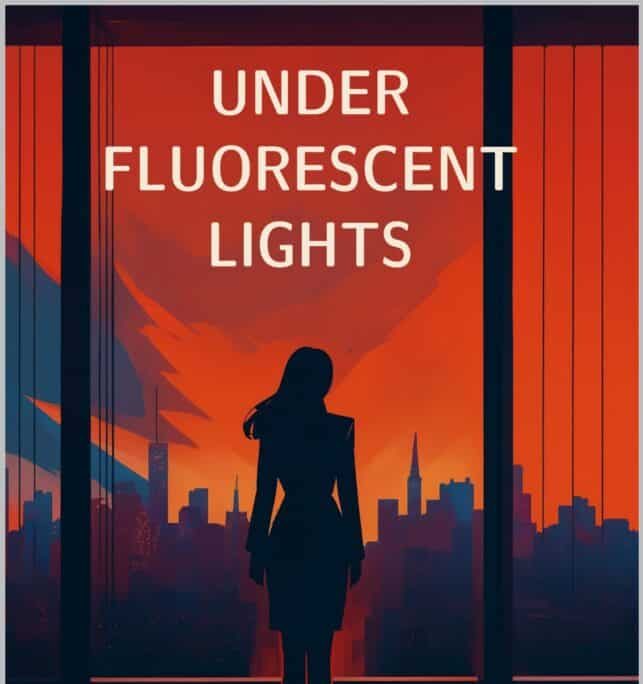
    Review: Under Fluorescent Lights

    Rafaella Sparkle, Under Fluorescent Lights (2025)

    https://www.goodreads.com/book/show/239665048-under-fluorescent-lights

    An office building in Madrid just before dawn, something stirs under the fluorescent lights. The French girl types at her desk, next to her, her bike. Like the narrator in Rebecca, her identity isn’t recognised, no one knows her well enough to call her by name—no one except Jack.

    The Opening is a bit subdued, but it lends a sense of foreboding, promising future action and intrigue, but the suspense building goes on a bit long. I was kind of expecting something bigger—some final chase scene or ticking time bomb. According to the principle of Chekhov’s Gun, I expected some excitement developing around her bike half-blocking the corridor.

    The climax promised by the foreboding in the Opening never transpires. She gets a promotion which her colleagues resent. She develops a work relationship with a male colleague in London.

    It’s rare to find a novel based almost exclusively on what happens in the office—I like that. And the story shows a deep understanding of the psychology of office politics. Each colleague shows nuanced character development. Despite the office animosity, having once been mates, Ava still sticks up for her. It might not be essential to the story, but I would have liked a bit more detail on what kind of work the company does.

    When an office romance sours, it’s always the woman who pays the price, and that’s unfortunate. But there’s a happy ending for her, after all.

    Very well written. Beautiful word choice and great pacing. I loved ‘sat like a fixed point around which chaos orbited’, ‘every scandal has a soft start’, ‘completely immersed in the sound of her own rise’, ‘walked through the doors, back into the performance’, ‘each floor smelled like printer toner and ambition’, ‘laptops tilted at identical angles’, ‘people trying to outshine their own shadows’.

  • Review: The Sinisterhood of Celebrity Psyclones

    Review: The Sinisterhood of Celebrity Psyclones

    em.thompson, The Sinisterhood of Celebrity Psyclones (Eccentric Directions 2025)

    https://www.goodreads.com/book/show/242083329-the-sinisterhood-of-celebrity-psyclones

    Where did kooky Heather Prendergast go to school?–you always wanted to know

    In a remote château in Switzerland, or somewhere, is a ‘Finishing School for Young Gentleladies’. Saint Blaizes promises to turn the daughters of the one percent from ugly ducklings into posh, poised swans, qualified for marriage to some billionaire or celeb. Suitable to ‘marry a nob and have his sprog’.

    Heather Prendergast has a burning desire to become the most famous detective in Britain since Sherlock Holmes, and she would rather be studying to be a police cadet than to be a stuck-up toff, but her rich Aunt Elizabeth—an alum of Saint Blaizes herself—made her attendance here a condition for funding Prendergast’s continued tuition at Merton Police College.

    But nefarious goings-on are going on in the cavernous caverns of the school’s basement, where an evil scientist is plotting to use the little princesses in the dorm rooms above for dastardly purposes.

    Will Prendergast, armed with her trusty Illustrated Sherlock Holmes Omnibus, foil his evil plans before she turns out in a twin set and pearls herself? Or before she herself falls victim?

    Like the rest of the Prendergast of the Yard Series, we are treated to a smorgasbord of witty writing. The characters are all as kooky as Prendergast herself, and the comedic wordplay is genius. The metaphors are all such as you’ve never seen before (‘blended in like a chirrup in a dawn chorus’, ‘a voice less cultured than a Glasgow handshake’, ‘noses in the air like meercats tasting a scent’, ‘chillier than an Englishman’s snog’, ‘trembling like a shrew at a sparrowhawk’s dinner party’), and the puns are all puns of puns. References often reflect erudite authorship, but even ignoramuses will laugh out loud.

    Though each paragraph is peppered with jokes, clever puns, cunning alliterations, funny Franglais, dotty Denglisch, mangled verbs and adjectives and word association football, the plot is ample. There is a crime, and Prendergast solves it—in her own kooky way.

    A panto dame once told me, ‘there’s no such thing as a new joke.’ But he/she/they never read em.thompson. Originality leaps from every paragraph. Another work of comic genius.

    Contains some light profanity and mild drug use, but nothing too graphic.

    I received an advance copy, and I leave this review voluntarily.