Tag: historical-fiction

  • Review: Revolution in Carcassonne

    Review: Revolution in Carcassonne

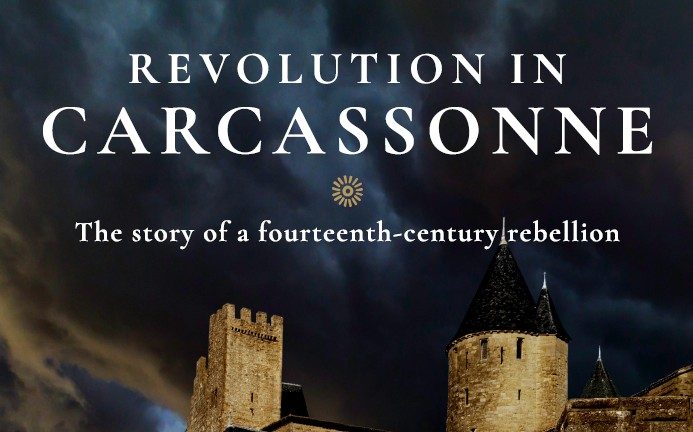
    Elaine Graham-Leigh, Revolution in Carcassonne: The story of a fourteenth-century rebellion (Whalebone Press 2025)

    https://www.goodreads.com/book/show/237965361-revolution-in-carcassonne?ref=nav_sb_ss_1_38

    The inside story of a 14th century revolution


    August 1303, 80 years after the French Crown had seized control of mediaeval Carcassonne during the Albigensian Crusade, the town rose in revolt.
    Resentment had been building for 20 years, and the townsfolk had first hoped Philip IV would address their concerns. When the king ignored them, houses of town leaders suspected of collaborating with the Inquisition were sacked (the ‘destruction of homes’); mobs freed prisoners in the prison (‘the Wall’); Dominicans, responsible for staffing the Inquisition, were taunted with cries of ‘Cohac, cohac’ (the caw of crows). Town leaders took down the king’s ‘bags’ (in which he collected merchants’ taxes) and offered suzerainty of the town to Ferran, son of the king of Majorca (a ‘Barcelona/ Aragon alternative to Toulouse and France’). Radical Franciscan priest Bernard Délicieux gave fiery sermons in the streets.
    Like her earlier The Southern French Nobility and the Albigensian Crusade, Graham-Leigh brings a complex history to life by focussing on specific individuals. The story of twelve men taking sanctuary in the Franciscan convent, accused by the Inquisition of ‘offend[ing] seriously and greatly’, culminates in the trial of Bernard Délicieux—convicted of treason in 1319. She provides a comprehensive glossary of all the individuals involved, with those who were witnesses at Bernard’s trial asterisked.
    This is a Marxist analysis, and Bernard is placed within the context of the class forces involved at the time.
    Graham-Leigh corrects some modern historians’ misunderstandings.
    Modern interpretations of the Cathars as a competing sect of Christianity need revising. ‘Catharism’ was more ‘a response to Inquisition persecution, rather than a reason for it’—persecution was not a matter of bigotry but rather ‘a ruling class strategy’. ‘Jew’ or ‘heretic’ (the name ‘Cathar’ didn’t yet exist) in the 14th century referred more to lifestyle than to identity. Witnesses at Bernard’s trial did not ‘talk about spirituality or belief’.
    Nor was the Languedoc a ‘lost Elysium’ as the troubadours would have us believe. Stephen of Tournai’s account of bands of foreign mercenaries disrupting an otherwise peaceful land is wrong; ‘feudalism itself was at issue in Languedoc’.
    The Albigensian Crusade ‘hit Languedoc with a few centuries worth of feudalisation in a few turbulent years’. With the crushing of the Carcassonne revolution, they reinforced the screws, to include other minorities and marginals—the Templars in 1307 and lepers and Jews in the 1321 hysteria, which began in Carcassonne, over the supposed ‘lepers’ plot’.
    Graham-Leigh’s superb research, which included examining original documents in Latin, shines through; and her writing style is exciting. Stories like the 1283 plot to steal the Inquisition’s registers are thrilling.
    She has a talent for expressing the gist of politics in easily comprehensible language. She outlines in clear terms the relations of base and superstructure, pointing out that the clerical ruling class underpinned the feudal system as much as the secular powers.
    The class struggle in these early years was more fighting over control of the extortion process than opposition to persecution per se. This explains why the Inquisition went after both rich and poor.
  • Review: Sensory Writing

    Review: Sensory Writing

    Val Andrews, Sensory Writing: How to Write Unforgettable Stories by Including Sensory Detail (Opal Tree Press 2024)

    https://www.goodreads.com/book/show/210910630-sensory-writing?ref=nav_sb_ss_4_15

    Using sight, hearing, smell, touch, taste and ESP to enliven your writing
    I often advise authors to ‘use sensory clues’ as an alternative to info-dumping (a writing crime of which I am especially guilty). Writing from your characters Point Of View—what are they seeing, hearing, smelling, feeling, tasting—is a great way to Show not Tell. It places the reader ‘inside the protagonist’s emotional journey’, precisely what we are trying to do with our writing.
    This book outlines everything an author needs to know.
    Sensory detail can:
    • Stimulate sensory memory
    • Activate imagination
    • Foster empathy
    • Evoke emotional resonance
    • Embody cognition and muscle memory
    • Sensory engagement and immersion
    • Increase attention
    • Enhance memory
    • Narrative presence
    • Create flow and vary Pace
    Some tips for using more sensory details:
    • Choose specific, concrete details
    • Enrich with metaphors and similes
    • Use selective focus to guide perception
    • Create dynamic descriptions
    • Symbolic use of colour
    • Weather
    • Visual contrast/harmony
    Sensory details should not be thought of as ‘additions’ but rather as ‘integral components of your story’s emotional and thematic development’.
    Use the six senses in your writing:
    • Sight
    • Hearing
    • Smell
    • Taste
    • Touch
    • The 6th sense
    Sensory writing
    Your character receives messages from their five senses and processes them. How do they respond? This is a big part of character development.
    Aim for specificity and make the experience unique to your character and appropriate for their world.
    Creating one dominant sensory experience and focussing on the emotion it invokes can ‘anchor’ a scene in the reader’s mind. Then you can add extra or contrasting experiences to add complexity. Ending a scene with a strong sensory detail is an effective device for leaving the reader with a lasting emotional impression.
    Changing sensory details can be an effective device for a shift in the Plot, and your character’s sensory experience can change as they develop emotionally. Varying longer passages with much sensory description with shorter passages with little can help to vary your Pace.
    Use sensory description to attune your character’s inner mood with their outer environment. And past events can leave sensory traces in the present—e.g. the lingering scent of gunpowder on a battlefield.
    Sensory tropes can zero in on your genre, but be wary of cliches, and subverting those tropes can provide contrast.
    Mixing the senses, e.g. using sound and colour can make your scenes more vivid or freshen up your metaphors.
    To feel real, your characters must be located somewhere on the personality spectrum. The OCEAN spectrum, Clifton Strengths model, DISC Assessment, Myers-Briggs Type Indicator and Enneagrams are different tools to use for doing this.

  • Review: Dreams of Revolution

    Review: Dreams of Revolution

    Linda J Collins, Dreams of Revolution (BookBaby 2021)

    https://www.goodreads.com/book/show/62634456-dreams-of-revolution?ac=1&from_search=true&qid=ctQU6UAHvi&rank=5

    1777 Hopewell, Pennsylvania
    15-year-old Rachel Palsgrove sneaks around the side of the furnace to peek in the window. Inside her father is molding iron—at night.
    Rachel’s wealthier friend Susanna dreams of living in a mansion. Rachel’s mother is anxious for her to find a beau, but she dreams of becoming a teacher. She goes to Philadelphia in hopes of studying at the university, defying the gentlemen-only rule, but it is closed due to the British occupation of the city.
    While waiting for news from the college, she is brutalised by a British spy and is betrayed by her best friend. She makes a daring midnight ride (actually three days) to warn Patriots in Hopewell of an impending British raid and, while her beau is imprisoned, becomes a spy for General Washington.
    I loved the references to historical American Revolution espionage, rich material for intrigue. The system—coded messages in invisible ink and coloured laundry on the line—is the same as the one historically used by Washington’s spies the Culper Ring. Rachel sweet-talks Captain Crammond the way Peggy Shippen groomed Benedict Arnold. And real historical figures like John André come into the story.
    We meet the characters in the course of their daily lives, giving us an opportunity to learn about early American lifestyles—making soap, making coal, predicting the weather by looking at the colour of the ‘woolies’ (brown bears’) fur, getting letters to relatives in other towns, the wedding customs, etc.
    I think we could have had an earlier indication that war with Britain is looming, some hints at how the characters felt about their colonial masters, perhaps. Rachel finally finds out what the men were making—cannons, defying the Iron Act—but we don’t see any Redcoats until chapter 20. I wish we could have reached the exciting bit, Mr Morris and Jesse’s arrest, earlier in the story.
    I bought this book because my sister lives in modern-day Hopewell, and I love anything having to do with revolution.
    Contains a rape, but it’s not graphic.

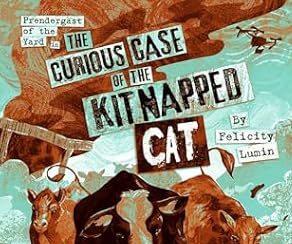
  • Review: The Curious Case of the Kitnapped Cat

    Review: The Curious Case of the Kitnapped Cat

    em.thompson, The Curious Case of the Kitnapped Cat (Eccentric Directions 2024)

    Crime fiction at its most comedic

    https://www.goodreads.com/book/show/213564034-the-curious-case-of-the-kitnapped-cat?from_search=true&from_srp=true&qid=9HpLkIRzai&rank=1

    Terrence ‘Tiny’ Bottomley, a swot in Heather Prendergast’s class at Merton Police College, answers the teacher’s question on ‘the most important weapons in a modern detective’s armoury’.
    ‘Forensics, CCTV footage, DNA analysis…’ he begins.
    Prendergast begs to disagree. She believes in ‘old fashioned gut instinct’. It may be that even her zany and filthy rich Aunt Elizabeth’s hefty bribes—I mean, donations—won’t be sufficient to get her to graduation so she can achieve her dream of becoming ‘Prendergast of The Yard’.
    Armed with her Girl Guides training and her illustrated Sherlock Holmes almanac, Prendergast’s gut instincts lead her on another madcap case, in the course of which she is ever decked in the highest-end yet most outrageously inappropriate fashion from Paris or Milan. The campus cafeteria skivvy Debb’s gran’s cat Puffball is missing, and aided by Tiny and Debbs, Prendergast goes in pursuit, wreaking hilarious havoc everywhere she goes.
    Em.thompson is a master comedic wordsmith, inventing words and phrases (‘cornerflap of pinafore’, ‘humzinger of a brainwave’, ‘bedraggled straggle of homelessness’, ‘earwigaphobia and occasional bouts of dreadheightedness’) and twisting metaphors into jokes (‘a helping hand from the long arm of the law’, ‘like impetigo on a honeydew melon’).
    Despite the non-stop witticisms, there is a proper plot, and despite Prendergast’s kooky blundering some real detecting happens.
    Move over, P G Wodehouse, Douglas Adams.

  • Review: Bruria

    Review: Bruria

    David Kurz, Bruria (2025)

    https://www.goodreads.com/book/show/236097816-bruria?ref=nav_sb_ss_2_6

    The story of Yohanan ben Zakkai through the eyes of a fictional ‘niece’


    Bruria spots suspicious campfire smoke. The Romans have destroyed Korazim, and refugees are flooding into Gamla.
    Old enough now, she accompanies her father to Tiberias, to sell wine and olive oil to Passover pilgrims. On the trip, they learn how divided is their land—zealots/pacifists, Hillelites/Shammaites, Jews/Gentiles—and they meet the lady Bereniki.
    Gamla is destroyed, and Bruria escapes to Jerusalem, where she becomes an ally to Yohanan ben Zakai. Everyone seems to expect her to ‘submit [her]self to the least obnoxious male around’, and she’s having none of it. She fights; she studies Torah; she tells grown men what to do; she orders her own beer.
    Yohanan ben Zakai was by and large THE individual responsible for the survival of rabbinic (Pharisaic) Judaism after the devastating Destruction of Jerusalem by Titus in 70 CE. Positing the protagonist within this movement makes for a fantastic story.
    This novel brings to life such heroes and anti-heroes of Jewish history as Mirta bat Boetus, Abba Sikra, Yehoshua ben Gamla and even Bereniki (the controversial mistress of Titus). The fictional characters like Bruria round out the story.
    The minor characters are numerous, which can be confusing, but that makes it realistic. As a novel, it would have worked better to put it mostly in Bruria’s point of view.
    I loved the invention of the Pathfinders, an organisation of leadership training for young people rather like the Scouts. The teenagers are full of energy, and active agents in the story. The plot is full of life.
    We get to hear up close and personal debates on the pros and cons of opposition to the Romans, as well as the religious ramifications. I loved: ‘every leader thinks he’s the greatest tactician since Judah the Maccabee’, ‘the “Just not Simon” camp’, ‘rebel Maccabees become power-hungry Hasmoneans’, ‘Pharisee Basics’.
    This lively, intimate story is a beautiful testament to some of the heroes of Judaism, a rare example of a fictional treatment of the Great Revolt and a historically accurate one, while accepting Josephus’ ‘it was all the Zealots’ fault’ analysis.
    The excitement of the war is well portrayed. I accepted Bereniki, but Bruria’s friendliness with Titus, the destroyer of Jerusalem, stuck in my craw.
    It is too long—the final chapters in Yavne especially could have been sped up—otherwise, it’s suitable for a YA readership. I would especially recommend it to Jewish young people, but all sorts will love this colourful portrayal of an ancient world and an important development in history.
    Contains killing and a rape, and some lesbian sex (not graphic).

  • Review: Death by Placebo

    Review: Death by Placebo

    Nelson K Foley, Death by Placebo (San San 2025)

    https://www.goodreads.com/book/show/230821260-death-by-placebo?ref=nav_sb_ss_1_16


    The President needs a liver donor, live or dead
    The President (dictator) of (fictional near Eastern country) Balarutan, Viktor Rachmanil, needs a liver transplant. But the patient is a ‘self-destructive denier’ and an ‘entitled demander’. Drs Rybak and Romanchuk steel themselves for dropping the bombshell with a vodka.
    Going abroad for the op might have been an option, but Rachmanil is cautious about the power vacuum he’d leave behind. The only person he listens to is his press secretary Natasha, and his ferret Snowflake, is a constant companion.
    The search is on—for a live donor or a brain-dead donor. The hospital checks out his three children as possible donors, but there is a ‘problem’ with Danica. To find a dead donor, Rachmanil contemplates ‘seeking out a suitable donor in advance’. Marcus Trubila, a member of his security service, knows what he means.
    There is an international conference of liver specialists in Vienna, and the hospital hopes to recruit foreign talent for the surgery. Danica goes along and spends time with Dr Andea Mancini.
    I do like it when plot intricacies are spelled out a bit, but the fact that the President is looking for a liver donor is repeated too, too many times.
    There’s a great twist at the end.

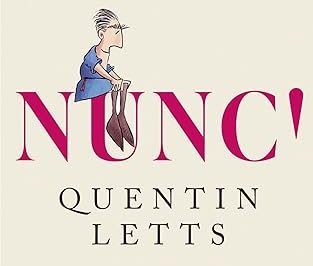
  • Review: Nunc

    Review: Nunc

    Quentin Letts, Nunc! (Constable 2025)

    https://www.goodreads.com/book/show/221179105-nunc

    This is a fictionalised retelling of ‘Nunc Dimittis’, ten verses in Luke’s Gospel about the elderly prophet Simeon who waited for the baby Jesus in the Temple. After declaring ‘mine eyes have seen thy salvation’, he can finally die in peace.
    2000 years ago, in Jerusalem, old Simeon’s wheelchair collides with a rubbish heap, providing entertainment for the occupants of Deuteronomy Square.
    It’s not plot-driven. Instead, we have a series of short stories, incidents in the lives of the inhabitants of the square, as Benjamin’s mule-cart takes us from place to place. The tone is not so much humorous as affectionate. The bits about Jesus are refreshingly devoid of the usual obligatory reverence (the magi following the star are ‘three blundering eejits’; the hiding of Joseph and Mary from Herod’s persecution is almost slapstick).
    I get the impression journalist-turned-novelist Quentin Letts, let off the leash from journalistic style constraints, is now free to use puns, emotive dialogue, juicy adjectives, colourful description, characterisation. The result is a flowering of creative expression. The characters are quirky and delicious. The settings are colourful, illuminated by almond blossoms, pistachio trees and bougainvillea. Artisans sell their aromatic wares, and merchants ply their trade.
    The blend of modern anachronisms and ancient Palestine is cute (‘Thanks, Mum, said Caleb in the voice teenagers have used since Noah’s flood’). We’re tantalised by first century intimacies (the ‘different types of Pharisee’; the problem of cleaning the Holy of Holies—‘when the high priest enters, you don’t want him smothered by cobwebs. The dust might set off his allergy’) and glimpses of people we will meet in the Gospels (that little boy next to Aretas’ verandah will grow up to crucify Jesus).
    Would also suit a YA readership. Non-Christians will love it, too.
    An adorable book, 6 stars, a real pleasure to read.
    This review first appeared in Historical Novels Review.

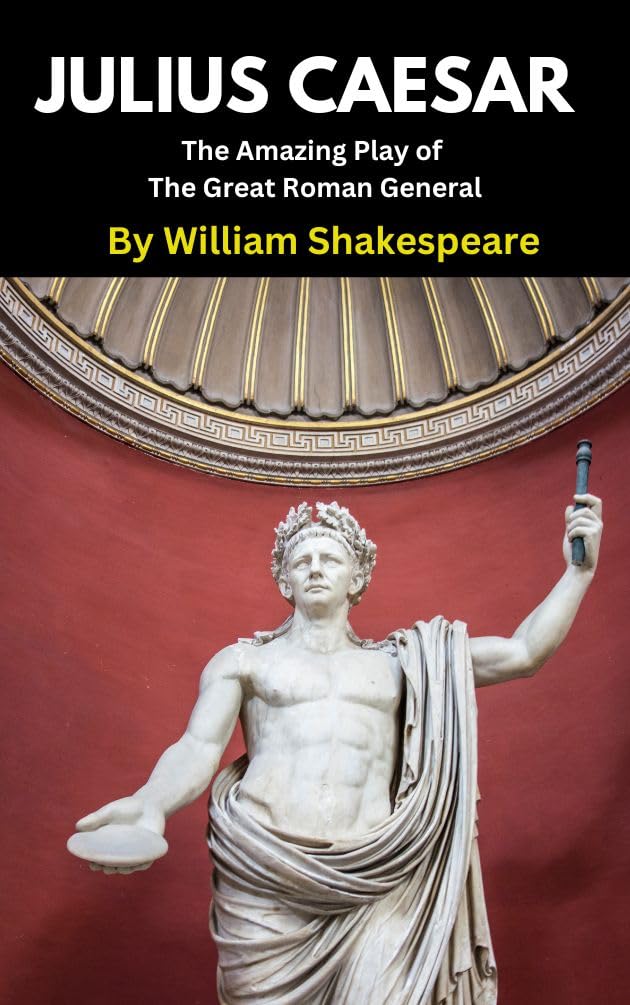
  • Review: Julius Caesar

    Review: Julius Caesar

    William Shakespeare, Julius Caesar: The Amazing Play of The Great Roman General (Kindle 2023)

    Rereading a classic masterpiece screenplay

    https://www.goodreads.com/book/show/203879797-julius-caesar


    I’m a big fan of Shakespeare—who isn’t? But not all of us loved learning it in school. I did, and Julius Caesar was always my favourite. I loved discovering the meaning behind antiquated language and appreciating the timeless plays on words.
    It’s based on real history, with which we are all familiar. It features rich interesting characters—Brutus in particular, who is conflicted, torn between his love and respect for Caesar and his devotion to the idea that Rome must have no king.
    And it’s chock full of great lines. We all know the ‘Friends, Romans, Countrymen, lend me your ears. I come to bury Caesar, not to praise him’ speech, but that’s not by any means the only memorable one. Immortal lines include: ‘the fault, dear Brutus, is not in our stars, but in ourselves’, ‘cowards die many times before their deaths; the valiant never taste of death but once’, ‘cry havoc, and let slip the dogs of war’, ‘et tu, Brute? Then fall, Caesar’, ‘I am constant as the Northern Star’, ‘the evil that men do lives after them, the good is oft interred with their bones’. And lesser known ones: ‘dwell I but in the suburbs of your good pleasure?’, ‘let us bathe our hands in Caesar’s blood, up to the elbows’, ‘whilst your purpled hands do reek and smoke’, oh, what a fall was there’, ‘this was the most unkindest cut of all’, ‘here was a Caesar, when comes such another?’, ‘mischief, thou art afoot’, there is a tide in the affairs of men’, ‘the elements so mixed in him that Nature might stand up and say to all the world, this was a man’.
    This is one of Shakespeare’s tragedies—not a comedy—and yet it’s full of witty puns that are still as funny as they were in Elizabethan days and humorous turns of phrase so gorgeous in their wordiness as only Shakespeare can do. Antony’s funeral speech is a masterclass in oratory (‘sweet friends, let me not stir you up to such a sudden flood of mutiny’), the repetition of ‘and Brutus is an honourable man’ digs the cut over and over.
    I have never understood why this play is not much performed. In contrast, Romeo and Juliet, my second favourite, has a new performance every few years.
    One drawback to reading the play verbatim is that you don’t have the CliffNotes at the side explaining every little thing. I needed those when I was in primary school, but I’m educated enough and familiar enough with Shakespearean language not now to need them.
    The challenge to actors in learning their long lines of complex monologue is balanced by the prestige of playing Shakespeare.
    In conjunction with rereading this classic masterpiece, I watched the 2014 Theatre Classics film of the play on YouTube. Thus, I managed to catch every word and every nuance.

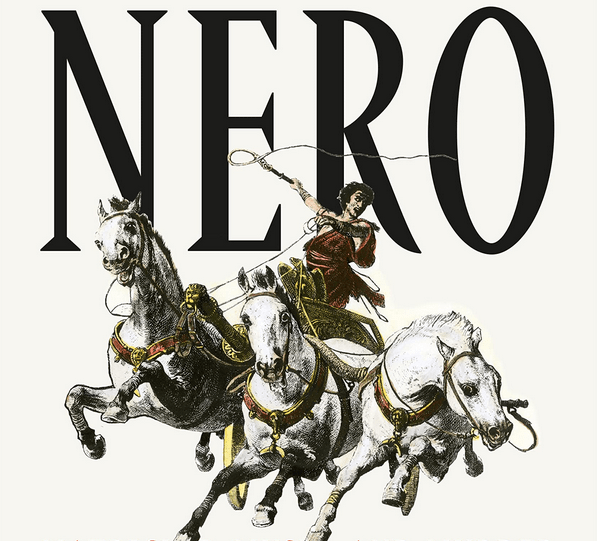
  • Review: Nero: Matricide, Music and Murder in Imperial Rome

    Review: Nero: Matricide, Music and Murder in Imperial Rome

    Anthony Everitt and Roddy Ashworth, Nero: Matricide, Music and Murder in Imperial Rome, (Random House, 2022)

    A wonderful telling of the history

    The author goes chronologically through the history of imperial Rome up to and including Nero, pointing out events and genealogies and their significance, from time to time branching off to tell a juicy story, such as when Caligula sacrificed a flamingo, leading to his assassination. Even his genitals were stabbed. Decimus Valerius Asiaticus, whose wife Caligula had slept with, said he wished he had done it.

    The structure is roughly chronological, while taking time out now and again to examine certain themes in greater detail—Roman cultural practices, the emperors’ sexual behaviours—which I thought was the perfect way to do it.

    It leaves in all the ‘dirt’ in the stories, such as the gruesome suicide of Cato the Younger, pulling out his own intestines, and doesn’t omit any of Suetonius’ slanderous gossip, so that’s great fun. Pays great attention to the ancient sources, while pointing out the political and personal prejudices of the ancient writers.

    I particularly loved the famous quips people said about people. When Caligula asked Gaius Salustius Passienus Crispus whether he had, like Caligula, slept with his sister, Passienus fudged the question with ‘not yet’. Juvenal wrote that Claudius’ third wife Valeria Messalina prostituted herself in a brothel ‘reeking of ancient blankets’. After Claudius’ death, Seneca, whom the emperor had banished to Corsica, got revenge by writing a satirical play entitled The Pumpkinification of the Deified Claudius. When a soothsayer predicted baby Nero would be emperor and would kill his mother, Agrippina said: Occidat dum imperet (He can kill me but just let him rule.) As we all know, Nero’s famous last words were ‘God, what an artist in me is dying.’

    So, was Nero a bad guy, or what? By and large, he was loved by the plebs, hated by the senators. He may as well have slept with his mother, he was so under her thumb, and he admitted openly that he murdered her. No, he probably did not set fire to Rome, though he may well have fiddled (actually, played the cithara) as it burned—that was how he generally reacted to momentous news. The stories of burning Christians are iffy. As an artist, he was monomaniacal but mediocre. As a ruler, he was no worse than many.

    See review on Goodreads.