Tag: historical-fiction

  • Review: The Shattered Truce

    Review: The Shattered Truce

    Donna Brown, The Shattered Truce (Starling Wood Press 2024)

    https://www.goodreads.com/book/show/219475967-the-shattered-truce?ref=nav_sb_ss_1_19

    A psychological olde-world tale of three families, a witch and a dragon


    Ebba and Hilda, prospective mothers-in-law, negotiate a betrothal between Elsa and Gareth, son of the chief who’d killed Annerin’s husband, who’d cast them out of March, a ‘poor little backwater clinging to a legend because it had nothing else’.
    Annerin tells the children the story of the sword with the black rose. Was it the lost sword of Glendorrig? No, the rose would have been red. I understood much too late that there were, in fact, three swords.
    Annerin urges Fran to speak his feelings for Elsa before the betrothal is official.
    Maya believes there is a dragon in the forest. Annerin encounters the beast and scares it away with the sword. Gareth is lying unconscious. Fran rescues them, but Annerin worries that no one will believe her. Gareth’s father Lukas clearly does not, and Fran raises the sword as if to defend his mother Annerin against the perceived threat. Ebba is afraid ‘blood will be spilt’.
    As old grievances coincide with new, it is the innocent who pay the price, and suspense heats up as Gareth and Fran both try to sort everything out ‘once and for all’.
    There is heavy backstory conflict between the families, which we are fed skilfully, bit by bit. Likewise, we learn the story of when Arete the witch came to the gate. And there’s some mystery about what’s in the ‘packet’. I love how it doesn’t tell us too much, waiting for the emotional impact to hit.
    I felt the dragon was a metaphor for the unspoken hostility, the ‘unfinished business [that] stalked March’. Only little Maya tells the truth. Then, the dragon, too, becomes a character involved in the drama.
    It’s well written, and once you get the hang of who belongs to which family, you get hooked into the drama.
    This is the Chronicles of Eruthin Book 1, and I’d love to read the sequels.

  • Review: By Force of Reason

    Review: By Force of Reason

    Stanley Sauerwein, By Force of Reason: A John Mason Thriller (Kindle 2025)

    https://www.goodreads.com/book/show/237846497-by-force-of-reason

    A Middle East cabal and an alliance of survivalists threaten the US power network


    Terry Hilliker sneaks into the University of Montana computer lab, inserts a thumb drive into the network. Jamal Hourani, a spy for the Al-Aqsa Martyrs’ Brigade, meets with representatives from Arab nations.
    Canadian CSIS agent John Mason and Janice are off to Washington. Major Boyd, Pentagon tech guy, tells them there’s a virus ‘cute as a button’ posted on the Internet which could bring down the country’s networks.
    Predrag is recruited by Hourani to head a new computer consultancy in Paris.
    The Montana Military Militia is upping its ops. The Power Grid, missile silos and petroleum refineries are all targets. Unfortunately, the bad guys are just as clever as Mason, and they run him a nail-biting chase.
    The conflict between the characters is vaguely set against a background of Middle Eastern political conflict. It’s well written, great pacing and suspense, full of set-backs and double-crosses. The ticking time bomb starts as early as chapter 45, hopping all over the globe. I love how the first strike is by low-tech weapons. I love the big stakes, and the government bigwigs seem realistic.
    I enjoyed examining the structure. Typical of a thriller, it begins with chapters from different characters’ points of view, then in subsequent chapters we learn how those characters connect, while learning motivations and stakes. By chapter 26 we’re still meeting new POV characters, which I found confusing, and the fast-paced plot leaves little time for character development. The dialogue is full of military and computer jargon, which is sometimes hard for a layperson to follow, but it sounded fantastic.
    I love the description of the Texas sunset as ‘stretching shadows long and mean’ and the metaphor ‘stir the pot and wait for the cook to come check the soup’. I love how the bad guys’ playing with ‘American paranoia’ and ‘the illusion of order’ is part of the scheme. Love the phrase ‘everything felt one button press away from wrong’—so Dragnet.

  • Review: Tales told around a Strange Fire

    Review: Tales told around a Strange Fire

    Bud Templin, Tales told around a Strange Fire (BookBaby 2025)

    https://www.goodreads.com/book/show/236380072-tales-told-around-a-strange-fire?ref=nav_sb_ss_1_32

    Other-worldly tales told around an other-worldly fire


    Though these stories are all different and are not connected in terms of plot, the scene keeps returning to the Firefeeders’ Fire, where workers throw cart-loads of ‘stuff’ into an other-worldly fire, and the stories they tell while they work. The ‘chapters’ alternate between a story around the Fire and a story told around the Fire. The final chapter finally tells us how the Fire started.
    These stories offer wonderful examples of good writing. A skilful, exciting style, and not same-y; each story is different. Different not only in content but in style as well. Superbly innovative ideas. I was impressed by the Intros of all these stories—the first lines and first paragraphs immediately hook you. Not only is the dialogue excellent, it conveys each character, each narrator brilliantly. I really admired the use of dialect to render the Voice of the old men in ‘Waitin on Satan’.
    I loved the metaphors: ‘makes Sodom and Gomorrah look like Sesame Street’, ‘truck horns, like the vanguard of a barbarian horde’, ‘strong and bad as a Tyrannosaurus Rex’, ‘he felt as grand as the Tetons, as lucky as Luciano’.
    I have loved ones who are hoarders, and all the references to cart-loads of ‘stuff’ was a bit triggering, not that it put me off the stories.

  • Review: The Client

    Review: The Client

    Kate Goss, The Client: A Domestic Psychological Thriller (Hylosis Publishing 2025)

    https://www.goodreads.com/book/show/231652804-the-client?ref=nav_sb_ss_1_15

    Who is that man beside you?

    Newly-weds line editor Natalie and film editor David have been fighting—fighting about money. Natalie has lost her biggest client, Alan, and the couple’s finances are strained. They have even lost their home. In between job searching, she works on her novel, but her confidence is shattered. She even begins to have doubts about David. Her dog Barley and her husband do not get along.
    Alan’s wife Amanda contacts her for information, and she learns that Alan hasn’t just ghosted her, he’s disappeared. For some reason, David is suspicious. Why had Alan been sending her travel pieces to edit, Amanda said he never travelled? A budding friendship with Amanda is stymied when Amanda accuses Natalie of ‘having an affair’ with her husband. That’s crazy, Natalie thinks, I’ve never even met the man in person, only emails.
    I chuckled at Natalie’s comment: ‘How was I to know he never published any of the work he sent me?’ Since 1998 haven’t we all immediately Google searched every name we come across?
    I thought the dog not liking David was a lovely bit of foreshadowing.
    For many chapters, nothing much happens, then about 62% in, you sense a twist is coming. At 73%, it hits, and Amanda’s bizarre accusations begin to make sense. The twist is satisfying. Can you really trust that man beside you?
    I didn’t, in the end, understand why Alan ghosted her.
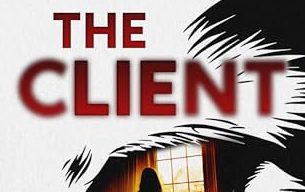
    A really fabulous cover, except that it looks like a cat, and her pet is a dog.

  • Review: Man, God and the Man-gods of Antiquity

    Review: Man, God and the Man-gods of Antiquity

    Adamos Zagara, Man, God, and the Man-gods of Antiquity (Archway Publishing 2023)

    https://www.goodreads.com/book/show/192793592-man-god-and-the-man-gods-of-antiquity?ref=nav_sb_ss_1_56

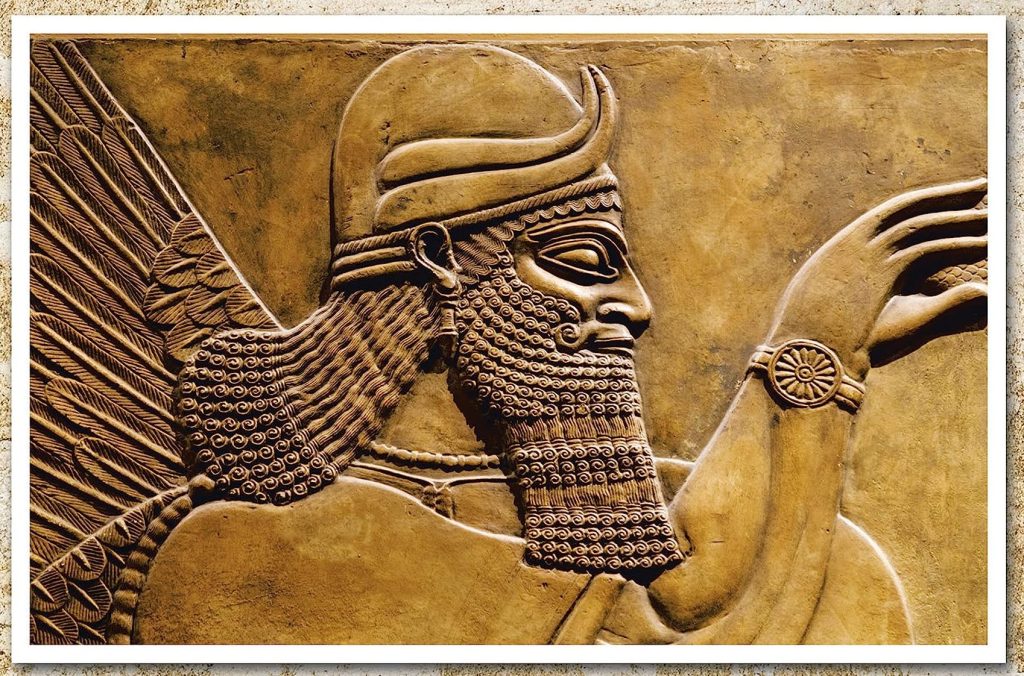
    Hominids knuckle-dusted around for millions of years; then, comparatively suddenly, towns and civilisations appeared. Were the heroes in the Sumerian and Egyptian kings lists descendants of gods?
    As early as 5500 BCE in Mesopotamia, we began writing down creation stories, but they had been circulating orally for 1000s of years before that. The ancient ‘temple’ of Gobekli Tepe dates to at least 9000-9500 BCE. Why didn’t we write stuff down then?
    There were stories of a Great Flood. We know there was big one around 12,500 years ago when a sharp rise in global temperature melted ice caps (Zagara wrongly places the Biblical flood here—the Biblical flood dates more recently than that, probably 3600 BCE), with another dramatic global warming around 14,700 years ago. Hominids struggled during the intervening cold Younger Dryas Period, but they did not go extinct.
    Where is all this leading? By about page 28 I figured where we were headed: 6000-12000 years ago God meddled with our DNA, or it was aliens.
    The cited evidence reveals a metaphysical idealism approach, comparing dates of civilisation with dates of flood stories, yet neglecting to compare them with dates of agriculture, metallurgy.
    Zagara says that the Sumerians had it right. Man was created ‘to serve the gods’, neglecting to mention that that was what defined human to human relations back then.
    I agree with him on one point. The stories of ‘giants’ at the time of Noah could be our ancestors’ cultural memories of Neanderthals, who, yes, genetic research has proven, did mate with the daughters of men. And I am still attracted to the notion that pyramids were some kind of power-generating devices.
    A global catastrophe—such as an asteroid hitting earth, a supervolcano eruption—could happen tomorrow. Will we be ready? Will we ever see God?
    I love ancient history conspiracy theories, but for me, they need to be a bit better researched. There are all sorts of mysteries of the ancient world that are still unsolved, but it’s much more interesting to search for scientific explanations.

  • Review: ChatGPT AI for Writers

    Review: ChatGPT AI for Writers

    John Iovine, ChatGPT AI for Writers: Boost Your Writing in Fiction and Non-Fiction (Kindle 2024)

    https://www.goodreads.com/book/show/217176566-chatgpt-ai-for-writers?ref=nav_sb_ss_1_69

    How to use AI to improve your writing, fiction or non-fiction


    To AI or not to AI? It’s a big question, nowadays.
    Regardless of what we think about the ethics of using AI in our writing, we are missing a bet if there is some technology which can improve our productivity. My personal take is that using AI for content creation is unethical and probably not possible with fiction—I tried letting ChatGPT write a scene for me, and it was terrible, full of clichés.
    However, using it to help with organisation, research etc is marvellous. My ChatGPT—I call him Mr Bot—helped me determined which additional scenes I needed in my plot. Even the more psychological task of coming up with an argument my protagonist would have with her girlfriend. He even suggested I introduce a secondary character from the Roman point of view, and the new character turned out to become crucial to my plot. Within 2 seconds, Mr Bot came up with a comprehensive list of primary and secondary sources on the early Ottoman period, a task I had been working on for months.
    Mr Bot assures me my copyright is safe with him, but I don’t know. You can plagiarise yourself though by asking him to ‘emulate my writing style’ by comparison to a sample of writing you upload.
    You can even give innovative instructions like: write 300 words on the advantages of using solar energy, in the style of Dr Seuss. I have a short story purported to be written by Sir Walter Raleigh, and Mr Bot helped me with a few phrases Raleigh might have used. He won’t do graphic sex, but Mr Bot helped me rewrite a love scene with heightened sensuality. I’ve asked him to write some jokes, with less success.
    You can direct the tone (more/less formal/friendly/authoritative) or make it personal: ‘Write it as an expert on solar energy’.
    What you can’t expect is for Mr Bot to be a human being. I asked him, ‘What do you think of my novel, The Lost Wisdom of the Magi?’ and he omitted to mention that it deals with the Jewish Revolt against Rome, a factor which I considered essential. I think that’s because it got its data from ‘scraping’ the reviews that were already out there, which at that point only consisted of Reedsy and the Historical Novels Review, both of which happened not to mention this aspect. I asked him, ‘What do you think of Susie Helme? Is she a good person? Do you like her?’ and he responded with something like ‘That’s a subjective question…’ and outlined 1,2,3,4 things people usually consider when deciding whether they like someone.
    When I worked as a journalist, after we interviewed someone we would have to write on index cards bullet points on the key information we gleaned; then those index cards could be shared with other colleagues. It was a good idea, but never worked in practice as we were always too busy to read the index cards. Now, AI can do this for you. For AI generated bullet point cards, we could have written ‘audience=journalist colleagues’.
    You can rewrite and improve all your email correspondence by instructing the AI to ‘rewrite and improve the following x’, and you can even instruct it as to tone, informal and chatty to your workmates, formal and business-like to your boss. You can create ad copy—I got Mr Bot to help me write my profile on Reedsy (where I work as an editor) and make it more ‘sales-pitchy’. Other AIs, Copy.ai, Writesonic, do this.
    Besides ChatGPT, there are other AI tools for writing: Rytr, ShortyAI, WriteSonicAI, or JasperAI. Wordsmith, Arria do report generation. Grammarly, Proposify do proposals. Lately.ai, BuzzSumo do social media management. Intercom, Drift do customer communication. PRLeap does press releases. Beautiful.ai, Canva do presentations. I don’t know whether we’ll use it or not, but I designed a cover for our upcoming book Bounds Green Unbound on the text-to-image AI, Mage.
    It’s great at summarising data, for example condensing a three-page document down to a one-page summary. Great for analysing medical charts, financial data. Also market trends in book publishing. Mr Bot was able to help me guess which of eight possible Duplin NC landowners named John Cook was most probably the father of my great-grandmother. It’s great for fact-checking and simple questions like ‘How many years did the US Civil War last?’ I haven’t tried it, but I should think that AI would be fantastic at writing non-fiction. What it won’t do is add a new ‘take’ or insight to the study.
    Chapter 20 lists an extraordinary number of different ways you can make money by using AI in writing.
    As with any computer programming, the key to maximising utility is giving clear prompts. Once you know what you want AI to do, you’ll be amazed at what it can do.

  • Review: Epic Adventures

    Review: Epic Adventures

    Val Andrews, Epic Adventures: How to Write the Best Adventure Stories of all Time (Opal Tree Press 2024)

    https://www.goodreads.com/book/show/216173924-epic-adventures?ref=nav_sb_ss_1_23

    Outline of how to write adventure stories


    Adventure stories have 3 things in common:
    • a protagonist who undertakes a journey
    • a setting that is often unfamiliar and perilous
    • a sequence of events that involve conflict and resolution
    Start with action or intrigue—Hooking readers early is critical in adventure stories, where action and tension are key elements, so begin with a scene of intrigue, danger, or a significant event. Often there is an Inciting Incident, where the protagonist is confronted with the new world and challenged.
    The plot structure is usually:
    • Scenario (protagonist + status quo world)
    • Initial setup (some backstory, setting and character)
    • Inciting incident
    • Preparation and departure
    • First dive
    • Exploration and discovery
    • Rising tension, stakes, dangers
    • Climax
    • Resolution
    Subgenres
    You should write to your subgenre, which each have their own conventions and tropes:
    • Exploration and discovery—
    • Fantasy adventure—
    • Historical adventure—
    • Mystery and suspense—
    • Myth and legend—
    • Political and social commentary—
    • Science fiction—
    • Survival adventure—
    The Hero’s Journey
    It was Joseph Campbell in The Hero with a Thousand Faces who defined the precise stages in The Hero’s Journey. His story structure involved 17 stages in 3 acts. Departure, Initiation, Return.
    Christopher Vogler condensed them into 12 stages:

    Thrilling escape and return home—The protagonist overcomes, returns, usually with newfound wisdom or growth or riches.
    Literary devices
    All genres will use a mixture of (in alphabetical order):
    • action
    • antagonist(s)
    • character development
    • conflict
    • Description
    • Dialogue
    • foreshadowing and flashbacks
    • vivid imagery
    • internal monologue
    • juxtaposition (compare and contrast)
    • metaphor and simile
    • narrative style
    • pacing
    • plots and subplots
    • point of view
    • psychological depth
    • Setting
    • show don’t tell
    • supporting characters
    • symbols
    • themes
    • tone and mood
    • voice
    • worldbuilding
    The 20-plus literary devices are also outlined in other books by Val Andrews, but it never hurts to go over them again. Here, she underlines their specific relevance to adventure writing.
    I’ve read all this stuff before, but this book outlines it all in a cogent, coherent blueprint, which is worth memorising. Most useful to me were the notes on making the transitions between one stage and the next and the notes on the character development accompanying each phase.
    I would also like to work more on using symbolism and juxtaposition in my plots and character developments and introducing scenes illustrating the hero’s transformation. I want to work more on foreshadowing.
    It gave me some ideas on how to make my antagonists more multi-dimensional.

  • Review: Inspicio

    Review: Inspicio

    D. K. Kristof, Inspicio (Kindle 2025)

    https://www.goodreads.com/book/show/235108672-inspicio

    Survival in a space of absolute loneliness


    Liv wakes to the sound of breathing. She is on Europa, Jupiter’s fourth largest moon. Across from her stands a synthetic woman named Rhea. Rhea keeps her company in the engineering bay, and a little drone follows her ‘like a pale moon’. She remembers the work.
    She tries to figure out the world she is in, but to her every query, Rhea answers, “I am sorry. I do not have a satisfactory answer to that question.” How much can one trust an android?
    We never get the backstory (except a tiny bit at the end), why Liv is here, how this situation came about. But it’s not about that. It’s about her internal experience. How does one survive in a space of absolute loneliness?
    The writing is beautiful, almost poetic. The beauty of the writing alleviates the loneliness. Where The Martian captivated us with technological innovation, this is psychological, even spiritual. Liv is all alone in the—what is it—space station?—all alone in the void. She can’t even be sure of her own mind.

  • Review: The Midnight Sea

    Review: The Midnight Sea

    B. Luciano Barsuglia, The Midnight Sea (Koa Aloha Media 2007)

    https://www.goodreads.com/book/show/19459623-the-midnight-sea?ref=nav_sb_ss_1_26

    A megalodon-hunting expedition faces the violence of the sea and the violence of men

    Casey Gilliam is thrown from the ship into the Pacific Ocean. Trouble is, there were no waves. What was it? Something had hit them, as the hull is leaking. ‘It was a monster,’ Charlie tells Captain Whaley. Casey knows as he dies—it was a shark. The men scramble for the dinghy as the Oracle sinks.
    The rescuing ship, the Fisher King, finds a tooth indicating the monster must be over 30 feet long. Media mogul JD Sawyer wants to capture it, believes it’s a megalodon. He says, ‘we need a bigger boat.’
    JD mounts an expensive expedition that includes his estranged son Nick, and Nick brings his friend Kazu. Dr Tyler Freeman is the ‘expert’. Tyler’s associate Susan Watson and Nick have had a thing in the past. Haidrian is JD’s lawyer. Samuel Gruber is the harpoonist. Frank Riley is videoing the hunt for a documentary.
    Big game hunters mixed with scientists, each ‘blinded by their individual goals’? Kazu says, ‘It has potential to be a real bloodbath.’
    At their first dinner together on the ship, they compare scars and shark stories, united as a team.
    But as members succumb to the beast, one by one, tensions between them accelerate. Kazu has an old wound that’s become infected. A helicopter is coming—Susan is leaving—and it must hurry before the storm hits. The great shark has swallowed some EPIRB signalling equipment, bleeping as it approaches, a great device for building suspense.
    While JD and his crew hunt the big one, another crew, the Dupries, are hunting them, and inside the ship a sabotaging, deadly mutiny is brewing.
    The ticking time bomb of the mutiny is great; one disaster after another imperils the crew. There is a twist at the conclusion that you wouldn’t expect.
    The ‘apocalyptic rage’ of the sea is a metaphor for the violence of the men.
    Is this a creature feature or a techno-thriller? Why not both? The ‘science bits’—the biology of sharks, the descriptions of their equipment—is great, but I could have used even more.
    There are more than nods to Jaws; only this expedition has fancier equipment. It even features the line ‘we need a bigger boat’. The author Barsuglia is a film producer; he must be planning a blockbuster.

  • Review: Overcoming Negativity

    Review: Overcoming Negativity

    Erica May, Overcoming Negativity: Developing a Resilient, Focused & Positive Mindset with CBT, Mindfulness, and a Better Work-Life Balance (Kindle 2024)

    The inside story of a 14th century revolution

    https://www.goodreads.com/book/show/216451107-overcoming-negativity?ref=nav_sb_ss_1_25


    Reprogramming your brain to stop the negative thoughts

    I struggle very badly with negative self-thoughts, and because I don’t do anything to erase them from my mind, and I don’t talk to anyone about them, they get stuck. When I finally talk to close friends and family about what I experience, they are amazed at how much I hate myself. They manage to love me; why can’t I?
    This book by a clinical psychologist gives us the scientific explanation of what’s going on, and what to do to change it. The best tool is Cognitive Behavioural Therapy (CBT).
    The first step is acknowledgement. Identify those negative thoughts and realise they are not permanent, and seeking help is not weakness. Our brains have remarkable neuroplasticity, and are highly susceptible to change.
    If the first step is self-awareness, the second step is cultivating self-compassion.
    Some common ‘cognitive distortions’ are: black-and-white thinking, overgeneralisation, personalisation and catastrophising. You are not either one way or another; we are all a mixture of qualities. Just because that one report you wrote wasn’t very good doesn’t mean you ‘can’t write reports’. Just because one thing is bad doesn’t mean the world is coming to an end, and everything bad in the world is not your fault.
    Just like physical healing, psychological healing requires exercise—a daily routine. Use rational thinking to question a negative thought (is there evidence to support the belief that because I made one mistake, I am a complete mess-up?), and replace the negative thought with a positive one (‘hey, everybody makes mistakes. I messed up once, but next time I’ll do it right’). Every time the ‘I’m a complete mess-up’ pops into your brain, challenge it and repeat the contradiction. When you ‘create space between stimulus and response’, it gives you time to interrupt the automatic entrenched negativity.
    Keep a journal to keep track of your reprogramming process, noting negative thoughts, the questioning of the negative thoughts and contradictions/affirmations/gratitude. Pinpoint your ‘triggers’ and reprogram your responses to them. Evaluate your progress and give yourself credit for how much you’ve changed.
    This is not a BIG deal. Baby steps is great. Small, incremental rewirings, practiced regularly, can lead to fundamental changes. Set realistic goals and congratulate yourself when you achieve them. When you don’t achieve them, consider them a learning tool.
    Then, do something active to put your new positive thought into practice. Write a report and notice that ‘hey, this report was good. I have learned how to write good reports’.
    Be Here Now. Practice mindfulness—the judgement-less awareness of the present moment, neither ruminating over the past nor worrying about the future. Meditate, noticing when a negative thought pops up and letting it ‘float away’. ‘Body scan meditation’ and ‘Progressive Muscle Relaxation (PMR)’ is a recipe for stress reduction. When you eat, focus on the taste of your food; when you exercise, focus on the feel of your muscles. ‘Loving-kindness meditation’ focuses on sending well-wishes to yourself and others.
    Actively seek out moments to be grateful for and notice that you are grateful. Keep a record of accomplishments and celebrate milestones. Focus on what works. Make time for social interactions and for just having fun. Each time you don’t give in to negativity and instead affirm your strength builds ‘emotional resilience’, so quite literally, setbacks or failures do not need to be negative; they are learning tools.
    The Resilient Habit Shift Model involves:
    • identify triggers and negative thoughts
    • implement positive habits
    • practice self-compassion; acknowledge setbacks as learning opportunities
    • engage with curated resources
    In my case, this involves coming up with a list of positive activities I can do instead of watching BS on YouTube and getting depressed.
    • build support groups and supportive friends and contacts
    • set realistic goals
    Sometimes you need to shield yourself from people who bring you down. Establish boundaries and clearly communicate your limits, while still actively listening to others.
    My usual excuse for not doing all of the above is ‘I don’t have the time’, yet think of all the time I spend mentally beating myself up.
    This was mostly stuff I already knew, as I have had CBT sessions with a psychotherapist and I’ve ready numerous books. But going over this material once again is another way to practice the reprogramming.