Tag: historical-fiction

  • Review: The Confessions of a Young Nero

    Review: The Confessions of a Young Nero

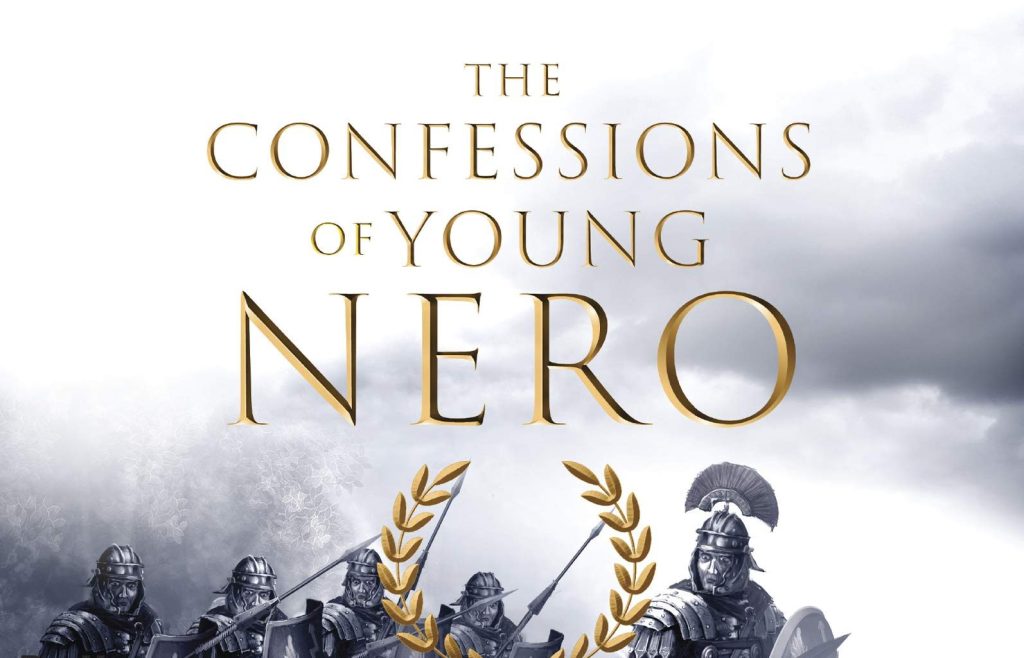
    Margaret George, The Confessions of a Young Nero, (Main Market, 2018)

    https://www.goodreads.com/book/show/63279259-the-confessions-of-young-nero

    Uneasy lies the much maligned head

    Young Lucius (Nero) is deposited age 3 with an aunt when Caligula exiles his mother. When Claudius comes to the purple, they are reunited, but the relationship is strained. He hears over and over that he is descended from the great Augustus, destined for something greater than happiness.

    When Agrippina marries Crispus, the boy is left for a while in the villa with his Greek tutors, and he experiences a period of freedom. He loves the cithara and chariot racing and everything Greek. He dreams of winning the cherished periodonikes, a victor’s crown in each of the four major Greek games.

    We see the setting and culture through the eyes of a youngster, enabling exposition without Telling through the protagonist’s viewpoint.

    With a title like The Confessions of… we expect that the book will be Nero owning up to all his sins. Did he really commit incest with his mother? Did he poison his half-brother Britannicus? It’s more a tale of justification. Nero is the narrator as well as the protagonist, so he can’t be expected to present himself in too bad a light.

    Lucius the boy Nero is utterly adorable, is respectful to slaves, does well in his schooling, obeys his mother, doesn’t use his high birth to influence unfair advantage at wrestling. Gradually, he gets an education. He witnesses his mother’s poisoning his beloved stepfather Crispus, her calculating seduction of Claudius. He’s forced to marry his sister.

    He struggles between two selves. ‘the Augustan one of public duties and Roman virtues and the Apollon one of music, art and poetry’, but where Mother comes into it, ‘a darker one emerges’.

    George says that Nero was much maligned, and unfairly so. According to this view, he was an artistic soul who was beloved by the people, if not the senators. Recently published non-fiction histories make the same point.[1] Our ancient sources—Tacitus, Suetonius, Cassius Dio—all had personal axes to grind and did not possess the modern historian’s propensity for factual truth. George’s Nero is a thoroughly nice guy, pushed into doing what he did by the debauched, corrupt, backstabbing environment he found himself in.

    The hagiographic portrayal continues in Book 2, Emperor Nero.

    If we are not chortling over the scurrilous gossip, if it’s to read fictional justifications of someone whom we know was guilty of at least some of the stuff he was accused of, is that interesting enough?


    [1] Thorsten Opper’s Nero: The Man Behind the Myth; Anthony Everitt’s and Roddy Ashworth’s Nero: Matricide, Murder and Music in Ancient Rome; Osric W Fenmere’s Nero biography.
  • Review: The Art of War

    Review: The Art of War

    Manda Scott, The Art of War, (Transworld Digital, 2013)

    https://www.goodreads.com/book/show/15799175-rome

    Rome 69 CE. The Year of the Four Emperors, treachery and intrigue around every street corner.

    Vespasian, our first narrator, is in his tent in Judaea. The spy Pantera has just foiled a would-be assassin sent by Vitellius’ brother Lucius. Vitellius had been ‘everyone’s second choice’ for emperor. Vespasian’s legions hail him Imperator. He sends Pantera to Rome to protect his son and his mistress.

    Centurion under Vitellius, Sextus Geminus, our next narrator, is promoted to the Praetorian Guards. He is ordered to kill Pantera, his friend Juvens ordered to kill Trabo.

    Trabo is the third narrator, like Pantera now an outlaw, a man loyal to the memory of Otho.

    Jocasta, ‘the Poet’, fourth narrator, summons Pantera to the house of Seneca’s widow. Both had been students of Seneca’s spycraft.

    Seven more narrators follow, each allied to one side or another. All these forces are intriguing against, spying on and double-crossing each other. All this is complicated, as Jocasta puts it: ‘Lucius thought he owned Trabo and Pantera thought that Lucius thought it while Pantera was the true owner. And I knew that Pantera thought so and was wrong.’

    There is a traitor close to Vespasian’s cause, and two different armies are marching toward Rome. There’s a price of eight sestertii on Pantera’s head as he plots sedition and subterfuge to bring Vespasian to power.

    The climax of the story, when Vespasian’s forces win him the throne, taking place, to add excitement, during the Saturnalia, is nail-biting.

    Central to the plot is the idea that there are organised ‘messenger networks’—of course, there must have been, and Scott recreates them in juicy detail. Complete with lists of undercover agents, hired assassins, under the table bribes, gutter boys all named Marcus whistling warnings from rooftops, passwords and call signs, secret letters in code, assassinated men’s heads in sacks.

    The head-hopping between narrators from chapter to chapter is confusing, but it does make the story seem immediate. We see the same scenes from multiple viewpoints.

    The five parts of this book are the five classes of spies as defined in Sun Tzu’s Art of War: local spies, internal spies, double agents, doomed spies and surviving spies.

    I was impressed that each of Scott’s four books in the series have slightly different structures. Some are third-person omniscient, some narrated. One is mostly soldiers and battles; another is mostly spies and secret messages. All are characterised by beautiful writing.

  • Book launch: All Points Imagination

    Book launch: All Points Imagination

    Book launch: All Points Imagination

    A doctor called out to a sick baby, a stranger chatting on a park bench, a warrior preparing to die for her Queen, a young couple falling in love…

    This anthology presents a range of stories told in diverse styles and voices. Across time and space, these are stories to enthral, amuse and enlighten. We’re calling at all points imagination, so let your fancy fly.

    All Points Imagination is the debut publication of Green Bounds Books, the publishing arm launched July 2025 of North London writers’ group Bounds Green Book Writers. It is available on Amazon world-wide, as ebook (£1.99/$2.99/€2.69) and paperback (£6.98/$8.49/€7.94).

    Bounds Green Book Writers comprise Susie Helme, Elaine Graham-Leigh, Rajes Bala and Mark Thompson. We don’t just sit around drinking tea; we mean business—as well as critiquing each other’s work, we have presentations and homework every month. We also publish online a ‘Writing advice and comment’ blog on creative writing techniques (https://boundsgreenbookwriters.com/category/writing-advice-and-comment/).

    Susie Helme

    07305012735

    https://boundsgreenbookwriters.com

  • Review: Seven Rivers: The Darkness

    Review: Seven Rivers: The Darkness

    B. Luiciano Barsuglia, Seven Rivers: The Darkness (Koa Aloha Media 2025)

    https://www.goodreads.com/book/show/235105617-seven-rivers

    A supernatural journey of redemption

    Cora and Gabe are fighting. She has a baseball bat; he has a gun.

    It ends badly in a devastating car accident, and she ends up at the Seven Rivers Recovery Clinic in bandages. But this is no pristine hospital, no wholesome rehab facility. It starts with the tea–they’re giving her some kind of hallucinogen–then the pain and the terror, the savage bandage changes. The place operates according to an unfamiliar set of rules, which Cora now has to work out. The other residents aren’t welcoming, either. But at least they seem to know why they are there.

    ‘Some are here for recovery; others for redemption. Why are you here?’ Lady asks.

    ‘I’m hiding out, I guess,’ says Cora.

    I liked the parallels between pain and terror, but the horror begins too soon. We need to build up to it. And there’s too little action. We start hearing about ‘the ragged pulse of her fear’ before we even see anything to be afraid of. There’s no explanation as to why she’s ended up in this place and no explanation as to why Gabe is threatening her life.

    The chapter headings read like a ‘Pilgrim’s Progress’–Integrity, Acceptance, Humility. Cora is on a journey of self-discovery and redemption about which we get no clues until page 109. She witnesses horrors. Ex-robbers in a heist gone wrong. Each room, each interaction with the other guests confronts her with the consequences of her guilty past.

    A few too many clichés for me, coupled with some phrases we don’t really know the meaning of–‘an unease that lingered like a shadow’. I liked ‘tremors that shook her very atoms’.

    I liked the Concept–a surreal environment (Purgatory?) forcing someone to accept the consequences of their past behaviour, but Cora’s psychology doesn’t really come through. The unexplainedness contributes a surreal, spooky Kafka-esque atmosphere, yet I didn’t get the sense that Cora was trying to figure it out, which was frustrating. We can’t empathise with Cora’s suffering if we don’t understand why.

    In the end, she confronts the fear of death, something I don’t see treated in many novels, surprising considering that it’s probably the biggest fear humans face.

  • Review: Detectives Roy & Roscoe Mysteries Books 1–7

    Review: Detectives Roy & Roscoe Mysteries Books 1–7

    Tony Bassett, Detectives Roy & Roscoe Mysteries Books 1–7 (The Book Folks Crime thriller and mystery 2025)

    https://www.goodreads.com/book/show/243115585-detectives-roy-roscoe-mysteries-books-1-7

    Absolutely perfect crime novels

    I congratulate Bassett on the publication of this compendium. I am a fan of his crime fiction and have read and reviewed several of the books in this collection.

    His writing is excellent, his characters colourful, and his plots are always exciting.

    What I like most about Bassett’s novels is the (what seems to me to be) realistic police procedures, the great characters and the great plots. The working lives of the characters are portrayed realistically. Bassett’s policemen have believably cop-like dialogue and avoid clichés (donuts, etc). We never lose sight of the people while the plot is gathering facts. The large cast of coppers and suspects all have inter-connecting stories, and we see fascinating peeks inside the suspects’ private lives.

    Bassett is a master of suspense. We find out the clues at the same time the detectives find them, meaning that the pacing is comfortable, slowly developing, then a rush of drama. As in real life, some of the leads don’t pan out, which gives it a true-to-real-life feel. Not everything is done by our heroine; also as in real life, there are multiple officers involved.

    We’re never given too much all at once, and usually about three-fourths into the story, just when it’s getting almost too complicated to follow, we are given a summary of the suspects, clues and alibis through the mouths of the police in a team operational briefing. So, we never have to think, ‘hang on, what was that clue back on page 23?’ Bassett is skilled at weaving necessary backstory into the dialogue. You probably get enough clues to solve the crime yourself, although I usually don’t.

    I like that his main detective, Sunita Roy, is of non-Anglo heritage, making her a little bit out of ordinary from what we’re used to. She’s an interesting woman as well as police detective. Though she’s not full of herself, she has a keen mind, and when cracks the case, it’s usually because she has done a bit of lateral thinking that her bosses haven’t considered. The crime is always solved in some innovative way.

  • Review: The Better Angels

    Review: The Better Angels

    Robin Holloway, The Better Angels (Holand Press 2025)

    https://www.goodreads.com/review/show/8009771617

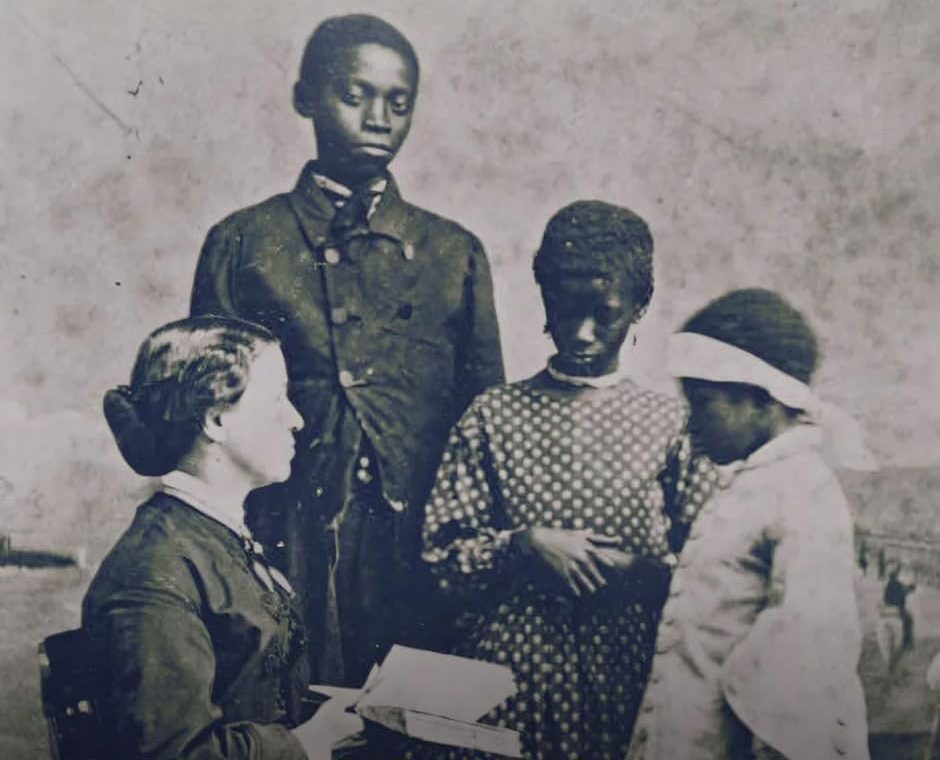
    The invasion of St. Helena Island in South Carolina by the Union forces drives away the white planters, leaving the ex-slaves considered ‘contrabands of war’, neither free nor slave.

    Northern white abolitionists like Laura Towne build a school to educate the children.

    While initially flabbergasted by the differentness of the culture and frustrated by their subservience, Laura spends her whole life loving and working in the good interests of ‘her people’.

    The ‘Port Royal Experiment’ is sincerely dedicated to bettering the lives of the ex-slaves, but there is debate on how to go about it. Some think the most important thing is to return the cotton fields to productivity and integrate the ex-slaves into the capitalist system. Laura loves and respects them, but fears for their vulnerability in the new world. Jupiter, the elegant black carriage driver, believes the blacks must fight for their freedoms.

    The first year’s cotton crop is not good, so they are ‘forced’ to list the plantations for sale. Mr Philbrick is trusted to make the initial investment, promising to offer plots to the freedmen ‘when it is possible’, but ‘possible’ keeps getting delayed. Will they get their ‘40 acres and a mule’ as promised? Will they get the vote?

    The structure is a mixture of diary entries, letters and exposition. Some of the exposition seems to be in the POV of Jupiter, but this is not clear. A very worthy subject, but as a novel, I found myself wanting a love story or some drama, or some slight fault in Laura’s angelic character.

    This is all about the psychology of oppression and the complexity of relationships when love is mixed with exploitation. It is also about angels. Fortunately, there are people on this earth and in history who dedicate their lives to making the world a better place.

    This review first appeared in Historical Novels Review.

  • Review: The Midnight Frequency

    Review: The Midnight Frequency

    Vicki Regan, The Midnight Frequency (2025)

    https://www.goodreads.com/book/show/231121146-the-midnight-frequency

    Time-travelling adventure to save the world, again and again

    Radio host Sarah Collins asks her late night audience to phone in with their ‘weirdest experiences’. Then, she has the weirdest experience of her life. She picks up a caller claiming to be a time traveller speaking from 2045 with a chilling prediction about Flight 2409. The prediction proves true, and Sarah receives more warning calls. The next one warns, ‘they’re coming for you.’

    As subsequent events prove the predictions her mysterious caller warns of, Sarah finds herself in danger from federal agents and from shadowy corporate bad guys who are trying to manipulate time for who knows what reason.

    She meets an ally, Dr Eleanor Hastings, an expert on ‘temporal anomalies’, and the two embark on a frantic mission to prevent the disasters their time traveller predicts. ‘Why me?’ Sarah wonders. Eleanor explains that her voice over the airwaves is ‘an anchor point across timelines’.

    Each time a disaster threatens, Eleanor says, ‘Let’s go save the world, again’. When they do, Sarah’s caller tells her she’s changed the timeline, ‘the future is now uncertain.’

    Timey-wimey conundrums ensue. In different timelines, different realities exist. Sarah’s mentor from the future tells her, time manipulation means ‘never being certain which version of reality you’re experiencing’.

    It’s tremendously exciting; by Chapter 2 Sarah is already running for her life and facing global destruction. The mechanics of the time traveling are more or less satisfactorily explained, though we never quite find out why the bad guys are doing this.

    The ending is quite cute, and does have a bit of finality, yet it’s open-ended enough to make you want to read Book 2.

    This novella is Book 1 in The Midnight Frequency Series.

  • Review: Among the Okapi

    Review: Among the Okapi

    John S Taylor, Among the Okapi (FriesenPress 2023)

    https://www.goodreads.com/book/show/152204115-among-the-okapi

    Memories of Africa cause ramifications for everyone back home

    The last students have left Anatomy class at Waverly College in Toronto where Fred is lab demonstrator. He’s determined to ask his head of department Dr Smith for a pay rise. An affair with the landlady Inge has not saved him from paying rent, but his mind is on a student from his hometown of Darby whom he remembered from high school, Esther.

    John Lyon is studying the sales figures of his lager-brewing company. A phone call promises that his son Jason will come home to visit. Wife Daphne is out at a meeting with the arts committee. Esther, their niece, orphaned at age 10, is staying there for a while. The two cousins have never met.

    Dr Smith commissions Fred to edit the study he did in Africa on the okapi. Esther, a vegetarian, wants to be excused from dissecting white rats. Dr Smith thinks she look familiar. Fred and Esther bond during a spot of undercover activity.

    Chapter 5, we break to quoting every other chapter from Dr Smith’s African journal—his tale of the okapi and of Alice. Every other chapter, however, goes back to the present-time narrative, so we don’t break the continuity.

    Dr Smith seems obsessed with a Mark Van Dusen, someone from the Africa days.

    These two sets of characters revolve around each other. Jason finally tells Dr Smith, ‘every time there’s been a serious problem in my family, it’s somehow connected to you.’

    The characters are all very well developed, and their histories intersect in interesting, complex ways. I would have liked a bit more enlightenment earlier on concerning Van Dusen. When we finally learn, it’s suitably astonishing, with misunderstandings all around.

    A very well written story.

  • Review: Dread: An Appalachian Horror Tale

    Review: Dread: An Appalachian Horror Tale

    David Grayson, Dread: An Appalachian Horror Tale (2025)

    https://www.goodreads.com/book/show/44288015-dread?ac=1&from_search=true&qid=gKTPYT6mDr&rank=1

    Something is stirring in the woods

    Ed awakes to deranged screams outside his cell in the Sanatorium. Fortunately his lunatic cellmate Joseph is still asleep. Ed remembers a different kind of torture in Fallujah.

    The first few paragraphs describe Ed’s life in the Sanatorium, but the Opening features interchanges between Joseph and other patients, making it more personal and more compelling.

    On page 16, we get the first hint of some horror, the mention of ‘lights in the woods’. The suspense builds from there. First, the monthly supplies of food and medicine didn’t arrive. The truck is discovered empty, the driver missing. The guards are behaving strangely. A series of events begins, which might otherwise be just normal glitches in the daily routine. But they build. Meanwhile, Ed flashes back to Fallujah.

    I was rather annoyed that the bad guys were never explained. Were they zombies? Why were they attacking the Sanatorium?

    Otherwise, this is an easy-to-digest novella, a lovely bit of horror just before bedtime.

  • Review: The Watchers

    Review: The Watchers

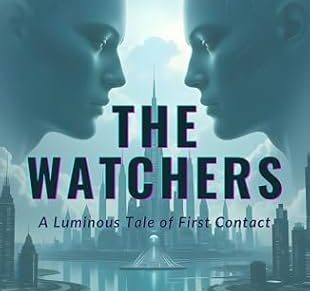
    V. M. Andrews, The Watchers: A Story of First Contact (2025)

    https://www.goodreads.com/review/show/7984314563

    A spooky, metaphysical portrayal of First Contact

    I chose this book because I found interesting the treatment of First Contact from the ET’s point of view.

    This poses a problem, though. Sci-fi necessitates a world-building before we can suspend disbelief. Here, the aliens are the status quo; they have no need to explain themselves. So, we are left with descriptions of how the Earth looks to them and aphorisms such as ‘We arrive as we have always arrived’ before we really understand what’s going on. This allows for some beautiful, dream-like writing, yet makes for a vague, rather confusing Opening. And it continues.

    I like the idea of the alien invasion as, not a single noteworthy event, but rather something gradual, a ‘continuity threaded through their myths’. The Watchers are ‘gardeners, archivists, architects of memory’.

    It’s not really a novel or novella, more like a poem. The language is absolutely beautiful, and metaphysically, it introduces some fascinating concepts, but I found the absence of storyline exhausting.

    There an outcry in the publishing industry over the use of AI. Intriguingly, this author admits to using it, not to ‘replace’ her creativity but as ‘a part of’ it. So far, I’m of that opinion myself.

    Each chapter features a beautiful spooky-looking colour illustration.