Tag: health

  • Review: The Midnight Frequency

    Review: The Midnight Frequency

    Vicki Regan, The Midnight Frequency (2025)

    https://www.goodreads.com/book/show/231121146-the-midnight-frequency

    Time-travelling adventure to save the world, again and again

    Radio host Sarah Collins asks her late night audience to phone in with their ‘weirdest experiences’. Then, she has the weirdest experience of her life. She picks up a caller claiming to be a time traveller speaking from 2045 with a chilling prediction about Flight 2409. The prediction proves true, and Sarah receives more warning calls. The next one warns, ‘they’re coming for you.’

    As subsequent events prove the predictions her mysterious caller warns of, Sarah finds herself in danger from federal agents and from shadowy corporate bad guys who are trying to manipulate time for who knows what reason.

    She meets an ally, Dr Eleanor Hastings, an expert on ‘temporal anomalies’, and the two embark on a frantic mission to prevent the disasters their time traveller predicts. ‘Why me?’ Sarah wonders. Eleanor explains that her voice over the airwaves is ‘an anchor point across timelines’.

    Each time a disaster threatens, Eleanor says, ‘Let’s go save the world, again’. When they do, Sarah’s caller tells her she’s changed the timeline, ‘the future is now uncertain.’

    Timey-wimey conundrums ensue. In different timelines, different realities exist. Sarah’s mentor from the future tells her, time manipulation means ‘never being certain which version of reality you’re experiencing’.

    It’s tremendously exciting; by Chapter 2 Sarah is already running for her life and facing global destruction. The mechanics of the time traveling are more or less satisfactorily explained, though we never quite find out why the bad guys are doing this.

    The ending is quite cute, and does have a bit of finality, yet it’s open-ended enough to make you want to read Book 2.

    This novella is Book 1 in The Midnight Frequency Series.

  • Review: Among the Okapi

    Review: Among the Okapi

    John S Taylor, Among the Okapi (FriesenPress 2023)

    https://www.goodreads.com/book/show/152204115-among-the-okapi

    Memories of Africa cause ramifications for everyone back home

    The last students have left Anatomy class at Waverly College in Toronto where Fred is lab demonstrator. He’s determined to ask his head of department Dr Smith for a pay rise. An affair with the landlady Inge has not saved him from paying rent, but his mind is on a student from his hometown of Darby whom he remembered from high school, Esther.

    John Lyon is studying the sales figures of his lager-brewing company. A phone call promises that his son Jason will come home to visit. Wife Daphne is out at a meeting with the arts committee. Esther, their niece, orphaned at age 10, is staying there for a while. The two cousins have never met.

    Dr Smith commissions Fred to edit the study he did in Africa on the okapi. Esther, a vegetarian, wants to be excused from dissecting white rats. Dr Smith thinks she look familiar. Fred and Esther bond during a spot of undercover activity.

    Chapter 5, we break to quoting every other chapter from Dr Smith’s African journal—his tale of the okapi and of Alice. Every other chapter, however, goes back to the present-time narrative, so we don’t break the continuity.

    Dr Smith seems obsessed with a Mark Van Dusen, someone from the Africa days.

    These two sets of characters revolve around each other. Jason finally tells Dr Smith, ‘every time there’s been a serious problem in my family, it’s somehow connected to you.’

    The characters are all very well developed, and their histories intersect in interesting, complex ways. I would have liked a bit more enlightenment earlier on concerning Van Dusen. When we finally learn, it’s suitably astonishing, with misunderstandings all around.

    A very well written story.

  • Review: Dread: An Appalachian Horror Tale

    Review: Dread: An Appalachian Horror Tale

    David Grayson, Dread: An Appalachian Horror Tale (2025)

    https://www.goodreads.com/book/show/44288015-dread?ac=1&from_search=true&qid=gKTPYT6mDr&rank=1

    Something is stirring in the woods

    Ed awakes to deranged screams outside his cell in the Sanatorium. Fortunately his lunatic cellmate Joseph is still asleep. Ed remembers a different kind of torture in Fallujah.

    The first few paragraphs describe Ed’s life in the Sanatorium, but the Opening features interchanges between Joseph and other patients, making it more personal and more compelling.

    On page 16, we get the first hint of some horror, the mention of ‘lights in the woods’. The suspense builds from there. First, the monthly supplies of food and medicine didn’t arrive. The truck is discovered empty, the driver missing. The guards are behaving strangely. A series of events begins, which might otherwise be just normal glitches in the daily routine. But they build. Meanwhile, Ed flashes back to Fallujah.

    I was rather annoyed that the bad guys were never explained. Were they zombies? Why were they attacking the Sanatorium?

    Otherwise, this is an easy-to-digest novella, a lovely bit of horror just before bedtime.

  • Review: The Watchers

    Review: The Watchers

    V. M. Andrews, The Watchers: A Story of First Contact (2025)

    https://www.goodreads.com/review/show/7984314563

    A spooky, metaphysical portrayal of First Contact

    I chose this book because I found interesting the treatment of First Contact from the ET’s point of view.

    This poses a problem, though. Sci-fi necessitates a world-building before we can suspend disbelief. Here, the aliens are the status quo; they have no need to explain themselves. So, we are left with descriptions of how the Earth looks to them and aphorisms such as ‘We arrive as we have always arrived’ before we really understand what’s going on. This allows for some beautiful, dream-like writing, yet makes for a vague, rather confusing Opening. And it continues.

    I like the idea of the alien invasion as, not a single noteworthy event, but rather something gradual, a ‘continuity threaded through their myths’. The Watchers are ‘gardeners, archivists, architects of memory’.

    It’s not really a novel or novella, more like a poem. The language is absolutely beautiful, and metaphysically, it introduces some fascinating concepts, but I found the absence of storyline exhausting.

    There an outcry in the publishing industry over the use of AI. Intriguingly, this author admits to using it, not to ‘replace’ her creativity but as ‘a part of’ it. So far, I’m of that opinion myself.

    Each chapter features a beautiful spooky-looking colour illustration.

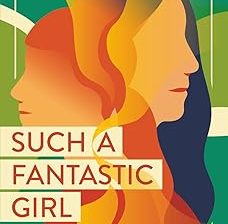
  • Review: Such a Fantastic Girl

    Review: Such a Fantastic Girl

    E. D. Rich, Such a Fantastic Girl (2025)

    https://www.goodreads.com/book/show/240943127-such-a-fantastic-girl

    Sara was a great mom, until she wasn’t. Now she wants to rebuild broken bridges

    Sara, age 42, is in therapy. She wants to look at why she put herself first, above her children, why she ‘doesn’t feel like a Grade A Asshole’. As a doctor, she’d taken an oath to ‘do no harm’, but she had done harm, to people she loved. All her life she’d been ‘such a fantastic girl’, but then something knocked her back.

    Her children, Jen and Bryan, weigh in. Jen recalls when the family got a horse. Bryan recalls when Mom ‘shut down on doing mom-type things’. Husband Rob knows exactly when it happened. It was the miscarriage. After two years of distancing herself from her family, Sara drops a bombshell. She is joining Doctors Without Borders, in Africa, alone. A divorce follows naturally.

    Jen is dangerously anorexic; Bryan pulls out his eyelashes and cries in bed every night. Sara pays a surprise visit home, and the kids don’t want to see her.

    Eventually, everyone moves on, goes into therapy, finds a new partner.

    The story traces the psychological development of all the characters, tracing forward from the miscarriage, and tracing backward to the early relationship, when it was all ‘babies, puppies, kittens, rainbows’.

    The teenagers are nuanced, and their voices sound authentically young. As they mature, they begin to have more grown-up analyses of their lives. I was fascinated by Jen’s self-talk technique that helped her improve her running. I liked the incorporation of text messaging. I liked Rob’s idea of offering Sara ‘prompts’ to aid her in rebuilding rapport with the kids.

    It’s a pretty ordinary story; it becomes a little bit ‘and-then-one-more-thing-happened’. Though this is a not-uncommon structure for family sagas, I kind of wanted some overarching theme or some big plot twist. Yet it’s poignant how a very ordinary occurrence, a miscarriage, which happens to couples all the time, could be the catalyst for a whole family to fall apart. I was glad to see someone talking about how emotionally devastating a miscarriage is; it is a little-recognised tragedy. Reading this book has helped me with my guilt feelings about all the mistakes I made as a mom.

    This review first appeared in Reedsy Discovery.

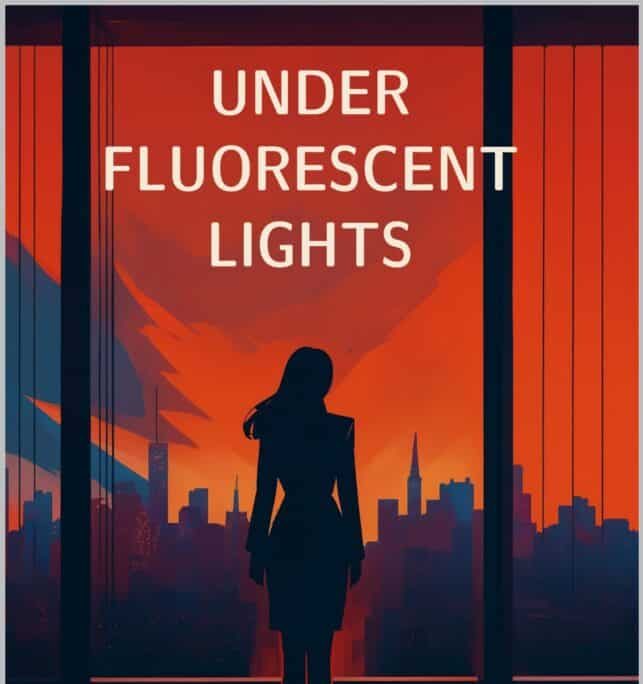
  • Review: Under Fluorescent Lights

    Review: Under Fluorescent Lights

    Rafaella Sparkle, Under Fluorescent Lights (2025)

    https://www.goodreads.com/book/show/239665048-under-fluorescent-lights

    An office building in Madrid just before dawn, something stirs under the fluorescent lights. The French girl types at her desk, next to her, her bike. Like the narrator in Rebecca, her identity isn’t recognised, no one knows her well enough to call her by name—no one except Jack.

    The Opening is a bit subdued, but it lends a sense of foreboding, promising future action and intrigue, but the suspense building goes on a bit long. I was kind of expecting something bigger—some final chase scene or ticking time bomb. According to the principle of Chekhov’s Gun, I expected some excitement developing around her bike half-blocking the corridor.

    The climax promised by the foreboding in the Opening never transpires. She gets a promotion which her colleagues resent. She develops a work relationship with a male colleague in London.

    It’s rare to find a novel based almost exclusively on what happens in the office—I like that. And the story shows a deep understanding of the psychology of office politics. Each colleague shows nuanced character development. Despite the office animosity, having once been mates, Ava still sticks up for her. It might not be essential to the story, but I would have liked a bit more detail on what kind of work the company does.

    When an office romance sours, it’s always the woman who pays the price, and that’s unfortunate. But there’s a happy ending for her, after all.

    Very well written. Beautiful word choice and great pacing. I loved ‘sat like a fixed point around which chaos orbited’, ‘every scandal has a soft start’, ‘completely immersed in the sound of her own rise’, ‘walked through the doors, back into the performance’, ‘each floor smelled like printer toner and ambition’, ‘laptops tilted at identical angles’, ‘people trying to outshine their own shadows’.

  • Review: The Sinisterhood of Celebrity Psyclones

    Review: The Sinisterhood of Celebrity Psyclones

    em.thompson, The Sinisterhood of Celebrity Psyclones (Eccentric Directions 2025)

    https://www.goodreads.com/book/show/242083329-the-sinisterhood-of-celebrity-psyclones

    Where did kooky Heather Prendergast go to school?–you always wanted to know

    In a remote château in Switzerland, or somewhere, is a ‘Finishing School for Young Gentleladies’. Saint Blaizes promises to turn the daughters of the one percent from ugly ducklings into posh, poised swans, qualified for marriage to some billionaire or celeb. Suitable to ‘marry a nob and have his sprog’.

    Heather Prendergast has a burning desire to become the most famous detective in Britain since Sherlock Holmes, and she would rather be studying to be a police cadet than to be a stuck-up toff, but her rich Aunt Elizabeth—an alum of Saint Blaizes herself—made her attendance here a condition for funding Prendergast’s continued tuition at Merton Police College.

    But nefarious goings-on are going on in the cavernous caverns of the school’s basement, where an evil scientist is plotting to use the little princesses in the dorm rooms above for dastardly purposes.

    Will Prendergast, armed with her trusty Illustrated Sherlock Holmes Omnibus, foil his evil plans before she turns out in a twin set and pearls herself? Or before she herself falls victim?

    Like the rest of the Prendergast of the Yard Series, we are treated to a smorgasbord of witty writing. The characters are all as kooky as Prendergast herself, and the comedic wordplay is genius. The metaphors are all such as you’ve never seen before (‘blended in like a chirrup in a dawn chorus’, ‘a voice less cultured than a Glasgow handshake’, ‘noses in the air like meercats tasting a scent’, ‘chillier than an Englishman’s snog’, ‘trembling like a shrew at a sparrowhawk’s dinner party’), and the puns are all puns of puns. References often reflect erudite authorship, but even ignoramuses will laugh out loud.

    Though each paragraph is peppered with jokes, clever puns, cunning alliterations, funny Franglais, dotty Denglisch, mangled verbs and adjectives and word association football, the plot is ample. There is a crime, and Prendergast solves it—in her own kooky way.

    A panto dame once told me, ‘there’s no such thing as a new joke.’ But he/she/they never read em.thompson. Originality leaps from every paragraph. Another work of comic genius.

    Contains some light profanity and mild drug use, but nothing too graphic.

    I received an advance copy, and I leave this review voluntarily.

  • Review: The King and the Sage

    Review: The King and the Sage

    George Zarkadakis, The King and the Sage (Feline Quanta 2025)

    https://www.goodreads.com/review/show/7953675109

    A gem, an exotic tale set in ancient Seleucid India

    The king is Menander I Soter (reigned 160-135 BCE), conqueror of the Punjab, not Meander the Greek playwright. The sage is the Buddhist monk Nāgasena. Their historic meeting was the subject of the Buddhist tract Milindapañha (Questions of Milinda). This is the India of the Seleucids, which I have never read another book about.

    Our narrator is Plato, not the Greek philosopher. Plato grows up feeling that his father Megacles has thwarted his chance for a good life. He wouldn’t let him attend the Academy, where Plato could have developed his innate talent for languages. But Megacles hopes for fame and remuneration for his magnum opus, a ‘true story’ about his trip—to the Moon. On the Moon—he saw them—lived ‘green-skinned giants that exhaled hot steam out of their nostrils, four-armed walruses with transparent tusks who rode on buffaloes day and night, hairy bugs with human bosoms who spoke three languages at once, and plant-people with mouths in their hands’.

    Plato and his father independently have drunken evenings which overlap with larger events happening around them and set them off on new adventures. When Buddhist sages come to town, to bring the Dharma to King Menander, their prospects improve.

    Plato has adorable insights on the differences between Indian and Greek cultures, looking up to the Greeks. I loved the primitive explanations of scientific phenomena. I adored the childhood memory of his father seizing members of the Agora crowd to stage his impromptu plays.

    Seleucid India was so unfamiliar to me that it took me a while to get my bearings. The character is something unusual to me, an Indo-Greek monk, yet his personality shines through, and we feel his emotions from page one. The character of Megacles is wonderful, too.

    The introduction of Buddhist ideas works well, expressed in the context of the lovely story of Nāgasena and the king, but Plato, individually, experiences a sort of nirvana as he gains closure on the events in his life and himself embraces Buddhism.

    The denouement and climax is just fabulous—with Sagala under threat, Plato’s newfound spiritual composure and Megacles’ inventiveness save the day. As well as the magical ending.

    Sumptuous writing, lightly humorous, full of myths and adventures, with beautiful descriptions and metaphors. Sagala, his hometown, is as ‘the ruby in the bellybutton of India’. The rhythmic movements of sex are ‘like those made by shoals of jellyfish as they pulsate through the seas’.

    A lovely, exotic tale, completely unique.

    I received an advance review copy for free, and I am leaving this review voluntarily.

  • Review: Kings of Stone

    Review: Kings of Stone

    R. Jay Driskill, Kings of Stone (Kindle 2025)

    https://www.goodreads.com/book/show/238611948-kings-of-stone?ac=1&from_search=true&qid=3QW3b2ReEP&rank=2

    Everything we know about the Hittites

    The civilisation of the Hittites, who flourished 1650-1180 BCE in Anatolia, has been shrouded in mystery. Archaeologist Archibald Henry Sayce in 1872 was the first to recognise that the Anatolian carvings on stone represented a distinct, hitherto forgotten culture.

    During the following centuries there have been a number of illuminating archaeological discoveries, notably the decipherment of their early Indo-European language Luwian, which had its breakthough with the discovery in 1946 of the ‘Hittite Rosetta Stone’, the 8th century BCE Karatepe bilingual inscription.

    Hittite studies have been complemented by the Amarna letters from Egypt, Ugaritic archives from Syria and Mycenaean Linear B tablets.

    Archaeologist Driskill outlines what we know about the Bronze Age superpower, from their origins in Anatolia 2300-2000 BCE [debated] to the zenith of their power in the 13th century BCE to their collapse during the Sea Peoples period. Suppiluliuma II (ca. 1207-1180 BCE) was the last documented Hittite king, but the capital Hattuša, intriguingly, was abandoned not destroyed.

    They called their own language Nesili and themselves ‘people of the land of Hatti’, after the non-Indo-European non-Semitic Hattians, whom they had either assimilated or conquered and whose double-headed eagle symbol and chief deities they adopted. Some of the prayers and rituals were conducted in Hattian. Onomastic (placenames) evidence points to a bilingual culture, with borrowing from Sumerian and Akkadian. ‘Hittite cultural development was one of creative synthesis rather than… separation.’ With distinct cultural boundaries (gods were localised) but with extensive borrowing.

    The Hittite Law Code 1650-1500 BCE, as compared to its harsher contemporary Code of Hammurabi, stressed compensation rather than ‘eye for an eye’ punishment. Their pragmatic and accommodating approach to statecraft and diplomacy established precedents across the ancient world. They played a pioneering role in the development of iron (which they called ‘black metal’) metallurgy.

    It charts the history century by century—dry, academic stuff, kings and dates and footnotes, but if you want to learn about the Hittites, it does the business in a cogent style. It goes through it all, language, kingly succession, governmental structures, religious pantheon, trade, agricultural practices and cultural and artistic trends.

    I love how each chapter, representing a particular period, is illustrated by a choice artefact. They are in colour, but I wish the photos were a bit larger, and I would like to have read a description of the object, where it was found etc.

    I received an advance review copy for free, and I am leaving this review voluntarily.

  • Review: Megalith: Studies in Stone

    Review: Megalith: Studies in Stone

    Hugh Newman et al, Megalith: Studies in Stone (Wooden Books 2018)

    https://www.goodreads.com/book/show/56302910-megalith

    This book features chapters by eight different authors on the astroarchaeology of megaliths and stone circles.

    Much can be said about Stonehenge, for example. Astroarchaeology-wise, it’s interesting that the entrance in 3150 BCE was aligned to the Northern-most moonrises, and it was later reoriented to midsummer sunrises. This perhaps indicates a shift from ‘moon worship’ (which may be a misnomer) or at least an accommodation of solar astronomy with lunar astronomy.

    The solar year is 365.242 days, and the lunar month is 29.531 days with 12 7/19 moons per year. On the days when they overlapped, there would be an eclipse. These numbers can be found in several of the constructions. There are 19 bluestones. The ratio of the diameter of the Aubrey Circle to that of the Sarsen Circle is 7/19. Even if one discards Thom’s Megalithic Yard Theory, using our modern inches the circumference of the Aubrey Circle = 10785.82 inches = 365.24 x 29.53 days = solar year x lunar month.

    Some of these number concurrences may be coincidence, but it’s hard to disregard the numerous alignments. Mayday sunrise as viewed from Glastonbury Tor rises over Avebury. Numerous sites are located on the lines running N-S from Isle of Man to Isle of Wight and E-W from Bury St Edmunds to St Michael’s Mount. These lines cross at Avebury.

    I got a bit lost in the maths and geometry, and I did baulk at some of the claims. How would the Neolithic builders of Avebury have known its precise latitude between the pole and the equator? How could measurements of sites in Britain which correspond to measurements of the Great Pyramid be more than coincidence? I’m not sold on the Megalithic Yard theory.

    But like everyone on earth today I am still astounded by the scale of the construction. Stonehenge took 12 million manhours to build. It’s astounding enough that they could predict eclipses that long ago. The stone circles seem to chart intricate astronomical knowledge gleaned over many generations. Göbekli Tepe (9000-7500 BCE) was aligned to the rising of Orion, which has a 25,800 yr cycle.