Tag: god

  • Review: The October Horse

    Review: The October Horse

    Colleen McCullough, The October Horse (Simon & Schuster 2002)

    https://www.goodreads.com/book/show/6474349-the-october-horse

    In Egypt, Ptolemy’s eunuchs present Caesar with the head of Pompey; he is outraged. The high priest of Ptah in Memphis sends Caesar a dingy old mat. Unrolled, it reveals you-know-who.
    The Nile has failed two years running; to bring the floods, Pharaoh Cleopatra must conceive a child, and she puts the proposition straight to Caesar. Caesar, vastly undermanned, wins a war with the anti-Cleopatra cabal in Alexandria. Six months pregnant Cleopatra takes Caesar on a cruise down the Nile, and he is taken into the Treasury vaults.
    The civil war between Caesar and Pompey works its way across the empire, the gradually victorious Caesar impressing his enemies with his clemency. Cilicia, Asia Province, Bithynia, Pontus, Galatia, Cimmeria and Cappadocia are pacified, and Caesar puts an end to tax farming.
    Cleopatra bears a son. Cato and Bibulus are proscribed, and their furniture is being seized. Brutus and his daughter Porcia fall into each other’s arms, and he promises to buy up Cato’s property to return to her.
    Caesar fights Labienus, Metellus Scipio, the Republicans and King Juba at Thapsus. It is an absolute rout. Cato falls on his sword, not very successfully and so very gory, with all his intestines out. Miraculously, surgeons manage to stitch him up, but, in a frenzy, he tears out his stitches to yank out his own intestines. Juba falls on his sword, and Caesar auctions off all his land.
    Caesar appoints 300 new senators, some Gauls. Caesar slaughters Labienus and young Gnaeus Pompey’s forces. Brutus divorces Claudia and marries Porcia. The 22 men now in the Kill Caesar Club recruit Brutus. On the Ides of March, his is the final blow, in the groin. But Rome does not laud them as liberators.
    The rest follows, in great detail, Caesar’s funeral and its aftermath, the war between the Liberators and the Triumvirate, culminating in the Battle of Philippi.
    The plot follows a mere six years of Roman history, October 48 BCE to December 42 BCE and seems to cover absolutely everything that happened during those years. Authorial imagination is marvelous, and the fictional elements are woven into historical facts so deftly that you feel like you’re right there. The detail is absolutely incredible—the daily routines of a Roman patrician and his clients, the precise logistics and costs of feeding a legion, family life.
  • Review: Caesar’s Women

    Review: Caesar’s Women

    Colleen McCullough, Caesar’s Women (Avon Books 1997)

    https://www.goodreads.com/book/show/3417.Caesar_s_Women?ac=1&from_search=true&qid=adqswMJf95&rank=1

    The first of Caesar’s women on the scene is Servilia, fussing over teenaged Brutus on the way to visit Aurelia, mother of Julius Caesar and Julia. Julia, only eight years old, is pretty and charming, and Brutus begs his mother to petition for her hand in marriage. Brutus has a liking for Uncle Cato, who is too low-born for Servilia’s liking. Into their company strides Caesar, fresh from Spain.
    Servilia proposes a betrothal between Brutus and little Julia, while the parents begin an affair. 100 pirate war galleys attack Rome’s port of Ostia, steal the grain ships and capture two praetors. To great acclaim, the Plebs commission Pompey with imperium to tackle piracy in all the oceans, which he accomplishes admirably.
    The plot moves through the Catiline Conspiracy, the Vettius Affair, a campaign against King Tigranes of Armenia. As well as Julius Caesar and his family, Pompey Magnus and Publius Clodius feature heavily. Caesar’s enmity with Marcus Porcius Cato continues.
    I can’t possibly summarise the plot. The plot is ten years of Roman history (68BCE-58BCE), told from up close and personal. The detail is amazing. The precise method the Vestal Virgins used for storing wills. The ‘ripe and shady’ ladies Sempronia Tuditani and Palla ‘gave the best fellatio in Rome’. Lucullus ‘experimented with soporific and ecstatic substances’. Julius Caesar drank no wine’. Did Brutus really have bad acne? Was Pompeia Sulla really terrible in bed? Was Cato really afraid of spiders and his sister Porcia of beetles? McCullough either has a rich imagination, or she was there herself, reading the wall graffiti. Either way, Roman history really comes to life. The rendering of the ins and outs, ups and down of Roman politics reveals a deep understanding not just of Roman history but of human character.
    It is Julius Caesar’s Voice we hear, a lot of the time, a difficult proposition for a character whom everyone knows was such a tough cookie.
    The cast of characters, each with a complex name, genealogy and familial and political affiliation, would be as daunting as in the first two books, if it were not that this Book 3 of the series largely zooms in on the stories of Caesar’s women.
    There is excellent weaving of backstory into the dialogue and details of history into intimate and sometimes wittily chatty letters from one person to another.
    It is TOO long—964 pages! but if you love Roman history, it’s a must read, though after about page 600, it becomes a bit long.

  • Review: The Jews of Sing Sing

    Review: The Jews of Sing Sing

    Ron Arons, The Jews of Sing Sing (Barricade Books 2008)

    https://www.goodreads.com/book/show/3883385-the-jews-of-sing-sing?ac=1&from_search=true&qid=KmHwLzAvWY&rank=1

    After both Ron Arons’ parents died of cancer within eighteen months of each other, he decided to learn more about his family history.
    He went through the accumulation of family postcards, letters, papers and documents in Cyrillic, Yiddish and English, in the attic. Hoping for love letters, he instead found a puzzle. Three conflicting birthplaces were featured for his great grandfather on his mother’s side, and his name was listed differently in different documents.
    The discovery of an 1881 census in the LDS Library led to a revelation, a reason as to why records had been falsified. Isaac had two wives, Ida and Minnie, who both accused him and sent him to Sing Sing (New York’s notorious prison) for bigamy, a merry chase which reads like an episode of the Keystone Cops.
    This discovery explained some strange experiences from Arons’ childhood. Once when he had been a bad boy, he told his grandmother she’d have to ‘send him to Sing Sing’, and she shushed him, saying mention of the word would ‘upset’ his grandfather. When she annoyed him, he was wont to cry, ‘Minah, Minah’ which Arons now recognised as a corruption of ‘Minnie’. His grandfather was threatening his wife that if she didn’t please him, he’d take another woman.
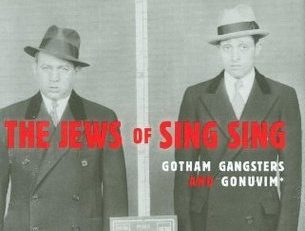
    Perusing some 7000 Sing Sing admissions, he outlines the background and criminal history of many famous New York criminals, discovering details that many of these men’s descendants had never been able to find—Edward ‘Monk’ Eastman, Benjamin Gitlow, Irving ‘Waxey Gordon’ Wexler. The histories of these men reveal much about the hardships and sometimes anti-Semitism they faced making a living in the New World. The stories also reveal the peculiar American involvement of gangsters with the early trade union movement (Jewish gangs targeting in one instance the employers, in another the workers). Jewish gangsters were known to have funded Zionist terrorism in Palestine. But they were on average less violent than their non-Jewish criminal counterparts; burglary, larceny and robbery constituted two-thirds of all Jewish convictions. Some were involved in whiskey-running during Prohibition, and later heroin. A number of Jews, like Isaac Spier, were incarcerated for abandonment or bigamy, and their family lives are examined.
    It is seen that, from whatever background in the Old Country—Russia, Poland, Latvia, or in Arons’ case Belarus—common identity as Jews and a livelihood that depended on crime brought them together into interconnected gangs. They lived in the same neighbourhoods; they hired the same lawyers; they were chased by the same cops or Feds or judges; they listened to the same rabbi chaplains in prison; they ate at the same diners and went to the same barbers.
    It regrettably doesn’t go into genealogy, not going further back in the lineage than great-grandparents. And it doesn’t touch upon Jewish deep ancestry—Moses and the Israelites—but that question has many books devoted to it.
    The subject matter is as dry as you would expect—it’s a work of journalism not literature, but there are several amusing bits, and it’s well written. Will be appreciated by ‘true crime’ addicts as well as by genealogy-seeking Jews.

  • Review: This Side of Paradise

    Review: This Side of Paradise

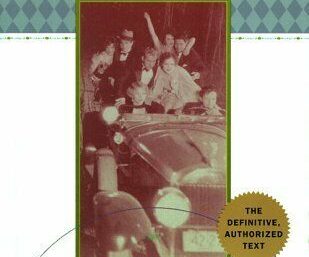
    F. Scott Fitzgerald, This Side of Paradise (1920; this edition 1998 by Scribner)

    https://www.goodreads.com/book/show/46165.This_Side_of_Paradise?ac=1&from_search=true&qid=uIRIQJ2a7b&rank=1

    No meaning of life to be found here


    This book is about a ridiculouos philosophy–the evolution of the protagonist from ‘egotist’ to ‘personage’.
    Amory Blaine inherited every valuable trait he has from his mother, Beatrice, who abandons him in Minneapolis. He is the sort of upper-class poser who considers it fashionable to be late and mysterious to speak in a fake British accent. He spends two years at boarding school, then (of course) Princeton.

    Social activities get in the way of studies, and he writes long letters to Isabelle Borgé. Then one of their set, Dick Humbert, is killed in a drink fueled car crash. Amory realizes he has no real feeling for Isabelle, and his father dies ‘inconspicuously’. He learns from Monsignor Darcy the concept of ‘personage’, ‘a person who is never thought of apart from what he has done’.

    He falls in love with a young widow named Clara; he fills his exam papers with poems. With Europe’s war taking its toll from American universities, Amory serves two years.

    Beatrice dies, having left the bulk of her fortune to the church. Amory works in advertising and meets the equally vain Rosalind. But she won’t marry someone on $35 a week. He turns to highballs before being interrupted by Prohibition.
    Then, a magnificent girl, Eleanor. For one glorious summer, before it all fades, she holds a mirror to his own intellectual vanity. In his search for a meaning of life that features himself at its centre he even begins to entertain socialism. Yet even that didn’t win me over.
    The writing is so erudite and clever that it annoyed me.
    Usually, I skip over the poetry bits in novels, but don’t skip over these.
    Those who have survived a boarding school/Ivy League education with a smidgen of self-esteem remaining will identify. Others will wonder – what’s the big deal? I loved the Great Gatsby, famous for portraying the sort of people Amory and his personages will grow up to be.

  • Review: Looked After Boy

    Review: Looked After Boy

    Lynda M. Brennan, Looked After Boy (Matador 2021)

    https://www.goodreads.com/book/show/56308840-looked-after-boy?ac=1&from_search=true&qid=HE88sjbMBJ&rank=1

    Adolescent and teen readers will love Looked After Boy, especially if they have experience being in care. It is a must-read for teachers, social workers, or anyone with experience of the care system. Brennan portrays a system, staffed with people with all the good will in the world, which tragically lets down so many young people whose families have broken down.
    We follow our Tottenham-loving hero Joe as his life is messed around by social workers who aren’t listening. He is separated from his siblings by a family court process he doesn’t understand, is sent to a children’s home where there are no children, and even becomes involved in the County Lines exploitation of teens for drug trafficking. Don’t worry, there’s a happy ending, so bear with him.
    The unique quality of this novel is the voice of the 14-year old narrator, whose adorable personality shines through every misfortune.

  • Review: Banks of the River Thillai

    Review: Banks of the River Thillai

    Rajes Bala, Banks of the River Thillai (The Conrad Press 2021)

    https://www.goodreads.com/book/show/59079655-the-banks-of-the-river-thillai?ac=1&from_search=true&qid=RccIYH7pp2&rank=1

    We follow the lives of the girls, Gowri, Saratha and Buvana, three cousins, as they blossom into womanhood under the strict, matriarchal thumb of Grandma.
    Grandma is determined to uphold Tamil traditions and wants nothing more than to get the girls married off to boys from good families.
    But the girls have other plans.
    However, events in the outside world transform the village. The River Thillai floods its banks, causing widespread devastation, and the Sinhalese army perpetrates ethnic cleansing, killing young men and raping girls. As the villagers are drawn into the political struggle for Tamil rights, personal tensions arise between the leaders of two prominent clans. The men’s hostility permanently impacts the girls’ lives. Grandma’s plans for her three granddaughters go tragically awry.
    This novel is most certainly a must read for all Tamils, but also non-Tamils will adore it. It paints a gorgeous picture of a bygone era and a lifestyle which no longer exists. I was thrilled to learn all the lovely details about Tamil culture.
    It’s beautifully written, poignantly describing the beauty of the village and the river. You can almost taste the coconut prawn curry and smell the incense wafting from Ganesh’s temple down the sunset-coloured lane. The characters are absolutely fantastic, and there are numerous hilariously funny scenes.

  • Review: The Caduca

    Review: The Caduca

    Elaine Graham-Leigh, The Caduca (The Conrad Press 2021)

    https://www.goodreads.com/book/show/57308614-the-caduca?ac=1&from_search=true&qid=FinrC1bLDy&rank=2

    The Caduca is a masterpiece. 6 Stars!

    Graham-Leigh creates a world which, though unfamiliar in its appearance, operates according to the same historical processes as ours. The dominant imperialist power has its way in every galaxy; the ruling class is criminally ignorant of the working classes. Each planet has an interlocking backhistory, more of which you can read in Graham-Leigh’s short stories.
    The tale is largely told by two women, one a terrorist freedom-fighter and one a liberal diplomat, and the reader is pulled into empathy for each contrasting point of view. As the voice switches from one character to another, sometimes the subtlety is hard to follow—you have to really work at it—and we never do find out what hebas are. This technique pulls you right into this alien world—you never feel like you’re an Earthling reading it.
    This novel should not just be read by science fiction lovers. Its literary artistry is among the most excellent that I have ever read; the writing is absolutely gorgeous.

  • Review: Dance Me a Revolution

    Review: Dance Me a Revolution

    Marsha Mildon, Dance me a Revolution (BookBaby 2021)

    https://www.goodreads.com/book/show/58245147-dance-me-a-revolution?ref=nav_sb_ss_1_21

    New Year’s Eve. Rosa dances, in that city built by conquistadors, in a dress of blue silk, suddenly beautiful. Diego catches her by the elbow, reciting love sonnets by Neruda, saying, ‘Tonight, no one expects revolution.’ She wants to dance some more, kiss some more, but he wants to bomb the power plant. She wants it, wants the revolution, to lead the Inca’s Pachakutiq—just… not tonight, with all the people dancing. The bomb explodes; she hopes it doesn’t tear her blue dress.
    Rosa helps her uncle and mother prepare for the gringos arriving, bringing business for their Peruvian trekking tours. Kelly is shooting a film about the Inca Trail. Though keen to video everybody’s business, Kelly seems reluctant to talk about her own background. Tony has an agenda of his own; he is looking to smoke out coca traffickers, and he solicits the help of local lieutenant Valdes.
    Kelly wants to feature Rosa as one in her series on ‘Outstanding Women’. Rosa’s claim to outstandingness is that she rode the stretch between Cusco and Quito, 15 kilometers every day. When young, she joined archaeological digs to uncover the Inca past. She learned Inca archaeology by day, revolution by night.
    Leocadia, Rosa’s mother, is a folk healer, and she leads the gringos in some of their rituals. They experience the spirit of the puma, of the snake, of the condor, and they benefit from her herbal medicines.
    As the Andean trek gets under way, involving an archaeological dig, whitewater rafting and a slide down a glacier, there is a shooting in the mountains, the military are hunting for coca factories. Diego is on the run from the Village Patrols, and he is threatening her family. Rosa seeks to distance herself from him—she’s a mother, now; she has her family’s business to worry about. Turns out, Tony has an agenda of his own for the trek; he has a destination in mind. Meanwhile, Rosa and Kelly discover that they have more in common than they had thought, and finally, Rosa agrees to let herself be filmed.
    We are introduced to the indigenous culture of Peru as explained to the gringo tourists, and I found myself clicking onto Google every other paragraph before realising there is a glossary at the back. It really brings you into the world of the characters. And it’s a world new to me, so, I learned something.
    I just love the title. The writing is gorgeous, and it’s well edited. The plot is exciting, working toward a beautiful climax. The gringos even play a role in saving the day, and Kelly gets it all on film. As a revolutionary myself, I was a bit sorry to see the revolutionary made to be the bad guy, but it makes a great story. And it all ends with a dance—the marinera.

  • Review: Stealing the Spanish Princess

    Review: Stealing the Spanish Princess

    Bea Green, Stealing the Spanish Princess (The Conrad Press 2021)

    https://www.goodreads.com/book/show/56868944-stealing-the-spanish-princess?ac=1&from_search=true&qid=rZG0dNoS13&rank=1

    I love novels where, as well as enjoying a good old murder mystery, you get learn all sorts of detail about some subject. Stealing the Spanish Princess takes you into the world of art theft. The titbits of art history and critique pique the interest and stimulate further research. Throw in some Russian mafia, a secret love child and the beautiful architecture of London, Madrid and St Petersburg—what’s not to like?
    DCI Richard Langley from Scotland Yard’s Art and Antiquities Unit and his colleagues from Homicide investigate a murder and art theft. The artwork in question is a fictional work by El Greco, hitherto unknown to anyone but its private owner. If no one knew of its existence, who could have stolen it? Positing a fictional artwork is a clever device.
    The scenes are well described. One gets an immediate sense of the protagonist’s character, and secondary and minor characters are interesting. The pace is good, and there’s enough action to keep the story moving.
    Some details bear more attention to verisimilitude—flowers have been banned from UK hospitals since 2003—would the intermediary with the criminals really be a priest?—police don’t read people Miranda rights when they’re just being questioned, only when they are under arrest–and the most intriguing clue for some reason is not followed up until the final chapters—but it’s a great story.
    It’s billed as ‘a Richard Langley mystery’, but we don’t need to have read others in the series. I look forward to the next one.

  • Review: Rollercoaster

    Review: Rollercoaster

    James Essinger, Rollercoaster (The Conrad Press 2021)

    https://www.goodreads.com/book/show/57744447-rollercoaster?ac=1&from_search=true&qid=DxBpz5k5Y4&rank=1

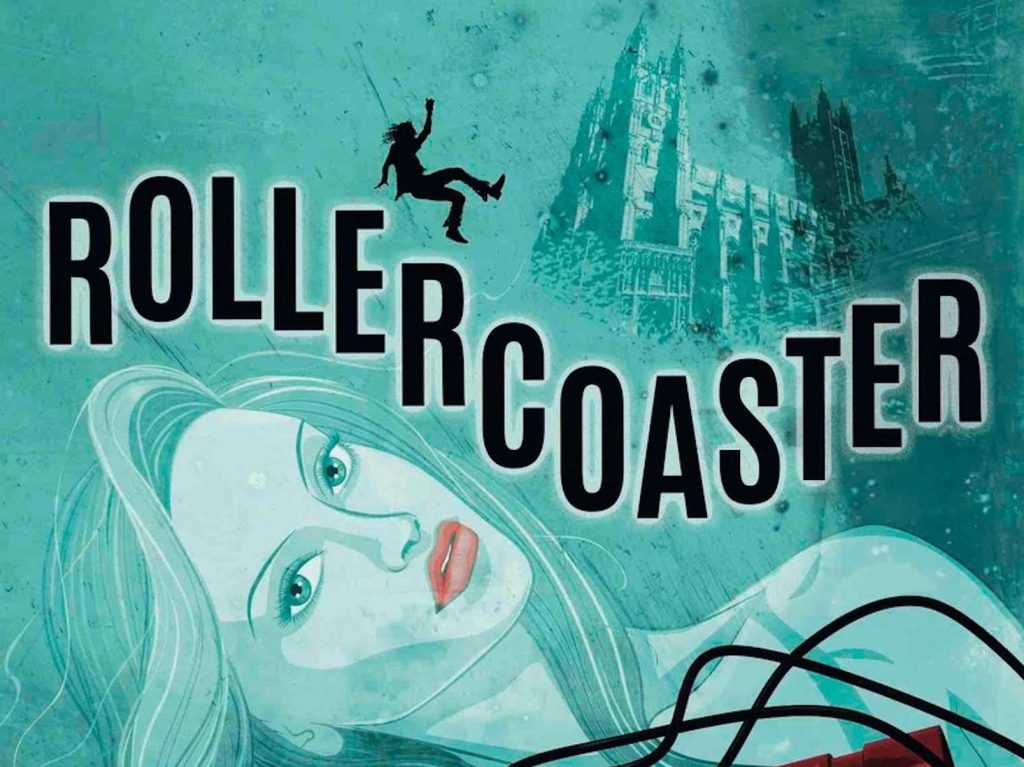
    Charles, failed grocer, failed husband, failed housebreaker, out for a walk in Canterbury, sees an enigmatic sign: ‘Past not taken into consideration: Apply to Dr Tortoise, 13 Cathedral Walk.’
    For something to do, he applies, and Tortoise hires him, promising £50,000, to travel to Marseilles and kill some Finns, members of a secret organisation, VALTA, who are dedicated to killing Russians. The men are all old, so all he has to do is ‘help them along’ to their deaths.
    Rod is hitch-hiking around, looking for, or trying to avoid, ‘slozes’ (women?). He remembers a certain Mexican bead seller on Portobello Rd as a symbol of the freedom to which he aspires.
    Rod comes across Charles, dying, who warns him about ‘the Russians at the Gloria Hotel in Düsseldorf’ and something about a ‘laundry chute’. The beautiful woman who shot him, Silja, holds Rod at gunpoint, yet confides in him about their plan to assassinate some visiting Russians at the Düsseldorf Gloria.
    Ms Vixen and her boss Mr Fox-Foetus, Head of Security at the Gloria Hotel in London, are enjoying a workplace liaison, when they receive a tip that the Düsseldorf Gloria is expecting a ‘terrorist threat’. They descend on West Germany intent on making the country, or at least the hotel, safe for the master race. Rod manages to get there just in time to save the Russians and the girl.
    The plot is rollicking, and the characters amusing. The writing is good, here and there offering some exceptionally witty lines. The Vixen/Fox-Foetus relationship is particularly hilarious. There were some plot points where I wondered—Is this funny? Or is it disconcerting?—such as Charles and Vixen, both quite main characters, suddenly being bumped off early in the story. I expected the Charles, Rod, Vixen/Fox and Silja plotlines to come together in Düsseldorf in some huge comedy of errors, but it was still quite funny.
    Some slang words I’m not familiar with: sloz, cream, tender, but I discovered there is a helpful glossary at the back.
    I really enjoyed this book and found it’s billing as ‘a 1970s comedy thriller for the 21st century’ to be spot-on.