Tag: food

  • Review: Milkman

    Review: Milkman

    Anna Burns, Milkman (Faber & Faber 2018)

    https://www.goodreads.com/book/show/36047860-milkman?ac=1&from_search=true&qid=8oLTfyWK3C&rank=1

    The dark, floaty, but witty tale of an unwelcome wooing in the dangerous world of the Northern Ireland Troubles
    This novel has a fantastic first line: ‘The day Somebody McSomebody put a gun to my breast and called me a cat and threatened to shoot me was the same day the milkman died.’ We enter a world (Northern Ireland during the Troubles) where everything, from what you name your child—if it’s Nigel or Troy, expect beats—to what you cook—it had better not be petit fours or amuse bouches—even to what car parts you dirty your living room carpet with, is divided between ‘their side of the street’ and ‘our side of the street’.
    Trying not to draw attention to herself in a dangerous environment, ‘middle-sister’ has the habit of ‘walking-while-reading’. This, however, is criticised by the gossips, especially when she becomes the unwelcome target of the amorous attentions of a ‘major paramilitary player’.
    Burns has a completely unique stream of consciousness writing style, with page after page of endless tangents, which, especially toward the end, become very witty, amidst all the murders.
    One technique is saying things three times in three different ways. For example: ‘being up on, having awareness, clocking everything… didn’t prevent things from happening’. She doesn’t say what ‘things’ she’s referring to, yet by that description, we learn something, get a sense of, absorb information on the feelings revolving around those ‘things’.
    People and places are not named, rather being referred to as ‘maybe-boyfriend’ or ‘third brother-in-law’, ‘the ten-minute-place’ or ‘over the water’. This glides you into a sort of fantasy world, creating an ‘uncomfortable floatiness’, a sense of unease, a feeling of foreboding and threat, in the midst of which one is nevertheless chuckling.


  • Review: Dancing on Thorns

    Review: Dancing on Thorns

    Rebecca Horsfall, Dancing on Thorns (Arrow 2005)

    https://www.goodreads.com/book/show/1540649.dancing_on_thorns

    A love story between two fascinating characters set to ballet, with poetry, tears and raptures


    For some reason she can’t herself explain, Nadia Petrovna, dowager étoile from the Diaghilev era, plucks awkward Jean-Baptiste St. Michel from the Académie in Paris for a scholarship at her Islington Ballet studio.
    Michel is the son of a famous choreographer working abroad, whom he has not seen in years, and after he leaves his mother for a career in ballet, they, also, become estranged.
    His uncle Jim dies, leaving him a large flat in Pimlico, which he and his Italian ballerino friend Primo convert into a dance studio and party pad. Enter Jonni, who has come to London as an aspiring actress and meets Michel at a party. As boys do, Michel casually lets Jonni know he’s been sleeping with his pas de deux partner Lynne, who casually informs Jonni that ‘we’ve all slept with each other in our gang’. He rudely ignores her for 90 pages while she follows along, infatuated by him and by his world, eventually being rewarded with a lover who, despite lack of commitment, makes love the way he dances.
    Michel is propelled into a lead role, and he catches the eye of Martyn Greene, artistic director of the British National Ballet. Islington’s head choreographer Charles Crown reveals his hand. Far from scrutinising his every plié out of opprobrium, as had been Michel’s impression, Crown has spotted his promise and has been moulding him for stardom. Jonni follows him, cooking for the dance troupe, as he climbs the ladder of success.
    I had always heard that the world of professional ballet was a competitive, bitchy scene, but the dancers in the Islington corps, here, love each other deeply, and these profound friendships carry them through the failures and successes of show biz and the highs and heartaches of their personal lives.
    In the end, in order to make things right, Michel has to confront his demons, and Jonni has to take a risk.
    Many interesting characters come onto the scene: the proud, statuesque prima ballerina Annette; the handsy actor Grant Noble; the leading actress full of wise words Maggie Lane; Leum the director who swears by saying ‘oh, panties!’; Roly, who went to a (dirty world in the ballet world) ‘stage school’; Carlotta di Gian-Tomaso, nicknamed the Giant Tomato; the tutor Marcus who became Marina; Jonni’s ‘tight-lipped, fifteen-denier tan-stockinged’ mother Veronica; the fat, vitriolic arts critic Boyle.
    All contribute to a story painted in all the colours of the rainbow, featuring some really beautiful writing. It’s a long novel, but I couldn’t put it down.

  • Review: The Origins of the Ottoman Empire

    Review: The Origins of the Ottoman Empire

    Mehmet Fuat Köprülü, The Origins of the Ottoman Empire (1935; this edition State University of New York Press 1991)

    https://www.goodreads.com/book/show/6918422-the-origins-of-the-ottoman-empire-soci-econ-hist-mid-east

    Dispels the myths of the misty early period and outlines the factors in the formation of the early state


    The dry academic style means this book is perhaps not one for the non-specialist Ottoman historian, comprised as it is of lectures by the professor. I purchased it, desperate for ideas for my novel about the daily lives of Kayis and Akhīs and their relations to other Turkic beyliks. I was disappointing in that, but nevertheless learned a lot.
    For most of us, what we see and read about the Ottomans dates from the period after Mehmed II’s conquest of Constantinople. These lectures cover those misty centuries before that, the 7th to the 12th centuries, particularly the Seljuk and Ilkhānate periods.
    Particularly valuable is the dispelling of certain myths. It is not true, says Köprülü, that the Ottomans invented their origins from the Kayı tribe during the reign of Murad II. Yes, Osman was the son of Ertuğrul, and no, he was not descended from the Prophet. The Kayı tribe was not related to the Mongol Qay tribe, and they did not migrate after the Mongol invasion of Khurāsān but rather came with the first Seljuk conquerors.
    Contrary to what you would think if you’re a fan, as I am, of the Diriliş Ertuğrul and Kuruluş Osman TV series, the proselytization of Islam was not yet a major preoccupation. The Turkmen tribes were messianic, ‘anticipating the mahdī’, and used religio-political propaganda, but the Seljuk state was not theocratic, and the Ottoman state never followed a policy of Islamization. Populations in Anatolia were a mixture of Muslims, Christians and some Jews, who lived in harmony, had the same dress and lifestyle, and eventually learned Turkish.
    Nevertheless, there were Christians, even Seljuk and Byzantine aristocrats who converted to Islam, but whatever pressures of a religious nature were applied were carried out more for political than for religious reasons. The privileged position of Muslims in the state organisation and desire to avoid jizya non-Muslim taxes were a factor. Köprülü contends that widespread conversion only occurred in the 15th century after the Ottoman conquest of the Balkans.
    Köprülü defines and outlines the political and religious affiliations of many groups we know of from this period, such as the various beyliks and religious orders. It’s untrue that Hājji Bektāsh, founder of Bektāshism, met with Ottoman rulers and played a role in founding the janissary corps. Unfortunately for my novel’s purposes, the Akhī women’s organisation Bājiyān-ı Rūm (Sisters of Anatolia) is probably fictional (but I won’t let that stop me from writing them into my fictional storyline).
    The major causative factors for the Ottomans’ rise (to summarise) were:
    • Their geographic location
    • The absence of hostility from neighbouring beyliks
    • Conditions favouring their entry into Europe and the Balkans
    • Elements of the population on the borders allowed them to capture Byzantine territory
    • In the Ottoman state, all power was under one ruler, not divided among the brothers and sons
    • A rapid conquest spreading westward coincided with Turks from Anatolia wishing to migrate
    • Ottoman conquest promised much booty and not many casualties, and prisoners were educated to become soldiers
    • The janissaries became a major military force during Murad I
    • Ottomans divided captured land into timars to grant to veterans, which were required to provide soldiers in proportion to their income
    • Ottomans continued the state organisation of the Seljuks, influenced by the Ilkhānate
    • Early rulers—Osman, Orhan, Murad—were skilful leaders

  • Review: The Driver

    Review: The Driver

    Mandasue Heller, The Driver (Hodder 2010)

    https://www.goodreads.com/book/show/11945787-the-driver?ref=nav_sb_ss_1_15

    Joe moves into a new flat on a council estate, pricking the interest of the fellow residents. There’s single mum Cheryl and her on-again-off-again ex, elderly overweight Molly and her cat, Carl and Mel, nosey racist Kettler, four Ukrainian hookers, and scary Eddie with his girlfriend Chrissie and scary pitbull.
    Cheryl throws Joe a welcome party, and he learns that Eddie is the hookers’ pimp as well as neighbourhood drug dealer and extortionist. Over the following weeks and months, he witnesses several of the pitiful personalities suffering under Eddie’s oppression and realises that Eddie keeps the hookers locked up.
    Eddie offers Joe a job as his driver while he does his drug runs. Joe becomes matey with Carl, a rather sweet druggie who works for Eddie. Eddie’s other boy Clive also seems less evil than his boss. Joe mostly does what he’s told, but nevertheless comes under suspicion from the gang. Everyone’s side stories come together in a clash on one eventful day at the estate.
    This book has no likable characters. The gangsters are monsters; the whores pitiful; the junkies disgusting. Even Joe, the hero, is hardly one you’d bring home to mother. It makes painful reading following the sufferings of the women done wrong by their disreputable menfolk. However, Katya—the prettiest of the hookers—wins one’s sympathy and does the right thing in the end. And Joe musters enough pluck to save the day.
    An easy read.

  • Review: The Hero with a Thousand Faces

    Review: The Hero with a Thousand Faces

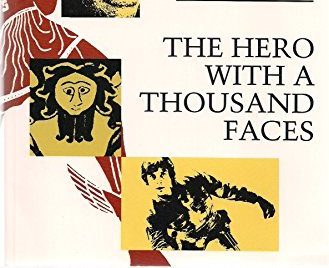
    Joseph Campbell, The Hero with a Thousand Faces (1949; this edition Princeton University Press 1972)

    https://www.goodreads.com/book/show/588138.The_Hero_With_a_Thousand_Faces?ref=nav_sb_ss_1_30

    A ‘Bible’ for the student of mythology, religion, literature or psychotherapy


    Through a comprehensive analysis of the world’s mythology and folklore, Joseph Campbell outlines the universal motifs of adventure. He examines myth—the basis of religion, literature, psychoanalysis and human culture itself, the ‘secret opening through which the inexhaustible energies of the cosmos pour in’.
    The goal of the Hero is the ’self-achieved submission’ to bring back the union between god and the collective of people. To do so, he must symbolically die and be reborn as ‘universal man’, purged of sin (disobedience to the divine will) and death (identification with the mortal form). Campbell examines ‘archetypes of the collective unconscious’, showing how this formula is followed time and again, from the ancient Sumerian myth of Inanna to examples from modern psychoanalysis.
    The universal pattern followed by adventure myths is similar to the five-part structure of novels—beginning with the ‘inciting incident’, followed by several ‘slaps’ and maybe a ‘false victory’. The protagonist (hero) is required to overcome some obstacle to realise that he has been living a lie—the ’dark night of the soul’. To achieve the final goal, he needs to accept a new truth.
    The universal formula of myth begins with ‘the call to adventure’, where the hero, sometimes reluctantly, accepts his mission. He is helped by some ‘supernatural aid’ and may be given some magical weapons, ‘crosses the first threshold’ to undergo initiation and overcomes a series of often symbolic trials. He is often challenged by a usually-female temptress or a trickster-god. A crisis point arrives where the hero is close to death or is believed dead—he is swallowed by the unknown, in ‘the belly of the whale’. He may have to go through some form a self-annihilation to be reborn. He ‘meets with the goddess’, a mystical union where a usually-female authority figure intervenes to offer guidance, representing ‘the bliss of infancy regained’. Sometimes he ‘tricks’ the king or the god to obtain the treasure or the princess or vanquish the monster. He reconciles with the Father and returns home bringing the ‘ultimate boon’ to his family or kingdom.
    In Part II Campbell reviews the ‘cosmogonic (creation of the universe) cycle’, from psychology to metaphysics. Mythology can be understood as ‘psychology misread as biography, history and cosmology’. The cosmogonic cycle is carried forward by the hero as embodiment of his people’s destiny. The modern hero seeks to ‘bring to light again the lost Atlantis of the co-ordinated soul’. As for religious cult (as contrasted to black magic), it’s all about the community’s ‘submission to the inevitables of destiny’, e.g., not so much beseaching the gods to stave off winter starvation, but rather preparing the people for a period of hardship.
    Enormously erudite, peppered with quotes from Freud, Heraclitus, Euripides, Ovid. I found if I read more than 50 pages in one sitting, I got a headache. Almost half the text is in the footnotes, most of which, I admit, I didn’t read, even though they were probably all fascinating. The complexity is probably inevitable—he tackled a huge subject and he drew from every corner of the earth and from every historical period in his illustrative examples.
    For the student of mythology, this book is one of a triad of must-reads—including The White Goddess by Robert Graves and The Golden Bough by James Frazer. Although I have to give 5 stars because it’s a ‘great work’, I didn’t enjoy reading this one. Perhaps it’s because the material is not so new to me at time of reading.

  • Review: Bar Kokhba, the Jew who Defied Hadrian and Challenged Rome

    Review: Bar Kokhba, the Jew who Defied Hadrian and Challenged Rome

    Lindsay Powell, Bar Kokhba, the Jew who Defied Hadrian and Challenged Rome (Pen and Sword Military 2021)

    https://www.goodreads.com/book/show/57168141-bar-kokhba?ref=nav_sb_ss_1_23

    In researching my fourth novel, The Receptacles of St. Ananias, set in 132 CE when the Bar Kokhba Revolt, the third great Jewish revolt against Rome, was happening, I bought this (Kindle) book after searching for—without finding—a novel on the subject. Since then, I’ve found one—My Husband Bar Kokhba by Andrew Sanders—although there are many military novels from the Roman soldiers’ point of view. I selected this history as one hopefully less obviously Zionist in tone as Yigael Yadin’s or others’ take.
    There are two problems facing those wanting to learn about Bar Kokhba in the 21st century. The first is that unlike the first Jewish Revolt of 66-73 CE, where we have contemporaneous accounts from Flavius Josephus and Tacitus , the precious and almost only records we have of the Bar Kokhba Revolt are the letters discovered in the 1950s in the Cave of Letters, some of them in the general’s own hand. Without knowing any of the context, these letters can read as cryptically as the Dead Sea Scrolls.
    Rabbinical sources refer to the man as just ‘the southerner’ (from Judaea). Cassius Dio’s account of the war doesn’t name him, and neither do Christian writings mention him by name. We don’t even know the location of Betar (maybe modern Bittar), the site of the famous last stand. What we know is pieced together from scant references in ancient histories and archeological finds.
    What information we have is highly susceptible to mythologisation. For example, the destruction of the First Temple, the destruction of the Second Temple and the fall of Bar Kokhba are all said to have fallen on Tisha b’Av (the 9th of month Av). Twice may be a coincidence, but three times is, I would imagine, a myth. Bar Kokhba is supposed to have cut off the little fingers of his men to ensure none were ‘afraid or faint-hearted’, hardly something a general in his right mind would do. Unfortunately, Powell accepts these ‘facts’ as history.
    The second problem is that Bar Kokhba has been claimed ideologically as a David-against-Goliath hero of Zionism. David ben Gurion, first prime minister in 1948, proclaimed, ‘The chain that was broken in the days of Shimon ben Kokhba…was reinforced in our days, and the Israeli army is again ready for the battle in its own land.’ A revision of this viewpoint is under way, e.g., Elon Gilad (2015) .
    Powell recounts the history using a literary technique I found particularly interesting. He expounds the history from the origins of the Israelites to Bar Kokhba as he makes his way through the galleries of the Israel Museum in Jerusalem. He goes through the life of Emperor Hadrian as he’s on his way to interview Professor So-and-So. He paints the second century topography and road system by recounting the progress of Hadrian’s well-documented travels. He talks about events in Jewish history after recounting similar things that happened on his travels. It makes the read more like a chatty travelogue than a dry history book and makes it more accessible.
    There is a lot of information in this book which is only laterally related to Bar Kokhba. Unfortunately, so little is known about the man and the war he waged that otherwise, it would have been a very thin book.

  • Review: The Bookseller’s Tale

    Review: The Bookseller’s Tale

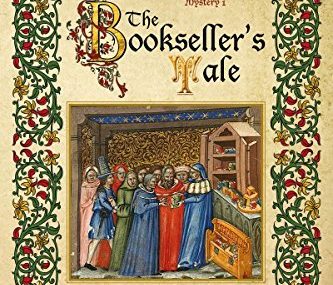
    Ann Swinfen, The Bookseller’s Tale (Shakenoak Press 2016)

    https://www.goodreads.com/book/show/30639175-the-bookseller-s-tale?ac=1&from_search=true&qid=Y89I8PTLtG&rank=1

    Nicholas, his sister Margaret and children Alysoun and Rafe are rare survivors of the great pestilence in Oxford that caught his wife Elizabeth and Margaret’s children and abusive husband. Nicholas is official bookseller to the university, and his two scriveners are at work copying.

    On his way home from collecting goose feathers at a local farm, he spots a body floating in the river. The boy is a young student, William Farringdon. Jordain, Warden of the Hall at the university, collaborates with Nicholas in investigating the crime.

    The next day, students come round the shop and recount how William had been worried of late. One of them, Peter de Wallingford, said William had been planning to take holy orders. He had seen him meeting with two ‘prosperous looking’ men, and he’d seemed afraid of them. Nicholas and Jordain visit William’s room at Hart Hall and discover that he had been at work copying a fine Irish psalter. How had he borrowed the original, kept under lock in the Merton collection?

    A mystery involving famous antique books ensues, and Nicholas and Jordain track down clues helped by local tradesmen and farmers, risking danger to themselves.

    It’s very well written, and the language is believably antique, with enough mediaeval minutiae to make one feel in the moment. I was fascinated by the details of the bookmaking industry—how parchment was made, what raw materials were used for pigments—as well as details of how crimes were investigated and prosecuted in the Middle Ages. Several interesting characters enter the picture, and the pace of the investigation is lively but not rushed.

    This 14th century mediaeval who-dunnit is Book 1 in the Oxford Medieval Mysteries Series. I can presume that the others are of equivalent quality. It is an easy read and would be suitable for a younger readership.

    This review first appeared in Historical Novels Review.

  • Review: The Bar Kokhba Revolt

    Review: The Bar Kokhba Revolt

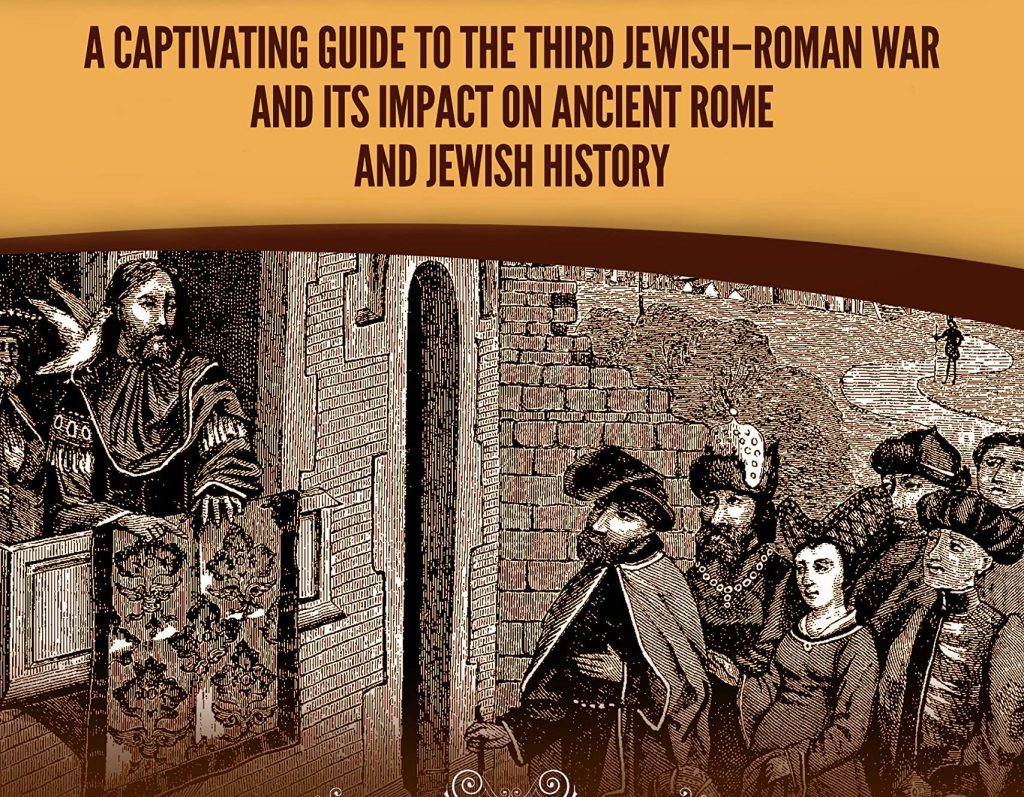
    Captivating History, The Bar Kokhba Revolt (Kindle 2021)

    https://www.goodreads.com/book/show/59720401-the-bar-kokhba-revolt?ac=1&from_search=true&qid=CeXt0elXwi&rank=1

    The book starts with a whistle-stop tour of Jewish history, beginning with the Exodus (without going into the fascinating question of historicity as backed up by the archaeological record, the biblical account is used). Then, whizzing through the Babylonians, Persian, Seleucids, Ptolemies and Hasmoneans (Maccabees), we’re up to the Romans by Chapter 2.
    The speed made my head spin, but the simplification of the Sadducees/Pharisees conflicts during the Hasmonean period was helpful.
    Herod became vassal king to Rome by backing the right Romans at the right time. The Romans began the practice, so vilified by future Zealots, of appointing their own puppet high priests.
    With a view to the Bar Kokhba revolt, all this background serves to outline the reasons why Jews wanted independence from Roman rule. Underlying it all was a cultural antagonism going back centuries of conflict between Greek-speaking Greco-Roman-influenced ‘Hellenists’ and Aramaic-speaking ‘Hebrews’. Then there was a religious conviction that Israelites were destined by God to be free. Successive Roman authorities didn’t help matters by trying to erect statues of emperors, considered religious anathema. Antagonism between Judaeans and their neighbours—Idumaeans, Samaritans, Galilean—dates back to the Hasmoneans, who forced Jewish customs and religions on the conquered people.
    After the first Jewish Revolt, things got worse, with the fiscus judaicus tax imposed only on Jews and anti-Semitism from both rulers and populace. Emperor Domitian was openly hostile to Jews (including Christians). There was a second Jewish Revolt with the Kitos uprisings of 115-117 CE in the Diaspora.
    The final straw before Bar Kokhba erupted in 132 CE is debated. Hadrian rescinded his promise to rebuild the Temple and began construction of a Roman colony Aelia Capitolina atop the ruins of Jerusalem. He planned to site a Temple of Jerusalem right on Temple Mount, although this may not have happened until after the revolt.
    Interestingly, it ends by reviewing the various scholarly controversies concerning the revolt, a situation engendered by the paucity of real information, which was itself probably engendered by the completeness of the defeat and the enormous deathtoll. Unfortunately, the conclusion reached is a silly, revisionist one—that it was ‘basically a cultural misunderstanding’.

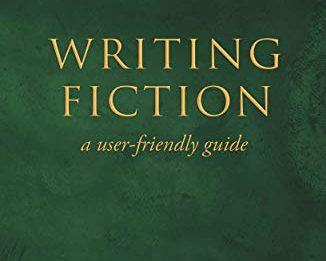
  • Review: Writing Fiction

    Review: Writing Fiction

    James Essinger, Writing Fiction (The Conrad Press 2019)

    https://www.goodreads.com/book/show/50199457-writing-fiction—a-user-friendly-guide?ac=1&from_search=true&qid=aIXIcYOFM0&rank=1

    When I first began writing novels, I was determined that I was not going to ‘follow the rules’. How boring it was always to have a ‘five-part structure’, always to follow the stages in ‘the hero’s journey’.
    However, now that I’ve grown up, I realise that there are rules. Readers expect them, and if your novel doesn’t follow them, the reader feels disappointed. We want a big climax in the middle and some kind of resolution at the end. We can’t empathise with a protagonist who’s fighting for a goal we don’t understand, and we lose interest in a hero who wins too easily.
    It begins with the basics—write an outline, show don’t tell, character and voice. A novel needs a hero who is grappling with stakes the reader considers significant.
    Two of the most important basics Essinger calls ‘golden rules’. 1. Stick to your story. Everything in your novel must be ‘pursued’; it must have something to do with the story. Any detail that’s out of the ordinary needs to be there for a reason. 2. Make your hero be an active participant in the story. Avoid authorial intrusion.
    Essinger explodes some old canards. For example, if you ‘only write what you know’, your novel is probably going to be as boring as real life usually is. No, you should use your imagination, but only write what you know, emotionally. ‘Tell’ is not an inferior cousin of ‘Show’; it is simply a different way of telling a story, useful in particular circumstances, for instance, to summarise events in order to move the plot along quickly.
    In a useful Appendix, Essinger includes specific advice on common mistakes he’s seen as a publisher.
    He concludes, ‘So let’s get to work.’
    This how-to book is a good exposition of the basics of fiction writing, featuring illustrative examples from literature and films. It would be a useful handbook for someone who is just starting out. This book adds to a growing shelf in my office of how-to-write books, as, now I know, I need all the help I can get.
    I was given an ARC by the author.

  • Review: Heart of Darkness

    Review: Heart of Darkness

    Joseph Conrad, Heart of Darkness (1899; this edition Green Integer 2003)

    https://www.goodreads.com/book/show/4900.Heart_of_Darkness?ref=nav_sb_ss_1_17

    A dreamlike tale of a man’s moral integrity challenged by the barbarity around him


    In this famous novella, Marlow recounts the story of his voyage to the Belgian Congo one evening while he and others are moored on a boat in the Thames.
    It is written in an old-fashioned style (published 1899) that modern readers may find difficult (I did). For example, he begins with a long, though beautiful, description of the Thames ‘crowded with memories of men and ships’, which strains the attention span.
    Marlow decides to seek his fortune. He wants to go to somewhere that was ‘a blank space on the map’ and procures himself a position as captain of a steamboat involved in the ivory trade. He finds that the steamboat has sunk and is dredged up to dry dock, where Marlow must repair it, an enterprise thwarted by the inefficiency of bureaucracy and the resulting lack of supplies. High on his list of wants is ‘rickets’, of which there had been thousands at the coast.
    From other white men he hears complimentary things about the mysterious Kurtz, another ivory trader, the man he is supposed to meet. He eventually sets off with a crew of cannibals, and his descriptions of the jungle they float past—dense, oppressive silences ‘with the word ivory ringing in the air’, punctuated from time to time by threatening native drums whipping the crew into a frenzy—are dark and disturbing.
    Finally arriving at Kurtz’s Inner Station, they discover that the man has set himself up as a sort of god, and a collection of severed heads on posts attest to his omnipotence. Kurtz is determined to ‘civilise’ the natives, his motto being ‘exterminate the brutes’. The steamer breaks down, and they have to dry dock again. Kurtz dies, uttering the last words, ‘the horror, the horror’.
    Marlow struggles to maintain his moral integrity, with all the savagery around him, and he struggles against Kurtz in his descent into madness. He barely survives but makes it back to Europe.
    Along the Congo River, exploitation of the native black men is at its most raw, and the scenes Marlow describes are nightmarish. Various techniques add to the dreaminess. For example, no character other than Kurtz is named. It is often unclear where Marlow is situated within the narrative. He begins telling us him impressions of a place before he has told us he has travelled to that place. The dream-like feel of this book led to its providing the inspiration for the film Apocalypse Now. The nebulousness is artful, but makes for difficult reading.
    This is a ‘hero’s journey’ where the hero doesn’t prevail, but instead returns home haunted by the horrors he has seen.