Tag: food

  • Review: The Happy Thistle

    Review: The Happy Thistle

    em.thompson, The Happy Thistle: The Curious Case of The Katenapped Girl (Eccentric Directions 2024)

    https://www.goodreads.com/book/show/219875720-the-happy-thistle?ac=1&from_search=true&qid=btkH39eHGB&rank=1

    Our gal at the Yard, Heather Prendergast, takes time off from her illustrious career working in the New Scotland Yard staff canteen. She is commissioned by her estranged father Sir Freddie to solve the case of the kidnapping of Katy, her stepmother’s daughter by a previous marriage.
    Prendergast leverages the copsmarts she learned in Hostagemurder class and Drugsbust class and undercover method acting at Hendon Police College as well as quirky lifesmarts she learned from her rich (and of course, eccentric) Aunt Elizabeth, with whom said father dumped her when he married said gold-digging stepmother.
    Evil genius ‘the Professor’ beavers away, assisted by his hyper-Scottish henchman Groaty McTavish, in a secret lab in the basement of a Highland-themed restaurant to crack the secret of dark matter—which, in case you wondered, is ρc+3H(1+wc,eff)ρc=0,ρΦ+3H(1+wΦ,eff)ρΦ=0—with which he plans to get rich, world domination, etc.
    The novel sports Thompson’s signature wit and creative wordplay. It’s full of genius puns, tongue-twisting alliterations and newly invented words, which are both hilarious and erudite (e.g. ‘the starstruck pipistrelle of night cloaked its wings across the milkywayed horizon to presage the passage of another customerless day’). No one in the history of the English language has created such inventive and side-splittingly funny metaphors. An educated scholar will pick up all sorts of clever references, yet at no point are we talked down to.
    The hilarious vocabulary does not detract from the interesting plot. Prendergast does her detective work, equipped with her bible, the Illustrated Sherlock Holmes Omnibus. The kidnappers’ best-laid plans begin to go humorously awry.
    We have character development, too, though the characters are comedic. The badguys hadn’t reckoned on HostageKaty having her own plans. Though the perps are too funny to be genuinely scary, there’s plenty of suspense.
    Funnier than Douglas Adams, and indeed, it contains some witty Hitch-hikers’ references.

  • Review: The Illusionaires

    Review: The Illusionaires

    Brian T. Marshall, The Illusionaires (Amazon Digital Services 2021)

    https://www.goodreads.com/book/show/58409445-the-illusionaires?ac=1&from_search=true&qid=CC8iWHxRzw&rank=1

    1938 A magician performs a trick on stage—he appears to have a third arm growing from his forehead—and takes a bow, ‘Ladies and Gentlemen, I am Richard Constairs.’
    Then, a voice from the audience, ‘No, I am Richard Constairs.’ This man has a third leg. He challenges three-arm Richard to a duel.
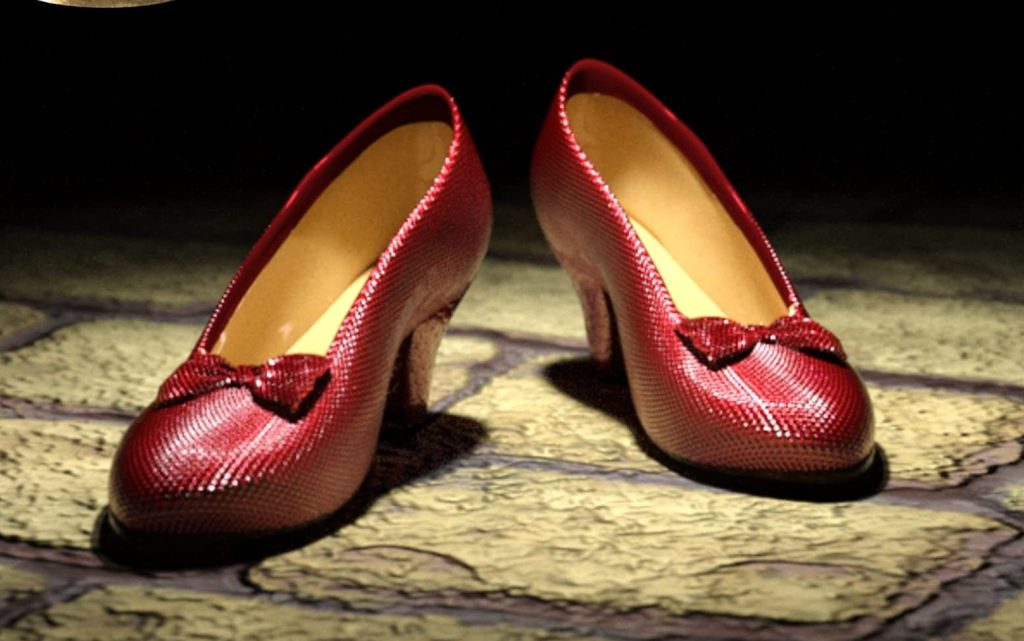
    Constairs wants to take his act into the movies. Karla doesn’t. So, he takes on a young apprentice, Charlie, and goes to Hollywood, hoping to bag a role on the making of the flying monkey scene in The Wizard of Oz. Is it illusion, or is it magic? Meanwhile, he’s training Charlie in the art of invisibility. And Charlie is teaching him things, too.
    Whenever Constairs needs something, he simply conjures it. Even if MGM and the Guild have everything all tied up, you’d think someone who is able to do actual magic would have the world as his oyster. He decides to take on the Guild. Trouble is, magicians are all dishonest, trick-artists. How to get them to work together? Constairs offers magicians collective bargaining power—they form the Illusionaires—at the same time offering Mr Louis B. Mayer, MGM’s Big Kahuna, a miraculous solution.
    1963 Charlie (Charles) is working for the CIA. Now, it’s time for some BIG tricks.
    The 1938 and the 1963 storylines tell completely different stories. What ties them together, besides the Charlie character, is the theme. What’s real? What’s illusion? What’s science? What’s magic? Who is pulling whose strings? The truth is as elusive as the Invisible Man. Even particle physics doesn’t have the answer. Says the CIA man, ‘all one can do is pick sides’. This is simply wonderful.
    The references paralleling with Oz are beautiful—the possible dual meaning of ‘there’s no place like home’; Constairs wants ‘to see the man behind the curtain’.
    The author seems to know all about The Making Of, and the story of how Hollywood worked back then is great fun. How magic works is even better.
    Marshall is a master of not Telling us too much, resulting in the surprising elements of the narration—the magic, if you will—hitting us with amazement. Every page has an artful phrase or sentence that will echo in your mind after you read them.

  • Review: Blood Sacrifice

    Review: Blood Sacrifice

    Douglas Jackson, Blood Sacrifice (Canelo Action 2024)

    https://www.goodreads.com/book/show/213846408-blood-sacrifice?ac=1&from_search=true&qid=swEb0jIUVB&rank=1

    Intrigue and excitement, fascinating character interactions, against a historical backrop


    January 1943. As 50,000 Jews in the Warsaw ghetto prepare to ‘create a story that will never be forgotten’, double agent Jan Kalisz is prepared to supply them with weapons. Smuggling them into the ghetto will be difficult. The Jews are starving, but they have treasure to trade—gold, gemstones, Picassos.
    Isaac Goldberg is ready to fight to the death. He tells Kalisz, ‘the Nazis will have us for breakfast; they’ll have you Poles for dinner’.
    New Gestapo member, Axel Weiss, is found hanging, and the man had secrets—and multiple aliases. Was he investigating corruption in the expropriation the Jews or looking for a piece of the action? The SS are a danger; the ghetto is a danger, traitors are not tolerated. The King of the Ghetto, The Piano Man—the saviour of the Jews or another Nazi bloodsucker?
    There is another threat, a cannibal targeting starving orphans, called The Golem.
    The Warsaw Ghetto, just before the final blaze of martyrdom, is a powerful setting. The stories of persecution, as the Nazis exterminate the Jews one street at a time, painful to read, give the story unstoppable tension. The people who orchestrate this terror use euphemisms—‘taken the train’, ‘resettled in the east’—to dehumanise what they are doing, which only serves to accentuate it for the reader.
    The timebomb in this story is horrific, and we feel it ticking on every page. Just when you think the stakes couldn’t be higher, it gets even more exciting.
    Jackson is masterful at giving away information a bit at a time, keeping us hooked. We’re kept guessing the whole way through—Who are the good guys? Who are the collaborators? Who is hiding what secret? The complex social identities—Germans/Poles, Jews/Aryans, Nazis/Resistance, Zionists/Communists—make for fascinating character interactions.
    Book 2 in the Warsaw Quartet.
    This review first appeared in Historical Novels Review.
  • Review: The Age of Heroes

    Review: The Age of Heroes

    Mikhail Gladkikh, The Age of Heroes (Quasaris Press 2023)

    https://www.goodreads.com/book/show/194025307-the-age-of-heroes?ac=1&from_search=true&qid=eGWsAB5zHa&rank=1

    What caused the Bronze Age collapse in the 12th Century BCE Mediterranean? This novel imagines that it was all the fault of the Olympian gods, meddling in the Trojan War with the use of advanced technology.
    Wanax (king) of Pylos Nestor has called a summit. The Trojans have broken their treaty with Pylos to form an alliance with the Hittites, and Hittite princess Ehli-nikkal (Helen), who had been promised to Nestor’s son Echelaos, is betrothed to prince Alaksandru of Wilusa (Troy). Wanax Agamemnon of Mycenae promises to rally all the Ahhiyawa (Achaeans) and Crete. Akhilleus is rallying the northmen of Iolkos. Machaon leads the chariotry from Miletus.
    Meanwhile, Assyria’s great king Ninurta-apal-ekkur is forming alliances to counter the threat from Egypt and uses the window provided by the Achaeans’ war to conquer Carchemish.
    Grave robbers break into the accursed tomb of Akhenaten at Pi-Ramesse, loosing a deadly force, until the goddess Wadjet steps in to help. There is an interesting take on the ‘curse’ of pharoahs’ tombs.
    Meanwhile, the Soarers (Olympian gods) are entering the human affray with ‘flying metal birds shooting deadly blue rays’. Some new technological ‘alien entities’ threaten even the gods, and they are fighting back using bio-engineering and science. And the Sea People are on the move, ready for conquest.
    Gladkikh does an admirable job of creating characters inhabiting this misty ancient time. Some of the names are known to history, mythology or archaeology, and I like the way he uses the original, ancient names. The story differs a bit from Homer, especially when the sci-fi elements come in, but it features many of the same dramatis personae. He also does an admirable job of painting us a picture of the Bronze Age world, although the dialogue sometimes slips into 21st century jargon.
    Like Homer’s tale, the connection between the gods and the earthlings is a bit tenuous, especially the advanced technology bit, and it gets more confusing toward the end. The high-tech bits could have been more clearly explained. I wasn’t sure whether they represented some technology we now recognise, or inventions. I didn’t understand the ‘alien entities’.
    The pre-Trojan Mycenaean world is wonderful. Mixing Sci-Fi and the Trojan War is highly original.

  • Review: Damnatio

    Review: Damnatio

    S. P. Somtow, Damnatio (Diplodocus Press 2024)

    https://www.goodreads.com/book/show/195082523-damnatio?ac=1&from_search=true&qid=Pp65a3OK3S&rank=1

    Sporus has been ‘moved to a superior accommodation’ at the Circus Maximus due to his ‘divine status’. From thence he tells his life story and the tale of his service to ‘Himself’.
    He, Nero’s ‘Empress’ accompanies ‘Himself’ to Corinth, staying at the home of Gallio, Seneca’s brother, who has committed suicide. Dressed incognito as the boy he no longer was, he and his body slave Hylas attend the party of a hetaira where he know Nero has gone. He gives Nero a ‘wedding present’, a carnelian ring depicting the rape of Persephone. They attend together the mystery rites at Eleusis.
    Nero has ordered that the calendar of the Games be changed to fit his itinerary. His mania is challenged to the hilt when another artist wins the audience’s acclaim, and his revenge is vicious.
    Sporus hears rumours of conspiracy. His ‘husband’s days are numbered, and his demise will result in the Year of the Four Emperors in Rome. All four of them loved this beautiful boy.
    Sporus has two identities—Poppaea and eromenos—in neither one is he free, ‘never allowed to stop acting’. His relationship with a man who was clearly one of history’s greatest lunatics is brilliant. The insight into the psychology of love and abuse is remarkable, and it is expressed so understatedly as to be poignant and artful.
    Nero’s eromenos is the perfect narrator for ancient Rome at the height of its decadence. This novel is gorgeously written and includes beautiful colour illustrations.
    Book 3 of the Nero and Sporus series.

  • Review: Write Your Novel: Perfecting the Plot

    Review: Write Your Novel: Perfecting the Plot

    Psalm Seven Books, Write Your Novel: Perfecting the Plot (Kindle 2024)

    https://www.goodreads.com/book/show/214321184-write-your-novel?ref=nav_sb_ss_1_37

    The chapter headings tell you precisely what you’ll get from reading this helpful manual: Plot Basics, Developing the Core Idea, Creating Strong Characters, Building the Structure, Setting up Conflict, Pacing your Plot, Crafting Sub-plots, Plot Twists and Surprises, Resolving the Plot and Plotting Tools and Techniques.
    Some of the information you’ll receive will probably be what you expect—the component elements in the ‘Hero’s Journey’, how you need both internal and external conflict. As a novelist who has read a number of such manuals, I believe you can’t possibly review this stuff too many times.
    Some information here was relatively new to me. For example, the four most common mistakes novelists make in their plots are: lack of conflict, plot holes, predictability and poor pacing. I’m immediately identifying where in my work I’ve been guilty of these faults.
    I paid particular attention to the chapter on Conflict, as my novels don’t have enough of that. The book recommends these techniques: escalate the conflict, vary the types of conflict, balance action and reflection, introduce new challenges and use sub-plots to reinforce main conflicts.
    Although one knows the importance of varying Pacing, the skill doesn’t come naturally. It’s all too easy to use info-dumps, over-explaining, unnecessary scenes, inconsistent pacing and ignore sub-plots. Some techniques suggested are: Show don’t Tell, weave exposition into the narrative, use flashbacks and memories and parallel fast sections/slow sections.
    I also personally appreciate the structured outline. I feel I’ve always done things in the wrong order with my novels—I write my Outline after I’ve finished Chapter 13, when everybody knows writing an Outline should come first. This book proposes a sensible 1, 2, 3 gameplan.
    The final chapter reviews various tools and techniques to help you on your Plotting journey.

  • Review: The Canal Whisperer

    Review: The Canal Whisperer

    Stefaan Declerk, The Canal Whisperer (Kindle 2024)

    https://www.goodreads.com/book/show/209402801-the-canal-whisperer

    Willem wakes to the soft sounds of the canals of Brugge. He pauses in Simon Stevin Square to look at the monument. His family name, Van Aarden, once respected, is now whispered with suspicion. As he sells his mackerel and haddock, ‘Are you really a witch?’ a boy asks.
    His old cottage, once filled with family activity, holds only him now.
    Martijn Janssen is opening the bakery for the day when he sees a body floating on the canal, and it’s not the first drowned body. Inspector De Vries begins an investigation, suspecting poison. Willem’s family history and proximity to the water makes him a suspect, at least for the townsfolk.
    Seamstress Eva Van der Meer searches for clues about her grandmother’s past—a locket carved with some kind of cipher and a letter from a man named Isaac.
    The canal victim is identified as Pieter De Smet.
    Helena De Baere gets up from her desk at the University of Brugge. She is determined to clear Willem’s name. She examines plant residues, water samples. De Vries decides to bring Willem into the investigation, to utilise his knowledge of the canals.
    For some reason (I didn’t catch why) De Vries and Helena think the witchcraft in Willem’s family history and mediaeval guilds have something to do with the case.
    Lucas Rombout’s paintings have been vandalised. The paintings are portraits of figures from Brugge’s past, members of the textile guilds. His subject matter seems to foreshadow the drownings. He has had one customer, Emile.
    With the help of Hendrik, owner of a curio shop, Eva discovers a link between her grandmother and the guilds. She finds a relative, Frederik Van Der Asten.
    The first third of the narrative has not a lot of action or dialogue. The plot in Willem’s voice, develops at a languid, winding pace, much like the canals of Brugge. Beautifully written, full of lovely metaphors appropriate for a fisherman.
    From the mid-point there’s a shift in tone; it gets more Dan Brown-esque, with faster moving plot, more clichéd metaphors.
    I love the repeated theme of whispers—of secrets, rumours, suspicions, accusations, warnings, the sounds of the canals, the breaking of a foggy dawn, the ‘slithering of eels in shallow water’, ‘memories of old tales surfacing unbidden’, ‘like water through reeds’. There’s also a repeated theme of threads and tapestries, in keeping with the textile guild antagonists.

  • Review: 30 Minutes of Less: Ultimate Chinese Recipes

    Review: 30 Minutes of Less: Ultimate Chinese Recipes

    Mei Ning, 30 Minutes or Less: Ultimate Chinese Recipes (Kindle 2016)

    https://www.goodreads.com/book/show/29495654-30-minutes-or-less?ac=1&from_search=true&qid=SRrtZAdF6K&rank=1

    Easy basic recipes that don’t require a lot of special ingredients


    Here are super-easy recipes for your favourite Chinese dishes: eg. Cashew Chicken, Kung Pao Chicken, Pineapple Shrimp, Shrimp Lo Mein, Beef and Broccoli, Beef and Snowpeas, Orange Beef, Shrimp Fried Rice, etc. All these use either chicken, beef or seafood, and they literally take less than 30 minutes to prepare.
    One tends to think unfamiliar cuisines will be difficult to cook, but not in the slightest. Each recipe is straightforward and easy to follow. Most require little special skill—just bung them into a wok in the right order, and Bob’s your uncle.
    Another potential stumbling block is ingredients. If you need special unfamiliar ingredients which you need to get from a Chinese supermarket and may not even recognise on the shelf, it can put an amateur chef off. These recipes require nothing more exotic than rice vinegar, bamboo shoots, soy sauce, chili sauce, hoisin sauce, oyster sauce or fish sauce. Many of these you can even get in a regular supermarket.
    If you don’t have or don’t want to invest in rice wine, I’m sure a white wine could substitute.
    I have never before seen a recipe for Fortune Cookies, but this has one.
    It suffers from a lack of colour illustrations, probably the main attraction for a cookbook, I believe.

  • Review: Homeworld of the Heart

    Review: Homeworld of the Heart

    S. P. Somtow, Homeworld of the Heart (Diplodocus Press 2020)

    https://www.goodreads.com/book/show/53322007-homeworld-of-the-heart?ac=1&from_search=true&qid=9tpfmiqEey&rank=1

    Sajittang is a village with a starport at the opposite end of the galaxy from Uran s’Varek, where pilgrims would sometimes come to see the whisperlyre. One day came a visitor who was more important than all the others.
    The old man, Tash Toléon, Rememberer of the tomb of Shen Sajit, welcomes Hokh’Ton Elloran, the Inquestor, who was once Sajit’s lover. The story evolves as the Rememberer tells the Inquestor the story of Sajit, whose songs are loved throughout the worlds since the Dispersal.
    He tells the Inquestor about meúr, the concept that the thread of time is spun a multitude of times. Thus, there were more than one Sajits.
    Growing up on Attembris, a stranger gives the young Sajit a gift—a songcube. As he grows he finds he has a gift—he can create songs. He and his family are moved to Nevéqilas, where he will receive training with Arbát. Around their breakfast circle are four storage benches, one of them locked. He knocks on it, and something knocks back.
    He learns his parents’ secret—they have a doppling kit; they are making another Sajit, which is harám. He names the boy Tijas. Tijas stands in for Sijat, and they take turns inside the box. It seems he has the same gift. He loves the lessons with Arbát and learns Arbát’s secret.
    Both boys come before prince Oritec. Their planet is destined to fall beyond. A new pleasure city is built, populated by citizens who had been frozen in skins of stasis. The dopplings search for a certain woman cloaked in shadow, a sacred whore of Aërat. The child collectors are coming, and Sajit has to fight for those he loves.
    Beautiful sci-fi. Not my favourite genre, but I had been impressed by one of this author’s historical fiction novels.
    It doesn’t get so caught up in the high-tech futurism that it forgets to be beautiful literature. The world-building is a bit tricky getting one’s head around at first—I really wanted a glossary, and I wished there would be no more than 3 strange words or unknown technology to a paragraph—but it’s gradual enough that one is not overwhelmed with questions, and artful enough that it’s not info-dump. I love the description of Sajit’s music—407 divisions in an octave, each with a colour as well as a tone.
    Each chapter begins with an excerpt in Highspeech, script and all, from one of the songs of Sajit.
    Book 5 in the Inquestor Series, with evocative B/W drawings by Mikey Jiraros

  • Review: City of Night Birds

    Review: City of Night Birds

    Juhea Kim, City of Night Birds  (Ecco 2024)

    https://www.goodreads.com/book/show/209801563-city-of-night-birds?ref=nav_sb_ss_1_20

    Once-famous prima ballerina Natalia touches down in once-familiar St. Petersburg, the city of her first fame, her first love. She hasn’t danced in two years. A string quartet plays Vivaldi, ‘not far from where [they]’d lain’.
    Dimitri—Dima—has sought her out. He offers her a job—to dance Giselle. An added incentive, the role of Albrecht will be danced by a primo, TaeHyung Kim. Has her injury healed enough to allow rising to this challenge?
    ‘Your injury,’ says Dima, ‘it’s mostly in your head.’ Natalia remembers other wounds she needs to heal, an absent father, a struggling single mother, from whom her fame estranges her, other loves she lost. The relentless, punishing rehearsals as she pirouettes her way to the top. The back-stabbing of jealous rivals.
    The most important loves in one’s life are ‘those who turn your weakness into strength’. There is one person above all others whom she dances to impress. The greatest performance of her career, the Moscow International, and he wasn’t even watching.
    To be the prima ballerina of the decade takes more than rehearsals; she must dig deep inside herself to something beyond talent, muscle and choreography.
    The glamourous yet cut-throat world of professional ballet is beautifully written—the terrifying teacher, the friend-rivals ‘like geese that fly in formation’—as is the intimate peeks into Russian culture. The metaphors are superb. Plunged into the beautiful and fully immersive world of competitive ballet, you taste the cold vodka and the hot tea sweetened with raspberry jam, feel the blisters from pointe shoes and the relaxation of the banya (sauna), hear the air-kiss greetings of the Parisian glitterati.
    This book treats the strong emotions—shame, ambition, desire, disappointment, elation, jealousy, love. ‘Art at its highest form is dangerous,’ and this novel aims for the heights.
    This review first appeared in Historical Novels Review.