Tag: food

  • Review: In the Joshua Sea

    Review: In the Joshua Sea

    M. Stillman, In the Joshua Sea (Gneiss 2023)

    https://www.goodreads.com/book/show/208297629-in-the-joshua-sea?ac=1&from_search=true&qid=kWZGvXQerf&rank=1

    6 stars


    Desert flora and fauna—Joshua trees, brittlebushes, yucca moths, iguanas, antelope squirrels—form the background as humans drill for gold in 1929. Haberman, ‘the Captain’, has leased a portion of the old Anaconda Mine for a few months, which he’s working with a four-man team, Stan, Jem, himself and newcomer William Quine. William, a Native American half-breed, is in the desert trying to reconnect with his roots and/or strike gold.
    The author admits an intentional parallel to Moby Dick. Haberman was a sailor in the Navy and remembers an influential encounter with a whale. The vast expanse of the desert is in many ways contrasted with the sea, and whale/deep sea-related metaphors are used to describe the desert and the characters’ relation to it. ‘Where Ahab is trying to hunt down the whale, Haberman is trying to get away from it,’ says Stillman. The desert is the opposite of the sea, and Haberman is the opposite of Ahab. The main protagonist William Quine, the Native American half-breed, has his analogue in Queequeg, a Pacific Islands harpooner who ‘marries’ Ishmael, Moby Dick’s narrator. Ishmael’s spiritual quest is paralleled with the spiritual quest of Quine to reconnect with his native roots. And the hubris of Ahab’s obsession with revenge is mirrored in the miners reaping the consequences of their rape of the natural world.
    The opening and entire ending are absolutely fantastic. The chapter endings often draw parallels between the humans and the fauna, and many of the metaphors are really gorgeous.
    The genius loci is genius. Most brilliant about this novel is the interplay between the humans’ narrative and the actions of the desert fauna. The descriptions of the desert animals are so important they become characters in the drama. The story moves slowly, alternating between the humans and the animals, insects and plants of the desert, creating a languid, hypnotic effect, like the shimmering waves of an oasis in the heat. We feel the baking heat of the desert sun, and in the silence, hear the beating of the hawk’s wing and the scatter of an ant’s run.
  • Review: The Voyageur

    Review: The Voyageur

    Paul Carlucci, The Voyageur (Swift Press 2024)

    https://www.goodreads.com/book/show/184573092-the-voyageur?ref=nav_sb_ss_1_21

    Carrying supplies to Fort William to trade for furs, members of the voyageur (French-Canadian fur traders) brigade are dropping like flies from consumption. Alex wants to make enough money trading furs to buy a plot of land along the St. Lawrence for a peach orchard.
    Alex makes his way in a multi-cultured, uncivilised land full of bad men out for their own advantage.
    When they reach Mackinac Island they get in serious trouble. Alex’s experience is truly harrowing. He comes under the care of Dr. Beaumont—it seems Alex is a medical miracle. He learns some lessons in spirituality from some Nishnaabe (Ojibwe) Indiens. The miracle connects the inside of Alex’s body with the outside world in a graphic way, but the phenomenon has a spiritual side. He is nourished by the ghost of his ‘tit frère (little brother).
    This novel deals insightfully with serious suffering in a harsh world. Alex’s thoughts as he confronts life-threatening situations are profound. We feel his pain, confusion, grief, loneliness. The admixture of French words and phrases is untranslated, which might be confusing to a non-Francophone [but hey, there’s Google Translate], and yet it adds an exotic feel for the time and place. It both accentuates Alex’s threatened innocence and lends an immediacy, in this wild frontier, where one never really knew what people were around the corner and what unfamiliar language they might speak. Alex is young and too frail to manage the woodsman’s life, and we follow along with his naïveté, stunned by the hardships and the betrayals of false friends.
    I was amazed to learn that Dr. Beaumont’s experiments and this ‘medical miracle’ were historical.
    Each point of view character has a unique voice, artfully done.
    This is an astonishing tale of the wild frontier, sometimes shocking, sometimes deeply emotional.
    This review first appeared in Historical Novels Review.

  • Review: The Cook of Castamar

    Review: The Cook of Castamar

    Fernando J. Múñez, The Cook of Castamar (Apollo 2024)

    https://www.goodreads.com/book/show/147982687-the-cook-of-castamar?ac=1&from_search=true&qid=nn8M3dGp0P&rank=1 

    Clara, high-born but without means after the death of her father, obtains a position as assistant cook in the palace of the Duke of Castamar, Don Diego. She has agoraphobia and is afraid to go outside the kitchen. She is under the thumb of housekeeper Úrsula, who commands even the butler Melkíades, and the head cook Escrivá. Clara’s skill is exceptional, and she is promoted to head cook, whipping the kitchen into shape and producing culinary masterpieces.
    There’s politics upstairs, too. Everyone has secrets—on which enemies of the duke seek to capitalise to wreak their vengeance.
    Upstairs is Don Diego, his mother Doña Mercedes, his adopted black brother Don Gabriel, and his suitor Lady Amelia. Diego’s friends Don Enrique, Don Alfredo, Don Francisco and Mercedes’ friend Doña Sol are frequent visitors. A complex web is woven of secret vendettas and forbidden romances.
    Clara is noticed by the duke, who is also bereaved, and an impossible romance brews.
    Despite the jealousies downstairs and the machinations upstairs, Clara manages to act in each instance with integrity. She is called upon to save her master, her heroism all the more laudatory as she struggles against her condition. The Castamar brothers conclude that one should find one’s true self, fall into the arms of the person you love, regardless of their race or class. True nobility is from the heart.
    Set very much in the time, with historical backstory and political intrigues. Deliciously detailed, right down to the porcelain. Contains some beautiful cuisine-related metaphors (e.g. ‘wobbled like a jelly that had just been turned onto a serving dish’). The descriptions of Clara’s experience during her agoraphobic episodes and as she tries to hide it are fantastic.
    A gorgeous novel, best-seller in Spain. Has been made into a sumptuous Netflix series, with some unnecessary plot changes.
    This review first appeared in Historical Novels Review.

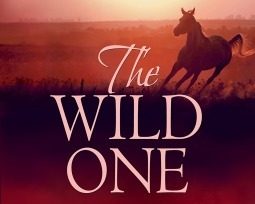
  • Review: The Wild One

    Review: The Wild One

    Janet Gover, The Wild One  (Choc Lit 2015)

    https://www.goodreads.com/book/show/25183607-the-wild-one?ac=1&from_search=true&qid=4cFJ90sPBI&rank=1

    Tyangi park ranger Dan is waiting by the billabong, kookaburra laughing, watching the brumbies (wild horses) drink at the waterhole. He is tasked with shooting them, a cull—they are non-native, damaging the parkland—but he’s not happy about it.
    Quinn, photojournalist of some fame, is even less happy about it. She cooks up a plan to save the brumbies and shoot a photo-journalism story for Australian Geographic. Trish, manageress of the Coorah Creek Hotel, barman Jack and cook Ellen, Doctor Adam and his air-ambulance pilot wife Jess want to help.
    When horse-breeder Justin and Carrie, a jockey retired from horse racing due to a serious accident, join the team, the project starts to look do-able. Carrie and Justin recognise the head stallion of the brumbies as being from a prized bloodline, offering Justin new breeding stock for his stud farm.
    The free-spirited Quinn finds herself falling for hunky Dan, but they each have to bury some demons from their past before the camp side romance can become permanent. His from a war-time disaster in Falluja resulting from his failure to follow an order, hers from a failed marriage.
    You will fall in love with the characters. They each offer their special talents to the brumby-corralling project, and they have to help each other work through their demons to get the job done. If falling in love should be the result, so much the better.
    We enter a whole world, here, the Australian outback, a wild, beautiful world that humans are at pains to tame. We learn all about the business of corralling wild horses, too.
    This is Book 2 in the Coorah Creek series. Quality chick-lit, beautifully written. Not really my genre, but I thoroughly enjoyed it.

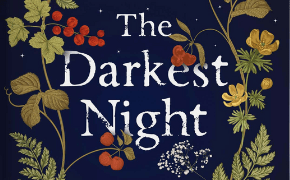
  • Review: The Darkest Night

    Review: The Darkest Night

    Victoria Hawthorne, The Darkest Night  (Quercus Publishing 2024)

    https://www.goodreads.com/book/show/63259977-the-darkest-night?ac=1&from_search=true&qid=hfljxCebya&rank=1

    A haunting story of witches, family secrets and the pain that never heals


    Ailsa Reid escapes to Fife after a scandal at work, to find her grandmother Moira missing and her grandfather Rupert injured.
    In her search for Moira, she needs help from her estranged mother Rowan. The mother/daughter love/hate relationship is tense. Ailsa is ‘annoyed with how [her] name sounds in her mouth’.
    The solution to the mystery involves witches, those gravestones on the hill, a mother and daughter, burned on the hill above the house, and an ancient curse.
    Bed-bound Selina finds healing as her friendship with Elspeth grows. The two share a secret, yet Selina has a further secret, too. The arrival of cousin Samuel complicates matters. He ‘knows’.
    I found the non-involvement of the police and the hospital strange. Someone has bashed her grandfather over the head, but the women just stay in the kitchen smoking cigarettes. And I wondered how Selina knew everyone in town when she had never left her bed.
    Despite the worrying scenario of the injured grandfather and the missing grandmother, the story begins quite low-key, then building, alongside wonderful characterisation and family dynamics. It features several examples of beautiful writing about strong emotions. (‘Her thoughts crash into one another in her mind with explosive clangs.’)
    The overall plot is very good, every element linking into every other element, frequently taking a dreamlike tone, as if we’re not really sure what is reality. Part II moves back to Moira’s childhood, which is a bit of a shift.
    I love how we are fed the story of Ailsa’s work scandal bit by bit—first, a ‘name’, then an ‘allegation’, then an ‘incident’, then an ‘investigation’—and how it gradually connects to the missing grandmother story. Both witch-hunts, ancient and modern—’accusations flayed across their skin’—ending in the Reid family women finally finding each other.
    This review originally appeared in Historical Novels Review.

  • Review: Self-editing for Fiction Writers

    Review: Self-editing for Fiction Writers

    Renni Browne, Dave King, Self-editing for Fiction Writers   (William Morrow Paperbacks 2004)

    https://www.goodreads.com/book/show/180467.Self_Editing_for_Fiction_Writers?ac=1&from_search=true&qid=hUFbV8cxLD&rank=1

    The chapter headings say what you’re going to get in this manual: Show and Tell, Characterisation and exposition, Point of view, Proportion, Dialogue mechanics, See how it sounds, Interior monologue, Once is usually enough, and Sophistication.
    A lot of it will be stuff you already know—create an ebbing and flowing rhythm between Showing and Telling; write your expositions in your POV character’s voice; Show emotion rather than explaining; use action ‘beat’s in your scenes and dialogue; use dialogue and interior monologue to portray your characters; Tell about setting in action and dialogue; don’t give us all the answers to the questions all at once; go easy on the speaker and thinker attributions; don’t use two characters or two scenes to do the work of one.
    I’ve read this stuff many times, but it does not hurt to go over it once again. And each chapter ends with a few useful exercises where Browne and King show how editing looks in practice. (I would have liked even more)
    Certain chapters, in particular Proportion and Sophistication, taught me things I did not know.
    Proportion deals with identifying the main import of what you are writing. I’m often suggesting, in novels I edit, that authors should have no more than one or two beautiful metaphors or highly descriptive adverbs or adjectives per page. But it’s not a question of quantity, but rather of quality. Don’t go on and on, waxing lyrical with beautiful metaphors, about things which aren’t very important in the grand scheme of things. If plot developments are minor, they may not be worth a scene. If you spend time and energy establishing a state of mind, make sure it makes a difference, a turning point in their life.
    Dialogue, mechanics and style are things you must develop as your writing matures. But some tips were a revelation to me. We should limit ‘doing x, she did y’ and ‘as she did x, she did y’ sentence structures, and don’t use adverbs. Instead, reframing them using dynamic verbs in action or dialogue. Instead of ‘you cretin, she said angrily, setting the cup down’, write ‘‘You cretin’. She slammed the cup down.’
    Above all, read it out loud. Highlight in yellow passages that make you say, ‘ah, yes’, and those that don’t, edit.

  • Review: Outlining Your Novel

    Review: Outlining Your Novel

    K. M. Weiland, Outlining Your Novel (PenForASwordPublishing 2011)

    https://www.goodreads.com/book/show/12786668-outlining-your-novel?ac=1&from_search=true&qid=xNjxXQmjYn&rank=1

    This manual reviews KM Weiland’s tips on writing Outlines for your novel. Each chapter also includes choice advice from several excellent and best-selling authors on the subject.
    Contrary to popular preconceptions, writing an outline does not stifle creativity, it stimulates it, while crucially lending it structure. As you move from Conceiving to Outlining to Writing to Revising, you are moving backwards and forwards between your right and left brain, the analysis of the one and the passion of the other feeding into each other.
    If you spend three entire months on your Outline, don’t sweat it, it might save you a year on the Revision.
    Weiland goes through the main questions you should ask yourself as you go about composing your Outline. Most of them are ones you would assume, but it never hurts to read a book about it. Asking these questions from the very beginning not only saves you time on the Writing and Editing, it also provides direction. You can explore possible beats and directions before you commit hours to writing them (and get stuck with a bunch of ‘darlings’ which are painful to ‘kill’).
    If you’ve already asked yourself the pertinent questions, your writing can flow from that by simply ‘connecting the dots’. Your writing will be more confident and your story will have better structure.
    In the second stage, when you write your Extended Outline, you can brainstorm different ways to accomplish the main criteria you set out for yourself. E.g. She needs to be rescued by someone. Who would be the most interesting character to do that? What are 10 possible things that could happen? What are 5 possible outcomes from this situation she’s in?
    My biggest take-aways from this book is that Outlining my novel can help me pinpoint where I need to up the stakes to ramp up the conflict and where I need to connect her external struggle to her internal struggle. And that to keep readers engaged, scene endings/chapter endings should have an inherent question: Will she win the fight? What’s in that letter she just opened?

  • Review: Structuring Your Novel

    Review: Structuring Your Novel

    K. M. Weiland, Structuring your Novel (PenForASwordPublishing 2013)

    https://www.goodreads.com/book/show/18371991-structuring-your-novel?ref=nav_sb_ss_1_22

    This how-to manual goes over not just how to Outline your novel, but how to structure it.
    The dramatic elements necessary for a good hook. An opening line must have character + action + setting.
    The first 20-25% is the setup, in which you develop personality + motivation + beliefs. Make clear what they stand to lose. Every scene must matter, like dominoes up to the 1st plot Point.
    The inciting event = sets the story in motion. (when the crime happens)
    The key event = is what the story is about. (when our man takes the case)
    Use your characters’ personal surroundings, tells us about how they live, how they are reacting to things, etc. and the earlier the better-before the 1st plot point. Use all the senses.
    The 1st Plot Point-25% mark-moment when character crosses her personal Rubicon, often including change in physical setting or cast of characters, something to which Prot reacts very strongly. Make it cataclysmic.
    1st Pinch Point – around 3/8th mark. She runs afoul from reacting to 1st Plot Point.
    Midpoint- at the 50% mark. Prot’s reaction to the 1st Plot Point, point at which she can never go back. Prot stops reacting and starts acting, arc of personal growth
    3rd Act-Slugfest
    2nd Pinch Point-At 5/8th mark-showcases the Antagonist, how Ant is capable of defeating Prot.
    3rd Plot Point -at the 75% mark. She responds in a completely different way with action and fights back.
    Climax- last 10%. Shows a glimpse of how Prot has changed- a relaxed moment when we see her in the middle of her new norm.
    The anatomy of a scene = scene (external action) + sequel (internal reaction). Goal + Conflict + Outcome. The sequel = Reaction (period of introspection) + Dilemma (Review + Analyse + Plan) + Decision.
    The anatomy of a sentence = Motivation + Reaction; Cause + Effect; 1. Feeling/thought 2. Action or response 3. Speech.
    It also features Dos and Don’ts on Dialogue, Conflict, Disasters, Telling and Showing and general Writing Style.
    A lot of stuff you may already know, but it never hurts to have it all laid out for you.

  • Review: Destoyer of Worlds

    Review: Destoyer of Worlds

    Martin J. Bird, Destoyer of Worlds (Melville House 2024)

    https://www.goodreads.com/book/show/216981753-destroyer-of-worlds?ac=1&from_search=true&qid=WCN0xuq1YL&rank=2

    A space fantasy in Douglas Adams style with a truly innovative plot.

    The story begins with a great first line: ‘I’m not a deep enough thinker to be troubled by existential conundrums’ followed by many paragraphs of existential conundrum—narrator Rintoul son of Starveall explaining how he came to leave his home planet and became a Black Robe. It’s not always the most exciting place to start, with a bunch of backstory, but this first chapter sets the tone, letting us know that we are in for a humorous ride.

    After reciting prayers, ‘a series of sounds without meaning’, and imbibing a dark red narcotic substance made from leather-bark fruit, Rintoul has a mystical vision—a prophecy?

    He wears a magical ear circlet ‘communicator’ given to him by his wife Elaine as a wedding gift. Their love story is romantic. He rescues her from shipwreck; she has some kind of magical power.

    Bird emulates Adams’ humorous, self-deprecating Voice, not funny ha-ha or jokey, but rather sardonic and witty. The world is vaguely mediaeval, vaguely Celtic, yet the narrative style is modern and colloquial. Rintoul exclaims ‘God’s b****x’, after his vision. His apprentice is ‘freaked’.

    Often, this makes for anachronism, but in a sci-fi fantasy makes for a light, comic narrative style. Some lovely metaphors are timeless—’the thread of my thoughts whiffled into thin air’. Some lovely mash-ups: ‘in for a ring, in for a torc’; ‘a few cucumbers short of a jar of pickle’. A cute nod to Mae West: ‘Is that you, or just me thinking it’s you?’

    I loved: ‘I was gradually becoming used to the idea of scary technology from other worlds’. I suspect a lot of the computer analogies were à propos, but being a self-professed technophobe, they washed over me. More savvy readers would find them funny.

    To world-build without info-dumping, Bird uses the effective and entertaining device of having the narrator commenting on things to ‘you Earthlings’. His wife Elaine and her uncle are outsiders, hinting at a reason for their strange abilities, so they present a world upon which Rintoul’s is the external viewpoint. They reveal their strange abilities and their extra-Themis-estrial origin to Rintoul bit by bit, in the midst of end-of-the-world ticking time bomb suspense, which reminded me of the wacky manic science of a Doctor Who episode. It’s all the more suspenseful as the ETs themselves don’t quite understand what’s going on.

    I would have appreciated more action and plot before the story of the vision, which is mostly internal monologue, to give us more time to suspend disbelief and get hooked into the world and the Protagonist. His quest or goal—saving Themis from his prophecy coming true?—could have been clearer, yet he wasn’t clear on it himself. First, we have to figure out what ‘the stone sphere’ is all about—but maybe that is a feature of the Adams-esque genre—wacky stuff happens out of the blue to people in space, and we have to work out why from comedic comments based on the (real Earth) human condition.

    In the end, the conclusion is the same as in Hitchhiker’s. Life goes on, much as before, often hilariously, with or without the presence of aliens.

    This review first appeared in Reedsy Discovery.

  • Review: The Bedlam Cadaver

    Review: The Bedlam Cadaver

    Robert J. Lloyd, The Bedlam Cadaver (Melville House 2024)

    https://www.goodreads.com/book/show/198919150-the-bedlam-cadaver?ac=1&from_search=true&qid=p1bIhsqcP8&rank=1

    1681 Restoration London. The king’s brother James, a Catholic, is heir to the throne, but there is rumoured to be a ‘black box’ containing evidence that the king’s illegitimate son, the Duke of Monmouth, is the rightful heir.
    In the heat of summer, rich young women are being kidnapped and murdered. First is Diana Cantley, then Elizabeth Percy Thynne. Harry Hunt, formerly of the Royal Society, comes falsely under suspicion. Harry’s quest to clear his name takes him all over the 17th century city, to the doors of Bethlehem (Bedlam) Hospital, into the studio of royal mistress portrait painter Peter Lely.
    It’s a historical thriller, an interesting retelling of a real historical murder, with a cast of characters famous from history—King Charles II, Christopher Wren, Robert Hooke (architect of Bethlehem Hospital)—and other dignitaries introduced by the artful device of a dissection demonstration at Gresham College. But, it’s the wrong cadaver, which makes for a brilliant Inciting Incident.
    This period of history is full of intrigue, with Protestants and Catholics vying to put their candidate on the throne.
    On the run for his life and his reputation, Harry is swept by the Thames as far as Rotherhithe, affording us a tour of the Docklands area with all the infrastructure and the guilty detritus of colonialism and the slave trade. I love how he communicates with Hooke from a distance.
    Harry finds the missing woman but doesn’t let us know until page 316. We also hear nothing about the ‘black box’ until this point.
    The genius loci is beautiful, including even a public execution at Tyburn. The exposition of the political debates and events of the period is well done. There’s a lot to get across, and Lloyd does it mainly through dialogue, without sounding forced.
    Book 3 in the Hunt & Hooke series.
    This review originally appeared in Historical Novels Review.