Tag: fitness

  • Review: Piso Christ

    Review: Piso Christ

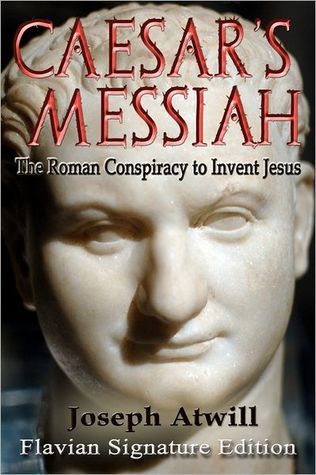
    Roman Piso, Piso Christ (Trafford Publishing 2010)

    https://www.goodreads.com/book/show/10002273-piso-christ

    Tricks with names and numbers, utter poppycock


    This book contends that Jesus was invented by (the fictionally invented) Arrius Calpurnius Piso masquerading as Flavius Josephus. The New Testament was not the story of Jesus but rather a satire on the military campaign of Titus. A great historical conspiracy perpetrated by the ruling class in order to hoodwink the rest of us. The author doesn’t reveal his real name out of fear that people will kill him.
    Not only was ACP writing under the pseudonym of Flavius Josephus, he was Dio Chrysostom, also Philo, Epictetus and Plutarch—hey, why not Shakespeare in the bargain? He was also the Antonius Primus who killed Vitellius, and Claudius Aristion, Maturus Arrianus, Curtius Montanus and Flavius Archippus. These multiple aliases would have had the man living in Rome, Prusa, Ephesus, Altinum, Athens and Crete all at the same time.
    Seneca and Lucius Piso wrote the Gospel of Mark. Arrius Piso’s son Justus was Justin Martyr. Eusebius was really Constantine’s brother, Pliny was really St Paul, Suetonius was Antoninus Pius.
    We plebs have had the wool pulled over our eyes for two millennia, as is ‘revealed’ using secret codename aliases and gematria (numerology), which I discount as proving anything sensible. It gets even loonier with discussion of so-called ‘royal language’ (e.g. made-up linguistics like Annius is really Arrius, because they changed the Rs to Ns). Entire chapters are devoted to the supposed dirty double entendres in early Christian writings—e.g. whenever the Gospels said ‘walked’ they really meant ‘have sex’; the ‘seven trumpets’ of Rev. 8:2 is about church leaders farting.
    I’ve always wanted to examine the Jesus-never-existed conspiracy theory, and now I have. Utter poppycock.

  • Review: A Post Office Christmas

    Review: A Post Office Christmas

    Poppy Cooper, A Post Office Christmas (Hodder & Stoughton 2021)

    https://www.goodreads.com/book/show/57199727-a-post-office-christmas?ac=1&from_search=true&qid=GCAzMqpNNH&rank=1

    1915. With Christmas approaching, Post Office Girls, Milly, Nora and Liza, are working harder than ever at the Home Depot to get letters and parcels to the troops on the front line.

    Milly is transferred to a different department. Was it because of her poor background? Her suffragist leanings put her out of sorts with her posher workmates. She misses her friends, but takes solace at her local suffragette group ELFS, and makes a new friend at work, ex-soldier Jack.

    Coming home from a meeting, Milly is accosted by a drunken soldier and saved just in time by fellow suffragettes, Hilda and Elise. The police believe his side of the story.

    Milly takes up the cause of a miscarriage of justice.

    It makes one’s blood boil to remember how women were treated—the pay differential, being accosted in the street at night, not being listened to by police, having to sit in a separate section of the pub to avoid catcalls, always being the ones in charges of tea and refreshments—not to mention multiple children and the ever-present threat of the workhouse.

    All the while, Sylvia Pankhurst has ruled ‘no militant action’ due to the war. But the ELFS ‘girls’ have better ideas, and Milly takes some people into her confidence that she shouldn’t have done.

    The royal family’s visit goes off without a hitch, after Milly and Jack save the day. The jolly Christmas tale ends well, and revelries spill out onto Euston Road. Looks like our boys will be getting their parcels, after all.

    It’s not often one finds a novel that deals with the working lives of working-class people—the ‘girls’ relationships with their workmates and supervisors, what they actually do in order to sort the post, how they spend their lunchbreaks.

    This is Book 2 in the Post Office Girls series.

    This review first appeared in Historical Novels Review.

  • Review: The Bewitching

    Review: The Bewitching

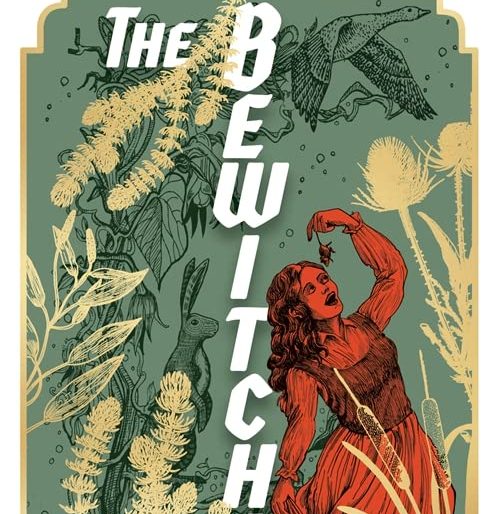
    Jill Dawson, The Bewitching (Sceptre 2022)

    https://www.goodreads.com/book/show/60038658-the-bewitching?ref=nav_sb_ss_1_21

    This 16th century tale tells the true story of a woman accused by her neighbours of witchcraft.

    Visiting her new neighbours in the Fenland village of Warboys, Alice Samuels meets the daughters of Squire Throckmorton, gifted the position by Sir Henry Cromwell.

    One of the girls, Jane, is experiencing terrifying fits. Jane points to Alice and calls her an ‘old witch’.

    Martha, the servant whose mother was a nun, looks after the Throckmorton children. Martha senses that there is some kind of ‘wrongness’ in the Throckmorton household. The son, Gabriel is in disgrace and is being sent away, and nobody knows why. She watches all this going on, but feels her position as servant doesn’t entitle her to say anything. The master is strangely keen to ask her counsel about things.

    The fits spread to the other girls, and the doctor says the cause is ‘sorcery’. More ‘signs’ of Alice’s witchery arise—many of them simply tricks the girls use to get attention—many simply made up. Even the lice in Bessie’s hair are a ‘sign’. High-born as they are, their word is taken as evidence.

    This is a credible account of a conspiracy theory gaining traction and snowballing, but the narrator, Martha, never actually denies the craziness, so the reader is swept along. It’s a bygone time, when life centred around the master’s great house. The local abbey lies in ruins; the black-hooded monks with their silver incense burners gone, the nuns told to get married. The old herbs are considered witchery, the old prayers popery. The dynamics between the servants, their masters and the children make the story all the more tragic.

    It’s well written, and there are some lovely agricultural metaphors. I found it quite effective that the story was told from a servant’s point of view.

    This review first appeared in Historical Novels Review.

  • Review: Skullduggery at Downtown Medicine Mound

    Review: Skullduggery at Downtown Medicine Mound

    Dennis Boyd Call, Skullduggery at Downtown Medicine Mound (Kindle 2021)

    https://www.goodreads.com/book/show/57979802-skullduggery-at-downtown-medicine-mound

    This is the second book in the series, the first book, Quanah, told the story of Quanah Parker, the son of the historical Comanche Chief Peta Nocona and Cynthia Ann Parker. It’s aimed at a YA readership.

    Jonathan, with the help of his spirit guide Prairie Flower, has unified the five generations of descendants of Chief Nocona, who had been driven apart by the To-sah-wi Alliance. Prairie Flower informs him that the Alliance still plans to destroy the Comanche Nation. Jonathan has 14 days before the next Tribal Council Meeting atop Medicine Mound to thwart their plans. To do so, he needs to consult the Apache prophetess Ōn-ah-wa Hastings.

    Silver Bear, self-proclaimed leader of the To-sah-wi Alliance wants to rule all Native Americans. Jonathan’s father is offered a job by the Herring brothers, but can he trust them? Has Sir returned to the Alliance?

    The style is a bit simple; perhaps this is suitable for a YA audience. But it’s too long for 13-14 year olds. It would have benefitted from a tight editing. A lot of the action takes place in the spirit world.

  • Review: Ranger

    Review: Ranger

    Timothy Ashby, Ranger (Sharpe Books 2022)

    https://www.goodreads.com/book/show/60548893-ranger?ac=1&from_search=true&qid=5kKJqQCoVb&rank=1

    1796 Arthur Charteris inherits a baronetcy and comes from Granada to Leicestershire to claim it. With him are two servants and his child Alexander (Chart) by his recently deceased slavewoman Weju. Half-caste Chart is raised as a gentleman alongside his cousin, the hunchbacked Pemberton, until Pemb commits a crime and is banished from the household.

    Chart goes to boarding school where Pemb is already studying and is violently bullied by his cousin. He falls in love with Arabella, but they are separated when he joins the East India Company.

    Upon the death of his father, Chart returns home to find not only that Pemb has thoroughly usurped him and married Arabella, but legally he is considered Pemb’s chattel. He is seized and taken to Grenada to be worked as a field slave on the sugar plantation where he grew up.

    Chart ‘feels like an Anglo-Saxon’ inside, a ‘man caught between two worlds’, and despite being helped by prominent abolitionists, he tends to look upon his case as a property dispute rather than a manumission issue.

    The French Revolution comes to the island in the form of a slave revolt, but Chart’s position is ambiguous. The revolt gives him his freedom, but he refuses to join in the violent reprisals against the British landowners. Instead, he joins the Black Rangers and fights against the French, to crush the rebellion. But he still has to face his cousin.

    The interplay between class interests, race interests, and national—even tribal—interests is complex, aggravated by the hypocrisy of the French Revolution, betrayed before it could truly deliver liberté, egalité, fraternité.

    The events in this book and many of the people were real. Unfortunately, the horrific depictions of abuse and degradation of the slaves were taken from true accounts.

    Book One in the Storm of War series.

    This review first appeared in Historical Novels Review.

  • Review: How To Play Mah Jong: Essential Guide For Beginners

    Review: How To Play Mah Jong: Essential Guide For Beginners

    Charles Nathan, How To Play Mah Jong: Essential Guide For Beginners (Kindle 2022)

    https://www.goodreads.com/book/show/60148554-how-to-play-mahjong?ac=1&from_search=true&qid=MLR37tGssH&rank=1

    I love playing Mah Jong with my son Genji and Chinese daughter in law Guo, and whenever I visit their house, there’s an argument—shall we play Monopoly (Genji wants) Mah Jong (Mummy and Guo want). Now that I’ve purchased a gorgeous Mah Jong set ordered all the way from China, I think Mah Jong will be winning out, so I want to ‘bone up’, so Guo won’t have to instruct us all the time. I played Mah Jong when I lived in Japan, but never learned how to score.
    Kindle offered me this for £0.00, so what’s not to like?
    The rules are different from the rules Guo taught us. According to Guo you can only pick up a tile from the person to your left who just discarded, but only to meld a ‘pong’ (3 of the same) or a ‘kong’ (4 of the same); according to this book, you can pick up from anyone’s discard; and you can also pick up and meld for a ‘chow’ (straight), though chows don’t win you any points. And if someone interrupts the rotation order by picking a discard, the rotation continues anew with the player to their right.
    It also says you pile the tiles willy-nilly in the centre of the table; whereas, as everyone knows, you’re supposed to create a square wall of double rows of 13 from which the players draw their hands of 13, 14 for the one who’s going to play first. The last tile to be drawn is called the ‘hor’ (joker) and is displayed face up on top of the wall. In Japan, fights will erupt if this protocol is not observed to the letter.
    This book covers the basic play (according to somebody’s rules) and how to score, but does not include any points on strategy.

  • Review: The Warrior Gene

    Review: The Warrior Gene

    Neil Staley, The Warrior Gene (Kindle 2023)

    https://www.goodreads.com/book/show/77776478-the-warrior-gene?ref=nav_sb_ss_1_31

    Apex Labs agents Reg Thompson and Harry Caine are on a security stake-out, and a Fed from the FBI, Joshua Smith, is on a case nearby. He introduces himself, then shoots them in the head.
    Back at the lab, Dr Alex Bishop’s boss Henry Drexler calls him to take a look at Batch DD-401A. ‘incomplete data utility’. Yet the client is moving forward the launch of Phase One.
    A rhesus monkey named Jimmy is injected with ‘the Icarus particle’, and the moneymen watch as Jimmy viciously destroys an uninjected monkey.
    There are numerous characters and minor inter-woven plotlines—the secret commemorative reward in the box, James Devlin’s promotion and abduction by his father and Blakenstock, two security agents murdered outside Alex’s lodgings, Mrs Galasky’s witness statement, the investigation against the religious cult leader, the fire at the lab, the flash drive and the other-worldly voice, Audrey’s backstabbing, the Mamluks and The Overwatch in the desert, Harun the Invisible Light—and that’s only up to chapter 16. At the final hour the ritual in the desert, Klick’s abusive religious cult and the warrior gene storylines converge.
    The multiplicity of characters makes it hard to keep track—my brain protested at being introduced to a whole new set of characters in chapter 20. The ‘head-hopping’ (switching of Points of View) may be confusing, but it adds intrigue and gives the reader a chance to piece things together without having everything explained.
    This novel is brilliant at creating suspense, using various skilful techniques as well as the old cliff-hanger. The science appears spot on—indeed, MAO-A has been called the ‘warrior gene’. The dialogue includes a perfect comeback to ‘age before beauty’—‘assholes before angels’.
    I couldn’t understand the timeline of: James and his father’s boss Blakenstock giving him a big promotion, Blakenstock catching him in flagrante with a woman, and his massage (‘two hours later’ than the in flagrante). And what was the ‘giant fist smashing the building to the ground’ on page 161? And after Alex knew how evil the code was, why did he still want to save it?
    The Concept—a techno/detective thriller involving the so-called ‘warrior gene’ is great. This follows in the tradition of techno-thrillers about scientifically engineered super-soldiers (Frank Herbert, Dune; Robert A Heinlein, Starship Troopers; Jeff Vintar, ‘Hardwired’ [iRobot]) and borrows the elite troop of Mamluks guarding secrets in the desert from ‘The Mummy’, the hole in the centre of the ceiling from ‘The Fifth Element’ and the ‘bloodline’ idea from The Da Vinci Code—all tropes too good to exclude.
    The action is well paced using scene-setting and dialogue; the final chapters are a rollercoaster of excitement with a marvellous twist at the end. It would make a great action film.
    This review first appeared in Reedsy Discovery.

  • Review: The Sinner’s Mark

    Review: The Sinner’s Mark

    S. W. Perry, The Sinner’s Mark (Corvus 2023)

    https://www.goodreads.com/book/show/74836672-the-sinner-s-mark

    Elizabethan mystery full of period character

    Nicholas Shelby, the queens’ physician, is summoned. Queen Elizabeth is fading but is nevertheless still interested in ‘young men with good calves and passable looks’.

    Shelby’s father is accused of distributing a seditious tract, and he is determined to clear his name. One of the suppliers of ingredients for wife Bianca’s simples, Aksel Leezen, has willed to her his house in the Steelyard. There, Leezen has left plaster casts of bones—écorché models, for studying anatomy, explains Nicholas—and a gruesome wooded effigy of a dead girl with half a face. Three young boys go missing.

    An old war-buddy arrives—his marvellous name is Petrus Eusebius Schenk.

    As Shakespeare’s players act the assassination of Julius Caesar, actors in another plot are laying dastardly plans. As well as the nods to the Gunpowder Plot, which would happen five years after the events in this story, there are bits that were inspired by real occurrences in Elizabethan London.

    Dialogue is good, but we don’t really hear the voices of the characters. The Voice is that of omniscient narrator.

    This is sixth in Perry’s Elizabethan Jackdaw Mysteries series, and we know Nicholas, Bianca, Rose and Ned from the earlier books. Their characters are further developed here, and necessary backstory is well handled.

    The plot develops languidly, and the slow pace allows for character development and scene-setting and gives one a feeling of the period, when even a trip across London required a horse ride, a wherry across the river, a stay in an inn.

    Another element comes across as true to the period—the schizophrenic and precarious nature of the religious ups and downs and the shifting goalposts on what was considered heresy. The character Ned voices the experience of someone newly inspired by revolutionary Protestant sermons, and Schenk’s zealotry is believable.

    This review first appeared in Historical Novels Review.

  • Review: The Priest’s Wife

    Review: The Priest’s Wife

    A. G. Rivett, The Priest’s Wife (Pantolwen Press 2023)

    https://www.goodreads.com/book/show/198910874-the-priest-s-wife?ref=nav_sb_ss_1_24

    When her husband Hugh the parish priest dies, her adopted son Dhion—a time-traveller from the future introduced in Book One, The Seaborne—his wife Shinane and the other villagers help Morag with her loss. Shinane is carrying new life—twins.

    Morag has lost her husband and come Bride’s Day will have to vacate the priests’ house. She has lost her place in the mediaeval Scottish/Irish island’s society and even feels alienated from her new grandchildren. She travels to Kimmoil, her birthplace two days north, on a quest to discover the identity of her own mother. Aided by the mystical Guardians of the Island, she embarks on a spiritual awakening.

    She finds the welcome in Kimmoil less than warm; the town is suffering from an outbreak of scurvy. She meets the daughter of her half-brother, Sorcha, unloved as she had been, and Morag brings the girl back with her.

    After Hugh’s death, the villagers look to Morag for pastoral and ritual care. ‘Ye’re the priestess, Auntie,’ says Sorcha. But when the new priest Aidan arrives, he tries to pull the parish away from their traditional druidic beliefs and customs, now deemed heretical, and butts head with the shareg (headman). The lives of Aidan and Morag reach a crisis point.

    Beautifully written and evocative of the culture of the time. No anachronistic language intrudes upon the beautiful picture. We see a misty, green world, where the Otherworld of the Sidhe is not so distant from life among the living.

    A doctor, crofter and ordained minister himself, Rivett understands well the tight relationship of the peasants to the land and the seasons, and the religious ideas and practices of the period. The contrast between the ‘nature-affirming’ Celtic faith and the ‘nature-denying’ Catholic is very much part of the dynamic between Aidan and Morag.

    The review first appeared in Historical Novels Review.

  • Review: St Francis: An Instrument of Peace

    Review: St Francis: An Instrument of Peace

    Wendy Mason, St Francis (novum pro 2018)

    https://www.goodreads.com/book/show/42850145-st-francis—an-instrument-of-peace?ac=1&from_search=true&qid=hxdce2AC0F&rank=1

    Francesco Bernardone grows up in Assisi, the son of a wealthy cloth merchant. From an early age, he seems ill disposed toward a life of business, instead preferring drinking and singing. He is influenced by a literary diet of troubadour’s romances and longs to be a great knight like Roland. He was not particularly religious.

    One day, keeping shop for his father, he gives the entire day’s takings to a beggar, and feels spiritually enriched by the act, despite fierce scolding from his father.

    Defeated in battle, he is held for ransom at Pelugia for one year. In his small cell, he develops his method of ‘walking and praying’. He hears the voice of God, and repents his past lifestyle, beginning with the penance of a pilgrimage to Rome.

    On his return, he repairs the church of St Damiano. He hides to escape his father’s wrath but has to leave home to finally be safe. He becomes an itinerant repairer of churches, dedicated to teaching others ‘how it feels to love and support one another, to bathe in God’s grace and live in anticipation of everlasting life’ and founds an order of friars.

    The story is fictional but woven around what we do know of the historical St Francis. It is told in first person, and we walk alongside him. Mason really manages to bring the saint to life. His character arc, also, is interesting: the influences in his life and how they shape him and how he changes his life in order to fulfil his mission. The stories of St Francis’ life are absolutely beautiful. His travels feature some gorgeous, loving descriptions of nature, affection for which St Francis is so legendary.

    There is just enough of his early family life to explain how he was motivated by his father’s disapproval, and just enough action to keep the pace up.

    An enjoyable and informative read, and spiritually uplifting.

    I received an ARC from the author.