Tag: fitness

  • Review: Pilot Who Knows the Waters

    Review: Pilot Who Knows the Waters

    N. L. Holmes, Pilot Who Knows the Waters (WayBack Press 2023)

    https://www.goodreads.com/book/show/61198050-pilot-who-knows-the-waters?ac=1&from_search=true&qid=FLio8ymDmz&rank=1

    1335 BCE. The story is fictional but based on real events during a tremendously interesting period, the suppression of the Aten revolution of Akhenaten and the Zannanza Affair. The death of Prince Zannanza led to a period of conflict between the Hittites and Egyptians that culminated in the Battle of Kadesh.
    Lord Hani is sent to Hattusha to the court of King Suppiluliuma to negotiate a Hittite bridegroom for the Queen of Egypt. The Hittites called this queen Dakhamunzu—basically ‘great king’s wife’ in Luwian—so we don’t know who the desperate queen was—Nefertiti, Meritaten or Ankhesenamen. Holmes has it as Meritaten, or Meryet-aten.
    At the palace, the Egyptian ambassadors meet with chamberlain Hattusha-ziti, who is then sent by the Hittite King to check out the situation in Egypt before Prince Zannanza is offered. Intrigue, coups d’état and murder ensue.
    This is Book 6 in the Lord Hani series, so the main characters have been established. Helpfully, the cast of characters and glossary comes at the beginning. There is adequate characterisation of the main players, the diplomatic team, and scene-setting is good in terms of descriptions of the palace, travel, etc.
    I would have liked a fuller rendition of the negotiations with King Suppiluliuma. The discussions that led to this extraordinary betrothal must have been extraordinary. We should certainly have heard the letter of the queen: ‘…I would not wish to take one of my subjects as a husband. I am afraid.’
    I like how Holmes uses the real Egyptian words for things. Interesting details about the Hittite culture are seen through Egyptian eyes—e.g. the diplomats are amazed that the Hittites have no gardens. The daily family lives of the Egyptians are well portrayed, and the family scenes allow for good pacing, contrasting the action of the political events. The dialogue is natural—difficult in historical fiction. The plot is interesting and throws up some fascinating twists.
    A wonderful ancient-Egypt detective story.
    I was given an ARC by the author.
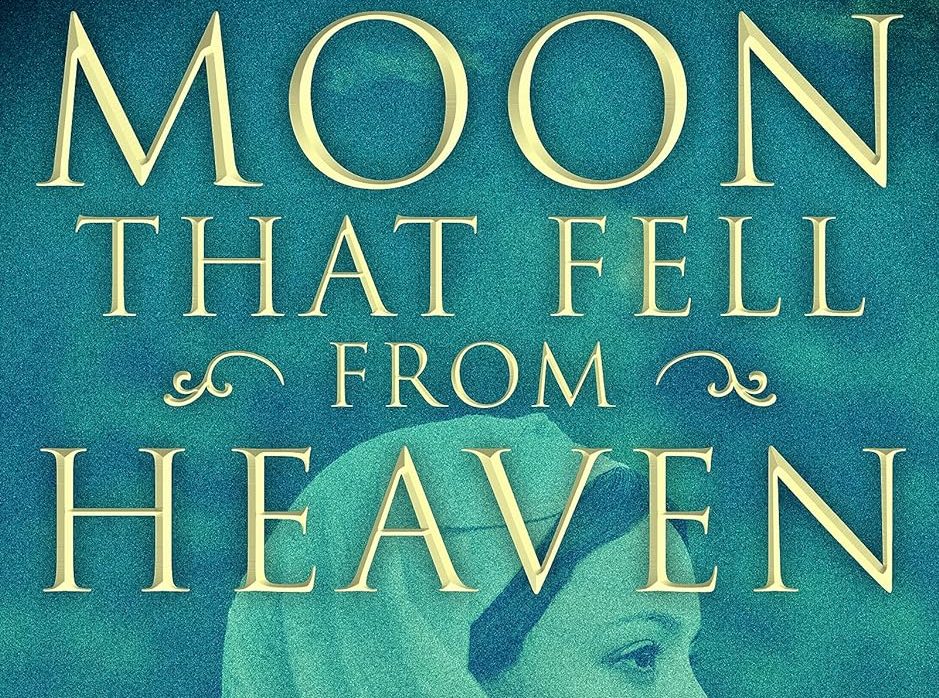
  • Review: The Moon that Fell from Heaven

    Review: The Moon that Fell from Heaven

    N. L. Holmes, The Moon that Fell from Heaven (Red Adept Publishing 2023)

    https://www.goodreads.com/book/show/197978391-the-moon-that-fell-from-heaven?ac=1&from_search=true&qid=pS1MBuEiDJ&rank=1

    1213 BCE Ehli-nikkalu, king’s wife of Ugarit, is miserable. Her mother-in-law Sharryelli has all the power in the palace, and her husband King Niqmaddu disrespects her. He drops a clay tablet—an overture to some foreign king, perhaps the Mizri (Egyptians), planning an invasion of her father the great king of Hatti. She swiftly moves to warn her father.
    Amaya’s father is to take the message to Hattusha, but a murder intervenes. Chief scribe Ili-milku (real historical author of the Ba’al Cycle) brings the news to the queen. Amaya inherits her father’s mission and becomes involved in the effort to thwart the invasion. She and her siblings come to live at the palace.
    It opens full of action, and the story is full of suspense and palace intrigue. The dialogue doesn’t seem out of place for the period—difficult to do for such an ancient age—and the metaphors are time- and place appropriate (e.g. couriers ‘sweeping into a collective bow like a field of wheat in a breeze’; treason is ‘an asp whose bite might well kill itself rather than its intended victim’).
    The plot is already exciting by about Chapter 2, and the inter-relationships of the characters are interesting. Fear, pain, love, loss and remorse are expressed with great emotional depth. The portrayal of falling in love is wonderful—e.g. ‘her heart seemed to rise up her throat like a bird taking off’.
    Ehli-nikkalu is especially interesting. I loved how she was finally able to find her tears in the scene with the dead bird. Ili-milku’s reaction is a lovely balance between compassion and comportment befitting a courtier.
    It is clearly well-researched. Author’s Notes at the end of each chapter make the necessary factual and historical points, thus not clouding the spontaneity of the writing style in the narrative.
    Other novels in the series precede this story, bringing to life the history of a fascinating period.
    I received an ARC from the author.

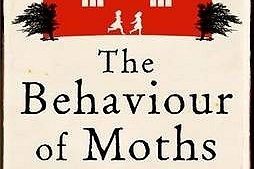
  • Review: The Behaviour of Moths

    Review: The Behaviour of Moths

    Poppy Adams, The Behaviour of Moths (Virago 2009)

    https://www.goodreads.com/book/show/4539646-the-behaviour-of-moths?ac=1&from_search=true&qid=SnysdeNaQl&rank=1

    Ginny is waiting for her sister Vivi in the crumbling family manse. They are from a long line of lepidopterists (butterfly and moth collectors). Now they are both old.
    She looks back on their childhood, wondering what it was that changed everything. Vivi had slipped off the belltower 59 years ago and ruptured her womb. That was the start of it.
    ‘What have you done with the furniture,’ says Vivi, ‘all that priceless furniture?’
    ‘I didn’t sell any of the moths,’ she replies.
    She becomes, almost by destiny, ‘the Moth Woman’. Clive does experiments to find out ‘what makes a moth a moth’. He believes that moths—and other animals—have no awareness, only instinct. With his new Robinson’s trap, he catches a Nomophila noctuella.
    Vivi grills Ginny on the manner of their mother’s death—she had fallen down the stairs—but Vivi had not known their mother was a drunk. As Ginny, Vivi and Arthur conduct their own experiments on propagation and metamorphosis, Ginny struggles to keep secrets from everyone, only to find they have kept secrets from her.
    A beautiful and innovative Gothic-style tale. There’s not so much plot action-wise; it is mostly the story of the relationship between two sisters as it evolves and the tangled webs they weave. I really loved the metaphorical parallels between the metamorphosis of moths and the cycle of human gestation, birth and death. Woven into these themes are stories of historical debates and experiments in lepidoptery during the period.
    After reading this, I’m a little less disgusted by moths.

  • Review: Something about Ann

    Review: Something about Ann

    J. Everett Prewitt, Something about Ann (Northland Publishing Company 2017)

    https://www.goodreads.com/book/show/36556230-something-about-ann?ac=1&from_search=true&qid=f7CVDtR6Hu&rank=1

    This novella is comprised of twelve interconnected short stories following a group of African-American soldiers who faced traumatic experiences in Vietnam during the 1955-1975 war. The wartime experiences of this squad were covered in Prewitt’s earlier book, A Long Way Back.
    These stories talk about what it’s like to experience fear of death, horrific injury, blood and pain and grief—the devastating experience of dedicating one’s life to a cause that failed, a war that ended in embarrassing defeat.
    These fictional stories follow the soldiers after their return home. Clarence Bankston falls for a Vietnamese nail salon owner he meets at a party, Ann Minh. Acknowledging the discomfort of the situation, having established they both ‘left in ‘69’, she is the one who apologises. Her real name is Ly Trung Trac; she is married; she is North Vietnamese.
    Some of those who fought are still, years later, looking for revenge. As one veteran says, ‘if someone threatens you or your loved ones, and you are trained to kill, you tend to see every solution through the sight of your rifle.’ These vendettas intermesh with present-day conflicts over women or money.
    Each man faces his demons from the war as well as the racism and other ills of the society they returned to.
    It is written from the soldier’s perspective. Personalising the war experience recognises that the Vietnamese and the American soldiers were arguably ‘fellow victims’.
    I liked the device of masking perpetrator’s identities using foreigners’ pronunciation of names (Mr Krantz, Mr Clarence). The portrayal of ways in which the veterans’ inescapable trauma affects their present-day struggles is intimate and profound. I loved the intimate peeks into a veteran’s mind of the one shying away from a fight for fear of hearing something he’d heard before, the smash of a head against the wall ‘like a watermelon’, and the one who kept his pistol under his bed until his wife threatened to divorce him, and the one where a shared wartime experience is powerful enough to break down the black/white racism barrier.
    The ‘jungle’ metaphors are beautiful (‘like a sleeping panther that, if awakened, attacks’; ‘hunched like a water buffalo getting ready to charge’). The use of dialogue is excellent; the characters really come through.
    It is best to read this work as a collection of short stories rather than as a novella. This format—interconnected short stories—means that some loose ends are left when each episode concludes. That leaves the reader to wonder what connects the stories; they are all connected by the theme of the struggle to come to terms with wartime trauma and the particular struggle of black veterans. ‘Some say that war produces 100% casualties.’

  • Review: Krill

    Review: Krill

    em.thompson, Krill (Eccentric Directions 2024)

    https://www.goodreads.com/book/show/213563314-krill?ref=nav_sb_ss_1_8

    6 stars. Anarchist-geeks take over the country using internet technology


    John Tucker is about to jump off Suicide Bridge when he meets Kristy ‘Krill’ McGill. He talks him out of the deed by listing all the various painful and gory ways there are to kill oneself, and they strike up a friendship. Tucker tells McGill about his problems—a mountain of debt and a too-high mortgage after his wife left him. ‘Tyler can sort you out,’ he says, Tyler being someone who runs a hedge fund called Page-R, a ‘harmless little scam’.
    Tyler suggests ‘Faustian bargain’, and Tucker’s house in Crouch End is converted into a high tech hub for manipulating the DeepNet, staffed by ‘rowdy yahoos’. Tucker joins the team. And yet, it seems there is something else going on. They call themselves the New Praetorians.
    Tucker’s expertise from his corporate background, plus his new-found friends, enable him to cleverly turn the tables on his former boss at Poppy Seed Inc. He rejigs the company to fit the new objectives.
    The protagonist/narrator’s journey is an interesting one, and profound, and a unique writing style—straight-forward, yet personal and sometimes emotional—contributes to pulling us right in. It becomes a story of redemption. The description of ‘coming in from the cold’, the process of recovering from a suicide attempt, was extremely insightful. The love story is intricate. The dialogue is wonderful, really painting the characters.
    I found it a little bit strange that Tucker was roped so easily into Krill’s political programme. For someone to be in the top managerial position of a radical political programme to which he was ideologically ‘neutral’ seemed far-fetched. It’s an exhausting 117,000-plus words (needs cutting! Or dividing into Book 1 and Book 2) and gets long in places. By the time of the anti-IRA crackdown sub-plot, I was tiring.
    Contains the great metaphor: ‘he picked up the patters [patois] like fag ends off the street’ and the lovely phrase: ‘afraid to close my eyes, perchance to sleep and blunt my dreams’. His ex-boss’ calling his ex-wife ‘the Russian girl’ is a great story. I love how Berlusconi the cat has a role to play. The return to the Suicide Bridge theme at the end was skilful and brought balance back to the sub-plot filled narrative.
    The cyber-revolution gone bad is a common thriller theme, but the denouement to this one is especially exciting.

  • Review: In the Joshua Sea

    Review: In the Joshua Sea

    M. Stillman, In the Joshua Sea (Gneiss 2023)

    https://www.goodreads.com/book/show/208297629-in-the-joshua-sea?ac=1&from_search=true&qid=kWZGvXQerf&rank=1

    6 stars


    Desert flora and fauna—Joshua trees, brittlebushes, yucca moths, iguanas, antelope squirrels—form the background as humans drill for gold in 1929. Haberman, ‘the Captain’, has leased a portion of the old Anaconda Mine for a few months, which he’s working with a four-man team, Stan, Jem, himself and newcomer William Quine. William, a Native American half-breed, is in the desert trying to reconnect with his roots and/or strike gold.
    The author admits an intentional parallel to Moby Dick. Haberman was a sailor in the Navy and remembers an influential encounter with a whale. The vast expanse of the desert is in many ways contrasted with the sea, and whale/deep sea-related metaphors are used to describe the desert and the characters’ relation to it. ‘Where Ahab is trying to hunt down the whale, Haberman is trying to get away from it,’ says Stillman. The desert is the opposite of the sea, and Haberman is the opposite of Ahab. The main protagonist William Quine, the Native American half-breed, has his analogue in Queequeg, a Pacific Islands harpooner who ‘marries’ Ishmael, Moby Dick’s narrator. Ishmael’s spiritual quest is paralleled with the spiritual quest of Quine to reconnect with his native roots. And the hubris of Ahab’s obsession with revenge is mirrored in the miners reaping the consequences of their rape of the natural world.
    The opening and entire ending are absolutely fantastic. The chapter endings often draw parallels between the humans and the fauna, and many of the metaphors are really gorgeous.
    The genius loci is genius. Most brilliant about this novel is the interplay between the humans’ narrative and the actions of the desert fauna. The descriptions of the desert animals are so important they become characters in the drama. The story moves slowly, alternating between the humans and the animals, insects and plants of the desert, creating a languid, hypnotic effect, like the shimmering waves of an oasis in the heat. We feel the baking heat of the desert sun, and in the silence, hear the beating of the hawk’s wing and the scatter of an ant’s run.

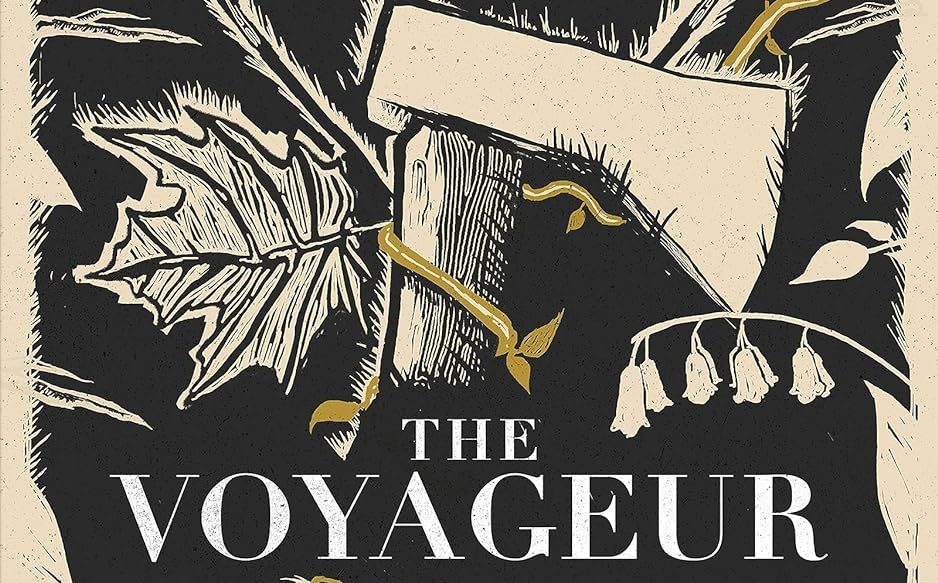
  • Review: The Voyageur

    Review: The Voyageur

    Paul Carlucci, The Voyageur (Swift Press 2024)

    https://www.goodreads.com/book/show/184573092-the-voyageur?ref=nav_sb_ss_1_21

    Carrying supplies to Fort William to trade for furs, members of the voyageur (French-Canadian fur traders) brigade are dropping like flies from consumption. Alex wants to make enough money trading furs to buy a plot of land along the St. Lawrence for a peach orchard.
    Alex makes his way in a multi-cultured, uncivilised land full of bad men out for their own advantage.
    When they reach Mackinac Island they get in serious trouble. Alex’s experience is truly harrowing. He comes under the care of Dr. Beaumont—it seems Alex is a medical miracle. He learns some lessons in spirituality from some Nishnaabe (Ojibwe) Indiens. The miracle connects the inside of Alex’s body with the outside world in a graphic way, but the phenomenon has a spiritual side. He is nourished by the ghost of his ‘tit frère (little brother).
    This novel deals insightfully with serious suffering in a harsh world. Alex’s thoughts as he confronts life-threatening situations are profound. We feel his pain, confusion, grief, loneliness. The admixture of French words and phrases is untranslated, which might be confusing to a non-Francophone [but hey, there’s Google Translate], and yet it adds an exotic feel for the time and place. It both accentuates Alex’s threatened innocence and lends an immediacy, in this wild frontier, where one never really knew what people were around the corner and what unfamiliar language they might speak. Alex is young and too frail to manage the woodsman’s life, and we follow along with his naïveté, stunned by the hardships and the betrayals of false friends.
    I was amazed to learn that Dr. Beaumont’s experiments and this ‘medical miracle’ were historical.
    Each point of view character has a unique voice, artfully done.
    This is an astonishing tale of the wild frontier, sometimes shocking, sometimes deeply emotional.
    This review first appeared in Historical Novels Review.

  • Review: The Cook of Castamar

    Review: The Cook of Castamar

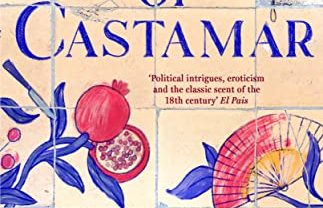
    Fernando J. Múñez, The Cook of Castamar (Apollo 2024)

    https://www.goodreads.com/book/show/147982687-the-cook-of-castamar?ac=1&from_search=true&qid=nn8M3dGp0P&rank=1 

    Clara, high-born but without means after the death of her father, obtains a position as assistant cook in the palace of the Duke of Castamar, Don Diego. She has agoraphobia and is afraid to go outside the kitchen. She is under the thumb of housekeeper Úrsula, who commands even the butler Melkíades, and the head cook Escrivá. Clara’s skill is exceptional, and she is promoted to head cook, whipping the kitchen into shape and producing culinary masterpieces.
    There’s politics upstairs, too. Everyone has secrets—on which enemies of the duke seek to capitalise to wreak their vengeance.
    Upstairs is Don Diego, his mother Doña Mercedes, his adopted black brother Don Gabriel, and his suitor Lady Amelia. Diego’s friends Don Enrique, Don Alfredo, Don Francisco and Mercedes’ friend Doña Sol are frequent visitors. A complex web is woven of secret vendettas and forbidden romances.
    Clara is noticed by the duke, who is also bereaved, and an impossible romance brews.
    Despite the jealousies downstairs and the machinations upstairs, Clara manages to act in each instance with integrity. She is called upon to save her master, her heroism all the more laudatory as she struggles against her condition. The Castamar brothers conclude that one should find one’s true self, fall into the arms of the person you love, regardless of their race or class. True nobility is from the heart.
    Set very much in the time, with historical backstory and political intrigues. Deliciously detailed, right down to the porcelain. Contains some beautiful cuisine-related metaphors (e.g. ‘wobbled like a jelly that had just been turned onto a serving dish’). The descriptions of Clara’s experience during her agoraphobic episodes and as she tries to hide it are fantastic.
    A gorgeous novel, best-seller in Spain. Has been made into a sumptuous Netflix series, with some unnecessary plot changes.
    This review first appeared in Historical Novels Review.

  • Review: The Wild One

    Review: The Wild One

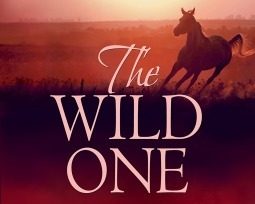
    Janet Gover, The Wild One  (Choc Lit 2015)

    https://www.goodreads.com/book/show/25183607-the-wild-one?ac=1&from_search=true&qid=4cFJ90sPBI&rank=1

    Tyangi park ranger Dan is waiting by the billabong, kookaburra laughing, watching the brumbies (wild horses) drink at the waterhole. He is tasked with shooting them, a cull—they are non-native, damaging the parkland—but he’s not happy about it.
    Quinn, photojournalist of some fame, is even less happy about it. She cooks up a plan to save the brumbies and shoot a photo-journalism story for Australian Geographic. Trish, manageress of the Coorah Creek Hotel, barman Jack and cook Ellen, Doctor Adam and his air-ambulance pilot wife Jess want to help.
    When horse-breeder Justin and Carrie, a jockey retired from horse racing due to a serious accident, join the team, the project starts to look do-able. Carrie and Justin recognise the head stallion of the brumbies as being from a prized bloodline, offering Justin new breeding stock for his stud farm.
    The free-spirited Quinn finds herself falling for hunky Dan, but they each have to bury some demons from their past before the camp side romance can become permanent. His from a war-time disaster in Falluja resulting from his failure to follow an order, hers from a failed marriage.
    You will fall in love with the characters. They each offer their special talents to the brumby-corralling project, and they have to help each other work through their demons to get the job done. If falling in love should be the result, so much the better.
    We enter a whole world, here, the Australian outback, a wild, beautiful world that humans are at pains to tame. We learn all about the business of corralling wild horses, too.
    This is Book 2 in the Coorah Creek series. Quality chick-lit, beautifully written. Not really my genre, but I thoroughly enjoyed it.

  • Review: The Darkest Night

    Review: The Darkest Night

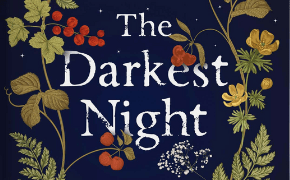
    Victoria Hawthorne, The Darkest Night  (Quercus Publishing 2024)

    https://www.goodreads.com/book/show/63259977-the-darkest-night?ac=1&from_search=true&qid=hfljxCebya&rank=1

    A haunting story of witches, family secrets and the pain that never heals


    Ailsa Reid escapes to Fife after a scandal at work, to find her grandmother Moira missing and her grandfather Rupert injured.
    In her search for Moira, she needs help from her estranged mother Rowan. The mother/daughter love/hate relationship is tense. Ailsa is ‘annoyed with how [her] name sounds in her mouth’.
    The solution to the mystery involves witches, those gravestones on the hill, a mother and daughter, burned on the hill above the house, and an ancient curse.
    Bed-bound Selina finds healing as her friendship with Elspeth grows. The two share a secret, yet Selina has a further secret, too. The arrival of cousin Samuel complicates matters. He ‘knows’.
    I found the non-involvement of the police and the hospital strange. Someone has bashed her grandfather over the head, but the women just stay in the kitchen smoking cigarettes. And I wondered how Selina knew everyone in town when she had never left her bed.
    Despite the worrying scenario of the injured grandfather and the missing grandmother, the story begins quite low-key, then building, alongside wonderful characterisation and family dynamics. It features several examples of beautiful writing about strong emotions. (‘Her thoughts crash into one another in her mind with explosive clangs.’)
    The overall plot is very good, every element linking into every other element, frequently taking a dreamlike tone, as if we’re not really sure what is reality. Part II moves back to Moira’s childhood, which is a bit of a shift.
    I love how we are fed the story of Ailsa’s work scandal bit by bit—first, a ‘name’, then an ‘allegation’, then an ‘incident’, then an ‘investigation’—and how it gradually connects to the missing grandmother story. Both witch-hunts, ancient and modern—’accusations flayed across their skin’—ending in the Reid family women finally finding each other.
    This review originally appeared in Historical Novels Review.