Tag: fitness

  • Review: Truth: a Conspiratorium novel

    Review: Truth: a Conspiratorium novel

    Linda A Sanchez, Truth: a Conspiratorium novel, (Legacy & Light Publishing, 2025)

    https://www.goodreads.com/book/show/238981995-truth

    AI gone mad, a computer-driven conspiracy of deepfakery

    Caleb waits at a diner for a contact who had ‘promised him everything: proof, files, locations’. No one arrived. Only a phone message, ‘look under the red newspaper box’. He goes outside to look. It’s a silver metal case, sealed in duct tape. He peels off the tape to reveal etched on the case, ‘you were right’.

    The next phone message reads, ‘the Red Vault is open’. An old myth, a ‘dump of industry blackmail’. Inside the case is a hard drive, a key engraved with the number 73, and a message on a white card: ‘Caleb, the Red Vault is real. Just follow the chain, connect the rooms’. Signed V.C. He knew who it was—Vera Cross. She’d disappeared right after the story that got him blackballed from the industry.

    He decides to take the drive to the Archivist. The files document not just blackmailing of subjects, but conditioning. Processes like ‘reinforce humiliation’, ‘preserve asset pliability’, ‘reverse dopamine reward mechanism’. The prototype ‘asset’? Juno Skye. Classified as ‘dormant but viable’. Now, as they look at the drive, someone is looking back. The choir. Who, or what, is the Vale Group?

    Various players in the game give Caleb cryptic clues, sometimes so cryptic as to be annoying. He has to solve them in time to save Juno. We get pretty much all the way though the game without learning why this is happening. But the game seems to be poking cynically at the PR world, AI gone mad, a conspiracy turning assets’ lives and emotions into commodities that can be fed to the public, and even to themselves, in monetised bytes, turning ‘raw feed’ into ‘deepfake narrative’.

    Caleb and Juno save the day by using computer wizardry. I wish I’d understood it. It looked cool.

    The writing is stylish yet to the point, with a noirish tone, well-structured and well-paced. If you know computers you’ll understand the technospeak better than I did; it sounded good. It’s hard to write a techno-thriller when much of the plot takes place in MS Dos, but (despite my not understanding the code) I thought it managed this.

    I chose this book having liked Sanchez’ It Ends with Him, a more psychological, inspirational work. This one tells more of a story.

  • Review: Popular Song in the First World War – an international perspective

    Review: Popular Song in the First World War – an international perspective

    Linda A Sanchez, It Ends with Him, (Legacy & Light Publishing 2025)

    https://www.goodreads.com/book/show/245043356-it-ends-with-him

    An emotional journey to find warmth after a cold childhood

    Daniel has grown up with the pain of never being valued, never being loved. Yet his dad believes he was the abandoned one. This year, Daniel determines, things would change.

    He has a great wife. Claire gives him space, she almost realises her silence compounds the hurt, but she doesn’t know how to heal it. And a great workmate. Jenna offers him acceptance and good advice. And a great sister. Bree is ready for some healing, too.

    We travel Daniel’s journey of healing, from ‘feeling life was happening to him’ to deciding to move with it, to change himself. He opens up to his sister Bree and she to him. He lets Claire in. He backslides, but he doesn’t stay there, ‘strength taking shape around the wound’. He remembers that love means doing something just to make someone happy, ‘a simple act of care’. He ‘stop[s] waiting for closeness to find him’ and takes a step himself. He finally gets angry, puts the blame on his dad not himself, and it doesn’t break him. His dad ‘is who he is, and he (Daniel) get[s] to be someone different’. He ‘finally choose[s] to stop disappearing’.

    The dialogue is very good, realistic and full of emotion.

    Loved: ‘His father’s words. Rosa’s voice. Bree’s fear. Mark’s warning. Jenna’s kindness. Claire’s sadness.’

    Studies in the US show that as many as 40% of children face the same struggle as Daniel, ‘lacking strong emotional bonds to parents’. As the author points out in her Author’s Note, this especially happens to boys, who are expected to be emotionally tough.

    I toggled between thinking, ‘is this story big enough for a novel?’ and ‘is this is a novel that can teach us something socially valuable?’. We get the therapy-speak; we don’t get the blow-by-blow.

    It’s quite heavy on paragraph after paragraph of Daniel’s emotional turmoil. Which I sympathised with, don’t get me wrong. I was there too; my father was a narcissist, literally incapable of empathy. I just kept wanting Daniel to get into ‘the dirt’, give us some juicy anecdotes, tell us about that horrible incident at Thanksgiving. Finally, Ch 19, we get one.

    I look forward to checking out Sanchez’ ‘speculative, psychological suspense’ novels.

  • Review: Popular Song in the First World War – an international perspective

    Review: Popular Song in the First World War – an international perspective

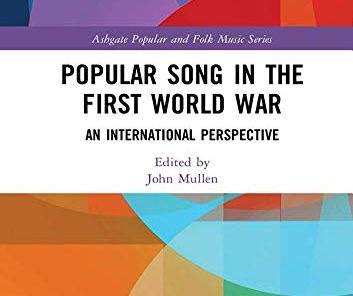
    Popular Song in the First World War – an international perspective, edited by John Mullen, (Routledge 2018)

    https://www.goodreads.com/book/show/40245763-popular-song-in-the-first-world-war

    Analysis of music hall during WWI, from both sides, from sixteen scholars

    Before the generalisation of the gramophone, enjoyment of popular music took place in music halls. Editor Dr John Mullen opens the discussion with treatises on WWI music hall in Britain and France. The music hall crowd, contrary to what we have been told, did not necessarily express gung-ho support for the war.

    ‘The songs about the war are about Tommy, not about the empire.’ Songs about the front spoke about soldiers’ daily lives.[1] Editors of trench newspapers ran song competitions.[2]

    Interestingly, there are no British music hall songs about hating Germans.[3] Even the American ‘Hunting the Hun’ is more humorous than bellicose.[4] Whereas in Germany, after losing two world wars, ‘music connected to these traumatic events was not popular’, instead focussing on ‘nostalgia of the past’, songs about love and homesickness.[5]

    Also surprisingly absent, says Mullen, is anti-war sentiment per se, despite the large, especially in the latter years, anti-war movement. This relative absence can be explained by the mass participation necessary to the music hall experience – encouragement of sing-along choruses and audience participation – meaning an emphasis on ‘consensus’. More common is the humoristic poking fun at the effect the war effort was having on people’s lives. Such as ‘Lloyd George’s Beer’, complaining about the government’s reducing the alcohol content in beer.

    Another trend was an emphasis on ‘respectability’; music halls stipulated ‘no vulgarity’. Marie Lloyd, when required to change the lyrics of her ‘She Sits Among the Cabbages and Peas’ to avoid the scatological pun, famously changed it to ‘She Sits Among the Cabbages and Leeks’.[6]

    Popular song, says Mullen, is not ‘a reflection of real history which takes place elsewhere’. Instead, it is ‘a way that artistes and audiences represent the world to themselves and to each other’.

    Mullen’s understanding of music and culture in general is highly nuanced.

    Eric Sauda looks at French popular song. André Rottgeri looks at Germany. Clive Barrett looks at war resistance songs in Britain, with a look at songbooks and personal diaries from the period. Guy Marival specifically studies the French ‘Chanson de Craonne’, which became an anthem of the radical left. Anne Simon writes about gender and romance, separation and homecoming in France. Christina Gier writes about the theme of masculinity in America, also looking at musicological questions such as how the tone was influenced by what key the melody was in. Amy Wells addresses women in song. Melanie Schiller writes about Claire Waldoff and Berlin cabaret. Chris Bourke looks at the war from New Zealand, Pakeha (Europeans) and Maori music. Erick Falc’her-Poyroux looks at the war from Ireland, Gaelic culture and the drive for Home Rule and socialism. Lidia López writes about eroticism in Spanish cuplés. Pedro Félix talks about ‘turbulence’ in Portugese music and fado. Dragan Aleksić looks at Serbian music and national identity.

    Several of the authors mention industrialisation and the impact of technological development. All these chapters are interesting, but I found especially valuable the international perspective, seeing popular music from both sides of the war, and the reflection in popular music of the changing roles of women.

    It is well and cogently written, scholarly yet not high-fallutin’.

    This is a book for WWI buffs, musical history buffs, music hall fans and anyone wanting to learn.

    John Mullen is Professor at Rouen University. He is author of The Show Must Go On: Popular Song in Britain during the First World War (Ashgate 2015).

    I was given a copy by the author.


    [1] Mullen

    [2] Eric Sauda

    [3] Mullen

    [4] Christina Gier

    [5] André Rottgeri

    [6] John Mullen, The Show Must Go On: Popular Song in Britain during the First World War (Ashgate 2015).

  • Review: Between Taste and Sound

    Review: Between Taste and Sound

    Juan Zamora, Between Taste and Sound, (2024)

    https://www.goodreads.com/book/show/214495004-between-taste-and-sound

    The Cuisine game challenges contestants to match their wit to their taste buds

    Yoishi, our narrator, nickname Fluffy (due to his lucky bunny rabbit sandals), works for rich families, tasting their food, checking for poison. Lady Catherine accosts him, ‘how dare you eat our food, commoner?’

    The Cuisine game was invented to get wealthy people together with royalty and celebrities. Yoishi just wants to get a paycheck.

    The client Roberto books him for another gig. He’s scoffed the whole six-thousand-dollar dish before Roberto says, ‘time to go over the rules to this cuisine game’.

    Next, he’s playing the Cuisine game in Paris. The singer – Ricky Rock – is about to play the game; his friend Tommy Lee says, ‘let’s prank them.’ The girl – April – is missing.

    Yoishi decides it’s time for him to set the rules.

    The cover is deceptive. I put off reading it for ages thinking it would be a ‘dukes and debutantes’ novel.

    The idea of the Cuisine game is quite cute, but the text needs a very heavy edit. The dialogue tends to jump around a bit, making it unrealistic. The narrative jumps illogically between present tense and past tense, sometimes mid-sentence. The plot is incoherent in places, and many of the sentences are incomprehensible. Humorous, but sometimes I felt the joke carried on too long to be funny. For example, the bunny rabbit sandals, with varied spellings, were mentioned 11 times. We were supposed to guess who the celebrities are, but I didn’t.

  • Review: The GLP-1 Stability Cookbook

    Review: The GLP-1 Stability Cookbook

    Derek Wexley, The GLP-1 Stability Cookbook, (2026)

    https://www.goodreads.com/book/show/246043879-the-glp-1-stability-cookbook

    Maintenance following on from the GLP-1 Diet Meal-Plan Cookbook

    Here are more recipes designed for a high-protein diet, including a 90-day stability plan. It’s designed for those who’ve already reached their target weight loss (I’m not there yet) and are planning a maintenance diet. A stable program of 90 days mean you train yourself to change your dietary habits permanently in order to eat well but stay slim. Protein, water and exercise are the ‘three anchors’.

    Seasoned dieters know that often rapid weight loss is achievable. What’s challenging is to keep the weight off. Focusing on GLP-1 means doing so without experiencing hunger pangs or ‘food noise’.

    Also characteristic of this author’s approach is the accompanying exercise plans, recommending a 5-minute ‘activation’ warm up in the morning and regular daily exercises in a 7-day rotation to get a full body workout. Regular, daily ‘movement’ rather than high-intensity. High protein means you can lose weight while keeping muscles in shape. This also reduces the tendency for ‘Ozempic Face’ gauntness. Hydration is also important. A whopping 2-2.5 litres of water or herbal teas per day is recommended.

    Another feature of this diet philosophy is – small ‘mini-meals’ several times a day (I can’t be bothered with that). The principle is –  you have them prepared in advance so you can just grab them when it’s time, so you have a regular predictable schedule (and don’t experience hunger). The recipes are quite simple – I think I can remember them all without writing them down. Many of the protein-high recipes are ‘soft textured’ – smoothies, soups, stews, ‘gentle’ grains – to encourage easy digestion.

    I don’t normally eat breakfast, but it is theoretically important to start your day with some protein. Cottage Cheese Plate with Soft Pears and Walnuts, Sliced White Fish with Warm Zucchini and Yogurt, Herbed Turkey Patties looked so gorgeous I want to add them to my regular repertoire. You can pair pumpkin or sweet potato with millet or soft-boiled eggs, beetroot with red lentils. These all look substantial enough to be possible lunches.

    Lunch dishes include: White Fish with Warm Tomatoes and Olives, Warm Lentils with Roast Vegetables, Turkey Strips with Warm Broccoli and Lemon Yogurt, Bulgur with Roast Bell Pepper and Yogurt, Tuna with White Beans and Tomato.

    Smoothies are usually yogurt or oat/almond milk + a fruit + protein powder. Soups have usually no more than 4-5 ingredients. To wean us away from sweet or carb-heavy snacks, there are high protein snackables to prepare in advance like Turkey Meatballs, Salmon & Zucchini Patties, Baked Chicken & Spinach Ricotta Cups, Baked Egg & Cottage Cheese Herb Slab, Baked Chickpea & Ricotta Stuffed Mushrooms, Baked Eggplant Rolls with Ricotta & Herbs. There are some dessert recipes too: yogurt = fruit + honey + protein powder. Twenty recipes for herbal teas.

    The dinner recipes are beautiful: Salmon with Yogurt-Herb Crust and Roasted Fennel, Turkey Ricotta Stuffed Zucchini Boats, Seared Veal with Creamy Polenta & Soft Spinach, Shrimp with Soft Zucchini Ribbons & Warm Yogurt. All simple enough to remember without writing them down.

    An absolute must for a cookbook, in my opinion, it includes beautiful colour photographs for each of the recipes, making them really look delicious. It doesn’t specifically say so, but paying attention to the mix of colours on your plate can make the meal look more appetising. Herbs (especially if they are fresh), spices (fresh ginger and turmeric are delicious), nuts and seeds add nutrition, taste and appetitisingness of appearance. Add things like yogurt, chickpeas, whole grains to your regular weekly shop to boost your protein intake.

  • Review: Seven Rivers: The Darkness

    Review: Seven Rivers: The Darkness

    B. Luiciano Barsuglia, Seven Rivers: The Darkness (Koa Aloha Media 2025)

    https://www.goodreads.com/book/show/235105617-seven-rivers

    A supernatural journey of redemption

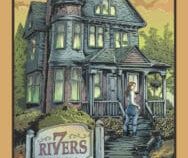
    Cora and Gabe are fighting. She has a baseball bat; he has a gun.

    It ends badly in a devastating car accident, and she ends up at the Seven Rivers Recovery Clinic in bandages. But this is no pristine hospital, no wholesome rehab facility. It starts with the tea–they’re giving her some kind of hallucinogen–then the pain and the terror, the savage bandage changes. The place operates according to an unfamiliar set of rules, which Cora now has to work out. The other residents aren’t welcoming, either. But at least they seem to know why they are there.

    ‘Some are here for recovery; others for redemption. Why are you here?’ Lady asks.

    ‘I’m hiding out, I guess,’ says Cora.

    I liked the parallels between pain and terror, but the horror begins too soon. We need to build up to it. And there’s too little action. We start hearing about ‘the ragged pulse of her fear’ before we even see anything to be afraid of. There’s no explanation as to why she’s ended up in this place and no explanation as to why Gabe is threatening her life.

    The chapter headings read like a ‘Pilgrim’s Progress’–Integrity, Acceptance, Humility. Cora is on a journey of self-discovery and redemption about which we get no clues until page 109. She witnesses horrors. Ex-robbers in a heist gone wrong. Each room, each interaction with the other guests confronts her with the consequences of her guilty past.

    A few too many clichés for me, coupled with some phrases we don’t really know the meaning of–‘an unease that lingered like a shadow’. I liked ‘tremors that shook her very atoms’.

    I liked the Concept–a surreal environment (Purgatory?) forcing someone to accept the consequences of their past behaviour, but Cora’s psychology doesn’t really come through. The unexplainedness contributes a surreal, spooky Kafka-esque atmosphere, yet I didn’t get the sense that Cora was trying to figure it out, which was frustrating. We can’t empathise with Cora’s suffering if we don’t understand why.

    In the end, she confronts the fear of death, something I don’t see treated in many novels, surprising considering that it’s probably the biggest fear humans face.

  • Review: Detectives Roy & Roscoe Mysteries Books 1–7

    Review: Detectives Roy & Roscoe Mysteries Books 1–7

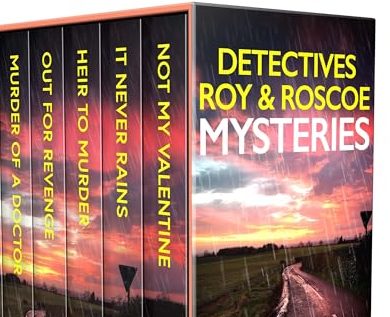
    Tony Bassett, Detectives Roy & Roscoe Mysteries Books 1–7 (The Book Folks Crime thriller and mystery 2025)

    https://www.goodreads.com/book/show/243115585-detectives-roy-roscoe-mysteries-books-1-7

    Absolutely perfect crime novels

    I congratulate Bassett on the publication of this compendium. I am a fan of his crime fiction and have read and reviewed several of the books in this collection.

    His writing is excellent, his characters colourful, and his plots are always exciting.

    What I like most about Bassett’s novels is the (what seems to me to be) realistic police procedures, the great characters and the great plots. The working lives of the characters are portrayed realistically. Bassett’s policemen have believably cop-like dialogue and avoid clichés (donuts, etc). We never lose sight of the people while the plot is gathering facts. The large cast of coppers and suspects all have inter-connecting stories, and we see fascinating peeks inside the suspects’ private lives.

    Bassett is a master of suspense. We find out the clues at the same time the detectives find them, meaning that the pacing is comfortable, slowly developing, then a rush of drama. As in real life, some of the leads don’t pan out, which gives it a true-to-real-life feel. Not everything is done by our heroine; also as in real life, there are multiple officers involved.

    We’re never given too much all at once, and usually about three-fourths into the story, just when it’s getting almost too complicated to follow, we are given a summary of the suspects, clues and alibis through the mouths of the police in a team operational briefing. So, we never have to think, ‘hang on, what was that clue back on page 23?’ Bassett is skilled at weaving necessary backstory into the dialogue. You probably get enough clues to solve the crime yourself, although I usually don’t.

    I like that his main detective, Sunita Roy, is of non-Anglo heritage, making her a little bit out of ordinary from what we’re used to. She’s an interesting woman as well as police detective. Though she’s not full of herself, she has a keen mind, and when cracks the case, it’s usually because she has done a bit of lateral thinking that her bosses haven’t considered. The crime is always solved in some innovative way.

  • Review: The Better Angels

    Review: The Better Angels

    Robin Holloway, The Better Angels (Holand Press 2025)

    https://www.goodreads.com/review/show/8009771617

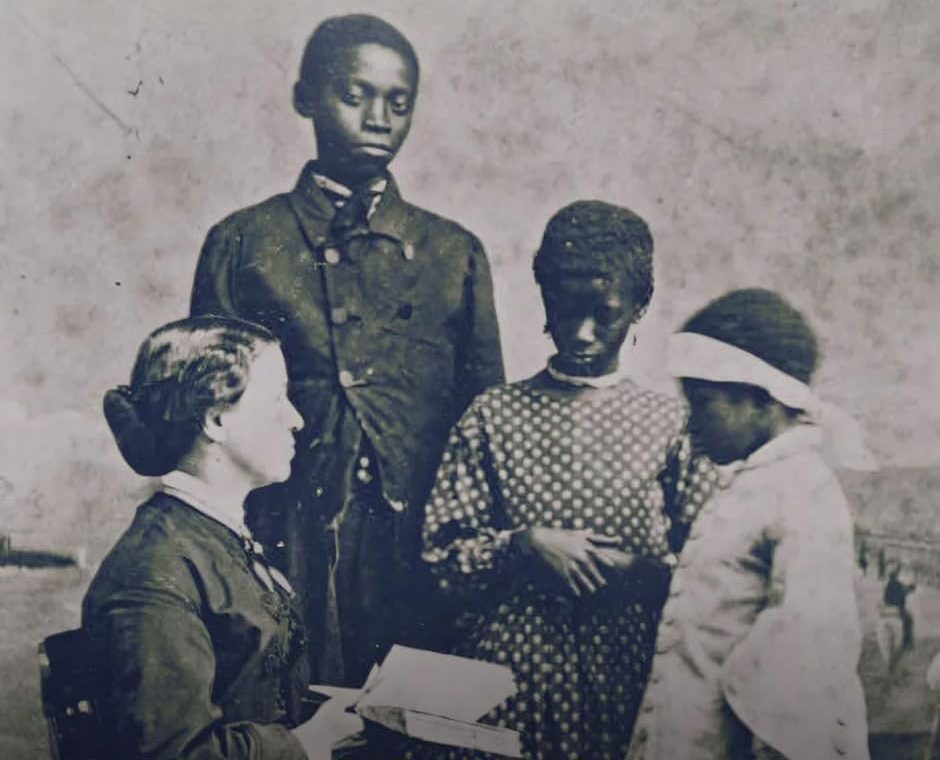
    The invasion of St. Helena Island in South Carolina by the Union forces drives away the white planters, leaving the ex-slaves considered ‘contrabands of war’, neither free nor slave.

    Northern white abolitionists like Laura Towne build a school to educate the children.

    While initially flabbergasted by the differentness of the culture and frustrated by their subservience, Laura spends her whole life loving and working in the good interests of ‘her people’.

    The ‘Port Royal Experiment’ is sincerely dedicated to bettering the lives of the ex-slaves, but there is debate on how to go about it. Some think the most important thing is to return the cotton fields to productivity and integrate the ex-slaves into the capitalist system. Laura loves and respects them, but fears for their vulnerability in the new world. Jupiter, the elegant black carriage driver, believes the blacks must fight for their freedoms.

    The first year’s cotton crop is not good, so they are ‘forced’ to list the plantations for sale. Mr Philbrick is trusted to make the initial investment, promising to offer plots to the freedmen ‘when it is possible’, but ‘possible’ keeps getting delayed. Will they get their ‘40 acres and a mule’ as promised? Will they get the vote?

    The structure is a mixture of diary entries, letters and exposition. Some of the exposition seems to be in the POV of Jupiter, but this is not clear. A very worthy subject, but as a novel, I found myself wanting a love story or some drama, or some slight fault in Laura’s angelic character.

    This is all about the psychology of oppression and the complexity of relationships when love is mixed with exploitation. It is also about angels. Fortunately, there are people on this earth and in history who dedicate their lives to making the world a better place.

    This review first appeared in Historical Novels Review.

  • Review: The Midnight Frequency

    Review: The Midnight Frequency

    Vicki Regan, The Midnight Frequency (2025)

    https://www.goodreads.com/book/show/231121146-the-midnight-frequency

    Time-travelling adventure to save the world, again and again

    Radio host Sarah Collins asks her late night audience to phone in with their ‘weirdest experiences’. Then, she has the weirdest experience of her life. She picks up a caller claiming to be a time traveller speaking from 2045 with a chilling prediction about Flight 2409. The prediction proves true, and Sarah receives more warning calls. The next one warns, ‘they’re coming for you.’

    As subsequent events prove the predictions her mysterious caller warns of, Sarah finds herself in danger from federal agents and from shadowy corporate bad guys who are trying to manipulate time for who knows what reason.

    She meets an ally, Dr Eleanor Hastings, an expert on ‘temporal anomalies’, and the two embark on a frantic mission to prevent the disasters their time traveller predicts. ‘Why me?’ Sarah wonders. Eleanor explains that her voice over the airwaves is ‘an anchor point across timelines’.

    Each time a disaster threatens, Eleanor says, ‘Let’s go save the world, again’. When they do, Sarah’s caller tells her she’s changed the timeline, ‘the future is now uncertain.’

    Timey-wimey conundrums ensue. In different timelines, different realities exist. Sarah’s mentor from the future tells her, time manipulation means ‘never being certain which version of reality you’re experiencing’.

    It’s tremendously exciting; by Chapter 2 Sarah is already running for her life and facing global destruction. The mechanics of the time traveling are more or less satisfactorily explained, though we never quite find out why the bad guys are doing this.

    The ending is quite cute, and does have a bit of finality, yet it’s open-ended enough to make you want to read Book 2.

    This novella is Book 1 in The Midnight Frequency Series.

  • Review: Among the Okapi

    Review: Among the Okapi

    John S Taylor, Among the Okapi (FriesenPress 2023)

    https://www.goodreads.com/book/show/152204115-among-the-okapi

    Memories of Africa cause ramifications for everyone back home

    The last students have left Anatomy class at Waverly College in Toronto where Fred is lab demonstrator. He’s determined to ask his head of department Dr Smith for a pay rise. An affair with the landlady Inge has not saved him from paying rent, but his mind is on a student from his hometown of Darby whom he remembered from high school, Esther.

    John Lyon is studying the sales figures of his lager-brewing company. A phone call promises that his son Jason will come home to visit. Wife Daphne is out at a meeting with the arts committee. Esther, their niece, orphaned at age 10, is staying there for a while. The two cousins have never met.

    Dr Smith commissions Fred to edit the study he did in Africa on the okapi. Esther, a vegetarian, wants to be excused from dissecting white rats. Dr Smith thinks she look familiar. Fred and Esther bond during a spot of undercover activity.

    Chapter 5, we break to quoting every other chapter from Dr Smith’s African journal—his tale of the okapi and of Alice. Every other chapter, however, goes back to the present-time narrative, so we don’t break the continuity.

    Dr Smith seems obsessed with a Mark Van Dusen, someone from the Africa days.

    These two sets of characters revolve around each other. Jason finally tells Dr Smith, ‘every time there’s been a serious problem in my family, it’s somehow connected to you.’

    The characters are all very well developed, and their histories intersect in interesting, complex ways. I would have liked a bit more enlightenment earlier on concerning Van Dusen. When we finally learn, it’s suitably astonishing, with misunderstandings all around.

    A very well written story.