Tag: christianity

  • Review: The Messiah of Septimania

    Review: The Messiah of Septimania

    Lee Levin, The Messiah of Septimania (Today’s Young Grandparent 2010)

    https://www.goodreads.com/book/show/10482907-the-messiah-of-septimania?ac=1&from_search=true&qid=7soKxY7KqF&rank=1

    The plot of this book is built around two myths—one well-known, one not so well-known. It is a popular theory that Alaric the Visigoth stole the Treasures of the Jerusalem from the Temple and took them to southern France, where they were paraded on Easter Sunday in Toulouse for 70 years. A lesser-known myth proposes that the Jewish kings of Septimania, an autonomous Jewish kingdom in the Languedoc lasting 140 years (768-900), intermarried with Merovingian royal houses. Arthur J Zuckerman suggests that Septimania’s first Jewish king Makhir was the same person as Thierry IV, count of Narbonne.
    It also weaves in some of the myths in the Chanson de Roland.
    Arian bishop Genseric, a Visigoth descendant, shows his acolyte Guibarc the reliquary of Rhédae Castle. Ishmaelites (Arabs) are at the gates, and if Genseric should die in the invasion, he wants Guibarc to protect the treasure in this acacia-wood box. His eyes behold the Golden Menorah of the Treasure of the Jerusalem Temple, brought to Rhédae by Alaric from Rome.
    17-year-old Charles (who will become magne) has arrived at Narbonne after his father Pepin the Short’s disastrous siege. He faces watching his son’s sun rise as his falls.
    Who do we have inside, Charles thinks. Half the population of Narbonne are Visigoths, Arian Christians, and the other half are Jews. Let’s bribe the ‘greedy Jews’, he thinks. But the Jews of Narbonne want more than Pepin’s dwindling treasury. They want their own kingdom. Conveniently, this will put Pope Stephen’s nose out of joint, whom Pepin blames for not offering concrete support against the Saracens. To seal the deal, Charles weds Makhir to his aunt Princess Alda, daughter of Charles Martel. Alda becomes Archbishop Agobard’s spy in the Cortada Regis Judæorum palace in Narbonne.
    Exilarch Hakhinai convinces Narbonai ben Zabinai (aka Thierry IV, aka Makhir) that he is not only king of Septimania, but also the Messiah. There is treasure at stake—an encoded document.
    There is a great deal of attention spent on the question of whether Makhir was, or thought he was, the Messiah, which, personally, I think misses the point. I’d admit to being fairly interested in ‘where is the treasure now?’, but I’m mostly interested in this supposed marriage.
    This is a juicy tale, incorporating several of my favourite myths. Secret codes, buried treasure, holy royal bloodlines, Roland—yum yum.
    But Alda and Makhir? Why on earth would Charlemagne have arranged this marriage? Levin proposes a scenario in which such an alliance might have been believable. His story is fun, but no more credible than Zuckerman’s.
    Very poorly edited.

  • Review: Kindred

    Review: Kindred

    Octavia E. Butler, Kindred (Beacon Press 2004)

    https://www.goodreads.com/book/show/60931.Kindred?ac=1&from_search=true&qid=SNnGMIV7Kn&rank=2

    Dana has lost her left arm in an ‘accident’ the police are trying to blame on her husband Kevin.
    She remembers the first time. She feels dizzy; she saves a red-haired white boy from drowning. The second time happens after dinner. She is with the boy, who is now older, in a burning room. He tells her the year is 1815. His name is Rufus Weylin.
    She follows eight white men, a ‘patrol’, to a slave cabin in the woods and witnesses the sort of atrocities the slaves are used to.
    The next time it happens, she is armed with a switchblade and a map, and brings Kevin with her. Rufus has broken his leg.
    It takes a while before the modern couple understand the social rules in this culture—the impossible distances between white and black, slave and free, man and woman, adult and child. The experience is quite different for Kevin—a white man—than for Dana. He can be a time-travelling observer; she gets ‘drawn all the way in’.
    The social dangers are accompanied by physical dangers. She and Kevin need to survive, together, in order to get back.
    We never understand the mechanism by which she time-transports, but the reason is remarkable. She and Rufus are boun, by a bond that transcends time and place. This helps us to understand her conflicted feelings toward the evil slavemaster.
    This extraordinary device gives us the emotion and detail of a first-hand account at the same time as a 21st century sensibility. This is especially useful in revealing how the oppressors used the slaves to enable their own oppression—by threatening their loved ones with being whipped, sold or killed. Alice tells her, ‘you ain’t no field nigger, but you a nigger just the same’.
    More historical fiction than sci-fi, innovative and genre-bending.

  • Review: Lessons

    Review: Lessons

    Ian McEwan, Lessons (Knopf 2022)

    https://www.goodreads.com/book/show/60092581-lessons?ac=1&from_search=true&qid=ElWUVnYtMf&rank=1

    Roland Baines looks back upon his life and the painful yet arousing memory of his childhood piano teacher. The remembered perfect happiness of a twisted first love, which he struggles and fails to recreate. His baby Lawrence is in his lap, his half-German wife Alissa gone, leaving only a note. She becomes a famed author, but, inexplicably, refuses any contact with her son.
    There’s not a lot of action or story. It’s mostly Roland remembering his life and reflecting on things.
    It launches perhaps too soon into the life histories of their parents and grandparents. Readers have to care enough about the protagonist before we’ll willingly sit through the boring stuff. What we really want to hear about is the piano teacher.
    What makes it interesting is seeing it through the child Roland’s eye. He’s a child when his father is stationed in Libya. Then he is shipped off to boarding school at a tender age, not yet understanding the whys and wherefores of ‘unspoken family problems’ and of the world. The nation-wide conspiracy of delusion during wartime is mixed with the child’s natural innocence. Roland traces the White Rose anti-Nazi resistance in Germany through the eyes of his then-journalist mother-in-law Jane.
    As a young adult, Roland makes several trips to East Germany, which he believes to be ‘a socialist country’—that is, until his friends start being arrested.
    As Roland and his grown siblings unravel the unspoken secrets in their family history, three generations—Jane, her daughter Alissa, then Lawrence seek expiation for the dysfunction in their childhoods. Roland has to seek his, too.
    I identify with both sides of this family. Like Alissa and Jane, motherhood killed my dreams—though, of course, a sacrifice worth it for the sake of bringing love into the world. Like Alissa, my children’s father wanted no contact with them, a mystery which died with him.
    The writing is, as always for McEwan, gorgeous—not a word wasted. Like the McEwan masterpiece, Atonement, this one grows on you.

  • Review: Worn: A People’s History of Clothing

    Review: Worn: A People’s History of Clothing

    Sofi Thanhauser, Worn: A People’s History of Clothing (Pantheon 2022)

    https://www.goodreads.com/book/show/56753473-worn?ac=1&from_search=true&qid=srDgYhsohK&rank=1

    Here is the social history of clothing, its history and economics rather than fashion.
    The impact of class is not ignored. In early mediaeval Germany, for example, there was conflict between organised guild weaving and home weavers. Later, labour was divided by sexism and racism. Mothers entered the early factories with children in tow.
    Before the 1880s under ‘coverture’, married women possessed nothing of their own other than their ‘linen’. Until 1964 black women were barred from working in textile factories, seen as high status work as compared to domestic service. In 19th century America often the only economic option for a woman was to take in ‘piecework’, embroidering linen at home.
    The structure of this history is wonderful. It’s not organised chronologically (boring) but rather by fabric—first comes linen, then cotton—its history, technology, economics and effect on humans. By the time we get to cotton the labour is by African slaves, and it is brutal.
    She outlines not only the mechanical processes involved in industrial weaving and knitting but also the climate change caused by water-hungry cotton growing, increased reliance on fossil fuels, enforced labour of ethnic minorities and the threat to silk production of environmental challenges to pollution-sensitive mulberry trees.
    Synthetics have offered the industry mass-production, but often at a high environmental, sometimes poisonous, cost. The industry also created its own gravedigger; Worn outlines the history of labour resistance to exploitation and capitalist class thuggery. Today’s EPZs (export processing zones) make employing underpaid non-union third world labour and systematic exploitation of raw materials easy. International trade agreements like NAFTA legislate to globalise exploitation. Big retailers like Walmart and Zara have such buying power they squeeze sweatshop workers’ wages and safety.
    This is from a ‘material culture’ (pun intended) standpoint, textiles rather that fashion. “A shirt may say ‘Wisconsin’ while its tag reads ‘Made in India’, but the real political story lies in its polycotton blend.”
    It reads like Cod or Nathaniel’s Nutmeg. It’s a history, but juicy, full of anecdotes and human details, a tapestry drawing into the weave women’s oppression, class and technological development.
    It is highly researched, the author having travelled all over the world visiting factories and interviewing clothing-makers.
    Colour illustrations would have enhanced the text. Indeed, for a subject like this, I would think it almost obligatory.

  • Review: Legacy

    Review: Legacy

    Anna Moore Bradfield, Legacy (Credo House Publishers 2023)

    https://www.goodreads.com/book/show/123966296-legacy?ac=1&from_search=true&qid=HZpRSRJMyo&rank=2

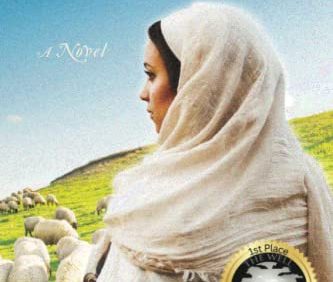
    11th century BC Bethlehem in the days of King Saul.
    Eliab ben Jesse, a Benjaminite, scribe to the king and the most eligible bachelor in Bethlehem, espies the beautiful Nitzevet along the road and hopes that she is intended as his bride. Instead, his father Jesse marries the girl.
    From a prosperous Ephraimite family, Nitzevet has to keep her wits about her while navigating her new family. Eliab pays his stepmother undue attention, and Jesse’s daughter Abigail is jealous.
    When Nitzevet suffers a breach birth of her fourth child, midwifed by her Canaanite servant Rhea, it is her husband Jesse who, breaking religious taboos, delivers the stillborn babe to save his wife’s life. In her grief, Nitzevet, nicknamed Bet, sends for her cousin Peninnah, who is immediately attracted to Eliab. Bet’s fifth child is a girl.
    Jesse is the grandson of Boaz and Ruth, a Moabite, and the legitimacy of that marriage was questionable, due to the Biblical injunction against marrying a Moabite convert. Jesse begins to doubt his own identity as an Israelite, and he shuns Bet’s bed. None of his sons seem inclined to take over the family’s sheep flock.
    Bet and Rhea cook up a plan, to safeguard the legacy of the house, worthy of Jesse’s ancestresses.
    Accusations of adultery, and worse, fly within the family. Bet tries to honour her husband while protecting her son, David. And we know the subsequent story of this boy—tends the sheep, plays the lyre, anointed by Samuel, kills Goliath, becomes king.
    This is a fictional story woven around characters from the Old Testament, a great Concept. We’re talking about Late Bronze Age, here, and the period is portrayed well.
    These Old Testament relationships are complex, offering rich possibilities for fictional biography. Biblical references are inevitable, as this is our only literary/historical source for these people, but they are handled awkwardly, put into the mouths of people who would have been so familiar with the stories as to not need repeating. In places the stories are repeated twice or even three times, which is unnecessary.
    The characters often pronounce the name of ineffable YHWH, which would have been (and still is) utterly taboo. Instead, they would have referred to God as ‘Adonai’ (Lord) or by one of his epithets, Elohim, Shaddai, Tsevaot, etc. Rhea calls Bet by her full maiden name, Nitzevet bat Adel, which would have been considered very rude. I think she would most likely have called her ‘Gvéret’ (Madam).

  • Review: Foxash

    Review: Foxash

    Kate Worsley, Foxash (Tinder Press 2023)

    https://www.goodreads.com/book/show/107526005-foxash?ac=1&from_search=true&qid=lJHuMrrBEm&rank=1

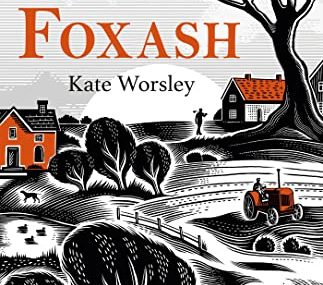
    Worn down by poverty, Lettie Radley arrives in Foxash, Essex to join her out-of-work miner husband Tommy. Their new smallholding may well be the ‘fairy-tale home’ the (Land Settlement) Association promised, but she has trouble accepting the new neighbours, Jean and Adam Dell. A farmer’s life is hard to adapt to, for city folks. Lettie relies on Jean for advice yet resents it and feels humiliated to have to ask.
    The characters have distinct personalities right from page one. The friendship between Lettie and Jean is multi-layered and interesting, and there’s more to it than meets the eye. Lettie has secrets, but so does Jean. The two women collide over what they each want more than anything.
    It is narrated from Lettie’s point of view, in first person present tense. The initial backstory is told in past perfect tense, which I find awkward, with some cryptic references to ‘our own rottenness’ and ‘what I’d done’ (we find out what on page 125). We finally get a hint on page 194 as to why Lettie is shy of the Association taking photos of them. Strangers come knocking at the gate, threatening the delicate balance of the two couples’ lives.
    The details of Lettie’s farmer’s wife lifestyle are often tedious, but they speak to her hardships, her determination to thrive amid diversity and her diligence and hard work. So much detail is given about the everyday things, but the unordinary things are left unsaid. Eventually, enough is said that we do guess. The outcome of this quadrangle relationship Lettie/Tommy/Jean/Adam will amaze you.
    I loved the metaphors comparing Lettie’s pregnancy with the growing of vegetables. The descriptions of pregnancy and childbirth are the best and most heart-breaking I’ve ever read. This review first appeared in Historical Novels Review.

  • Review: Breach of the Peace

    Review: Breach of the Peace

    C. R. Dempsey, Breach of the Peace (CRMPD Media 2023)

    https://www.goodreads.com/book/show/75436474-breach-of-the-peace?ref=nav_sb_ss_3_19

    1590s Ireland.
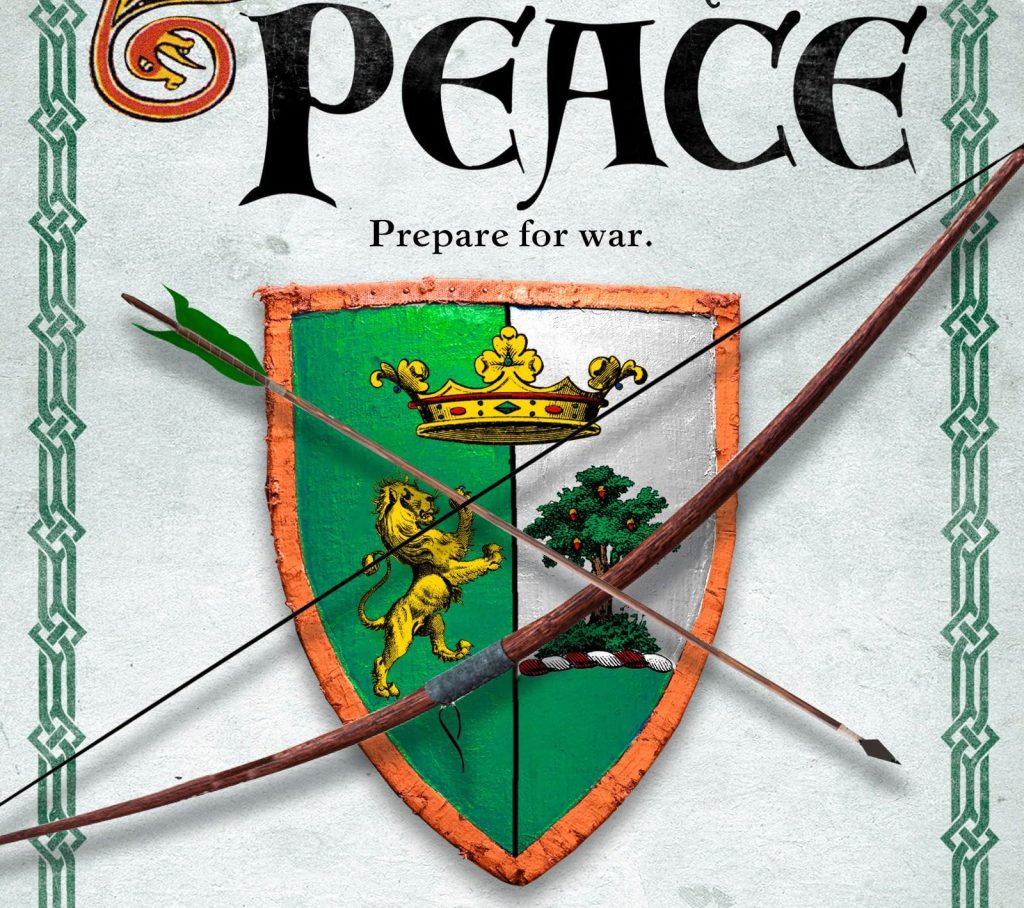
    This historical thriller tells the story of the Nine Years’ War (Tyrone’s Rebellion) fighting against ‘the heretic queen’, in those primitive, romantic days of guerrilla ambushes in the mountains, when the clans held power in Ireland a king still ruled in Leinster.
    William Taaffe, sheriff of Sligo, aspires to the land of Turlough O’Hara. He demands protection money, calling it ‘the Queen’s taxes’, and murders the O’Haras so he can mark the land as ‘untenanted’. For his effort the governor Sir Richard Bingham gives him a castle but refuses him a promotion.
    Things are looking good for Eunan Maguire. He’s a commander in the rebel army, fighting for Ireland’s freedom, and now a lord, and he is to be married to Sorcha MacBaron, in order to cement the alliance between the Maguires and the O’Neills. He admits to his uncle Seamus MacSheehy and aunt Dervella that he loves another.
    The newlyweds are off to Dungannon, where Eunan will train men, but the bride is ill, so they divert to her home, Augher Castle.
    His relationship with his indomitable father in law is improved when he rescues Sorcha’s brother from Taaffe’s prison but remains strained as the father protects his sickly daughter. By day, he trains his men; by night, love blossoms, and Sorcha is with child. But she miscarries, time and again.
    Seamus and his band take Ballinacor Castle, sparking a war of attrition. Eunan and his Galloglass (fighters) are with the Maguire (‘Red Hugh’), allied with the O’Donnells and clans of Connacht. The tale ends after the Battle of Yellow Ford with the rebel Irish still undefeated.
    It is Book 4 in the Exiles series; there is considerable backstory, which we have to absorb in the first few chapters, which, though well done, is a bit difficult to catch up on.
    These events and many of the characters are true to history. I was expecting Eunan to be the central protagonist, but Seamus takes center stage for much of the story. Taaffe is so evil, you’d think he was a made-up antagonist, but apparently, he really was that horrible.
    The author himself berates his obsession with excessive research, but his writing is not overly dense with historical detail. Instead, there’s a real feel for the period and understanding of the lives of these early Irish rebels. The politicking between men jostling for power and position is complex, fascinating and makes for great fictional drama.
    Fans of military fiction would find the excitement, fear and hatred of warfare well depicted. This review first appeared in Reedsy Discovery.

  • Review: Somewhere to Call Home

    Review: Somewhere to Call Home

    Elizabeth Jeffrey, Somewhere to Call Home (Canelo Severn House 2022)

    https://www.goodreads.com/book/show/121514804-somewhere-to-call-home?ref=nav_sb_ss_4_22

    Stella Nolan gets off the train with a valise in her hand and a black armband on her sleeve. The Great War is over; the world is finally at peace; yet the people seem tired and war-worn. Meeting her at the station is Henry Hogg, Major Anderson’s handyman. She is going to meet the family of her deceased husband, John. In the kitchen, the servants, including day worker Emma, discuss the young widow. Emma has a drunk, unemployed husband and a sick child, dying of consumption, at home.
    Stella’s reception is not as warm as John had led her to expect. In fact, his sister Rosalie is blatantly hostile. Stella discovers she is pregnant, and despite frostiness, mother-in-law Doreen invites her to stay with them permanently. Henry drives her and Rosalie’s paraplegic husband Philip into town, and Philip insists on hosting his ssiter-in-law and his servant in a tearoom. Doreen is not best pleased with town gossip, but Stella stands up to her bravely.
    Tragedy hits the downstairs staff, and the Missus is only concerned with who will set the table. Doreen fusses intrusively over the ‘precious bundle’, interfering with Stella’s capable parenting. Tensions never get better with her mother-in-law, though Stella defends herself better than I could ever do. Finally, when Doreen creates a ‘scandal’ out of nothing, Stella has had enough. Family snobbery and social conventions overcome, Stella finds her way into a new life with her son, and finds new love, too.
    The tender ways in which people, surviving the war, appreciated one another are heart-warming and intimate. Doreen is just too horrid to be credible. It ends happily ever after. This family saga is a lovely story of post-war Britain. It would also suit a YA audience, I think.
    This review first appeared in Historical Novels Review.

  • Review: The October Horse

    Review: The October Horse

    Colleen McCullough, The October Horse (Simon & Schuster 2002)

    https://www.goodreads.com/book/show/6474349-the-october-horse

    In Egypt, Ptolemy’s eunuchs present Caesar with the head of Pompey; he is outraged. The high priest of Ptah in Memphis sends Caesar a dingy old mat. Unrolled, it reveals you-know-who.
    The Nile has failed two years running; to bring the floods, Pharaoh Cleopatra must conceive a child, and she puts the proposition straight to Caesar. Caesar, vastly undermanned, wins a war with the anti-Cleopatra cabal in Alexandria. Six months pregnant Cleopatra takes Caesar on a cruise down the Nile, and he is taken into the Treasury vaults.
    The civil war between Caesar and Pompey works its way across the empire, the gradually victorious Caesar impressing his enemies with his clemency. Cilicia, Asia Province, Bithynia, Pontus, Galatia, Cimmeria and Cappadocia are pacified, and Caesar puts an end to tax farming.
    Cleopatra bears a son. Cato and Bibulus are proscribed, and their furniture is being seized. Brutus and his daughter Porcia fall into each other’s arms, and he promises to buy up Cato’s property to return to her.
    Caesar fights Labienus, Metellus Scipio, the Republicans and King Juba at Thapsus. It is an absolute rout. Cato falls on his sword, not very successfully and so very gory, with all his intestines out. Miraculously, surgeons manage to stitch him up, but, in a frenzy, he tears out his stitches to yank out his own intestines. Juba falls on his sword, and Caesar auctions off all his land.
    Caesar appoints 300 new senators, some Gauls. Caesar slaughters Labienus and young Gnaeus Pompey’s forces. Brutus divorces Claudia and marries Porcia. The 22 men now in the Kill Caesar Club recruit Brutus. On the Ides of March, his is the final blow, in the groin. But Rome does not laud them as liberators.
    The rest follows, in great detail, Caesar’s funeral and its aftermath, the war between the Liberators and the Triumvirate, culminating in the Battle of Philippi.
    The plot follows a mere six years of Roman history, October 48 BCE to December 42 BCE and seems to cover absolutely everything that happened during those years. Authorial imagination is marvelous, and the fictional elements are woven into historical facts so deftly that you feel like you’re right there. The detail is absolutely incredible—the daily routines of a Roman patrician and his clients, the precise logistics and costs of feeding a legion, family life.

  • Review: Caesar’s Women

    Review: Caesar’s Women

    Colleen McCullough, Caesar’s Women (Avon Books 1997)

    https://www.goodreads.com/book/show/3417.Caesar_s_Women?ac=1&from_search=true&qid=adqswMJf95&rank=1

    The first of Caesar’s women on the scene is Servilia, fussing over teenaged Brutus on the way to visit Aurelia, mother of Julius Caesar and Julia. Julia, only eight years old, is pretty and charming, and Brutus begs his mother to petition for her hand in marriage. Brutus has a liking for Uncle Cato, who is too low-born for Servilia’s liking. Into their company strides Caesar, fresh from Spain.
    Servilia proposes a betrothal between Brutus and little Julia, while the parents begin an affair. 100 pirate war galleys attack Rome’s port of Ostia, steal the grain ships and capture two praetors. To great acclaim, the Plebs commission Pompey with imperium to tackle piracy in all the oceans, which he accomplishes admirably.
    The plot moves through the Catiline Conspiracy, the Vettius Affair, a campaign against King Tigranes of Armenia. As well as Julius Caesar and his family, Pompey Magnus and Publius Clodius feature heavily. Caesar’s enmity with Marcus Porcius Cato continues.
    I can’t possibly summarise the plot. The plot is ten years of Roman history (68BCE-58BCE), told from up close and personal. The detail is amazing. The precise method the Vestal Virgins used for storing wills. The ‘ripe and shady’ ladies Sempronia Tuditani and Palla ‘gave the best fellatio in Rome’. Lucullus ‘experimented with soporific and ecstatic substances’. Julius Caesar drank no wine’. Did Brutus really have bad acne? Was Pompeia Sulla really terrible in bed? Was Cato really afraid of spiders and his sister Porcia of beetles? McCullough either has a rich imagination, or she was there herself, reading the wall graffiti. Either way, Roman history really comes to life. The rendering of the ins and outs, ups and down of Roman politics reveals a deep understanding not just of Roman history but of human character.
    It is Julius Caesar’s Voice we hear, a lot of the time, a difficult proposition for a character whom everyone knows was such a tough cookie.
    The cast of characters, each with a complex name, genealogy and familial and political affiliation, would be as daunting as in the first two books, if it were not that this Book 3 of the series largely zooms in on the stories of Caesar’s women.
    There is excellent weaving of backstory into the dialogue and details of history into intimate and sometimes wittily chatty letters from one person to another.
    It is TOO long—964 pages! but if you love Roman history, it’s a must read, though after about page 600, it becomes a bit long.