Tag: christianity

  • Review: The Weaver’s Legacy

    Review: The Weaver’s Legacy

    Olive Collins, The Weaver’s Legacy  (2020)

    https://www.goodreads.com/book/show/55956483-the-weaver-s-legacy?ac=1&from_search=true&qid=pVOTjWBbqS&rank=1

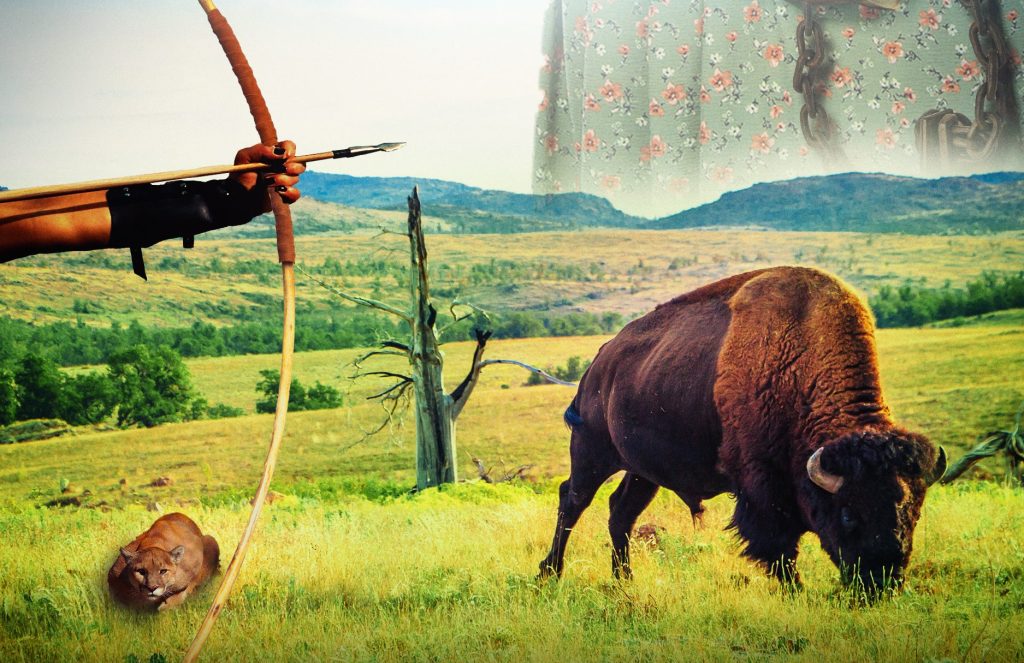
    Lucy O’Neill has been adopted by her aunt Goldie, who’d left her a ranch in Four Oaks, Wyoming. Trying to convince her to come back and take possession of her property, her cousin Wilbur Breen informs her of the sudden reappearance of her long-lost father Lorcan.
    Lorcan has returned after a 30-year absence, and Lucy goes back to Four Oaks to meet him, hoping to learn the real story of the family’s past. She reminisces with Makawee, the Lakota wife of Goldie’s neighbour, while her husband Harry plots to make sure Lorcan is not there to try to claim the property.

    Grainne O’Neill (Goldie) is 9 when she sets off West with a wagon train of Irish Catholic immigrants, each family to claim their 160 acres. Her father Barry is keen to leave everything behind, even their Gaelic language, always ‘clawing for more’. Her brother Lorcan can’t seem to do anything right and is ever thirsty to hear stories about killing Indians. The children make friends with Chaytan, the Lakota boy who tames wild mustangs.
    Goldie is fighting with her cousin when the grasshoppers (locusts) invade. When the swarm subsides, her baby sister is gone. Each day she steps farther into the forested hills marked as Indian territory and leaves letters for the Indians she believes have taken her sister.
    The immigrant families intermarry, carrying their personalities, their prejudices and their vendettas with them, and the various family histories unravel across the generations.
    One challenge in writing family sagas is that most families lead pretty ordinary lives. ‘The story of my grandparents’ is really only interesting enough if they’re your own grandparents. There usually has to be some kind of ‘deep, dark family secret’ or mystery to keep the reader wanting to read through till the end while we work through the generations. In this novel, the two mysteries a) where had Lorcan been and why was he back? and b) what happened to Goldie’s baby sister? are just about enough. There’s also c) an undercurrent that Lorcan may not have been ‘the gentleman that she had been led to believe’.
    The initial reveal is a bit clumsy, making me wonder if I’d skipped over a few pages somewhere, but it becomes clear in the end. The final revelation is a shocker that comes too late to avoid the tragedies.
    It also helps if a story is set during an eventful historical period. The setting is, interestingly enough, defined as the period of time between two great natural disasters—the 1866 Grasshopper Invasion and the 1933 Dust Bowl.
    Tx to JM, who gave me this book for my birthday.

  • Review: So It Goes

    Review: So It Goes

    Isis Molina, So It Goes  (2022)

    https://www.goodreads.com/book/show/60150520-so-it-goes?ac=1&from_search=true&qid=GZy2WpLOK2&rank=5

    The good life in suburbia, two men’s love for their children and for each other


    Aaron Santos, Karen and 5 year old Danny move into their new dream house in Oklahoma and become acquainted with the neighbours, Lucas, his pregnant artist wife Angelica and their dog Daisy. Aaron and Lucas hit it off right away. Lucas is a writer of ‘comedy horror’ novels, and the two men enjoy a shared love of bad horror films. Aaron shares with Lucas that he’s bisexual and that he is not Danny’s biological dad, a painful subject.
    Aaron loves Danny with a passion and wants to be a good dad, unlike his own deadbeat father, and there are other strains within the Santos family dynamic.
    It’s very long, 833 pages. And a lot of the story is really ordinary stuff, people unpacking boxes, watching Scooby-doo, fixing lunch, taking the dog for walks, having BBQs and handing each other beers. Lucas helps Aaron pick up a swingset he’s bought off Craigslist. They swim in the pool, have potlucks with Ophelia and her wife Rosa. I don’t really need to know how everybody takes their coffee or when people take bathroom breaks.
    Finally, in Part 3 a bombshell is dropped into Aaron’s life, and as he recovers, another bombshell falls on Lucas, but their friendship sees them though. In Part 6 Aaron has to make a heart-wrenching decision.
    The Craigslist adventure was not as horrible as we expected (hoped?) it would be. The characters are lively enough to sustain interest, but I did find myself wishing for some vampires or a dead body or something, and I certainly wanted Aaron and Lucas to go ahead and bonk already.
    This is a character-driven contemporary novel, maybe a romance, with some sexually explicit scenes. It is beautifully written in a distinct fluent style with a colloquial feel and a strong voice, and it’s perfectly edited.
    The strength of this novel is the characters. They are sparkling, well-rounded and interesting from page one, with complex relationships, and I really cared how they all get on. The dialogue is natural and true to each character’s personality.
    I was given an ARC by the author.

  • Review: In the Name of the Family

    Review: In the Name of the Family

    Sarah Dunant, In the Name of the Family  (Random House 2017)

    https://www.goodreads.com/book/show/41021513-in-the-name-of-the-family?ac=1&from_search=true&qid=i0J8FVz2Sv&rank=2

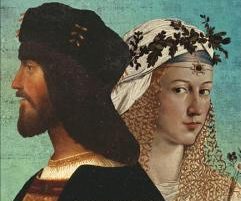
    Rodrigo Borgia sits on the papal throne, dreaming of creating a Borgia state in Italy ‘through the brawn of his son and the loins of his daughter’. Cesare is aboard a galley off the coast of Piombino, chafing at the delays to his ambition. Lucrezia, 21 and on her third marriage, is on her way to Ferrara, parading her charms and her dowry at every ducal court along the way.
    Lucrezia, eager to spend her dowry and establish her own court, deftly handles her snooty in-laws and a husband who expends most of his energy on fat prostitutes and metallurgy. She is in perilous childbed.
    Cesare, supposedly cured of the pox, believes he’s invincible. He blazes a fiery trail of conquests while ‘half of Italy looks over their shoulder to make sure his shadow is not falling across their path’. Pisa and Urbino declare for Borgia; Florence appeals to Louis king of France and would-be Naples only to see Louis and Cesare walking arm in arm.
    Pope Alexander weaves his way through interminable ceremonies, ‘playing politics like a winning hand of cards’. He plunders the Church to fund his son’s warfare and hurries to create new cardinals loyal to Borgia.
    Lucrezia’s child is stillborn, and after near death, she is nursed back to health by the nuns of Corpus Domini. The poet Pietro Bembo, ‘surely a master of the rules of court dalliance with a great lady’, comes to Ferrara, and a chaste affair begins. ‘An invisible thread of attraction is drawn between them so that if either pulls on it even by a fraction the other is aware.’ Sister-in-law Isabella of Mantua threatens to cause a scandal. Her ‘ladies’ noses are known to reach around corners and through closed doors’. Cesare, having put down a conspiracy of erstwhile allies, Christmases in Cesena, where ‘the ladies seem to relish the progress of their own damnation’. The Pope plunders the estates of his son’s vanquished foes.
    This is superb history and haute litérature, featuring really beautiful prose. Will Michelangelo’s colossal new statue David be ‘powerful enough to shield the city from the Borgia Goliath’? Dinner at the household of Florentine diplomat Machiavelli, though whose eyes much of this story is told, ‘feels crowded though there are only two at the table’.
    The Borgias’ lust for power and fierce love for each other makes a wonderful story, and Dunant does it more than justice.

  • Review: Blood and Beauty

    Review: Blood and Beauty

    Sarah Dunant, Blood and Beauty  (Random House 2013)

    https://www.goodreads.com/book/show/16142157-blood-beauty?ac=1&from_search=true&qid=exacdV5qyY&rank=1

    6 stars. A gorgeous work of literature, a great work of history


    Pope Innocent VIII is dead, and ‘his body was still warm when the stories started wafting like sewer smells through the streets.’ Cardinal della Rovere and Cardinal Rodrigo Borgia are locked in rivalry. Borgia’s Spanish (Catalán) blood is against him, yet he has bribed his way to the top. His coronation as Pope Alexander is ‘the party the Borgias have been waiting to throw for thirty years’.
    At home with his cousin Adriana and his daughter Lucrezia, mistress Giulia (‘la Bella’) Farnese is pregnant with a Borgia child. Son Cesare and his henchman Michelotto receive dispatch riders at Spoleto. A Spanish match is off, Lucrezia will be married into either Milan or Naples.
    Over maps of Italy, Cesare and his father discuss their plans for dominion. Giulia has a daughter. Lucrezia is betrothed to Giovanni Sforza of Pesaro. At Lucrezia’s wedding ceremony, Giulia is presented as the Pope’s companion, and the Borgias are bedecked in jewels. Rumour has it that ‘ten papacies would not satisfy this horde of relatives’.
    The marriage as yet unconsummated, Giovanni Sforza leaves Rome. To become a cardinal Cesare needs to be legitimate, so Pope Alexander simply issues a bull to the effect. He packs the College of Cardinals with new appointees.
    King Ferrante of Naples dies, affecting the Milan/Naples balancing act. Medici power in Florence is challenged by the sermons of Savonarola. With the arrival in Rome of summer fever, the women are shipped off to Pesaro. Charles VIII of France invades Italy, but Alexander handles the crisis to his advantage.
    Informed that her marriage is to be annulled, on grounds of non-consummation no less, Lucrezia takes herself off to a convent. Pedro Calderón is assigned as messenger to Lucrezia, and the two begin a dangerous flirtation. Cesare, ever jealous of any man with his sister, has the man murdered.
    Lucrezia marries Alfonso d’Aragon, and this time it’s a love match; she has a baby boy. Cesare marries a French princess, and now he has French troops. Imola surrenders; Forli is conquered. Cesare is lord of all Romagna. The house of Aragon is no longer strategic; Cesare has Lucrezia’s husband murdered right in front of her. She is married off to the great house of Este in Ferrara.
    The house of Borgia is on the rise.
    I bought this book because its sequel, In the Name of the Family, was so excellent. This one was just as great.

  • Review: Standing Against the Wind

    Review: Standing Against the Wind

    Marcus Abston, Standing Against the Wind  (Chas Novels 2021)

    https://www.goodreads.com/book/show/59338634-standing-against-the-wind?ac=1&from_search=true&qid=H5uPdel9t9&rank=2

    Runaway slave Annabelle takes refuge with Grace’s Cherokee family in Indian Territory after her husband and child were murdered. Some Cherokee are slaveholders and Grace fears exposure by the Indian agents who come through town to check their records. She gives Annabelle a job working in the family store and falsifies a slave document to provide her with papers.
    At the store Annabelle meets Grace’s cousins Tsula and Lisa, her sister Lizzie and her uncle George. Lizzie has conflicted feelings towards Annabelle as a Negro, as she fancied a half-Negro boy who rejected her. The boys in the family are Michael, Samuel, John and little David. John has closed his mind to anything that is not Cherokee. Uncle George places a whip on the counter, in case Grace needs ‘to keep Annabelle in her place’, and yet Annabelle is surprised to meet some slave owners who are nice.
    Grace’s family struggle to love God in a world where slavery exists, and the Negro girl and Cherokee family find common ground in their anger against the white men. The Trail of Tears is still fresh in the memory of Elder Joyce, who counsels making an alliance with the Negroes and trusting in Jesus and teaches Annabelle Cherokee.
    Annabelle misses her white friend Judy Mays. She befriends Doll, who is happy being a slave in the Thompson household. Annabelle brings water to slaves working in the fields. Some of their owners appreciate the gesture; some do not. Nancy and Lizzie are two characters who antagonise the girls, particularly Annabelle, and accepting Jesus into her heart helps her deal with it. Indian agents come to town and spread their vile racism everywhere they go.
    The work could use a good hard editing. There are numerous sentences that I felt were not quite English, as if they had been translated from another language. ‘The town seemed to struggle with happiness’. ‘No feeling of fear was present’. ’They would rather kill themselves before changing for the better’. ’Crop fields large and small appeared to be their life source’. ‘He was a terrible example of Christian men’. ‘Annabelle was surprised by the bird’s anxious nature’. ‘Annabelle had now reached the level of not being allowed to greet Joyce with English’. ‘I can’t expect more since you’re so little of us’. ‘They’re waiting for a chance to take control and come through like a summer storm’. Many of the scenes would have worked better had the dialogue sounded less stilted.
    It’s a good, strong concept—a runaway slave takes shelter with the Cherokee. Does their respective suffering at the hands of the white men mean they are natural allies? We come to love and understand the characters, and the plot is good. The book’s anti-racist message shines through. It’s also a story of forgiveness and redemption. Annabelle’s spiritual journey and struggle to find happiness in her new life is one we can all both applaud and learn from.
    This is Book 2 of which Bloodlines was Book 1.

  • Review: Perseverance Place

    Review: Perseverance Place

    Elizabeth McNeil, Perseverance Place (Canelo Saga 2021)

    https://www.goodreads.com/book/show/62979005-perseverance-place

    1890 Edinburgh. When Brabazon Nairn’s husband Duncan is bankrupted, they and their two teenage sons, Henry and Laurence, must start over, taking up residence in Perseverance Place.
    They sell the mansion house, and the creditors agree to let Brabazon take over the management of the brewery.
    First to call upon the new neighbours is Nellie Warre, wife of head brewer Alex.
    Brabazon’s first brew they christen ‘Mrs Nairn’s Number One’. Duncan is ill, and it’s serious, Parkinson’s. Someone is in the brewery, late at night, and she discovers Alex dead. Someone had pushed him down the ladder.
    Mhairi in the Outer Hebrides is raped by Dugald Stewart, and she has a son, but her mother says either she or the bairn has to go. She goes to work in the kitchen of a convent but finds it hellish, so, she runs away.
    Mhairi takes a room in the Place and soon endears herself to the Nairns, nursing Duncan in his final days while Brabazon runs the brewery. Her family have emigrated to New York, her baby Calum with them. The elder Nairn brother Henry is interested in her. But there is long-standing resentment and rivalry between Henry and his brother Laurence.
    This Scottish family saga is a beautiful novel. We get to know all the tenants in the Place, and they feel very real. The writing is wonderful. There are beautiful phrases like ‘ships’ masts leaning confidingly together’ in the harbour and gorgeous words like ‘debouched’.
    I got a bit exhausted reading about suffering and then more suffering. Then, when the family is prosperous again, it’s good news and then more good news. It could have continued forever, taking up the children, then the grandchildren.
    If there is an overlying theme, I suppose it’s—perseverance—starting anew and keeping at it.
    This review first appeared in Historical Novels Review.

  • Review: Argo

    Review: Argo

    Mark Knowles, Argo (Head of Zeus 2022)

    https://www.goodreads.com/book/show/58327073-argo?ac=1&from_search=true&qid=kbFC4gIOE7&rank=3

    1230 BCE Iolkos, Thessaly. A stranger arrives to compete in King Pelias’ Games, wearing only one sandal. The man, his nephew Jason, was supposed to have been killed as a child. Now, Jason wants the kingdom. Pelias sets him an impossible task—steal the Golden Fleece of Colchis.
    The early chapters feature vignettes where we successively meet the Argonauts—all our favourites: Castor and Pollux, Orpheus, Herakles. With his mighty allies, Jason sets sail. A captain among established heroes, he has some teething troubles establishing his command. He needs not only to steal the Fleece, he also needs to become a leader.
    The plot roughly follows Apollonius of Rhodes, minus the supernatural elements.
    The crew are seduced by the man-less women of Lemnos, experience the mysteries of the old gods with the Kabeiroi (a cult associated with Hephaestus) on Samothrace, fight various Black Sea tribes, rescue Phineus from the Harpies (scavenging birds). The dragonteeth army is here substituted by Sirakian warriors.
    One of the Argonauts, Herakles, is a hero of the Bronze Age, winning prowess by brute force. Jason is a new man (for 13th C BC), a hero for the Iron Age, a man of trade not conquest, who uses his brains not his brawn. As if to acknowledge that his day is done, Herakles is parted from the company, leaving the venture to the wiles of Jason.
    For a tale which introduced the world to a new sort of hero, Jason doesn’t always occupy centre stage in Knowles’ version, and in the end it’s the wiles of the princess, Medea, that wins the Fleece.
    This is a modern retelling of the ancient myth, but Knowles’ background in the Classics, archaeology and even antique shipcraft is evident.
    The novel ends with a ‘to be continued’, so I assume we will read more of Jason and Medea.
    This review was written for Historical Novels Review.
  • Review: The Bear of Byzantium

    Review: The Bear of Byzantium

    S. J. A. Turney, The Bear of Byzantium (Canelo Adventure 2022)

    https://www.goodreads.com/book/show/59832856-the-bear-of-byzantium?ac=1&from_search=true&qid=H7loc0B6jg&rank=1

    Harðráði (Harald ‘Hardrada’ Sigurdsson), his second-in-command Valgarðr and the Varangian Guard, the Byzantine emperor’s personal guard, defeat the Bulgars at the Battle of Ostrovo. 6000 strong, the Varangians comprise men from the northern Baltic and Rus, their Viking warrior skills hardened by battle.
    Halfdan, and his crew on the Sea Wolf, shadow Harðráði’s journey back to Constantinople, and the men eventually meet. Halfdan’s seer Gunnhild negotiates for the crew to join Harðráði’s Varangians, for which role they must feign allegiance to ‘the nailed god’ and swear an oath to the imperial throne.
    Constantinople is a new world for these men, and they have to navigate the new pecking order. Gunnhild takes a house in the city, and soon people are coming to her for healing. Her fame grows, and she is called to service the Empress Zoe herself.
    The emperor is ill, and Halfdan’s crew become embroiled in imperial intrigue. They find their oath of allegiance put to the test as a struggle for the throne ensues. Which thread in the weaving of the Norns is Gunnhild’s destiny?
    Leaping straight into the personal drama between various commanders, this story is well written and full of fascinating characters with an exciting, complex plot. It’s a bit uncomfortable that there’s no clear protagonist; Harðráði is the eponymous ‘bear’, but the hero of the series is Halfdan, and Gunnhild seems to direct most of the action.
    Attention to the detail of these 11th century mercenaries’ lives really makes the story come to life. The details of Gunnhild’s Seiðr (Nordic magic) practice are fascinating. The battle scenes are choreographed and gory.
    All of the main characters here are taken from real history. Turney seems not just to know the period, but to understand it.
    This is Book 2 in the Wolves of Odin Series.
    This review first appeared in Historical Novels Review.

  • Review: The Crossbow Stalker

    Review: The Crossbow Stalker

    Tony Bassett, The Crossbow Stalker (The Book Folks 2022)

    https://www.goodreads.com/book/show/60353844-the-crossbow-stalker?ac=1&from_search=true&qid=P9CIPdwp3J&rank=1

    Young detective sergeant Sunita Roy is called to a murder at a remote country cottage. The victim, Oliver, has been shot with a crossbow bolt and a handkerchief embroidered with the letter C has been stuffed into his mouth. So begins Tony Bassett’s excellent crime thriller.

    As the investigation progresses, so do the murders, all with crossbows and all with the handkerchief marked C. And there may be a copycat killer on the loose as well.

    A near-perfect crime thriller. I’ve never solved a murder, myself, but the police methods seemed quite realistic. The large cast of characters and suspects all have inter-connecting stories. We get clues and pieces of evidence bit by bit, with tantalising red herrings, encouraging the reader to try to crack the crime. I usually don’t, but I did this time. The writing is excellent, and the characters are colourful.

  • Review: Plumes of Dust

    Review: Plumes of Dust

    Greg Parkes, Plumes of Dust (2021)

    https://www.goodreads.com/book/show/96064279-plumes-of-dust?ac=1&from_search=true&qid=P6V8MoTd6S&rank=4

    1745. James Schoolcraft is apprenticed to Jacob Wyngaart, master sawyer at Mr Schuyler’s mill in Saratoga. Beyond the trading post ten miles north upstream, there was ‘nothing but a wilderness of bears, wolves and Indians as far as Montreal’. His ambition, after completing his apprenticeship, is to return home to Schoharie and build a sawmill there. He has his eye on the Wyngaarts’ daughter Rachel.

    An attack by French soldiers and Indians invades their peaceful breakfast, and the wife Greta is killed, Rachel abducted by the Indians and Mr Schuyler’s house and the sawmill torched. James and the rest of the Dutch villagers are taken captive by the French.

    Rachel is taken by Tekanatoken to be his adopted daughter, before she leaves, pledging her love to James. She escapes from one master only to be enslaved by another. She talks to the ghosts of the women who went before her.

    James and Jacob’s family are among those sent to Quebec, where James makes the acquaintance of Mrs Mercy Weaver, who, she admits, ‘lies with men’.

    Rachel is called by different names according to which man is her master, which made me think she accepted her bondage. I wondered if her talking to ghosts was a sign of emotional deterioration. Were they ghosts? Were they jealous spirits from another realm determined to ruin her? Were they alternate personalities?

    The Indian attack scene is a bit thrown away, without any suspense built, and thus, we don’t feel the outrage that we might do at Rachel’s abduction. Despite being based on the historical Raid on Saratoga during King George’s War and the characters in the story being based on real historical people, in chapter one we don’t get a sense of this event’s place in history. For the rest of the novel, we do get a real sense of the period—the hardships, indignities and boredom of prison life, the insecurity of people in times of war, the extremes that human beings are capable of surviving.