Tag: christianity

  • Review: The Genesis Inquiry

    Review: The Genesis Inquiry

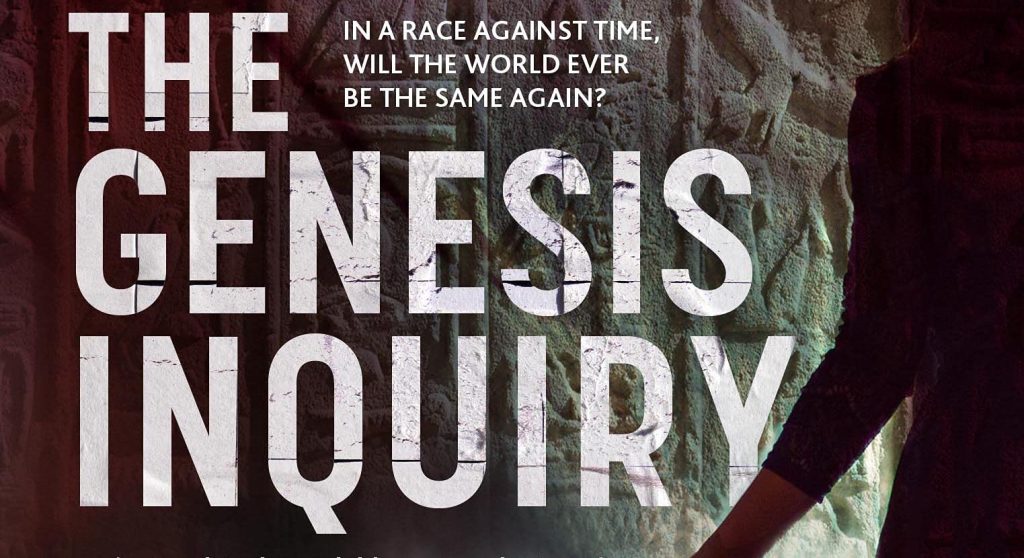
    Olly Jarvis, The Genesis Inquiry (Hobeck Books 2021)

    https://www.goodreads.com/book/show/59337468-the-genesis-inquiry?ac=1&from_search=true&qid=EpmlDEYCbX&rank=1

    A detective/legal thriller incorporating ancient history, religion, and ‘the big questions’


    Barrister Ella Blake takes a case at De Jure College in Cambridge, also where her daughter Lizzie is at uni, but their relationship is strained. Cambridge is ‘all about answering the big questions’, Lizzie says.
    The case concerns the mysterious disappearance of a genius African American academic from Arizona, Mathew Shepherd. Shepherd had been researching ‘the big questions—how? and why?’. De Jure wants Ella to find Shepherd and to discover what was the nature of this work. As well as a penchant for the Greek philosophers, he appears to have been reading about every subject, about every period of history—and also the Yorkshire Ripper.
    Though attracted to campus gardener Jay, Lizzie begins dating Greg. But gardener Jay is in trouble, in court for hacking MI6, and Ella defends him. Before making his appointment with Ella, Shepherd’s brother Cameron turns up dead.
    Lizzie and Greg attend the new age retreat of climate change activist David Kline, who has some crazy theories about life and the connectedness of all things.
    A detective, Broady, has come all the way from Phoenix to investigate Cameron’s case, his telescope in tow. Lizzie doesn’t know whom to trust, Greg or Jay. Should they trust Agent Harris from the police?
    The team—Ella, Broady, Lizzie and Jay—are on the run, from Cambridge to London to Lindisfarne to Turkey, chasing down clues. There is an enigmatic letter from Matthew to his brother. There’s a password-protected memory stick and some kind of Bible-code-type grid of dots in columns and rows. All the while, they are being chased by…who? MI6? David Kline? The Chinese? And people who help them keep getting murdered.
    Like Dan Brown books, there are recurring themes, designed to give readers the feeling that we’re being let in on a secret conspiracy—the Anglo-Saxon Chronicle, Aristotle, comets, Noah’s Ark, the date 9500BC. Little by little, these clues reveal what exactly is the Genesis inquiry. The conclusion is more interesting and more educated than the usual we-found-the-real-Garden-of-Eden fare. And in the end, it’s Ella’s lawyer-skill with words that wins the day, not some macho-man with guns. OK, there were guns, too.
    This thriller is an easy read, well written and perfectly edited. I was interested in the characters from page 1, and the backstory is woven skilfully into the well-paced, rapidly developing plot.
    As a real life barrister, Jarvis knows what he’s talking about; the legal proceedings and courtroom scenes seemed quite realistic. It looks like he has a sideline in ancient history and archaeology.
    Olly Jarvis has written several detective/legal novels. This one is billed as ‘an Ella Blake thriller’, so we can probably expect a sequel.
    I was given an ARC by the HNS, who didn’t consider it to fit the historical fiction genre.

  • Review: The Happy Writing Book

    Review: The Happy Writing Book

    Elise Valmorbida, The Happy Writing Book (Laurence King Publishing 2021)

    https://www.goodreads.com/book/show/57356168-the-happy-writing-book?ac=1&from_search=true&qid=kBGOqR2DU2&rank=1

    A writing book not just about the craft, but about the process and the emotional journey of writing


    In my view, there could never be too many books about writing. There are always new ways of reviewing the basics, new viewpoints to hear, new examples to use. However, this book is not just one more writing book—it’s something completely different. This is the first writing book I’ve come across which addresses the why, not just the how. This is a writing book that outlines not only the craft of writing, but the spiritual/emotional journey involved.
    Each chapter is only one or two pages long, and there are 100 of them, 100 ‘parcels of inspiration and provocation’. Chapter headings include “Dream big”, “Put off procrastination”, “Perfect is the enemy of good”, “Make yourself feel”, and (my favourite) “Change the world”. The Further Reading section at the end has headings like “Randomness” and “Listening to silence”.
    The HWB addresses not just the method of writing but the process of writing and the psychological journey involved. Why do we want to write? What is holding us back, emotionally? How do we overcome what gets in our way? The chapters often end with a ‘homework’ exercise—again, focussing on provoking creativity, not just on using a particular writing technique.
    One could probably assume that anyone reading this book is already writing or starting to write, so some of the advice might be a tad simplistic, but the different approach (process rather than just technique) makes up for it, and the chapters are so short they only take a minute to read. I found it a handy tool reading one or two chapters a day to provide a pep talk before starting my morning’s writing.
    The condensation of choice ideas and concepts into the small space makes the chapters almost like little poems. I totally loved the metaphor for creative juices (our writing forays are as one ant’s action, then another’s) as—‘formic pheromones’. The HWB is full of gorgeous new ideas like that.

  • Review: The Owls of Gloucester

    Review: The Owls of Gloucester

    Edward Marston, The Owls of Gloucester (Ostara Publishing 2011)

    https://www.goodreads.com/book/show/11755271-the-owls-of-gloucester

    This 11th century whodunit centers on Gloucester Abbey, where a monk, Brother Nicholas, collector of the abbey’s rents, has been murdered. The body is discovered in the belltower by two novices, Kenelm and Elaf, escaping a beating. They admit they didn’t like the way Brother Nicholas ‘looked at’ them. We can guess.
    Ralph Delchard and Gervase Bret are on the King’s business, administering the Great Survey. As Sheriff Durand begins his investigation of the murder Ralph and Gervase deliberate on local property issues at the shire hall.
    The wives, Golde and Maud, enter the story, as well as Abbot Serlo and Brother Frewine. At the shire hall, we encounter local land owners, both conquering and conquered, making up a panoply of interesting characters.
    As is usual in detective stories, the Sheriff rushes off down a blind alley, needing the king’s commissioners to lead him to the right path, assistance which is, of course, much resented by said Sheriff. Meanwhile, the abbot and his monks conduct their own inquiry, and each party is not sharing their findings with the others. We discover that the local property disputes have very much to do with the murder of Brother Nicholas.
    An easy read—might be accessible to an older-end YA audience, too—not chock full of detail about the period, yet I didn’t find any anachronisms. I don’t think the property cases dealt with by Ralph and Gervase are historic, but they are believable, and there was, indeed, a Strang the Dane listed in the DB as a property owner dispossessed in 1066. If you loved Brother Cadfael you’ll love this series.
    I found the concept of the series positively inspired—detective cases encountered while on the business of William the Conqueror’s survey. This is Book 10 in the 11-book Domesday Series.
    This review was written for Historical Novels Review.

  • Review: The Lion Ascendant

    Review: The Lion Ascendant

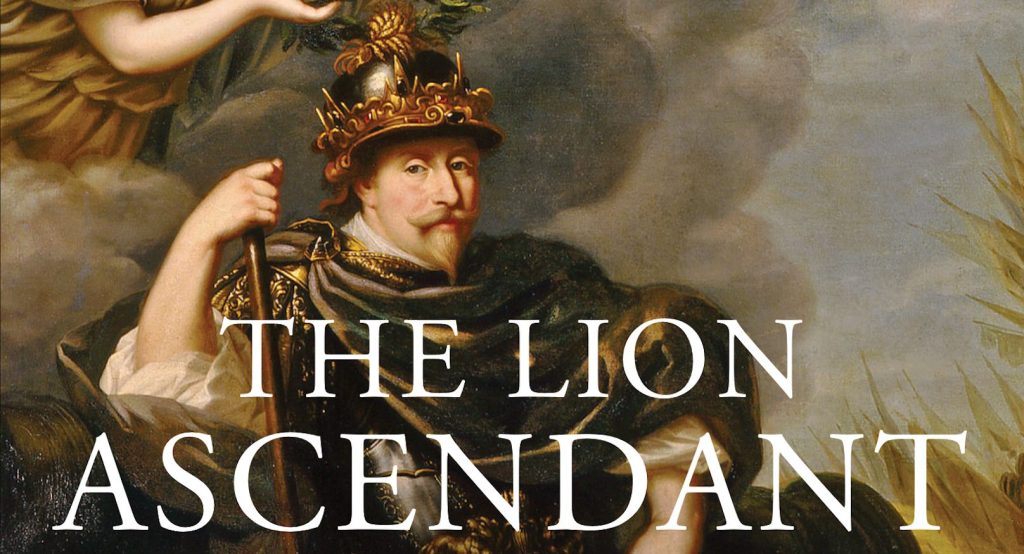
    John Biggins, The Lion Ascendant (Bonanova Editions 2021)

    https://www.goodreads.com/book/show/58835259-the-lion-ascendant?ref=nav_sb_ss_1_18

    Flemish surgeon’s apprentice Frans Michielszoon van Raveck enters the Polish-Swedish War 1626-29 War in the service of King Gustav.
    Biggins’ ‘fascination with… the pathology of decaying empires’, as claimed in his author’s bio, is evident throughout. Frans’ life story reads like a comedy of errors, as he assists in one bumbled project after another.
    Over-wintering on a frozen hummock on the Vistula River, Frans becomes assistant to an Italian architect charged by King Gustav to construct an over-priced fortress and sluice-gates. He earns a medical scholarship by successfully operating on the Swedish king, studying at a miserably equipped university in Uppsala. In Stockholm he assists in the construction of the ill-fated folly, the Vasa warship, which sank less than a mile into her maiden voyage.
    Peppered with Classical and Biblical references, the writing admits to having ‘drunk deep at the spring of Pericles [and] Cicero’. It is a rich, erudite style which is very much to my taste. Even apart from the frequent vocabulary in Dutch, Polish, Swedish and Latin, I found almost 20 words I have never before seen in usage, such as ‘obloquy’, ‘clyster’ and ‘gallipot’.
    In places the language is so flowery as to be humorous. For example, a fellow who doesn’t love Amsterdam ‘would certainly starve in the midst of Dame Abundantia’s larder and lack salt to his boiled egg beside the very brine pans of Cadiz’. The language is believable for the 17th century, something which I consider essential for historical fiction.
    The slow pace also speaks to period verisimilitude, when travellers trekked across endless frozen meadows with no map and soldiers waited months for orders never being told the overall battle objective.
    This is Biggins’ 6th novel. This is the sequel to The Surgeon’s Apprentice and ends with Frans travelling, so we can expect Volume III.
    Review first appeared in The Historical Novels Review.

  • Review: The Only Living Lady Parachutist

    Review: The Only Living Lady Parachutist

    Catherine Clarke, The Only Living Lady Parachutist (Idle Fancy Press 2021)

    https://www.goodreads.com/book/show/58421074-the-only-living-lady-parachutist?ref=nav_sb_ss_1_33

    The true tale of a woman reaching the heights (pun intended) of her profession, with some tall tales told to whip up the crowd


    Lillian reminisces upon her entry into show business—the Music Hall world of acrobats, jugglers, trapezists, upon which she gazed with envy from her barmaid job at the pub next door.
    Ted Faust gives her an audition, as a trapezist—and a stage name, Gladys Freitas—only to find that he proposes charging her, ‘for lessons’. Eventually, she becomes ‘the Aerial Queen’, lauded by the Sydney Herald, as trapeze artists say, ‘with the world at her feet’.
    Her debut at Haymarket Music Hall, despite her mother’s disparaging that she had become ‘an actress’, is a success. Sister Ruby wants to form a double act. Despite a prickle of resentment, Lillian welcomes the second Freitas sister.
    Finding their slot increasingly challenged by the new act, Negro minstrels from America, the Freitas Sisters are pressured to undertake something more dangerous in their act. A visiting American, Professor Park Van Tassel, invites them to a hot air balloon and parachute jump show. He gives them jobs as performers. The sisters change employers, as they get traded around like livestock.
    Lillian tries a daring feat and is injured, and the ventriloquist Harry Rayward woos her. When she arrives, cured, in Adelaide, financial backers, Edwin Thorne and magicienne Miss Cora, are scrambling for their shares in the proceeds. As Lillian, now named Leila Adair, seeks daredevil fame, the troupe suffers from a series of failed balloon inflations.
    Van Tassel’s dialogue sounds a bit awkward, but maybe that’s just a sign of a quirky personality. Some plot developments seem thrown away, although, granted, there’s a limit to how much one can embellish with biography. Lillian suffers from a dark pain from her childhood, her career tears her away from her children, and various frauds and mountebanks double-cross her, yet she doesn’t seem to suffer as much as you know someone would.
    An interesting twist towards the end, a secret revealed—and then another—seems unfortunately thrown away, too. The true story finally makes its way through invented personas, lies and tall tales told to whip up a crowd and makes a fascinating concept for a novel.
    The writing style is a little bit tongue-in-cheek in tone, without often reaching ‘funny ha-ha’.
    The world of professional balloonists/parachutists is beautifully portrayed. The book captures the mood of the age, 1890 Australia/New Zealand, when science and new inventions seemed to make everything suddenly possible, and the public, newly blessed with free time for leisure pursuits, hungered for all things strange, exciting and dangerous.
    This is based on the true story of a real woman parachutist, and each chapter is introduced by a real—and wonderfully illuminating—newspaper clipping from the time. The research necessary for this book must have been quite a challenge.
    I received an ARC from Reedsy Discovery.

  • Review: A Misplaced Beauty

    Review: A Misplaced Beauty

    Amy Walsh, A Misplaced Beauty (Kindle 2021)

    https://www.goodreads.com/book/show/56493870-a-misplaced-beauty?ac=1&from_search=true&qid=kbqXRHTD68&rank=1

    A Victorian romance—a morality tale of married love, spiritual growth and redemption


    It’s 1882. Miss Georgina Huxington is the toast of the London season three years running, and she has refused suitor after suitor, even the conceited Lord Bartron. With her younger sisters now coming out, she realises her popularity is an impediment to their potential success. She determines to accept the next proposal she receives.
    Malcolm, marquis of Birmingham, has admired her from the corners of the ballroom at Spencer House, and tries his luck, sending her father a letter. To his shock, she accepts. Her mother and sisters warn her that while the marquis has a reputation for kindness, he is, nevertheless, ‘portly’.
    She first sets eyes on him as she walks down the aisle, when she discovers that he is PORTLY. He is tetchy and seems to take offence at everything she says. They agree to sleep separately on the first night, and the second, and the third. The awkwardness persists.
    Enter Malcolm’s nephew, the handsome Charles, and he is inappropriately flirtatious, matched by Malcolm’s increased surliness. The marriage goes from bad to worse, but Georgina determines to win back her husband’s love. There is tragedy among the tenants, but Baptist preacher Charles Spurgeon brings them both into God’s love and love of each other.
    The last 15 pages are Georgina’s diary, which I would have preferred sprinkled in as excerpts amidst the rest of the text, or left out, as it doesn’t add much.
    This is along the lines of other Victorian romances—mostly concerned with the prospects of eligible upper-class ladies in an age when the bride and groom typically knew nothing about each other apart from their lineages. Having been trained to be superficial and witty at balls, they are unskilled at conducting real, intimate discussions with each other. The conflict theme involves discovering the reasons for the marriage’s success or failure.
    With Austen, one has the diversion of exceptionally beautiful language, and the characters are as concerned with lofty matters—pride, prejudice, sense, sensibility—and how these conflict with societal expectations, as they are with gentlemen’s real estate and income. Here, at first, we think this is simply a story about how a husband and wife can misunderstand each other. She is stuck, thinking—’Can I love him even though he’s fat?’ ‘How can I enter the marital bed when I feel so uncomfortable and nervous?’ He is stuck, thinking—’Can a lady so beautiful and refined love a country bumpkin like me?’ ‘How can I sustain my desire when I just saw that glint of disgust in her eye?’
    We begin to see that it is a morality tale about the benefits of setting aside pride and vanity for the higher spiritual state of ‘freedom of Grace’ and ‘laying one’s problems before the Throne’ of God. Walsh writes convincingly about the experience of religious conversion, and even as a non-Christian, I empathised with Georgina’s spiritual journey and gained something from it.
    This book is the first in a series, as we follow the four Huxington sisters in their quest to find husbands.

  • Review: Sherlock Holmes and the Pandemic of Death

    Review: Sherlock Holmes and the Pandemic of Death

    Daniel Victor, Sherlock Holmes and the Pandemic of Death (MX Publishing 2021)

    https://www.goodreads.com/book/show/69616206-sherlock-holmes-and-the-pandemic-of-death?ref=nav_sb_ss_1_41

    The Covid-19 crisis having made such an enormous impact on our cultural consciousness, it is about time we started seeing titles with this theme. This one, of course, placed in its proper historical context, refers to the previous one, the Spanish Flu of 1918.
    The glittering novelist Sinclair Lewis comes to Dr Watson for advice on his upcoming work, a novel about a doctor championing the fight against a deadly disease. The recount of the meeting pokes gentle fun with Watson’s astonishment at the American’s brashness and Sinclair’s amusement at the Englishman’s smugness.
    The Spanish Flu being too raw in the writer’s memory, he has decided to write about the plague. It’s a painful subject for Watson, too, plus he’s familiar with Sinclair’s tendence toward satire.
    They consult Sherlock Holmes.
    As a detective story, it’s not terribly exciting, involving the professional reputations of two bacteriologists and whether or not Pfeiffer’s bacillus was the cause of the Spanish flu, but as a Sherlock Holmes story—using logic, eliminating the impossible—it fits the bill.
    Oddly, though Holmes solves the case, he declines to reveal it to the police. Perhaps the beans are spilled in Sinclair’s book, Arrowsmith—I haven’t read it.
    The writing style matches quite deliciously Conan Doyle’s Victorian feel. A good deal of the story, as the party discusses the demise of Watson’s late lab partner Martin Aaron-Smith, is told in the past perfect tense, and I always find that uncomfortable, although perhaps it’s in keeping with the Victorian feel.
    Though a very easy read, the complex language means it is not one for a younger readership.
    It’s a clever concept—focussing on an actual novel and going back in time to create a story about its inspiration. This is Book 7 in the Sherlock Holmes and the American Literati series.
    This review first appeared in the Historical Novels Review.

  • Review: Elektra

    Review: Elektra

    Jennifer Saint, Elektra (Flatiron Books 2022)

    https://www.goodreads.com/book/show/58725016-elektra?ac=1&from_search=true&qid=upw59QMtpd&rank=1

    This modern retelling of the Homeric myth, follows the lives and fates of three women—Elektra, Clytemnestra, and Cassandra.
    Clytemnestra awaits the return home of the husband she hates. They’ve waited ten years. When Aegisthus creeps into their lives, Elektra is suspicious. Orestes grows.
    There’s not much variance from Homer and Sophocles in terms of plot besides a more modern feel. For example, Apollo curses Cassandra because she refuses to sleep with him. Saint misses out some top scenes—Clytemnestra with Achilles when she believes he’s to wed her daughter—Iphigenia going meekly to the altar.
    Watching the entire scenario from these three viewpoints—from the wrath of Achilles to Odysseus’ final trick to the torching of the topless towers—is something new. What set the Iliad apart from other epic poems of his era was that he told both sides of the story. Saint does the same, as we shift from Mycenae to Troy and back again.
    With all the father-murdering and daughter-sacrificing that went on in the House of Atreus, you’d think the women would be pretty hard-nosed, too. They would have taken as read such vicissitudes of war as men squabbling over female war captives like so much booty and the throwing of princes’ babies off high rooves before they can grow up to seek revenge. But the women’s attitudes seem relatable.
    It is beautifully written, as we follow the three women’s internal journeys. Cassandra’s description of the inner turmoil that comes along with her gift is very moving; she tends Apollo in the temple but is terrified of his visions. We feel Clytemnestra’s thirst for revenge and Elektra’s longing and the effect on the families as the war drags on and on for too many years.
    Saint is also the author of the 2021 Ariadne.
    This review first appeared in the Historical Novels Review.

  • Review: Shadow of the Knife

    Review: Shadow of the Knife

    Richard Ayre, Shadow of the Knife (Burning Chair Limited 2021)

    https://www.goodreads.com/book/show/59221195-shadow-of-the-knife?ac=1&from_search=true&qid=2Wa2XPxApi&rank=3

    Two years since Jack the Ripper stalked the streets. Dr Carter ‘Jigsaw’ Jarman is consulted on a murder, Eliza Cotton, and another, Molly Harnath, both prostitutes killed by a single slice through the throat. Then, the first body goes missing from the morgue, apparently incinerated by order of the police, yet there was no signature on the form.
    For detective Jonas Handy, himself the son of a prostitute who died when he was 8, the cases strike close to home.
    They check our Molly’s former employ, a matchstick factory owed by Thomas Villiers. The Villiers’ servant Ellie tells Jarman’s driver Curmudgeon that the master has gentlemen friends and women to the house for ‘deviant’ parties when Mrs Villiers is away. And the first victim Eliza had also worked at the match factory, both given jobs as ‘charity’ cases.
    Is the Ripper back? Young news reporter Edward Ely believes so. Jarman thinks it’s a copycat killer.
    Now, a third victim, literally torn to pieces.
    And there it was again, another anti-Semitic slogan. Similar to the Ripper case’s enigmatic ‘The Juwes…’ graffito, a pamphlet was distributed around, stating, ‘The Jewish monster has returned…’ People suspect a police coverup, and the investigators have to flee from an angry vigilante mob, which resulted in three deaths and Callow sustaining an injury to the skull. While the riot was raging, the corpse of the third victim goes missing. And Ely turns up dead, murdered.
    Ely has is eye on Villiers. Ely receives a threatening letter, delivered to his home, warning him to ‘stay away from V’, signed ‘Jack the Ripper’. A barmaid informs them that the third victim was Hetty Kennedy, who that night had ‘sweetened herself up’ for an important date. The carter who found the body comes forward, saying he saw someone. Jarman and Curmudgeon travel to Dorking to see Mrs Villiers at her country estate. ‘My husband is not a good man,’ she says. They are informed by Grace at the boarding house that Hetty as well was one of Villiers’ ‘charity’ cases, yet her name has been erased from the office ledger.
    The backstory of Jarman’s late wife is a trifle clumsily told, a shame since he is the main protagonist and it’s so pertinent to his character. Jarman realises the paper the ‘Ripper’ letter was on came from the match factory. They arrest the clerk Robert Clinch. Clinch is murdered in his cell, then Grace. Jarman thinks it’s two killers—the three prostitutes by a deranged madman, the others by a methodical professional assassin. Assistant Commissioner Montgomery Pence is implicated. Susannah Villiers reveals that her husband’s ‘parties’ ceased while the Ripper killings were happening. Handy burgles the factory and finds the ledger listing the names of the attendees to Villiers’ parties. Pence reveals to us the identity of the second killer before the investigators have a chance to discover it, which I thought was rather a waste. There are multiple bad guys, here—the original Ripper, the sick slasher of the prostitutes, the methodical assassin, ‘the dark man’ and the ‘Guardian’.
    This is very well written, a cut above the usual detective thriller. The author deals well with suspense (a good thing for a detective novel), and one really feels the deprivation and filth of Whitechapel and the horror of the crime scenes.
    Every now and again there is an aside in the voice of ‘the dark man’. Unlike many detective novels, where the murderer is just portrayed as a bad ‘un, the psychopathy of this murderer is believable, I thought. Gradually it dawns on us who it is. I rather thought the suspects were guessed too easily by the investigators. A little more than halfway through the book, it looks like the crime is solved. But Pence suspends Handy from duty. Jarman and Handy work out who the original Ripper was.
    Richard Ayre is the author of several thrillers.
    This review was written for Historical Novels Review.

  • Review: Disappearance of a Scribe

    Review: Disappearance of a Scribe

    Dana Stabenow, Disappearance of a Scribe (Head of Zeus 2022)

    https://www.goodreads.com/book/show/57070407-disappearance-of-a-scribe?ac=1&from_search=true&qid=UgKFfzmfo7&rank=1

    47 BCE. Caesar has returned to Rome, and Cleopatra VII must bring order back to Alexandria.
    Tetisheri, her Eye of Isis, records her cases on a scroll in the Great Library. A certain Grafeas had gone missing. Grafeas, a scribe, had been conducting a profitable business recording legal cases. Librarian Sosigenes reports a spate of organised book thefts targeting the most ancient of the documents.
    Fishermen discover a body anchored at the bottom of the sea, his feet embedded in cement—‘Rhakotis sandals’. Aristander of the Shurta (Police) says it’s the second such case he’s seen. Tetisheri consults the architect Vitruvius to learn about pozzolan, the pit ash that makes cement seawater-proof. The Roman legate Gaius Aurelius Cotta is also enquiring about pozzolan.
    The Eye conducts a merry chase around Alexandria to solve the case. Ever one to put on a good show, Cleopatra stages the big reveal for maximum effect and shows a clemency the historical Cleo was not known for.
    I loved the usage of the authentic words for things—a case is called máthema; widths are measured in plethra. People swear ‘by Sobek’s balls’. Weeks are measured in ‘ten-day’s. Metaphors are period-specific—her love Apollodorus’s green eyes are a ‘color straight out of the olivine mines of Punt’; a man has ‘the four-square solidity of the Roman veteran and nothing less than the authority of a tesserarius’.
    The writing style is fluent and colourful. It pulls you into a world where 47 BCE is the present day, making you feel as if you are right there. Attention is paid to what people eat and drink and wear. The characters are fascinating; the descriptions gorgeous; the plot swift-paced and the dialogue convincing.
    Hooked by chapter one, I couldn’t put it down.
    This is Book 2 in the Eye of Isis series.
    This review first appeared in the Historical Novels Review.