Tag: christianity

  • Review: Tarō

    Review: Tarō

    Blue Spruell, Tarō (Out of the Blue Productions 2021)

    https://www.goodreads.com/book/show/57590409-taro?ac=1&from_search=true&qid=CrIcEVSzMv&rank=2

    In Japanese families, Tarō is a sort of generic name for the eldest son, where Jirō is the second born and Saburō is the third, so one could think of a story about a boy named Tarō as a story about Everyboy.
    Kintarō (Golden Boy) is the legend of an actual historical person, Sakata no Kintoki, a renowned samurai of the 10th century Heian Period, who became legendary as the chief of Minamoto no Yoritomo’s shitennō (four braves). Urashima Tarō is an 8th century fairy tale about a fisherman who is carried on the back of a giant sea turtle to the Dragon Palace under the sea where he is loved by the Princess Otohime. Momotarō (Peach Boy) is a fairy tale first written down in the 17th century about a boy born out of a giant peach.
    Spruell borrows from these three traditional folk traditions, weaving the ‘three faces of Tarō’ (fictionally) into one archetypal boy, Takeda Shingen, who was a real person from the Sengoku (Warring States) period of the 16th century. This is an innovative literary device, and one I have not seen before.
    The story opens on Tarō, on the occasion of his 7th birthday, being presented by his father Takeda Nobutora with a traditional wakizashi (short sword), before a pilgrimage to the shrine where they are ambushed and his father killed.
    Competing daimyō (lords) vie for influence over the young emperor, and treachery is afoot. Along with Tanuki, his badger sidekick, Tarō enters into the service of Lord Tokugawa in Edo (now Tokyo) and enjoys his first bath, first kabuki play and an excursion to the ukiyo ‘floating world’ pleasure district. His eye is caught by Kamehime, the lovely daughter of the lord.
    He enters into training as a samurai, surprised to find that his sparring partner is Kamehime. As well as wrestling, archery, sword and spear fighting Tarō learns the more spiritual lessons of bushidō. His tutor’s taunt, ‘You don’t know yourself, Tarō’, haunts him, and he learns that lesson (no spoilers) to his chagrin. His destiny now clear to him, he carries out one final mission, aided by his ability to talk to the animals. The final climax is exciting, a fictional retelling of the Battle of Sekigahara!
    Exciting figures from Japanese history—Tokugawa Ieyasu, Oda Nobunaga, Hashiba Hideyoshi, Sen no Rikyū, Ikkō-Ikki warrior monks and castle wall-scaling ninja assassins—pop into a story peppered with magical creatures—a shape-shifting tanuki (badger), sumo-wrestling tengu (demons), a turtle-backed kappa, a rokurokubi monk with an elongated neck and a cave-dwelling yama uba (mountain witch) with an enchanted mirror. Spruell paints a colourful portrait of a fascinating period of Japan’s history, with just enough witches, goblins and shape-shifting talking animals to make the tale juicy. In the fight scenes, the author’s experience as a martial arts instructor is evident.
    As a devout Japanophile, I devoured this book with relish. It’s gorgeously written and also beautifully illustrated. The borrowing from the Tarō folk traditions lend one to expect it to be for children or YA-targetted, but if so, it should have been shorter and the history/politics should have been simpler. It does feature a bit of gore and some adult topics, and some of the yōkai (ghosts/demons) of Japanese folk tradition are quite nightmarish. If intended to begin with for an adult readership, it could have featured the history/politics in more depth. Anyway, as an adult, I enjoyed it immensely, and I would read it to my children if they were older than about 10.
    Tiny niggles were that the placing of Yama Uba’s magic mirror within the narrative is in places clumsy, and a late scene of Tanuki in the ukiyo seems superfluous.
  • Review: The Sower

    Review: The Sower

    Rob Jung, The Sower (Hawk Hill Literary 2021)

    https://www.goodreads.com/book/show/57635713-the-sower-book-two-of-the-chimera-chronicles?ac=1&from_search=true&qid=7cmOzROmcO&rank=1

    This book is the second in a series, and I haven’t read the first one, but it works as a standalone. It continues the story of The Reaper, a still-lost painting by Spanish artist Joan Miro, which disappeared from the 1937 Paris Exposition.
    Trans P.I. Ronni’s detective agency is investigating the cold case murder of Lorraine Blethen, hired by the woman’s grandson, Hamilton. But someone is trying to stop her, slashing her tire, burgling her house—transphobes? or someone trying to thwart her investigation?
    Hamilton’s only clue regarding the existence of his mother, who left him when he was 4, was an enigmatic graduation card signed ‘Magnolia’. Could Massachusetts senatorial candidate Magnolia Kanaranzi, with her connections to media mogul Arthur Kincaid, have had a secret love child? No one seems to have any information on Magnolia’s childhood. Now, the museum has received a tip-off that The Reaper, sold to them by Hamilton, is a forgery.
    Ronni tries multiple lines of inquiry, and multiple suspects pop up. There’s a spate of trans murders in Dallas. Meanwhile, shenanigans are kicking off in Magnolia’s senatorial campaign, and disgruntled staff from her election campaign enter the picture.
    It’s very carefully edited. The characters are interesting, the dialogue lifelike, and the writing style fluent and witty. I feel compelled to mention the cleverest description I’ve ever come across of someone who has undergone a sex change—’a “T” in that familiar string of letters (LGBTQ), and a relative newcomer to the status of “W”’.
    As someone who has not read the first book in the series, I would have appreciated a brief rehash of what happened in Book 1. The detective investigation is interesting and believable, and the multiple story lines make the plot quite complex, and it even has a love story. The Lorraine Blethen plotline and the Magnolia Kanaranzi plotline come together at the end in a thoroughly satisfying way. This novel has all the elements of a great crime thriller.

  • Review: A Deadly Harvest

    Review: A Deadly Harvest

    Scott Dovala, A Deadly Harvest (SD Publishing 2021)

    https://www.goodreads.com/book/show/58005553-a-deadly-harvest?ac=1&from_search=true&qid=tG8D6vei15&rank=1

    Starts out rather cliché—Peter Lansing, world-renowned photographer, an overnight success at age 17, gets sick of his city job, experiences road rage, goes into a bar, chugs down two vodkas while he examines himself in the bar’s mirror. He buys himself a house in Healdsburg next to a vineyard.
    Carlo Vinetti, from a wine-making family in Aosta, Italy, loses both his parents to cholera and goes to live with his uncle Marcello in New York. He learns the bread-making business in Marcello’s bakery, but he just doesn’t get along with his aunt Angela. Then one day there’s a gas leak and fire, and Marcello doesn’t make it out. Angela kicks him out, and he is taken in by Marcello’s friend Enrico Genovese, who offers him a job at his restaurant as a pastry chef. At night, he yearns for vineyards. With the proceeds from selling his parents’ vineyard, he buys a vineyard in Petaluma, near Healdsburg.
    He meets a beautiful girl, Catarina Sorrentino, and in a year’s time, he marries her. As their vineyard matures Catarina dies in childbirth, and Carlo raises the child, Christoforo, on his own. Christoforo grows up, goes to university, joins the Marines and serves in the Pacific War. In Okinawa, he faces hand-to-hand combat with a Japanese officer, while watched by a boy from the jungle. He comes home and marries the daughter of another Sonoma County wine-maker, soon blessing Carlo with a grandson, Gio, but the boy’s parents are killed in a train crash, leaving Carlo with another baby to raise on his own. Gio grow up, joins the Army, serves in Vietnam, where he distinguishes himself in Apocalyse Now-style combat, before being wounded, when he falls in love with a British nurse. Gio waits for her to join him in California, but one day he receives a letter, not from her, from her mother, saying she was to marry a British barrister.
    Gio spots a change in the market and want to switch to making higher-end wines, but Carol won’t have it, so Gio starts producing fancier wines without telling him. Carlo dies, and Gio plans to launch his new boutique wine with a fancy advert, hiring his friend, Peter Lansing. Peter is stunned by the beautiful model Gio has recruited to star in the ad, and the two begin a whirlwind romance, but their jet-set work schedules get in the way. Emily finds she has a weekend free and plans to Peter for a romantic weekend in Bordeaux wine country.
    But the unscrupulous businessman Hakata is out to get Vinetti Vineyards.
    The story of how the grape harvest is turned into wine is fascinating, but I would have preferred, instead of straight narration, for it to have been dramatized. Perhaps Gio and his workers, out in the field, struggling through the night to get the vintage in because of an unexpected cold rain…?
    The author seems to know his stuff about wine-making, and photography, and the reader benefits from the education. The unscrupulous business dealings of Mr Hakata are probably very like what business practices unscrupulous businessmen do use to put pressure on the little guys. As a Japan-lover, I’m sorry the baddie has to be Japanese, but, hey, somebody’s got to be the baddie. And I do understand that it was a noticeable phenomenon in the 1980s that Japanese investors like Hakata were buying up property and assets in America, every square centimeter of the Japanese islands having long been bought up.

  • Review: Something for Everyone

    Review: Something for Everyone

    Dean W. Scott, Something for Everyone (Kindle 2021)

    https://www.goodreads.com/book/show/58191787-something-for-everyone?ac=1&from_search=true&qid=wC1UxFnW7j&rank=5

    This anthology contains a horror story, a sci-fi story, a love story—I love the way he says, ‘I felt I owed my wife a love story’—a little something for everyone. I knew I would love this writer when I saw the phrase ‘stygian secrets’. As there’s no overall theme, I’ll address the stories one by one.
    ‘Something for Everyone’ breaks your heart, a family’s first Christmas since the death of their younger brother—everyone trying to be cheerful, trying not to mention what’s missing. However, I thought switching the Voice from the brother to the mother didn’t work.
    In spooky ‘Interstate’, a couple on the way to honeymoon at Niagara Falls. After stopping at a roadside horse farm for a trail ride, they keep passing the same Interstate sign over and over, and even the radio seems to have entered the Twilight Zone.
    ‘Changes’ is a love story from the point of view of a werewolf. The girlfriend notices he goes AWOL once a month after the new moon and finally guesses. Surprisingly, she’s cool with it. Not as smouldering as Bella and Edward Cullen, but I loved his Voice when in the persona of wolf.
    In ‘Break’, a stranger walks into a bar, interacts with the regulars, the barman and barmaid try to figure him out—just a guy taking an afternoon off?
    In ‘The World’s Greatest Assassin’ Nikolai is sent to solicit the ‘services’ of a wealthy American against his employer’s rival. I’m afraid I didn’t understand the ending.
    ‘Abeona’ is a sci-fi thriller. Alex-zander is working on terraforming the Galilean moons, while Sar-rah stayed on Mars developing the flora and fauna in the domes. Eight light years away, they’ve discovered a potentially colonisable planet, Abeona, when there’s a distress call from Alex. There’s something odd about the flora in Quadrant 43. This is a fabulous story, and I think would make a full-length novel as well as a great movie.
    ‘Draconia veterinarius’ flips into the fantasy genre and develops a very cute theme. Duke Labrigi looks down from his throne upon the charred body of Sir Melman, the seventh to be defeated by the dragon. In walks Dr. James Wright, veterinarian, who pledges to solve the duke’s problem. The solution, as he tells his young apprentice Stephen, is not to fight it, but to diagnose what ails the creature and treat it.
    During a game of hide-and-seek, a boy locks his babysitter in the attic, saying, ‘I’m sorry’. It’s a whole other, terrifying world up there.
    In ‘Reader’, third-grade teacher Barbara loves reading. She finds in the library an enigmatic old-style book which seems to have a mind of its own and has a disturbing history.
    Nick is a successful doctor, but he’s been losing patients, and losing sleep. His psychiatrist believes he has ‘Imposter Syndrome’. Little does she know…
    The anthology is edited to perfection, although the justified spacing leaves the words too spaced out at the ends of some paragraphs.
    This collection contains a diverse assortment of themes, from different genres, even; many are especially inventive. Each story shows the same high quality of writing. I would love to read more stories by this author, and hope he writes a novel or two.

  • Review: Mother of the People

    Review: Mother of the People

    Tom Phillips, Mother of the People (Kindle 2020)

    https://www.goodreads.com/book/show/59918136-mother-of-the-people

    It’s the end of the Permian period, 252 million years ago. At the northern tip of Pangaea a mega-volcano erupts covering present-day Siberia with basalt. This was the beginning of the Great Dying. Only those creatures living in the highlands escaped the deadly hydrogen sulfide.
    Nobantu, Mother of the People, a cynodont (ancestor of mammals) matriarch plans the day’s hunt for her true-dog-tooth clan. Her father Umkulu has been having bad dreams.
    Paleontologist Dr. Wilhelm Van Dyke is in Port Elizabeth, South Africa, with Cassie, Danielle and Alton, on a field trip to study the Permo-Triassic boundary.
    On the field trip they debate paleontology, geology, climate change, asteroids, volcanoes and extinction events. Interacting with the locals they discuss the history of South Africa, terrorism and apartheid. They even debate the Russian Revolution and the possibility of socialism in South Africa. The Americans are, as is our wont, too arrogant and ignorant of other cultures, and it gets them in trouble.
    But the real drama is between the people on the team, prickly Danielle, nerdy Alton and the Prof, who drinks too much and is endlessly trying to chat up beautiful but tough geologist and Afghan vet, Cassie.
    The team sees ancient cave paintings, criss-cross patterns in red ochre, and in Chapter 11 the story digresses to that of these cave paintings.
    A village of early hominid hunters is visited by some light-skinned coastal traders who eat fish and live in caves. A boy trader Neo likes a girl villager, and she likes him back. She paints in red on the cave wall mountains.
    The tale of Nobantu and her clan’s struggle for survival is like the screenplay for an episode of ‘Walking with Dinosaurs’(which I adored!). Sometimes stories told from the point of view of animals are silly, but I found this one credible.
    I liked the way the vastly different story lines connected. The paleontology field trip is studying the same areas that Nobantu’s cynodonts had travelled and eventually find their fossilised bones. The climate change that forces the cynodont clan to move is discussed by the paleontology students. The red ochre criss-cross cave paintings the field trippers see is painted by the girl in the hominid village. However, I found the hominid digression a bit anomalous and surplus to the overall plot.
    This is one of my favourite types of novels. We get to learn a lot about some scientific subject, but at the same time there’s interesting social drama going on between the characters. I was only disappointed in that with so much going on, the character of the main protagonist, Cassie, doesn’t have much time to develop. The others, also, have interesting backstories that get a bit rushed through with all the action going on.
    The story is worth it, though, and gets quite exciting at the end, with a real Hollywood ending. Mother of the People would make a smashing film—the cynodonts could be done with animation.

  • Review: The Natural God

    Review: The Natural God

    Tom Phillips, The Natural God (Lulu.Com 2007)

    https://www.goodreads.com/book/show/14903312-the-natural-god?ac=1&from_search=true&qid=4m5uLTXwHn&rank=1

    Science and religion fight it out in this innovative 5 star-plus techno-thriller


    Jesse Jamison gets a place in the National Honor Society. Previously home schooled, she feels alienated from the rest in this small-town Texas high school and thinks they’re all ‘imbeciles’. She hopes she won’t suffer a seizure, to which she is occasionally prone—gorgeously described as ‘screaming so hard that she can feel pieces of her lungs fly out of her body’.
    She helps her father Richard launch his virtual reality CAVE (Cavernous Automated Virtual Environment). She has volunteered to be the ‘traveller’ into the virtual reality of the cellular environment, simulating a helper T cell.
    Jesse believes that if a god exists, he must be a ‘Natural God’. She clashes with classmate Angela, a ‘pro-life’ Christian. Her classmates expound their religious beliefs to her, and to some degree, Jesse climbs down from her high horse.
    The US military wants Richard’s CAVE technology. Jesse’s mother Marti has some strange genetic disease. Her doctor says, ‘perhaps you should pray’. So, she does.
    The science versus religion competition ‘to explain the ultimate nature of the universe’ is played out in Jesse’s science project, a demonstration of the double-slit quantum theory conundrum. How can a single photon be demonstrating interference? That photon, she says, is communicating with ‘multiple universes’. Angela’s project of fossil-containing rocks, she says, demonstrates ‘intelligent design’, refuting Darwin and winning the competition.
    We learn about virtual reality technology, gene therapy, religious and atheistic ideas and the science of genetic diseases and cellular composition. The visual description of the cellular environment is remarkable. Having Jesse’s parents each represent a different field is an effective technique, giving us a well-rounded picture of the science.
    This novel is something different, filled with ideology, largely expressed through interactions between characters—mainly Jesse’s classmates—and science, through her parents’ lectures. This provides enough action to make it exciting, while fully exploring the science and the ideological debates. The kids’ fight in the cafeteria is both inspired and exciting.
    I received an ARC from the author.

  • Review: Great Crossing

    Review: Great Crossing

    Judalon de Bornay, Great Crossing (Kindle 2021)

    https://www.goodreads.com/book/show/58669818-great-crossing?ref=nav_sb_ss_1_21

    6 stars

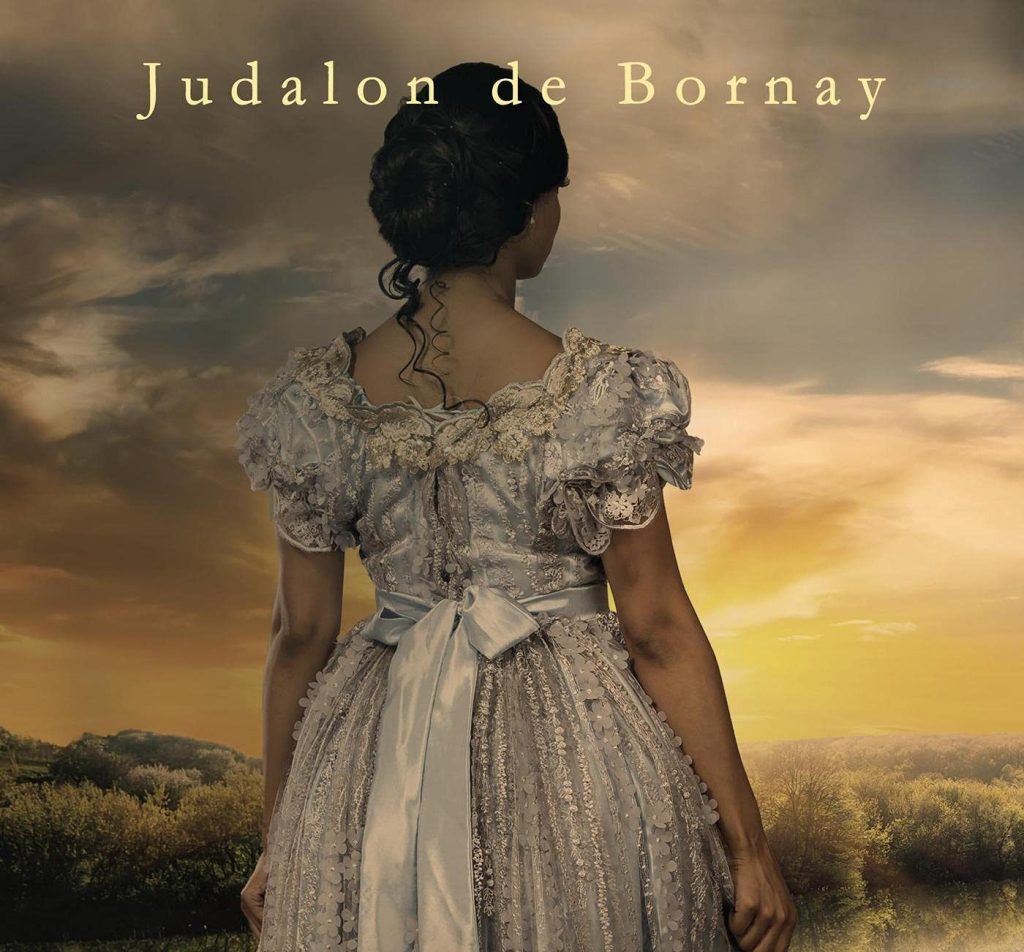
    Richard Mentor Johnson, 9th vice-president of the US under Martin Van Buren, looks back on his childhood in Great Crossing, Kentucky—his parents and many siblings, the society they moved in, and their relations with their slaves. Richard’s partner, Julia Chinn, an octoroon (one-eighth African), is one of these, and she becomes not only his mistress but, though prohibited by racist law from marrying, treated as his wife. Julia’s mother Henrietta is cook for the Johnsons, and Julia is his mother’s maid.
    We follow Richard through a failed engagement—to a seamstress, just not high enough status for Richard’s mother Jemima—and we experience the contradictions of the inter-relations between slaves and masters of the time. Julia’s skin is fairer than that of the Johnson siblings, yet she is not free. As his brothers become colonels and generals and his sisters marry well, he’s off to Washington as a Congressman, leaving Julia to pine. He plans to take her to Washington with him and pass her as white. He backs Jefferson; he argues for war with England. He fights the Shawnee and kills Tecumseh, but he champions education for Indians.
    We also follow the life of Julia. She watches her mother die, and it gives her a desire to be a healer, fostering a closeness with Dr Theobald. Miz Jemima dotes on her, and the sisters are jealous. She fends off advances from Richard’s brothers and their friends. Richard elopes with her, then has the audacity to try to seat her with the family at church. He tries to make his plantation at Blue Spring a haven for their love, but their marriage causes a huge ripple in the Johnson family and threatens his political career. Miz Jemima won’t speak to her. But Julia bears up with fortitude. She waits, without him, to manage a resentful staff at Blue Spring while he’s in Washington, suffering pregnancies, miscarriages and the birth of two daughters.
    Their daughters are raised as free, are educated, and marry white men; however, the law disinherits them on grounds of their ‘illegitimacy’.
    I wish I could give this book at least 6 stars. This is fictionalised biography worthy of Hilary Mantel. The writing is absolutely superb, and the style is in keeping with early 19th century, which is important to me. I can’t help but love a writer who uses the word ‘passel’. It’s tightly edited, and there are no wasted words; every one is a jewel. The characterisation is gorgeous. The little details of everyday life—the newness and fragility of the American political system, the feuds and duels between the Founding Fathers, the precariousness of life during warfare, the tremendous ordeal of childbirth—fully transport you into the period.
    It was additionally fun for me reading this book as one of Richard’s sisters-in-law, Verlinda Clagett Offutt, was my 3rd cousin 4x removed.

  • Review: Sugar upon my Lemons

    Review: Sugar upon my Lemons

    Maria Conyers, Sugar upon my Lemons (The Conrad Press 2025)

    https://www.goodreads.com/book/show/227779721-sugar-upon-my-lemons

    A no-warts biography and love story, inspirational for the bereaved or anyone with a dying loved one
    The prologue begins as Great Britain has suffered 40,000 deaths, including that of the narrator’s beloved, Parker. Psychotherapist Maria remembers the life she had with her wonderful husband before his sad end, though not from Covid, from cancer. It was all the sadder for the family as lockdown restrictions limited their ability to see each other during the final days; they weren’t even allowed to hug each other at the funeral.
    I must stipulate, I have never read a ‘romance novel’, and I can’t imagine wanting to do so, nor do I read ‘biographies’ unless they’re about some famous person in history, and they’re more interesting if they’re warts-and-all. For me, a love story isn’t interesting unless it is set against a dramatic transition period in history or explores some aberrant psychology.
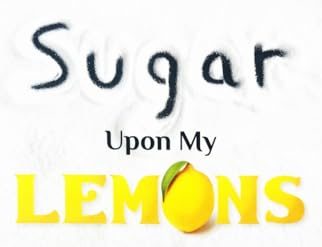
    I love the title, and found it à propos, and the text is well written, though I found a few grammar mistakes. The memoir is a chronological account of their relationship, which is first tested by Maria becoming wheelchair-bound and then by Parker’s diagnosis of cancer. It is told as straight narration. Year 1, Parker and I did this. Year 2, we did that.
    Some scenes were interesting enough to have been built into whole scenes. Keen to hide their love affair at first from their children, they inventing fictitious friends to tell them they are visiting, until his daughter discovers a skimpy undergarment. We need some dialogue, here. We need to experience the ‘gotcha’ moment. A family car journey that culminates with Parker backing the car all the way down a mountain road, with a child in the backseat suffering from motion sickness–that could have been a great scene. Instead, she tells it as just one more time when Parker was so wonderful. Insisting that he take a turn at cooking, the tube from Parker’s chemotherapy starts melting, leaking dangerous chemicals which start flying around the kitchen. What a dramatic anecdote! I’ve never heard of such a thing happening! I felt sure that if this incident had been recounted in a style other than straight narration, it would have been more dramatic.
    Parker sounds like a really great guy, and everyone who knew him should definitely have a copy of this memoir. It would also be inspirational and useful for anyone whose loved one is dying or has died. The recounting of Parker’s last days and Maria’s struggle to love and support him through them are extremely moving. The loving care that she and her extended family gave to him during his tragic illness is truly inspiring and should provide a model for anyone faced with a similar challenge. Maria writes that “it is possible to use one’s grief as a catalyst to help others”. She includes, as epilogue, a beautiful and inspirational essay About Grief, which speaks to her experience as a psychotherapist as well as that of losing her husband, and her call for a national bereavement support scheme is well said.

  • Review: Lured by the Hoard

    Review: Lured by the Hoard

    Ian Walford, Lured by the Hoard (The Conrad Press 2021)

    https://www.goodreads.com/book/show/59752824-lured-by-the-hoard

    638 AD. Aelfred and his slave Cadmon are digging. They uncover a rich treasure, the bejewelled war trophies of ancient kings.
    Going back in time to the Roman era, Aelfred’s ancestor Eadrich, an Anglian mercenary stationed in York, enjoys a jar of ale with his mate Modig. Eadrich is getting ready to retire, having been granted land in Deira, which he plans to call Woden’s Ford. He means to found a dynasty.
    Aelfred is born to Rinc, eighth in succession from Eadrich, and Hilda in Woden’s Ford; 6 months later in Gwynedd Cadmon is born to Abertha and Gerant. Rinc and his Northumbrian raiders attack Gerant’s village, killing him. Abertha, carrying her baby, and other villagers are taken as slaves.
    The new house slave suddenly dies, leaving baby Cadmon to Hilda to raise, and Aelfred and Cadmon grow up as if brothers.
    Tensions rise as King Edwin plans to marry a Christian princess, and some talk of a Deiran break-away from the Northumbrian alliance. King Edwin issues a decree requiring the land to convert, and Woden’s Ford, at least nominally, complies.
    King Cadwallon of Gwynedd, allied with King Penda of Mercia, is planning to attack Northumbria and all the thegns in Deira and Bernicia are warned to be ready. King Edwin decides to hide his treasure in various locations (why would he do that?). The battle goes against them, and Woden’s Ford has to adjust.
    Aelfred makes a secret plan, involving the treasure, during which his and Cadmon’s differences have interesting implications for the plot.
    Aelfred’s attitude to the new religion and to King Penda seems in places contradictory, but in the end, his approach to Christianity is pivotal to the plot.
    Personally, I didn’t like the frequent anachronistic expressions—‘no rest for the wicked’ (origin 15C), etc.—but I understand that the more colloquial modern writing style makes the story more accessible to a younger audience.
    The writing style is clear, lively and interesting, and it is perfectly edited.
    What a great idea to write a novel based on the Staffordshire Hoard! When viewing mysterious ancient sights and artefacts, who doesn’t think, ‘I wonder what it was like’? Walford paints a lively picture of what might have been.

  • Review: The Memory of Water

    Review: The Memory of Water

    J. T. Lawrence, The Memory of Water (Pulp Books 2016)

    https://www.goodreads.com/book/show/30899323-the-memory-of-water?ac=1&from_search=true&qid=Kx0JHfy70b&rank=3

    The theme starts out ordinary enough. Hitherto rich and successful writer Slade Harris is now in a slump. With two successful novels under his belt, he’s in an unshakable writer’s block. Publisher and creditors are at the gates. Hitherto successfully promiscuous, he’s beginning to realise that short-lived affairs aren’t bringing him happiness. But there is one woman who seems to matter.
    That’s where ordinary stops. We expect him to plan to propose to her. Instead, he plans to murder her.
    Such a remedy for writer’s block, if believable, would really require quite an aberrant psychology, and Slade has a childhood tragedy he keeps close to his chest. Plus, he has Mommy issues. Hang on, not really. He only means to use it as the storyline in his novel, an exercise designed to unblock the muse.
    From here the plot becomes ever more tangled (no spoilers), and Slade careens into deeper self-examination, finally reaching an epiphany. The conclusion is brilliant, with twists and then twists upon twists, a big surprise.
    At various points during the tale, we’re unsure as to whether Slade is really experiencing this, or whether he is imagining it. With some novels, I might consider this a defect, but here, it seems to match the theme. Slade is looking both for a more real experience of his own life and for a fresh, new fictional inspiration for his novel.
    There’s anything ordinary about the writing. It’s rich, innovative and full of wry humour. The protagonist keeps likening himself to Jay Gatsby, but I kept being reminded of the wit, word-skill and characters of Tom Wolfe.