Tag: chatgpt

  • Review: The Coming of the King

    Review: The Coming of the King

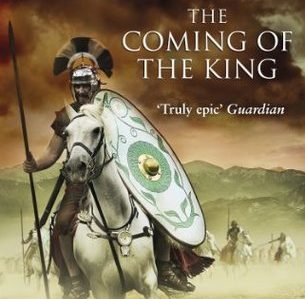
    Manda Scott, The Coming of the King, (Transworld Digital, 2011)

    https://www.goodreads.com/book/show/19183790-rome

    Christian legend and Jewish history in a new, surprising plot

    Saulos convalesces among the Berbers after the Fire, the skin on his burned feet growing back. He plots revenge on ‘the entire Hebrew people’. He brings Iksahra to Caesarea, accompanied by her cheetah and four hunting birds, to tend King Agrippa (II)’s beasts.

    Pantera arrives with Mergus. The message-birds had told them Saulos was travelling, and he knows they are. They travel with a Sabaean camel train, looking to sell their beasts to Yusaf ben Matthias.

    Hypatia has a gift for Berenice from Poppaea.

    The story brings the enmity between Pantera and Saulos from Book 1 to Judaea. The task at hand now is to save Jerusalem. Syrians and Hebrews riot nightly over the issue of a synagogue. Rebellion is in the air.

    The references to Christian legends and names and events from Jewish history—Yusaf ben Matthias, Menachem ben Jehudah, Ananias ben Ananias—are tantalising, and they are crafted into a new, surprising plot.

    Secret letters in code, graffiti symbols scratched into stone, passwords and countersigns, oracles and prophecies, message-doves intercepted by hunting falcons, tunnels with listening spaces inside palace walls—the plot is full of intrigue and drama. It ends on a cliffhanger, leaving us certain to buy Book 3.

    The intricate cultural detail and subtlety of writing pulls you in. The understatedness of the language makes it sound believably ancient.

    Beautiful writing: ‘[She] smiled at them covertly across the sea of strangers’ faces, and their smiles, covertly returned, had felt like splashes of colour in a grey winter’s day’; ‘a certain kind of individual, having met Pantera, was inclined to follow him closely, if not out of desire or admiration, then in the understanding that where he went, life was always interesting.’; ‘he was walking round and round the gold like a hen who has hatched her first egg and found she has given birth to a harpy.’

  • Review: The Emperor’s Spy

    Review: The Emperor’s Spy

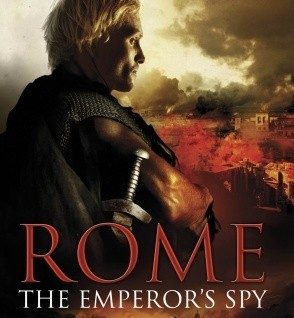
    Manda Scott, The Emperor’s Spy, (Transworld Digital, 2010)

    https://www.goodreads.com/book/show/6940527-rome

    Historical thriller with fabulous characters set in Nero’s Rome

    Sebastos was twelve years old when he discovered his father was a traitor. The almonds were in bloom. He watched from a rock as his father the decurion led the three Hebrew women to the tomb. A rabbi and a Galilean Sicari followed.

    ‘He’s alive,’ the women reported to them. The Sicari produced silver from his purse.

    ‘The Galilean was everyone’s hero, even though he was an enemy.’

    Pantera bears scars from his time in Britannia. Sent to battle Boudica, he instead joined the rebels.

    A grubby urchin named Math watches the people off the ship in Coriallum and their belt-pouches. Math is apprenticed to Ajax the charioteer, and dreams of becoming a driver; he is mothered by Hannah the healer. He has been paid an entire sestertius to follow a man, oak-brown hair, eyes the green-brown colour of a river—Sebastos Abdes Pantera.

    With an entire denarius, Pantera and the philosopher Seneca turn the boy to spy for them. There is a Sybilline prophecy, predicting that Rome will burn.

    The entire Green chariot-racing team is taken to Alexandria, then Rome, to run for Nero.

    The characters are from all corners of the empire. It was especially juicy to recognise some from Christian legend—the Galilean in the tomb, Saulos the Idumaean, Shimon the Zealot, the Sicari. They are twisted brilliantly and unexpectedly into the story of the Great Fire.

    The writing is beautiful, subtle, with gorgeous metaphors like ‘Nero’s progress was that of a scythe through corn, leaving untidy rows felled in his wake’; ‘his hair…. was the white of old snow as it rots in spring, flat and greyly stained with the colours of his earlier life’. Scott demonstrates wonderful knowledge of the ancient Roman world; tantalising details are woven into the scenes, things I had not known before.

    It’s hard to believe anyone ever dared write another novel about Nero’s Rome after this one.

  • Review: Forgiving Nero

    Review: Forgiving Nero

    Mary Ann Bernal, Forgiving Nero, (‎Whispering Legends Press, 2021)

    https://www.goodreads.com/book/show/57097873-forgiving-nero

    The story of two star-crossed romances, with some liberties taken with history

    (The fictional) Traian Aelius Protacius, guards the boy Lucius (Nero), sent to live with his aunt Lepida during the rule of Caligula while his mother Agrippina is in exile. Attending the boy is slave woman Vena, a secret Christian, to whom Traian is attracted.

    Nero asks for a tutor to teach him the lyre (cithara). He performs for the children of slaves and freedmen. He longs for a world where he can play his music and marry Acte, but Agrippina sweet talks Claudius into betrothing him to his daughter Octavia, Nero’s adoptive sister.

    Seneca tutors him in other studies. Paul of Tarsus visits Vena’s Christians.

    This is the story of two star-crossed romances. Nero can’t marry Acte because his family demands his dynastic marriage to Octavia. Traian marries Vena, but it must be in secret due to her class as slave.

    It twists history as we know it on quite a number of points: treats Octavia as in love with Nero (they hated each other); Nero’s music as proficient (his talent was described as mediocre); Nero trusts in his mother’s goodness (he banished her to rid himself of her influence and had her murdered); Camulodunum is a picture of peaceful assimilation (the Boudicca revolt showed, viscerally, how much the British tribes hated the invaders); Claudius is killed by his wife giving him poisoned mushrooms (that was Augustus); Britannicus is killed by poisoned water (it was hot soup that was cooled down by adding poisoned water); Domitius Ahenobarbus is some guy who gives Nero a villa (he was his biological father); Acte wants to be empress (Nero’s interest in her was already replaced by Poppaea by the time he rid himself of Octavia); Acte is interested in Christianity (that was Poppaea, who was interested in Judaism); Domitia Lepida generously offers her villa to Acte (there seems to be no reason for inventing this in either woman’s character arc); Agrippina burst through the curtains of her hidey-hole onto the Senate floor, shouting what was to be done (this was too outrageous even for Agrippina); Poppaea suddenly gets a brainwave that she needs to bear Nero a son (everyone would have known that the emperor needed an heir); Nero rejects proposals by midwives to perform a Caesarean section in order to save Poppaea’s life (Lex Caesarea prohibited performing the operation unless the mother was dead or dying, and the mother was not expected to survive).

    I don’t mind non-historical invention in historical fiction, but there should be some point to it, some reason for the storyline to be different from what we are familiar with. This history is juicy enough without outright inventing stuff.

    The alternating references to the emperor as Lucius or Nero are confusing. I get it that he changed after becoming emperor, but he should be referred to by one name in each timeframe.

    The writing style tends to the Telling rather than Showing, the dialogue quite stilted. For such a familiar story, we really need the writing to offer something special. It gets poorer as the pages progress.

  • Review: Tyrant

    Review: Tyrant

    Conn Iggulden, Tyrant, (Michael Joseph, 2025)

    https://www.goodreads.com/book/show/220160369-tyrant

    Nero’s rise, from his mother’s wedding to her murder

    On the emperor’s wedding day, Praetorians smash into the home of Junius Silanus Torquatus, accusing him of incest with his sister. He is Agrippina’s first persecution. She aims to wipe out the bloodline of Augustus. Claudius is officially adopting her son Lucius (Nero).

    Nero and his friends torment their tutor to death with a wasp’s nest. He gets a whipping and a new tutor—Seneca. Agrippina gets Rufrius replaced as Prefect of the Praetorians by her favourite Burrus. The slaves address her as ‘empress’, and she calls herself ‘Augusta’ on coins. Nero dons the toga virilis, a year early, but his virilis ceremony is dominated by the whispers over his mother’s self-appointed title.

    Agrippina sweet-talks Claudius into betrothing Nero to Octavia, his sister by adoption.

    Nero is crazy for chariot-racing. He’s the son of Ahenobarbus, after all. At the races, he is smitten by the pale-skinned Greek freedwoman Acte. With Claudius away in the provinces, Nero sits some legal cases, with some wisdom. Among them are some Jews, followers of Iesus.

    Agrippina poisons her husband just in time to raise her son. Nero comes to the purple and sends his mother to live in Misenum.

    My favourite feature of Iggulden is the relationships. The dialogue on Nero’s and Octavia’s wedding night is heart-breaking. The conversation between his friends and him at the mock naval battle is full of psychological intricacy. The relationship between him and his mother is complex.

  • Review: Nero

    Review: Nero

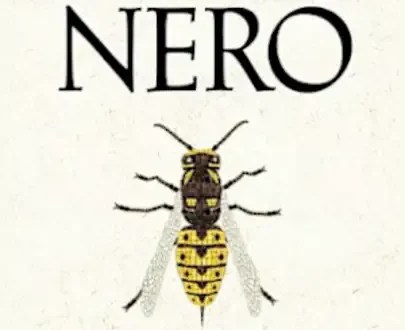
    Conn Iggulden, Nero, (‎Penguin, 2025)

    https://www.goodreads.com/book/show/198344721-nero

    The story of Nero’s origins, surviving three emperors and a horrible family

    Barbo (Gnaeus Domitius Ahenobarbus) is readying his team of horses to ride for Rome. His wife (Agrippina), though pregnant with his child, finally, after nine years of marriage, hates him.

    Sejanus is before Emperor Tiberius, pleading for his life. The corrupt prefect is thrown down the Gemonian stairs. Tiberius is dying.

    Gaius (Caligula) takes his sister Agrippina by the arm, a bit too roughly. He wants to reminisce about their childhood, when he was happy. He seems scarred from his years on Capreae. The last living heir to the throne, he senses enemies all around him.

    Caligula becomes emperor and wants his sisters by his side, to the dismay of their husbands. His megalomania increases by the day, until finally he pushes the Praetorians too far, and they assassinate him, choosing Uncle Claudius to replace him. Eventually, Agrippina gets her hooks into Claudius, and Nero becomes the emperor’s stepson. Nero’s relationship with his mother is strained from the beginning.

    The only thing I didn’t like about this novel was the title. Lucius (Nero) is a child, shoved off into adoption in the slums; he survives three emperors and doesn’t re-enter the story until page 197.

    The characters, monsters to a man (except Claudius, who is at least smart), are all believable, the intricacies of relationships are handled with subtlety, and the dialogue is good. We know them from history, but here we know them personally. We see the invasion of Britain also from the British tribes’ point of view.

    The women are equally vicious, though more sympathetic. Messalina, upon Claudius’s inauguration, ‘pressing her hands together over her womb, like a little girl waiting for presents’. Agrippina, upon seeing her son again after her imprisonment, ‘her hands opening and closing like flowers at her side’.

    I never tire of hearing the story of Rome’s emperors, and Iggulden tells it well.

  • Review: When the Walls Fell

    Review: When the Walls Fell

    M. Hadassah Wells, When the Walls Fell, (‎School of Hope Publishers, 2025)

    https://www.goodreads.com/book/show/239223215-when-the-walls-fell

    This book tells the story of the legendary* ‘fall of Jericho’, closely following the Book of Joshua.

    Rahab the harlot plies her trade in the streets of Jericho; her heart beats. The Israelites are coming; their God ‘burned mountains, cracked seas, and swallowed cities in silence’.

    Joshua is outside his tent in the camp at Shittim in Moab, remembering his leader. Moses was dead. But Joshua hears the command of the Lord, too. He sends two of his men, Salmon and Haziel, to scout. Rahab lets them in. She lets them down the walls with her scarlet cord.

    ‘The broken idols piled like refuse… stone shoulders chipped, heads shattered, empty sockets staring at the sky’ provide a gorgeous metaphor for what is soon to befall Jericho—to be defeated by the one true God.

    Suspense for the big tumblin’ down moment is built by going through the arguments Rahab has with her family and neighbours, as she becomes a kind of spiritual leader for her community. I’m not a Christian, but the theology here seems sound. Within and without the walls, people are measured by whether they believe. ‘It won’t be the walls they fight,’ Rahab warns her brother, ‘it will be our hearts.’

    Loved: ‘His fingers twitch like they still crave gold’, ‘And Rahab, the woman no one respected… stood in the moonlight and waited to be remembered’, ‘You’ve waited forty years for this’, ‘smoke rising in ribbons that braided into the pale sky’.

    It’s beautifully written. Christians will find the expressions of the triumph of faith thrilling, but non-Christians, too, can appreciate this epic tale. The settings are beautifully described; the culture and way of life of the Late Bronze Age Levant comes alive. The characters have fully-formed arcs, and it’s full of emotion.

    It is not the right time after the year we’ve had to be celebrating victories of the Israelites, whether legendary or historical. Just tell yourself—it’s a great story. I loved it.

    * (and, incidentally, completely fictional, according to the archaeological record)

  • Review: The Platinum Receiver

    Review: The Platinum Receiver

    Kyle Robertson, The Platinum Receiver (‎PIMI eBooks, 2017)

    https://www.goodreads.com/book/show/36290808-the-platinum-retriever

    Orphaned before his parents even had a chance to give him a name, Daedalus Platinum is a Retriever, chasing the deadbeat parents of the world. Parents should be obligated, he believes, and when he finds them he makes them pay, with their lives. But he has people chasing him, too—the Obliterators. They just cancel you from the planet, remove your existence.

    The Obliterators are aliens, but ‘not from a different planet, they just have a mixture of otherworldly DNA in their system’—in other words, ‘mutts’. Daedalus’ mother’s undead body has been used for xenomorphic procreation. The monsters are his half-siblings. He has some strange power; he’s the only one on Earth who can obliterate them.

    Loved: ‘Nature was my mother’s executioner; I was just nature’s axe’, ‘they came at us like cheetahs on the Serengeti’. I loved the fighting in the finale using moves from the various different martial arts schools.

    This novel’s Concept is highly innovative. The voice is colloquial, almost gangster, short, sharp sentences, cop-talk-like clichés. The narrator addresses the audience as ‘you’, in daily journal entries, full of sassy 4th wall asides like ‘That was cathartic. All right, back to the story’.

    Verb tenses are all over the place, which is distracting, though it lends a feel of breathlessness. It either needs the grammar sorted out or crafted into a deliberate style choice.

  • Review: Voices from the Dead

    Review: Voices from the Dead

    Tony Bassett, Voices from the Dead (‎The Book Folks crime thrillers, 2025)

    https://www.goodreads.com/book/show/244102463-voices-from-the-dead-an-unputdownable-british-crime-thriller-packed-with

    DS Sunita Roy and her boyfriend and colleague DI Tom Vickers happen to be attending a wedding at a Queensbridge hotel, when a guest reports witnessing a murder from her balcony, through one of the windows in the opposite building. The victim is successful beauty expert Candy Goodhope.

    Who could have murdered her in her hotel room? The boyfriend? The husband? The business rival?

    In another case, Miranda Higley is waiting for her ex-husband to lay a new floor for her when she is brutally attacked.

    It helps that there is an eyewitness, and the police also have CCTV evidence and numerous people to interview who were with Candy on the day. These characters, as we meet them, are interesting and colourful. Even the perps are sympathetic. Sunita is often accompanied by Tom or DC Brett Dawson, so we hear her thought processes though dialogue.

    The Plot is exciting, with enough surprises to keep us hooked, and the Pace is just right. We learn the clues at just the same time that the police do, so there’s plenty of time to assimilate it all.

    Bassett’s crime novels feature very realistic (it seems to me) police procedures, meaning we get right down into the story. He takes us through the investigation process, as day by day new clues are discovered. It never turns out to be who you suspect, and the boss always gets it wrong at first. Sunita’s uncanny ability for lateral thinking saves the day. And though we get all the clues, it always takes a bit of a stretch of Sunita’s ingenuity to solve the crime.

    I loved how we didn’t understand the rationale behind the title until the very end, making it a kind of punchline.

    I received an advance review copy for free, and I leave this review voluntarily.

  • Review: Timeline Dissonance

    Review: Timeline Dissonance

    Vicki Regan, Timeline Dissonance (2025)

    https://www.goodreads.com/book/show/234118263-timeline-dissonance

    We left Sarah and Eleanor from Book 2 in a world of truly nightmarish ‘temporal dysphoria’, people and objects popping in and out of different timelines. Now, they are captive under fascistic martial law, labelled as ‘Primary Dissonants’ by baddie time bandits still bent on destroying all free will. ‘Temporal alignment’ has become outright thought control and even ‘total reality manipulation’. The confused population accepts the new regime as better than the chaos that went before.

    Sarah, her voice across the airwaves, is a constant throughout all timelines, but she still sees the nightmares of disastrous futures she lived. She reads a forbidden book, which teaches strategy to the resistance. Eleanor secretly develops new technology to disrupt the system. She and Sarah know that ‘consciousness itself resists determinism’. It’s ‘quantum resonance feedback’, and Eleanor knows how to exploit it.

    The end is no utopia; democracy is messy, but human, full of the possibilities of all the timelines.

    The ‘optimised society’ of New Philadelphia is described chillingly. The techy stuff is great, highly detailed and sounds plausible. The techy workarounds the resistance fighters come up with to thwart the techy oppression are ingenious.

    The excellent writing of Books 1 and 2 continues. Fantastic suspense and pace, but interspersed with enough human relationship stuff to give us a breather from all the sci-fi jargon. We would have benefited from some layman’s explanation of the real science—quantum, entanglement, dissonance.

  • Review: Quantum Entanglement

    Review: Quantum Entanglement

    Vicki Regan, Quantum Entanglement (2025)

    https://www.goodreads.com/book/show/232441758-quantum-entanglement

    We left Sarah Collins in Book 1 sitting on a park bench, having time-travelled to a new timeline, one where her ally Dr Eleanor Hastings, doesn’t recognise her. She doesn’t even know whether this timeline’s Eleanor is one she can trust. Nevertheless, she takes a job with her at her Quantum Temporal Institute. Sarah studies ‘atmospheric anomalies’.

    Eleanor doesn’t know whether to trust Sarah, either, but she’s been seeing her in her dreams.

    As in Book 1, the action begins right away; by Chapter 2 we’re already swept up, as Sarah is arrested for ‘temporal espionage’, and the two women are on the run again, trying to save the world from shadowy bad guys intent on seizing control of time. They find allies.

    Sharp and pacey writing. The style is colourful, yet fresh, avoiding too many clichés. I was impressed by the way Regan weaves the backstory of Book 1 into the new plot. The ticking timebomb is great. Eleanor says, ‘we have three weeks to ensure they never find me—or better yet, to dismantle their entire operation.’ It’s bigger than that, Sarah realises. They just might ‘lose more than our lives’; they might ‘lose all possible futures’.

    It’s not a victory—we need to read Book 3—but we know that the quantum entanglement of love is eternal, across all realities.

    I thought the explanation of the ‘science bits’ was great. It didn’t even matter if such technology is not really possible, Regan makes it all sound so plausible. Phrases occur and recur—‘chronological inconsistencies’, ‘temporal dissonance’, ‘quantum dampening’—which we don’t quite understand the meaning of, but that’s OK. It sounds cool.

    I loved the concept of ‘Aberration Type-3s’, retained memories from erased timelines, ‘timeline bleed’, and ‘chronological stress points’. I loved ‘triangulating your chronological signature’. Loved the mathematical equation of Sarah’s and Eleanor’s relationship.