Tag: chatgpt

  • Review: A Study in Statecraft

    Review: A Study in Statecraft

    Orlando Pearson, The Redacted Novels II, A Study in Statecraft-The memoirs of Mycroft Holmes  (MX Publishing 2023)

    https://www.goodreads.com/book/show/182109331-a-study-in-statecraft?ac=1&from_search=true&qid=stQioF2RUg&rank=1

    We’ve not heard much about the older brother of the famous Baker Street detective. Mycroft is mentioned in only two of Arthur Conan Doyle’s stories, where it is said that he ‘IS the British government’.
    His specialism, he says in these memoirs, is not in the ‘minutiae’, ‘the forensic area of crime’ or in ‘lying on my face with a lens to my eye’ like his famous brother, but rather in statecraft—‘getting people to agree to what they might not otherwise agree to’. Another difference is that brother Sherlock often acted a judge as well as detective, personally exonerating some criminals he considered worthy. Mycroft doesn’t make the decisions—he advises.
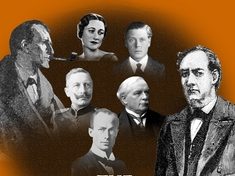
    Intending to leave behind a textbook on the art of diplomacy, Mycroft chronicles how he manoeuvred the belligerent nations into signing the Armistice after WWI, how he convinced Edward VIII to abdicate.
    Many of the stories are narrated by Sherlock’s biographer and crime-solving partner Dr Watson, keeping the familiar format. The flowery, verbose prose style of the time is somewhat replicated, through which the modern reader struggles, yet it does achieve a feel for the period. Despite the wordiness, the episodes are interesting, although the resolutions aren’t spectacular. The ‘episodes’ weave the fictional diplomacies around real historical people, making the stories credible.
    Some are follow-ons from previous cases. The first case ‘An Individual of High Net Worth’ is a sequel to ‘The Beryl Coronet’. So, it assumes some familiarity with the Conan Doyle stories.
    There are little nods to present day circumstances. Mycroft uncovers evidence of ‘jollifications’ at Number 10 during the Spanish Flu pandemic. He advises the Prime Minister on the ramifications of the King marrying a divorcée. The connections to our modern day are spelled out in ‘afterword’s’, which I would have preferred to instead remain inferred.

  • Review: A Maid on Fifth Avenue

    Review: A Maid on Fifth Avenue

    Sinéad Crowley, A Maid on Fifth Avenue (Aria 2024)

    https://www.goodreads.com/book/show/201630789-a-maid-on-fifth-avenue?ac=1&from_search=true&qid=SVcU55AYO2&rank=1

    Dual timeline story of two women, Kerry and New York, tied by the Fairy Tree


    1920s Ballydrynawn, West Kerry. Annie Thornton ties a white lace handkerchief to the Fairy Tree, hoping the magic will cure her mother. But does she really believe in them, fairies? Helpless, she watches her friend May fall into an abusive marriage. Marrying Seánie Lynch is not the happy life she had hoped for.
    Annie leaves her home in Ireland for a job as a maid with the Cavendish family in New York. Her workdays are long, but she likes her employers and makes friends. But America has abusive relationships, too, as her Italian friend Elena shows her. She lives for her Thursday afternoons.
    A century later, post-pandemic, Emer is also running; she finds a home for the summer with her family in Ballydrynawn. She learns surfboarding, considers whether to flirt with the instructor Rob. There’s something familiar about his wealthy Mam Siobhán Lynch. The Fairy Tree is on their land.
    Rob’s assistant Alison turns up some evidence that connects the Thorntons and Lynches, historically, but not everyone in town believes it.
    The dual timelines take a few chapters to get into, then you’re hooked. The ties between Kerry and New York bind the girls to their new homes while they miss the old. Emer’s and Annie’s lives entwine, past and present, and long buried secrets are about to be revealed.
    The connection between Annie’s and Emer’s worlds doesn’t become apparent until about halfway through, so be patient. The twist at the end is highly satisfying, and it all comes back to the Fairy Tree.
    It suffers from having villains (May’s husband Seánie and Elena’s suitor Lorenzo) who are just too horrible to be credible. I believe we don’t have to like our villains, but we do have to understand them.
    Proofreaders, please use commas to separate complex clauses.
    This review first appeared in Historical Novels Review.

  • Review: Berlin Duet

    Review: Berlin Duet

    S. W. Perry, Berlin Duet (Corvus 2024)

    https://www.goodreads.com/book/show/207600035-berlin-duet?ac=1&from_search=true&qid=tZhLx8zAtO&rank=1

    WWII has a devastating effect on two families, leaving pain and unspoken secrets


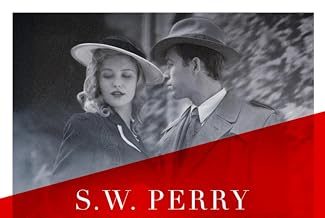
    1938 English spy Harry Taverner spends the night dancing with a married woman, Jewish photographer Anna Cantrell. He is her case officer. Love doesn’t enter the picture; there is a war on.
    1942 Anna is hiding from her Austrian Nazi husband. Harry wants her to come in from the cold and escape with her recovering cocaine-addict mother and her two children.
    After the war they reunite. Anna is searching the ruins of Berlin for her missing children.
    1989 The elderly Harry witnesses the fall of the Berlin Wall, when he ‘has a turn’. His daughter Elly comes to look after him. In a lucid moment, he looks at one of Anna’s old photographs. He and Anna are bound together by a secret. ‘It’s time you knew,’ he says to Elly.
    Anna and her parents are artists, but her life is haunted by the toxicity of their relationship. And she enters into another one herself with Ivo. The couple lives with Marion, witnessing her dysfunction.
    The narrative jumps around in time from chapter to chapter, which serves to open up to us, bit by bit, building to a crescendo, the pain in people’s pasts. The night Anna ‘finds out’ about her father Rex, forced to see things by a drunken Marion, is burned into her heart.
    As Hitler goes from bad to worse, we feel the fear. The conflict between Ivo’s Naziism and Anna’s Jewishness heats up. The rift logs one injury, then another. The ways in which the Nazi terror plays out within Anna’s family are horrifying. We see it through Anna’s eyes, then Elly, hearing the story.
    It is beautifully written, encapsulating the most painful of human emotions and the devastating effect world events can have on families. I’ve read many novels about families torn apart by WWII and fascism. This one is something special.
    This review appeared first in Historical Novels Review.

  • Review: The Eleventh Grieve

    Review: The Eleventh Grieve

    Garth Hallberg, The Eleventh Grieve (The Reason for Everything Press 2023)

    https://www.goodreads.com/book/show/136769306-the-eleventh-grieve?ac=1&from_search=true&qid=mCW1NrafFT&rank=1

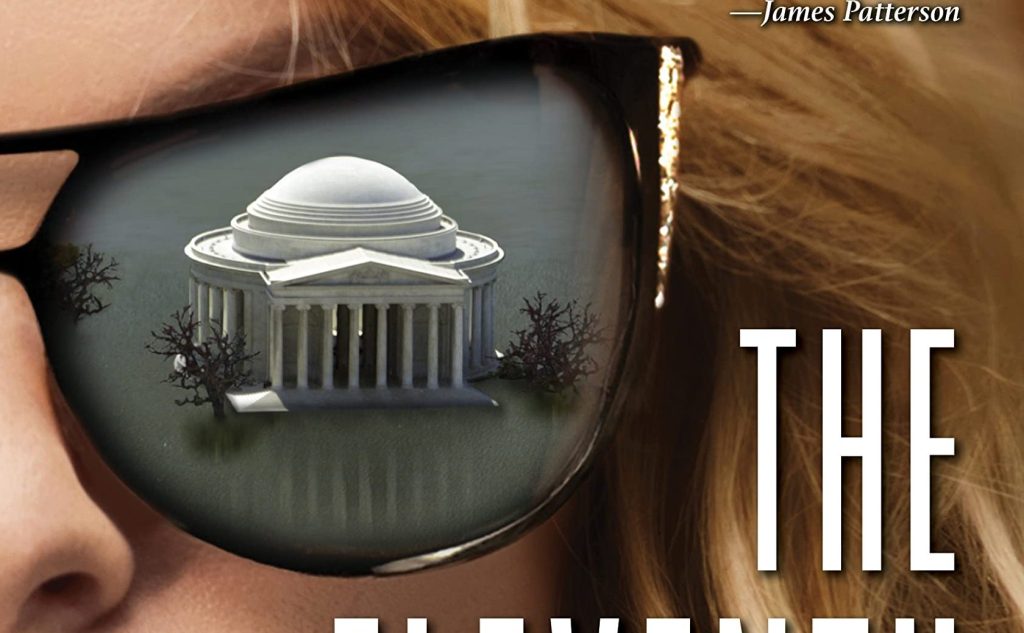
    ‘There are no oysters, sir,’ the waiter informs him, but what Jake Krimmer wants to know is, ‘Since when?’ He makes his living off meteorological disasters—droughts, tidal waves and forest fires. He collects ‘congestion revenue’ in cases of bottlenecks in the power grid; he has purchased the Financial Transmission Rights (FTRs).
    The girl with indigo eyes he met at a cocktail party, Rita ‘Ten Grieve’, calls it ‘climate change’, but he prefers to call it ‘weird weather’. His mother calls it ‘making a living off of other people’s misery’.
    His right-hand-gal is ex-girlfriend, meteorologist Sam. Sam predicts a big twister coming to Norman, Oklahoma, and Krimmer hopes to make a killing on FTRs.
    Rita Ten Grieve comes to him, calling him her ‘client’. Her job—to change his mind about climate change. She challenges him to a game. She has ten chances to explain to him why she ‘grieves for the future’ and ten chances to convince him to grieve. He plays along, hoping for ‘naughty bedtime games’. Rita gets her data from the Nimbus, some Cloud-type technology which she uses to reveal to him his father’s betrayal of the ‘denial’ cause, the first grieve. She uses virtual reality, taking him back to moments in his life on a spiritual journey like Scrooge’s Ghosts of Christmas visions. What she delivers is ‘the terror of the ordinary’.
    Krimmer has regrets about having ended it with Sam, and she is being wooed by his business partner Mortenson. Sam is having regrets about how they earn their bread, and Krimmer begins to unravel, his social conscience finally pricked. This is also a story of redemption—of ’contrition, capitulation and conversion’, as each grieve further opens his eyes to his responsibility for the future of the earth.
    This great techno-thriller features rich vocabulary and phrasing with beautiful, complex descriptions of scenery and weather, and the characters are lively, though I found the motivations of Krimmer’s dad confusing. The transformation of Krimmer happened a little quickly. I rather wanted him to have some major crisis or go into a dark night of the soul, before re-examining his life and livelihood.
    I love techno-thrillers both for the excitement and for the education. You always learn in detail about some particular field. Here, we learn about the ins and outs of the financial exploitation of the climate change crisis. About meteorology, extreme weather tornado-chasing and the FTR market. An addendum reviews the history and science behind climate change.
    This review first appeared in Reedsy Discovery.

  • Review: It Never Rains

    Review: It Never Rains

    Tony Bassett, It Never Rains (The Book Folks 2024)

    https://www.goodreads.com/book/show/218676037-it-never-rains?ac=1&from_search=true&qid=zS1d2ryvvq&rank=4

    Marilyn Willis is preparing a gourmet dinner, hoping to make a good impression on her employer, Frenchman footballer Jean-Jacques Beauvais, when three robbers break in. One ties her up and holds her at knifepoint. The footballer’s stepson Marcel is kidnapped, and his bodyguard killed. The three men steal Beauvais’ Bentley and get away.
    The police conduct a search, interviewing neighbours, family members, staff, and ‘the Matchday Boys’ send a ransom demand and a video of the boy. Fortunately, other reported crimes are found to have a connection to the case, narrowing the search parameters. Clever Marcel manages to leave clues, and the badguys aren’t as clever as they think they are. The clues that unravel the case are fascinating, but the investigative methods are straightforward policework.
    The policemen are very real, fully developed, as are the badguys. Detectives DS Sunita Roy and DCI Gavin Roscoe have been introduced in previous books in the series, and they are well portrayed. Roy is bit private and not too demonstrative, just the sort of personality that would suit a police detective. Her little grey cells are quietly ticking away, and her insights are often the ones that crack the case.
    As is characteristic with Bassett novels, the police procedures are realistic. Different professionals, of different ethnicities and different capabilities, work on different bits of the case, just like in real life (I imagine, though I’m not a cop). We work through the case slowly, learning each clue as Roscoe and Roy do, which adds suspense, but we never lose sight of the people while the plot is gathering facts. Dialogue and interrogations are highly natural, meaning we feel right there on the scene.
    Another perfect crime novel from Bassett.

  • Review: The Electrician and the Seamstress

    Review: The Electrician and the Seamstress

    Monica Granlove, The Electrician and the Seamstress (Kindle 2024)

    https://www.goodreads.com/book/show/214349085-the-electrician-and-the-seamstress?ac=1&from_search=true&qid=3jB7tX14xI&rank=1

    Nazi-era Romeo-and-Juliet family saga


    1959 Frankfurt. Karla and Bruno are being interviewed about their lives by a history professor at Goethe University. They had travelled nine hours from their home in Kiel. Germany was now divided, East and West, and the whole country, not only the Arnolds, was in recovery from the traumas of two wars.
    Karla’s story begins in 1928, her mother’s funeral during the depths of winter. Her father slipping into incompetence, the burden of the household falls upon Karla. Her parents had tried to shield the children from any news about the war. Karla had devoted her energies to the piano; now her dreams of going to university are shattered. Her father and sister support the National Socialists. Her father wants her to marry the Nazi dentist mayor Drechsler. Instead he befriends her sister Erna.

    Bruno and his brother Karl work on the ships that Karla’s father designed. He meets Karla as they together rescue a kitten from under a truck. He is a great storyteller. His Jewish friends Eli and Ilse are particularly affected by the political situation. People are being taken to ‘re-education camps’. Bruno and Karla marry amid a sea of black uniforms and swastika armbands, and they try to save Eli and Ilse and protect their own children from the escalating persecution. Bruno is drafted into Hitler’s infantry and makes an arduous escape. Karla is roped into service, too.
    This Nazi-era family saga is personal and heartfelt and at the same time well-researched. We discover in the Epilogue that it was based on the true story of Granlove’s grandparents. How wonderful that they had an author granddaughter to record their remarkable story for posterity.
    At about the ¾ mark, we lose Karla’s POV for many chapters, serving to accentuate Bruno’s painful separation from his family, which so many people experienced during this war. The story of the whole neighbourhood listening to Karla’s piano playing the evening before they evacuated from Kiel is so moving. As is Bruno’s panic attack while queuing for the toilet.
    I could have done without the introduction on WWI and how it affected the media. We already knew that.

  • Review: Tarzan of the Apes

    Review: Tarzan of the Apes

    Edgar Rice Burroughs, Tarzan of the Apes (1912)

    https://www.goodreads.com/book/show/40425.Tarzan_of_the_Apes?ref=nav_sb_ss_1_18

    The idea of the ‘noble savage’ son of Viscount Greystoke both reflects British colonial perspectives of Africans and challenges them. The image of Tarzan swinging through the jungle on grapevines yodelling ‘Aayahyayahaah’ has appealed to generations of children.
    Tarzan grows up in the jungle, raised by apes, but his discovery of his dead parents’ cabin leads him to struggle with his identity—is he a savage man? or a noble ape? From books and letters found there, he examines the ‘little bugs’ on the pages and teaches himself to read.
    He kills the chief Kerchak and becomes King of the Apes, yet his superior intelligence distances him from them.
    He falls in love with Jane, a thoroughly civilised white woman, whom he saves from peril. She, too, is smitten. ‘Beast?’ she wonders of the ape-man. ‘Then God make me a beast, for man or beast, I am yours.’
    The passages devoted to Tarzan and Jane discovering each other are beautiful, but I was disappointed nowhere to see the line, ‘Me Tarzan; you Jane’.
    He searches for many chapters to reunite with Jane, only to discover she is engaged to the cousin who has usurped his viscountship.
    He proves his ‘racial superiority’ by treating Jane in a gentlemanly manner, said to be a ‘hallmark of his aristocratic birth’, though he has never been taught this behaviour, and by his revulsion to cannibalism and refusal to eat an African man he has killed. We have to quell our own revulsion at Burrough’s stereotypical portrayal of black Africans, his racist theme of the triumph of white Western civilisation and his sexist helpless females.
    The structure of the novel reflects its origin in 1912 as a magazine sequel, each chapter telling another of Tarzan’s escapades and his relations with his ape family, the ‘blacks’—cannibalistic hunters living nearby—and the white visitors.
    Tarzan’s evolution toward acculturation is lightning fast, more rapid than would be credible, and I believe Burroughs could have done a whole lot more with the beast-or-man/gentleman-or-savage theme.

  • Review: The Twist in the Tale

    Review: The Twist in the Tale

    em.thompson, The Twist in the Tale (Kindle 2024)

    https://www.goodreads.com/book/show/217108899-the-twist-in-the-tale

    George Aarbuthnot parks his Bentley next to the moat; he is early for luncheon chez his client, author WC Lumin, at Stoat Hall. Chef/wife Edith Lumin is cooking a wild boar they’d caught rampaging on the estate, with bilberry syllabub for pudding.
    The luncheon guests, all with hilarious Dickensian names, have been instructed to write a short story, they are told at first, for their host to rip off. The true purpose of the exercise is more sinister.
    Around the table are: Hermione Lumin—’scrumptious eye candy’, Reverend DeMoncey—who organised the Mission for Fallen Gentleladies minibus, Edith Lumin—in a bloodstained butcher’s apron, Sherriden Slipshod—bohemian publisher, Spencer Lumin—pinstripe suited barrister with sunken cheeks, and Felicity Lumin DeMoncey—’knee-tremblingly beguiling’.
    Thompson’s distinctive style and clever wordplay is in evidence. With invented words: (minibusphobia, echoic expanse) and alliterations: (mishmash of misconceived mythology, gut-gurgling gulp). A character is ‘like the lovechild of a hobbit and a bull mastiff grim’; a setting is ‘a blot on the landscape in the remotest wilds of deepest nowhere’.
    Despite all the punning and joking around, the plot is substantial, with an unexpected twist at the end.
    This novella is an absolute joy.

  • Review: The Girl of Many Crowns

    Review: The Girl of Many Crowns

    D. H. Morris, The Girl of Many Crowns (New Classics Publishing 2024)

    https://www.goodreads.com/book/show/217336977-the-girl-of-many-crowns?ac=1&from_search=true&qid=O7P2s3pQTW&rank=1

    A saga of the royal families of pre-Norman Francia and Brittania


    Baldwin ‘Iron Arm’ of Flanders is on his way to Senlis to enter the service of Charles ‘the Bald’, king of the western Franks. Seneschal Gauzlin has a special assignment for him.
    Baldwin becomes arms master to Prince Louis, whom the king will place as ruler of Neustria. In the process he catches the eye of Princess Judith, and he feasts at the king’s table. He makes the acquaintance of the scholar John Scotus.
    Major worries of the rulers at the time were the Pestilence and the Danes, and marriage alliances of their princes and princesses were another. Judith marries King Aethelwulf of Wessex. She teaches Prince Alfred to read. The Franks teach the Wessex men the tradition of kings’ cakes, and the English teach them wassailing.
    Aethelwulf and his son Alfred arrive, returned from their pilgrimage to Rome, and hear the news that Alfred’s older brother Aethelbald has usurped the throne of Wessex, and his brother Louis the German threatens Charles’ reign. We see the constant shifting of land borders as warring brothers fight over their patrimony, and incursions of Vikings further disrupt the unity.
    After two unhappy marriages, to king Aethelwulf, then his son Aethelbald, Judith, age 17, chooses for herself, Count Baldwin, relinquishing her crowns, and they plot a daring elopement. Louis and Charles also make their own choice of bride.
    There is more dirty laundry in the royal family. Lothar, king of Lotharingia, seeks a divorce from his queen Theutberga, accusing her of incest with her brother, a trick to be used again in the future by Henry VIII.
    There is not really any one protagonist. We begin with Count Baldwin, then the story is carried by other POV characters—Judith, Archbishop Hincmar, the sons of Charles the Bald—only returning to Baldwin halfway through.
    The writing style is straightforward. The major events and personages seem to be roughly in keeping with history, and the discussions between the king and his advisors about politics seem authentic. We see famous names from history—Charles the Bald, Judith of Flanders, Aethelwulf of Wessex—become real people.
    Baldwin Iron Arm was my 33rd great-grandfather.

  • Review: The Coming of the Yirraalii

    Review: The Coming of the Yirraalii

    Steve A. Trotter, The Coming of the Yirraalii (Magpie Publishers 2024)

    https://www.goodreads.com/book/show/221570842-the-coming-of-the-yirraalii?ref=nav_sb_ss_1_27

    The prologue is spooky, like the misty forests of the Dreamtime.
    A battle is pending between the aboriginal Nyangbal mob and the Rain Forest mob. The issue is that a man has taken a bride who had been betrothed to another. Men of a certain mob are expected to marry women from another certain mob and no other.
    Balagaan likes Gawngan, but she is betrothed to Dangan. Balagaan won’t see her again until the festival in two years’ time. But he is caught kissing her good-bye and as punishment is sent to live with the Red Soil mob for five years.
    The tribes move from place to place, following the seasonal food supply, and they carefully husband their environment.
    At the Games, Balagaan comes head to head with Dangan, competing to claim Gawngan as wife. A Clever Man’s prophecy and a magpie, his totem, give him strength.
    Returning from a kangaroo hunt, the Nyangbal mob discovers white-skinned newcomers—Yirraalii—have invaded their land. The Yirraalii don’t understand the lore, and their violence disrupts the balanced society and the ecosystem. And Dangan is out for revenge.
    The setting and subject matter are exotic, but I wish they had been portrayed more clearly at the beginning. I could have used footnotes or a glossary. After I got into it, I was fascinated. It is set in Bundjalung, on the eastern coast of Australia. The invasion of the white men and their ‘thunder sticks’ and their ‘canoes with wings’ give us a clue as to the date.
    The culture is unfamiliar to a non-Australian, and right from the first there are multiple unfamiliar names and foreign words—bagaas, nulla-nullas, woomera, coolamons, janagan, dubay. The extensive use of foreign words brings the camera angle right down to the characters’ level, but it’s hard to get into, as we don’t know whether the names referred to are people, titles, or groups of people. And we lose track of who is a member of which mob. This all happens before we understand who are the main protagonists. This may not be an issue for readers who are more familiar with aboriginal culture, but I found it confusing.
    The novel seems to have been retitled Savages.

    This review first appeared in Historical Novels Review.