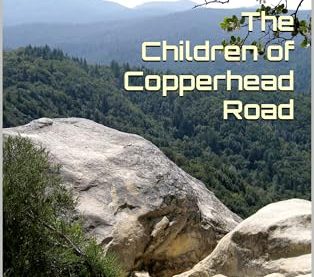
Vicki Regan, The Children of Copperhead Road, (2025)
https://www.goodreads.com/book/show/244648404-the-children-of-copperhead-road
Appalachian horror folktale novella
The Compton boy is lost in the mountains; the dogs lost the scent. But something’s been found, just past the Calhoun place. Multiple children, and they ‘aren’t right’. Earl says, ‘Don’t put this on the radio.’
He’s decided one thing—they’re not going up there at night.
Kelly says, ‘My daddy told me to stay off Copperhead Road.’
The reek hits them as they climb, animal musk, weathered animal bones. ‘Kids don’t do this,’ says Kelly.
The children are all ‘wrong’ in bizarre ways, and they’re all humming—the same note. They take the sheriff and his deputy to see ‘Mama’, a vision of horror, yet she has none. She’s blind. A helicopter comes to take them to the hospital, but their condition defies the doctors. They have ‘anomalies’. Dr Wallace takes over.
They’re taking the children back to Mama, sending a young teacher up the mountain to homeschool them—Miss Dorothy. Dorothy sends weekly reports, but they cease. The last one says, ‘Caleb won’t take no for an answer.’
Over and over, Earl does nothing. He watches the treeline.
2024, there’ve been four disappearances in five years. There’s a new sheriff now. Something moves through the trees.
We begin to understand that the law enforcement people are related to some of the children. I thought this might have been done as more of a Big Reveal.
Skilful at the building of suspense, Regan knows how to write horror. This echoes the ‘inbred hillbillies’ stereotype, but Mama and the ‘wrong’ children are more horrific than Banjo Boy in Deliverance.
I chose this book after enjoying Regan’s sci-fi trilogy Midnight Frequency series. She seems to be a versatile author, writing sci-fi, backwoods horror and vampire fantasy.




 Susie Helme