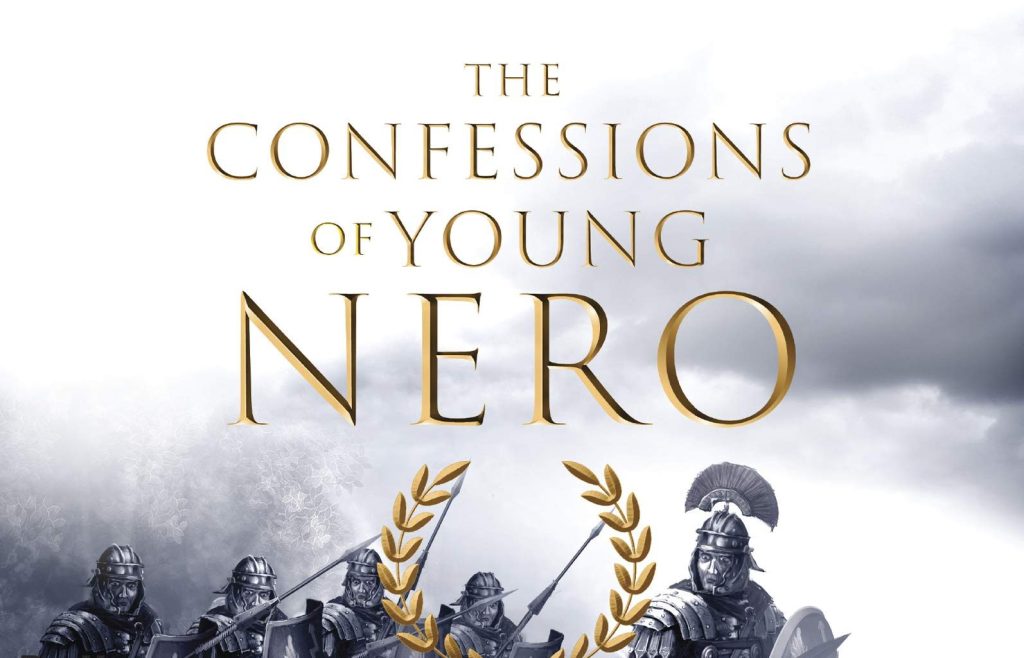
Margaret George, The Confessions of a Young Nero, (Main Market, 2018)
https://www.goodreads.com/book/show/63279259-the-confessions-of-young-nero
Uneasy lies the much maligned head
Young Lucius (Nero) is deposited age 3 with an aunt when Caligula exiles his mother. When Claudius comes to the purple, they are reunited, but the relationship is strained. He hears over and over that he is descended from the great Augustus, destined for something greater than happiness.
When Agrippina marries Crispus, the boy is left for a while in the villa with his Greek tutors, and he experiences a period of freedom. He loves the cithara and chariot racing and everything Greek. He dreams of winning the cherished periodonikes, a victor’s crown in each of the four major Greek games.
We see the setting and culture through the eyes of a youngster, enabling exposition without Telling through the protagonist’s viewpoint.
With a title like The Confessions of… we expect that the book will be Nero owning up to all his sins. Did he really commit incest with his mother? Did he poison his half-brother Britannicus? It’s more a tale of justification. Nero is the narrator as well as the protagonist, so he can’t be expected to present himself in too bad a light.
Lucius the boy Nero is utterly adorable, is respectful to slaves, does well in his schooling, obeys his mother, doesn’t use his high birth to influence unfair advantage at wrestling. Gradually, he gets an education. He witnesses his mother’s poisoning his beloved stepfather Crispus, her calculating seduction of Claudius. He’s forced to marry his sister.
He struggles between two selves. ‘the Augustan one of public duties and Roman virtues and the Apollon one of music, art and poetry’, but where Mother comes into it, ‘a darker one emerges’.
George says that Nero was much maligned, and unfairly so. According to this view, he was an artistic soul who was beloved by the people, if not the senators. Recently published non-fiction histories make the same point.[1] Our ancient sources—Tacitus, Suetonius, Cassius Dio—all had personal axes to grind and did not possess the modern historian’s propensity for factual truth. George’s Nero is a thoroughly nice guy, pushed into doing what he did by the debauched, corrupt, backstabbing environment he found himself in.
The hagiographic portrayal continues in Book 2, Emperor Nero.
If we are not chortling over the scurrilous gossip, if it’s to read fictional justifications of someone whom we know was guilty of at least some of the stuff he was accused of, is that interesting enough?
[1] Thorsten Opper’s Nero: The Man Behind the Myth; Anthony Everitt’s and Roddy Ashworth’s Nero: Matricide, Murder and Music in Ancient Rome; Osric W Fenmere’s Nero biography.




 Susie Helme