Tag: bible

  • Review: Super Easy Carnivore Diet Cookbook

    Review: Super Easy Carnivore Diet Cookbook

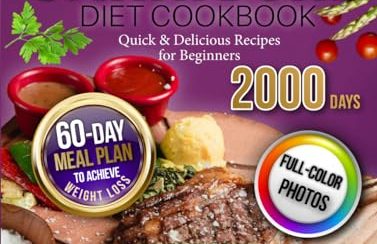
    Tory Peter, Super Easy Carnivore Diet Cookbook: Quick & Delicious Recipes for Beginners with a 60-Day Meal Plan to Achieve Weight Loss, with Full Color Pictures  (2024)

    https://www.goodreads.com/book/show/219165253-super-easy-carnivore-diet-cookbook?ac=1&from_search=true&qid=1GtfYyewY4&rank=1

    Principles of a protein-heavy diet, colour illustrated recipes and a 60-day mealplan


    The first chapters go through the science and basic principles of the Carnivore Diet. Then it goes into recipes for Breakfast (lots of egg recipes), Lunches, Dinners, Soups and Broths. These are not Julia Child—just simple recipes you can easily buy ingredients for and prep in a few minutes.
    Absolutely every recipe is illustrated with a colour photo. It also include a comprehensive 60-day Meal Plan.
    My motivation is for weight loss, but the Carnivore Diet is also good for improving energy, mood stability and other health benefits. Homo sapiens is primarily a carnivore species, so evolutionarily, we were meant to live this way.
    We should be eating more fish, and there are several fish recipes. We really should be eating more offal, and this book contains some offal (liver, heart) recipes. Bone broth is very nutritious, though you have to boil the bones for a very long time before the yummy, nutritious marrow comes out. I get ‘beefy marrow bones’ from a butcher who will saw them sideways for you, so the broth reaches the marrow inside.
    A trick for limiting carbs is to use other flours (almond, etc) instead of wheat flour.
    I’m looking forward to trying Beef Heart Salad, Fish Casserole, Carnivore Chicken and Dumplings, Herb-crusted Lamb Rack, Slow-cooked Lamb Broth and Smoke Salmon Cream Soup.
    I would say a downside is that meat is more expensive than plant-based and carb-heavy ingredients, but if it gets me skinny, it’s worth it.
    Despite purchasing the ebook for real money, I had a terrible time accessing it, as my PC wouldn’t open it. I was finally able to download it to my Android phone.

  • Review: Keto Slow Cooker Cookbook for Beginners

    Review: Keto Slow Cooker Cookbook for Beginners

    Angelica May, Keto Slow Cooker Cookbook for Beginners: 150 Wholesome Low-Carb Recipes. Elevate Your Ketogenic Lifestyle with Quick Nutrient-packed Meals (Kindle 2024)

    https://www.goodreads.com/book/show/213809639-keto-slow-cooker-cookbook-for-beginners?from_search=true&from_srp=true&qid=N9FdwnhDom&rank=1

    Basic Keto recipes you can make in your slow cooker


    The first chapters go into the science and principles of a Keto Diet. Then it is organised into Breakfast, Lunch, Dinner, Side Dish, Snack, Seafood, Poultry, Meat, Vegetarian and Dessert recipes.
    My motive is weight loss, and the basic principle of losing weight through ketosis is that when your body is in this state (because you haven’t fed it any sugars) you lose weight without feeling hungry. One upside is that cheese, cream and even mayonnaise are OK. It’s sugar that makes you fat, not fat. Instead of potatoes, you can use cauliflower or turnips.
    I look forward to trying Bacon & Mushroom Keto Quiche (no pie crust), Cheesy Avocado Breakfast, Mexican Breakfast Casserole, Creamy Cauliflower Bacon Soup, Jalapeno Popper Chicken Salad, Spicy Shrimp Soup, Creamy Tuscan Chicken, Moroccan Lamb Stew, Coconut Lime Chicken
    There are some old favourites—e.g. Chicken Cacciatore, Beef Bourgignon, Corned Beef & Cabbage—which are translated into keto-friendly and slow-cooker friendly versions.
    I don’t have a slow cooker, but I don’t think that’s an issue, as I can just use my pressure cooker. The only information which would be different, I suppose, is the cooking times.
    It unfortunately lacks colour illustrations, which I believe is essential for a cookbook.

  • Review: Carnivore Diet for Beginners

    Review: Carnivore Diet for Beginners

    Amelia Milton, Carnivore Diet for Beginners: Practical Guide for Health, Weight Loss, and Energy (Kindle 2024)

    https://www.goodreads.com/book/show/222023966-carnivore-diet-for-beginners

    A diet plan, including the science, for those who want a meat and only meat diet


    The first chapters go through the science and basic principles of the Carnivore Diet and what sort of mental challenges people face around losing weight. It goes into a practical guide to changing your mindset and implementing new, healthier eating habits.
    This new lifestyle emphasises drinking water, replenishing electrolytes and getting plenty of rest.
    My motivation is desired weight loss, but people (particularly men) often choose a protein-heavy diet in order to build muscle or to lower cholesterol. A meat-rich diet is also good for improving energy and mental clarity. It is often said that meat is more satiating than plant-based foods, thus making us ‘feel full’.
    Homo sapiens is primarily a carnivore species, so evolutionarily, we were meant to live this way.
    Of course, it’s primarily beef, poultry, pork, seafood and eggs, but we should also add bone broth, animal fat, organ meats and fatty cuts. Remember, it’s sugar that makes you fat; fat does not make you fat.
    This cookbook contains relatively few actual recipes—organised into Breakfast, Lunch, Dinner, Snacks and ‘Nose-to-tail’ recipes. ‘Nose-to-tail’ recipes are those calling for rogan meats—liver, heart, tail—which we are less used to cooking with. I get ‘beefy marrow bones’ from a butcher who will saw them sideways for you, so the marrow is open to the broth.
    And we are talking basic, basic recipes—meat+butter+salt. Each recipe is illustrated by a colour photo. There is a simple meal plan for three meals a day for four weeks and beyond. I prefer one meal a day—the OMAD diet—but I fall down on ‘snacking’ in the evening and drinking wine. For those on the go, there are some portable options like beef jerky, boiled eggs (did we really need a recipe for that?).
    One on the go recipe I look forward to trying is Cheese & Meat Roll-ups—simply layering cheese slices with slices of luncheon meat, rolling them up and cutting into bite-size pieces. I’m also tempted by the offal recipes like Braised Beef Heart Stew and Seared Lamb Kidney with Herb Butter. Some of the seafood recipes look easy and delicious, like Seared Tuna Steak with Sea Salt and Grilled Shrimp Skewers with Lemon Butter.
    I kind of don’t really feel I’m ‘cooking’ unless I’m making some recipe with loads of ingredients. These recipes are not that. They are for people who want to eat meat! And that’s it.
    The final chapters are on health and safety, ‘customising your Carnivore journey’ and answering common questions.
    I would say a downside is that meat is more expensive than plant-based and carb-heavy ingredients, but if it gets me skinny, it’s worth it. I will probably not go as whole-hog as this. I’m probably going to slip some vegetables, fruit and dairy in there, but I have been thoroughly won to the no-carb, no-sugar principle. Studies are beginning to show that a meat-only diet is good for us.
    For some technical reason I understand not, my PC Kindle wouldn’t open it. But I was able to download it to my Android phone.

  • Review: Social Media Marketing for Beginners

    Review: Social Media Marketing for Beginners

    Blake Preston and Brian Scott Fitzgerald, Social Media Marketing For Beginners: Unleashing the Power of Digital Marketing, Build a Strong Online Presence of Your Business (Fitzgerald Publishing 2023)

    https://www.amazon.co.uk/Social-Media-Marketing-Beginners-Unleashing/dp/B0FM26BT76/ref=sr_1_1?crid=21201MLIGQSUT&dib=eyJ2IjoiMSJ9.fLt9MZ29eX3hVL3lROMCbg.rc0CZCYCHS1efXshImXG0HgnPoLX1hVnycGFsQiDfAc&dib_tag=se&keywords=Social+Media+Marketing+for+Beginners+by+Blake+Preston+and+Brian+Scott+Fitzgerald&qid=1755194530&sprefix=social+media+marketing+for+beginners+by+blake+preston+and+brian+scott+fitzgerald%2Caps%2C651&sr=8-1

    As an author, I am keen to sell my books. It would be great to make money, but the real goal is I want people to read them. And yet, I’m never going to afford the ads in tube stations you see for the big guns guys like Ken Follet or JK Rowling. I need some lower cost way to get eyes on my books, and I gather that the best way to do this in the 21st century is to ‘maximise my internet presence’. However, I don’t just want people to click on my book page or give me a quick ‘Like’. I want to get myself some real ‘fans’, people who will read the whole book, write me a five-star (hopefully) review and wait impatiently for my next book.
    The first few chapters work on talking you into the programme, why and how social media marketing works, etc. I am a total novice, so I suppose I needed to read all that. But I’m anxious to get to the what. I want a step by step programme of what to do.
    I gather I need to ‘convert followers into readers through intriguing content marketing’, But seriously, I am too busy writing to blog. I already subscribe to a million of those things, and they are mostly a waste of my time. Chapter 4 agrees with me, that ‘traditional social media marketing’ is a waste of time. Everybody ‘retweets’ and ‘likes’ and ‘follow’s everybody, but nobody actually buys anything. Chapter 4 suggests that the problem is that there is no ’screening’, so targeting is impossible. You have 100s of followers, but who are they, and what do they read?
    Here are the 10 steps:
    1. Find and target specific niches
    2. Organise existing content
    3. Reverse-engineer competitors’ best material
    4. Develop optimised data for the payload
    5. Promote your mailing list
    6. Explore cross-platform content repurposing
    7. Optimise content distribution
    8. Raise the stakes of targeting
    9. Modify your approach to list sales
    10. Spend wisely
    The first step is to design a ‘squeeze page’ or landing page, the page on the web that elicits people to leave you their email address. And obviously, you have to offer them something that’s not just spam, as we all already have way too much of that.
    The first goal is to accurately define your unique selling proposition and find your sub-niche market, as you’re never going to compete with the big guns. If I define myself as simply ‘historical fiction’, people are just going to pass me buy and click on Hilary Mantel.
    I understand the potential for repurposing and using content cross-platform (Facebook, Pinterest, Twitter, YouTube). If I write a blogpost on, say, ‘anachronisms in historical fiction writing’, I can then turn that into a YouTube video. I can teach an online course on the subject, design a Powerpoint presentation on the best and worst examples, etc. Chapter 11 suggests ten hours of promotion work for every one hour spent on content creation.
    Chapter 13 goes into the use of hashtags.
    Once you’ve converted ‘followers’ into ‘subscribers’, you have to offer them something valuable and new. Then you have to close the distance between wanting something for free and willing to pay something. Ideally, you want to get to the place where you create the content once, and it’s resold automatically, creating passive income.
    After reading this book, I’m maybe a bit less of a troglodyte, but I was hoping for a more concrete walk-though—day one, do this; day two, do that. I’m not sure such a thing exists.

  • Review: Quick and Simple Chair Yoga for Seniors

    Review: Quick and Simple Chair Yoga for Seniors

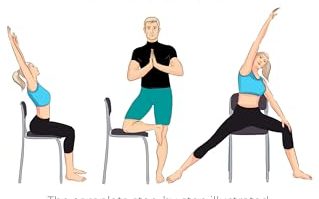
    Luna Light, Quick And Simple Chair Yoga For Seniors: The Complete Step-by-Step Illustrated Guide to Seated Movements for Weight Loss, Improved Balance and Mobility … in Under 10 Minutes a Day (Kindle 2023)

    https://www.goodreads.com/book/show/202972738-quick-and-simple-chair-yoga-for-seniors?ref=nav_sb_ss_2_44

    Basic chair-based posture, cardio and stretching for Seniors, with 28-day programme

    I’m 70, and have lower back issues, so the opportunity to get some low-impact exercise, muscle training and stretching done while seated appeals to me. Because I’m not standing, there’s no impacting the lower lumbar vertebrae and less weight on my bad knee. A big motivation for me is pain relief. I am limited in my work by pain more than any other disability.
    There’s only one of these exercises—the Floor Leg Raise—that I can’t do (because once I lie on the floor I can’t get up). However, I can modify it to do it while lying on the bed.
    The exercises here incorporate Alexander Technique and Pilates. Also the pranayama breathing techniques of yoga.
    Better posture, strength, flexibility, cardio and weight loss are addressed.
    There’s a 28-day programme to make sure you get a well-rounded, general workout and to help you feel like you’re making progress. There are four groups of exercises, which most days you do two or three groups, with a Break day every sixth day. By Day 23, you’ve worked up to doing all four groups.
    Group 1 is basic posture, Group 2 is warmup. Group 3 is easy cardio. Group 4 is flexibility.
    Readers can also download bonus videos.
    I’m starting my 28-day programme today, right in my office, and I’ve just done Day One. I’ve printed the 28-day programme onto a Wall Chart to hang on the inside door of my office to track my progress.

  • Review: Delicatus

    Review: Delicatus

    S. P. Somtow, Delicatus (Diplodocus Press 2023)

    https://www.goodreads.com/book/show/90588349-delicatus?ac=1&from_search=true&qid=01FLZSUME4&rank=1

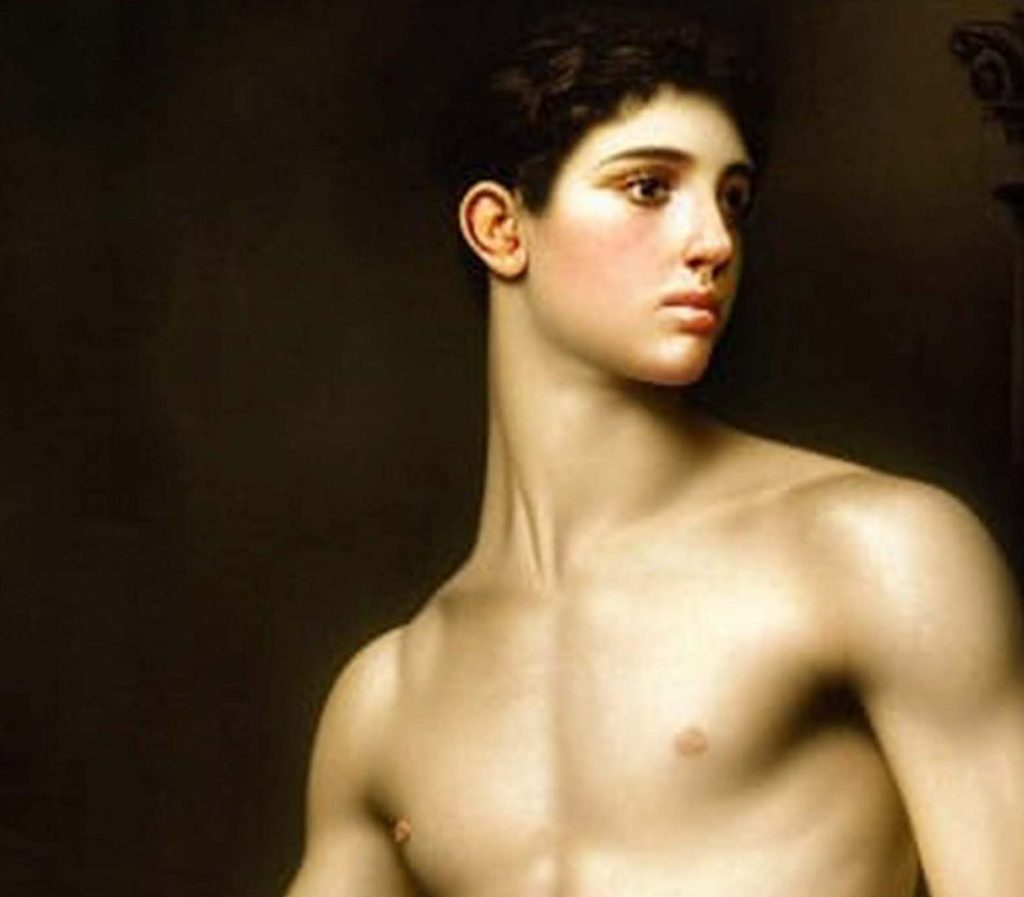
    The depravity of ancient Rome highlighted by the story of a beautiful boy


    Beautiful catamite Sporus is passed on from Nero to Vitellius. He recounts his journey ‘from slave boy, to fellator of senators, to Empress of Rome, to Goddess of Spring, to Queen of the Dead’.
    He can’t remember the scene of the original outrage—was it in the forest? Or in a palace? When his mother’s head was bashed in. Now Emperor Vitellius intends to use the boy in a reenactment of the Rape of Proserpina in the Circus.
    It’s a tragic tale from the pages of history, but the characters had no voice. Somtow creates a fictional autobiography of one of history’s most famous catamites, and in the process we get up close and personal with the perversions and voluptuaries of Otho, Vitellius and other unworthies. It manages to convey the horror of the sexual abuse historians called ‘an abomination’ without being graphic.
    Nero sings while Rome burns, an apt metaphor for the decaying and debauched ruling class, until Pontius Pilatus suggests blaming it all on the Christians.
    An absolutely smashing first line: ‘…chains and the sea…’ This is how the story of his sexual abuse begins. The tale is beautifully written, told in first person, as if addressing the attendant, the ‘overpainted whore’ perfuming him for sacrifice.
    I discovered this author from GetBooksReviewed, and this is the third book I’ve read.

  • Review: As the Hurricane Winds Blow

    Review: As the Hurricane Winds Blow

    Perry Zenon, As the Hurricane Winds Blow (Black Haired Raven Publishing 2024)

    https://www.goodreads.com/book/show/222103322-as-the-hurricane-winds-blow?ref=nav_sb_ss_1_27

    A cozy collection of ghost stories for a dark and stormy night


    A powerful hurricane rages on the banks of the Mississippi, and the Delaunay family hunkers down inside the family home to tell horror stories. As the wind howls, they pile up cushions in the living room, preparing to brave the storm.
    This anthology comprises separate short stories with dark and/or supernatural themes. There is a haunted asylum beset by a series of mysterious deaths, and a vengeful spirit haunts a funhouse. One tells of a ‘mirror world’ inhabited by a sinister entity. A New Orleans detective uncovers a web of madness. A time traveller goes back in time to prevent a tragic event.
    Common to all the stories is a focus on the darker side of human experience—fear, obsession, guilt. The family examines together the fine line between reality and the unknown and finds that by sticking together in the face of the storms of life, the human spirit survives.
    The text is riven with quite a few clichés: ‘air thick with anticipation’, ‘news swept through the town like wind’, ‘vehicle shrouded in silence’, ‘nerves honed to a steely resolve’, ‘the tranquillity of her reserve was shattered’, ‘a trail of confusion and fear’. It could use a developmental edit and proofread.
    The asylum story jumps too quickly to the accounts of the deaths—we’re not even sure what the protagonist is doing there. And the tension is thrown away by resorting to ‘then there were more deaths’. Other opportunities to build tension are thrown away, I thought—the enchanted mirror could be terrifying, for example, but we see it too soon.
    The stories introduce great ideas that could potentially be scary, but better building of suspense is crucial for the ghost story genre. In several places, the stories could have been scarier if they were longer, with more attention on building suspense.
    I could have done without the intercallary chapters about which family member is going to tell the next story. All except for the last one, which summarises the moral of the story for each one.
    If you love ‘ghost stories’, sink your teeth into these.

  • Review: The Bible: A Global History

    Review: The Bible: A Global History

    Bruce Gordon, The Bible: A Global History (Basic Books 2024)

    https://www.goodreads.com/book/show/204593723-the-bible?from_search=true&from_srp=true&qid=9GKahtOSci&rank=1

    The book goes through how the Bible became a book and how early Christian writers were inspired to proselytise. We see how the Gospels portrayed the person of the Christ, an aspect of early Christianity which remains shrouded in myth.
    Then it works chronologically through the history of the Christian Bible, from the middle ages to Renaissance and Reformation, taking on the science versus religion argument. We follow the book as it champions the switch from scroll to codex format. The project of translating the Bible drove the invention of the Armenian (4th C) and Cyrillic (9th C) scripts. The book made its way to the New World, making its way to Africa and China. It has been translated into 698 languages.
    Although it treats the Christian Bible (New Testament) only, it does touch upon Christian interpretations of Jewish Scriptures. I missed discussion of the Jewish history, and found discussion of the formation of canon a bit wanting. The dating of the gospels is a fascinating story, and I wish the book had gone into that a bit more. There are some colour photographs of famous Bibles throughout history, but a big book like this could have used more illustrations.
    This is a prodigious work of scholarship extensive in scope.
    I was given this book for Christmas.

  • Review: The Epic Women of Homer

    Review: The Epic Women of Homer

    Eirene S. Allen, The Epic Women of Homer: Exploring Women’s Roles in the Iliad and Odyssey (Pen and Sword History 2025)

    https://www.goodreads.com/book/show/219296084-the-epic-women-of-homer

    Homer (whoever he/they were) didn’t just tell the stories of both the Greeks and the Trojans.

    Where most ancient literature barely mentioned slaves, captives or even wives, Homer’s women are fully formed. The grief and heartbreak of the Trojan women is vividly portrayed, and Helen, the captive queen who causes the war, is a complex protagonist. The victim of sexual violence (or was it love?), her fate depends on the outcome of battle between men. Still, she exercises agency, and in her voice is placed the final lament in the Iliad.

    Allen concentrates on precise line by line translation of the Greek, which at first it may seem a bit pedantic to non-Greek readers. I majored in historical linguistics, however, so I find it fascinating. But we must stick through it, otherwise, we miss too much.

    In some translations Telemachus’ scolding Penelope to return to ‘the loom and the distaff’ can sound like teenage misogyny, until we understand that Penelope is Odysseus’ histos, his loom and his mast, a weaving term with connotations of ship-building and of pillars that hold up the rooves of family and dynasty.

    Allen studies women’s roles as queen, captive, goddess or heroine, a structure I found not the most systematic. For example, the same scene of Telemachus scolding his mother is discussed in several different places.

    A woman’s status was defined in relation to the men in her life. The bard implies, though, that the roles are complementary—we couldn’t have had the heroes without the heroines; it is the women who sing the laments, tend the shrines and keep the legends alive.

    What you won’t find anywhere else is the amazing appendix featuring nuanced and insightful discussions on words and phrases (such as histos) within the cultural context of Homer’s age.

    This review first appeared in Historical Novels Review.

  • Review: The Forger’s Ink

    Review: The Forger’s Ink

    Jo Mazelis, The Forger’s Ink (Seren 2025)

    https://www.goodreads.com/book/show/232616443-the-forger-s-ink

    1816 Swansea. It’s October, and the summer has not come.


    Orphaned Fanny Imlay is unloved in the house of her stepfather, who claims she ‘makes a luxury of her melancholy’. She writes of a fantasy world called Summerland where the sun always shines and all the people are happy—all but one girl who believes she was ‘born sad’ and weeps and weeps. The portrait of her mother Mary Wollstonecraft painted by John Opie, which hangs on the wall in the study, is destined never to glance in her direction. When her half-sisters run off with Percy Bysshe Shelley, they do not take her.
    Years later in 1971 Helena is unloved, minding the bookshop while her absent, cruel husband is away. Jude walks in carrying papers she purports to be proof that Fanny did not, as history has written, commit suicide, the tragedy that was the inspiration for Mary Shelley’s Frankenstein.
    Jude, orphaned, has inherited Fisherman’s Cottage, where ghosts come up from the river ‘squelching and dripping, fish-nibbled and green with slimy weeds’. She meets the fun-loving couple Sigi and Olof. Olof teaches her how to make ink from oak galls, and Jude takes up writing again, inspired by the classics. She’s heart-broken when the couple move back to Sweden. She mourns the warmth of the manufactured family she enjoyed for scarce months the way Shelley’s monster watches the happy family with unrequited longing. Like the monster, Jude ‘pass[es] like a wraith through the world’.
    The Gothic tone matches the Wollstonecraft-Shelley subject matter; the pace is languid. It takes Helena over 100 pages to understand what Jude’s papers are (it’s really her husband who knows books).
    Mysterious and beautiful, if heart-rending, it fully explores the emotions of isolation and sadness. We feel the profound melancholy of Fanny and Jude, even Helena.
    This review first appeared in Historical Novels Review.