Tag: beauty

  • Review: Eve-0

    Review: Eve-0

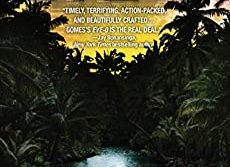
    Danielle Gomes, Eve-0 (ANJO One Eleven Press 2021)

    https://www.goodreads.com/book/show/57819046-eve-0?ac=1&from_search=true&qid=hxQ20ob0Vj&rank=1

    In the past decade, 3 million have died from flu, and another five million from viruses. Civilisation has between 3 and 5 years before everyone is wiped out.
    Gabrielle is called away from her U Penn hospital by her fiancé Trent, a geneticist, to be the surgeon on a critical mission into the Amazon jungle. Trent’s employers, AmCorps, have identified an ‘evolution gene’—Eve-0—in hopes of programming the human body to be resistant to disease. Since 1987 Eve-0 has been ‘dormant’, corresponding to a hyper-evolution of viruses and bacteria. The mission is to seek some individuals, without contact from the outside world, untouched by vaccinations and antibiotics, whose Eve-0 gene is not dormant.
    On the boat are also are military man Chris, the captain Paulo, and Kukua, the chief, and three members of the Sapanahua tribe, who will escort them. But someone is leaking info to opposition organisations. First, they fight off gunmen, the it’s sharks in the water, and Gabby soon gets used to the adrenaline rushes. They face a coming storm, and decide to anchor the boat in a lagoon. In the fury of the storm, a tribe member Jim is injured with a punctured lung, and Gabby has to operate against the listing and crashing of the boat. The boat is too damaged, and they have to take off in small Zodiac boats, and they lower Jim into the water to die.
    Back at HQ, word is that it’s Interfaith for Peace who are tracking the Amazon team, and their billionaire backer. They identify Paulo, their pilot, as the mole, and there’s a mole at home, where martial law is in force. Through forest-fire-scorched forest, they guide their boats, chased by these unknown trackers. Plus, there’s danger from the shores, the indigenous Matsés tribe, whom they want to contact for their DNA, but they also want to avoid antagonising. As they hike into the jungle, they’re bombarded by insects. Gabby begins to understand that the ‘terrorists’ following them are instead environmentalists.
    From then, it’s a series of non-stop adrenaline rushes. Finally, a local tribe takes them in and they take ayahuasca. In her trance, Gabby’s mother tells her, ‘When Eve bit the apple it wasn’t knowledge she sought, but control.’ The tribe have fully active Eve-0 DNA. As the roundup of the specimens begins, things heat up, and it’s hard to know who’s on whose side, and HQ tries to take control, without knowing the situation on the ground. That everyone is talking untranslated Portuguese only adds to the confusion. There’s a climax a bit like the end of Hamlet, but the good guys triumph.
    The pandemic-driven post-apocalyptic theme is perhaps not new, but the proposal of a genetically engineered solution is innovative, and the plot is great. The whole jungle experience sounds absolutely hellish. It seems like every disaster you can imagine happening in the jungle happened to these guys. I was picturing the blockbuster film the whole time I was reading it.
    The main character Gabby is fairly interesting; I was so glad she didn’t end up with Trent. The science is really cool, and sounds quite plausible. I would have liked even more of it. And Trent’s high-tech surveillance equipment sounds interesting, too—I would have liked a bit more description there, as well. It’s well written, and well edited, although I must note that inanimate things like ‘life’, ‘strategy’ and ‘damage’ cannot be quantified by the word ‘amount’.

  • Review: Flitting in the Shadows

    Review: Flitting in the Shadows

    Sunil Sethy, Flitting in the Shadows (Notion Press 2021)

    https://www.goodreads.com/book/show/58135069-flitting-in-the-shadows?ac=1&from_search=true&qid=sxdJQv3DLj&rank=1

    Husna’s mother and grandmother are killed in a car crash caused by two men lost in their desire. Husna was already prejudiced by her mother against gays, and this solidifies her antagonism. In her mum’s things she finds a manuscript addressed to her. Her boyfriend Adam helps her through it.
    Part I deals with the manuscript’s revelations about Arvind’s family.
    Arvind is accused by his friend Clive’s wife of a liaison with him, of which they are innocent, but he decides to own up to some things with his own wife Sushmita. This is the gist of the manuscript.
    Manmohan and his pregnant wife Tillotama are fleeing from a massacre of Hindus and Sikhs in the Punjab.
    Their young son Arvind is sexually molested by his uncle Shiv. He wets the bed, and is berated by his parents. But the relationship continues, to Arvind’s pleasure and his shame. Uncle Trilok has started molesting Arvind as well. He is rougher, threatening to tell Manmohan if Arvind doesn’t comply.
    Part II deals with Sushmita’s family history.
    Her wealthy mother Anjali marries the handsome Rakesh in a whirlwind romance, then when he leaves his father-in-law’s firm to take a lower paid job, she abandons him and their daughter and moved to New York.
    Arvind and Sushmita marry despite their parents’ objections. Sushmita suffers two miscarriages, and they adopt a girl—we guessed it—Husna. Arvind feels neglected and has a string of liaisons.
    Part III returns to the present day with Husna and Adam.
    Husna, for some reason, concludes that Sushmita is a pseudonym for her mother Kalpana. This would make Arvind her father. No wonder her mother poisoned her against gays.
    Husna and Adam travel to India, then to Australia in search of her father. They find out his real name is Sudhir Nanda, and he’s migrated to Australia and lives with Brian Murphy, whom Husna surmises is ‘Clive’ from the manuscript. Husna and Adam travel to Sydney, but the baggage of the past rears an ugly head, and the reunion is not as happy as it should have been. But there is a happy ending.
    The writing style is good. There are a few spelling mistakes; in a few places names of characters are spelled differently, which is confusing, since we’re already handling so many characters. There are an awful lot of people to keep track of. The synopsis described it as a ‘family saga’ (which I love) so I was forewarned and kept a running list of characters and their relationships. The myriad characters are all rich and multi-faceted, and their lives complex. Their sagas also span several decades of an interesting period in India’s history, and by the end, we have learned so much about India.
    Almost the whole novel consists of this manuscript Husna discovers, interspersed with brief chapters with Husna and Adam saying stuff to each other about it and Husna saying, ‘What does all this have to do with ME?’ While this may be a logical plot structure, it leaves the reader behind a bit. We are left wondering not only ‘what does this have to do with Husna?’ but ‘Wait, who was Husna, now? I was so engrossed in the Arvind and Sushmita saga, I forgot.’
    The book reflects feelings common for people who have been adopted, unsure of their identity when they don’t know where they’ve come from. Of course, one is pained to read of the abuse of Arvind’s childhood. His later psychological sufferings may also be familiar to those with what is often mistakenly called ‘ambivalent sexuality’. So many people whose sexuality is more complex than just straight or just gay suffer from identity confusion, too. Marital infidelities of any sexuality still often cause too much pain to surmount. Modern-day people can read of these sufferings with sympathy, in hopes that one day, these confusions will no longer cause such suffering.

  • Review: Parted Waters

    Review: Parted Waters

    Deborah Cook, Parted Waters (CMC 2021)

    https://www.goodreads.com/book/show/56864140-parted-waters?ac=1&from_search=true&qid=A5hbzi9EZi&rank=2

    The characters’ lives are a bit banal at first. Ben is a megalomaniac from the start, and his girlfriend Melissa is such a tool, rescripting her entire life just to get Ben’s attention. Peter, the local police chief has a perfect family and goes out weekends on his boat. His wife Julia, when not soccer-momming, gardens, and their perfect teenage kids concern themselves with proms, boyfriends and exams.
    The inciting incident for Ben was when his beloved childhood horse got caught in a barbed wire fence and had to be shot, prompting him to dream of a world without government controls.
    Against the wishes of Julia and the Land Grant, Ben buys the old McPherson Farm, several hundred acres near the small New Hampshire town of Grantville. Now they’re felling trees and constructing buildings, all without planning permission. Scores of families have moved in, and their children aren’t going to school. Peter’s daughter Katherine has a surprising encounter with Ben, and his son Josh is befriended by the settler Rafael.
    The suspense builds marvellously. First, the settlers start construction, then they join the library committee, then they attend a council meeting “just to watch”. Little by little, they take over the town. And they have guns. Ben runs for mayor, and wins without even campaigning, and soon there’s a settler winning every position in town.
    Despite her misgivings, Katherine goes out with Ben. Josh has an accident, and the doctors find opiates in his system. Rafael feels guilty for supplying him and befriends a little girl, Ella, promising to teach her things since she doesn’t go to school.
    The settlers’ disregard for regulations and their wanton cutting down of trees have tragic environmental and social consequences. High-minded principles give way to personal vendettas, with dire consequences for everyone.
    The idea of out of towners taking over a town seems patterned after the experience in Oregon of Bhagwan (Osho). But truth may be stranger than fiction, there. The true story of Rajneeshpuram offered, as well as libertarian separatism, the additional dramas of a strange cult religion, biological terrorism, and corruption and criminality of the leaders.
    In this story, in places I found the plot and phrasing to be ordinary. Staircases are always ‘rickety’, belongings are always ‘meagre’ and sportcars are always ‘flashy’. However, it’s very well written, and the characters are very good. An excellent novel, but don’t expect a happy ending.

  • Review: The Absent Prince

    Review: The Absent Prince

    Una Suseli O’Conner, The Absent Prince (The Conrad Press 2020)

    https://www.goodreads.com/book/show/56228956-the-absent-prince?ac=1&from_search=true&qid=pZ69PKRYNU&rank=1

    Beautifully written family portrait


    The author recounts her family history, having pieced the story together from family documents discovered after her parents’ deaths.
    Her grandfather Harry married the nurse, Grace, who cared for him when his leg was shot during the war. Harry was a lonely man, shunned by his family for marrying a Protestant, shunned by his native Ireland for serving in the British armed forces.
    Her maternal grandfather, Ernst, a policeman, had trouble meeting his wife Rosa’s expectations, and was accused of stealing some money, committing suicide in shame. This was never discussed by her Swiss mother Lea, and she, herself, often threatened suicide.
    Peter taught at Groton, a prestigious American boys’ prep school, and a great proportion of the book is devoted to singing its praises. Described by students and colleagues as ‘an inspirational leader’, Peter suffered from some inner unhappiness, jumping from therapist to guru, leaving the family for long periods to chase wacky treatments.
    They married when Lea is 38, but, because of her tuberculosis, she was unable to get a visa, so Peter moved to England. Peter and Lea founded and ran a successful English language school in Folkestone.
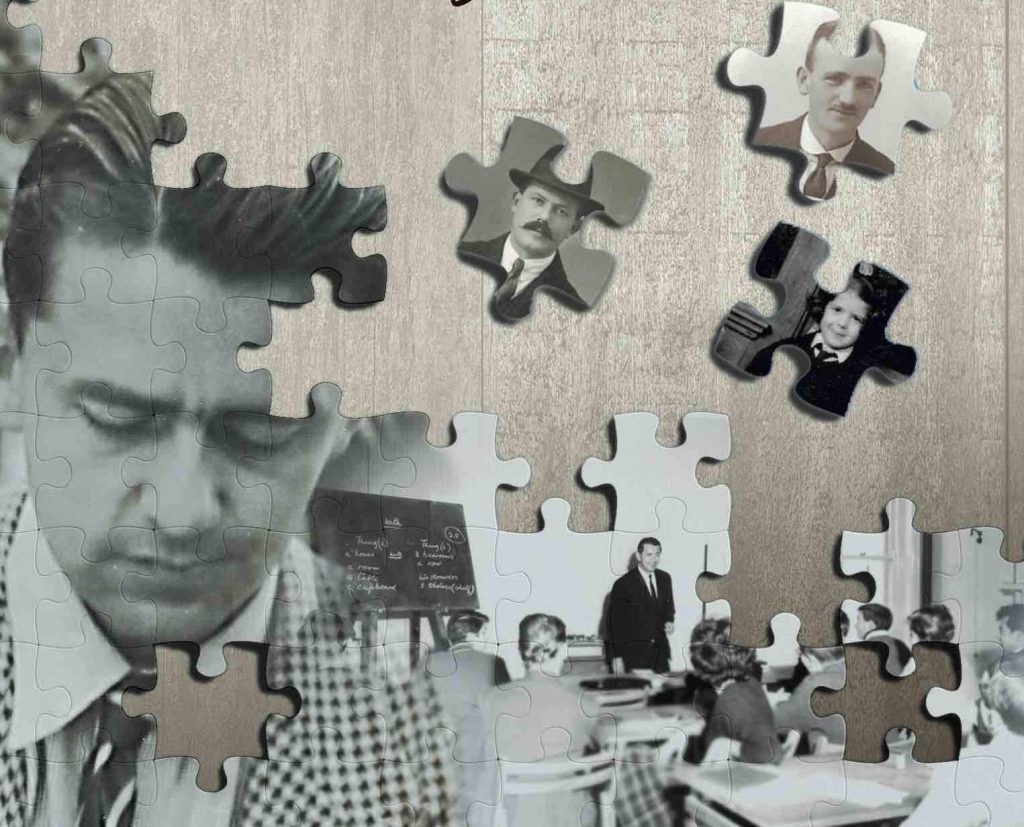
    We begin the book thinking we’re going to read all about Peter’s and Lea’s extended families, and we end up reading mostly about philosophies of education. The author refers to a manifesto written by her father entitled ‘The Absent Prince’ on his prescriptions for ‘the ideal teacher’, one who includes love and psychology in the mix. We realise toward the end of the book that this has been an overall theme. But this, if it is ‘mission creep’, gives additional meaning to the lives of these characters, especially Peter. Everyone in the family tree is treated with understanding and compassion. But the person we get to know most is Peter O’Connell, and what an interesting, complex, inspiring and yet probably difficult man!
    The structure is complex, not necessarily directly chronological, which I liked very much. Instead, it’s organised more thematically, making for more interesting and more meaningful reading. For example, after a passage about her grandfather’s religious beliefs, she moves into the story of her great-grandparents, beginning from their religious beliefs. She also brings in other people in history whose stories are related to her themes. During the part where she discusses her grandfather’s suicide, she tells the tale of other people in the story who also killed themselves. After discussing her father’s good relationship with his students, she discusses her own bad relationship with a childhood teacher.
    This thematic structure is very satisfying to read, as you get to grips with a broader subject matter instead of jumping from person to person or date to date. It also results in a richer understanding of the characters than if we had simply read ‘in 1938 they did that, in 1939 they did that’.
    Links are found between one theme and the next, artfully weaving them into a narrative that flows seamlessly.
    This novel is beautifully written and well edited, and it also includes illustrations, family photographs.
    (reprinted with permission from) https://kentbylines.co.uk/family-history-the-absent-prince-in-search-of-missing-men/

  • Review: The Orchid House

    Review: The Orchid House

    Jane Sheridan, The Orchid House (The Conrad Press 2020)

    https://www.goodreads.com/book/show/55107146-the-orchid-house?ac=1&from_search=true&qid=ueNvDVmnvD&rank=1

    Developments in the lives of three friends, Ginny, Bella and Leila, challenge them and their friendships.
    Their boys are all away in boarding school, Ginny and David are on holiday in Devon. Ginny hopes the weekend will rekindle the spark in their marriage — perhaps the vastness of the landscape surrounding Brent Tor will make their own problems seem small in comparison.
    The orchids Ginny so lovingly cultivates in her conservatory, dubbed the Orchid House, become a metaphor for the one-sided devotion she has lavished on her marriage, the lights tucked in among the flowers represent her hope of something new. David knows he’s been deficient and he feels guilty about it, this guilt translating into churlishness rather than affection.
    Bella in Sandwich is trying to escape her tyrannical husband, Steve. A new friendship with Ginny is a ray of sunshine in her life of fear and bruises. She keeps a secret diary. With Ginny away in Devon, she goes alone to join the group canvassing for the election.
    David comes across a young girl, Grace, trapped by boulders in the freezing river, and is unable to rescue her until the helicopters arrive, the incident seeming to mirror his own inability to rescue his marriage. He comes home traumatised. Ginny sees that they are worlds apart. She is ready for a change, to go back to college to study landscape gardening. A new woman at David’s work is flirting with him.
    Bella comes home from canvassing ‘late’ and Steve roughs her up, again. After the rescue of the young girl, Ginny now has to rescue Bella. Steve is made redundant due to ‘misconduct’, and Bella realises she needs to get away. Ginny’s friend Leila is a legal advocate and helps Bella. Leila has a new boyfriend, Matt, and he’s not Hindu.
    Ginny hosts a dinner party including Bella and Steve, Leila and Matt and a couple from David’s work. Unsurprisingly, it is a difficult evening, and eventually, everything kicks off in the Orchid House.
    This is a tale of female empowerment, and most of the men in this story are right bastards—well, Matt is an angel—but I kind of wish they had been treated more sympathetically. Sure, men have affairs; sure, men beat their wives. Yes, we women can survive, and that’s great, but is it really all to do with them being bastards? Or is there some underlying sociological reason we could understand and thus do something about? We begin to understand David when we experience his anguish over not being able to save Grace. However, we never have an inkling of empathy for Steve.
    It’s well written, with passable editing, and the plot is well structured. There is a happy ending to look forward to; the women look to the future and maybe the promise of new men in their lives.
    (reprinted with permission from Kent Bylines)

  • Review: Emilie

    Review: Emilie

    Ingrid Ramsdale, Emilie (2021)

    https://www.goodreads.com/book/show/58118521-emilie?ac=1&from_search=true&qid=VyzZALcJ1l&rank=1

    5 stars Plus!


    1560 Paris. 5-year-old Emilie is beaten by a gang of children down by the river, while her brother hides, laughing. They call her ‘Huguenot swine’, words she doesn’t yet understand. By age 16, she understands well enough, and she still has headaches.
    She’s dreading her morning of lessons reading Latin scriptures. She wants to learn science, poetry, geography, the arts like her brother Pierre, and she often sneaks into the library of her noble father Olivier Lefroy, adviser to King Charles IX.
    Better yet, she wants to learn about healing herbs, and seeks instruction from Thomas the gardener. She sketches them afterward in her room. She slips off to the apothecary, where she meets with Thomas’s mother the midwife Helene. At night she reads Materia Medica.
    Princess Marguerite of Valois is soon to marry Henry of Navarre. Emilie is expected to marry Pierre’s arrogant friend Marcus.
    Pierre violates Emilie’s maid Marie and lays the blame on Thomas, setting off tragic consequences for the servants of the Lefroys. But Emilie’s parents’ ambitions for her are thwarted by the intervention of the Bartholomew’s Day Massacre. Her parents are murdered, and there are corpses all over the streets. She escapes the city with Thomas’s family, Hubert the apothecary and Marie in a cart disguised as corpses, and they flee through the forest. She is rescued by the Benedictines. She joins with Brother Nicholas and her ex-governess, setting up an infirmary tending to wounded and sick Huguenots. She achieves her ambition of becoming a healer.
    After many travels and much adventure, Marcus and Pierre catch up with her, ending in a fight and a misadventure. We finally learn what drives Marcus and Pierre to their dastardly deeds.
    This is a story of a war between two religions, and the adventure story of a girl seeking her own identity in a world that constricts her. Trying to survive the Bartholomew’s Day Massacre and its aftermath must have been horrific.
    We modern women can identify with the feisty Emilie who chafes against the expectations of the period for her gender. She has a passion—herbal healing—and we are drawn into her enthusiasm, learning as she learns. Across her travels, as well as religious conflict and herbs, we learn about castle life, the apothecary business, forest survival skills, monastic life and industry, paper and candle making, medieval surgical practice, the lifestyle of cloistered nuns, ecclesiastical and noble intrigue and politics…
    This novel is packed with juicy detail, and ample time is devoted to fully exploring the many characters.
    The writing is true to its time; the dialogue sounds mostly believable for the 16th century. I wonder, though, whether people back then would not have discussed their religious beliefs a bit more, and referred to God, Jesus, Mary, the saints, quoting scripture, etc. more in their daily conversation. And I didn’t understand why a countess would take a position as governess, and I don’t think the perpetrators of a ‘massacre’ would have called it such, and a liar wouldn’t have called them ‘lies’. The activities of the characters seem historically accurate. This is so important in historical fiction, and this novel does it beautifully.

  • Review: The Bridge to Rembrandt

    Review: The Bridge to Rembrandt

    Nelson K. Foley, The Bridge to Rembrandt (San San 2021)

    https://www.goodreads.com/book/show/58549182-the-bridge-to-rembrandt?ac=1&from_search=true&qid=VKDQQyKrvx&rank=1

    Time travel, Old Masters and finding Saskia


    Robert is sitting at a café in Amsterdam thinking about his work and his women. He’s an events organiser, but that’s seasonal, so he’s started a side business with Mark dealing in reproductions of famous paintings. He also has two women, wife Belinda, who’s none too happy about the side business, and Saskia. He picks up an old coin. He’s a diabetic and needs to inject himself regularly with insulin.
    His paintings business has begun dealing in copies of living artists, and one of them is suing. Saskia, too, wants a change.
    His son buys an antique chest online, and the owner lives in the house next to Saskia’s.
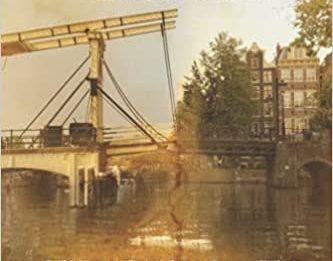
    Suddenly, crossing the bridge over the Brouwersgracht, he’s transported 3 years back in time—how? why?—to the day he first met Saskia. He begins reliving his life, but the second time around, he manages everything better. He has a propensity for making ‘predictions’. He’s boringly out on a very ordinary first date with the Saskia only he knows he will fall in love with, while we’re thinking—hang on, man, you just travelled back in time!
    Suddenly, crossing the bridge, he’s again transported back in time—how? why?—to 1945, where there is an entirely different ‘Saskia’. The two become embroiled in the Dam Square Massacre, which Robert predicts just in time. But he’s low on insulin.
    Crossing the bridge, again he goes back to 1886, and finds himself in the middle of the Eel Riot. Again, he meets a ‘Saskia’. His lack of insulin will become life-threatening within weeks. He is ‘beginning to enjoy the learning curve with a new Saskia each time’. Sometimes the way the different Saskias explain things to him seems a bit unnatural. WE know she’s talking to a time traveller, but SHE wouldn’t have known it.
    Crossing the bridge, again he goes back to 1664, and he’s in the middle of the Plague. This time, ‘Saskia’ recognises him. It’s the 2019 Saskia; she’s time travelled, too, only in this time period, she has a husband and is mistress of a large house. Her next-door neighbour was apprentice to Rembrandt. He has been making the chest which Robert’s son bought in 2019, and 2019 Saskia has the other of the pair. He discovers something remarkable about the chest.
    Crossing the bridge, he’s back again, and everything is different for him with his two women.
    What would you do if you time travelled? I would first find a confidant—otherwise, it would just be too lonely–and the first thing you want to do is to figure out how it worked and have someone to help you do so. Then I’d make my way to the bookies and bet on some things I knew were going to happen. Then I’d try to answer some archaeological/historical mysteries. Was this really this way or that way back then? Or I’d try to influence history, try to prevent something awful from happening. Robert just keeps seeking out Saskia. He does take photos, though, which is another thing I’d do.
    This works better than some time travel novels. The hero does face some adversity, and he changes due to his experience. Satisfactorily, he also gets his hands on a historic treasure. It’s well written and well edited, and though we never fully understand how the time travel mechanism works, it works.

  • Review: Irina

    Review: Irina

    Philip Warren, Irina (The PineLands Company 2021)

    https://www.goodreads.com/book/show/58238779-irina?ac=1&from_search=true&qid=H8lp71yPsF&rank=3

    A deliciously complex story, illuminating a fascinating period of history


    1378 Poznan. Irina steps past the burning flesh on ulica Zydowska (Jewish Street) her eyes locking for one last time with her beloved Berek Joselewicz. She places her fingers on her belly, and he smiles. Velka and the dog Yip are the only survivors. Two of the attackers, Tomasz and Franciszek, are from Duke Zygmunt’s household.
    The Kwasniewskis once were wealthy, but her parents Ignacz and Maria were poor, with many mouths to feed. Since the age of 12, working for Panie (Mrs) Eva Joselewicz in Poznan, she has had warmer boots to wear. Panie Eva had told Irina of a secret hiding place, and she retrieves the Joselewicz gold.
    Duke Zygmunt sends his squire Jan Brezchwa to summon Father Madrosh. There is news from Gniezno. Black Death. ‘Some blame it on the Jews,’ he said. Madrosh scoffs, but the man continues, ‘It is said they poison our wells.’ Madrosh argues, ‘the Jews die of Plague, just as we do.’
    The king of France has called all the nobility of Europe to convene in Paris. Dressed in Panie Eva’s rich clothing, with Velka posing as the lady’s maid, they join Duke Zygmunt’s party.
    Their travels are interrupted by the imperialist designs of King Louis I of Hungary and Poland, as well as the vengeful ambitions of Tomasz. Duke Zygmunt and Margrave Wenceslas trap the invading Hungarians in a bloodbath at Krosno.
    Irina marries squire Jan Brezchwa, and they raise Irina’s son Shashu and begin a successful furniture dealership in Giverny.
    Along the way Irina doubts her faith, and Madrosh gives religious instruction–a clever device, by which we rehearse the theological beliefs debates of the period, though perhaps it went on a bit long—across many, many chapters. Understandably, Irina questions the meaning of good and evil, having seen the violence against the Jews of Poznan and that meted out to the Hungarians at Krosno, but did we really need to read everything St Augustine and St Thomas Aquinas argued? The lengthy treatise might have been better placed in a novel about churchmen or philosophers. The long voyage to Paris also gives us time to learn a bit of the complicated history and politics of mediaeval Poland and Hungary.
    At first, it was hard to get into, as, while we’re still unfamiliar with the story, the Irina plotline and the Duke Zygmunt plotline jump back and forth too quickly. It doesn’t give us time to absorb the information. The story alternates throughout between Irina’s youth and old age, which is also confusing.
    The writing quality and the editing are good, and the research involved was admirable. This is a complex story, with multiple interconnecting plotlines, and one with many characters—too many—with names we need to learn how to pronounce, but the complexity, once you learn the multiple characters, is delicious.

  • Review: Through Forests and Mountains

    Review: Through Forests and Mountains

    Margaret Walker, Through Forests and Mountains (Penmore Press 2021)

    https://www.goodreads.com/book/show/56984493-through-forests-and-mountains?ac=1&from_search=true&qid=gakmBCOPmI&rank=1

    6 stars. A heroic story, gorgeous, unclichéd writing, reflecting superb understanding of the history


    Captain Anton Marković is recuperating in hospital, his arm shattered by the propellers of his torpedo boat, the Nebojša. Mara leaves the ambassador’s mansion in a pique; she wants to return to Belgrade. Her father the ambassador says, ‘find the boyfriend’, Miroslav. ‘He’ll be able to find her’.
    Miroslav finds Mara, but she wants nothing to do with him, his possessiveness and his Croatian fascist politics. She has listened to a talk by Tito, and she’s impressed. She attends a meeting of communist women and joins a 10-day barefoot march to Drvar in Bosnia, along the way receiving harsh lessons in the plight of the proletariat. The communist women ask Mara to take a position teaching in liberated Užice, and though she had hoped for ‘more epic’ work, she is happy.
    Anton takes to the mountains with Montenegrin chieftain, Nikola Mugoša, and two of Mugoša’s sons. With the Germans occupied with invading Russia, when Italy claims Montenegro, the Yugoslav uprising takes them by surprise. Belgrade is Judenfrei, and they are looking for ways to execute more untermenschen like Serbs and Slavs.
    Mara takes up with a British spy, Mr Hudson codenamed ‘Marko’, but they are accosted by her Croatian stalker Miroslav, and he threatens her. He breaks in to Hudson’s flat and steals his codebooks. Mara ends up with Anton’s party and other refugees, all the while stalked by Miroslav.
    The writing is beautiful, unclichéd, in places funny, filled with gorgeous phrases like ‘his night’s morphine flashing from her syringe’, ‘the priest’s…towering black presence filled the outhouse with authority’, ‘he woke up bathed in the scent of finer things that lingered through shaving and breakfast’ and ‘she farewelled the city as the dawn cast amber ripples across its traumatised buildings’.
    The pronouncements of the partisans on the two extreme ends of the political spectrum, communists and fascists, are credible; this evidences the author’s understanding of both and is something that is hard to do. The scene where Mara first encounters the villagers of Drvar is astounding!
    We learn the complicated history of wartime Yugoslavia, fed bit by bit into the dialogue. This is very artful. Despite the complexity of the history, the plot is not too complex to follow, and time is taken to appreciate the horrors of war.
    Death to fascism; freedom to the people!
    (I received an ARC from Reedsy Discovery)

  • Review: War Story

    Review: War Story

    Rolf Margenau, War Story (Frogworks,com 2021)

    https://www.goodreads.com/book/show/58714079-war-story?ac=1&from_search=true&qid=HBC9A0f0N6&rank=1

    WWII experiences of loosely connected characters, especially the adorable child Achim


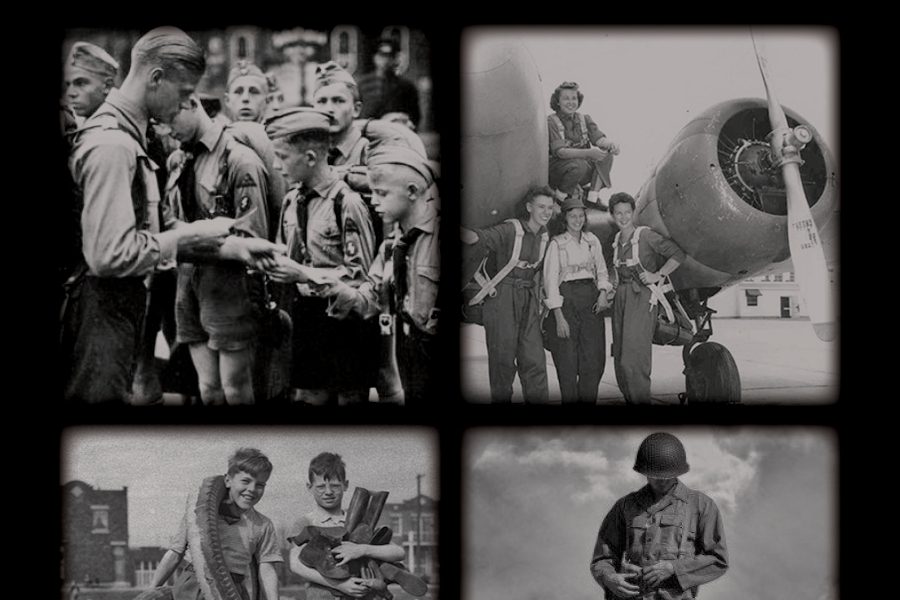
    This novel is a collection of stories of WWII-themed chapters from a German or German-American viewpoint. It follows the wartime experiences of aviation-mad Liesel, the German Panzer commander Horst, rocket engineer Paul and the child Achim, with each chapter following one of these.
    The characters are loosely connected. Paul is a classmate of Liesel. Liesel is Achim’s babysitter, and he is best friends with Liesel’s younger sister. Horst is Achim’s uncle.
    Achim enjoys the circus with his cousins, until a tiger bit of one of their hands. His best friend is no longer allowed to play with him because he’s a ‘dirty jerry’.
    Commander Horst’s Panzer tank makes its way through the Libyan desert to Tripoli. He wants to dismiss the defeated Italian troops as ’cowardly macaronis’ but can’t help but see them as fellow soldiers. After the battle of Kasserine Pass, they’re no longer winning. He ends up in a POW camp in Mississippi, where he falls in love with the black nurse, Dora.
    Aviation-crazy Liesel takes her first solo flight in 1936. A year later she is the youngest licensed pilot in Connecticut. She is upset over what her idol Charles Lindbergh said about Jews. Her parents are German Jews. Germans and Japanese immigrants are being ‘interned’, and her father’s law firm is representing them.
    Paul graduates from Yale, then graduates from officer training in the army. He is sent to London to work at Bletchley Park.
    Each chapter features one character and tells their story, but they each have a theme, as well. One wonders who are our real enemies; one examines the allocation of food and rations; one looks at everything that wasn’t as good as it was before the war. A common theme is the contradictory position of German-Americans, when their country is at war with their homeland. And what the Nazi ideology looks like from the viewpoint of the defeated. Two of the characters, Liesel and Paul, experience war-time bereavements.
    Horst and Dora come to visit Achim’s family, get married, get jobs and settle in New Haven.
    The novel was built around real research, and it gives hitherto little-known insights into D-Day, POW camps, the internment of ‘enemy aliens’, prisoner exchange, letters home.
    The most disappointing thing about this novel was the ending. It just ends with Achim saying, ‘that’s all I wanted to tell you. Goodbye’. I don’t know how I wanted it to end, but that wasn’t it.
    The best are the sections on Achim. They are written in first person, affording us a child’s eye view on the war and how it affected the children on the homefront. These chapters give us a glimpse into the hardships suffered by the nation during war, and are told from the adorable point of view of a child.