Tag: artificial-intelligence

  • Review: A Keeper of Tales

    Review: A Keeper of Tales

    Marilyn Pemberton, A Keeper of Tales (Williams & Whiting 2022)

    https://www.goodreads.com/book/show/63050783-a-keeper-of-tales?ac=1&from_search=true&qid=AyHhuradqF&rank=4

    Harriet is a female student at Oxford in 1885. Their stern chaperone warns her against making any waves. They live at a boarding home for lower-income students, where they are joined by haughty Lady Victoria, daughter of Lord Somerset, who wants to live with ‘ordinary’ people.
    She meets, chaperoned by Mrs Croft, with her brother Bertie and her second cousin Edward.
    Harriet writes stories, like the ones she heard from her grandma Glizzy—Lizzie from Book 1 The Teller of Tales—and Lady Victoria, Vee, offers to illustrate them. The narrative is interspersed with Harriet’s stories, all about girls asserting independence, being the heroines in their own lives.
    Harriet and Vee are strong characters, and their friendship and their conflicts make for interesting reading. Vee’s aristocratic haughtiness renders her, on the surface, unlikeable, yet she has some deep pain that we are keen to uncover, and we are sympathetic to her rage at the limitations society places on women. They have to dress as men even to enter the library, an act of rebellion which results in their expulsion.
    They are happily taken under Aunt Augusta’s wing. Vee and Edward compete for Harriet’s affections. Harriet discovers there are worse fates for women than being denied an Oxbridge education, and yet she finds love in the end.
    This is Book 2 in the Grandmothers’ Footsteps series, I have read Book 1. Book 3 is expected soon. This one is told in the same first person present tense of story-telling and treats the same theme of female empowerment. As Harriet says, ‘Maybe it’s time for women to lose their femininity and just become human.’
    I received an ARC from the author.
  • Review: A Teller of Tales

    Review: A Teller of Tales

    Marilyn Pemberton, A Teller of Tales (Williams & Whiting 2022)

    https://www.goodreads.com/book/show/63050705-a-teller-of-tales?ac=1&from_search=true&qid=vHVAyLOSbc&rank=1

    Lizzie looks after her mute, handicapped little brother Bobbit, defending him from within and without the family, in their 1820s mining town of Wednesbury, Staffordshire. She tells him imaginative stories, tales of powerful girls who right all wrongs done to their brothers. Does he understand them?
    The addition to the family of a baby sister adds to the tensions, as Matthew, her favourite older brother, prepares to leave to study to be a vicar. Lizzie longs to be a missionary to some far-off land, or, failing that, a teacher. She is told that her place is in the home, and if she didn’t look after Bobbit, they’d place him in an institution.
    Instead, the good Mr Whittaker, who has an admiration for Lizzie, is taken on as new schoolmaster. She watches in envy as her other brother James ‘acts despicably one day and gets his heart’s desire the next’.
    Matthew is going to be a missionary in Africa. Lizzie’s friend John, the carpenter’s son, who insists, despite her urging, on calling her ‘Miss Elizabeth’, makes for her a beautiful carved walnut box to give Matthew as a going-away gift. John understands; she wants to be the heroine in her own stories. Then one day, Bobbit takes one of her stories literally.
    By this time, Lizzie has grown into a young woman, and tragedy ushers in some lessons about life as well as some redemption, as well as a happy-ever-after.
    The dialogue feels a bit rushed in places, although that does match the fairy-tale-like style. I would have liked more commas. (But then, I always want more commas.)
    This is a tale of female empowerment. The story is told in first person present tense, a brave voice, which adds to the immediacy and the story-telling quality. The tone is light and inventive.
    This review was originally written for Historical Novels Review.

  • Review: The Iron Way

    Review: The Iron Way

    Tim Leach, The Iron Way (Head of Zeus 2022)

    https://www.goodreads.com/book/show/59828085-the-iron-way?ac=1&from_search=true&qid=7m3F7GkmpI&rank=1

    175 CE Vindolanda, Britannia. Sarmatian warrior Kai has paid for his people’s defeat on the Danube by pledging his arms to Rome. At the edge of Empire, the Sarmatians fight to keep their world alive.
    At the milecastle near the centre of the Wall, boards are rotting, iron gates are rusting and mortar crumbling away. Above, the sentry nods; below, the raiders move silently.
    Kai shares a campfire with Lucius the Roman commander. He searches in the shadows for her, Arite. Perhaps she is one of those in the women’s camp. Also in the shadows is her husband Bahadur, also looking for Arite. The signal fires are lit, the horns blown; it is time to fight, to die for Rome. Kai picks 20 riders to lead the advance. Twenty-five more years, after fulfilling their oath, and they can go home; Kai will see his daughter Tomyris.
    From among the dead, Kai rescues a boy. One of the raiders has escaped, the man on the tall horse.
    Kai and Gaevani leave camp on a quest for justice, but they’ve got it wrong. When freedom is on the agenda, existing alliances, even oaths by the sword, may be threatened.
    ‘Something is stirring, north of the Wall,’ the Votadini chief tells Lucius, ‘something that your Empire cannot stop.’
    This masterpiece is a tale of a conquered people and their tentative truce with invading imperialists, affording each other a portion of mutual respect, yet tinged with mutual distrust. A great story from a fascinating period, superbly written, this is Book 2 in the Sarmatian Trilogy. It is masterful to write with such beautiful language, and yet it still has a Roman province sense of place and an antique feel. It must have been quite a feat digging out such historical verisimilitude from a dark period of history.
    This review was originally written for Historical Novels Review.

  • Review: The Loki Sword

    Review: The Loki Sword

    Angus Donald, The Loki Sword (Canelo Adventure 2022)

    https://www.goodreads.com/book/show/60596295-the-loki-sword?ac=1&from_search=true&qid=UlLznrYSor&rank=1

    Bjarki Bloodhand trudges through the snow; he seeks his mother’s people the White Bear Clan of the Sami people. The old woman caring for him, Fire Dancer, is his grandmother. He and his half-sister, shieldmaiden Tor, had killed their father, driven mad by his gandr. Bjarki experienced the same madness when he killed his love, Yoni.
    Fire Dancer helps Bjarki tame his gandr.
    Tor is feeding the pigs when she encounters a band of men from Starki, Jarl of Norrland. The leader, Hafnar the Silent, demands tribute, an encounter with consequences for the farm. Tor kills him, and his son Rorik seeks revenge.
    A visitor, Valtyr, tells them the tale of Loki’s cursed sword, Tyrfingr, with which the tricky god killed the giant cockerel, Vithnofnir. ‘I know where the sword is today,’ he says; it’s in the tomb of an ancient king of the Goths. He invites Bjarki to come with him to retrieve it and seize its treasure. Valtyr plans to give the sword to Widukind of Saxony, to fight against Karolus the Frank.
    The ship which takes them, Wave Serpent, is owned by Lars, commissioned by Aistulf the Lombard to carry furs. Aistulf will trade his furs for amber in Truso, which they will transport to Carnuntum. An old song, sung by a skald, tells the way.
    Tor and her half-brother Bjarki are the dual protagonists, she the brains, he the brawn. Their enemies, the Christian Franks, and their allies and their foes, enter the story, and battles are fought along the Amber Road. Who will wield the magical sword? The prophecies come true in more ways than one.
    This inventive mix of Norse myth, real history and author’s imagination is a story of international travel in the 4th century. It is Book 3 in the Fire Born series.
    This review was originally written for Historical Novels Review.

  • Review: Lords of the Horizons

    Review: Lords of the Horizons

    Jason Goodwin, Lords of the Horizons (Picador 2003)

    https://www.goodreads.com/book/show/549752.Lords_of_the_Horizons?ac=1&from_search=true&qid=MDSuJ0BQwd&rank=1

    I read only 4 chapters of this, the pages allotted as a free Sample, but it was enough for me, since I’m only researching the early Ottomans period.

    In that respect, it is more generous that most. Most Ottoman histories begin with Mehmed and the conquest of Constantinople. Whether one takes the line that Ottoman rule was patterned after Byzantine prototypes or that it was uniquely Turkish, this blindness to the early years negates the Eastern origins of this culture.

    The structure is thematic, rather than strictly chronological, which makes a history more pleasurable to read as well as more meaningful.

    Would that all histories were so beautifully written. The writing style is especially gorgeous, sometimes even to a fault. The eye delights in such phrases as ‘Its ceremonial was Byzantine, its dignity Persian, its wealth Egyptian, its letters Arabic’, but should a history really be making such blanket statements, however eloquent?

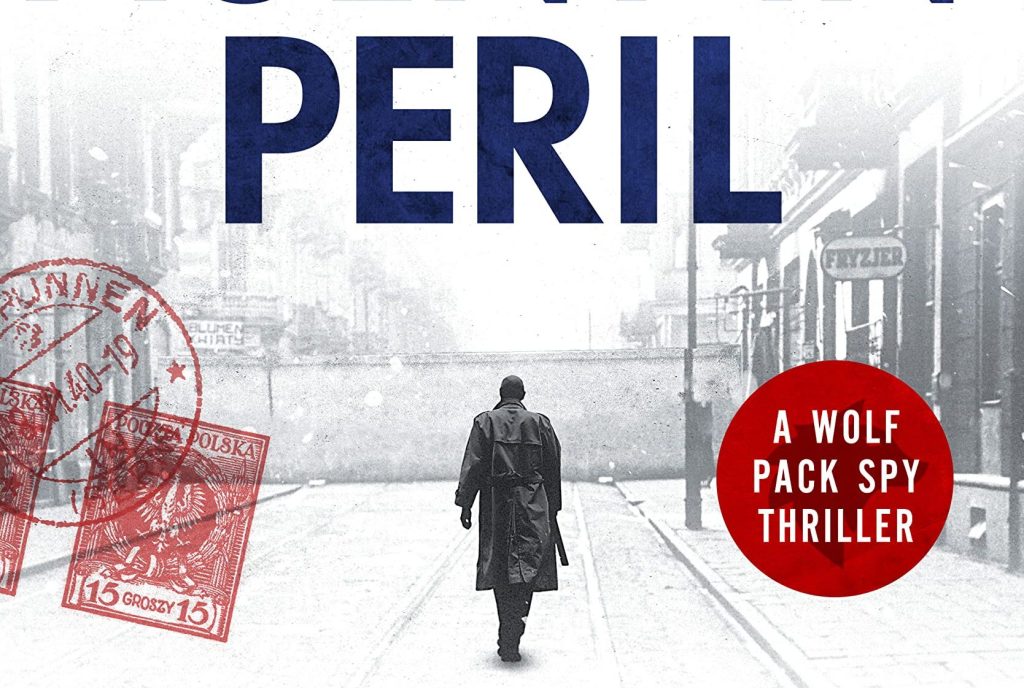
  • Review: Agent in Peril

    Review: Agent in Peril

    Alex Gerlis, Agent in Peril (Canelo Action 2022)

    https://www.goodreads.com/book/show/60777764-agent-in-peril?ac=1&from_search=true&qid=rHO6W40htR&rank=1

    Poznań, 1938. Polish electronics professor Roman Loszynski is met at the airfield by Major Szymański and General Brygady Wiśniewski, whom he’d just heard describe him as ‘one of them’. The Polish air force men are meeting with the general to outline the advantages of the new bomber PZL.37.
    Berlin, 1943. On the train, Sophia von Naundorf is questioned by the Gestapo. She says she is on ‘confidential’ SS business. Actually, she is going to Zürich to retrieve the money and jewels her husband Karl-Heinrich stole from Jews. Sophia had been operating as a British agent for two and a half years, and she wants to bring her husband to justice. Agent Jack Miller waits for her.
    Loszynski and his family are in hiding in the Warsaw ghetto; he has safeguarded the equipment and blueprints for the PZL.37. He tells the head of the Jewish Fighting Organisation, codenamed Sowa, about PZL.37.
    The various agents begin a tense race, criss-crossing Europe to safeguard Loszynski’s invention. What scary work it was being a secret agent during WWII!
    This is a thriller with an exciting plot of cloak and dagger espionage and secret missions, passwords and disguises. If this story has to have a protagonist, it can only be Loszynski, yet he disappears for most of the chapters. The only other person to identify with is Sophia, mainly because she’s a woman with a difficult job to do (turn in her husband). Jack plays a major role in the espionage. At times we even follow the Germans’ point of view. There’s too much going on and too many players—a helpful list is included at the front—to have time for any character development.
    It is very realistic and supposedly mirrors real historical events.
    This is Book 2 in the Wolf Pack Spies series.
    This review was originally written for Historical Novels Review.

  • Review: The Crimson Petal and the White

    Review: The Crimson Petal and the White

    Michel Faber, The Crimson Petal and the White (Canongate Books 2003)

    https://www.goodreads.com/book/show/40200.The_Crimson_Petal_and_the_White?ref=nav_sb_ss_1_31

    1874 London. William Rackham, heir of Rackham Perfumeries, chafes under the economies of his father, who has long bemoaned his son’s mediocrity. William lounges after dinner, perusing gentleman’s pornography, which impels him, after a discussion with the doctor about committing his wife to an asylum, to seek out the whereabouts of Mrs Castaway’s establishment and a certain prostitute named Sugar.
    His wife, the always-ill Agnes, ‘considers herself the miraculous survivor of a million horrific onslaughts’, stays abed all day with curtains drawn. No one has ever told Agnes about menstruation, and, convinced the internal bleeding is a sign of early death, she starves herself to keep it at bay. Sugar knows, ‘they’re keeping her doped because she says things they don’t care to hear.’ When clear-headed, Agnes sews dresses and practices polite conversation in front of the mirror in readiness for the Season.
    William’s brother Henry, who eschewed the directorship to become a clergyman, pursues a chaste courtship of widow Mrs Fox but secretly desires to ravage prostitutes.
    Life looks up for William. Finally permitted by Rackham Senior to take over the directorship, he redecorates and hires more servants. He purchases Sugar for his exclusive use, and she now utilises her extra time writing a novel, ‘the first book to tell the truth about prostitution’, in which the protagonist violently murders all her johns. William even purchases for her her very own house in Priory Close.
    With too large gaps between his visits to Priory Close, Sugar becomes afraid William will reject her and begins to surreptitiously follow him, and Agnes. In fact, aside from the private dinner and balls, Sugar is doing the Season, sitting a few rows behind the Rackhams wherever they go, and she becomes enamoured of theatre and music.
    Then, she contrives a way of getting ever closer to William. She admits to a friend, ‘I’m so full of schemes and plots, nothing interests me if it doesn’t concern the Rackhams.’ Her final revenge against the johns is brilliant.
    Verbose, Victorian, voluptuous—a delicious slow read. It is written in second person. The unknown but all-knowing narrator speaks to ‘you’. (‘Are you bored yet? There will be fucking in the near future.’) There is a brilliant first line: ‘Watch your step.’ The narrator suggests ‘you’ work your way up the London social ladder by means of successive introductions, while making biting comments on each character’s levels of sophistication or morality.

  • Review: It Had to be You

    Review: It Had to be You

    June Francis, It Had to be You (Allison & Busby 2012)

    https://www.goodreads.com/book/show/19233044-it-had-to-be-you?ac=1&from_search=true&qid=unjxGWeeog&rank=5

    1952 Yorkshire. Two half-sisters are separated and, as adults, find out about each other.
    Emma Booth is with her grandfather Harold, advising him not to go out, as it’s icy. Despite conditions, they go to the pictures. On the way out, the old man slips on the icy pavement and fatally hits his head, leaving Emma with only memories of her grandparents and her parents.
    She finds a letter to her grandmother from a woman, Lizzie Booth, and discovers she has a half-sister. She decides to go to Liverpool to meet her. On the train, her bag is stolen, but a kind passer-by gives her some money to continue her journey. She arrives to find the house derelict, and furthermore, sprains her ankle at the door, but a young constable, Dougie Marshall, stops to help. Dougie and Emma make enquiries about her family, which end at Mrs Elsie Gregory, Betty’s aunt.
    Finally, Emma gets a letter directly to Betty; the half-sisters meet and get along famously. Emma opens her tearoom on Whit bank holiday weekend.
    Betty has a secret regarding Uncle Teddy, which the girls eventually find out about.
    Betty is able to continue her studies in Liverpool. ‘Our Jared’ is home from Korea.
    More nefarious behaviour on Teddy’s part prompts Elsie to confess to the youngsters the secrets of the past.
    The dialogue in this post-war family saga is unnatural in places. The story is told linearly, as is the usual template for family sagas—first these people did this, then those people did that. This can get tiresome at times, when you’re having to read about every cup of tea and every scone and every cigarette. I know it’s Yorkshire, but are people really SO often referred to as ‘our So-and-so’? The characters are interesting and relatable, and the pacing is good.

  • Review: The Scribe

    Review: The Scribe

    Elizabeth R. Andersen, The Scribe (Haeddre Press 2021)

    https://www.goodreads.com/book/show/58586385-the-scribe?ac=1&from_search=true&qid=wjisF9pIqF&rank=1

    Damascus 1277. Tamrat lives with his wife Sara and son Dejen.
    In the Amanos Mountains, Emre trains with the other captive Mamluk boys, but he longs for home. He is selected by Amir Qalāwūn to train as Bhadir’s right hand man. Sarangerel picks her way through the wreckage and takes in an orphaned girl.
    Acre 1279. Abdülhamit and Nasir play with the half-Saracen boy Henri Jean-Rogier Maron. King Henry and his sons Amalric and Henry are with Henri’s father Lord Rogier.
    Tamrat invites 6-year-old Sidika to cut his moneybag every morning.
    The sultan Qalāwūn wants to drive the Franj out of Acre. He decides to marry his sons to Mongol wives.
    His father murdered, Henri inherits the title, but the servants are not happy. Henri is spoiled and tyrannical. He is not attentive to them as his father had been. He marries his widowed mother to the unpleasant Mafeo.
    Acre 1290. Tamrat works as a scribe, the adopted Sidika helping him. She is out hunting one day and rescues a tall Franj, Lord Henri. He asks her to join his household as maidservant, and she very rudely refuses.
    Having no other men-at-arms, Henri joins the Templars on patrol. They apprehend ‘a spy’. It is Tamrat, and Lord Henri knows he’s innocent. He makes a decision, the only humane option, and yet it’s not an easy one.
    There are multiple story lines and a plethora of characters. This makes interesting reading, but it was hard to keep up. It’s well written and has a mediaeval ‘feel’ and sense of place. Andersen captures well the social interplay in a complex society comprising Templars, Frankish nobles, Bahri sultans, Mamluk slaves, Arab servants.
    The ending, ‘to be continued’, is simply unacceptable. I know it’s Book One in a series, but I still want each book to have a proper ending.

  • Review: An Honourable Thief

    Review: An Honourable Thief

    Douglas Skelton, An Honourable Thief (Canelo Adventure 2022)

    https://www.goodreads.com/book/show/60840450-an-honourable-thief?ref=nav_sb_ss_1_19

    Queen Anne is dead, and now England must prepare for a German king. Colonel Nathaniel Charters and Charles Talbot, Duke of Shrewsbury, discuss the possible existence of a document, Queen Anne’s will naming her half-brother James Edward, a Catholic, as heir.
    Charters has a mission for Jonas Flynt, who has been won to his Company of Rogues by blackmail.
    Flynt is sent after the document, but he is bested in a showdown with Madame de Fontaine. She mentions that she is employed by ‘the Fellowship’—a secret Jacobite society.
    Flynt rides to Edinburgh, the land of his childhood memories, memories of Cassie. He meets his West Indian stepmother Mother Mercy and his father Gideon, and Cassie has married his friend Rab. Lord Moncrieff, who may have purchased the document, comes, seeking his ‘lost property’, his slave Nero. In fact, Rab and Gideon have arranged the man’s escape.
    A public hanging turns to riot, and a child is killed, leading to more unfortunate carnage. Their guardsman friend Charlie is held responsible for not controlling the situation.
    Flynt and his allies pursue Lord Moncrieff and Madame de Fontaine across Scotland as battle lines form between the Jacobites under the Earl of Mar (‘Bobbing John’ Erskine) and the king’s forces under the Duke of Argyll.
    Flynt and Moncrieff have a history that goes back before Madame de Fontaine. Secrets from the past further complicate dynamics between the characters. The final showdown takes place on a ridge above as the Battle of Sheriffmuir rages below.
    This exciting historical adventure is beautifully written, the scenes well portrayed, vivid and period-appropriate. The dialogue captures very well (it seems to me) the vernacular of the 18th century Edinburgh streets and the feel of the language of the time. The plot is complex and interesting, and backstory is handled artfully.