Tag: archaeology

  • Review: The Timber Girls

    Review: The Timber Girls

    Rosie Archer, The Timber Girls (Quercus Publishing 2022)

    https://www.goodreads.com/book/show/60864215-the-timber-girls?ref=nav_sb_ss_1_16

    Trixie Smith is fed up working in a greengrocers and playing the piano in a pub at night in Gosport. How is this helping to win the war? she thinks. So, she is on her way to Scotland to join the Women’s Timber Corps. On the ferry she meets Cy, a US soldier from New Orleans on leave.
    Training to be a lumberjill is hard work, and Trixie finds that each of her new friends has something they’re running away from. Hen has left a privileged life for the promise of excitement. There must be some story behind Jo’s mercurial moods. And what has caused the bruising on Vi’s arms?
    Doing a job that’s vital for the war effort makes women of these girls, while the boys at the front are facing hardship, danger and death.
    The dialogue with Cy is a bit stilted, meaning that we don’t really feel the ‘falling in love’ bit, but the conversation among the ‘girls’ is more natural. It’s page 258 before we discover something important about Cy, which I think should have been revealed earlier.
    It captures the period and the wartime spirit—that everything was changing, the eagerness to seize opportunities for love and fun because death could be around the corner. Though a lot of the detail is fairly banal stuff, it depicts the living and working lives of women workers, the camaraderie of the shared war effort, the newfound self-satisfaction in doing ‘a man’s job’, sexism and even threats from men. It was interesting to learn about ‘brashing’, ‘snedding’, cross-cut saws and spokeshaves and fretsaws, how to measure a tree’s height, fire and accident prevention, the infernal midges—all the business of forestry and felling trees.
    This is a ‘girls at war’ saga, a well written, easy read. This review first appeared in Historical Novels Review.

  • Review: Christ in the Belly of the Whale

    Review: Christ in the Belly of the Whale

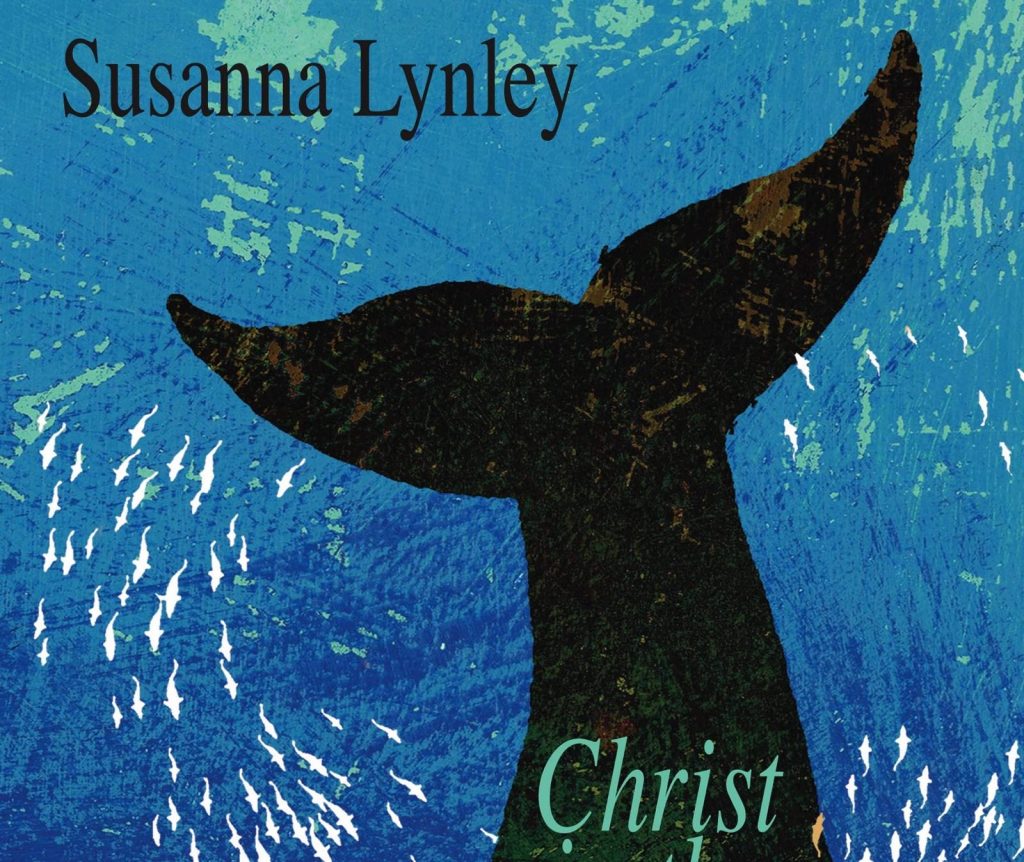
    Susanna Lynley, Christ in the Belly of the Whale (Kindle 2022)

    https://www.goodreads.com/book/show/63231805-christ-in-the-belly-of-the-whale?ac=1&from_search=true&qid=EYsZGYajK2&rank=1

    The Gospels announce the ‘goodnews’ of Jesus’ resurrection, but they don’t tell us the story.
    Golgotha 14 Nisan 30CE. His uncle and foster father Amos the cloth merchant is among the six at the cross, watching Jeshua’s final suffering. The women of Amos’ family possess the secret of a blue dye ‘from the lightest shade of a bird’s egg to one so rich it rivals lapis for depth and clarity’.
    It all began with a pair of chisels.
    Amos tells a familiar story from an unfamiliar point of view. Like HBO Rome, the story inserts fictional characters next to the historical ones. This device is handy, seeing as there is so little we know about the historical Jesus.
    The title is both catchy and inspired. Jonah—he in the whale’s belly—was a popular symbol for early Christians, representing both pious dissidence and Christ’s burial/resurrection.
    It’s sometimes a 21st century take. A history or biography of the historical Jesus would be a different novel and probably impossible to achieve. For example, Amos says the ‘King of the Jews’ sign on the cross was ‘Pilate’s little joke’. We are not used to thinking of Jesus as some kind of contender for the throne. First-century observers would not have found the sign funny at all. Jesus rides in on a donkey to ‘be quiet’. First-century Jews would have recognised the stunt as a restaging of Zech 9:9. Though I myself have studied the historical Jesus for over 20 years, I think this is fine.
    Backstory is managed with an admirable light touch and keeps within the Voice of each narrator. I loved Judas Iscariot’s: ‘What I did not know, what I wish I had known, is that he (Jesus) was weak.’ There’s a bit of Telling (not Showing), but the scene-setting is great. The details of the cloth trade are wonderful. The plot is inventive, with added intrigue as the sons of Yehuda the Galilean conspire against the peacemongers. It weaves in more than just the story we already know; it’s fun to read a book about Jesus that’s not all about Jesus. An Epilogue addresses the historicity question, with an impressive Bibliography.
    There is no blasphemy, only imagination. Christian readers will love this. YA readers already conversant with the Christian mythology will find familiar people and elements. All will enjoy the lively, down-to-earth, intimate portrayal of everyday life in the 1st century.
    This review first appeared in Reedsy Discovery.

  • Review: Bury Me Behind the Baseboard

    Review: Bury Me Behind the Baseboard

    Pavel Sanaev, Bury Me Behind the Baseboard (1996, this edition CreateSpace Independent Publishing Platform 2014)

    https://www.goodreads.com/book/show/22269461-bury-me-behind-the-baseboard?ac=1&from_search=true&qid=N04ea7NCD8&rank=1

    Eight-year-old Sasha introduces himself thus: ‘My mother abandoned me for a blood-sucking midget and hung me around Grandma’s neck like a god-awful heavy cross.’
    Grandma alternates between horrible verbal abuse—Sasha ‘stinks’ and is a ‘bastard’, destined to ‘rot away’ before he is 16—and excessive suffocating attention—she picks the seeds out of his grapes; he has to stand on a chair while dressing so his feet won’t get cold and wear woollen tights even in bed; he has to take homeopathic pills; and Grandma is terrified that he might sweat. He is taken to the doctor more often than school. According to Grandma, he has maxillary sinusitis, golden staph, colitis, chronic pancreatitis and intracranial hypertension. He has to take Ephedrin, Conium, colloidal silver, albucid and olive oil.
    She says Grandpa will ‘rip out his arms and legs’ if he goes to play at the MREC again. Grandpa, however, is fully hen-pecked and depressed over his situation, unable to escape the harpy’s tongue.
    All Sasha lives for is to see Mom, a rare occurrence. She has taken up with a boyfriend, whom Sasha is encouraged to view as an ogre. And fighting with Grandma takes up so much of the time he is allowed to spend with her. When he dies, he wants to be buried not in the cemetery, which frightens him, but behind her baseboard, so he can always see her.
    The child’s-eye view of Sasha’s Voice is adorable. It’s Russian, but not overbearingly so and funnier than Dostoyevsky, containing some dream-like magical realism bits.
    The truly insane behaviour of Grandma is told through the helpless eyes of the child. I have seen behaviour/parenting like this, which I term ‘crazifying behaviour’, and I’ve struggled to effectively represent it in writing. This parenting style is so crazy that I think Sanaev’s open-eyed, innocent approach is the only way to portray it. This approach stands back, uncommenting, and allows the reader to exclaim, ‘OMG, how insane!’
    Though happily Sasha is eventually rescued, it kind of ends with a thud.
    It is written in a distinctive style and has been beautifully translated by Konstantin Gurevich and Helen Anderson. The original publication apparently sold over a million copies in Russia, won literary prizes in Russia and Italy and was made into a movie in 2009. It won first in World Literature Today’s November 2014 readers’ poll ‘25 Books That Inspired the World’. This review first appeared in Reedsy Discovery.

  • Review: The Warlock Effect

    Review: The Warlock Effect

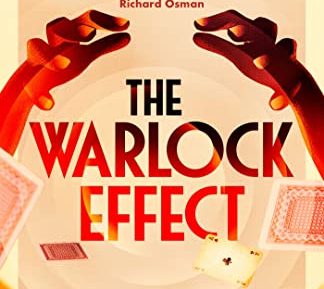
    Jeremy Dyson, The Warlock Effect (Hodder & Stoughton 2023)

    https://www.goodreads.com/book/show/60053872-the-warlock-effect

    A young German Jew fleeing the Nazis, Ludvik plays card tricks to lure the English boys away from tormenting him. Louis Warlock the magician is born.
    Mr Aldous, editor of Illustrated, who has previous history with Louis, challenges him to prove his magic is ‘real’. His assistant (and fiancée) Dinah is hidden within a three-mile radius, and Louis must find her within three hours, blindfolded, only using his ‘psychic’ mental connection to her. They secretly communicate messages to each other by tapping their fingers in Morse code. He passes the test.
    A British Secret Service agent recruits him for a mission which requires his sleight of hand skills. But is he dealing with a double agent? He is being used by someone. Are his handlers British? Soviets? Louis is taken against his will, removed from his friends and fiancée and thrust into a Kafka-esque world of mind games. He is sent behind Soviet lines into Czechoslavakia to investigate the sinister ‘Funhouse’, where it seems magicians can even fool magicians.
    This thriller is all about mind-manipulation as much as it is about espionage. I was reminded of the sadistic mind experiments the Nazis did, for which Louis, as a Jew, would have held a familiar dread. To safeguard his sanity, he recites the Shema. The story is interspersed with instructions on how to do various magic tricks (which you must not reveal).
    At some point, Louis becomes a willing participant in the secret agenting that he is being forced into. Given what they had put him through, I found that a bit incredible. If it were me, I would have found some way to phone the fiancée.
    It is well written, and the agent/double agent conundrum adds a twist to what would otherwise have been a simple story about surviving torture.
    This review first appeared in Historical Novels Review.

  • Review: Dear Doctor Love

    Review: Dear Doctor Love

    Susan Murphy, Dear Doctor Love (2023)

    https://www.goodreads.com/book/show/123284009-dear-doctor-love?ac=1&from_search=true&qid=UdKx6s78iW&rank=2

    Cadet reporter Ella is leaving the funeral of her beloved Aunt Gina, not so long after burying her dad, when a stranger presses a card into her hand—Meg Russel, Russel Gallery & Exhibits—says she ‘helped Gina with her affairs’. Ella still grieves for her dad, and Aunt Gina’s death hits her hard. Gina has left her house to Ella, and Ella is glad to move away from home.
    Filled with loving memories of Aunt Gina, Ella sets to clearing out her aunt’s effects. Jazz joins her with bagels and coffee, and in one of the albums they discover a bunch of clippings from newspapers and magazines, agony aunt letters and responses. Then a set of hand-written letters and typed replies. Aunt Gina had been a secret agony aunt. She was ‘Doctor Love’.
    In a letter to Ella left in her office, Gina confessed her secret side job and asked Ella to contact Meg Russel about mounting an exhibition of these letters.
    Ella finds some letters that had not been answered ‘due to program shutdown’. Among them is evidence of a young love story facilitated by Doctor Love, yet just at the point when Tom was to notify Maya of a rendezvous point for their elopement, the newspaper shut down. Had these star-crossed lovers found each other?
    They decide to reinstate the Doctor Love column, track down Tom and Maya and write the story up for the paper. They find Tom and find an ally in son Cal in the hunt for Maya. She and Cal connect.
    But Jazz has gone one too far. She takes too personal an interest in one of their cases, which triggers something in her. She goes off on a search of her own.
    The Tom and Maya story comes to a conclusion, 30 years after their last good-bye, and Ella’s article is a hit.
    The relationship of Ella and Jazz is quite adorable, and the bit where she’s cleaning Gina’s house portrays her loving memories of Aunt Gina beautifully. Each of the trio contribute their own talents and personality to both the Doctor Love column and the search for Tom and Maya. Cal provides a serious side to counterbalance Jazz’ exuberance.
    Both love stories are handled with a light touch, which seemed to match the style of the work. I really liked the ending, so simple and joyful and looking to the future.
    This review first appeared in Reedsy Discovery.

  • Review: Olawu

    Review: Olawu

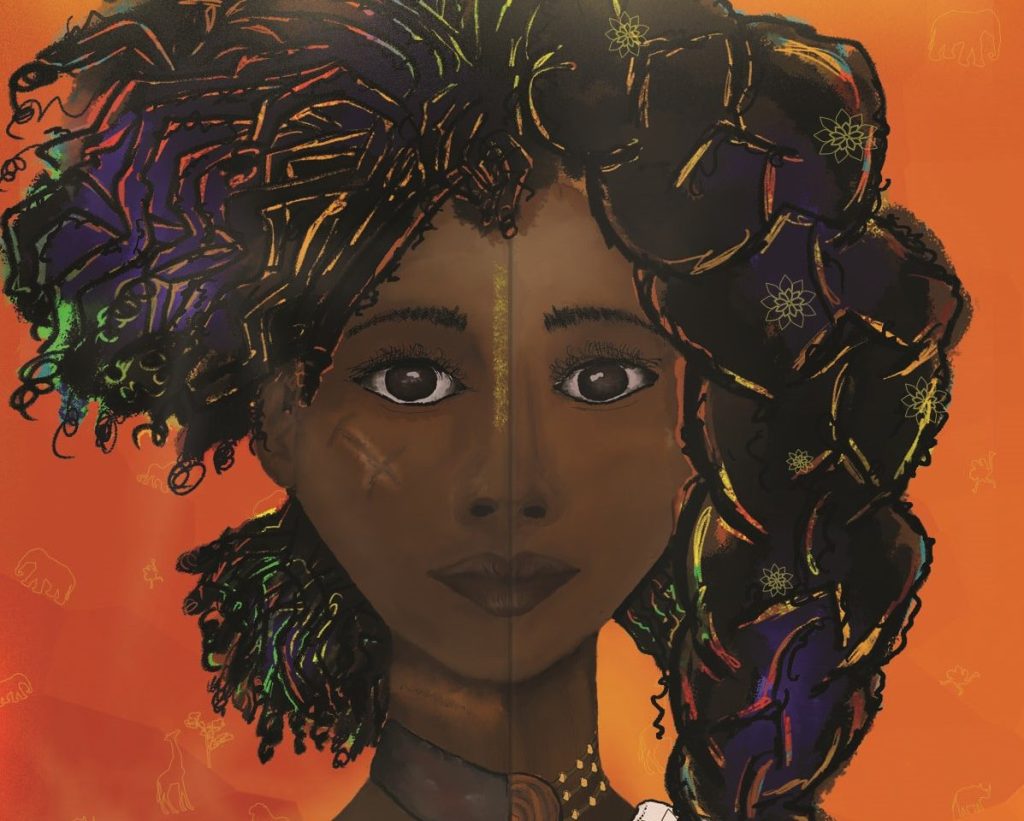
    P. J. Leigh, Olawu (Brave Girls Press 2024)

    https://www.goodreads.com/book/show/217003023-olawu?ac=1&from_search=true&qid=020DrYhEvk&rank=1

    Young Zulu Olawu causes a scene at market, earning a beating from her Umama. She is friendly with the boy Batiko. Her Ubaba tells her, ‘Do not give him your heart’, but Batiko has other plans. In secret, Ubaba teaches her how to set bones.
    Members of the Dikebe tribe come to Kanakam. Would the Zulu be drawn into their conflict with the Oloko?
    Dikembe, son of the warlord who has taken over their village, comes seeking Ubaba, the udokotela (surgeon) Mbako, seeking help for his mother. Olawu notices Dikembe’s blue lotus flower tattoo.
    If she doesn’t find a husband, she’ll be sent to the Choosing and be sold for the price of an isitshalo—a plantain.
    A war ensues between the Dikebe and the Oloko. Her relationship with Dikembe is on-again-off-again, but Businge, a young man from Borimbe, is a suitor.
    What Olawu cares about is not which man she’ll end up married to, but whether or not she can become an udokotela. She wants to fill her Ubaba’s shoes in a society which doesn’t accept such a profession for a woman. In pursuit of this, her loyalites shift.
    A girl’s coming-of-age and female emancipation in a misogynistic culture—it’s a familiar theme. As well as the ruse of male attire. What is delicious about this is the intimacies of a culture from a time and place that I don’t know much about.
    I understand Olawu’s shift to the Oloko because they had accepted her as udokotela, but her shift from agreeing to kill Dikembe to melting in his arms, then spying on him, and even turning on her own Kanakam, was not well explained from a character motivation point of view.
    It’s action-filled, with brilliant scene-setting and descriptions of the culture and the people in it, and the dialogue is good, the interplay between the characters wonderful. I was confused by the unexplained foreign words, although they certainly led to verisimilitude. I couldn’t find online a definition of ‘Pootagi’—finally defined on page 271. It flows well and is well paced. There is pretty hot frisson going on between Olawu and Dikembe, and their relationship arc is very interesting. The battle with the Oloko and the dam-sabotage scene are exciting. But it’s long, 312 pages, particularly about ¾ in, between the battle and the dam-sabotage.
    Though long, would suit a YA readership—for young readers of East African heritage, particularly girls, a ‘must read’.

  • Review: Isabelle

    Review: Isabelle

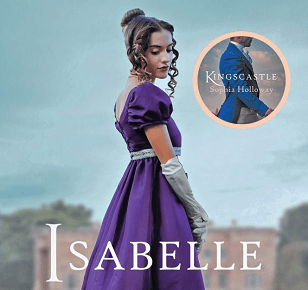
    Sophie Holloway, Isabelle (Allison & Busby 2022)

    https://www.goodreads.com/book/show/62001257-isabelle?ac=1&from_search=true&qid=hYMtUxwNsC&rank=1

    Isabelle Wareham’s difficult relationship with her sister is exacerbated by the death of their father. The elder Cornelia, already planning refurbishments to Bladings, the family manse, is incensed that the Will leaves everything to Isabelle, who had looked after Col. Wareham since his seizure. Isabelle is aggravated to find that her brother-in-law viscount Charles Dunsfold, is now her legal guardian.
    She decides, despite mourning, to host the annual Boxing Day hunt at Bladings as was her father’s tradition. And she is determined to hold the Twelfth Night shoot, as well. Her cousin Julia accepts the proposal of Lord Slinfold, so, one of the bachelors is out of the running. Lord Idsworth is wounded at the shoot, and Isabelle nurses him back to health.
    The tension is light. The ins and outs of aristocratic English high society are daunting. What is appropriate? What is not? Are men flirting with her, or just being gracious? Fortunately, Lady Taynton takes her under her wing.
    Local squire Edwin Semington seems sure Isabelle will marry him, a match favoured by Lord Dunsfold, but she is more attracted to the penniless Lord Idsworth. As Dunsfold and Semington plot to force her hand, Lady Taynton and Idsworth plot to rescue her.
    The similarity of names—Charles Slinfold/Charles Wareham; Slinfold/Dunsfold—is unfortunate, but there are not too many characters to keep track of.
    This is a Regency romance ‘in the style of Georgette Heyer’. I don’t know Heyer, but there seemed to be a bit of the Bridgerton and a bit of the Upstairs, Downstairs (but mostly Upstairs) and with the antics of young toffs Sir Charles Wareham, Lord Idsworth, Lord ‘Molly’ Mollerton and the indefatigable butler Mumby in their hunt for the rat and/or Lady Slinfold’s muff, a bit of the PG Wodehouse. An easy read.
    This review first appeared in Historical Novels Review.

  • Review: The First Kingdom

    Review: The First Kingdom

    Max Adams, The First Kingdom (Apollo 2011)

    https://www.goodreads.com/book/show/54626524-the-first-kingdom?ac=1&from_search=true&qid=JAZYKeaae2&rank=1

    We have very little to tell us about the lives of early British people after the Romans departed. Their houses and villages lie waiting for us, under mounds of earth on Salisbury Plain and elsewhere, but they are as yet unexcavated, archaeologists focussing on the juicier finds of fancy villas. These villas were not the norm. Most people lived as unfree serfs in small, unfortified villages. Literature leaves us the very rare Venerable Bede to tell us about it.
    Claudius Caesar’s invading force in 43 CE recorded information in Latin about the local tribes—Trinovantes, Iceni, Brigantes, Belgae—and their leaders, but no tax records survive to give us the names in the local Brythonic. One list, the Tribal Hidage, gives the names of kingdoms and their wealth in hides, but the centuries between Caesar and Bede are relatively silent.
    At Venta Begarum (Winchester) the civitas capital of the Belgae, women weavers wove byrri hooded capes and tapetia rugs for export to Gaul. There was a temple and town around the hot baths of Aquae Sulis. The Fosse Way connected Isca (Exeter) the civitas capital of the Dumnonii with a military veterans’ colonia at Lindum (Lincoln). A road from Aquae Sulis led to Londinium via Corinium Dobunnorum (Cirencester) the civitas capital of the Dobunni and Verulamium (St Albans).
    Some of the only known voices of that past come from curses inscribed on lead sheets supplicating the goddess Sulis, and offerings of clothing, vessels and jewellery—even one mule—give a picture of the material culture. It seems they had the latest technology and access to European trade goods. An indigenous ruling class, like Boudicca and her husband, were thoroughly Romanised, spoke and signed documents in Latin and wore togas.
    There was a gradual population decline, tree pollen counts indicate that agricultural land was less intensively farmed, and politico-economic power decentralised, but in no way was it the ‘Dark Age’ picture of catastrophic devastation painted by 6th C Gildas. In fact, ‘there seems to be a broad continuum in architecture, economy and social practice’ into the early Middle Ages.
    Towns began to build walls in the 4th C, yet it may have simply been a statement of status; there is no archaeological evidence for attacks during this period, and no Romano-British town shows signs of widespread abandonment. Only one post-Roman pre-Viking battle site has been identified in Britain. No Roman coins have been found after this period.
    Having said that, there were profound changes in the culture that, if violence was not the cause, need to be explained. 5th and 6th C Britons cremated their dead at public funeral feasts and buried them in pots that had previously been used for food storage along with valuables and sometime animals or food, customs linking them to Germany or Scandinavia. However, the change of burial customs seems to have occurred before Gildas’ dating of any mass migration. A switch to east-west alignment of the bodies is seen as evidence of Christianisation. They built German-style sunken grubenhäuser pit-houses that don’t seem to have been dwellings. They lived in clusters of households, each community producing food and goods for its own consumption or taxes, not market.
    At West Heslerton ‘Anglian’ graves contained grave goods similar to ones found in Germany and Scandinavia. The West Heslerton bodies have been isotope-tested, showing that most of them were descended from people who had lived there since prehistoric times. A few individuals revealed a foreign origin.
    The 452 Chronica Gallica states that Britain was now ruled by Saxons.
    The story in Historia Brittonum of Saxon mercenaries under Hengest and Horsa in ‘three keels’, invited in to fight the Picts, who then stayed to become raiders themselves sounds credible. But where are these ‘big men’? Gildas’ ‘tyrants’? The Hengests, the Arthurs and the Cerdics? The monumental earthworks, dykes of this period needed some powerful authority to have organised their construction, but the archaeological landscape is empty of their graves or mead halls. Adams suggests they moved into refurbished buildings in Roman towns.
    Adoption of new styles and customs and the growing predominance of Old English (Saxon) placenames seem to tally with Bede’s mass migrations of Angles, Saxons and Jutes. In the east and south of Britain Brythonic and Latin were completely replaced. Yet the archaeology suggests intermittent raiding or more of a gradual chain migration, a movement of people over several generations, rather than Gildas’ ‘foul hordes’. Anthropologists suggest a small peripatetic warrior elite able to exploit a weaker indigenous people. But ‘no single model seems to accommodate all the evidence.’
    A new class of bucellari, military men who could shift their allegiance between lords (like Beowulf who offered his service to King Hrothgar), was handy when tax collecting time came around, and the right to collect taxes devolved to the comites (armed retinue). Bailiffs rose to become de facto lords; ‘the late Roman state had been privatized.’ These social changes took place before any incursion of foreigners. Towns became places where tax goods could be converted into more fungible goods or coin. Furthermore, 5th and 6th C towns show a peaceful co-existence between locals and incomers. By the 6th C there were few major towns.
    Adams tells us the ‘under Roman rule, Britons were better off’, still stressing that this was only the case for some Britons. The classic answer to the question ‘what did the Romans ever do for us?’ is ‘aqueducts’. Yes, a marvelous engineering feat, but one which benefitted only the rich in their villas. Water from these aqueducts went straight to the fountains and baths of the rich. It was not used to irrigate crops or provide drinking water and was never of benefit to the general population.
    Personally, I suspect the answer lies somewhere between the two. The Saxons clearly came, whether bellicosely or peacefully, en masse or intermittent. We will probably one day begin to unearth the battlesites, rígtechs (royal houses) and ‘princely burials’ presumably so missing from the British landscape.
    Adams equates the 5th C Romano-British warlord Ambrosius Aurelianus mentioned by Gildas with ‘King Arthur’.
    A well-written history and valuable contribution to understanding of an age only ‘dark’ because we know too little about it.

  • Review: Almodis the Peaceweaver

    Review: Almodis the Peaceweaver

    Tracey Warr, Almodis the Peacekeeper (Impress Books 2011)

    https://www.goodreads.com/book/show/13565702-almodis-the-peaceweaver?from_search=true&from_srp=true&qid=IBiQMFMnsc&rank=1

    A noble hostage living at Chateau de Montrueil-Bonnin with her beloved grandfather William V duke of Aquitaine and her unloving step-grandmother Agnes of Mâcon, Almodis de la Marche (1020-1071) has grown up estranged from her La Marche family, including her twin sister Raingarde.
    Reunited at Chateau Narbonnais on the occasion of the investiture of Pons son of William Taillefer as 2nd count of Toulouse, she is determined to use the inside knowledge she has gained about the Aquitaines for the advancement of her kin, and she is more politically savvy than many of the men. In a time of warfare, a noble woman is supposed to be a ‘peaceweaver’. She is betrothed to Hugh V lord of Lusignan, Raingarde to Pierre Raymond of Carcassonne.
    She finds her childhood friend Geoffrey the Hammerer of Anjou is less appealing as an adult, now married to her old foe Agnes and busily taking other people’s lands. Exercising her falcon, she is attracted to young Ramon (Berenger I), count of Barcelona. Perusing the books in the library, she meets Dia, a female troubadour, a trobairiz.
    Hugh is gay, but she manages to squeeze three children out of him before being repudiated for an invented ‘consanguinity’. She marries Pons, unfortunately for her keener in the bed, and births Toulouses in quick succession. As Countess of Toulouse, still barely 20, she makes her mark as a capable châtelaine and ruler and establishes an enviable court. Newly widowed, Geoffrey, who is training her sons to be knights, makes a play for her affections, but she is loyal to Toulouse if not to Pons.
    The youthful attraction between Ramon and Almodis is consummated in secret, and she falls pregnant. Now, her scheming to keep Pons from her bed works against her. Learning from a servant that Pons is planning to imprison her to marry an Aragonian princess, she flees to Ramon’s rescue (kidnap) and becomes Countess of Barcelona. But the pope considers this marriage adulterous and excommunicates them. As a ‘morning gift’ (given by the groom to the bride after the wedding night) he builds her a library.
    When her sons come to battle over Aquitaine and when there’s a crisis of title succession to Carcassonne, Almodis again has to be the peaceweaver.
    Shortly after this period came the Crusades and the Albigensian Crusade. Almodis’ story shows how these events were just part of the same pattern of territorial aggression by second and third noble sons.
    In a society where nobles married several times in their lives (if not death, there was always real or imagined adultery or consanguinity to justify a desired repudiation), seeking more favourable alliances as their family rose, it was the women who handled the daily matters and the children. I enjoyed reading how Almodis handled her children’s jealousies.
    Warr admirably and believably reads emotion and familial intrigue into the biographical data history has left us of these people. A sometime resident herself of Occitan, she pains a rich picture of a noble culture which was quite alien to the Capetian culture of the North, working in lovely details—eg. her first husband’s family suspects witchcraft because Almodis has birthed twins.
    Almodis de La Marche was my ‘step granddaughter of step grandson of stepson of 4th cousin 31x removed’.
    I also read Warr’s novel Daughter of the Last King (I lost my review before I could type it up) about Nest verch Rhys (my 20th great grand-aunt), daughter of Rhys ap Tewdwr, last king of Deheubarth. I liked Almodis better. Perhaps Nest had a less interesting life. But I think it was because Nest straddled the new world order between the Welsh and the conquering Normans, and this divided consciousness wasn’t examined as well as I would have liked. Contrastingly, Almodis is highly politically savvy. She plays the cards; she doesn’t have them played on her.

  • Review: River Kings

    Review: River Kings

    Cat Jarman, River Kings (William Collins 2021)

    https://www.goodreads.com/book/show/53242328-river-kings?ac=1&from_search=true&qid=a0hSXkONkG&rank=1

    In this book archaeologist Dr. Cat Jarman tells the story of the Repton dig and her remarkable conclusions about the history of Viking Age world.
    Now armed with modern equipment and scientific practices (such as isotope analysis, DNA testing, micromorphology, GPR and lidar photography) Jarman discovers that the people buried in graves archaeologists had been calling ‘Danish Vikings’ were from the same places as the ones they’d called Angles, Jutes and Picts. They were connected to a far-reaching global slave trading economy, largely bullion-based, using as currency silver ingots melted down from looted treasure. That’s why they destroyed all those priceless works of art.
    Movement eastward
    Jarman focusses on one remarkable find, a single carnelian bead, which tells a story of ‘step-wise movement eastward’, with Viking trade connections going all the way back to Gujarat India.
    The Repton finds show that the site of the ancient church of St Wystan was, indeed, the site of the Viking’s overwintering camp, just like the Anglo-Saxon Chronicle said. The blue-eyed, blond-haired but bald, ‘Repton Warrior’, Grave 511, and the younger man buried next to him, G295, identified as Olafr (who raided with Ivar the Boneless) and his son Eysteinn.
    Surprisingly, 20% of the skeletons were female, perhaps local wives or captive slaves. And yet, the people in the graves were of mixed origin, only a few were locals. This seems to indicate, says Jarman a pattern of ‘composite forces under joint leadership that could pick up and lose members along the way’.
    A modern DNA study in Iceland determined that 75% of men had Scandinavian origin, where 62% of women came from the British Isles, surely a picture of Angle, Jute and Pict slavegirls being carted around in ships and impregnated. Ancient Scandinavian DNA, however, shows a more even mix of origins.
    Before Repton, the Great Army overwintered at Torksey. They had to restock food and fodder supplies, the feorm (food rent) stored at monasteries and noble residences making them particular targets for raids. Setting up camp in autumn, at harvest-time, made sense. Wintersetl, places where local traders could sell their goods to Vikings, sometimes became tradetowns.
    Out of the blue
    Lindisfarne was not so out of the blue as all that. An 822 charter from Mercian puppet king Ceolwulf shows that many incoming pagans were merchants not conquerors.
    Merchant Ohthere, visiting Alfred in 890, described his journey to ‘Sciringes healh’, a place now identified as Kaupang (trade bay) in Norway.
    Tracing the bead’s journey backwards from Torksey comes around Scotland and Orkney to the Humber, or via Shetland, to the North Sea.
    On Helgö was found some remarkable exotic artefacts including a bronze statuette of Buddha sitting on a double lotus flower.
    Hordes and hoards
    At Birka in Sweden, an 850 woman’s grave contained jewellery including a ring inscribed in Arabic, ‘for Allah’. Testing suggests the ring made it from the silversmiths in the caliphate to the Birka woman with very few steps in between. The exoticness of such items was probably a status symbol, showing that one had the means to travel or to import. Doubtless, the Birka woman was not a Muslim and could not read the inscription.
    Conversion was used as a deliberate political tool, but was gradual. Great Army leader Guthrum had only to be baptised to win a truce with Alfred in 878. For most people, ‘religions… persisted side by side in an overlap period’.
    Really, there is no such thing as a ‘genetic Viking’. At three sites in the Orkneys, considered to be fully Viking in culture, only a small proportion showed Scandinavian origin. most were locals. The genetic mix of Sigtuna graves was on a rough par with that of a Roman army camp. Of the Sigtuna migrants, there were as many women as men. At Oseberg, the grandest graves were those of two women. So were there also River Queens—Valkyrie, shieldmaidens? Did the wives wait in Kattegat for their men to return? Or did they migrate, too. Among the envoys cited in Byzantine/Rus treaties, several had female names.
    Jarman’s own study of skulls in the Shreiner Anatomical Collection in Oslo showed that the majority of those showing mobility were women. These were not housewives who stayed at home. The 10th century ‘Birka Warrior Woman’ Bj.581 had originally been thought an archetypal Viking male warrior, buried with not only weaponry but two complete horses bridled to go. Was she, like Aethelflaed, Lady of the Mercians, or the bloodthirsty Freydís Eiríksdóttir, a leader of soldiers?
    Exotic grave goods
    At sites where modern techniques and equipment was used, the male/female ratio was 1/1. 50% of the weighing equipment, an indication that the person was a trader, was buried with females. This suggests trading as a family affair in which women played an active role.
    The movement of people and goods may have been greater in the opposite direction than we had thought. Outside Scandinavia, more objects of Scandinavian origin were found in the east than in the west.
    At Spillings on the island of Gotland, three spectacular hoards were found 14,295 coins, most of them Islamic. Why bury this wealth? According to Snorri Sturluson, this is because a warrior could take what he had buried underground with him to Valhalla. If you won the battle, you could come home and dig it up; if you lost, you could take it with you.
    Silk and silver
    Further tracing back eastward from the Baltic, we have the Silk Roads leading to Persia and China, already established thousands of years before any Norsemen got there. As well as silk from China, the road network, with Baghdad as its hub, transported luxuries like garnets and the Repton carnelian bead.
    Why the sudden expansion eastward during the late 8th century? Silver mines were becoming exhausted, and there was a lack of supply, and traders began debasing the silver.
    The females with eastern grave goods could also represent diplomatic marriages, like that between Sithric II, Viking leader of Dublin, and King Aethelstan’s sister.
    The Rus
    These trading sites were not just temporary stopping off points, they were nodes in a long-distance network. Though not so today, in the 9th century, it was possible to travel all the way from the Baltic to the Black Sea by boat. Two main arteries, the Dneiper and the Volga, fed the silver trade.
    Staraya Ladoga was an important node, devoid of any fortifications, thus indicative of peaceful trade. Southward along the Volkhov, you come to Lake Ilmen, which sprouted the Rurikova Gorodische settlement in the 9th. This, on the other hand, was heavily fortified.
    From there—eastward to the Volga and Caspian Sea or southward to the Dneiper and Black Sea—either direction you sail would have taken you to the land of the Rus. Vikings and Rus, before now thought of as two different peoples, were the same. Only since the lifting of the Iron Curtain have these relationships been able to be examined.
    In 839, Louis the Pious received an embassage from the Rhos, bringing gifts and a letter from Byzantine Emperor Theophilus requesting safe passage through Frankia. Old Finnish sources refer to the Austrvegr (eastern route) by which they must have travelled to Frankia, through Eastern Europe.
    The steppes
    Westward to Hungary and eastward to Mongolia, the Steppe Roads were an early precursor to the Silk Roads.
    At Gnezdovo (anciently Smaleskia), according to the Russian Primary Chronicle, some Rus brothers arrived to become the first rulers of Kyiv, who lost no time in setting up a protection racket like that of the Vikings in the west, taking over from the Khazars the role of oppressing the Slavs. At peak raiding season, a slave could cost as little as 3 dinars (20 sheep cost 1 dinar).
    At one nearby hillfort was found a carnelian bead perfectly matching the one at Repton.
    Trading posts filled a specific role in facilitating communications, and from there, often a local rural economy would develop. Ship maintenance created a market for wood, iron and tar for waterproofing. The organisation of a professional military supported elite rule and ensured peaceful trading conditions.
    Scandinavian connections
    At Shestovitsa, some of the buried had Scandinavian connections, 2 had ‘Swedish’ or ‘Norwegian-like’ ancestry. A conical fur cap mount was found almost identical to Bj.581’s.
    Mixed identities
    The first ruler of Kyiv to have a Slavic name, Svytoslav, had men in his retinue with Scandinavian names—Asmund, Sveinald. His mother, the bloodthirsty Olga, became Christian (and despite her gory murders was sainted), while he did not. Clearly identities were mixed, both culturally/linguistically and religiously. The traditional western references to ‘Danes’ and ‘pagans’ may be a false description of their make-up, both ethnically and geographically A similar picture is beginning to emerge in the east.
    Beyond the Black Sea, beyond the Dniprov’ska Gulf, is the island of Berezan, where was found a runic inscription ‘Grani made this vault in memory of his (business/raiding) partner Karl’. They were probably on their way to Miklagard (Byzantium/Constantinople).
    The first Rus attack on Constantinople was in 860, reported in diverse sources. Subsequent Rus/Byzantine trade was strictly regulated by treaty.
    13th century Snorri said the gods lived ‘east of the fork of the Don’ (near Volgograd or Kazakhstan). In the ‘land of the Turks’, he said, ‘Odin had large possessions’. One Danish historian believed the historic Odin had lived in Byzantium.
    By the 11th century, the silver supply had dried to the extent that Ingvar the Far-Travelled mounted an unsuccessful expedition to reestablish the old trade routes.
    The Rus crossed the Caspian, raiding and massacring along the way. Finally, at Bardha’a they sickened due to eating fruit, which was unfamiliar to their diet, and were able to be defeated.
    They Rus made it all the way to Baghdad, by the 9th century the largest city in the world, to trade furs and swords. From there, one could sail to the Persian Gulf, Indian Ocean and China, or travel overland by camel caravan. Crucially, they could converse with the Slavs already living there.
    One undesirable effect of this globalisation was smallpox, identified as early as 600, the spread of which can now be linked to Viking movements. In an ancient DNA study of 525 graves dating to the Viking Age or earlier, 13 had the infection. A 900-1000 mass grave at Oxford could be the site of the St Brice’s Day Massacre on 13 Nov 1002. One of the men had smallpox. A close genetic match (brother or cousin) to one of the men was found in Galgedil in Denmark. One female had grown up on Gotland, and one man was buried in the Slavic fashion, a migrant, perhaps. These last two came from the Rus’ port on the Dneiper, Gnezdovo.
    Southwest of Ahmedabad is Lothal, by river from Lothal to the Gulf of Khambat. The carnelian mines are to be found at Ratanpur.
    In 883 Alfred sent an embassage to ‘the shrine of St. Thomas in India’. This trip, said later William of Malmsbury, brought back ‘exotic precious stones’. Including, perhaps, a carnelian bead.
    Conclusion
    The big picture of the Vikings’ role in a global economy has revolutionised our thinking on the Viking Age. The story of the archaeology—how and why they came to what conclusion—is fabulous.
    There was much greater East/West contact and migration and a more standardised currency system during the Viking Age than we had thought. Amazingly, Vikings could and did make it all the way to Baghdad by boat, crossing ‘rivers and harbourless seas’. Movement of both goods and people was greater in an easterly direction than southerly, and much of it was not gory raids but peaceful trade, challenging our earlier assumptions about ‘hordes from the North’. The ancestors of the Vikings came from the steppes of Eastern Europe.
    Wonderfully researched and well written.