Category: Books reviews – non-fiction

  • Review: Kings of Stone

    Review: Kings of Stone

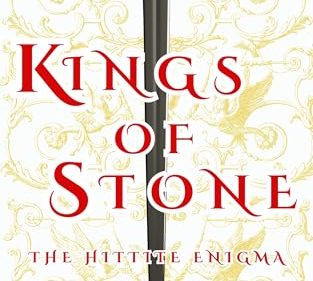
    R. Jay Driskill, Kings of Stone (Kindle 2025)

    https://www.goodreads.com/book/show/238611948-kings-of-stone?ac=1&from_search=true&qid=3QW3b2ReEP&rank=2

    Everything we know about the Hittites

    The civilisation of the Hittites, who flourished 1650-1180 BCE in Anatolia, has been shrouded in mystery. Archaeologist Archibald Henry Sayce in 1872 was the first to recognise that the Anatolian carvings on stone represented a distinct, hitherto forgotten culture.

    During the following centuries there have been a number of illuminating archaeological discoveries, notably the decipherment of their early Indo-European language Luwian, which had its breakthough with the discovery in 1946 of the ‘Hittite Rosetta Stone’, the 8th century BCE Karatepe bilingual inscription.

    Hittite studies have been complemented by the Amarna letters from Egypt, Ugaritic archives from Syria and Mycenaean Linear B tablets.

    Archaeologist Driskill outlines what we know about the Bronze Age superpower, from their origins in Anatolia 2300-2000 BCE [debated] to the zenith of their power in the 13th century BCE to their collapse during the Sea Peoples period. Suppiluliuma II (ca. 1207-1180 BCE) was the last documented Hittite king, but the capital Hattuša, intriguingly, was abandoned not destroyed.

    They called their own language Nesili and themselves ‘people of the land of Hatti’, after the non-Indo-European non-Semitic Hattians, whom they had either assimilated or conquered and whose double-headed eagle symbol and chief deities they adopted. Some of the prayers and rituals were conducted in Hattian. Onomastic (placenames) evidence points to a bilingual culture, with borrowing from Sumerian and Akkadian. ‘Hittite cultural development was one of creative synthesis rather than… separation.’ With distinct cultural boundaries (gods were localised) but with extensive borrowing.

    The Hittite Law Code 1650-1500 BCE, as compared to its harsher contemporary Code of Hammurabi, stressed compensation rather than ‘eye for an eye’ punishment. Their pragmatic and accommodating approach to statecraft and diplomacy established precedents across the ancient world. They played a pioneering role in the development of iron (which they called ‘black metal’) metallurgy.

    It charts the history century by century—dry, academic stuff, kings and dates and footnotes, but if you want to learn about the Hittites, it does the business in a cogent style. It goes through it all, language, kingly succession, governmental structures, religious pantheon, trade, agricultural practices and cultural and artistic trends.

    I love how each chapter, representing a particular period, is illustrated by a choice artefact. They are in colour, but I wish the photos were a bit larger, and I would like to have read a description of the object, where it was found etc.

    I received an advance review copy for free, and I am leaving this review voluntarily.

  • Review: Megalith: Studies in Stone

    Review: Megalith: Studies in Stone

    Hugh Newman et al, Megalith: Studies in Stone (Wooden Books 2018)

    https://www.goodreads.com/book/show/56302910-megalith

    This book features chapters by eight different authors on the astroarchaeology of megaliths and stone circles.

    Much can be said about Stonehenge, for example. Astroarchaeology-wise, it’s interesting that the entrance in 3150 BCE was aligned to the Northern-most moonrises, and it was later reoriented to midsummer sunrises. This perhaps indicates a shift from ‘moon worship’ (which may be a misnomer) or at least an accommodation of solar astronomy with lunar astronomy.

    The solar year is 365.242 days, and the lunar month is 29.531 days with 12 7/19 moons per year. On the days when they overlapped, there would be an eclipse. These numbers can be found in several of the constructions. There are 19 bluestones. The ratio of the diameter of the Aubrey Circle to that of the Sarsen Circle is 7/19. Even if one discards Thom’s Megalithic Yard Theory, using our modern inches the circumference of the Aubrey Circle = 10785.82 inches = 365.24 x 29.53 days = solar year x lunar month.

    Some of these number concurrences may be coincidence, but it’s hard to disregard the numerous alignments. Mayday sunrise as viewed from Glastonbury Tor rises over Avebury. Numerous sites are located on the lines running N-S from Isle of Man to Isle of Wight and E-W from Bury St Edmunds to St Michael’s Mount. These lines cross at Avebury.

    I got a bit lost in the maths and geometry, and I did baulk at some of the claims. How would the Neolithic builders of Avebury have known its precise latitude between the pole and the equator? How could measurements of sites in Britain which correspond to measurements of the Great Pyramid be more than coincidence? I’m not sold on the Megalithic Yard theory.

    But like everyone on earth today I am still astounded by the scale of the construction. Stonehenge took 12 million manhours to build. It’s astounding enough that they could predict eclipses that long ago. The stone circles seem to chart intricate astronomical knowledge gleaned over many generations. Göbekli Tepe (9000-7500 BCE) was aligned to the rising of Orion, which has a 25,800 yr cycle.

  • Review: Inside the Neolithic Mind

    Review: Inside the Neolithic Mind

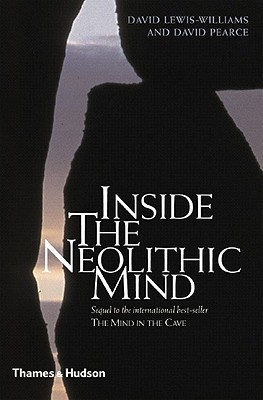
    David Lewis-Williams and David Pearce, Inside the Neolithic Mind (Thames & Hudson 2005)

    https://www.goodreads.com/book/show/967815.Inside_the_Neolithic_Mind?ref=nav_sb_ss_1_25

    This is the book I have been waiting for. Finally, an explanation of stone circles and cave art that makes sense. I’ve heard explanations from stupid to stupider. The red handprints were people planting their mark ‘I wuz ‘ere’ or letting their kids muck around with the paint while they drew bison.

    No, this book says, they were representations of early humans’ spiritual experience, attempts to portray altered states of consciousness and get closer to god. That’s why the horses seem to be floating in air; they were paintings of the horse’s spirit animal. That’s why the bison are sometimes left half finished, as if they’re crawling out of the wall; the wall was seen as a membrane into the spirit world.

    This ‘neuropsychological model’ explains the ubiquity of designs—spirals, lozenges, zigzags, cups and rings. It could be that the descendants of Palaeolithic artists in France migrated into Britain, learning megalithic architecture and artistic norms from their ancestors. Or the artists were painting or carving from a similar experience as that of their forebears, one that is hardwired into homo sapiens’ brains, sometimes aided by hallucinogens or other means of altering consciousness. In fact, subjects in altered states of consciousness under laboratory conditions have produced similar images.[1] Or it could be, I think, a bit of both.

    This explains the abstractness, the mishmash of images, why there is no overall composition. They weren’t creating an artwork to be viewed; they were depicting an experience. Much of this is in places too inaccessible for the whole midwinter solstice crowd, deep inside dark passage tombs; it would have been the purview of the shaman or seer.

    It follows an idealistic analysis, proposing that religious ideas preceded the material realities and social relations they expressed. Clearly, humans had religion before they developed agriculture, as Göbekli Tepe shows. Aurochs (wild bulls) were important in Neolithic religion before the domestication of cattle. But I think any argument that ideas precede realities is illogical (and unMarxist). But that is my only criticism.

    It does not examine astroarchaeology (the alignments of stone circles toward solstices), but that is not a criticism. Other books do that. In the light of this analysis, however, I have revised my view of stone circles as ‘calendars’. Their import was probably more religious than as date predictors. The purpose was more to convey the consistency of the cosmos and to symbolise the stability provided by the rule of the religious elite—as above, so below.

    The book analyses in detail major Neolithic sites in the Near East and British Isles. With B/W drawings and colour photos.

    Richly scholarly, densely footnoted. It explains complex philosophical concepts quite cogently (though with some big words).


    [1] See Fig 64 p 262.

  • Review: The Typo

    Review: The Typo

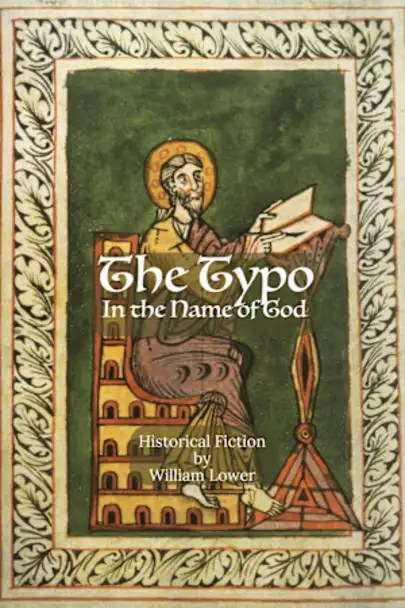
    William Lower, The Typo: In the Name of God (Ink and Pixel Publishers 2025)

    https://www.goodreads.com/book/show/241284986-the-typo

    Florentine Antonio Strozzi is illuminating a manuscript for Abbot Fransisco, he takes especial care with his expensive ultramarine pigment. The abbot is preparing for the following day’s viewing, which Cosimo de’ Medici will attend, of the monastery’s new Gutenberg Bible.

    In Mainz, Johannes Gutenberg is bankrupt.

    Antonio attends the viewing and on page 149 spots a shocking mistake. A ‘deus’ is not capitalised. Blasphemy! He has discovered the world’s first typo. He is commissioned as the world’s first proofreader to check the rest of the book, then to travel Mainz to demand correction, with guard Gabriele to protect him.

    The abbot wants to hush up the heresy, but Prior Lorenzo wants to hush up the travelers. The discovery of Guglielmo’s horse where it should not be sparks a suspicion of the intrigue at play. So, who is going to poison whom? Many trips between Florence and Bologna and much changing of horses will reveal. The chase between Antonio and Gabriele, and Lorenzo and the band of thieves, from town to town, from monastery to tavern, gets a bit long after a while, but it is punctuated by some humorous scenes and dialogues.

    Then, there’s a twist in the intrigue. Lorenzo tries to woo Antonio onto his side. And there’s an interesting twist in the rapport between Antonio and Gabriele. Lorenzo does not acquiesce easily.

    We’re introduced to all the POV characters in the first chapter, which I don’t think is the best way, as it doesn’t allow us time to get to know them, so that as we start chapter 2, we’ve already forgotten them.

    Though otherwise the tale is told chronologically, one-third of the way into the journey, it inexplicably flashes back, which confuses the story.

    It’s a lovely tale, humorous in places, but there’s a tendency to repeat the jokes too many times.

    I didn’t get the Epilogue.

  • Review: Caesar’s Messiah

    Review: Caesar’s Messiah

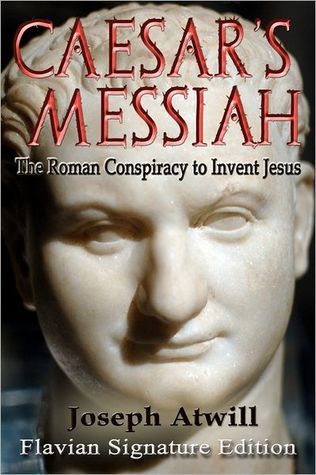
    Joseph Atwill, Caesar’s Messiah (Ulysses Press 2005)

    This is an interesting exposition of the Jesus-Never-Existed (JNE) conspiracy theory.
    Anyone who has compared the works of Flavius Josephus and the New Testament can’t help but notice. The Gospels write about stuff that supposedly happened during Jesus’s lifetime, in the 30s, and Josephus writes about the same stuff happening during the Great Revolt, in the 60s. Exact parallels, even the same words and phrases are used. What’s going on here? There are at least 115 parallels between the Gospel stories of Jesus in the 30s and Josephus in the 60s. It is very tempting to believe that one of them must have copied from the other.
    Atwill’s answer is—a big conspiracy. The Romans (specifically, their adopted historian Flavius Josephus) invented Christianity as a big con game.
    Typical of conspiracy theories, the basic idea is, on the face of it, credible—it just sounds like something ‘they’ would do. But when you get to the detail, all sorts of silliness ensues. Motive, also—according to Atwill it was either to ‘tame messianic Judaism’ or to ‘prove how clever they were’—is silly.
    The puzzles are ‘solved’ by means of ‘typology’ (peshers) to transfer one story to another to show the hand of God at work. The parallels between Jesus and Titus begin with vocabulary—the word for gospel is ‘euanggelion’ (good news), the same word Titus uses for his military victories—continuing through to dating according to the ‘70 weeks of Daniel’.
    That the Flavians and the Herodians may have mixed genealogically is highly credible. Royal families intermarried all the time, and Herod the Great was keen on marrying kings of the neighbouring ‘Nations’ with his daughters and granddaughters. For generations, Herodian princes had been educated in Rome side by side with the Caesars. Princess Berenice was infamously the long-time mistress of Titus. After the destruction of Jerusalem in 70CE, the entire Judaean royal family moved to Rome, and the reading of post-war brides of various noble Romans as descendants of Herod the Great is more than reasonable.
    Unfortunately for these juicy-sounding hypotheses, the Arria the Elder and Arria the Younger, proposed by JNE as being Herodian descendants, had well-attested Roman pedigrees.
    The parallels are really remarkable. I do not subscribe to this theory, however. I believe the concurrences can be understood as the authors referring to a common cultural and literary tradition. The evangelists and Josephus all had cultural memories of the war and were party to myths and legends which circulated at the time, a number of which involved characters named Jesus.

  • Review: Dirty Roulette

    Review: Dirty Roulette

    Stephy M. Marie, Dirty Roulette (Kindle 2025)

    https://www.goodreads.com/book/show/238208053-dirty-roulette

    The early years of college are a lot of fun, sometimes. But they can be a stage for some painful experiences.
    Ryder is still trying to get over the night he saw his girlfriend of 3 years Brittni f***ing the college a***ole Brody. Brody is the dude all the gals go for, and as is often the case in an age group where people don’t yet really know who they are, he’s a piece of work.
    Ryder has seen the casual s**, the jealousies, the breakups, the vendettas, and he’s determined to protect his sister Charlie, who is barely eighteen.
    Then one night a party gets out of control. What starts as a silly game of Strip Poker ends up wreaking havoc on the kids. The wrong people end up having s** together, things are posted on the internet that shouldn’t have been, and their fragile, pressured society is fractured.
    Everything is first-person present tense, alternating chapters between POV characters—Ryder, Payton and Charlie. This gives intimacy to the reader. The writing style is unique. The plotline works in today’s huge role of texting and social media. They all seem barely out of high school maturity-wise, and their emotions are usually turned up to High—shame, jealousy, desire, betrayal. The parents all seem to have their own dysfunction going on, so the young people have to work out their social problems by themselves.
    It’s worth making a little list as you go along to keep in mind whose head we’re hopping into—Who is whose sister? Who has the hots for whom? Who dumped whom? Who f***ed whom, and who knows about it? Old folks like me struggle to catch all the young streettalk.
    The characters are interesting and multi-layered. I love stories like this, where one event ends up having ramifications for each of the characters. It reminded me how painful it was to be young.

  • Review: Jesus Never Existed

    Review: Jesus Never Existed

    Kenneth Humphreys, Jesus Never Existed (Nine-Banded Books 2014)

    https://www.goodreads.com/book/show/19988610-jesus-never-existed

    This is an easy summary of stuff we know about the conundrum that so little is known about ‘the historical Jesus’.
    The placenames, as well as some of the names of major apostles, sound completely made up. There was no town in Galilee named ‘Nazareth’ in the 1st or 2nd centuries. Prophecies in the ‘Old Testament’ were primped and squeezed into being apparent proofs of ‘fulfilment’ of Jesus as the promised Jewish messiah—’we might as well call it copying’.
    The story of Jesus we receive in the New Testament is neither history embellished like Caesar’s Gallic Wars, nor fiction placed in a historical setting like Sherlock Holmes.
    It reads not so much like a remembered history but like a mediaeval drama. What we ended up with is a ‘join the dots’ approach—a nativity fairy tale, some wise parables and miracles, and a dying and rising god—which has been ‘reformed a hundred times’.
    His is a theory of ‘syncretism’ in which many authors played a part. He doesn’t believe that the Roman state would have ‘invented the whole nine yards of Christianity’; rather that they acquired a product already formed. The Church began ‘providing its own bread and circuses’, and found a ‘winning formula’: a simple story + mystery religion (like Mithraism) + ethical philosophy (like Stoicism) + public ceremonies (Like Magna Mater), backed up by manufactured ‘evidence’ (relics).
    99% of the NT texts that are extant date from later than the 4th century. It is clear that the first Christians knew almost nothing about the historical Jesus.
    Humphreys doesn’t go down the ‘Arrius Calpurnius Piso’ rabbit hole, and is more logical.
    I do not subscribe to this theory, but it was interesting to read Humphreys’ ideas on the subject.
    I hadn’t realised when I bought this that this is an ‘introduction’ version of Humphreys’ longer book, Jesus Never Existed: The Fabrication of a Saviour of the World.

  • Review: Piso Christ

    Review: Piso Christ

    Roman Piso, Piso Christ (Trafford Publishing 2010)

    https://www.goodreads.com/book/show/10002273-piso-christ

    Tricks with names and numbers, utter poppycock


    This book contends that Jesus was invented by (the fictionally invented) Arrius Calpurnius Piso masquerading as Flavius Josephus. The New Testament was not the story of Jesus but rather a satire on the military campaign of Titus. A great historical conspiracy perpetrated by the ruling class in order to hoodwink the rest of us. The author doesn’t reveal his real name out of fear that people will kill him.
    Not only was ACP writing under the pseudonym of Flavius Josephus, he was Dio Chrysostom, also Philo, Epictetus and Plutarch—hey, why not Shakespeare in the bargain? He was also the Antonius Primus who killed Vitellius, and Claudius Aristion, Maturus Arrianus, Curtius Montanus and Flavius Archippus. These multiple aliases would have had the man living in Rome, Prusa, Ephesus, Altinum, Athens and Crete all at the same time.
    Seneca and Lucius Piso wrote the Gospel of Mark. Arrius Piso’s son Justus was Justin Martyr. Eusebius was really Constantine’s brother, Pliny was really St Paul, Suetonius was Antoninus Pius.
    We plebs have had the wool pulled over our eyes for two millennia, as is ‘revealed’ using secret codename aliases and gematria (numerology), which I discount as proving anything sensible. It gets even loonier with discussion of so-called ‘royal language’ (e.g. made-up linguistics like Annius is really Arrius, because they changed the Rs to Ns). Entire chapters are devoted to the supposed dirty double entendres in early Christian writings—e.g. whenever the Gospels said ‘walked’ they really meant ‘have sex’; the ‘seven trumpets’ of Rev. 8:2 is about church leaders farting.
    I’ve always wanted to examine the Jesus-never-existed conspiracy theory, and now I have. Utter poppycock.

  • Review: A Post Office Christmas

    Review: A Post Office Christmas

    Poppy Cooper, A Post Office Christmas (Hodder & Stoughton 2021)

    https://www.goodreads.com/book/show/57199727-a-post-office-christmas?ac=1&from_search=true&qid=GCAzMqpNNH&rank=1

    1915. With Christmas approaching, Post Office Girls, Milly, Nora and Liza, are working harder than ever at the Home Depot to get letters and parcels to the troops on the front line.

    Milly is transferred to a different department. Was it because of her poor background? Her suffragist leanings put her out of sorts with her posher workmates. She misses her friends, but takes solace at her local suffragette group ELFS, and makes a new friend at work, ex-soldier Jack.

    Coming home from a meeting, Milly is accosted by a drunken soldier and saved just in time by fellow suffragettes, Hilda and Elise. The police believe his side of the story.

    Milly takes up the cause of a miscarriage of justice.

    It makes one’s blood boil to remember how women were treated—the pay differential, being accosted in the street at night, not being listened to by police, having to sit in a separate section of the pub to avoid catcalls, always being the ones in charges of tea and refreshments—not to mention multiple children and the ever-present threat of the workhouse.

    All the while, Sylvia Pankhurst has ruled ‘no militant action’ due to the war. But the ELFS ‘girls’ have better ideas, and Milly takes some people into her confidence that she shouldn’t have done.

    The royal family’s visit goes off without a hitch, after Milly and Jack save the day. The jolly Christmas tale ends well, and revelries spill out onto Euston Road. Looks like our boys will be getting their parcels, after all.

    It’s not often one finds a novel that deals with the working lives of working-class people—the ‘girls’ relationships with their workmates and supervisors, what they actually do in order to sort the post, how they spend their lunchbreaks.

    This is Book 2 in the Post Office Girls series.

    This review first appeared in Historical Novels Review.

  • Review: The Bewitching

    Review: The Bewitching

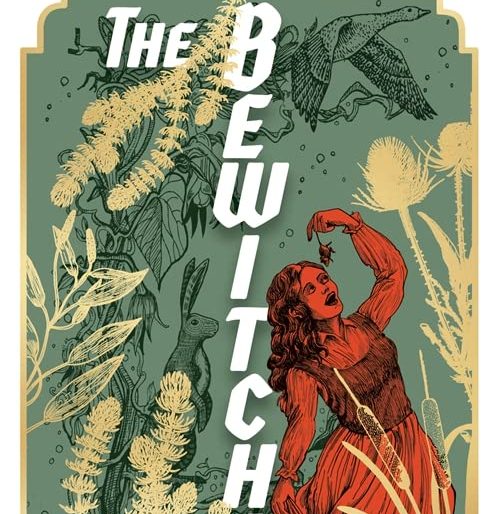
    Jill Dawson, The Bewitching (Sceptre 2022)

    https://www.goodreads.com/book/show/60038658-the-bewitching?ref=nav_sb_ss_1_21

    This 16th century tale tells the true story of a woman accused by her neighbours of witchcraft.

    Visiting her new neighbours in the Fenland village of Warboys, Alice Samuels meets the daughters of Squire Throckmorton, gifted the position by Sir Henry Cromwell.

    One of the girls, Jane, is experiencing terrifying fits. Jane points to Alice and calls her an ‘old witch’.

    Martha, the servant whose mother was a nun, looks after the Throckmorton children. Martha senses that there is some kind of ‘wrongness’ in the Throckmorton household. The son, Gabriel is in disgrace and is being sent away, and nobody knows why. She watches all this going on, but feels her position as servant doesn’t entitle her to say anything. The master is strangely keen to ask her counsel about things.

    The fits spread to the other girls, and the doctor says the cause is ‘sorcery’. More ‘signs’ of Alice’s witchery arise—many of them simply tricks the girls use to get attention—many simply made up. Even the lice in Bessie’s hair are a ‘sign’. High-born as they are, their word is taken as evidence.

    This is a credible account of a conspiracy theory gaining traction and snowballing, but the narrator, Martha, never actually denies the craziness, so the reader is swept along. It’s a bygone time, when life centred around the master’s great house. The local abbey lies in ruins; the black-hooded monks with their silver incense burners gone, the nuns told to get married. The old herbs are considered witchery, the old prayers popery. The dynamics between the servants, their masters and the children make the story all the more tragic.

    It’s well written, and there are some lovely agricultural metaphors. I found it quite effective that the story was told from a servant’s point of view.

    This review first appeared in Historical Novels Review.