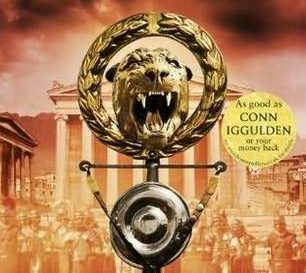
Manda Scott, The Art of War, (Transworld Digital, 2013)
https://www.goodreads.com/book/show/15799175-rome
Rome 69 CE. The Year of the Four Emperors, treachery and intrigue around every street corner.
Vespasian, our first narrator, is in his tent in Judaea. The spy Pantera has just foiled a would-be assassin sent by Vitellius’ brother Lucius. Vitellius had been ‘everyone’s second choice’ for emperor. Vespasian’s legions hail him Imperator. He sends Pantera to Rome to protect his son and his mistress.
Centurion under Vitellius, Sextus Geminus, our next narrator, is promoted to the Praetorian Guards. He is ordered to kill Pantera, his friend Juvens ordered to kill Trabo.
Trabo is the third narrator, like Pantera now an outlaw, a man loyal to the memory of Otho.
Jocasta, ‘the Poet’, fourth narrator, summons Pantera to the house of Seneca’s widow. Both had been students of Seneca’s spycraft.
Seven more narrators follow, each allied to one side or another. All these forces are intriguing against, spying on and double-crossing each other. All this is complicated, as Jocasta puts it: ‘Lucius thought he owned Trabo and Pantera thought that Lucius thought it while Pantera was the true owner. And I knew that Pantera thought so and was wrong.’
There is a traitor close to Vespasian’s cause, and two different armies are marching toward Rome. There’s a price of eight sestertii on Pantera’s head as he plots sedition and subterfuge to bring Vespasian to power.
The climax of the story, when Vespasian’s forces win him the throne, taking place, to add excitement, during the Saturnalia, is nail-biting.
Central to the plot is the idea that there are organised ‘messenger networks’—of course, there must have been, and Scott recreates them in juicy detail. Complete with lists of undercover agents, hired assassins, under the table bribes, gutter boys all named Marcus whistling warnings from rooftops, passwords and call signs, secret letters in code, assassinated men’s heads in sacks.
The head-hopping between narrators from chapter to chapter is confusing, but it does make the story seem immediate. We see the same scenes from multiple viewpoints.
The five parts of this book are the five classes of spies as defined in Sun Tzu’s Art of War: local spies, internal spies, double agents, doomed spies and surviving spies.
I was impressed that each of Scott’s four books in the series have slightly different structures. Some are third-person omniscient, some narrated. One is mostly soldiers and battles; another is mostly spies and secret messages. All are characterised by beautiful writing.
 Susie Helme
Leave a comment