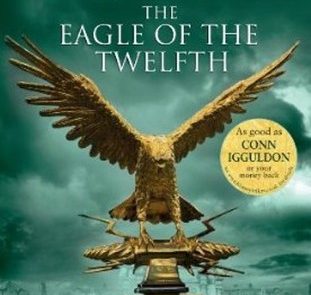
Manda Scott, The Eagle of the Twelfth, (Transworld Digital, 2012)
https://www.goodreads.com/book/show/12515759-rome
Demalion of Macedon and the Eagle standard, beautiful writing about ancient Rome
Feb 57 CE, Hyrcania on the Caspian Sea. The Vth Macedonica faces Vardanes II and seventeen client kings. Demalion of Macedon, our narrator, clerks for Sebastos Abdes Pantera, his commander. Pantera shoots an arrow killing Vardanes, allowing Vologases to reclaim the throne of Parthia. Pantera gets Demalion and Cadus promoted to positions in the XIIth.
They dye their tunics with madder to mark a successful training manoeuvre in the mountains, giving their cohort a nickname, the Bloody First. They come under the command of Corbulo, governor of Syria, a good leader; then Lucius Caesennius Paetus, governor of Cappadocia, a poorer one. Paetus sends them into a Thermopylae-like defeat at the Battle of Rhandeia.
Book 2 left us breathless with a new king of Israel anointed and Roman legions on the march.
Now, Demalion and the disgraced XIIth suffer another devastating defeat at Beth Horon in Judaea under Cestius Gallus, another poor general. What’s worse, the rebels have stolen their eagle standard, the symbol of their military pride. Retrieving it is almost more important than victory.
Three-fourths of the book follow Demalion’s military life, then the last fourth brings Pantera back into the story. I found this disjunct a bit disconcerting, and after all those pages, we’d forgotten Pantera’s motivation.
As with the first two books, Scott crafts the known history into an entirely new plot, with deep understanding of the culture.
I’m not normally a fan of ‘military fiction’, but the gorgeous writing makes it worth it, full of drama and emotion, like: ‘looking down on to the tops of their helmets… they seemed to ooze towards us, thickly, like so much mercury poured into a dish; a river of shimmering metal, dancing under the sun’; ‘the parade ground did not so much rock to our entrance as titter, and it was clear that at night we would be cold for lack of men around us.’ I loved Pantera’s assessment of Britannia, ‘a swamp surrounded by sea and full of women who fight like harpies’.
I’m excited to finally find a historical novel about the Jewish Revolt, albeit, unlike my novel,[1] one from the Roman point of view.
[1] The Lost Wisdom of the Magi
 Susie Helme
Leave a comment