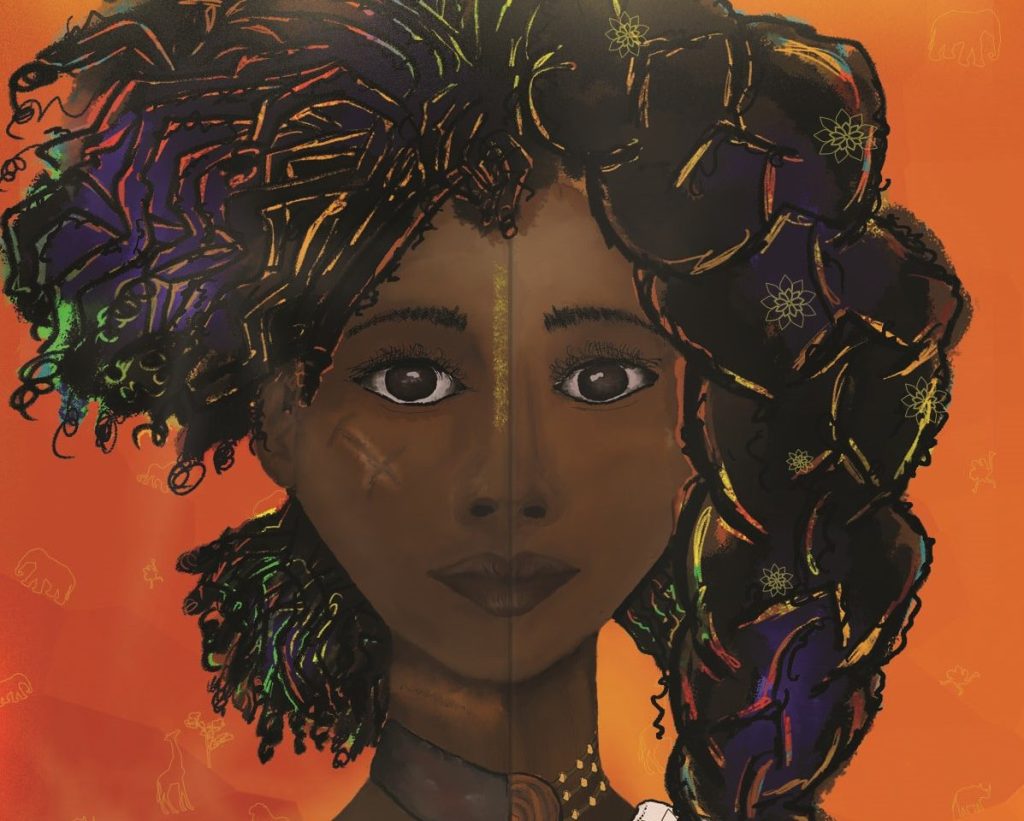
P. J. Leigh, Olawu (Brave Girls Press 2024)
https://www.goodreads.com/book/show/217003023-olawu?ac=1&from_search=true&qid=020DrYhEvk&rank=1
Young Zulu Olawu causes a scene at market, earning a beating from her Umama. She is friendly with the boy Batiko. Her Ubaba tells her, ‘Do not give him your heart’, but Batiko has other plans. In secret, Ubaba teaches her how to set bones.
Members of the Dikebe tribe come to Kanakam. Would the Zulu be drawn into their conflict with the Oloko?
Dikembe, son of the warlord who has taken over their village, comes seeking Ubaba, the udokotela (surgeon) Mbako, seeking help for his mother. Olawu notices Dikembe’s blue lotus flower tattoo.
If she doesn’t find a husband, she’ll be sent to the Choosing and be sold for the price of an isitshalo—a plantain.
A war ensues between the Dikebe and the Oloko. Her relationship with Dikembe is on-again-off-again, but Businge, a young man from Borimbe, is a suitor.
What Olawu cares about is not which man she’ll end up married to, but whether or not she can become an udokotela. She wants to fill her Ubaba’s shoes in a society which doesn’t accept such a profession for a woman. In pursuit of this, her loyalites shift.
A girl’s coming-of-age and female emancipation in a misogynistic culture—it’s a familiar theme. As well as the ruse of male attire. What is delicious about this is the intimacies of a culture from a time and place that I don’t know much about.
I understand Olawu’s shift to the Oloko because they had accepted her as udokotela, but her shift from agreeing to kill Dikembe to melting in his arms, then spying on him, and even turning on her own Kanakam, was not well explained from a character motivation point of view.
It’s action-filled, with brilliant scene-setting and descriptions of the culture and the people in it, and the dialogue is good, the interplay between the characters wonderful. I was confused by the unexplained foreign words, although they certainly led to verisimilitude. I couldn’t find online a definition of ‘Pootagi’—finally defined on page 271. It flows well and is well paced. There is pretty hot frisson going on between Olawu and Dikembe, and their relationship arc is very interesting. The battle with the Oloko and the dam-sabotage scene are exciting. But it’s long, 312 pages, particularly about ¾ in, between the battle and the dam-sabotage.
Though long, would suit a YA readership—for young readers of East African heritage, particularly girls, a ‘must read’.
 Susie Helme
Leave a comment